Categories
Selected Articles

Biden shows growing appetite to cross Putin’s red lines


YPL6Q67TH5D7TIF6B6FU66DQD4.jpg&w=1440

President Biden’s decision last month to help Ukraine obtain F-16 fighter jets marked another crossing of a Russian red line that Vladimir Putin has said would transform the war and draw Washington and Moscow into direct conflict.

Despite the Russian leader’s apocalyptic warnings, the United States has gradually agreed to expand Ukraine’s arsenal with Javelin and Stinger missiles, HIMARS rocket launchers, advanced missile defense systems, drones, helicopters, M1 Abrams tanks and, soon, fourth-generation fighter jets.

A key reason for brushing aside Putin’s threats, U.S. officials say, is a dynamic that has held since the opening days of the war: Russia’s president has not followed through on promises to punish the West for providing weapons to Ukraine. His bluffing has given U.S. and European leaders some confidence they can continue doing so without severe consequences — but to what extent remains one of the conflict’s most dangerous uncertainties.

“Russia has devalued its red lines so many times by saying certain things would be unacceptable and then doing nothing when they happen,” said Maxim Samorukov, a Russia expert at the Carnegie Endowment for International Peace. “The problem is that we don’t know the actual red line. It’s in one person’s head, and it can change from one day to the next.”

U.S. officials say managing the risk of escalation remains one of the most difficult aspects of the war for Biden and his foreign policy advisers. When deciding what new weapons systems to provide Ukraine, they focus on four key factors, officials said.

“Do they need it? Can they use it? Do we have it? What is the Russian response going to be?” said a senior State Department official. Like others interviewed for this report, this person spoke on the condition of anonymity to discuss sensitive internal deliberations.

The official said Russia’s reluctance to retaliate has influenced the risk calculus of Secretary of State Antony Blinken, a key Biden confidant who has been an influential voice encouraging the administration and U.S. allies to do more to support Ukraine.

“You factor that in your decision-making. We did this — there was no escalation or response — can we do the next thing? We’re constantly weighing those factors, and it becomes the hardest judgment call we have to make,” said the official.

Like Blinken, White House national security adviser Jake Sullivan also has viewed the benefits of supplying more lethal weaponry to Ukraine as outweighing the risks of escalation and has worked extensively with European allies on providing F-16s to Ukraine, said a White House official.

The administration has juggled these concerns amid a clamor from Ukrainians and hawks in Congress frustrated by the incremental approach and eager for Biden to move faster in sending more advanced equipment to the battlefield amid Russia’s brutal onslaught.

At the outset of Russia’s invasion in February last year, Putin warned that any country that tried to “impede” his forces “must know that the Russian response will be immediate and lead to consequences you have never seen in history.”

As the war has dragged on, the warnings from Putin and his subordinates have only become more bombastic, threatening a nuclear holocaust if Russia faced setbacks on the battlefield.

“If Russia feels its territorial integrity is threatened, we will use all defense methods at our disposal, and this is not a bluff,” Putin said last September.

Dmitry Medvedev, who serves as deputy chairman of Putin’s powerful security council, was more explicit in January. “The defeat of a nuclear power in a conventional war may trigger a nuclear war,” he said.

While Putin has challenged the United States — suspending participation in a critical arms control treaty, imprisoning Wall Street Journal reporter Evan Gershkovich and overseeing a court’s decision to sentence WNBA star Brittney Griner to a nine-year prison term before insisting on a one-for-one trade for a notorious arms merchant — he has not lashed out militarily at Washington or its allies.

But Western officials are cognizant that that doesn’t mean he never will — particularly as the conflict escalates.

On Tuesday, drones struck affluent districts of Moscow in what one Russian politician called the worst attack on the capital since World War II. Ukraine has denied involvement in such strikes within the Russian mainland, and the Biden administration said it neither enables nor encourages Ukrainian attacks inside Russia. But Kyiv appears content with Russian civilians experiencing the fears that Ukrainians have lived with for more than a year as their population centers have come under relentless Russian missile and drone attacks.

A possible explanation for Putin’s reluctance to hit the West is the diminished state of Russia’s military, according to U.S. officials.

“It would not seem to be in their interest to get into a direct confrontation with NATO right now,” said the senior U.S. official. “They are not well positioned to do so.”

Gen. Mark A. Milley, chairman of the Joint Chiefs of Staff, estimated in a recent interview with Foreign Affairs that Russia has suffered as many as 250,000 dead and wounded since its full-scale invasion began — staggering losses for any conflict.

Putin has replaced them on the battlefield, Milley said, but with reservists who are “poorly led, not well trained, poorly equipped, not well sustained.”

As Russian fatalities have mounted, Putin has recalibrated his war aims, from seizing control of Kyiv and decapitating the government of Ukrainian President Volodymyr Zelensky to controlling and annexing a swath of territory across eastern and southern Ukraine.

Still, U.S. officials remain wary that Russia, home to the world’s largest nuclear arsenal, could escalate in Ukraine or elsewhere. Last year, amid heightened concerns that Russia was considering deploying a nuclear weapon, senior State Department officials privately warned Moscow about the consequences of doing so — messages that were eventually followed by public warnings.

As the Biden administration has weighed such risks, Ukrainian leaders, including Zelensky, have expressed their consternation publicly. The perceived dithering and delay, they have claimed, has prolonged the bloodshed by inhibiting Ukraine’s ability to overwhelm the Russian military and force an end to the war.

Republican hawks in Congress, meanwhile, have said the threat of Russian escalation should not even be a consideration. Rep. Michael McCaul of Texas, chairman of the House Foreign Affairs Committee, has called the administration “cowardly” for not sending tactical missile systems known as ATACMS. The weapons, with a range up to about 190 miles, have been high on Ukraine’s wish list for almost the entirety of the war.

“Every time the administration has delayed sending Ukraine a critical weapon system, from Stingers to HIMARS to Bradleys, over fears of Russian escalation, they have been proven completely and utterly wrong,” he said earlier this year.

Britain approved the transfer of weapons with a similar range, air-launched cruise missiles known as Storm Shadows, in early May.

Inside the Biden administration, the Pentagon is considered more cautious than the White House or State Department about sending more sophisticated weaponry to Ukraine, but officials there deny that fear of escalation plays any role in their calculations.

The Defense Department has focused on what Ukraine needs at any given moment, said a senior Pentagon official who defended its role and counsel as Kyiv’s ambitious requests throughout the war have been slow-rolled or turned down. The official cited how the United States has evolved from providing anti-armor missiles such as the Javelin, when it was clear columns of Russian military vehicles would invade, to sending artillery as the war shifted into a bloody duel waged from trenches — and to more recent Western commitments of tanks and F-16 fighter jets.

Before almost any Western arms or equipment can be transferred to the units that will use them, Ukrainian forces first must learn how to operate and maintain what they receive, this person said, praising “how amazing” they have been at “standing up what is now a very sophisticated maintenance and sustainment system that did not exist at the beginning of the war.”

In one example, Ukrainian officials for months last year requested the billion-dollar Patriot air defense missile system. U.S. officials held back, citing concerns about training, maintenance and cost, but ultimately relented in December after repeated Russian missile barrages targeted Ukrainian civilian infrastructure. One such system donated by the West was damaged after a Russian strike in mid-May, requiring U.S. assistance to repair.

The senior defense official disputed any suggestion that other U.S. agencies are looking to do more to help Ukraine than the Pentagon is. “I think the folks in the Defense Department have a unique understanding of what is practically possible, and how to best support the Ukrainian armed forces in a way that supports them at any given moment on the battlefield,” the official said.

Unquestionably, the Biden administration’s willingness to cross Putin’s red lines has bolstered Ukraine’s ability to defend itself and recapture territory in the east and south. What remains to be seen, however, is whether Putin will continue to allow the West to defy his threats without consequence.

“Certain red lines exist,” said Alexander Gabuev, director of the Carnegie Russia Eurasia Center in Berlin, “… but because we don’t have a way to know for sure what they are, that’s what creates risk.”


Categories
Selected Articles

Executive Summary: DIRECTED ENERGY WEAPONS: RECENT DEVELOPMENTS AND UTILIZATION


top of page

Interested in joining us? Learn more

© The Counterterrorism Group (CTG) – 2024 – This website and all of its contents are copyrighted by The Counterterrorism Group, Inc. 2023. Any use, reproduction or duplication of the contents of this website without the express written permission of The Counterterrorism Group (CTG) is strictly prohibited.

bottom of page


Categories
Selected Articles

“Maybe he should have had some Mountain Dew” Missouri’s Congressional delegation sounds off about presidential debate


Some people might have been on the fence prior to Thursday night’s debate between President Joe Biden and former President Donald Trump. For others, the debate might have sealed their decision on who they will vote for as the nation’s commander-in-chief.

The 90-minute debate was hosted by CNN. Jake Tapper and Dana Bash were the moderators.

A variety of topics were covered, including abortion, immigration, taxes, January 6th rioters, foreign policy, and even their golf game.

Several Missouri politicians did not waste time going on X to give their two cents.

“This will end up being the only debate. No way Democrats agree to another one unless it’s with their replacement. When Kamala Harris debates President Trump on September 10th, I hope she’ll be more coherent for the sake of the country,” said Sen. Eric Schmitt.

“Maybe he should have had some Mountain Dew,” said Congressman Eric Burlison, R-7th District.

“We cannot afford four more years of Biden’s blunders,” said St. Louis area Congresswoman Ann Wagner, R-2nd District.

“Total triumph for Trump. Tomorrow the clamor to replace Biden will be deafening,” said Sen. Josh Hawley.

“The clear winner of tonight’s debate was President Donald J. Trump. He was strong, resolute, and firm on his message. Most importantly, he was himself. The vision, results, and policies he laid out will be critical in putting our country back on track and getting the American government back to doing the business of the American people,” said Congressman Mark Alford, R-4th District.

In a statement from Biden’s campaign, Jen O’Malley Dillon said that Biden presented a positive and winning vision for the future of America – one in which every American has a fair shot at the American dream, where every one of our rights are protected, and where our president fights to strengthen our democracy – not to tear it down.

“On the other side of the stage was Donald Trump, who offered a dark and backwards window into what America will look like if he steps foot back in the White House: a country where women are forced to beg for the health care they need to stay alive. A country that puts the interests of billionaires over working people. And a former president who not once, not twice, but three times, failed to promise he would accept the results of a free and fair election this November.

“Trump’s performance tonight reminded the American people why they fired him four years ago, and reinforced just how high the stakes are this November for the future of our country.”

The Republican National Convention is July 15-18 in Milwaukee. The Democratic National Convention is August 19-22 in Chicago.

Copyright © 2024 Missourinet


MODOT-CMv-2024-Companion-Banners_468x60.

Categories
Selected Articles

Председателем Совета министров обороны государств СНГ избран Андрей Белоусов


7858f2de51cbc64e56fb70cf560d7372.jpg

Сегодня, 3 июля, на очередном заседании Совета министров обороны государств — участников Содружества Независимых Государств в Минске министр обороны Беларуси Виктор Хренин поздравил российского коллегу Андрея Белоусова с избранием на пост председателя Совета министров обороны государств СНГ и передал ему слово для ведения заседания.

Более 30 лет Содружество Независимых Государств демонстрирует приверженность дружбе, добрососедству и сотрудничеству наших стран, начал министр обороны РФ Андрей Белоусов:

— Вопросы обеспечения безопасности постоянно находятся в центре внимания Совета министров обороны. В текущем году Российская Федерация председательствует в СНГ. Программа председательства в военной сфере включает 40 различных мероприятий. На фоне глобальной нестабильности и усиления напряженности по периметру внешних границ Содружества особое значение приобрело совершенствование механизмов совместного противодействия как новым, так и традиционным вызовам и угрозам. Это один из наших приоритетов.

В июне Президент Российской Федерации Владимир Путин заявил о необходимости формирования в Евразии архитектуры равной и неделимой безопасности, взаимовыгодного и равноправного сотрудничества и развития. Андрей Белоусов пояснил:

— Речь идет о будущей системе безопасности, охватывающей все сферы деятельности и открытой для всех евразийских стран без исключения. Важную роль в этом играют созданные в Евразии многосторонние международные организации, такие как Союзное государство, ОДКБ, Евразийский экономический союз, СНГ и ШОС. Упор делаем на повышение активности и авторитета этих интеграционных структур, налаживание между ними диалога в области безопасности.

Андрей Белоусов подчеркнул, что сегодня США и их союзники стремятся нанести стратегическое поражение России в Украине:

— Именно Запад подготовил и спровоцировал украинский кризис, а сейчас целенаправленно его затягивает. При этом западные страны всячески потворствуют временному правительству Украины, повсеместному насаждению нацизма в самых острых его проявлениях, прилагают максимум усилий для искажения исторической правды. Совместными усилиями мы будем и дальше отстаивать правду о нашем общем прошлом. Сегодняшний парад в Минске тому подтверждение. 2025 год объявлен в СНГ годом 80-летия Победы в Великой Отечественной войне, годом мира и единства в борьбе с нацизмом. Уроки этой войны остаются актуальными. Главный из них заключается в том, что страна должна иметь оснащенные и хорошо подготовленные вооруженные силы.

gorbateko@sb.by


Categories
Selected Articles

Ukraine hits munitions depot inside Russia with drones – source


466BJJQ7PVGY5O53NZ3KL65MHM.png?auth=b9c3

KYIV, July 7 (Reuters) – Ukrainian drones hit a munitions depot inside Russia overnight and there was a “high chance” of explosions at Russian military-industrial sites in the near future, a security source said on Sunday.

The source, who asked to remain anonymous, told Reuters the 9,000 sq. metre munitions storage facility was in the Russian region of Voronezh, which borders a chunk of northeastern Ukraine occupied by Russia since 2022.

Russia stored surface-to-surface and surface-to-air missiles, tank and artillery shells, and bullets at the depot, according to the source.

According to the source, the depot was near the village of Sergeyevka, which is about 85 miles from the nearest Kyiv-controlled territory.

Since Russia invaded it in 2022, Ukraine has been building a fleet of long-range drones to give it the ability to strike targets deep inside Russia.

“In the nearest future, there remains a high chance of sudden detonations at Russian military-industrial facilities, which are working (to supply) the war against Ukraine,” the source said.

Sign up here.

Reporting by Tom Balmforth, writing by Max Hunder; Editing by Angus MacSwan and Elaine Hardcastle

Our Standards: The Thomson Reuters Trust Principles., opens new tab


Categories
Selected Articles

Democrats’ cover-up of Biden decline raises hard questions. When did they know the truth?


74294727007-getty-images-1519148788.jpg?

play
Who are the top choices to replace Biden if he decides not to run?
If President Joe Biden decides not to seek re-election, who are some of the top choices to replace him on the Democratic ticket?

In a brief speech on Monday night from the White House, President Joe Biden appeared once again to struggle to speak without a teleprompter. He spoke for only five minutes and refused to take questions from even friendly members of the press, spurring ongoing doubts about his health.

Biden’s disastrous June 27 debate performance opposite Donald Trump is front of mind for the Democratic and Republican parties, as well as American voters. As the fallout from the Biden-Trump debate continues, more questions than answers have surfaced.

Here are a few that the White House and Democrats need to answer about the health of our nation’s commander in chief:

It’s clear that Biden struggles to be coherent and cognizant, especially when he’s required to process and respond to questions spontaneously, as opposed to giving a speech with a teleprompter. During the debate, Biden trailed off repeatedly, murmuring and slurring his words. In a few cases, he was unable to articulate a complete thought. Pundits, politicians and the American public noticed, leading to multiple calls for the Democratic Party to reconsider Biden as their nominee.

This raises one of the most pertinent questions Democrats must answer: When did members of Biden’s inner circle know about the president’s steep decline?

It’s clear, based on his debate performance and other gaffes we’ve seen in public, that Biden’s decline must have been obvious to those closest to him.

It also explains why Biden rarely fields questions from reporters, or gives speeches without a teleprompter and is largely shielded from the public. The effort to shield Biden and to hide the truth from voters was intentional. Democratic leaders need to be honest about how long they have known Biden has been declining.

Now that it’s obvious how much Biden has been struggling, even Democrats are calling for Biden to be replaced as the party’s nominee. While it’s a bit shocking to see how quickly Democrats have turned on their own leader, their acknowledgement of the president’s problems raises other questions: If Democrats think Biden is unfit to be the nominee, how can he continue to be president? How will he function as the nation’s chief executive for another six months?

A day after the debate, I posted on X, “Just think: Foreign leaders who have met with Biden in the last year knew about his cognitive decline before you did. They knew and they snickered and felt a sense of schadenfreude.”

That same day, the Wall Street Journal posted a story, “The World Saw Biden Deteriorating. Democrats Ignored the Warnings.” It’s a damning picture that reveals something uncomfortable: Foreign dignitaries likely knew more about Biden’s health than the American people did. Biden, after all, was shielded from the American public but had to be present in person in meetings with foreign leaders.

Americans often forget: The world is watching us. They’re watching for strength. They’re also watching for weakness.

When allies and enemies meet with President Joe Biden, what have they seen? If Biden’s presidential debate performance is any clue, he likely struggled to converse and articulate U.S. stances on policy and defense. Why would Democrats knowingly put the United States in a position to look anything but strong − whether in meetings with Chinese President Xi Jinping or the newly defeated British Prime Minister Rishi Sunak?

In “The Art of War,” Sun Tzu said to “appear weak when you are strong, and strong when you are weak.” I fear that when foreign dignitaries have met with Biden that America has appeared weak − and has been weak.

I’m no fan of former President Donald Trump. I don’t think he’s a good presidential candidate or a good representation of the Republican Party. He’s an arrogant, thin-skinned narcissistic buffoon. He’s a convicted felon battling additional indictments. Americans deserve better.

For years, Democrats have weaponized Trump’s character flaws: At least our guy isn’t a fraud or a felon. Yet, their guy has shown the world he isn’t fit mentally or physically to be president.

Now that Biden’s poor condition has been exposed, even I can’t help but wonder: Is Trump actually worse than Biden?

That doesn’t mean I think Trump is any good, but are we at the point where we can acknowledge that both are pretty bad, just in different ways?

The debate exposed the truth. Democrats gaslighted Americans about Biden’s cognitive decline.

Let’s frame this another way: Trump’s flaws have long been exposed for everyone to see − and to decide for themselves his fitness to serve in elected office. But suppose the Republican Party had been propping up a guy who was in serious cognitive decline and denying to the American pubic that he actually was in decline? Would Republicans ever hear the end of it?

Wouldn’t Democrats weaponize such a scandal until the end of time? Of course they would.

It’s time to weigh the serious flaws of both Biden and Trump: Is one worse? Are they both awful? If so, where do we go from here?

Now that we know that Democratic leaders knew about Biden’s decline, why did they hide it for so long?

The answer is important because there are only two possible responses, and neither of them is good.

Happy birthday, America: Why this aging millennial still loves America, even if Gen Z doesn’t get it

Either Democrats hid Biden’s poor condition because they don’t respect Americans or the public’s right to full disclosure.

Or Democrats hid what they knew about Biden because they want to maintain power − no matter the cost to America’s well-being.

Is their thirst for power greater than their respect, empathy and goodwill toward the American public?

Do Democrats dare to answer honestly?

Nicole Russell is an opinion columnist with USA TODAY. She lives in Texas with her four kids. Sign up for her newsletter, The Right Track, and get it delivered to your inbox.


Categories
Selected Articles

Russian spy plot to sow ‘panic and terror’ in US leaked in bombshell report


A Russian spy plot that sought to sow “panic and terror” in the West has been revealed in a joint-investigation.

Leaked emails from Russia’s Foreign Intelligence Service (SVR) obtained by independent Russian site The Insider and the German newspaper Der Spiegel reveal an elaborate plan masterminded in 2022, dubbed “Project Kylo.”

Just months into Russia’s full-scale invasion of Ukraine, in May 2022, a group of SVR employees unveiled the operation at a private roundtable discussion in the Russian Senate. Leaked communications showed that Moscow sought to sow disinformation campaigns in the West about Ukraine, “stoke existential fears and create animosity to [Ukrainian] refugees fleeing the war.”

Newsweek couldn’t independently verify the claims made in the investigation and has contacted Russia’s Foreign Ministry for comment by email.

Russian President Vladimir Putin

Russian President Vladimir Putin is pictured in Astana, Kazakhstan, on July 4, 2024. A Russian spy plot which sought to sow “panic and terror” in the West has been revealed in a joint investigation.
SERGEI GUNEYEV/POOL/AFP/Getty Images

The proposal, first put forward by Mikhail Kolesov, a 45-year-old SVR officer, was designed to “inject a new scheme into the Kremlin’s propaganda approach” that was “systematic, targeted and active, offensive in nature,” according to the investigation.

The SVR officer suggested that instead of pushing typical pro-Russian arguments about the conflict, the operation should “deepen internal contradictions between the ruling elites” in the West, including in the U.S., which is known among the special services as Russia’s “main adversary.”

This involved SVR recruits creating fake advertisements disguised as news headlines, fake NGOs and websites, publishing manipulative content on social media platforms including YouTube, and hiring individuals to take part in protests in the West with the aim of filming them and disseminating the content online.

At a time when some Western politicians were suggesting that Ukrainian refugees who fled the war were becoming burdens on state resources, SVR recruits attempted to exploit the situation by creating fake news websites and running articles with headlines such as: “How Ukrainians are robbing Germany of economic prosperity.”

Hundreds of thousands of social media accounts attempted to direct internet users to these sites by publishing images with “sensationalistic slogans” such as “Germany is sinking into homelessness” and “Even bread is a luxury” and linking back to them.

The “leitmotif of our cognitive campaign in the [Western] countries is proposed to be the instilling of the strongest emotion in the human psyche—fear,” one leaked document said. “It is precisely the fear for the future, uncertainty about tomorrow, the inability to make long-term plans, the unclear fate of children and future generations. The cultivation of these triggers floods an individual’s subconscious with panic and terror.”

Do you have a tip on a world news story that Newsweek should be covering? Do you have a question about the Russia-Ukraine war? Let us know via worldnews@newsweek.com.

Newsweek is committed to challenging conventional wisdom and finding connections in the search for common ground.

Newsweek is committed to challenging conventional wisdom and finding connections in the search for common ground.


Categories
Selected Articles

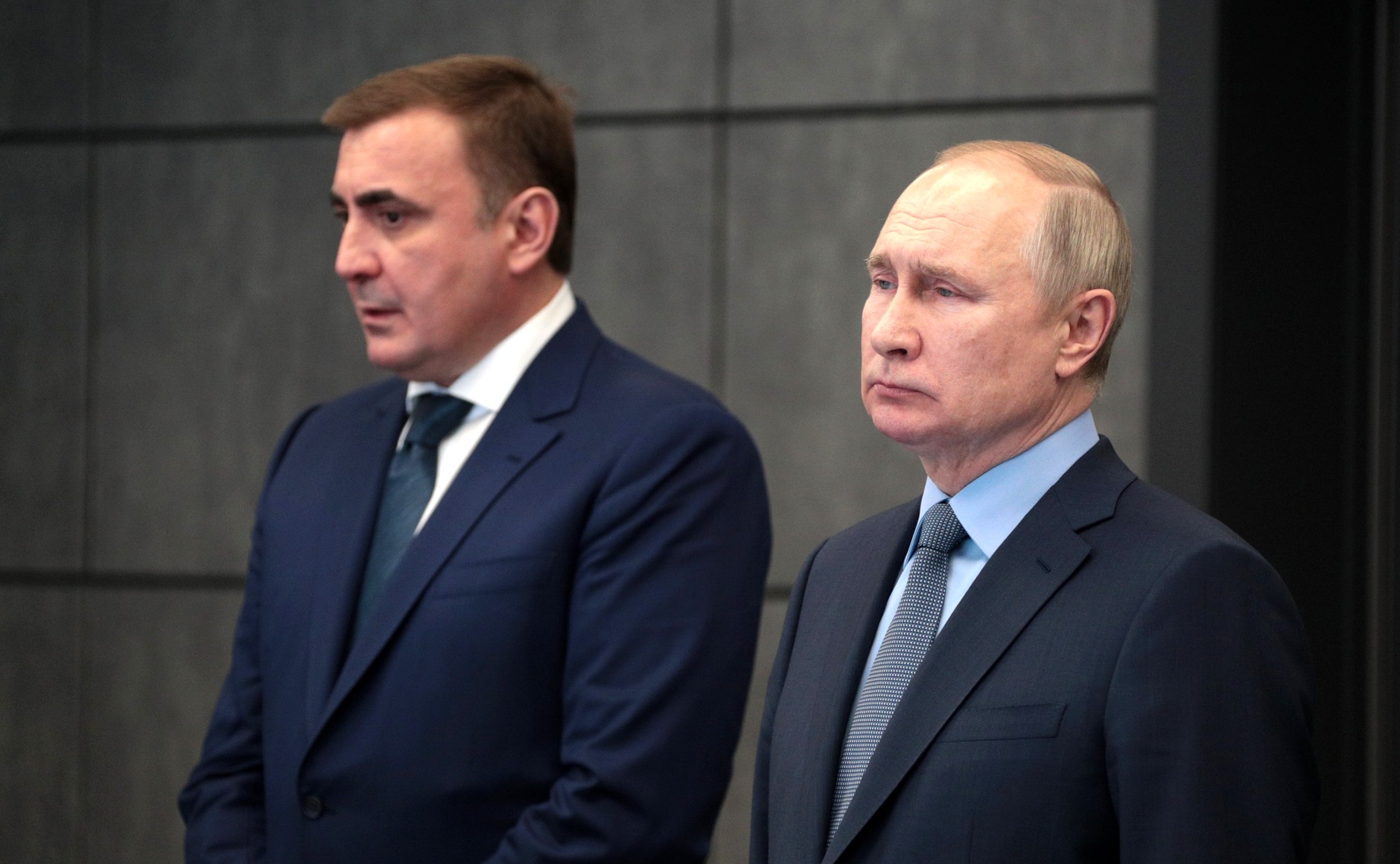
Путин не готовит Дюмина в качестве своего преемника — политолог


Aleksej-Djumin-i-Vladimir-Putin.-Foto-kr

МОСКВА (ИА Реалист). После того, как в конце мая Алексей Дюмин сместил на должности секретаря Госсовета влиятельного Игоря Левитина, поползли слухи, что президент России Владимир Путин готовит себе преемника.

О том, насколько оправданы эти слухи и кем на самом деле является Алексей Дюмин рассуждает научный сотрудник-консультант программы «Россия и Евразия» в лондонском Chatham House, профессор кафедры политологии ВШЭ Николай Петров.

Профессор считает, что нынешнее повышение Дюмина представляет собой второе по серьезности кадровое изменение в рамках путинской перестановки элит, уступающее только замене Сергея Шойгу на посту министра обороны Андреем Белоусовым.

«Замена Левитина Дюминым, несомненно, — значительный шаг вперед для бывшего телохранителя, но влечет за собой ослабление института: Дюмину не хватает навыков и поддержки, необходимых для того, чтобы вести бюрократическую игру так же успешно, как это делал Левитин», — полагает Петров.

Он полагает, что продвижение Дюмина — часть модели, согласно которой Путин все больше полагается на членов своей «преторианской гвардии» при выборе кандидатов на важные посты.

В качестве примера, профессор называет фамилии Дмитрия Миронова, назначенного на пост помощника президента в октябре 2021 года, Александра Куренкова, получившего кресло министра по чрезвычайным ситуациям в мае 2022 года, Валерия Пикалина, ставшего главой Федеральной таможенной службы в мае 2024 года.

«Короче говоря, Дюмин никогда не был первым кандидатом Путина, и маловероятно, что его новое назначение указывает на какой-либо особый статус в мышлении российского президента относительно его преемственности. Включение Дюмина в списки возможных преемников Путина, похоже, стало результатом специальной информационной кампании Кремля. Более того, Путин может назначить на свой пост любого, кого пожелает. Нет никаких норм или правил, ограничивающих его — и он, скорее всего, не будет косвенно сигнализировать о своем выборе, прежде чем сделать его», — полагает Петров.

Он подчеркивает, что даже если Дюмин станет президентом, что, по его мнению, маловероятно, он хоть и будет обладать атрибутами власти, но не будет иметь реальную власть.


Categories
Selected Articles

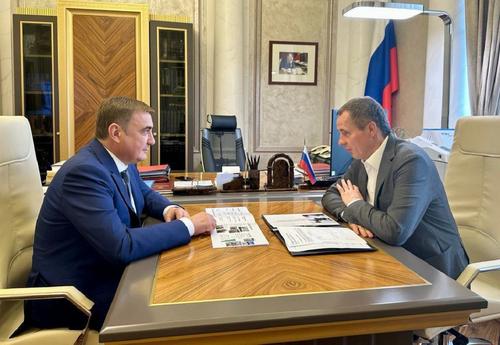
Дюмин и Гладков обсудили безопасность жителей Белгородской области – Аргументы Недели


20240705083444-907886.jpg

Аргументы Недели → Политика 13+

5 июля 2024, 20:44 Источник: ТГ-канал Вячеслава Гладкова

Подписывайтесь на Аргументы недели: Новости | Дзен | Telegram


Categories
Selected Articles

Эрдоган: у Путина есть свои подходы для нормализации отношений Турции и Сирии – Аргументы Недели


Аргументы Недели → Политика 13+

7 июля 2024, 16:34 Источник: РИА Новости

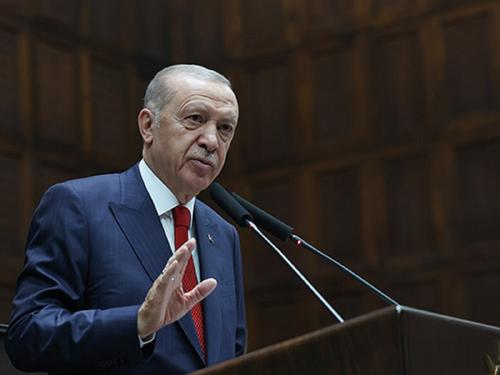
Эрдоган: у Путина есть свои подходы для нормализации отношений Турции и Сирии Реджеп Тайип Эрдоган. Фото: сайт президента Турции.

У лидеров России и Ирака есть свои подходы для нормализации отношений Турции и Сирии. Об этом заявил турецкий лидер Реджеп Тайип Эрдоган. По его словам, Анкара готова к улучшению отношений с Дамаском.

Общаясь 7 июля с журналистами на борту самолета по пути из Германии, Эрдоган заявил, что Турция готова направить приглашение сирийскому лидеру Башару Асаду, чтобы «привести отношения Турции и Сирии к тому же уровню, что и в прошлом». Однако для этого Асад должен сделать свои шаги.

Эрдоган дал понять, что данный вопрос будет обсуждаться в ходе возможной встречи с президентом РФ.

«Что касается встречи в Турции, то у господина Путина есть подходы. У премьер-министра Ирака есть подходы по этому вопросу», – приводит слова Эрдогана «РИА Новости».

Ранее пресс-секретарь президента РФ Дмитрий Песков заявлял, что визит Путина в Анкару готовится, однако конкретных дат пока нет.

Подписывайтесь на Аргументы недели: Новости | Дзен | Telegram