

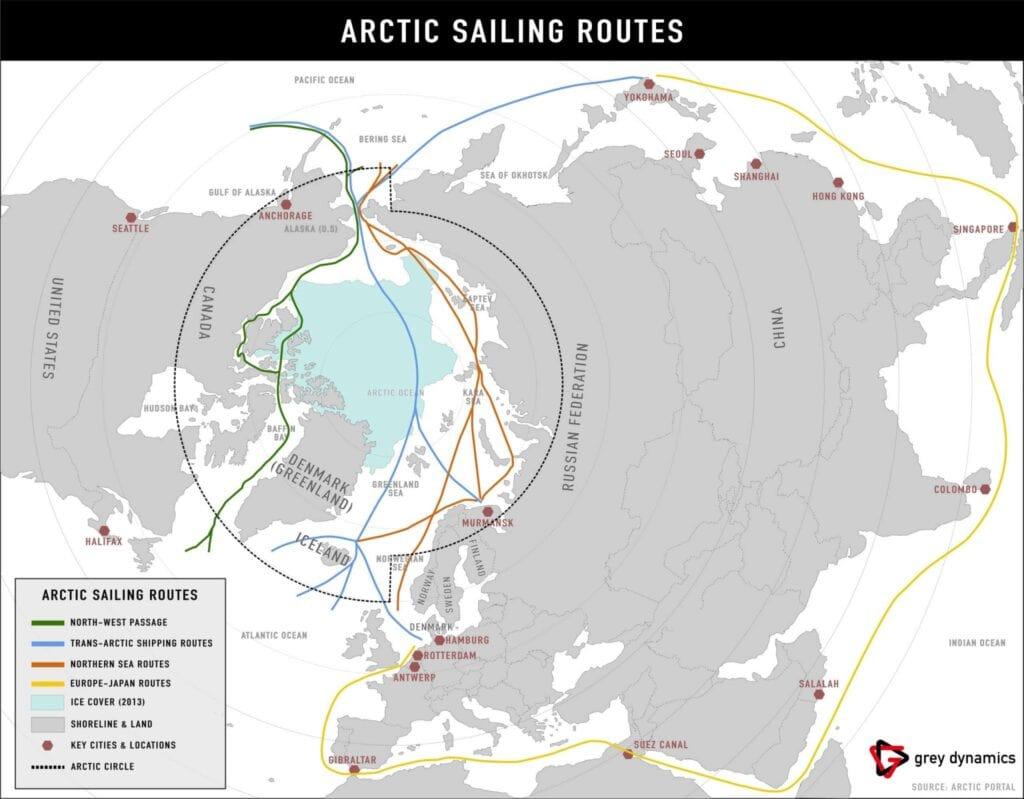
The Arctic region is becoming increasingly important to Finland. Tension with Russia poses challenges to Finnish security, even after joining NATO. Along the lines of Finland’s Arctic Policy, published in 2021, Finland continues to focus on security, climate and the environment (source). Growing competition with Russia in 2023 has implications for Finland’s arctic policy over the next 12 months.
Key Judgement 1. Finland will likely intensify its joint military presence with NATO in the Arctic region over the next 12 months.
Key Judgement 2. In the next 12 months, Finland is likely to continue to prioritise climate change mitigation and adaptation as well as the protection of the Sámi people.
Key Judgement 3 Tensions between Finland and Russia are likely to increase over the next 12 months, especially given a NATO troop deployment in the country.
KJ-1. Finland will likely intensify its joint military presence with NATO in the Arctic region over the next 12 months.
a. Finland’s recent accession to NATO represents a new strategic shift in the Arctic. Since early 2023, NATO and Finland have conducted at least three military exercises in the Arctic (source).
b. In February 2023, Finland, Norway and the US organised Arctic Forge. This exercise focused on the development of military capabilities and cooperation in the Arctic (source).
c. In March 2023, Finland organised Exercise Talvikotka 23 in the Arctic Circle. This exercise aimed to improve and exchange winter warfare tactics and techniques with the US (source).
d. In May 2023, 150 aircraft from 14 NATO members and partner countries participated in the Arctic Challenge Exercise 2023 (source).
e. Also in May, allied forces from Norway, the UK, the US and Sweden joined Finnish troops for military exercises in the region. These were the largest modern manoeuvres by Finnish ground forces above the Arctic Circle, bringing together 7,500 troops and 1,000 vehicles (source).
f. In December 2023, Finland signed a defence cooperation agreement with the US. The agreement grants the US military access to the country, including its border with Russia (source).

KJ-2. In the next 12 months, Finland is likely to continue to prioritise climate change mitigation and adaptation as well as the protection of the Sámi people.
a. Finnish authorities have insisted that Arctic activities must align with environmental capacity, climate protection, sustainable development and indigenous rights (source).
b. Finland remains loyal to its 2021 Arctic Policy. The strategy prioritises a climate-resilient approach and focuses on sustainable development and environmental conservation (source).
c. In addition, the Lapland Regional Council has developed a climate change strategy for 2030. The strategy lists Lapland’s objectives to better mitigate climate change in the region (source).
d. The Policy also underscores the protection of indigenous inhabitants (Sámi people). It gives them influence and strengthens their involvement in Finland’s Arctic policy. The authorities also established a Sámi Climate Council (source).
KJ-3. Tensions between Finland and Russia are likely to increase over the next 12 months.
a. Since Russia invaded Ukraine, the Arctic Council has ceased all cooperation with Russia in the region. Seven of the eight Arctic states in the Arctic Council have suspended all forms of cooperation with Russia, including on non-military matters (source).
b. Since early 2022, Russia has threatened Finland with “countermeasures” on several occasions, given its NATO membership (source).
c. In June 2022, Russian President Putin also warned Finland of retaliation if it hosts NATO troops and military infrastructure on its territory (source).
d. Russia has begun to build up its military infrastructure and reconfigure strategic planning in the region (source). In early 2023, Russian authorities approved the expansion and modernisation of the Novaya Zemlya air base in the Arctic (source).
Analytical Summary
We have high confidence in our assessment that Finland, together with its NATO allies, will intensify its activity in the Arctic. This will in turn increase tensions with neighbouring Russia. Our analysis is primarily based on English-language press. We assume that Finland and NATO will continue to be interested in the Arctic region. Were this assumption proven incorrect, we would expect a de-escalation of tensions with Russia in the region. Further insight into Finland´s plans, NATO interests, and the role of Russia would reduce uncertainty.
Intelligence Cut-Off Date: 25 December 2023
The post Finland’s Arctic Strategy 2024: A 12-Month Assessment appeared first on Grey Dynamics.