Categories
Saved Web Pages

The US allows Ukraine to use its weapons to strike inside Russia, but it is unlikely to be a game-changer


The story of the past 27 months since Russia invaded Ukraine has been one of crumbling taboos. After repelling Russia’s initial march on Kyiv, Ukraine has asked its Western allies for greater and greater support: first ammunition, then tanks, then cluster munitions, then fighter jets.

Each time, the West has agonized over whether to grant Kyiv’s latest request, fearing escalation and a potential Russian response. Each time, the taboo was broken – and nothing happened. What seemed beyond the pale one week had become banal the next.

But the rhythm of deliberation and delay has been hard to shake. Despite securing more weapons from the United States last month, Ukraine has not been able to use them as it pleases. As Moscow this month launched its surprise assault on the northeastern Kharkiv region, Washington forbade Kyiv from using US weapons to strike targets inside Russia.

This too crumbled. President Joe Biden this week gave Ukraine permission to carry out limited strikes using US weapons in Russian territory around Kharkiv, after several European nations had removed restrictions on how the weapons they have given to Kyiv can be used.

“Over the past few weeks, Ukraine came to us and asked for the authorization to use weapons that were provided to defend against this aggression” near Kharkiv city, “including against Russian forces that are massing on the Russian side of the border,” US Secretary of State Antony Blinken said Friday on a visit to Prague, the Czech capital. He confirmed Biden had approved Ukraine’s request.

Ukrainian President Volodymyr Zelensky praised the decision as a “step forward” which will help his forces to defend the embattled Kharkiv region.

While the decision may mark a new phase of the war, analysts have questioned whether the new freedoms will significantly bolster Ukraine’s ability to repel Russia’s invasion.

Some are bullish. This month, the calls for the US to remove the restrictions became more desperate, as Russia continue to pummel Kharkiv city with missiles and make gains elsewhere in the region.
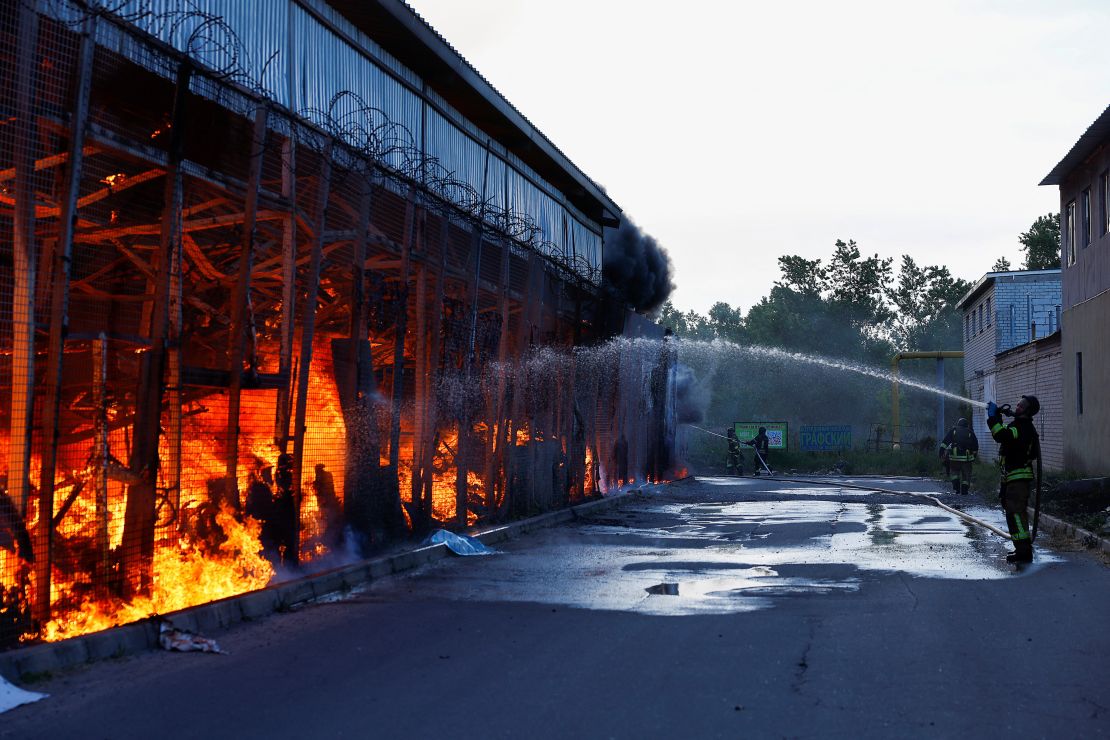
Firefighters work at a hardware store targeted by a Russian air strike in Kharkiv, May 25, 2024.

In a CNN op-ed, Adam Kinzinger and Ben Hodges described the bizarre effect of the US taboo: “We have heard Ukrainian soldiers repeatedly tell stories of Russian columns attacking, being repelled, and retreating to safe Russian territory to regroup, have a hot meal, plan and attack again.”

“Ukraine cannot win if Russians can attack civilian targets with impunity and call ‘time out’ in their own territory,” they wrote, urging Biden to call his Russian counterpart Vladimir Putin’s bluff.

But military analysts have tempered expectations, partly because the US is standing firm in not allowing Ukraine to use the most formidable munition it has been given to fire into Russia: the long-range missiles known as ATACMS that can hit targets 300 kilometers (nearly 200 miles) away.

Instead, Ukraine can only use shorter-range missiles known as GMLRS, which have a range of around 70 kilometers (around 40 miles).

Kateryna Stepanenko, an analyst at the Institute for the Study of War in Washington, told CNN the policy change will “blunt” Russia’s offensive in Kharkiv, but still “preserves the majority of Russia’s sanctuary space.”

“The policy still protects Russia’s operational and deep rear sufficiently that this change near Kharkiv Oblast is insufficient to bring about a turning point in the war. Ukraine particularly needs the capacity to strike deep rear areas to defeat the Russian ground and air threats, as many Russian airfields that support strikes against Ukrainian cities are located outside of the allowed GMLRS range,” she said.
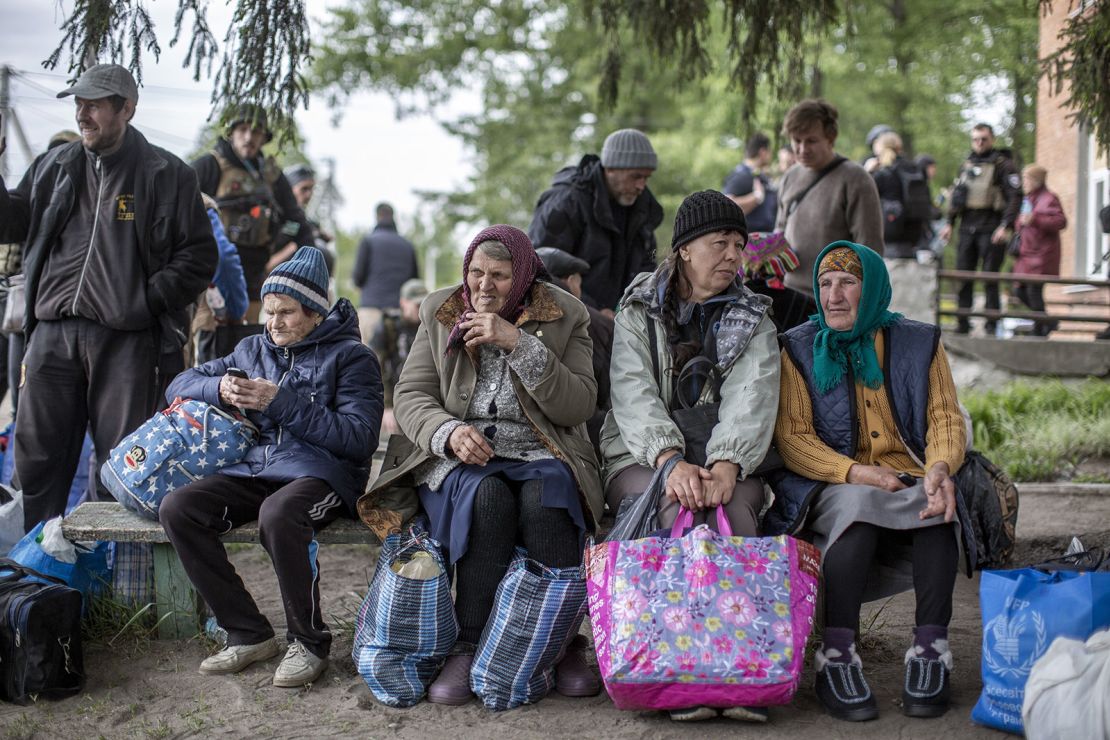
Elderly Ukrainians wait to be evacuated from the city of Vovchansk as Russia advances in Kharkiv region, May 20, 2024.

Franz-Stefan Gady, an associate fellow at the International Institute for Strategic Studies, told CNN the GMLRS cross-border strikes will allow Ukraine “to hit some Russian staging areas, command and control centers, as well as supply depots. It will not stop but complicate Russian military operations against Kharkhiv.”

“We need to be realistic about what can be expected from this policy change, since the Russian armed forces have already adapted to the introduction of ground-based precision fires,” he said.

Mathieu Boulegue, a researcher at the Center for European Policy Analysis, said the policy change would allow Ukraine to “be more efficient when it comes to repelling attacks and pushing back preemptively.”

“It’s not a game changer, per se. It’s an add-on, a steroid, an extra booster for Ukraine to defend itself,” he said.

The US is joining the United Kingdom, France, Germany and several others in removing restrictions on how Ukraine uses the weapons it is given.

Before Biden gave the green light, Putin had made veiled nuclear threats to countries considering allowing Ukraine to strike Russia with their weapons. He warned the move could lead to “serious consequences,” particularly for “small and densely populated countries.”

As well as making nuclear threats, Putin also signaled earlier this month that he was open to peace talks.

“All of these false narratives deliberately aimed to discourage Western decisionmakers from allowing Ukraine to preempt Russia’s attack on Kharkiv city,” Stepanenko said.

While the removal of this taboo appears to mark a new chapter in the war, Russia has previously experienced Ukrainian strikes with Western weapons on territory it considers its own.

Ukraine has frequently targeted occupied Crimea, which Russia annexed in 2014, using “Storm Shadow” missiles provided by the UK.

Ukraine also launched strikes on Kharkiv and Kherson in late 2022, as it sought to liberate the regions occupied by Russia in the early weeks of the full-scale invasion.

In both cases, Russia had warned Ukraine and its Western allies not to cross its red line. In both cases, Ukraine and its Western allies ignored the warning.

“The Kremlin already regards strikes against occupied Crimea and Donetsk, Luhansk, Kherson, and Zaporizhia oblasts as ‘strikes against Russia,’ but the reality is that there are few things that Russia can do to further escalate its war in Ukraine without incurring major risks,” Stepanenko said.

CNN’s Alex Marquardt, Jennifer Hansler, Kylie Atwood, Niamh Kennedy and Anna Chernova contributed reporting.
Categories
Saved Web Pages

Putin’s Tactical Nuclear Exercises: Old Wine in New Bottles?


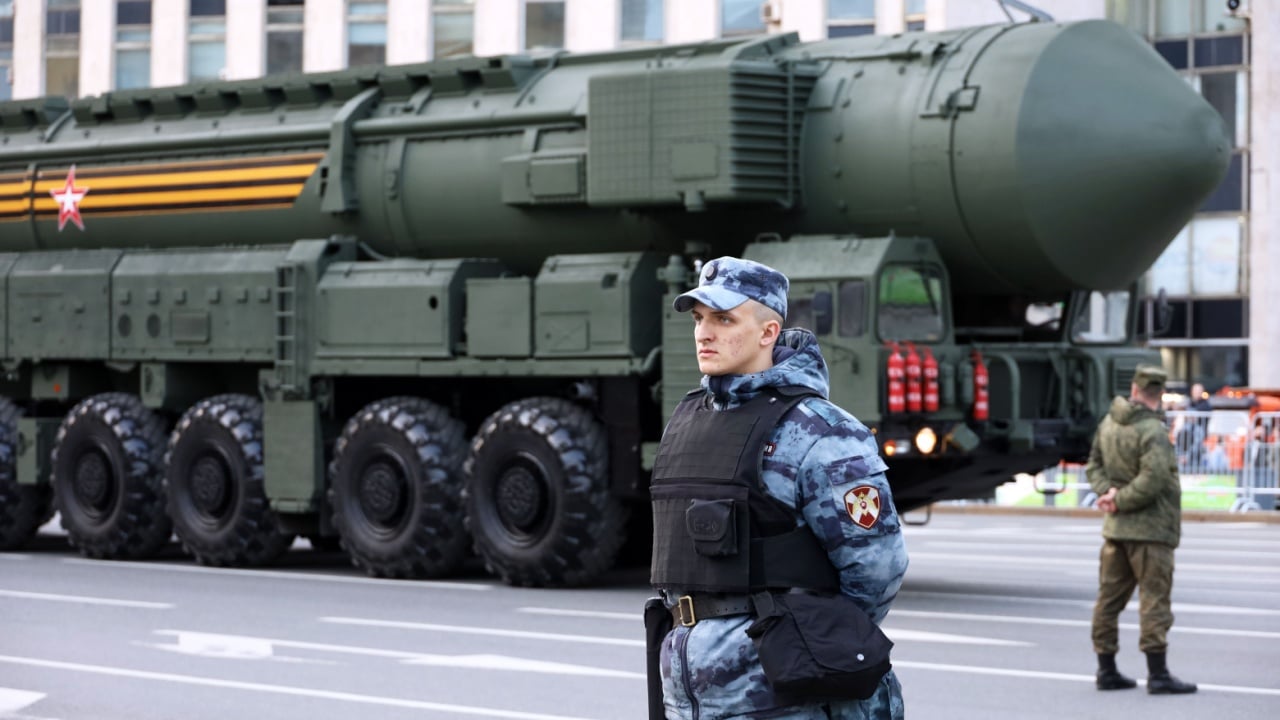
Russian_ICBM_SS.jpg

In response to what he termed “threats” from the West, Russian president Vladimir Putin ordered into effect rehearsals for the deployment of tactical nuclear weapons on May 6. According to the Russian defense ministry, during the exercises, “a set of measures will be carried out to practice the issues of preparation and use of non-strategic nuclear weapons.” The same day, Russia also summoned the British ambassador to the Russian Foreign Ministry, warning that Ukrainian strikes on Russian territory with British-supplied weapons could result in retaliatory attacks on British targets in Ukraine or elsewhere. The Russian so-called snap exercises were scheduled to take place in the Southern Military District headquarters in Rostov-on-Don, which borders Ukraine.  

Russian diplomatic exertions and military maneuvers have also been exacerbated by French president Emmanuel Macron, who has said more than once that he does not exclude the option of sending French troops to Ukraine. Some sources have reported that French Foreign Legionnaires have already been deployed there, though the French government has denied this. It would be safe to assume that other North Atlantic Treaty Organization (NATO) countries have also deployed operatives of various sorts in Ukraine or in neighboring countries, but not military forces in publicly acknowledged roles.

In addition, Congressman Hakeem Jeffries (D-NY), Democratic Minority Leader in the U.S. House of Representatives, stated in an interview with CBS News, “We can’t let Ukraine fall because if it does, then there’s a significant likelihood that America will have to get into the conflict—not simply with our money, but with our servicewomen and our servicemen.” With regard to comments made by Macron and by British foreign secretary David Cameron, former Russian president and deputy head of Russia’s security council Dmitri Medvedev warned of a possible “global catastrophe” if Western escalation continued. On the other hand, a spokesman for the Military Intelligence Agency of Ukraine commented on national television: “Nuclear blackmail is a usual practice of Putin’s regime; it does not constitute major news.” Nuclear arms control expert Pavel Podvig assessed that the Russian nuclear drills are “of course, a signal,” and urged the international community to avoid “getting sucked into this.” According to Podvig, the correct response is to “double down on ‘nuclear threats are inadmissible’ and rally everyone around that.”

Non-Strategic Nuclear Weapons 

Russia’s non-strategic or tactical nuclear weapons are distinguished from their strategic nuclear weapons by their respective missions, assigned launchers, and destructive power. Strategic nuclear weapons are assigned to U.S. and Russian land-based intercontinental ballistic missiles (ICBMs), submarine-launched ballistic missiles (SLBMs), or heavy bombers of intercontinental or transoceanic range. Tactical nuclear weapons are designed for battlefield use over shorter ranges and have less destructive power compared to strategic weapons. In Russia’s case, five to fifty-kiloton tactical nuclear warheads can be mounted on 9M723-1 ballistic missiles or 9M728 cruise missiles. Warheads of similar yield can also be assigned to the air-launched Kh-47M2 Kinzhal ballistic missiles and the Kh-32 cruise missiles carried by Russian bombers. Tactical nuclear warheads with yields of two to two-and-a-half kilotons can also be delivered by a number of artillery systems. Experts have estimated the total number of Russian non-strategic or tactical nuclear weapons to be approximately 1,558. Still, estimates are complicated by the fact that many launchers are capable of firing both conventional and nuclear-armed weapons.

The assumption that tactical nuclear weapons are usable on the modern battlefield has been contested since the early days of the Cold War. U.S. tactical nuclear weapons were deployed in Europe during the Cold War due to the assumed superiority of Soviet conventional forces located in Eastern Europe compared to those available to NATO. Even then, it was not entirely clear whether these NATO tactical nuclear weapons would be seen as tripwires that could automatically escalate a conventional war into Armageddon or as firebreaks between limited and total nuclear war. 

Since the end of the Cold War, the situation with respect to conventional military power has reversed. NATO now holds the high cards with respect to capabilities for technologically advanced, high-end conventional warfare, and Russia’s tactical nukes are considered to be compensation for its inferiority in conventional forces. The United States currently deploys roughly 100 air-delivered nuclear weapons in five NATO member states: Belgium, Germany, Italy, the Netherlands, and Turkey. In addition, the United Kingdom and France have their own independent nuclear retaliatory forces deployed on various platforms. Nuclear release authority for U.S. weapons deployed abroad would presumably have to come from the American president after having consulted with NATO allies.

U.S. non-strategic nuclear weapons deployed in Europe are deterrents until one moves close to the immediate threshold of a decision by Moscow for nuclear first use, at which point those weapons also become potential hostages. Russian intelligence will be on the lookout for telltale signs that NATO decided to raise its alert levels and initiate preparatory moves to upload munitions from storage sites onto delivery systems. Assuming that NATO can do so in a timely and coordinated manner, Russia will be under pressure to initiate strike plans for preemption against assumed NATO plans to do the same. 

Russia will know that it can destabilize, if not fully destroy, NATO’s tactical nuclear deterrent by taking out the six air bases with conventional weapons, presumably long-range missiles or aircraft. Russia can also strike military headquarters, as well as other targets in NATO-Europe, with conventional long-range precision fires and with a pre-established array of special operations for sabotage and destruction that have been prepared and continuously rehearsed since the Cold War era. What this means is that, in the middle of a crisis in which nuclear first use is a possibility but not a certainty, Russia might gain significant tactical advantages from the military threat or execution of conventional preemption against vital NATO forces and infrastructure supported by a capability for nuclear first use as a tool for political coercion.

Would this recipe for pre-nuclear deterrence by Russia, consisting of a credible threat of conventional preemption supported by a capability for nuclear first use, work under the circumstances of highly alerted NATO and Russian forces and tightly wound political leadership? No one can say for sure: outcomes in war and crisis management are dependent upon the particular circumstances of the moment. Some might argue that NATO, with its overall conventional forces superior to those of Russia, could execute the preceding recipe to its advantage. But that argument falls flat due to NATO’s deficiencies relative to Russia in the numbers of available tactical nuclear weapons based in theater for war in Europe. How significant is this gap for deterrence or defense, if need be? Some argue that Russia’s advantage in theater nuclear forces gives them a more convincing deterrent because flexible options for tactical nuclear first use are more believable than the threat of jumping directly from a conventional war to a strategic nuclear first strike. According to the Final Report of the Congressional Commission on the Strategic Posture of the United States:

Russian strategy and doctrine as written envisions limited first use of theater nuclear weapons to, inter alia, coerce war termination on terms acceptable to Russia, and larger scale use of theater nuclear forces to defeat NATO conventional forces if Russia is decisively losing a war with NATO. Russian strategy and doctrine rely on strategic nuclear forces to deter a large-scale U.S. nuclear response against the Russian homeland while Russia can escalate to limited nuclear war in theater if it chooses.

On the other hand, the deterrent effect of tactical nuclear weapons lies, at least partly, in the possible expansion of tactical into strategic nuclear warfare. The assumption that so-called theater nuclear warfare in Europe would take place in a sealed compartment, against further escalation into mutually assured destruction, is hopeful but challenging in the face of much military history. Obviously aware of this, Biden administration officials in 2022 and 2023 messaged Russia to the effect that, in case of any Russian nuclear first use against Ukraine, the United States and its allies “would for the first time engage Russian forces in Ukraine directly, targeting those forces with a devastating campaign of air strikes and missiles.” The presumption was that this “devastating” response was to be accomplished with conventional forces, although nuclear responses were not necessarily precluded. In addition to American allies, the United States also enlisted nontraditional partners and competing great powers (e.g., India and China) to come out with declaratory policies against nuclear first use by Russia. 

Going Forward

Instead of navigating the slippery slope of fightable and winnable limited nuclear wars, the United States and Russia (and perhaps eventually China) could attempt to re-energize a serious nuclear arms control dialogue. Russia has stated that it has temporarily suspended its participation in the discussions about New START and possible successor regimes. But Russia has stopped short of formal withdrawal from the treaty and has decided, for the time being, to abide by agreed-upon New START limits on the numbers of operationally deployed warheads and launchers for strategic nuclear forces. 


Categories
Saved Web Pages

Former Putin Bodyguard, Kremlin Aide Dyumin Elevated To Key Position


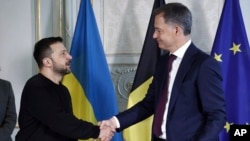
Ukrainian President Volodymyr Zelenskiy (left) and Belgian Prime Minister Alexander De Croo shake hands after signing a bilateral security agreement in Brussels on May 28.

Ukrainian President Volodymyr Zelenskiy (left) and Belgian Prime Minister Alexander De Croo shake hands after signing a bilateral security agreement in Brussels on May 28.

Belgium will deliver 977 million euros ($1 billion) in military aid and 30 F-16 fighter jets for Ukraine under a 10-year bilateral security agreement signed by President Volodymyr Zelenskiy and Belgian Prime Minister Alexander De Croo on May 28 in Brussels.

The agreement is the second of its kind signed by Zelenskiy in as many days as he continues a whirlwind tour to secure more military aid for Ukraine’s outgunned and outmanned troops as they struggle to fend off a Russian offensive and relentless strikes on civilian targets in the northeastern region of Kharkiv.

“For the first time, such an agreement specifies the exact number of F-16 fighter jets — 30 — that will be delivered to Ukraine until 2028, with the first arriving already this year,” Zelenskiy wrote on X, formerly Twitter. De Croo said at a joint news conference that Brussels will do “everything possible” to deliver the first fighter jets by the end of the year.

Asked by RFE/RL to specify how many warplanes will be delivered this year, De Croo did not answer, saying just that efforts of the aircraft coalition for Ukraine were ongoing.

De Croo stressed that the planes are to be used only above the territory of Ukraine. “The security agreement stipulates that military equipment will be used by the armed forces of Ukraine and on the territory of Ukraine,” he said. The Belgian prime minister added that training was already under way for Ukrainian pilots on Belgian F-16s.

“Today, our planes are used to train new Ukrainian pilots. Our technical teams are used to provide technical support to keep aircraft in the air. Our teams are training Ukrainian technicians how to perform [technical support],” he said.

WATCH: Zelenskiy Visits Belgian Military Base As Brussels Pledges F16s

Zelenskiy, asked by RFE/RL about the progress of negotiations with partners on obtaining permission to strike targets on the territory of Russia, replied that he was “confident of a positive result both from some partners and from our production.”

Ukraine has been frustrated by the lack of permission from some of its allies, mainly the United States and Germany, to hit military targets inside Russia with Western weapons systems.

The European Union’s top diplomat, Josep Borrell, has backed Kyiv’s request. “According with the law of war, it is perfectly possible and there is no contradiction. I could retaliate or I could fight against the one who fights against me from his territory,” Borrell told journalists ahead of a meeting with EU defense ministers.

“You have to balance the risk of escalation and the need for Ukrainians to defend,” he said.


RFE/RL’s Live Briefing gives you all of the latest developments on Russia’s full-scale invasion, Kyiv’s counteroffensive, Western military aid, global reaction, and the plight of civilians. For all of RFE/RL’s coverage of the war in Ukraine, click here.

NATO Secretary-General Jens Stoltenberg has also thrown his weight behind Ukraine’s plea, saying concerns that the use of Western weapons inside Russia would implicate the alliance in the war are unfounded.

“Ukraine’s use of weapons supplied by its Western allies against targets inside Russia would not make NATO and its members part of the conflict,” Stoltenberg said in Brussels on May 28.

French President Emmanuel Macron added his voice, saying on May 28 that Kyiv should be allowed to “neutralize” Russian military bases from which Moscow troops have fired missiles into Ukraine.

“We think that we should allow them to neutralize military sites where missiles are fired,” Macron said on a state visit to Germany.

He stressed, however, that Ukraine should not be allowed to hit other targets in Russia or civilian facilities.

But the White House on May 28 again rejected ending restrictions on Kyiv using U.S.-supplied arms to strike Russian territory.

“There’s no change to our policy at this point. We don’t encourage or enable the use of U.S.-supplied weapons to strike inside Russia,” White House National Security Council spokesman John Kirby told a briefing.

Russian President Vladimir Putin warned earlier on May 28 that hitting Russian soil with Western-supplied long-range weapons could set the war on a dangerous new path.

Speaking to reporters while on a trip to Uzbekistan, Putin said the use of such weapons would rely on Western intelligence data and imply the involvement of NATO military personnel.

“Representatives of countries that are NATO members, particularly in Europe, should be aware of what they are playing with,” Putin said, adding that “countries with small territory and dense populations” should be particularly careful.

With reporting by AP and AFP

Categories
Saved Web Pages

Les relais politiques français du régime de Bakou


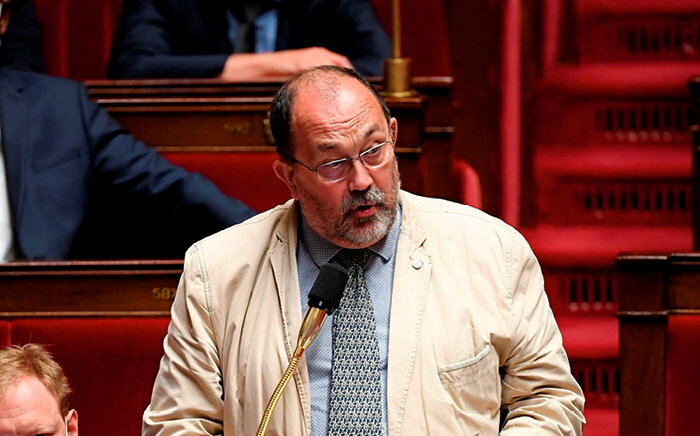
En cette période très troublée en Nouvelle-Calédonie, le groupe d’amitié France-Azerbaïdjan de l’Assemblée nationale fait profil bas. Un seul député y siégeant a trouvé le temps de répondre à nos questions. « Nous avons de grandes sociétés françaises qui travaillent en Azerbaïdjan, avance André Villiers, député Horizons de l’Yonne. Les intérêts français doivent être ménagés. » Il indique que le groupe d’amitié avait « suspendu ses relations » avec son homologue de Bakou après les premiers signes d’épuration ethnique en septembre 2023.

La newsletter international

Tous les mardis à 11h

Recevez le meilleur de l’actualité internationale.

Merci !Votre inscription a bien été prise en compte avec l’adresse email :

Pour découvrir toutes nos autres newsletters, rendez-vous ici : MonCompte

En vous inscrivant, vous acceptez les conditions générales d’utilisations et notre politique de confidentialité.

Le groupe d’amitié a déjà fait parler de lui en 2018, lorsque Marianne a révélé que son président, le tout fraîchement élu macroniste de l’Essonne Pierre-Alain Raphan, avait présenté à l’ambassade d’Azerbaïdjan un projet d’association visant à promouvoir le pays en France… Un lobbying clé en main, que Raphan se proposait de déployer avec trois collaborateurs à temps plein pour un budget de 2,8 millions d’euros par an, soit 230 000 euros par mois qu’aurait dépensés Bakou ! Depuis lors, l’ancien élu n’a visiblement pas changé sa bio sur son compte X, où s’affiche le mot-clé #Droitshumains. « Il a commis un certain nombre de boulettes, c’est le moins qu’on puisse dire », euphémise Jérôme Lambert, qui fut député PS de la Charente de 1986 à 1993 et de 1997 à 2022, et membre du groupe d’amitié de 2012 à 2022.

À LIRE AUSSI Aliev, ce dictateur qui en veut à la France

Cette association aurait fait concurrence à l’Association des amis de l’Azerbaïdjan (AAA), régulièrement pointée du doigt pour ses liens étroits avec l’ambassade du pays en France. Jérôme Lambert en est justement le président, depuis 2021. « Quand j’en ai pris la tête, j’ai dit à l’ancien président et aux Azerbaïdjanais de l’ambassade que je voulais bien m’en occuper, mais, attention, j’allais faire le ménage. Il ne sera plus question avec moi de pots-de-vin ou d’émoluments. Je serai un président bénévole et qui entend le rester », assure-t-il.

<FIGCAPTION>  <STRONG>Défense. </STRONG>La sénatrice (UDI) Nathalie Goulet fustige le « soutien systématique et inconditionnel » de la France envers l’Arménie.</FIGCAPTION> © SICCOLI PATRICK/SIPA
Défense. La sénatrice (UDI) Nathalie Goulet fustige le « soutien systématique et inconditionnel » de la France envers l’Arménie.
© SICCOLI PATRICK/SIPA

Du côté des habituels relais français de l’Azerbaïdjan, on condamne les ingérences évidentes en Nouvelle-Calédonie… tout en pointant l’attitude de la France. « Je ne peux pas cautionner des ingérences dans la politique française, c’est impossible », attaque la sénatrice de l’Orne Nathalie Goulet (UDI), qui, avec sept déplacements en Azerbaïdjan de 2015 à 2024, trouve néanmoins « regrettable »la dégradation des relations diplomatiques entre Paris et Bakou et fustige le « soutien systématique et inconditionnel » de la France envers l’Arménie.

<FIGCAPTION>  <STRONG>AAA. </STRONG>Jérôme Lambert, président de l’Association des amis de l’Azerbaïdjan, assure vouloir faire le ménage. </FIGCAPTION> © CHRISTOPHE SAIDI/SIPA
AAA. Jérôme Lambert, président de l’Association des amis de l’Azerbaïdjan, assure vouloir faire le ménage. 
© CHRISTOPHE SAIDI/SIPA

Pays non alignés

« Il s’agit de toute évidence d’une manœuvre hostile » de la part de Bakou, complète l’eurodéputé RN Thierry Mariani, ancien président du groupe d’amitié France-Azerbaïdjan de l’Assemblée nationale (2012-2014). « Après, est-ce que tout cela a un vrai rôle dans le soulèvement en Nouvelle-Calédonie, personnellement, je suis sceptique. Qui a vraiment une influence dans cette zone et qui a de grands intérêts ? C’est plus la Chine que l’Azerbaïdjan », souligne-t-il.

À LIRE AUSSI Dans la poudrière calédonienne, pendant les émeutes

« La seule ingérence, c’est l’Azerbaïdjan qui a pris le leadership des pays non alignés », estime de son côté Jérôme Lambert. Le « député honoraire » balaie les accusations portées contre Bakou et refuse de condamner ses agissements. « Ils ont invité des indépendantistes qui ont pignon sur rue. S’ils avaient reçu des terroristes, j’aurais été le premier à le condamner », affirme Lambert, qui a multiplié ces dernières années les missions douteuses, non seulement à Bakou mais aussi à Damas, pour y rencontrer le dictateur Bachar el-Assad, et en Crimée annexée par la Russie, pour y légitimer des élections illégalement organisées par le Kremlin.

<FIGCAPTION>  <STRONG>Soutien. </STRONG>En 2017, le député (LR) Jean-François Mancel avait défendu la vision d’un pays laïque. </FIGCAPTION>
Soutien. En 2017, le député (LR) Jean-François Mancel avait défendu la vision d’un pays laïque.

« Surenchère inutile »

Alors que le Sénat votait en janvier une résolution condamnant notamment l’offensive militaire de Bakou, Jérôme Lambert dénonçait, via le compte X de l’association, « une résolution à contre-courant de la reconnaissance internationale de l’Azerbaïdjan sur son territoire du Karabakh ». « Le lobby de la diaspora arménienne, plus extrémiste que leur propre pays d’origine, nous entraîne dans une surenchère inutile », complétait-il. La sénatrice Nathalie Goulet avait été la seule élue à voter contre la résolution.

À LIRE AUSSI Aux frontières de l’Arménie, la guerre en suspens

« Est-ce qu’on a vraiment besoin de ces groupes d’amitié qui parfois se transforment en organes d’influence de pays étrangers ? » s’interroge de son côté le journaliste Laurent Richard. Auteur de plusieurs documentaires sur l’Azerbaïdjan et sa diplomatie du caviar, il avait été poursuivi en diffamation par Bakou pour avoir décrit le pays comme étant une « dictature parmi les plus féroces au monde ». Lors du procès, plusieurs élus français, parmi lesquels l’ancien député LR Jean-François Mancel, avaient défendu la vision d’un pays laïque, en progrès dans le domaine des droits de l’homme. Au bout du compte, la procédure avait été jugée irrecevable.


Categories
Saved Web Pages

Comey Delivers Grave Warning That Trump ‘Is Coming’ for DOJ, FBI


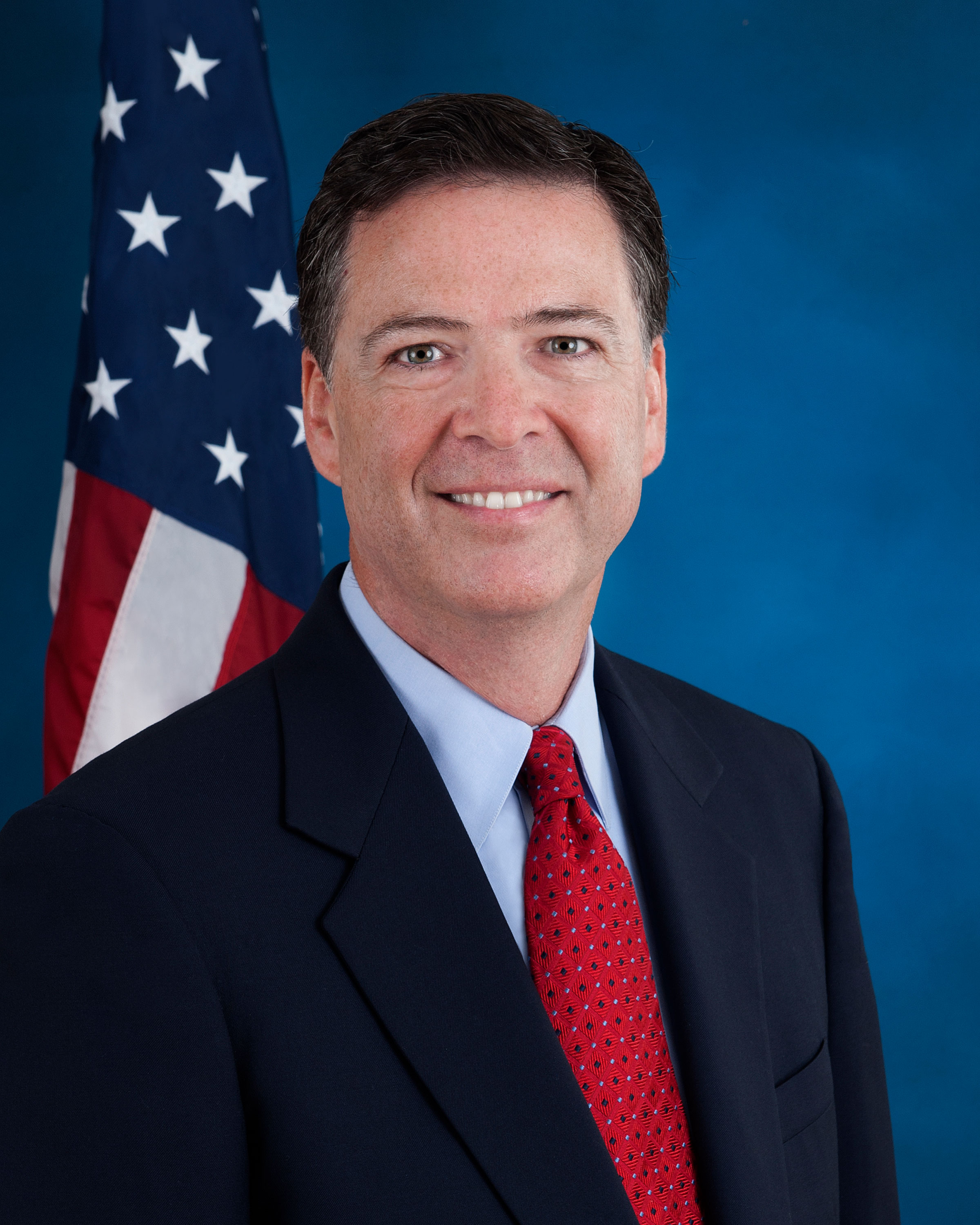
Former FBI Director James Comey

By Steve Neavling

Former FBI Director James Comey warned Tuesday that Donald Trump “is coming” for the FBI and Justice Department. 

In an interview with MSNBC, Comey was asked about the implications for the bureau if Trump is elected to a second term. 

“Serious for the Justice Department and the FBI, because Trump is coming for those institutions,” Comey, who led the FBI from 2013 to 2017, said. “He knows their power, and I think he has regrets that he didn’t work hard enough to corrupt them last time. So, he’s coming for them, and that’s a danger for all Americans.”

Comey added, “He’s going to put people in positions in those organizations. He didn’t have all-stars the last time. He’ll have the bottom of the barrel this time, but people who will want to do his will, and that should worry every American. This election matters because of a reason like that,”

U.S. Rep. Ayanna Pressley, D-Mass., went even further, saying Trump’s DOJ would “go on a murdering spree” if Trump wins a second term. 

Pressley delivered the warning at a House Oversight and Accountability Committee hearing on the Office of Personnel Management, The Hill reports

Trump and his allies have repeatedly discussed the former president’s plans to use the FBI and DOJ as a weapon for conservative causes.


Categories
Saved Web Pages

Watch Live: National Security Advisor Sullivan Joins WH Monday Briefing


632960_5_.jpg

National Security Advisor Jake Sullivan will join Karine Jean-Pierre for the press briefing on Monday around 2:15 pm.

Categories
Saved Web Pages

Putin’s New War Weapon: An Economist Managing the Military


  • Photos
  • Russia’s New Offensive
  • Ukraine’s Air Defenses
  • Putin’s New Defense Minister
  • Rebuilding Ukrainian Villages

In his first public appearance as the newly appointed defense minister, Andrei R. Belousov spoke about veterans’ benefits and overcrowded hospitals rather than a new offensive in Ukraine.

Andrei Belousov, wearing a dark suit, speaks from a lectern in a government chamber.

Andrei R. Belousov, the newly appointed defense minister, at a hearing on Monday in the Russian Parliament, in a photo made available by the Russian Federation Council.Credit…Russian Federation Council, via Reuters

May 13, 2024Updated 10:36 a.m. ET

To President Vladimir V. Putin of Russia, appointing a new defense minister provides a new building block toward fighting a long war.

That was evident in Moscow on Monday when Andrei R. Belousov, the economist who was Mr. Putin’s surprise pick to lead Russia’s sprawling defense ministry, made his first public appearance in his new role and spoke about bureaucracy rather than the battlefield.

It reflects an acknowledgment that the military production that is supplying Russia’s war, and heating its economy, must be carefully managed to sustain a war of attrition with Ukraine.

At the same time, Russia is playing the long game on the battlefield. In northeastern Ukraine, Russian forces mounting a new offensive are pushing forward slowly rather than attempting major breakthroughs to big cities, as they did at the beginning of the war — with disastrous results.

In televised remarks at Russia’s upper house of Parliament on Monday, which is expected to rubber-stamp his nomination, Mr. Belousov emphasized the bureaucratic details of the fast-growing military effort, and made no reference to the situation at the front. He described his priorities as improving standards of care and living for soldiers, veterans and their families.

The excessive paperwork that fighters faced in obtaining benefits, he said, ought to be addressed “in the framework of interagency electronic coordination.”

“It’s absolutely unacceptable” that soldiers are redirected to overcrowded hospitals when on leave, Mr. Belousov said in televised comments. “This issue needs to be resolved.”

The brief hearing was a snapshot of how the sudden rise of a soft-spoken expert on economic policy to the helm of an enormous military apparatus waging its biggest conflict since World War II has emerged as a new component in Mr. Putin’s strategy of defeating Ukraine and the West through a war of attrition.

Mr. Belousov’s appointment signals Mr. Putin’s focus on subordinating the country’s economy to his military needs, in the expectation that a war in Ukraine, or at least a militarized standoff with the West, could shape Russia’s future for years to come.

“Putin’s priority is war, and war of attrition is won by economics,” said Alexandra Prokopenko, a former Russian central bank official now at the Carnegie Russia Eurasia Center in Berlin.

Over more than six years serving as Mr. Putin’s economic adviser, Mr. Belousov developed a reputation as a strong supporter of a dominant state role in the economy and of high public spending. The war has already led Mr. Putin to enact some of the proposals that Mr. Belousov has been advocating for years, such as higher taxes on big business and greater use of the country’s oil savings.

In Moscow, Valentina Matviyenko, the chairwoman of the upper house of Parliament, said Mr. Belousov was the best choice to find ways to procure “new, modern weaponry, new technology and new innovations” for the military.

Sergei Mironov, an ultranationalist lawmaker, welcomed Mr. Belousov’s appointment, adding that “the servicemen are not the only ones fighting today, but so are economies.”

When his nomination is finalized, Mr. Belousov will replace Sergei K. Shoigu, a long-serving minister who was fiercely loyal to Mr. Putin. Many analysts said that, despite his close ties to the Russian leader, Mr. Shoigu’s days were numbered ever since the spectacular failure of the initial invasion in February 2022, when Russia’s troops appeared shocked by the resistance put up by Ukraine’s forces.

But rather than fire Mr. Shoigu as Russia was struggling to stay in the fight, Mr. Putin chose only to replace him now — as Russia appears to be in its strongest position in the war since Mr. Putin started it more than two years ago.

“Putin is seeing that a lot of things were not done right — there were very grave mistakes,” Sergei Markov, a Moscow political analyst and a former Kremlin adviser, said in a phone interview. But, he added, “you don’t make personnel decisions in a crisis.”

“Now the crisis has been resolved — the Ukrainian offensive was stopped and a new army has been formed,” Mr. Markov said.

The appointment of a methodical bureaucrat to oversee Russia’s war effort also meshes with the consolidation of a slower-paced Russian strategy on the battlefield.

The failed attempts to stun the enemy into submission in the first month of the invasion in 2022 with armored thrusts and paratrooper drops have since given way to systematic pummeling of Ukrainian defenses along most of the frontline.

This strategy has allowed Russia to exploit its manpower and firepower advantage to gradually inch forward against overstretched and exhausted defenders.

Last week, Mr. Putin doubled down on the strategy of attrition by opening of a new front in the northern Ukrainian border region of Kharkiv.

Russia had tried to capture the region of Kharkiv in the early weeks of the war when its armored columns streamed across the border and headed for the regional capital of the same name along the highways. The attack quickly collapsed after encountering determined Ukrainian forces, who later forced Russia into a hasty retreat.

With the element of surprise now gone, Russia this time has used small units of infantry supported by artillery to filter across the border and slowly push forward, one village at a time.

Military analysts said the new offensive stands little chance of capturing the city of Kharkiv, Ukraine’s second largest metropolitan area. But the attacks appear to have succeeded in drawing Ukrainian reinforcements from other sections of the front, at a time when the country is struggling to recruit enough fighters and obtain new weapons from its Western allies.


Categories
Saved Web Pages

Russia celebrates victory in World War II as Putin accuses the West of fueling global conflicts


7GO7MHQN4YI67LQKU2DQRBKRRU_size-normaliz

MOSCOW — Russia on Thursday wrapped itself in patriotic pageantry for Victory Day, as President Vladimir Putin celebrated the defeat of Nazi Germany in World War II by hailing his forces fighting in Ukraine and blasting the West for fueling conflicts around the world.

Even though few veterans of what Russia calls the Great Patriotic War are still alive 79 years after Berlin fell to the Red Army, the victory remains the most important and widely revered symbol of Russia’s prowess and a key element of national identity.


Categories
Saved Web Pages

Rep. Henry Cuellar and his wife allegedly took nearly $600,000 in bribes, indictment says


gettyimages-2147033493.jpg?c=16x9&q=w_80

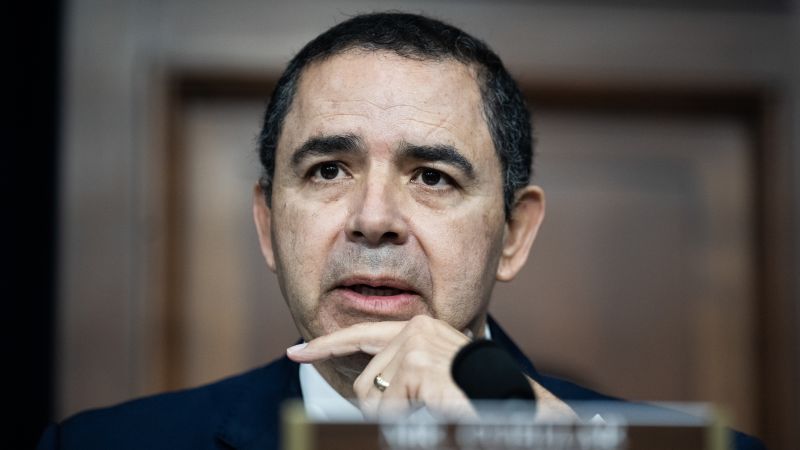
Democratic Rep. Henry Cuellar of Texas and his wife have been charged with accepting nearly $600,000 in bribes from two foreign entities, according to an indictment in federal court in Texas.

The alleged scheme took place from late 2014 through at least November 2021, the indictment says.

The congressman and his wife, Imelda Cuellar, made their initial court appearance on Friday in Houston and were released on a $100,000 bond. They are facing several charges, including conspiracy to commit bribery of a federal official, violating the ban on public officials acting as agents of a foreign principal and money laundering.

In a statement on Friday, Cuellar said: “I want to be clear that both my wife and I are innocent of these allegations. Everything I have done in Congress has been to serve the people of South Texas.”

Cuellar said in his statement that actions he took in Congress were “in the interest of the American people” and vowed to continue his bid for reelection in November. The congressman also defended his wife, saying that, “The allegation that she is anything but qualified and hard working is both wrong and offensive.”

“The actions I took in Congress were consistent with the actions of many of my colleagues and in the interest of the American people,” Cuellar said.

Prosecutors say that Henry and Imelda Cuellar crafted two yearslong schemes to get bribes from foreign entities – an oil and gas company “wholly owned and controlled by the Government of Azerbaijan, and a bank headquartered in Mexico City.”

In exchange for bribe payments from the Azerbaijan oil company, Cuellar “agreed to perform official acts in his capacity as a Member of Congress, to commit acts in violation of his official duties, and to act as an agent of the Government of Azerbaijan” and the bank, the indictment says.

Among those promises, prosecutors allege Cuellar agreed to influence US policy through a “series of legislative measures relating to Azerbaijan’s conflict with neighboring Armenia,” by giving a pro-Azerbaijani speech on the House floor, inserting language “favored by Azerbaijan” into legislation and committee reports, and advocating for “series of legislative measures relating to Azerbaijan’s conflict with neighboring Armenia.”

The Texas Democrat also allegedly promised to influence financial regulations in a way that would benefit the Mexican bank and its affiliates, including by working to pressure the Executive Branch on anti-money laundering enforcement practices that “threatened” their business interest and supporting revisions to the criminal money-laundering statutes.

The couple received the bribe payments through shell companies owned by Imelda Cuellar, prosecutors say. They allegedly used the proceeds from the bribery schemes to pay taxes, pay down debt and spend tens of thousands of dollars at restaurants and retail stores. One purchase was for a $12,000 custom gown, according to the indictment.

Cuellar’s home and campaign office in Laredo, Texas, were raided by the FBI in 2022. The charges against Cuellar are not yet publicly available.

A spokesperson for House Minority Leader Hakeem Jeffries released a statement shortly after Cuellar’s charges were reported, saying that the congressman is entitled to the presumption of innocence. But, spokesperson Christie Stephenson said, Cuellar will temporarily step down from his top spot on a House Appropriations Subcommittee while the investigation is ongoing.

“Henry Cuellar has admirably devoted his career to public service and is a valued Member of the House Democratic Caucus. Like any American, Congressman Cuellar is entitled to his day in court and the presumption of innocence throughout the legal process,” Stephenson said.

The National Republican Congressional Committee swiftly called on Cuellar to resign.

“If his colleagues truly believe in putting ‘people over politics,’ they will call on him to resign. If not — they are hypocrites whose statements about public service aren’t worth the paper they’re written on,” Delanie Bomar, a spokesperson for the NRCC, said in a statement.

CORRECTION: This story has been updated to reflect that a spokesperson for Hakeem Jeffries released a statement following news of Cuellar’s charges. This story and headline have also been updated with additional developments.


Categories
Saved Web Pages

ФСБ рассказала о том, как СБУ смогла провезти 10 тонн тротила для взрыва на Крымском мосту


<<5@a0=b*”> 40==K< @0AA;54>20=8O, ?>4@K2 3@C7>2>3>…”>

logo.png

ФСБ рассказала о том, как СБУ смогла провезти 10 тонн тротила для взрыва на Крымском мосту

Керченский мост в октябре 2022 года подорвали самодельной бомбой, равной по мощности 10 тоннам тротила.

Об этом пишет газета “КоммерсантЪ” ссылаясь на данные ФСБ. По данным расследования, подрыв грузового автомобиля со взрывчаткой 8 октября 2022 года произошел в результате тщательно подготовленной диверсии СБУ.

По данным ФСБ, взрывное устройство, закамуфлированное в рулоны со строительной полиэтиленовой пленкой на 22 паллетах общим весом почти 22,8 тонны, везли из Одессы через Болгарию, Грузию и Армению.

При этом скрытый под пленкой детонатор сработал от сигнала GPS-навигатора “в момент прохождения заранее заданной точки маршрута”.

Источник: https://tsargrad.tv

5@a0=b*”>

27 апреля жители Армянска приняли активное участие во Всероссийском субботнике

Кто имеет право на досрочную пенсию в Крыму – разъяснение Соцфонда

Уважаемые жители и гости Бахчисарайского района!

Мы возвращаем своё. Свою землю, территории, песни. И это только начало

Хроники Керченской переправы

Ночью 3 мая над Крымским полуостровом сбили украинский беспилотник

08:30Ночью над Крымом уничтожили украинский беспилотник-Минобороны @vesticrimea// ВЕСТИ КРЫМ

08:30

Что делать если ребенок перестал дышать? Как правильно оказать первую помощь ребенку с остановкой сердечной деятельности?

Доброе утро!. #Симферополь

2 мая председатель Советского районного совета Елена Пось, первый заместитель главы администрации Советского района...

Курортный сбор — не помеха отдыху. Чем удивит Петербург гостей города

Доброе утро, севастопольцы!

Украинский беспилотник сбили ночью над Крымом

Крымский мост в 2022 году взорвали самодельной бомбой, равной по мощности 10 тоннам тротила — основу СВУ составляло твердое ракетное топливо

С добрым утром, город счастья!

Доброе утро!. #Крымскаяжелезнаядорога

Кот Мостик: Сегодня день солнца. #Мостик_о_праздниках В его лучах даже самое пасмурное настроение меняется на безоблачное Пусть каждый ваш день будет ярким и теплым @cat_the_most

Военный комиссариат города Керчь и Ленинского района приглашают граждан на поступление на военную службу по контракту

Ночью над Крымом сбили очередной украинский беспилотник

#Главные_события_ТАСС к этому часу: