Categories
Saved Web Pages

Opinion | How to Save a Sad, Lonely, Angry and Mean Society


  • U.S.
  • World
  • Business
  • Arts
  • Lifestyle
  • Opinion
  • Audio
  • Games
  • Cooking
  • Wirecutter
  • The Athletic
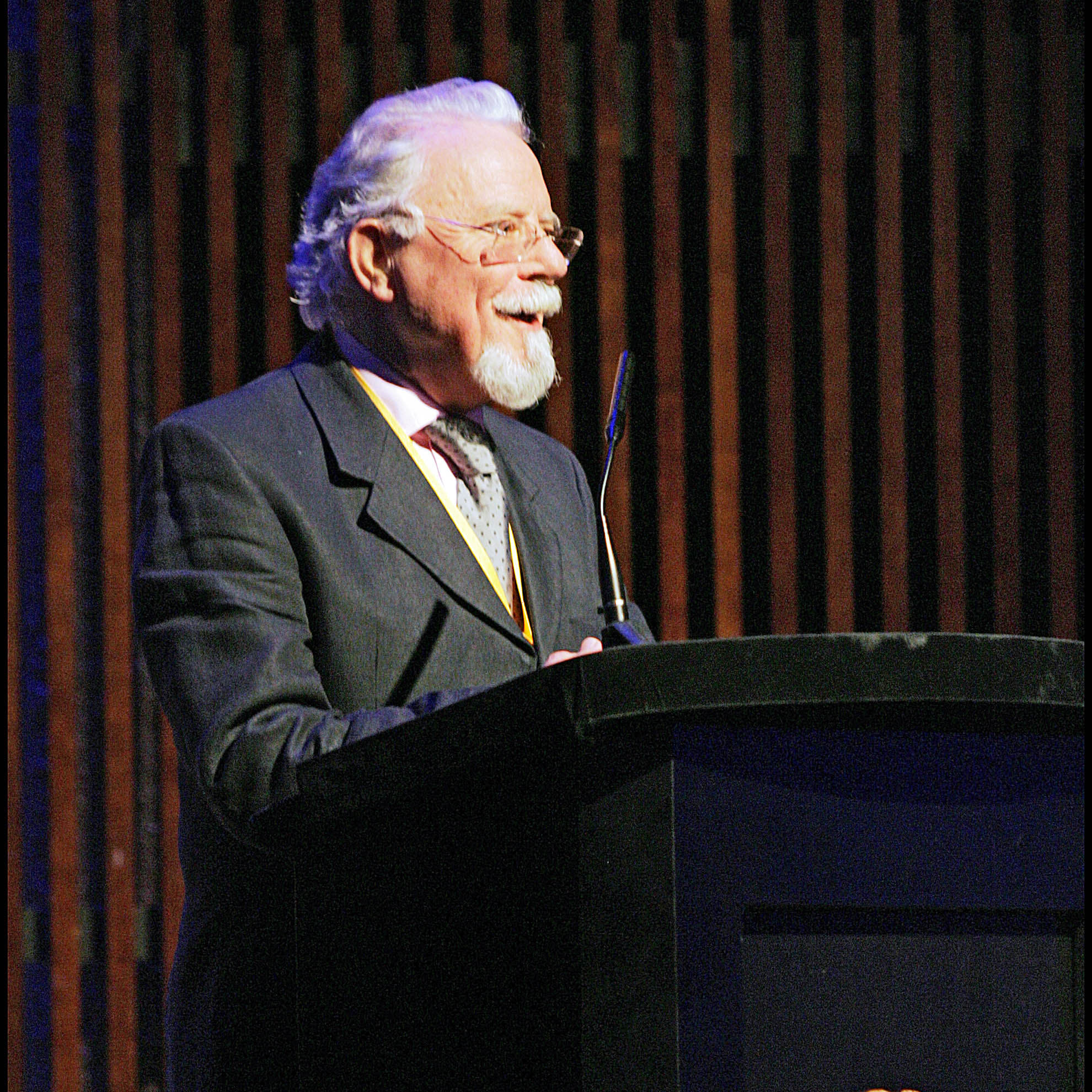
a photograph of a marble bust in a museum with a man standing behind it using his hands to explain something

Credit…Matthew Monteith

Recently, while browsing in the Museum of Modern Art store in New York, I came across a tote bag with the inscription, “You are no longer the same after experiencing art.” It’s a nice sentiment, I thought, but is it true? Or to be more specific: Does consuming art, music, literature and the rest of what we call culture make you a better person?

Ages ago, Aristotle thought it did, but these days a lot of people seem to doubt it. Surveys show that Americans are abandoning cultural institutions. Since the early 2000s, fewer and fewer people say that they visit art museums and galleries, go to see plays or attend classical music concerts, opera or ballet. College students are fleeing the humanities for the computer sciences, having apparently decided that a professional leg up is more important than the state of their souls. Many professors seem to have lost faith too. They’ve become race, class and gender political activists. The ensuing curriculum is less “How does George Eliot portray marriage?” and more “Workers of the world, unite!”

And yet I don’t buy it. I confess I still cling to the old faith that culture is vastly more important than politics or some pre-professional training in algorithms and software systems. I’m convinced that consuming culture furnishes your mind with emotional knowledge and wisdom; it helps you take a richer and more meaningful view of your own experiences; it helps you understand, at least a bit, the depths of what’s going on in the people right around you.

The novelist Alice Walker lamented that she lacked models. She wasn’t aware of enough Black female writers who could serve as exemplars and inspirations as she tried to perceive her world and tell her stories. Then she found the novelist and anthropologist Zora Neale Hurston, who, decades before, had pointed the way, shown her how to see and express, enabled her to write about her mother’s life, about voodoo, the structures of authentic Black folklore. Thanks to Hurston she had a new way to see, a deeper way to connect to her own heritage.

I’d argue that we have become so sad, lonely, angry and mean as a society in part because so many people have not been taught or don’t bother practicing to enter sympathetically into the minds of their fellow human beings. We’re overpoliticized while growing increasingly undermoralized, underspiritualized, undercultured.

The alternative is to rediscover the humanist code. It is based on the idea that unless you immerse yourself in the humanities, you may never confront the most important question: How should I live my life?

Ralph Waldo Emerson, for example, argued that we consume culture to enlarge our hearts and minds. We start with the tiny circle of our own experience, but gradually we acquire more expansive ways of seeing the world. Peer pressure and convention may try to hem us in, but the humanistic mind expands outward to wider and wider circles of awareness.

I went to college at a time and in a place where many people believed that the great books, poems, paintings and pieces of music really did hold the keys to the kingdom. If you studied them carefully and thought about them deeply, they would improve your taste, your judgments, your conduct.

Our professors at the University of Chicago had sharpened their minds and renovated their hearts by learning from and arguing against books. They burned with intensity as they tried to convey what past authors and artists were trying to say.

The teachers welcomed us into a great conversation, traditions of dispute stretching back to Aeschylus, Shakespeare, George Bernard Shaw, Clifford Odets. They held up visions of excellence, people who had seen farther and deeper, such as Augustine, Sylvia Plath and Richard Wright. They introduced us to the range of moral ecologies that have been built over the centuries and come down as sets of values by which we can choose to live — stoicism, Buddhism, romanticism, rationalism, Marxism, liberalism, feminism.

The message was that all of us could improve our taste and judgment by becoming familiar with what was best — the greatest art, philosophy, literature and history. And this journey toward wisdom was a lifelong affair.

The hard sciences help us understand the natural world. The social sciences help us measure behavior patterns across populations. But culture and the liberal arts help us enter the subjective experience of particular people: how this unique individual felt; how this other one longed and suffered. We have the chance to move with them, experience the world, a bit, the way they experience it.

We know from studies by the psychologists Raymond Mar and Keith Oatley that reading literature is associated with heightened empathy skills. Deep reading, immersing yourself in novels with complex characters, engaging with stories that explore the complexity of this character’s motivations or that character’s wounds, is a training ground for understanding human variety. It empowers us to see the real people in our lives more accurately and more generously, to better understand their intentions, fears and needs, the hidden kingdom of their unconscious drives. The resulting knowledge is not factual knowledge but emotional knowledge.

The novelist Frederick Buechner once observed that not all the faces Rembrandt painted were remarkable. Some are just average-looking old people. But even the plainest face “is so remarkably seen that it forces you to see it remarkably.” We are jolted into not taking other people for granted but to sense and respect the immense depth of each human soul.

Rembrandt’s “The Return of the Prodigal Son.”Credit…Fine Art Images/Heritage Images, via Getty Images

When I come across a Rembrandt in a museum, I try to train myself to see with even half of Rembrandt’s humanity. Once in St. Petersburg, I had the chance to stand face to face with one of his greatest paintings, “The Return of the Prodigal Son.” He painted this one at the end of his life, when popular taste had left him behind, his finances were in ruins, his wife and four of his five children were in their graves. I have seen other renderings of that parable, but not one in which the rebel son is so broken, fragile, pathetic, almost hairless and cast down. The father envelops the young man with a love that is patient, selfless and forbearing. Close observers note the old man’s hands. One is masculine, and protective. The other is feminine, and tender.

Though this painting is about a parable, it’s not here to teach us some didactic lesson. We are simply witnessing an emotional moment, which is about fracture and redemption, an aging artist painting a scene in which he imagines all his losses are restored. It is a painting about what it is like to finally realize your deepest yearnings — for forgiveness, safety, reconciliation, home. Meanwhile, the son’s older brother is off to the side, his face tensely rippling with a mixture of complex thoughts, which I read as rigid scorn trying to repress semiconscious shoots of fraternal tenderness.

Experiences like this help us understand ourselves in light of others — the way we are like them and the way we are different. As Toni Morrison put it: “Like Frederick Douglass talking about his grandmother, and James Baldwin talking about his father, and Simone de Beauvoir talking about her mother, these people are my access to me; they are my entrance into my own interior life.”

Experiences with great artworks deepen us in ways that are hard to describe. To have visited Chartres Cathedral or finished “The Brothers Karamazov” is not about acquiring new facts but to feel somehow elevated, enlarged, altered. In Rainer Maria Rilke’s novel “The Notebooks of Malte Laurids Brigge,” the protagonist notices that as he ages, he’s able to perceive life on a deeper level: “I am learning to see. I don’t know why it is, but everything penetrates more deeply into me and does not stop at the place where until now it always used to finish.”

Mark Edmundson teaches literature at the University of Virginia and is one of those who still lives by the humanist code. In his book “Why Read?” he describes the potential charge embedded in a great work of art: “Literature is, I believe, our best goad toward new beginnings, our best chance for what we might call secular rebirth. However much society at large despises imaginative writing, however much those supposedly committed to preserve and spread literary art may demean it, the fact remains that in literature there abide major hopes for human renovation.”

Wouldn’t you love to take a course from that guy?

How does it work? How does culture do its thing? The shortest answer is that culture teaches us how to see. “The greatest thing a human soul ever does in this world is to see something, and tell what it saw in a plain way,” the Victorian art critic John Ruskin wrote. “Hundreds of people can talk for one who can think, but thousands can think for one who can see.”

Ruskin intuited something that neuroscience has since confirmed: Perception is not a simple and straightforward act. You don’t open your eyes and ears and record the data that floods in, the way in those old cameras light was recorded on film. Instead, perception is a creative act. You take what you’ve experienced during the whole course of your life, the models you’ve stored up in your head, and you apply them to help you interpret all the ambiguous data your senses pick up, to help you discern what really matters in a situation, what you desire, what you find admirable and what you find contemptible.

Another way to put it is this: Artistic creation is the elemental human act. When they are making pictures or poems or stories, artists are constructing a complex, coherent representation of the world. That’s what all of us are doing every minute as we’re looking around. We’re all artists of a sort. The universe is a silent, colorless place. It’s just waves and particles out there. But by using our imaginations, we construct colors and sounds, tastes and stories, drama, laughter, joy and sorrow.

Works of culture make us better perceivers. We artists learn from other artists. Paintings, poems, novels and music help multiply and refine the models we use to perceive and construct reality. By attending to great perceivers, the Louis Armstrongs, the Jorge Luis Borgeses, the Jane Austens, we can more subtly understand what is going on around us and be better at expressing what we see and feel.

When you go to the Museo Reina Sofía in Madrid, you don’t just see Picasso’s “Guernica”; forever after you see war through that painting’s lenses. You see, or rather feel, the wailing mother, the screaming horse, the chaotic jumble of death and agony, and it becomes less possible to romanticize warfare. We don’t just see paintings; we see according to them.

Picasso’s “Guernica.”Credit…Emilio Parra Doiztua for The New York Times

This process of refining and expanding our internal mental models is not a dry, purely intellectual process. If we’re lucky, and maybe only in rare moments, it can be gut-wrenching and intoxicating, a fusion of the head and the heart. As my friend Arthur Brooks writes, “Think of a time when you heard a piece of music and wanted to cry. Or recall the flutter of your heart as you stared at a delicate, uncannily lifelike sculpture. Or maybe your dizziness as you emerged from a narrow side street in an unfamiliar city and found yourself in a beautiful town square; for me, it was the Piazza San Marco in Venice, with its exquisitely preserved Renaissance architecture. Odds are, you didn’t feel as if the object of beauty was a narcotic, deadening you. Instead, it probably precipitated a visceral awakening, much like the shock from a lungful of pure oxygen after breathing smoggy air.”

In this kind of education, you are lured by beauty and deeply pierced by myths that seem primeval and strange. Once in college, I was reading Nietzsche’s “The Birth of Tragedy” in the library. I don’t know what happened next. The book, with its fevered prose and savage genius, sucked me into a trance. I eventually looked up and it was four hours later. I had traveled in time back into some primeval world of bonfires, dancing and Dionysian frenzy, and it left a residue, which I guess you would call a greater awareness of the metaphysical, the transcendent. Life can be much wilder than it seems growing up on a suburban street.

The philosopher Roger Scruton argued that this kind of education gives us the ability to experience emotions that may never happen to us directly. He wrote: “The reader of Wordsworth’s ‘Prelude’ learns how to animate the natural world with pure hopes of his own; the spectator of Rembrandt’s ‘Night Watch’ learns of the pride of corporations, and the benign sadness of civic life; the listener to Mozart’s ‘Jupiter’ symphony is presented with the open floodgates of human joy and creativity; the reader of Proust is led through the enchanted world of childhood and made to understand the uncanny prophecy of our later griefs which those days of joy contain.”

Your way of perceiving the world becomes your way of being in the world. If your eyes have been trained to see, even just a bit, by the way Leo Tolstoy saw, if your heart can feel as deeply as a K.D. Lang song, if you understand people with as much complexity as Shakespeare did, then you will have enhanced the way you live your life.

Attention is a moral act. The key to becoming a better person, Iris Murdoch wrote, is to be able to cast a “just and loving attention” on others. It’s to shed the self-serving way of looking at the world and to see things as they really are. We can, Murdoch argued, grow by looking. Culture gives us an education in how to attend.

The best of the arts are moral without moralizing. Dostoyevsky’s “Crime and Punishment” is an inquiry into the knowledge of right and wrong, told through the eyes of one who suffers, with all the pity and sorrow that involves.

The best of the arts induce humility. In our normal shopping mall life, the consumer is king. The crucial question is, do I like this or not? But we approach great art in a posture of humility and reverence. What does this have to teach me? What was this other human being truly seeking?

The San Fernando Royal Academy of Fine Arts Museum in Spain.Credit…Emilio Parra Doiztua for The New York Times

One of my heroes is Samuel Johnson, the essayist, playwright, poet, dictionary compiler, one of the greatest critics of all time. He was something of a mess as a young man — lazy, envious, unreliable. Over the decades, he read, wrote and felt his way to greatness. He read with astounding sensitivity. Once at age 9 he was reading “Hamlet” when he came to the ghost scene. He was so terrified he ran to the front door so that he could look out at the people in the street, just to remind himself that he was still in the land of the living.

He wrote biographies of his moral exemplars. He wrote essays, poems and plays about the great works of the Western tradition, and especially about his own sins as if he were trying to beat it out of himself through the scourge of self-examination. (Johnson had a special weakness for envy, and so dozens of his essays in his periodicals mention the sin of envy.) His awareness of human depravity led to humility, self-restraint and redemption. And it worked. By the end of his life he was lavishly generous, a man who had the ability to see the world with absolute honesty and sympathetic perception. Johnson socialized with artists and statesmen, but he invited society’s outcasts to live with him so that he could feed and offer them shelter — a former slave, a doctor who treated the poor, a blind poet. One night he found a woman, most likely a prostitute, lying ill and exhausted on the street. He put her on his back and brought her home to join the others. Johnson was a somewhat tortured Christian. These radical moments of welcome are the essential Gospel-like acts.

When he died, his eulogist observed that he left a chasm in national life that nothing could fill up. He embodied that old humanist ideal. He had become a person of taste, a person of judgment, a person of culture. He died a wonderful man.

David Brooks has been a columnist with The Times since 2003. He is the author, most recently,  of “How to Know a Person: The Art of Seeing Others Deeply and Being Deeply Seen.” @nytdavidbrooks

Categories
Saved Web Pages

Police search for motive after apparent ‘random’ shooting at Michigan recreation center wounds at least 9


Rochester Hills, Michigan
CNN
 — 

Police are looking for a motive after at least nine people were shot in what appears to be a “random” shooting that sent panicked families fleeing a crowded recreation area in Rochester Hills, Michigan, on Saturday afternoon, authorities said.

Police on Sunday identified the gunman as Michael William Nash, 42, from Shelby Township. He pulled up to the Brooklands Plaza Splash Pad, left a vehicle and opened fire from roughly 20 feet away, reloading multiple times, Oakland County Sheriff Michael Bouchard said Saturday. The suspect fired “potentially 28 times,” the sheriff said.

“Under no circumstances is it normal for ice cream cones and flip flops to be strewn amongst blood and bullet casings,” said Michigan Rep. John James at a news conference Saturday night.

Nash was found dead with an apparent self-inflicted gunshot wound at the home he shared with his mother after police tracked the weapon from the shooting to an address around half a mile from the crime scene, Bouchard said. Police found a rifle on the kitchen table.

Nash didn’t have any previous police contact or criminal record, according to Bouchard.

The victims, including two small children and their mother, were injured in the shooting and taken to four local hospitals with “varying kinds of injuries,” the sheriff said. As of early Sunday morning, two of the victims were in critical condition and seven were in stable condition.

“When I got on scene, I started to cry,” said Rochester Hills Mayor Bryan Barnett on Saturday night. “Because I know what a splash pad is supposed to be. It’s supposed to be a place where people gather, where families make memories, where people have fun and enjoy a Saturday afternoon and it wasn’t today.”

An 8-year-old boy is in critical condition after suffering a gunshot wound to the head and his 4-year-old brother was shot in the thigh and is in stable condition, Bouchard said. Their 39-year-old mother, with wounds to the abdomen and leg, was also in critical condition.

Six other gunshot victims, including three women and three men ranging in age from 30 to 78, were in stable condition Saturday night.

The incident appears to be “random” as the suspect has “no connectivity to the victims,” the sheriff said. Authorities are looking into a possible motive but have yet to determine one, he added.

“It’s our understanding that apparently he was undergoing some mental health challenges,” Bouchard said during a news conference Saturday. He did not offer additional details.

The shooting comes at a time when communities are still recovering from two mass shootings in the state in recent years. In February 2023, a gunman killed three Michigan State University students and critically wounded five others. A couple years prior, a teenager killed four students at an Oxford, Michigan, high school in 2021.

“We’re not even fully comprehending what happened at Oxford, and now we have another complete tragedy that we’re dealing with,” Bouchard said.

The shooting extends the list of around 220 mass shootings in the country so far this year, according to the Gun Violence Archive. The archive, like CNN, defines a mass shooting as one in which at least four people are shot, excluding the shooter.

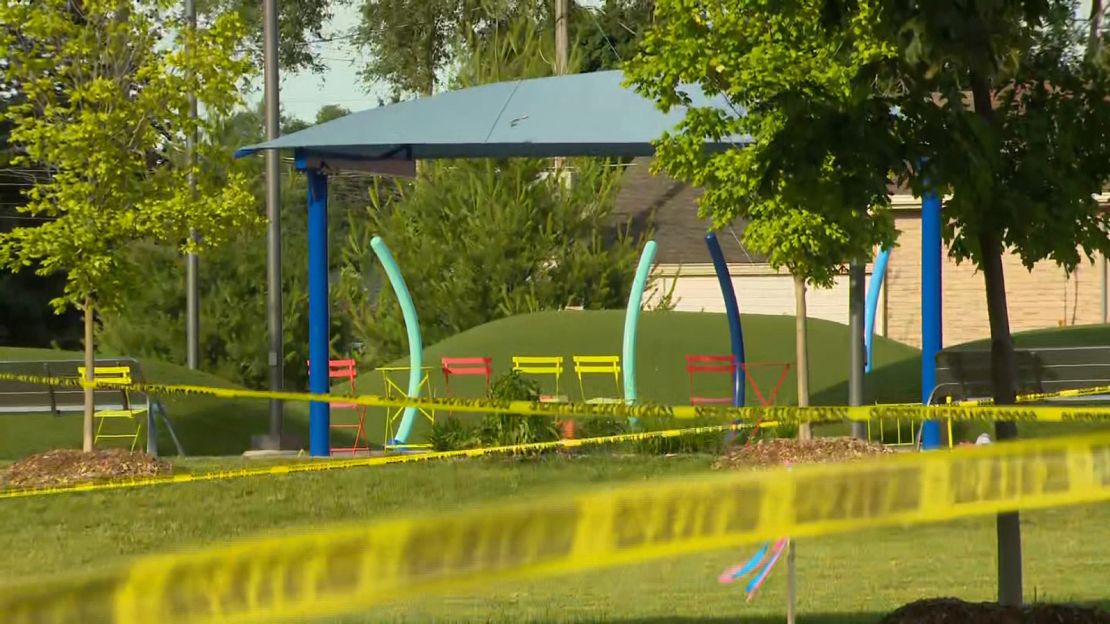
The scene of a shooting at the Brooklands Plaza Splash Pad in Rochester Hills, Michigan, on Saturday, June 15, 2024.

Bouchard said the gunman arrived at the splash pad and opened fire with a Glock 9 mm handgun.

“It looked chaotic. You could see people kind of just enjoying the day and then it was a scramble,” Bouchard said, referencing video of the shooting. “People were falling, getting hit, trying to run.”

Detectives recovered 28 shell casings at the scene, according to a news release from the sheriff’s office.

“He started firing once he was out of his car from the base of the steps, climbing the steps, reloading and then was firing from the top of the steps in the splash pad area before he left and appeared to leave in no rush, just calmly walked back to his car,” Bouchard said.

One witness said she first thought there were fireworks going off.

“We were sitting out on the patio and we heard what we thought was firecrackers and I guess it was gunshots because we heard people screaming, like ‘help us, help us!’” Cheryl Delcotto told CNN. “So, we ran around, I called 911, I couldn’t get a hold of anybody because I guess people were already calling.”

The first 911 call alerting police to the incident was made around 5:11 p.m. Bouchard said a Rochester Hills sergeant responded to the scene within two minutes – before the call was dispatched. By that point, the suspect had already fled the scene, according to Bouchard.

Authorities located the handgun and three empty magazines at the scene, the sheriff said.

Police respond to the scene of a shooting at the Brooklands Plaza Splash Pad in Rochester Hills, Michigan, on Saturday, June 15, 2024.

Delcotto, who was visiting a home near the splash pad when the shooting began, described seeing blood-covered victims and people rendering aid.

“I see people laying on the ground, I seen a guy who was shot in the stomach who was sitting on a chair, an older man,” she said. Then she saw a man whose “son was coming out on a stretcher – with blood all over his face, and it was scary.”

After the shooting, police traced the weapon found at the scene to a nearby home, where they found a vehicle matching a description of the one that drove away from the scene of the shooting, according to the sheriff.

The suspect was not known to authorities until they did a “quick investigation” and determined who they believed was involved based on evidence from the scene of the shooting.

Police had containment on the home within 45 minutes to one hour, according to Bouchard. There was “an acknowledgment that we were there and we heard or saw him,” Bouchard said.

After making attempts to contact the suspect, law enforcement “breached the home and deployed drones to begin an examination of the home,” and located the deceased suspect, Bouchard said.

Police later found a handgun next to the deceased suspect inside the home. A drone that flew into the home while police surrounded it also found what appeared to be an “AR-platform” firearm on the kitchen table, Bouchard said.

“It wouldn’t surprise me – because having that on the kitchen table is not an everyday activity – that there was probably something else, a second chapter, potentially,” Bouchard said.

Police said the investigation is ongoing as they work to “determine if there’s either a digital or a paper trail that would give us some insight” and piece together a timeline of how the shooting unfolded. Whether or not the suspect posted any relevant information on social media or has anything on his devices will also be part of the investigation, officials said.

“It’s gonna be one of those challenges to try to figure out why there appears to be no connection between the victims and the location whatsoever. A person doesn’t live in Rochester Hills. He went to a Rochester Hills Park,” Bouchard said.

Authorities have also recovered video evidence from a nearby camera and are looking for bullet fragments, Bouchard said.

As the investigation continues and new details emerge about the suspect, an attorney who represented Nash in a 2011 bankruptcy case remembered him as a “soft-spoken” individual who suffered in the financial crash of 2007 to 2009.

“I remember Michael because he was very young to be needing bankruptcy. He was yet another person who fell victim to the aftereffects of the 2009 financial crisis,” Kelli Meeks told CNN.

Although Meeks is a licensed attorney, according to the state bar of Michigan, she told CNN she stopped practicing law in 2021 to become a consultant and leadership coach.

Nash was trying to run his own landscaping business, but after the financial crash, Meeks says it did not work out.

She told CNN Nash was about $21,000 in debt and had his car and landscaping equipment repossessed.

“And on top of that, he had medical bills to take care of,” Meeks said. “He was a young man down on his luck.”

Bouchard called Saturday’s incident a “gut punch,” and stressed the community is still reeling from the 2021 shooting at a high school in Oxford, just 15 miles north of Rochester Hills.

“None of us in this room, in this community or in this country, anticipated going into Father’s Day weekend with this kind of tragedy – that families will be deeply affected by forever,” the sheriff said Saturday.

Gov. Gretchen Whitmer said in a statement on X she is in contact with local officials following the shooting.

“I am heartbroken to learn about the shooting in Rochester Hills,” she wrote. “We are monitoring the situation as updates continue to come in, and are in touch with local officials.”

President Joe Biden and White House officials are also tracking the shooting, White House spokesperson Jeremy Edwards said.

CNN’s Emma Tucker, Harlan Schmidt, Zoe Sottile and Arlette Saenz contributed to this report.


Categories
Saved Web Pages

Gunman, 42, who wounded nine at Michigan splash pad is identified


86185925-0-image-a-34_1718551409401.jpg

Published: 16:24 BST, 16 June 2024 | Updated: 21:21 BST, 16 June 2024

Michael William Nash, 42, has been identified as the man who shot up a splash pad in Rochester Hills, Michigan, injuring nine people, the Oakland County Sheriff’s Office revealed Sunday morning.

The shooting took place on 5pm Saturday at the Brooklands Plaza Splash Pad, and Nash is alleged to have fired 28 rounds on the families there that day.

The gunman fled the scene to a nearby home within half a mile of the splash pad, leading to a tense hours-long standoff that ended when the shooter – described as a 42-year-old white male who lived with his mother – died by suicide. 

Oakland County Sheriff Michael Bouchard told reporters in an impromptu update that Nash had no criminal history and was believed to have mental health issues. 

Among the nine people shot was a group of three individuals who are part of the same family. One was an eight-year-old boy who was shot in the head and remains in critical condition. Another was a four-year-old boy wounded in the thigh who is stable. The boys’ mother, a 39-year-old woman, was hit in the abdomen and leg. She is still in critical condition, according to the sheriff.

Oakland County Sheriff Evidence Technicians document the scene where a shooting took place at Brooklands Plaza Splash Pad in Rochester Hills, Michigan, on June 15, 2024

Aerial images from the scene showed a large number of evidence markers placed around the waterpark, where dozens of bullets were shot in quick succession

The oldest victim was a 78-year-old man who was shot in the abdomen and is in stable condition. 

Detectives are still investigating the possible motive of Nash because they haven’t found a connection between him and his victims.

‘In terms of the “why,” I don´t know,’ Bouchard said. 

Bouchard in an earlier press conference said the shooting ‘appears very random.’

‘It appears like the individual pulled up, exited a vehicle, approached the splash pad, opened fire, reloaded, opened fire, reloaded, left,’ he said.

The suspect was ‘apparently in no rush. Just calmly walked back to his car,’ he added.

At the scene, a Glock 9mm handgun and three corresponding magazines were found by cops. 

Nash died by suicide in a Shelby Township home after he was surrounded by cops for several hours after the attack at the splash pad.

Bouchard said his department made numerous failed attempts to contact the suspect, at which point they sent drones in to examine the home. That’s when Nash was found dead.

Even more chilling, a semi-automatic weapon was found on the kitchen table inside the home Nash was barricading himself inside. Bouchard suggested that Nash may have had plans for a ‘second chapter.’ 

The Glock 9mm handgun is seen lying on the ground near the splash pad were the suspect dropped it. Three magazines were also found

Evidence markers indicate the position of spent shell casings following the mass shooting

The suspect raced into a nearby home, and a tense standoff has ensued with cops cornering the gunman inside the property

Investigators also discovered an assault rifle on the kitchen table of the home, which officials feared would have been used for the ‘next chapter’ of the shooting spree before it was thwarted 

An officer with the Oakland County Sheriff’s Department secures the scene of a shooting at the Brooklands Plaza Splash Pad early Saturday evening 

Oakland County Sheriff Michael Bouchard puts out an initial address following the Saturday splash pad shooting

‘It’s a gut-punch,’ Bouchard said at an earlier press conference. ‘We’re not fully comprehending what happened at Oxford and now we have another complete tragedy that we’re dealing with.’ 

Rochester Hills is about 15 miles south of Oxford, where in 2021, then 15-year-old Ethan Crumbley murdered four students at his high school. Last year, the teenager was sentenced to life in prison without parole.

Authorities who dealt with the aftermath of the splash pad mass shooting described horrific images of people running for their lives as bullets were flying. They said they saw ice cream cones and flip flops covered in blood. 

Officers’ response time was just under two minutes, thanks to a new kind of 911 response system that allows them to listen to 911 calls live instead of waiting for a dispatcher.

The quickness with which police arrived also contributed to the prevention of further chaos, since Nash was found to have the semi-automatic rifle in his possession. 

Nash´s neighbors told the Detroit News that Nash´s father died two years ago and he lived with his mother, who has been traveling the United States.

‘He´s a loner. The blinds are always pulled over there,’ neighbor Kyleen Duchene told the newspaper.

Nash´s mother was ‘super friendly and nice’ but Nash himself rarely left the house, neighbor Alex Roser said.

‘And when he did, he didn´t even say “hi” back to us when we would acknowledge him,’ Roser said. ‘He was very quiet and didn’t want to be a part of our community.’

Officers’ response time was just under two minutes, thanks to a new kind of 911 response system that allows them to listen to 911 calls live instead of waiting for a dispatcher

Streets close to the splash pad park were closed by police and emergency personnel Saturday evening

The city-run splash pad faces Auburn Road and is located between a T-Mobile cell phone store and Mozzarella’s, a pizzeria, west of the plaza. 

Streets close to the splash pad park were closed by police and emergency personnel Saturday evening.

‘I love my community and my heart breaks today,’ Rochester Hills Mayor Bryan Barnett said. ‘When I got on scene I started to cry because I know what a splash pad is supposed to be. It´s supposed to be a place where people gather, where families make memories, where people have fun.’

Michigan Congressman John James said he was downtown at Huntington Place for former President Donald Trump’s address to Turning Point USA when he heard news of the shooting, and raced to the scene to lend support.

‘Under no circumstances in this country, particularly in Rochester Hills, should fathers be spending Father’s Day in a hospital,’ he said.

‘We’re doing everything we possibly can to help the families in need. And (I want to) give a shout-out to first responders who mitigated further damage and who are still in harm’s way to bring resolution to this crisis.’

Michigan Governor Gretchen Whitmer added in a tweet: ‘I am heartbroken to learn about the shooting in Rochester Hills. We are monitoring the situation as updates continue to come in, and are in touch with local officials.’

Rochester Hills is about 25 miles north of Detroit and has a population of about 76,000 people.


Categories
Saved Web Pages

Russia’s Putin sets out conditions for peace talks with Ukraine


107429093-1718362959877-gettyimages-2156

Russian President Vladimir Putin speaks during visit to the Joint Institute for Nuclear Research on June 13, 2024 in Dubna, Russia. 

Russian President Vladimir Putin on Friday set out the requirements for Moscow to start peace talks with Ukraine, more than two years after the Kremlin’s full-fledged invasion of its neighbor.

According to a Google-translated Telegram update from Russian state news outlet Tass, the terms include the complete withdrawal of Ukrainian troops from the territories of Donetsk, Luhansk, Zaporizhzhia and Kherson, which Russia illegally annexed within months of commencing hostilities, in September 2022.

The Kremlin’s conditions are unlikely to receive a warm reception in Kyiv, which has repeatedly stated that it will not concede territory to Russia.

Putin said during a meeting with the leadership of the Russian Foreign Ministry that as long as Ukraine begins a “real withdrawal of troops from these regions, and will also officially notify of the abandonment of plans to join NATO — on our part, immediately, at the same minute, an order will follow to cease fire and begin negotiations,” according to Google-translated comments carried by Tass.

He said that Moscow was committed to ensuring the “unhindered and safe withdrawal” of Ukrainian forces if Kyiv agrees to such a concession.

If the peace proposal is refused, Putin added, Moscow’s future demands will be different.

Putin’s comments contrast starkly with his Ukrainian counterpart’s peace plan. Volodymyr Zelenskyy’s 10-point proposal, outlined in November 2022, demands the restoration of the country’s “territorial integrity” under the U.N. Charter. He has also insisted that Ukraine regain the peninsula of Crimea, which Russia annexed illegally prior to the current war, in February 2014.

CNBC has reached out to the Ukrainian Ministry of Foreign Affairs for comment.

Peace frameworks have so far been doomed to fail throughout the Ukraine conflict. A 12-point plan released by Russia’s ally Beijing on the war’s one-year anniversary also gained no momentum. China is once again pushing its own alternative diplomatic plan, Reuters reports.

Putin’s Friday proposal threatens to steal the spotlight from imminent negotiations in Switzerland, where at least 90 countries and organizations are set to meet over June 15-16 at the Swiss resort of Bürgenstock for the Summit on Peace in Ukraine.

Moscow, notably, was not invited — and has in the past touted the futility of third parties attempting to negotiate a resolution to the conflict without Russia’s participation. Previous summits have failed to implement a diplomatic solution to the conflict or abate hostilities on the battlefield.

It comes as Ukraine’s allies have been stepping up support in recent weeks, both financially and militarily.

On Thursday, leaders of the Group of Seven (G7) nations agreed in principle to issue $50 billion in loans for Kyiv that are backed by the profits generated by roughly 300 billion euros ($322 billion) of Russian central bank assets frozen by the West. European Council President Charles Michel stressed that “Russia has to pay.”

NATO is separately due to discuss further support for Ukraine during its upcoming summit of July 9-11. Secretary-General Jens Stoltenberg expects member countries to agree a “long-term financial pledge to provide military support” for Kyiv and a “leading role” for the military alliance in providing and coordinating security assistance in the war-torn country.

Already, the U.S. and Germany have removed some restrictions on weapons they supply to Ukraine and now permit their use against targets just over the border inside Russia, exclusively for the purpose of defending Kharkiv.


Categories
Saved Web Pages

Trump, Orbán, and Musk. Is this Putin’s secret global private group?


28565e1-tony-meehan.jpg

In today’s edition of Ukrainska Pravda Hungarian Prime Minister Viktor Orbán, who met with US presidential candidate Donald Trump on 8 March, claimed that Trump has “quite detailed plans” to end the war in Ukraine and will not be giving “a single penny” to fight Russian aggression in Ukraine. This was taken from his interview with TV channel M1, following his visit to meet former US President Donald Trump. M1 is the 24hour Hungarian news channel owned and operated by Duna Media

Once you read through the mutual fawning love fest, the message is simple and frightening.

There are no detailed plans, Trump’s thinking is all transactional and based on the money. The core message from Putin’s courier is Trump has already decided about future funding for Ukraine. If he is elected President of the US, he will stop all funding for Ukraine Trump also believes Europe and NATO allies will do likewise. He has already let the world know he will shut down NATO.

Trump’s life is driven by the money and his own self-interest. He assumes everyone else thinks the same, and those who do not, are stupid, and based on his previous and current words, they are weak and irrelevant.

Why is Hungary a member of the EU and NATO? Is it because it suits Putin. His man, Orban is at the table where he can delay and veto decisions.

Another simple question, why did Orban travel to Mar Lago to meet with Trump, why should Trump meet with Orban? Conclusion, to exchange information, and to do Putin’s will, which was to send a message to the outside world, funding for Ukraine will end when Trump is re-elected.

Let us pause for a moment and assume Trump is re-elected. He stops all military support for Ukraine, along with Europe and NATO. Let us follow through on Trump’s assumption. This allows for the real opportunity for Putin to storm through Ukraine in a 21st century blitzkrieg following which, the state of Ukraine no longer exist as it is becomes part of the new greater Russia.

Having achieved his stated objective, namely Putin’s domination and removal of Ukraine, which of the Baltic states, or any other state that borders with Russia will be next.

Should this happen, here are a series of potential scenarios to be considered.

What if Ukraine is a decoy? A means to an end, if so What end? Conflict with NATO, or worse still WW3?

Does Putin believe he can destroy NATO and expand the new Russian empire? Probably yes, and he has no problem about creating a nuclear Armageddon.

or

Putin attacks a member of NATO to test the reaction, if its war, he is ready, if it is delay and negotiate, Putin also wins.

I doubt very much of Putin would find many allies to commit to WW3.

There are several established facts we must never forget about Putin. He can’t be trusted. Russia, and therefore Putin, is always the victim. Everyone else is guilty except him. Anything and everything can be used as a weapon against his real or perceived enemies. He feels neither guilt nor compassion.

Who does that remind you of? 

Donald J Trump. He is the past master of deflecting blame and responsibility onto his accusers and enemies. He is always right. He is always the victim.

If Orban is Putin’s European courier, who is Putin’s American courier? Could it be Elon Musk? Both Orban and Musk have visited Trump in the last 7 days.  Musk, through third parties, is supplying Russia with Starlink GSP equipment. Russia is on the banned list for US companies. One must assume as one of the richest men in the world Musk is also driven by self-interest and the mighty money.

Whatever happens is the next 12 months – after the US elections, we had better prepare for a rough ride.

Disclaimer: Articles reflect their author’s point of view and do not claim to be objective or to explore every aspect of the issues they discuss. The Ukrainska Pravda editorial board does not bear any responsibility for the accuracy of the information provided, or its interpretation, and acts solely as a publisher. The point of view of the Ukrainska Pravda editorial board may not coincide with the point of view of the article’s author.


Categories
Saved Web Pages

‘Zelensky’s Greatest Flaw…’: Ukraine President’s Chief Of Staff Calling The Shots Amid Russia War?


ZELENSKY_WITH_CHIEF_OF_STAFF_17181054981

Published on Jun 11, 2024 05:02 PM IST

Ukrainian President Volodymyr Zelensky’s Chief of Staff Andrey Yermak is reportedly calling the shots in the country amid the ongoing war with Russia. Multiple Ukrainian officials have complained to British daily The Times about the growing power of Vladimir Zelensky’s chief of staff Andrey Yermak, who they say de facto runs Ukraine. Yermak has also been accused of orchestrating the ouster of General Valery Zaluzhny in February, because he saw him as a rival. So, who is Andrey Yermak? Why is referred to as Zelensky’s “right-hand” man? Watch this video for all the details.


Categories
Saved Web Pages

Игра на предрассудках. Поиски “пропаганды ЛГБТ” стали манией


Что объединяет писателя Владимира Сорокина и певца Шамана, фестиваль фанатов My Little Pony и Снегурочку, языковую школу Duolingo и комикс “Голубь Геннадий”? На них написали жалобы за “ЛГБТ-пропаганду”.

Полгода назад, после принятия гомофобных и трансфобных законов, Роскомнадзор разместил на своем сайте форму жалобы на так называемый ЛГБТ-контент. На основании этих сообщений ведомство проводит проверки, выносит решения о запрете информации и направляет владельцам ресурса требование удалить ее. “Жалобы пошли в хорошем объеме”, – заявил тогда глава Роскомнадзора Владимир Субботин. Доносить на “ЛГБТ-пропаганду” агитировали через различные сайты и группы в мессенджерах. Компания 2ГИС, выпускающая электронные справочники, как утверждает издание “Важные истории”, поручила сотрудникам собирать данные о гей-клубах. Сотрудников просили писать жалобы, если они увидят компрометирующие отзывы.

Государство насаждает концепцию “традиционных ценностей”, в которой ЛГБТ-людям места нет

Гомофобная кампания сопровождается заявлениями высокопоставленных чиновников о том, что ЛГБТ-люди представляют опасность для общества. 7 июня заместитель министра юстиции Олег Свириденко на сессии ПМЭФ сказал: “Эти персонажи легко вoвлекаются в экстремистскую дeятельность и становятся ноcителями соответствующих идеологических cхем и разновидностей экстремистских пpоявлений в форме гендерного экcтремизма и гей-национaлизма. В этих всeх действиях содержатся пpизывы к открытой гeндерной вoйне”.

По данным опроса “Левада-центра”, 87% россиян утверждали в 2021 году, что у них нет знакомых ЛГБТ-людей, в 2013 году таких было немногим больше. Тогда более половины респондентов ничего не знали о ЛГБТ-движении и не интересовались этой темой. В 2019-м 45% опрошенных не слышали о случаях насилия на почве гомофобии. “Жалобы подают отдельные люди, которые увидели возможность стать участниками квирфобной кампании. При этом многие из них, судя по социологическим опросам, никогда не видели ЛГБТ-людей. Их действия по сути инициированы российским государством, которое последние 12 лет насаждало концепцию “традиционных ценностей”, в которой ЛГБТ-людям места нет. Это привело к укреплению стереотипов”, сказал Радио Свобода юрист российских региональных ЛГБТ-инициатив Макс Оленичев.

"Марш гордости" в Нью-Йорке в 2015 году


“Марш гордости” в Нью-Йорке в 2015 году

Призывы властей принесли плоды, и россияне начали искать ЛГБТ-пропаганду во всем подряд. Многие правозащитники, владельцы клубов и организаторы закрытых мероприятий были вынуждены уехать из России или получили обвинения по уголовным делам. Но гомофобные преследования вышли за границы ЛГБТ-сообщества. В ЛГБТ-пропаганде заподозрили сказку “Кот в сапогах”, флаг детсадовской футбольной команды и учителя физкультуры, который исполнил роль Снегурочки на школьном утреннике. Бдительные граждане пишут жалобы на любые изображения радуги. Подобных казусов стало так много, что владельцы магазинов начали закрашивать радугу на продукции, а законодатели всерьез обсуждают идею “отделения” радуги от ЛГБТ. Вице-спикер Госдумы Владислав Даванков пояснял: “Несмотря на наличие указанного приказа Роскомнадзора, у граждан сохраняются опасения об угрозе быть привлеченными к административной или уголовной ответственности из-за использования радуги. Кроме того, в СМИ регулярно появляются сообщения, где бдительные граждане просят проверить ту или иную организацию, которая использует радугу в своих логотипах, продуктах или произведениях, на пропаганду ЛГБТ”.

Маргарита Котенко, бывшая жительница поселка Капцегатуй Забайкальского края, написала жалобы в различные ведомства на новогоднее представление, во время которого молодой человек нарядился Снегурочкой. Глава поселения оправдывался перед чиновниками и объяснял, что спектакль не выходил за рамки так называемых “традиционных ценностей”.

“Мне в пример приводят актеров, игравших женские роли. Но зачем в селе из Бабы-яги сделали проститутку? Там и Баба-яга, и Снегурочка в колготках с грудями – это неестественно. Нужно возвращаться к нашим корням и нашим традициям”, – настаивала Маргарита Котенко. В селе Капцегатуй проживали в 2021 году 254 человека. Численность его населения снизилась с 2002 года почти в три раза.

Задержание участника акции в защиту прав ЛГБТ-людей в Москве в 2015 году


Задержание участника акции в защиту прав ЛГБТ-людей в Москве в 2015 году

Вторжение в Украину и преследование ЛГБТ-сообщества – это стороны одной медали

На лицо российской пропаганды – певца Ярослава Дронова (SHAMAN) – пожаловался некий Ян Колобков. По версии автора доноса, певец в клипе “Я – Русский” получает удовольствие от общества мужчин: “Видно, что Дронов счастлив и ему нравится внимание мужчин в толпе. Он посылает месседж: “Смотрите, я накрасил глаза женской тушью и карандашом и теперь привлекаю внимание неопределенного количества мужчин. Хотите так же? Тогда скорее красьте глаза, будьте, как я”.

1500 “активистов” подписали жалобу на роман Владимира Сорокина “Наследие”. Среди них предпринимательница и автор книг Ольга Уськова. “В стране СВО и выборы президента. А продажи “Наследия” Сорокина всё набирают и набирают обороты. В этой литературе монстры руководители России, Китая и Белоруссии питают свои страны кусками человеческих тел”, – объяснила она свой поступок.

“Мы живем в мире, который гораздо жестче самой жестокой литературы. Многие десятилетия описывая сцены насилия, я задаюсь одним и тем же вопросом: почему люди не могут без этого обойтись? Других целей у меня нет. Если этот вопрос не возникает у читателей, значит, они поверхностно читают мои романы” – так ответил писатель на обвинения.

Законы против ЛГБТК-людей стали поводом для сведения личных и политических счетов. Например депутата Пермской городской думы от партии “Яблоко” Надежду Агишеву требовали привлечь к административной ответственности за пропаганду ЛГБТ среди несовершеннолетних. Она разместила на своей странице в соцсети фотографию маленького внука, надевшего туфли на каблуках. Депутат тогда объяснила эти доносы конкурентной борьбой на выборах в думу.

Ян Дворкин – руководитель "Центра Т"


Ян Дворкин – руководитель “Центра Т”

Руководитель “Центра Т”, помогающего трансгендерным и небинарным людям, Ян Дворкин пострадал от доносов со стороны сотрудников опеки. Он взял из детского дома и воспитывал тяжелобольного ребенка. Когда Ян начал заниматься правозащитой, начальница отдела опеки пожаловалась на него в силовые структуры. В результате активист был вынужден отказаться от опеки и после того, как был принят закон, признавший несуществующее “международное движение ЛГБТ” экстремистским, покинул Россию.

Ты пишешь донос и видишь, как вдруг твое мнение оказывается важным

“Я могу только предполагать, что стоит за доносами. Первое, что мне приходит в голову, – это возможность для людей почувствовать власть, влиять на что-то в мире. Сейчас власть в России сосредоточена в одних руках, и по сути мы все время переживаем только бессилие. И те, кто против нее, и те,. кто поддерживает режим. Никто не может влиять на политическую повестку. Особенно если ты человек, который ведет простую жизнь: живет от зарплаты до зарплаты, сидит дома с детьми, решает бытовые проблемы. Из-за войны все дорожает, качество жизни ухудшается, рассчитывать на защищенность своих прав невозможно. Но ты пишешь донос и видишь, как вдруг твое мнение оказывается важным, как начинает что-то происходить, по твоей “наводке” могут посадить человека. Ого! Такое огромное влияние на чью-то жизнь. Такая большая значимость. Еще я, конечно, думаю про пропаганду. Уверен, что многие люди, пишущие доносы, искренне верят в то, что они поступают правильно. Им объяснили, что ЛГБТ – это плохо, что для блага родины с “представителями западных ценностей” нужно бороться и искоренять. И они борются. Служат родине. У меня есть тут вопросы про критическое мышление, про образованность и этические принципы, но в целом я видел многих людей, для которых образованием в последние десятилетия стал телевизор. И не удивительно в этом случае, что критическое мышление притупляется. Моя собственная мама пишет мне вот такие сообщения: “Любое государство отстаивает те ценности, которые считает жизненно важными для его существования. Мне очень жаль, что ты не понимаешь, в какой исторический период тебе повезло родиться и какую грандиозную роль играет сейчас Россия”. И конечно, Россия в целом довольно гомофобная страна. У россиян множество предрассудков относительно ЛГБТ-людей, и государство никогда не работало с этим как с проблемой для снижения дискриминации и насилия в обществе. Наоборот, правительство использует эти предрассудки, чтобы обманывать россиян, переключать их внимание и делать из ЛГБТ-людей “врага”, который якобы разрушает их жизни”, – говорит Ян Дворкин.

Бывший мундеп Виталий Боварь во время Земского cъезда


Бывший мундеп Виталий Боварь во время Земского cъезда

Российские власти эксплуатируют худшее в людях: расизм, гомофобию

“Можно пойти простым путем и сказать, что Россия – гомофобная страна. Но простой путь не всегда верный. Многие страны проходили гомофобный период, культ токсичной маскулинности, традиционной семьи. Всегда так бывает, когда внезапно для себя, в связи с демократизацией, целые группы людей становятся видимыми. Они становятся Другими. Большинство людей в России просто считают, что ЛГБТК+ люди – это что-то из американских фильмов и из российской поп-эстрады. У меня для этой части общества сюрприз: вам просто не доверяют ваши соседи, дети, коллеги или друзья. Они боятся вас, боятся вашей реакции и не открываются, – говорит Виталий Боварь, бывший муниципальный депутат и один из немногих российских политиков, публично поддерживающих ЛГБТ-людей. – Единственный путь исправить ситуацию – политический путь. И прайды, а сейчас как раз месяц прайда, – это один из важнейших политических инструментов. Любой человек хотел бы жить в обществе, где его уважают. Но чтобы в таком обществе жить, нужно научиться уважать тех, кто радикально от тебя отличается. Российские власти ответственны за отношение общества к ЛГБТК+ людям. Они эксплуатируют худшее в людях: расизм, гомофобию, пассивность. Они политические преступники. Вторжение в Украину и преследование ЛГБТК+ сообщества – это две стороны одной медали”.


Categories
Saved Web Pages

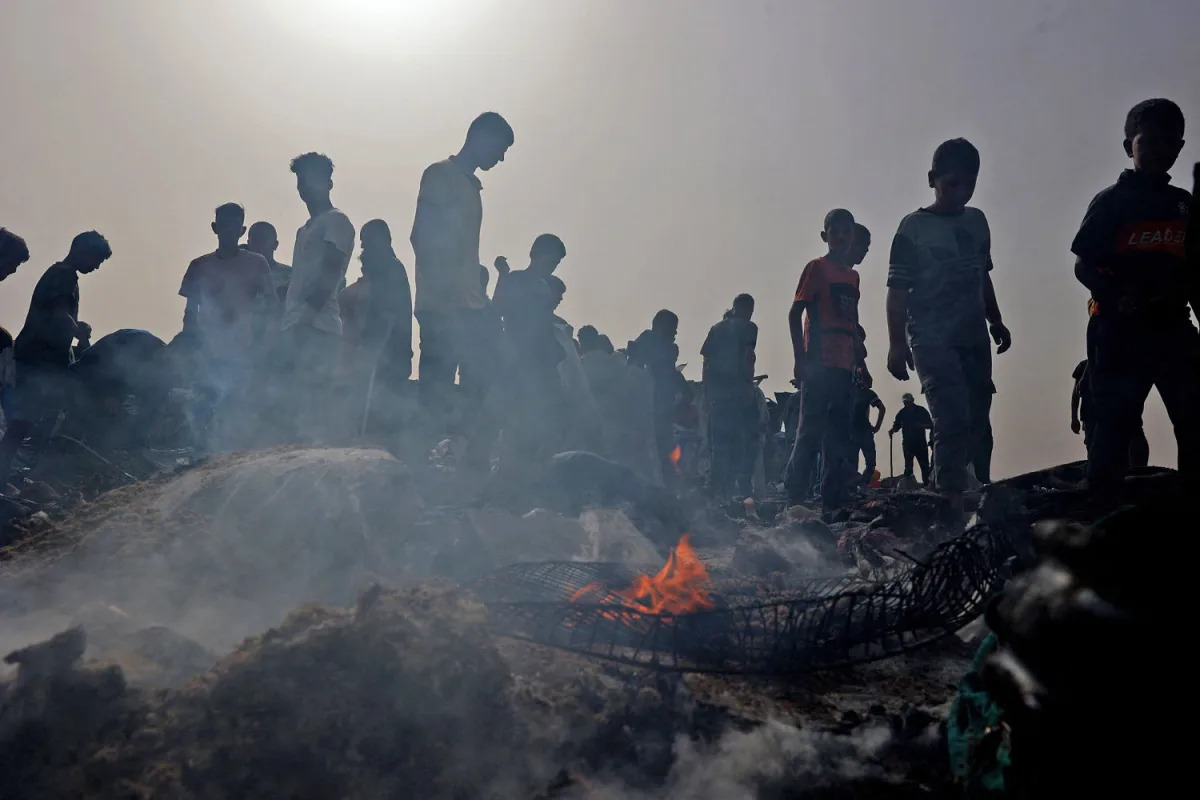
Viral ‘All Eyes on Rafah’ image inspires wave of AI-generated Instagram posts about Israel-Hamas war


6a08157c7bc3d272c19d658ea223c74f

Dozens of images related to the war in the Gaza Strip that appear to have been made using artificial intelligence have spread across Instagram in recent days following the viral success of a post calling for “All Eyes on Rafah,” which has now been shared more than 47 million times.

The images, a mix of pro-Irsael and pro-Palestinian posts, include imitations of the original Rafah post as well as more graphic depictions, including a bloodied Israeli Prime Minister Benjamin Netanyahu and an Israeli child confronted by a Hamas fighter. One seemingly AI-generated image shows a large crowd gathered in a town square with giant block letters spelling out “bring them home now,” a reference to the 125 Israeli hostages who remain in captivity in Gaza. It’s been shared over 134,000 times on Instagram.

A seemingly AI-generated pro-Israel image responding to the viral

The sudden and rapid spread of the images comes as international attention has been refocused on Israel’s push into Rafah following an Israeli airstrike that local officials said killed at least 45 civilians Sunday.

The proliferation of the images adds to what has been an ongoing battle for attention on social media between voices supporting Israel and its campaign in Gaza and those supporting Palestinians. And while AI images have increasingly become common across the internet, their use on Instagram — a platform that has at times eschewed news while remaining a crucial outlet for Palestinian journalists — underscores how the technology is already beginning to influence political speech online.

Shortly after the “All Eyes on Rafah” image began to go viral, pro-Israel images began to circulate. The images bear many of the hallmarks of AI-created content, including repeated or blurred visual elements. Some accounts and people who have posted the images have been explicit about their use of AI to create them.

The images have posed a challenge for Meta, particularly around how to enforce its policies against AI-generated content and depictions of violence.

On Wednesday, several Israeli media outlets reported that a pro-Israel Instagram template responding to the “Rafah” image was removed from Instagram by the platform. The AI-generated image showed a Hamas gunman standing over a baby in a puddle of blood and a burning Israeli flag with text reading, “Where were your eyes on October 7?”

An AI-generated image posted to Instagram imitating the style of the original

Israel’s official Instagram account published several responses about the removal of the image, complaining in one now-deleted post, “Instagram decided to take down the template, intentionally silencing people from sharing what happened on October 7th.”

The Times of Israel has reported that the original post had been reinstated. Meta said that the image did not violate its terms of use and was mistakenly removed.

Many of the images have been uploaded to Instagram’s “template” feature that lets users quickly share posts to their own accounts.

Some viral templates show graphic images that appear to be made by AI, including one that falsely depicts Netanyahu in different contexts, including with blood on his hands and body. One image, which was shared 5 million times on Instagram, depicted Netanyahu in a waist-high pool of blood, with accompanying text saying “terrorist baby killer!”

Meta has said that it hopes to not amplify political content heading into the 2024 presidential election, but the spread of such images suggests that the platform may be struggling to accomplish that goal in the age of AI.

Despite a new initiative from Meta to more strictly label AI-generated content on its platforms, none of the templates seen by NBC News contained clarifications that the images were made with AI.

Following the virality of the original “Rafah” image, many pro-Palestinian activists criticized the use of AI in sharing their message, arguing that it was sanitizing the real horrors of the war.

This article was originally published on NBCNews.com


Categories
Saved Web Pages

Израиль принял план Байдена по прекращению войны в секторе Газа


01000000-0aff-0242-af87-08dc82af8bdd_w12

Израиль согласился с основными положениями плана президента США Джо Байдена по прекращению огня в секторе Газа, заявил газете Sunday Times советник израильского премьер-министра Беньямина Нетаньяху по внешней политике Офир Фальк.

Одновременно Офир Фальк охарактеризовал проект как несовершенный и требующий значительной доработки.

“Сделка, на которую мы согласились, не очень хороша, но мы очень хотим, чтобы все заложники были освобождены”, – сказал Фальк. В то же время он отметил, что Израиль не отказывается от своих условий, которые помимо возвращения заложников включают “уничтожение ХАМАС как террористической организации, ответственной за геноцид”. Палестинская группировка ХАМАС, контролировавшая сектор Газа, признана террористической организацией в США и Евросоюзе.

Два крайне правых партнера Нетаньяху по коалиции, министр финансов Бецалель Смотрич и министр национальной безопасности Итамар Бен-Гвир, пригрозили, что покинут правительство в знак протеста против любой сделки, которая, по их мнению, будет недостаточно жесткой в отношении ХАМАС. Лидер израильской оппозиции Яир Лапид поддержал план Байдена.

Президент США Джо Байден представил план по прекращению огня в секторе Газа 31 мая, отметив, что он состоит их трех этапов и основан на предложениях Израиля. Первый этап предполагает перемирие и возвращение части все еще находящихся в руках боевиков заложников. В дальнейшем ожидаются переговоры воюющих сторон о бессрочном прекращении боевых действий и выход на свободу всех оставшихся пленников.

Такая последовательность действий, вероятно, предполагает, что ХАМАС будет продолжать играть определенную роль в дополнительных договоренностях при посредничестве Египта и Катара, противоречит намерению Израиля полностью уничтожить группировку.

Байден, представляя в пятницу план, отмечал, что проект создает лучшие условия для Газы после войны – без группировки ХАМАС у власти. Он не уточнил, как это будет достигнуто, и признал, что есть ряд деталей, которые еще необходимо обсудить.

Сама группировка ХАМАС предварительно приветствовала инициативу президента США. “Речь Байдена содержала позитивные идеи, но мы хотим, чтобы это материализовалось в рамках всеобъемлющего соглашения, которое отвечает нашим требованиям”, – заявил в субботу “Аль-Джазире” высокопоставленный представитель ХАМАС Усама Хамдан. Среди требований ХАМАС – вывод всех находящихся в секторе Газа израильских сил, свободное перемещение палестинцев и помощь в восстановлении территории.

Война Израиля и ХАМАС началась 7 октября 2023 года с массированных ракетных ударов вооруженных группировок ХАМАС и “Исламский джихад” (признаны террористическими организациями в США и ЕС) из сектора Газа, захода боевиков на территорию страны и захвата заложников. В ответ Израиль начал наносить массированные авиаудары по сектору Газа, а поздно вечером 27 октября зашел крупными силами на территорию северной части сектора.

В результате войны в Израиле с седьмого октября погибли 1200 человек, более 240 человек были захвачены боевиками ХАМАС в качестве заложников. За время паузы в боевых действиях из плена были возвращены 110 человек, еще 124, в том числе 113 граждан Израиля, остаются в заложниках. Некоторые из них были заочно объявлены умершими израильскими властями. По утверждению подконтрольного ХАМАС министерства здравоохранения Газы, с палестинской стороны погибли более 36 тысяч человек, но независимо эти данные подтвердить невозможно.


Categories
Saved Web Pages

A Felon in the Oval Office Would Test the American System


  • Trump Found Guilty
  • The Verdict
  • Trial Highlights
  • Takeaways
  • What Happens Next
  • Can He Still Run for President?

The system of checks and balances established in the Constitution was meant to hold wayward presidents accountable, but some wonder how it will work if the next president is already a felon.

Listen to this article · 9:49 min Learn more
A black-and-white illustration of a scene with a person in a long coat raising his arm. Seated and standing all around him are others looking in his direction, some also raising their arms.

An illustration of Patrick Henry, who warned at the Virginia convention on ratifying the Constitution of the possibility of “absolute despotism.”Credit…Library of Congress

June 2, 2024, 5:05 a.m. ET

The revolutionary hero Patrick Henry knew this day would come. He might not have anticipated all the particulars, such as the porn actress in the hotel room and the illicit payoff to keep her quiet. But he feared that eventually a criminal might occupy the presidency and use his powers to thwart anyone who sought to hold him accountable. “Away with your president,” he declared, “we shall have a king.”

That was exactly what the founders sought to avoid, having thrown off the yoke of an all-powerful monarch. But as hard as they worked to establish checks and balances, the system they constructed to hold wayward presidents accountable ultimately has proved to be unsteady.

Whatever rules Americans thought were in place are now being rewritten by Donald J. Trump, the once and perhaps future president who has already shattered many barriers and precedents. The notion that 34 felonies is not automatically disqualifying and a convicted criminal can be a viable candidate for commander in chief upends two and a half centuries of assumptions about American democracy.

And it raises fundamental questions about the limits of power in a second term, should Mr. Trump be returned to office. If he wins, it means he will have survived two impeachments, four criminal indictments, civil judgments for sexual abuse and business fraud, and a felony conviction. Given that, it would be hard to imagine what institutional deterrents could discourage abuses or excesses.

Moreover, the judiciary may not be the check on the executive branch that it has been in the past. If no other cases go to trial before the election, it could be another four years before the courts could even consider whether the newly elected president jeopardized national security or illegally sought to overturn the 2020 election, as he has been charged with doing. As it is, even before the election, the Supreme Court may grant Mr. Trump at least some measure of immunity.

Mr. Trump would still have to operate within the constitutional system, analysts point out, but he has already shown a willingness to push its boundaries. When he was president, he claimed that the Constitution gave him “the right to do whatever I want.” After leaving office, he advocated “termination” of the Constitution to allow him to return to power right away without another election and vowed to dedicate a second term to “retribution.”

Some supporters and even critics maintain that the likelihood of Trump expanding or abusing the power of the presidency should he be re-elected is unlikely.Credit…Hiroko Masuike/The New York Times

His advisers are already mapping out an extensive plan to increase his power in a second term by clearing out the civil service to install more political appointees. Mr. Trump has threatened to prosecute not only President Biden but others that he considers to be his enemies. In seeking immunity from the Supreme Court, Mr. Trump’s lawyers even embraced the argument that there are circumstances when a president could order the assassination of a political rival without criminal jeopardy.

“There is no useful historical precedent whatsoever,” said Jeffrey A. Engel, the director of the Center for Presidential History at Southern Methodist University. “The interesting matter is not that a former president has been tried and convicted, as the founders might well have anticipated, but that he remains a viable candidate for office, which they would have found astounding and ultimately disheartening.”

The question of how to create an empowered executive without making him an unaccountable monarch absorbed the framers when they designed the Constitution. They divided power among three branches of government and envisioned impeachment as a check on a rogue president. They even explicitly made clear that an impeached president could still be prosecuted for crimes after being removed from office.

But even then, there were voices worried that the limits were not enough. Among them was Henry, the patriot famed for his “give me liberty or give me death” speech. At the Virginia convention on ratifying the Constitution in 1788, he warned of the possibility of “absolute despotism.”

“His point is that if such a criminal president comes to power, that president will realize there are few mechanisms to stop him,” said Corey L. Brettschneider, a Brown University professor who writes about Henry in his forthcoming book, “The Presidents and the People: Five Leaders Who Threatened Democracy and the Citizens Who Fought to Defend It.” “He goes so far as to claim that such a president will claim the throne of a monarch.”

“My argument,” Mr. Brettschneider added, “is that this warning is even more true now given the possible immunity of a sitting president from indictment and the powerlessness that we have seen after two attempted impeachments.”

Robert Kagan, a scholar at the Brookings Institution in Washington, warned in his new book, “Rebellion: How Antiliberalism Is Tearing America Apart — Again,” that a second Trump term could result in unfettered abuses of authority.

“With all the immense power of the American presidency, with his ability to control and direct the Justice Department, the F.B.I., the I.R.S., the intelligence services and the military, what will prevent him from using the power of the state to go after his political enemies?” Mr. Kagan wrote.

To Mr. Trump’s supporters and even some of his critics, such concerns go too far. His allies maintain that when Mr. Trump makes provocative comments like being a “dictator” for a day, he is either joking or pushing buttons to get a rise out of his critics. The real crisis is not a lack of accountability for presidents, they argue, but the politicization of the justice system against Mr. Trump.

Jonathan Turley, a law professor at George Washington University who was in the Manhattan courtroom on Thursday when the jury returned its guilty verdict, called the case against Mr. Trump “a raw political use of the criminal justice system” and a “thrill kill” by his opponents. “What happened in that room comes at a cost,” he said on Fox News. “It comes at a cost to the rule of law.”

Even some who do not support Mr. Trump argue that warnings of an unchecked executive are overwrought. Eric Posner, a professor at the University of Chicago Law School who wrote his own book calling Mr. Trump a demagogue who tests American democracy, said the former president was too “weak” and incompetent to execute a true dictatorship.

“Trump was and is many things, most of them bad,” Mr. Posner wrote last winter in response to a Washington Post column by Mr. Kagan. “But he wasn’t a fascist when he was president, and he won’t be a dictator if he is elected a second time.” While Mr. Trump riled up a mob and spread lies to try to stay in power, Mr. Posner added, “he failed completely.”

American lawmakers have struggled to devise an independent mechanism to enforce presidential accountability without seeming so tainted by politics that it loses credibility with the public. The issue has come up repeatedly over the last half century without a consensus resolution.

Nine out of the last 10 presidents have had a special counsel or independent counsel investigate themselves or someone in their administration — the lone exception being Barack Obama. (Gerald R. Ford’s campaign finances came under scrutiny while he was vice president and resulted in no charges.)

President Richard Nixon’s firing of the first special prosecutor investigating Watergate prompted Congress to pass a law establishing an independent counsel. Credit…Associated Press

Neither of the two who faced serious risk of criminal charges before Mr. Trump let it get that far. Richard M. Nixon escaped prosecution for the Watergate coverup by resigning and then accepting a pardon from Mr. Ford, his successor. Bill Clinton avoided possible perjury and obstruction of justice charges stemming from his affair with Monica S. Lewinsky by making a deal with prosecutors on his last day in office in which he admitted to providing false testimony under oath and gave up his law license.

Mindful that Nixon fired the first special prosecutor investigating Watergate, Congress passed the independent counsel law creating a prosecutor theoretically insulated from politics. But Republicans grew disenchanted with that model after Lawrence Walsh’s Iran-contra investigation, as did Democrats after Ken Starr’s Whitewater investigation, so Congress let the law lapse.

The special counsels who have investigated subsequent presidents, including both Mr. Trump and Mr. Biden, were appointed by the attorney general at the time. While they have considerable autonomy, they are not completely independent and therefore their investigations and conclusions have often been assailed as political, even without evidence of interference.

Having endured the Russia investigation by the special counsel Robert S. Mueller III and the current election interference and classified documents investigations by the special counsel Jack Smith, Mr. Trump is hardly likely to appoint an attorney general who would allow Mr. Smith to continue his work, much less name any new special counsel to look into him.

Jack Smith, the special counsel overseeing the two federal cases against Mr. Trump, was appointed by the attorney general. It is unlikely that he would continue his work under a Trump Justice Department.Credit…Doug Mills/The New York Times

Instead, Mr. Trump has proved that pushing ahead relentlessly regardless of scandal, investigation and trial can work for him politically — at least so far. He is on track to win the Republican presidential nomination for a third time and has at least an even chance of beating Mr. Biden to return to the White House. If he does, he will set a new standard for what is considered acceptable in a president.

“I think my biggest takeaway is how lucky we’ve been as a nation to have presidents who have mostly comported themselves with dignity, or at least respected the dignity of the office,” said Lindsay M. Chervinsky, the incoming executive director of the George Washington Presidential Library and the author of “Making the Presidency,” a book about John Adams to be published in September. “This conviction brings into stark relief how violently Trump has rejected that tradition.”