
Today’s and tonight’s Piatykhatky, Dnipropetrovsk Oblast, Ukraine weather forecast, weather conditions and Doppler radar from The Weather Channel and Weather.com
Day: October 6, 2023
October 05, 2023
U.S. Senators Chris Van Hollen (D-Md.), Gary Peters (D-Mich.), Marco Rubio (R-Fla.), Jeanne Shaheen (D-N.H.), Bill Cassidy (R-La.), Pete Ricketts (R-Neb.) and John Kennedy (R-La.) introduced legislation that would prevent the U.S. from providing security assistance to Azerbaijan until it has been determined that they are not taking offensive action against the Armenians. The Senators introduced the legislation in response to the unilateral seizure, by force of arms, of Nagorno-Karabakh by Azerbaijan.
“The United States must send a clear message that we will not support the Azeri regime as it continues its campaign of ethnic cleansing against Armenians in Nagorno-Karabakh,” said Senator Van Hollen. “That’s why, in the face of its continued aggression and its blocking of critical humanitarian assistance, the Administration should immediately revoke Azerbaijan’s access to U.S. security assistance.”
“The Azerbaijani government has made it clear – it will use its military resources to eliminate the presence of Armenians in Nagorno-Karabakh.” said Senator Peters. “The United States cannot be complicit in Azerbaijani violence against the Armenian people. We must pass this legislation to block additional American aid to Azerbaijan until it puts an end to its aggression in the region.”
“It’s absurd that our nation has provided security assistance to Azerbaijan for decades, despite existing law requiring the President to certify that Azerbaijan is not taking offensive action against Armenian,” said Senator Rubio. “This bill is an important first step, as would be sanctioning Azerbaijani officials under the Global Magnitsky Human Rights Accountability Act.”
“The United States must take a stand to make sure the Azerbaijani government does not inflict further suffering on ethnic Armenians,” said Senator Shaheen. “I’m proud to help introduce this bipartisan legislation, which is intended to hold Azerbaijan accountable for its actions in Nagorno-Karabakh.”
“Through the 907 waiver authority, Americans saw their tax money used to provide weapons to Azerbaijan to attack lands where Armenians have lived for centuries. That is not only wrong, it’s perverse. This bill withdraws that authority,” said Dr. Cassidy.
The Armenian Protection Act would end U.S. assistance to the Azerbaijani government that is currently allowed under a waiver to Section 907 of the Freedom Support Act. Although the Freedom Support Act generally prohibits most bilateral assistance to Azerbaijan, following the September 11, 2001 terrorist attacks, waiver authority was added to Section 907 granting additional discretion to the President to provide aid to Azerbaijan. The waiver authority has been invoked annually by Presidents of both parties since 2002 and the Biden Administration is still reviewing its waiver authority for 2023.
Pipeline development in the Caspian region comes with geopolitical complexity. The countries directly involved in the Southern Gas Corridor (SGC)—Turkey and Azerbaijan—as well as Turkmenistan, Russia, and Iran have diverging geopolitical goals. Turkey and Azerbaijan are trying to maintain relations with both Russia and the European Union (EU) and Turkmenistan is trying to balance gas supplies between China and the EU while avoiding deteriorating relationships with its northern neighbors: Russia, Uzbekistan, and Kazakhstan. Russia and Iran are trying to break geopolitical isolation, increase their influence in the region, and monetize locked-in gas reserves. Following an analysis of the economics of Caspian gas, in this Q&A, the author discusses how the challenge of balancing contradictory interests could be a risk for the EU, in terms of both the reliability of gas supply and instability in the region.
Facing increasing pressure from the West, Russia has increased its efforts to reestablish a sphere of influence in Caspian and Central Asia. So far Russian authorities have taken the readiness of Azerbaijan and Turkey to increase gas supplies to the EU calmly, as they try to maintain friendly relations with the leaders of Azerbaijan, Turkey and Turkmenistan
There is no visible deterioration in relations between Russia and Azerbaijan[1] with presidents Vladmir Putin and Ilham Aliyev regularly meeting one another. Since 2022, Azerbaijan has provided an overland trade corridor between Iran and Russia, which has become extremely significant for Russia under sanctions [2]. There has also been a noticeable economic convergence between Russia and Turkmenistan in the past year and a half.[3] Amid frequent meetings, the two countries signed the Declaration on Deepening Strategic Partnership in June 2022. In particular, bilateral cooperation in the gas, oil and electricity sectors is growing, with Gazprom and Tatneft increasing their activities in the Turkmen market.[4]
Turkey has become a key Russian political and economic partner since the sanctions against Russia were introduced in 2022. Just before his re-election, Turkish President Recep Tayyip Erdogan had stated that “Russia and Turkey need each other in every possible field.”[5] Despite the country’s membership of NATO, Turkey has, in fact, stepped up its economic ties with Russia since the start of the war, increasing imports of Russian oil embargoed by European countries.[6] In 2022, 40 percent of Turkey’s gas imports came from Russia.[7]
For now, the benefits to Russia of maintaining good relations with Turkic countries outweigh any potential downsides, including competition with these countries in the EU gas market. As discussed in the previous article. Russia need not worry too much about competition; Azerbaijan itself is importing gas from Turkmenistan to fill gaps at the moment, while Turkmenistan is limited by the challenges of building the Trans-Caspian pipeline and commitments to China. And Turkey is now the biggest net importer of Russian gas.
Amidst declining export revenue, Russia is interested in holding onto the remaining opportunities to generate at least some income from gas exports to countries like Azerbaijan and Turkey. But there are still some “red lines”; Russia makes it clear that it would obstruct any attempt to build a Trans-Caspian pipeline on environmental grounds.[8]
Source: https://www.sgc.az/en.
Recep Tayyip Erdogan, re-elected as the President of Turkey in May 2023, has repeatedly announced his ambition to make Turkey a gas hub, while continuing to maintain special relations with Russia. He has frequently mentioned plans “to turn Turkey into a center in the energy sector of the Mediterranean, the Caspian region, and the Middle East.”[9] Putin echoes this rhetoric, but his statements seem to be motivated by the desire to send more Russian pipeline gas to Turkey, which can then be re-exported to Europe.[10] Putin observed in a meeting with Erdogan earlier this month that Gazprom has submitted a road map for the hub to Turkish energy company BOTAS.[11] This suggests the likelihood of further strengthening of ties between Turkey and Russia. At the same time, since his re-lection, Erdogan has also been speaking about Turkey’s ambition to join the EU, although he has recently scaled back his ambitions.[12] Turkey believes it can leverage its existing and new trade relations to become a gas hub and is pushing its own gas exporting agenda to the EU. Although Turkey is trying to balance its relations with Europe and Russia, it`s becoming apparent that it will be difficult to build up such a hub without infringing on the interests of either Russia or the EU.
Following Russia’s invasion of Ukraine, Central Asian countries seemed to be distancing themselves from Russia. But Moscow, with an understanding of the energy and social problems of these countries, is drawing them into ever closer cooperation—and perhaps, even greater dependence in the future. Facing severe gas deficit and winter blackouts, these countries will likely continue to buy Russian gas. In addition to cooperation with Azerbaijan and Turkmenistan, Russia is also focusing on Kazakhstan and Uzbekistan. Agreements related to a tripartite gas union between Russia, Kazakhstan and Uzbekistan, proposed in November 2022 by Putin and involving the transportation of Russian gas through the territories of these countries,[13] are starting to materialize.[14] According to the officials, transit deliveries of Russian gas to Uzbekistan could reach up to 10 bcm per year.[15] Both Uzbekistan and Kazakhstan have obligations to supply gas to China and have significantly under-delivered in recent years due to domestic constraints. If Russian gas is supplied to Kazakhstan and Uzbekistan, at a favorable discount compared to the price of these countries’ exports to China, then Russia could somewhat make up for the loss of the EU market, while Kazakhstan and Uzbekistan could increase gas supplies to China, receiving much-needed export earnings.
Russia is simultaneously tightening ties with Iran—also struggling to monetize its gas reserves. In August 2023, Russia and Iran reached agreements on the creation of an energy hub, according to Majid Chegani, Iran’s deputy oil minister and general director of the National Iranian Gas Company.[16] The idea may be to deliver gas to Iran through Uzbekistan, Turkmenistan via the gas pipeline system “Central Asia – Center” using it in reverse mode and potentially via Azerbaijan.[17] This could lead to the implementation of a gas pipeline from Iran to Pakistan and India. Another possibility is for Iran to collaborate with evolving Russian competences in LNG plant construction. Although these plans sound farfetched and do not look economically feasible, they are important for Russia from a geopolitical point of view—and cannot be completely ruled out.
For years, the EU has supported the creation of SGC and has been looking at Caspian gas as a viable diversification option. However, with Russia working hard to reestablish its influence in the region, these supplies might come with increasing geopolitical risk.
The region is volatile, as shown most recently by Azerbaijan’s military offensive against Armenians in the breakaway region of Nagorno-Karabakh. Moreover, the countries participating in the SGC—Azerbaijan and potentially Turkmenistan—are authoritarian regimes lacking transparency.[18] Revenues from hydrocarbon exports are not used by the authorities to establish stable institutions. Instead, they primarily enrich the ruling elites.[19] This creates a risk that these countries may follow the path of other resource-based, unpredictable autocracies. Azerbaijan’s readiness to increase volumes through supplies from Russia and via Iran—while the Trans-Caspian is still in an early stage with questions about its future—adds additional risks to the expansion of SGC for the EU.
Despite the MoU signed by President Aliyev and president of the European Commission Ursula von der Leyen to double gas supplies from Azerbaijan by 2027, and Turkmenistan’s recent statement on its readiness to proceed with Trans-Caspian pipeline, the future expansion of the SGC remains uncertain.
It is questionable whether Azerbaijan can ensure the required gas volumes without increasing its reliance on Russia or Turkmenistan (via Iran or through a direct route). Participation of Turkmenistan is not guaranteed; challenges related to the financing of the Trans-Caspian project, as well as geopolitical tensions in Caspian remain in place.
The timing is critical; Europe needs this gas urgently, not in a decade’s time. In the next 2-3 years, substantial LNG volumes would become available globally, and by then the EU may have resolved its current energy supply crisis and moved further along on its energy transition path.
Still, the discussion on expanding supplies through the SGC will continue in the coming years, as the negotiating process itself is important for Azerbaijan, Turkmenistan, and Turkey from a geopolitical perspective.
[1] https://carnegieendowment.org/politika/88651
[2] https://www.stimson.org/2023/russia-iran-converge-in-attempt-to-build-a-new-eurasian-order/
[3] https://1prime.ru/state_regulation/20230120/839535364.html
[4] https://tdh.gov.tm/ru/post/34395/turkmenistan-rossiya-kurs-na-diversifikaciyu-dvustoronnego-partnyorstva
[5] https://www.politico.eu/article/turkey-special-relationship-russia-grow-recep-tayyip-erdogan-valdimir-putin/
[6] https://www.politico.eu/article/turkey-special-relationship-russia-grow-recep-tayyip-erdogan-valdimir-putin/
[7] https://www.osw.waw.pl/en/publikacje/osw-commentary/2023-03-10/turkeys-dream-a-hub-ankaras-wartime-gas-policy
[8] https://eurasianet.org/turkmenistan-smashing-time
[9] https://tass.com/economy/1556141
[10] https://www.dw.com/en/will-turkey-ever-become-a-russian-gas-hub/a-65053534
[11] https://www.reuters.com/business/energy/disagreements-delay-russian-gas-hub-plans-turkey-sources-2023-09-14/
[12] https://www.reuters.com/world/middle-east/turkeys-erdogan-says-country-could-part-ways-with-eu-if-necessary-2023-09-16/
[13] https://www.uzdaily.uz/ru/post/73735
[14] https://podrobno.uz/cat/uzbekistan-i-rossiya-dialog-partnerov-/gazovyy-soyuz-rossii-uzbekistana-i-kazakhstana-mozhet-rasshiritsya/
[15] https://www.rbc.ru/business/15/08/2023/64db4b429a79477e12def06c?from=newsfeed
[16] https://news.day.az/world/1587706.html
[17] https://itek.ru/analytics/trojstvennyj-gazovyj-sojuz/
[18] https://freedomhouse.org/explore-the-map?type=fiw&year=2023
[19]https://www.transparency.org/en/news/azerbaijani-laundromat-grand-corruption-and-how-to-buy-influence

As EU leaders gather in Granada on Thursday, their most publicised agenda item is the situation with Armenia after Azerbaijan took control of Nagorno-Karabakh following a 24-hour military operation that ended almost four decades of tension, writes EURACTIV.
The international press has focused on Azerbaijan’s strongman, Ilhan Aliyev, who snubbed the five-way talks planned on the sidelines of the summit with the leaders of France, Germany, and Armenia, hosted by Council President Charles Michel.
Such a snub is embarrassing for the hosts. But Aliyev is the EU’s favourite dictator. After Russia attacked Ukraine, Azerbaijan’s gas became precious as Russian supplies dwindled.
Aliyev has so far accepted all the invitations by the EU’s Michel to discuss Karabakh, and there were many photo opportunities with his Armenian counterpart Nikol Pashinyan, despite the total failure of the exercise.
Now Aliyev took Karabakh as a low-hanging fruit because he could.
He can also claim there is no ethnic cleansing: The population of 120,000 left to seek refuge in Armenia, not because Aliyev’s army drove them out but because they feared this would happen. There is no damage to civilian infrastructure such as hospitals, schools and housing or to cultural and religious sites in Karabakh, the UN said.
So everything is fine, the EU’s favourite dictator has accomplished the perfect war – without casualties, without destruction, without war crimes.
Moreover, under international law, Nagorno-Karabakh is the territory of Azerbaijan, so one may argue that this was going to happen sooner or later.
Aliyev succeeded, it seems, because Europe has forgotten how things went down in Munich in 1938.
Appeasing the dictator (Hitler in that case) was the basis of the 1938 agreement between France, the UK, fascist Italy, and Nazi Germany. It essentially provided for the German annexation of a part of Czechoslovakia called the Sudetenland, where more than three million people, mainly ethnic Germans, lived.
Giving Hitler “what he wants” to appease him was of course a shameful and wrong move.
Aliyev is suspected of gearing up for another war, whose aim is to establish a land corridor between the Azeri enclave of Nahichivan and mainland Azerbaijan – by grabbing Armenian territory.
And he has the support of Turkey, which has megalomaniac dreams about a bigger Turkic corridor, all the way from Anatolia to the Uigurs in China. The only piece of land lacking to complete this puzzle is Armenian territory.
Aliyev knew he would be under pressure in Granada, alone against four at the five-way talks, so he turned down the invitation. As a pretext, he used “pro-Armenian statements” by French officials and an alleged French decision to supply Yerevan with military equipment.
French Foreign Minister Catherine Colonna was the first Western official to visit Yerevan after the fall of Karabakh. But she didn’t announce a decision to supply Armenia with French armament. What she said was:
“France has given its agreement to the conclusion of future contracts with Armenia, which will allow the delivery of military equipment to Armenia so that it can ensure its defence.”
Giving “an agreement” for the conclusion of future contracts does not mean military supplies would start anytime soon. And France doesn’t have much to send anyway, as the supplies sent to Ukraine have dried up the stocks.
The real context: France is home to half a million ethnic Armenians and Colonna needed to visit Yerevan and say something that would sound nice and appropriate. Aliyev knows that, but the pretext was just too good to pass up.
The EU made a major mistake by not inviting Turkish President Recep Erdoğan to the five-way mediation talks in Granada. The Turkish president is a major player in the region, and a strong backer of Azerbaijan, and should not be absent from such talks.
If the Granada meeting was expected to be a milestone, indeed, it will be one, in terms of failed European policies.
The gathering will likely encourage Aliyev and Erdoğan to go ahead and grab from Armenia what they want. The Armenians can try to fight – but perhaps they had better surrender. It seems no one is really prepared to help them.
09:56, 6 October 2023
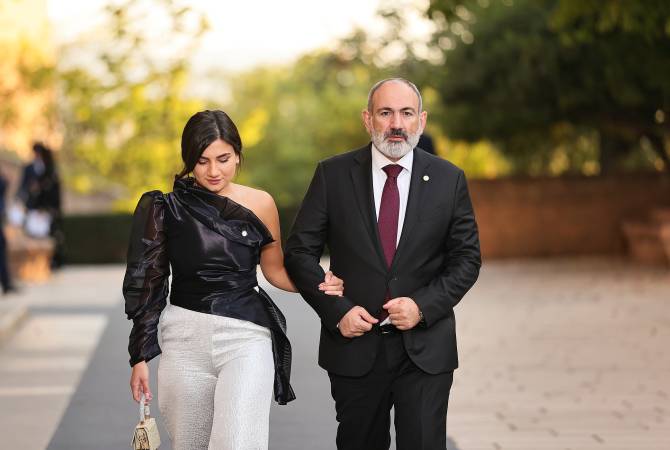
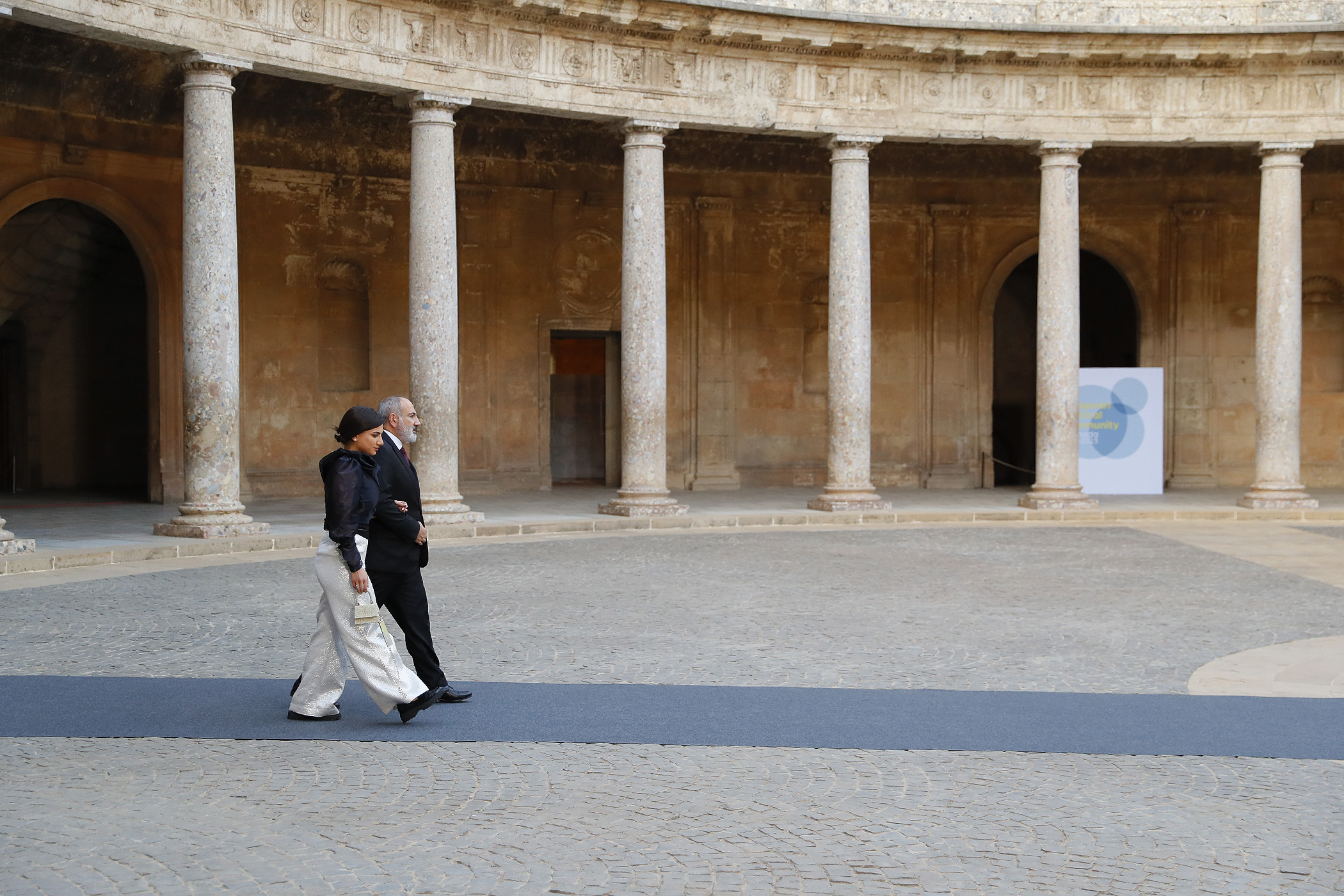
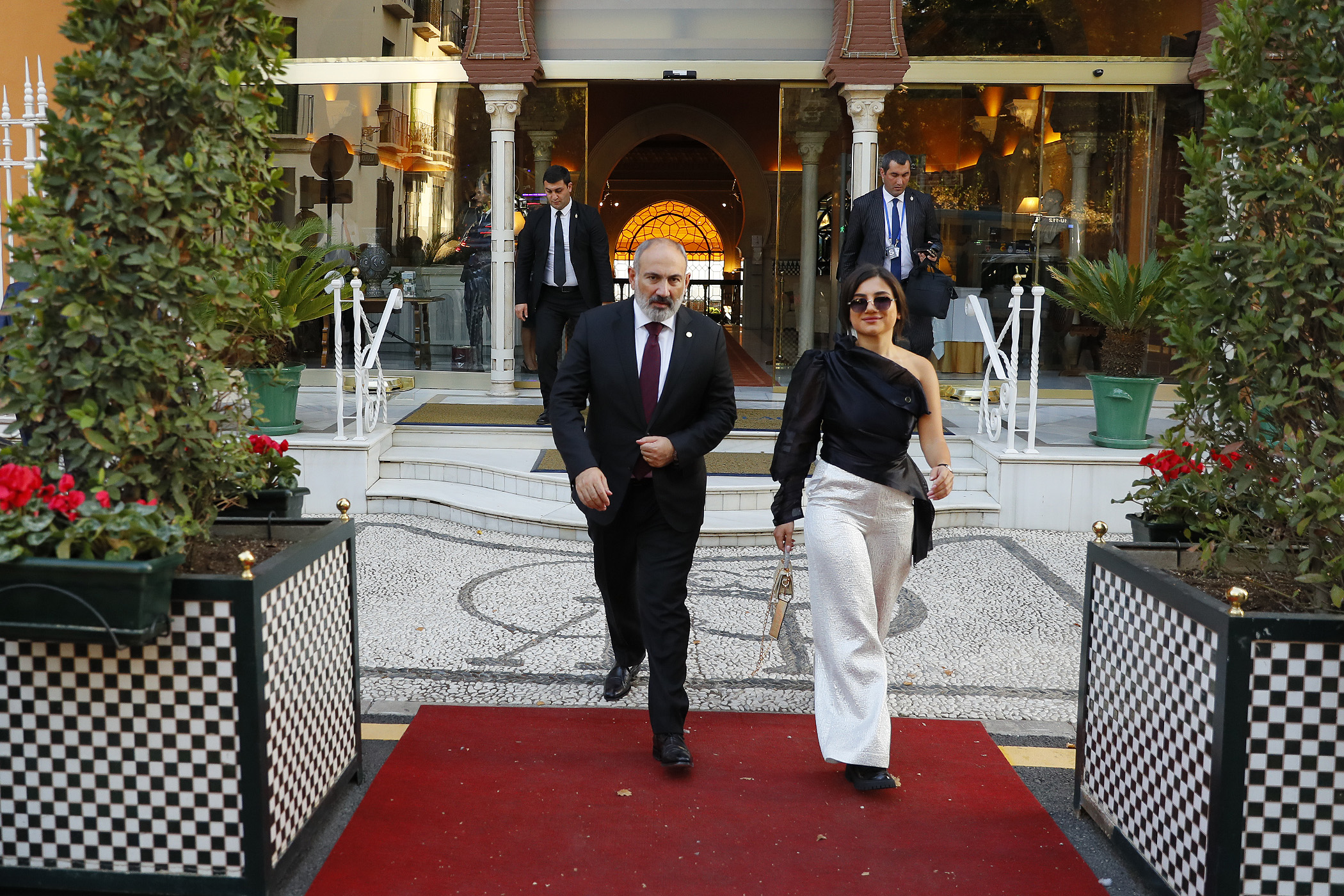
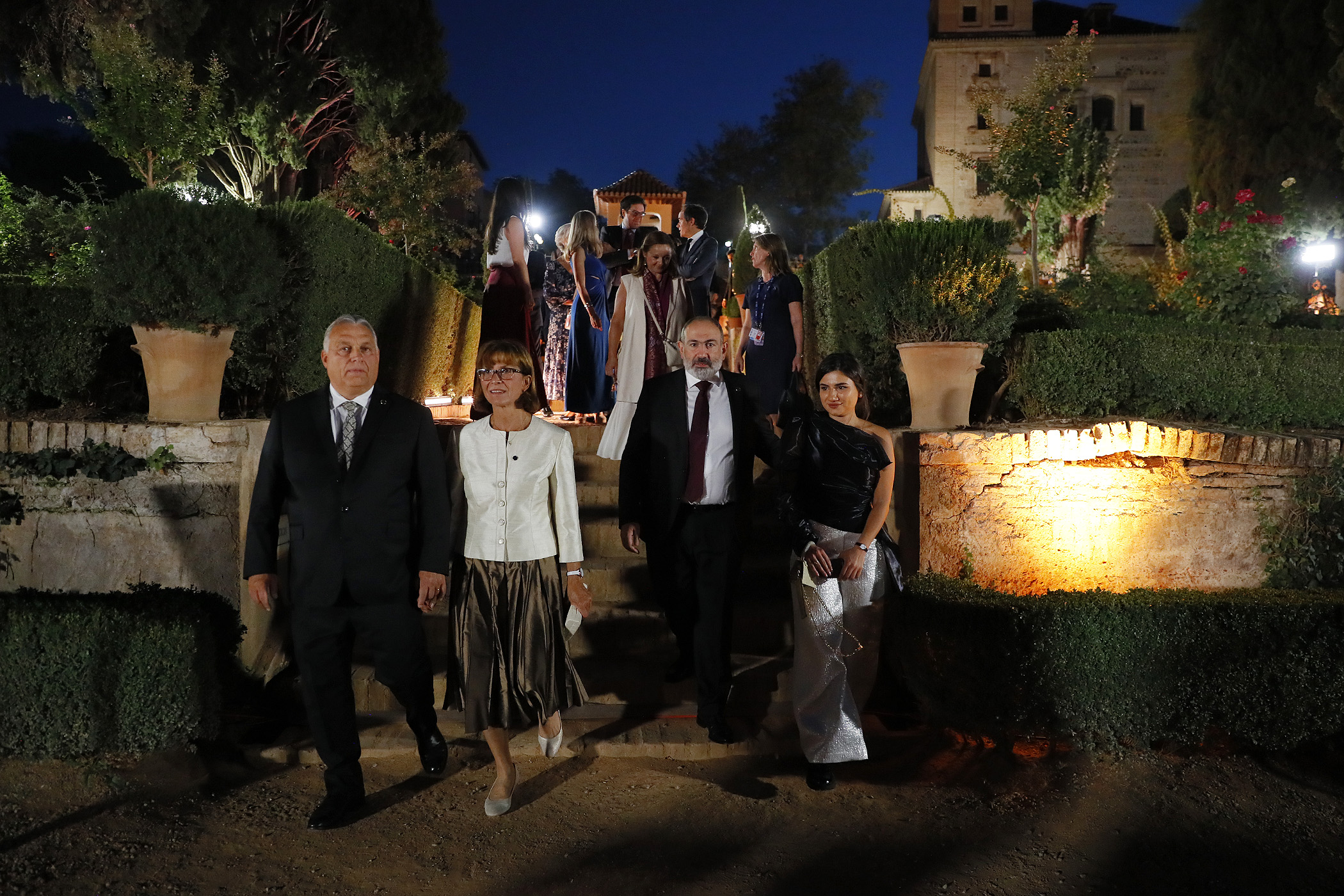
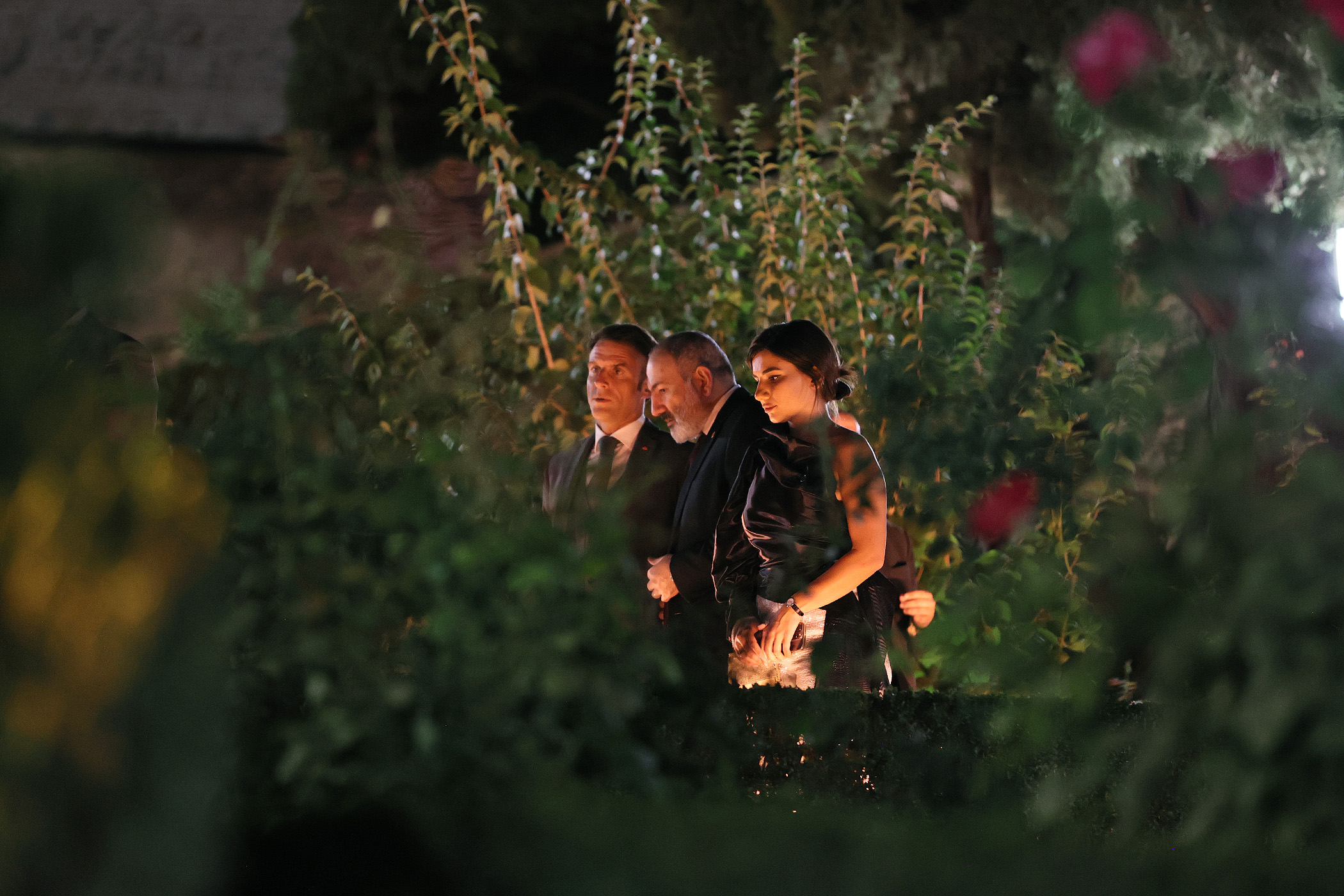
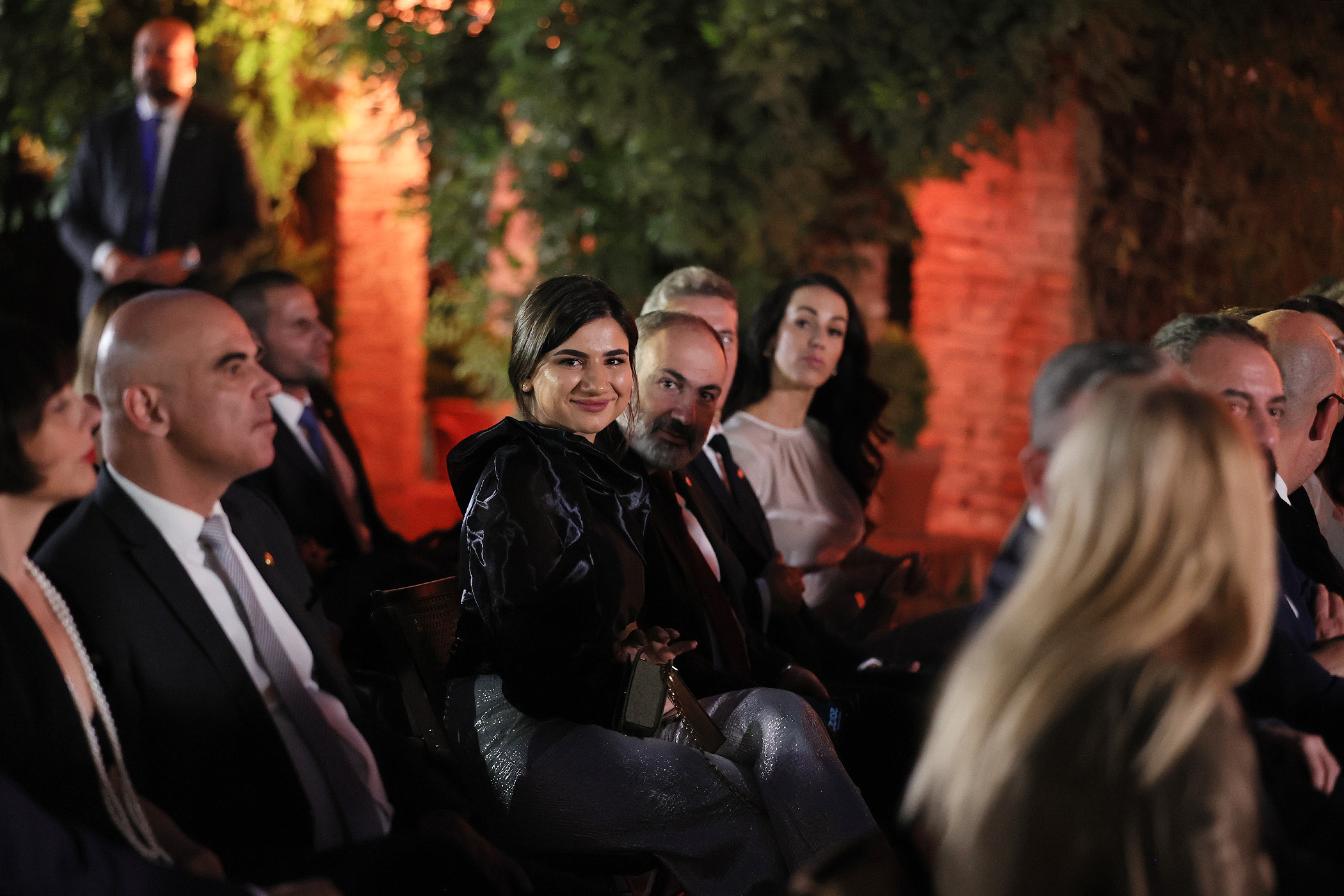
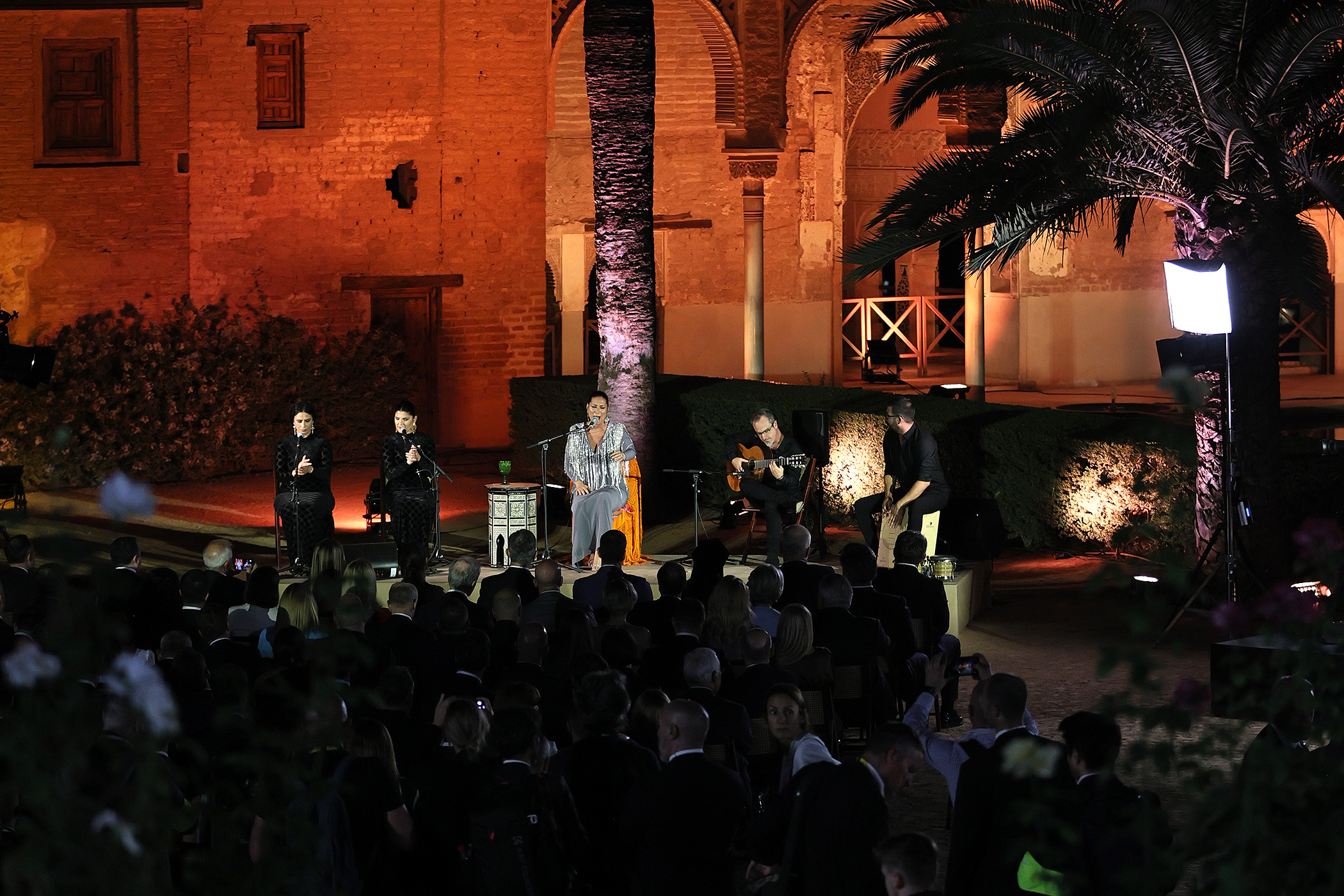
YEREVAN, OCTOBER 6, ARMENPRESS. Prime Minister Nikol Pashinyan, together with his daughter Mariam Pashinyan, on October 5 attended the banquet hosted by King Felipe VI and Queen Letizia of Spain in the Palace of Charles V in Granada as part of the third European Political Community summit. Spain’s Prime Minister Pedro Sánchez welcomed the heads of state and government participating in the event.
Invasive spyware capable of reading a smartphone’s messages and listening to calls was found on the phones of at least 12 Armenian journalists, politicians and civil society members, according to a report published Thursday by a group of nonprofit organizations.
The spyware, called Pegasus and made by the Israeli company NSO, had previously been found on the phones of thousands of people around the world, leading to U.S. sanctions in 2021 and a lawsuit from Apple. But researchers said their most recent findings are unique — they believe it is the first time that the technology has been weaponized in an armed conflict between countries.
Armenia has intermittently battled its neighbor Azerbaijan for decades. In 2020, a cease-fire was broken in the disputed region of Nagorno-Karabakh, leaving thousands dead. Since then, the two countries have been mired in a sporadic shooting war which has killed dozens more.
The report, a collaboration among the international internet rights group Access Now, Amnesty International and the University of Toronto’s Citizen Lab, calls for “an immediate moratorium” on the sale and transfer of spyware technology.
NSO is the most notorious mercenary spyware developer in the world. It creates powerful programs like Pegasus, which can hack smartphones to reveal information such as contacts, calls and location.
The report does not conclusively find that Azerbaijan was behind the spyware used on Armenian citizens, though researchers noted that all instances of the spyware’s use occurred during or near the time of conflict between the two countries and against those who would be considered traditional espionage targets. Citizen Lab’s research found two distinct Pegasus operators in Azerbaijan, both of which were registered by 2018.
Three arms of the Azerbaijani government — the consul’s office in Washington, its Ministry of Foreign Affairs, and the president’s office — did not respond to requests for comment.
NSO has long insisted its software is intended only for governments to catch terrorists and criminals. But its spyware has repeatedly been found on the phones of dissidents in authoritarian countries. A global media consortium found in 2021 that Pegasus spyware had been used on at least 189 journalists and 85 human rights activists around the world.
NSO has denied responsibility in many of the cases where its software has been abused, arguing that its software was operated by independent, legitimate government agencies.
While governments around the world have long abused NSO tools, the findings revealed Thursday are the first time that civilians have been hacked while their country is in armed conflict with another country.
“We’ve expected this, but it’s still surprising when you see it,” said John Scott-Railton, a senior researcher at Citizen Lab, which has for years documented NSO Group attacks. “And it’s a reminder that mercenary spyware is not just a cybersecurity problem. It is a geopolitical problem, and it is potentially capable of changing the outcome of armed conflict,” he said. His research contributed to the investigation.
In a statement, an NSO Group spokesperson said that it would not confirm any of its customers, but said it “will investigate all credible allegations of misuse.”
“Past NSO investigations have resulted in the termination of multiple contracts regarding the improper use of our technologies,” the spokesperson added.
The 12 confirmed victims worked as journalists, lawyers and for human rights and civic causes.
One victim, television and web journalist Karlen Aslanyan, said he suspected his work made him a natural target.
“If it was the Azerbaijani government, maybe they were trying to find some contacts, to listen to what kind of sources I have,” he said.
Samvel Farmanyan, a political journalist and former politician, said that being hacked was profoundly disturbing.
“Psychologically, it changes your life. Can you imagine that you have the feeling that you are under surveillance, and you don’t know who is surveilling you and what the purposes are?” he said.
Governments around the world should take this as a wake-up call that their citizens can easily be surveilled by countries that have access to spyware, Scott-Railton said.
“They need to be in a position where they understand just how serious this threat is, and how it may have been used around this conflict and other ongoing conflicts,” he said.
Outcome of the quadripartite meeting in Granada
“The statement adopted at the end of the quadripartite meeting held in Granada annulled the November 9, 2020 trilateral document signed by the leaders of Armenia, Azerbaijan and Russia at the end of hostilities in Karabakh,” political analyst Gurgen Simonyan believes.
He explains that the text of the Granada statement “recognizes the legitimacy of the countries’ services and laws in relation to their sovereign territories, while the November document implied the presence of Russian special services – Russia’s FSB – on them.”
The day before, Armenian Prime Minister Nikol Pashinyan, French President Emmanuel Macron, German Chancellor Olaf Scholz and European Council President Charles Michel held a quadrilateral meeting in Granada, within the framework of the third summit of the European Political Community.
Azerbaijani President Ilham Aliyev refused to participate in the meeting, citing France’s biased position. In addition, he proposed to invite the Turkish president, which was opposed by Paris and Berlin.
Main provisions of the statement adopted in Granada, as well as a commentary by an Armenian political scientist.
Provisions of the statement adopted in Granada
European Council President Charles Michel, French President Emmanuel Macron and German Chancellor Olaf Scholz
- emphasized their unwavering support for the independence, sovereignty, territorial integrity and inviolability of Armenia’s borders,
- expressed their support for the strengthening of EU-Armenia relations in all dimensions, based on the needs of the Republic of Armenia,
- agreed on the need to provide additional humanitarian assistance to Armenia, as the latter is facing the consequences of the recent mass resettlement of the Armenians of Nagorno-Karabakh,
- emphasized that these refugees should be able to freely exercise their right to return to their homes and places of residence unconditionally, under international supervision and with due respect for their history, culture and human rights,
- expressed their commitment to all efforts aimed at the normalization of relations between Armenia and Azerbaijan on the basis of mutual recognition of the sovereignty, inviolability of borders and territorial integrity of Armenia (29,800 km2) and Azerbaijan (86,600 km2),
- called for strict observance of the principle of non-use of force and threat of use of force,
- emphasized the urgent need to work on the delimitation of the border on the basis of the USSR General Staff maps provided to the sides, which should also be the basis for the withdrawal of forces, the finalization of the peace treaty and the resolution of all humanitarian issues,
- called for the opening of all borders, including the border between Armenia and Turkey, as well as the opening of regional communications on the basis of full respect for the sovereignty and jurisdiction of the countries, as well as on the basis of the principle of equality and reciprocity,
- called for the release of all detainees and for cooperation to resolve the fate of the missing and to facilitate demining efforts.
Commentary
Political analyst Gurgen Simonyan believes Armenia could not have “favorable positions” in the negotiations after its defeat in the 44-day war in 2020.
“It can only count on relatively convenient realities, but Azerbaijan demands much more. Armenia is trying to secure for itself the territories of the Armenian SSR that were under its control during the Soviet Union. But Azerbaijan disputes this too,” he said, commenting on the issue of border demarcation and the map on which it should be carried out.
The political analyst believes that the participation of the Armenian delegation in the meeting in Granada, as opposed to the boycott by Azerbaijan, shows that Armenia has a more constructive position and is ready to promote the peace agenda.
According to Gurgen Simonyan’s assessment, it can be stated that Azerbaijan has always set itself the goal of not only achieving the desired solution to the Nagorno-Karabakh issue, but has also pursued and is pursuing “a policy of complete disintegration, destruction of Armenia’s sovereignty. And this makes all the adopted agreements “untenable and impossible”.
“We need to realize that for peace two sides are needed, and for war one is enough. If they boycott this agenda, the situation will become even more aggravated.”
Referring to the provisions of the statement on Nagorno-Karabakh, the political analyst noted that it uses the terms “mass resettlement” and “refugees.”
“This means that they were deprived of their homeland, subjected to patriocide, which is a phenomenon containing elements of genocide. In the future, Azerbaijan may be accused of committing genocide, and the Kosovo version may work here”.
According to Simonyan, in the current situation the return of NK Armenians to their homeland, to their homes seems unrealistic, but it may eventually become possible.
“If it is possible to send a peacekeeping mission to Artsakh under the auspices of the UN, if the Berdzor corridor [Lachin corridor] operates unhindered, if the border zones are demilitarized, it is not excluded that they will return,” he explained.
When asked by JAMnews what we can expect from the “strengthening of EU-Armenia relations” and “preparation of a joint EU-US event” announced by European Commission head Ursula von der Leyen after her meeting with Pashinyan, the political analyst said:
“We can expect a strategic reversal [of Armenia’s foreign policy vector]. We should realize that Armenia has no alternative. It is necessary to break military-political and economic ties with all hostile parties and try to structure new realities based on our national security.”
According to him, by ratifying the Rome Statute, Armenia showed itself as befits a sovereign state, acting in its national interests. And it was “a much more serious step than leaving Russia’s CSTO military bloc.”
“We are talking about a political and legal U-turn. Now the withdrawal from the Russian CSTO and EAEU blocs are just a consequential, subsequent important step to be taken,” he said.
On October 5, the Armenian Prime Minister also met with the President of the European Commission Ursula von der Leyen in Granada. Following the meeting, a joint statement was adopted, which also states that “in the long term, the European Union and Armenia are determined to strengthen their economic ties”. Ursula von der Leyen informed Nikol Pashinyan about “the preparation of a joint EU-US event in support of Armenia”.
Follow us – Twitter | Facebook | Instagram
Outcome of the quadripartite meeting in Granada


Published: 16:03 BST, 28 May 2020 | Updated: 19:29 BST, 28 May 2020
The ancient Canaanite community mentioned in the Bible were a distinct population that migrated from the ‘Near East’ to the Southern Levant over several centuries, new DNA analysis reveals.
Canaanites lived in the Southern Levant – which is now Israel, the Palestinian Authority, Jordan and Lebanon – between 3,500 and 1,150 BC.
They lived in various townships and, previously, their genetic make-up and ancestry was not well understood.
But a new study has confirmed that they were genetically different to anyone else seen in the world.
An international team of researchers has found they were descended from a combination of two main groups of people: Neolithic inhabitants of the Levant and populations related to Copper Age Iranians, specifically the region of the Zagros Mountains, and Bronze Age people from Caucasus.
Over hundreds of years, Canaanites migrated from the Ancient Near East – what is now modern Georgia, Armenia, and Azerbaijan – into the Southern Levant.
Modern-day inhabitants share much of this Canaanite DNA, as only at three points in the last 4,000 years has an external influence penetrated the gene pool.
The three points were monumental in world history and are: the beginning of the Iron Age (1,000BC); the arrival of Alexander the Great (from 330BC); and the domination of the Ottoman Empire (1516AD).
Scroll down for video
The Canaanite populations did not remain static over time. Instead, they migrated slowly, over hundreds of years, from the Ancient Near East, what is now modern Georgia, Armenia, and Azerbaijan, into the Southern Levant (pictured)
Two studies have found Canaanites were a secular people, rarely breeding with outsiders, and were descended from two main lineages: Neolithic inhabitants of the Levant and populations related to Bronze Age Iranians and people from Caucasus.pictured, one of the study sites in Israel
A host of researchers from all around the world analysed the remains of 93 individuals who lived over 1,500 years, at nine different sites in the Levant.
It revealed that the Canaanites do represent a clear group and, despite being from various locations, are closely related.
‘The Canaanites, albeit living in different city-states, were culturally and genetically similar,’ says Liran Carmel of The Hebrew University of Jerusalem.
The findings reveal that most of the Canaanites’ genetics was inherited from a mixture of local Neolithic populations and people from Copper-Age Iran and the Bronze Age Caucasus — modern-day Armenia, Azerbaijan, Georgia, and Russia.
Dr Carmel adds: ‘In addition, this region has witnessed many later population movements, with people coming from the northeast, from the south, and from the northwest.
‘Individuals from all sites are highly genetically similar, albeit with subtle differences, showing that the archaeologically and historically defined “Canaanites” corresponds to a demographically coherent group.’
This, they say, is proof that the Southern Levant saw a gradual and continuous stream of migration from the Near East.
Canaanites migrated slowly, over hundreds of years, from the Ancient Near East, what is now modern Georgia, Armenia, and Azerbaijan, into the Southern Levant. Pictured, one of the study sites
An ancient 3,200-year-old Canaanite temple has been discovered in Israel which was part of a biblical city destroyed by Joshua.
Inside, archaeologists found various statues of different gods, including two bronze figurines said to be ‘smiting’.
The temple, from about the 12th century BC, was once part of the powerful Canaanite city of Lachish.
This city was mentioned in the book of Joshua, with Lachish supposedly delivered by God into the hands of Israel, where ‘[they] put it and all the people in it to the sword’.
Archaeologists from the Hebrew University of Jerusalem and Southern Adventist University in Tennessee say this is a ‘unique opportunity’ to study the Canaanite’s.
The Late Bronze Age temple had two pillars and two towers leading to a large rectangular hall – unusual for the period, according to Professor Yosef Garfinkel.
They found a host of other objects in the temple, including two bronze figurines said to be armed ‘smiting gods’ – housed near the altar.
‘The settlement is mentioned in both the Bible and in various Egyptian sources and was one of the few Canaanite cities to survive into the 12th century BCE,’ Hebrew University explained in a statement.
The layout was common in the earlier Bronze Age and similar to bible descriptions of the First Temple in Jerusalem said to have been built by King Solomon.
It was a rare discovery for the researchers – who say a find along these lines and of this scale only happens every few decades.
‘The strength of the migration from the northeast of the Ancient Near East, and the fact that this migration continued for many centuries, may help to explain why rulers of city-states in Canaan in the Late Bronze Age carry non-Semitic, Hurrian names,’ says Shai Carmi of The Hebrew University of Jerusalem.
‘There were strong and active connections between these regions through movements of people that help to understand the shared elements of culture.’
When compared to modern inhabitants of the region, the scientists said 50 per cent of the ancestry of Canaanites comes from the Caucasus and the Zagros Mountains.
An unknown proportion comes from the local Neolithic inhabitants of the Southern Levant and a smaller, but also unknown proportion from both Europe and Africa.
It is unknown when African and European genes first made it into the genomes of modern-day inhabitants of the Levant.
The Near East has been a tumultuous region over the last 4,000 years, with innumerable conflicts and invasions.
However, 19 of the 93 skeletons used in the aforementioned research were also studied by a separate team of scientists.
They found that, despite a range of almost 4,000 years, the ancestry of the skeletons was largely the same.
In fact, the researchers say that only three events had a significant impact on the gene pool of modern-day Lebanese people.
The Levant has been ruled by Egyptians, Babylonians, Assyrians, Persians, Greeks, Romans, Crusaders, Arabs, and Ottomans in its extensive history, but the genes of modern-day residents of Beirut were 90 per cent similar to ancestors who lived around 4,000 years ago.
Even one of the most recent invaders, the Crusaders, have left barely a mark on the genetics of the Levant.
Dr Marc Haber, first author from the University of Birmingham and previously from the Wellcome Sanger Institute, said: ‘We revealed a genetic history of the area across 4,000 years, with a time-point approximately every 500 years.
‘This showed us that despite the huge cultural changes that were occurring during this period, there were only a few times that the genetics of the general population changed enough to affect the ordinary people.’
The first study was published in Cell Press and the second study is today available in the American Journal of Human Genetics.
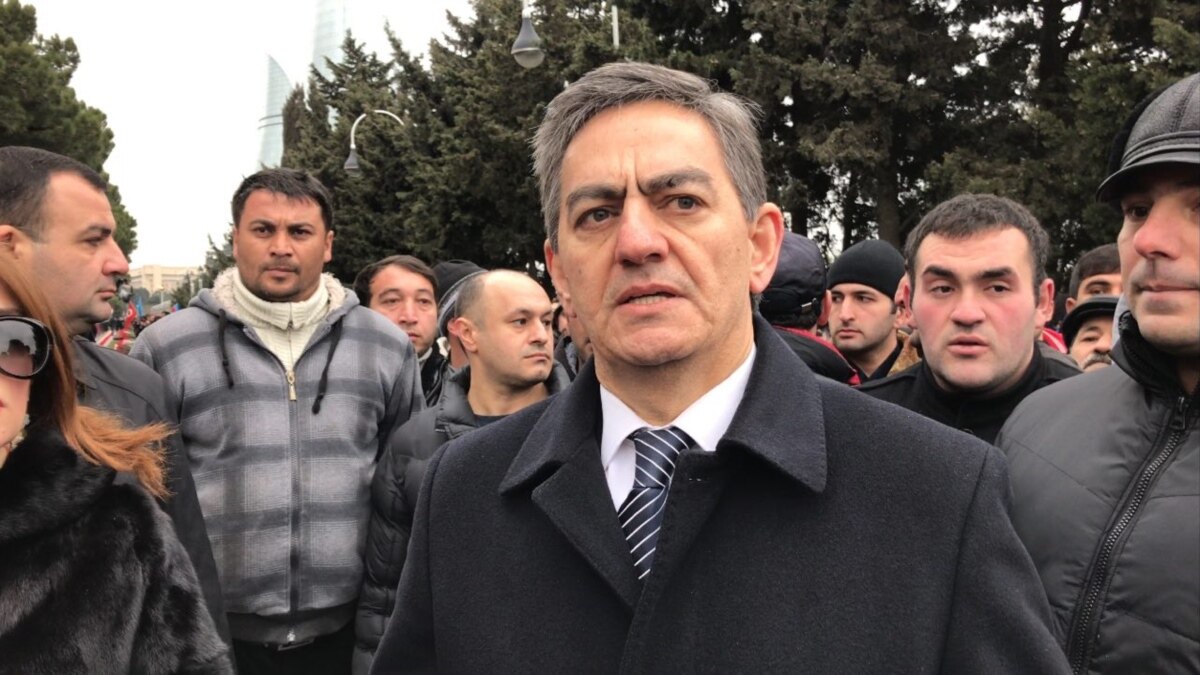
BAKU — Police in Baku briefly detained the leader of the opposition Popular Front Party of Azerbaijan (AXCP), Ali Karimli, before letting him go amid allegations he was trying to undermine public stability.
Opposition politician Tofiq Yaqublu told RFE/RL that police detained Karimli on June 28 as he was leaving an event in the capital to raise money to help activists in the former Soviet republic pay fines resulting from what they call bogus charges.
Police officials gave no explanation for Karimli’s detainment, but Yaqublu said the authorities were trying to disrupt the fundraising event organized at the headquarters of the opposition Musavat party. Critics of longtime President Ilham Aliyev’s government say authorities of the oil-rich South Caucasus nation frequently seek to silence dissent by jailing reporters, human-rights activists, and civil-society advocates without grounds. Dozens of AXCP members have been arrested, and some imprisoned, in recent years on what their supporters have called trumped-up charges.
Aliyev denies any rights abuses. He took power in 2003 shortly before the death of his father, Heydar Aliyev, a former KGB officer and communist-era leader who had ruled Azerbaijan since 1993.

Narges Mohammadi
Imprisoned Iranian women’s rights activist Narges Mohammadi, who was awarded the 2023 Nobel Peace Prize on October 6, said the honor only strengthens her resolve to fight oppression even if it means spending the rest of her life behind bars.
In bestowing the award at an announcement ceremony in the Norwegian capital of Oslo, the Norwegian Nobel Committee said it was honoring the 51-year-old for “her fight against the oppression of women in Iran and her fight to promote human rights and freedom for all.”
“I will never stop striving for the realization of democracy, freedom and equality,” she said in a statement released through The New York Times after the Nobel announcement.
“Standing alongside the brave mothers of Iran…I will continue to fight against the relentless discrimination, tyranny, and gender-based oppression by the oppressive religious government until the liberation of women.”
The award was widely applauded by the international community, though it is likely to be derided by the government in Iran, where Mohammadi’s campaign for freedom of expression and women’s rights has prompted the Islamic regime to arrest her 13 times, convict her five times, and sentence her to a total of 31 years in prison and 154 lashes.
Mohammadi is currently serving multiple sentences in Tehran’s Evin prison amounting to about 12 years’ imprisonment — she has not seen her family in more than eight years — on charges that include spreading propaganda against the state.
“Although the years of her absence can never be compensated for us, the reality is that the honor of recognizing Narges’s efforts for peace is a source of solace for our indescribable suffering,” a family statement said.
“For us, who know that the Nobel Peace Prize will aid her in achieving her goals, this day is a blessed day,” it added.
Mohammadi is the 19th woman to win the 122-year-old prize and the second Iranian woman, after human rights activist Shirin Ebadi won it in 2003.
“This prize means that the world is paying attention to the activities that is being done in Iran for the rights of women, the world sees how the establishment represses women,” Ebadi told RFE/RL’s Radio Farda after the announcement.
“As I have repeatedly said, democracy will enter Iran through the gate of women’s rights.”
Berit Reiss-Andersen, the chair of the Norwegian Nobel Committee, who announced the prize in Oslo, said it remains to be seen whether Mohammadi will be able to receive the award in Norway at a ceremony on December 10.
“If the Iranian authorities make the right decision, they will release her. So she can be present to receive this honor, which is what we primarily hope for,” Reiss-Andersen said.
The Nobel Committee said the 2023 prize also recognizes the hundreds of thousands of people who “have demonstrated against Iran’s theocratic regime’s policies of discrimination and oppression targeting women,” the Norwegian Nobel Committee said in making the announcement on October 6.
The anti-government protests in Iran were sparked by the death of 22-year-old Mahsa Amini while in police custody for an alleged head-scarf violation.
The authorities responded to the unrest with a crackdown on demonstrations that has left hundreds dead.
More recently, 16-year-old high-school student Armita Garavand was reportedly assaulted by the city’s notorious morality police on the Tehran subway on October 1 for not wearing a head scarf.
A source at the Fajr Air Force Hospital, who spoke to RFE/RL’s Radio Farda on condition of anonymity due to security reasons, said Garavand had suffered internal bleeding in the brain and was in critical condition.
Mohammadi’s husband, Taghi Rahmani, told RFE/RL’s Radio Farda that the Nobel announcement “opens a window for the fight for democracy, for human rights, civil equality and it also makes Narges’s responsibility heavy and as she’s said, ‘Any prize makes me stronger for the human rights goals that I have.'”
“I think this is important, it’s not just a prize for Narges, it brings attention to the resistance that is ongoing in Iran for freedom, democracy, and civil equality,” he added.
First arrested 22 years ago, Mohammadi has spent much of the past two decades in and out of jail over her unstinting campaigning for human rights in Iran. She has most recently been incarcerated since November 2021.
Still, the Nobel laureate has managed to remain an activist even while imprisoned, winning the 2018 Andrei Sakharov Prize for Freedom of Thought.
Though she was behind bars for the anti-government protests over the past year that highlighted the Women, Life, Freedom movement triggered by Amini’s death, Mohammadi and fellow inmates staged a symbolic protest in the yard of Evin by burning their head scarves on the anniversary of the 22-year-old’s death.
From behind bars, Mohammadi still contributed an opinion piece for The New York Times in September where she called the dissent a testament to the resilience of protesters and the waning authority of the “theocratic authoritarian regime.”
“What the government may not understand is that the more of us they lock up, the stronger we become,” she wrote.
Last year, in a letter addressed to Javaid Rehman, the UN special rapporteur on human rights in Iran, Mohammadi described the “assault on women during arrest and in detention centers” as part of the Islamic republic’s “suppression program” against activist women.
Iranian authorities have yet to comment publicly on the award.
However, Iran’s semiofficial Fars news agency said Mohammadi “received her prize from the Westerners” for “actions against Iran’s national security.” Teheran has repeatedly blamed the West for fueling the protests, without providing any evidence.
The Nobel Peace Prize, awarded by experts appointed by the Norwegian parliament, comes with an award of 11 million Swedish crowns (about $1 million).
Last year, the prize was awarded to human rights activists in Belarus, Russia, and Ukraine amid harsh crackdowns by Minsk and Moscow on dissent and the Kremlin’s invasion of Ukraine.
This year the Norwegian Nobel Committee received 351 nominations — 259 for individuals and 92 for organizations. The full list is kept secret for 50 years.