
So, what is an LLM? An LLM is a machine-learning neuro network trained through data input/output sets; frequently, the text is unlabeled or uncategorized, and the model is using self-supervised…
Day: October 4, 2023
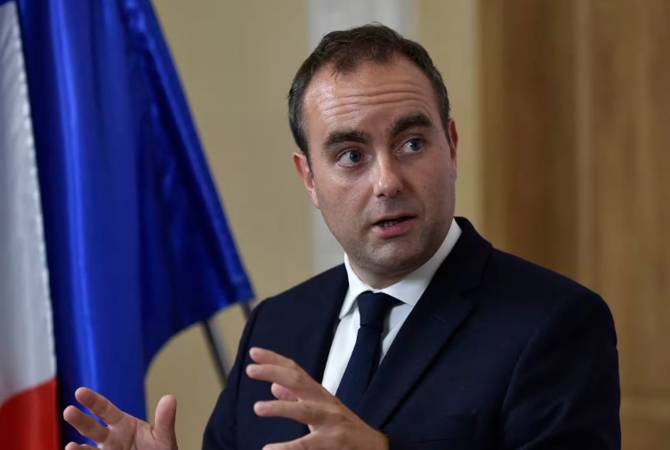
15:14, 1 October 2023
YEREVAN, OCTOBER 1, ARMENPRESS. France is examining Armenia’s defense needs, French Defense Minister Sébastien Lecornu has said.
In an interview with Franceinfo, Lecornu said that French President Emmanuel Macron is personally following the situation concerning Armenia.
“The President of the Republic is personally following this issue, which is important for France, important for many French people who love Armenia or have ties with Armenia,” the French Defense Minister said when asked whether France could intervene militarily to support to preserve Armenia’s territorial integrity.
“The President has said that the integrity, sovereignty and defense of the Armenian population are an absolute goal for us. I’ve met with Armenia’s Defense Minister multiple times. Besides, I think I am the first Minister of the Armed Forces who’s had so many contacts with the Armenian partner. We’ve opened a defense mission in Armenia that didn’t exist before, and which allows to have daily dialogue with the Armenian military and Armenian authorities, particularly to examine their needs in case of necessity,” the French Defense Minister said.
Regarding the question on possible military intervention, Lecornu said he doesn’t believe that could happen, but noted that it is up to the President to give an answer to this question. “In any case, looking at the demands that come from Armenia so that it can defend itself is obviously something that we do,” he added.
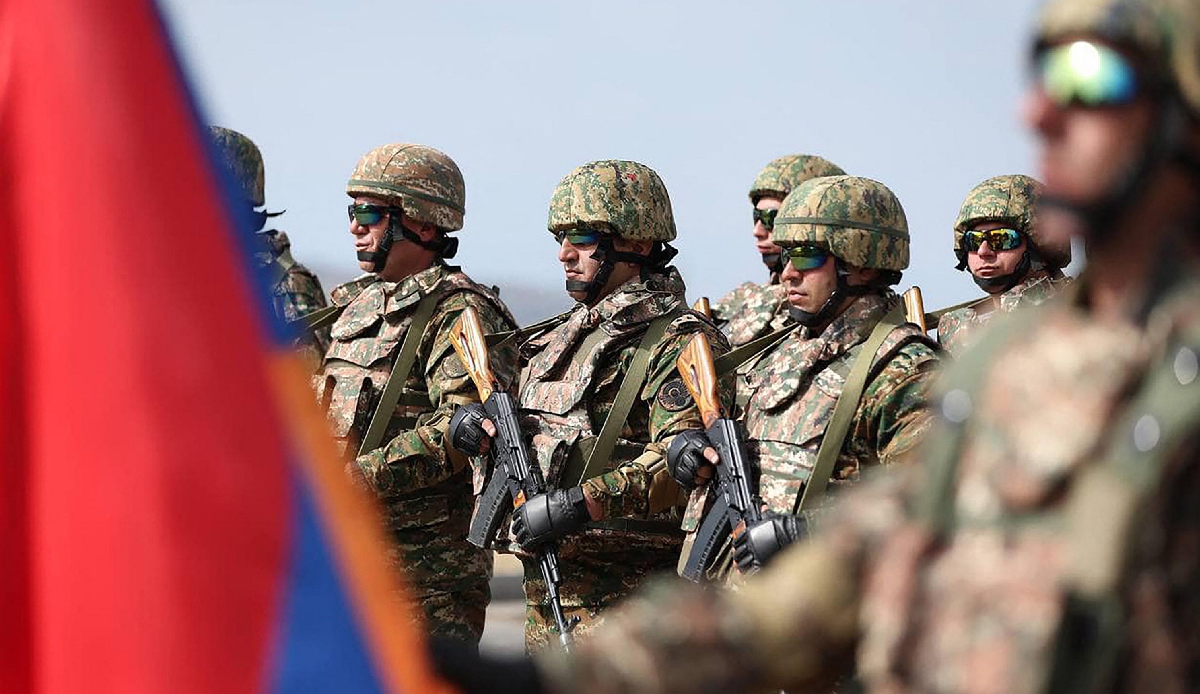
Share Photo
Brad Sherman, a member of the Arizona House of Representatives, who is part of the Armenia Friendship group in the United States (US) Congress, suggested that the United States (US) should supply Armenia with appropriate defense weapons to prevent the occupation.
“It makes little sense to say that Ukraine should not lose territory to armed aggression, but the territorial integrity of the Armenians is not a US national interest. As I insisted 10 years ago, we should have armed Ukraine more before the 2014 invasion,” Sherman said and expressed support for Yerevan on the example of Ukraine.
CALL FOR SANCTIONS AGAINST AZERBAIJAN
In the US Senate, Michigan Senator Gary Peters, who voiced statements in support of Sherman’s statements, introduced a bill to ban security assistance to Azerbaijan.
“The Azerbaijani government has made it clear that it can and will use its military resources to carry out violent attacks against the people of Armenia and Nagorno-Karabakh. We must pass this legislation to block additional American aid to Azerbaijan until it ends its aggression in the region,” Peters said.
Last week, Peters called for the Treasury Department and the State Department to impose sanctions on certain Azerbaijani government officials.
DEFENCE AID FROM FRANCE TO ARMENIA
On the other hand, French Defence Minister Sebastien Lecornu said that they are examining Armenia’s defense needs. In an interview with Franceinfo, Lecornu said that French President Emmanuel Macron is personally following the situation in Armenia.
“The President of the Republic is personally following this issue, which is important for many French people who love Armenia or have ties with Armenia,” Lecornu said.
“In any case, looking at the requests for Armenia to be able to defend itself is of course something we do,” he added.
TENSIONS BETWEEN RUSSIA AND ARMENIA
Russia, which has historical ties with Armenia, has seen its influence in the Caucasus noticeably diminish in the aftermath of the ongoing and costly war in Ukraine. Azerbaijan’s Nagorno Karabakh.
Moscow, which did not react to the anti-terrorist operation in Karabakh, was accused of treason by the Yerevan administration.
Many Western countries, especially the US, see the tension between the two countries as an opportunity to consolidate their power in the region where Russia’s influence is declining. Despite Russia’s objections, the US conducted a military exercise with the Armenian Armed Forces on Armenian territory.
Source: Newsroom
Moscow said Russian and Azerbaijani forces on Monday came under sniper fire in Nagorno-Karabakh, days after Baku secured the surrender of Armenian separatists in an offensive to regain control of the mountainous territory.
Issued on: 02/10/2023 – 19:45Modified: 02/10/2023 – 21:13
3 min

The report came as Armenia said one serviceman was killed along its shared border with Azerbaijan, underscoring the volatility of the region even after Karabakh’s capitulation last week.
“In the city of Stepanakert (Khankendi) a joint Russian-Azerbaijani patrol was shot at by an unknown person using a sniper weapon. There were no casualties,” the Russian defence ministry said.
Russia deployed its peacekeepers to the mountainous region in 2020 as part of a ceasefire deal it had brokered between Azerbaijan and Armenia.
But mired in its war in Ukraine, Moscow refused to intervene when Azerbaijan launched a lightning offensive at the end of September.
Separatists capitulated and said 220 were killed in the fighting, while Azerbaijan reported 199 dead.
Another Armenian serviceman was killed when Azerbaijani forces opened fire near the eastern village of Kut on Monday, Armenia’s defence ministry said.
It also announced two were wounded. Azerbaijan had rejected the claim.
Days after the lightning offensive, fighting has nevertheless subsided.
Eerily silent
Almost all ethnic Armenians — over 100,000 people — have fled the breakaway territory over fears of ethnic cleansing.
After nine days of fear and panic, the exodus of Armenians is over with the Lachin corridor that links Karabakh to Armenia mostly deserted.

AFP journalists on a tour organised by Azerbaijani forces in the rebel stronghold of Stepanakert saw an eerily empty city.
Buildings, restaurants, hotels and supermarkets laid deserted in a city that once had 55,000 inhabitants.
Many were smashed up with empty shelves — signs of looting or hasty departures.
After three decades of Armenian control, the separatist authorities have agreed to disarm, dissolve their government and reintegrate with Azerbaijan.
The separatist government however said some officials would stay to oversee rescue operations.
President Samvel Shahramanyan “will stay in (Karabakh’s main city of) Stepanakert with a group of officials until the search and rescue operations for the remainder of those killed and those missing… are completed,” the separatist government said.
In addition to the toll from the fighting itself, another 170 people died when a fuel depot exploded during the massive exodus.
Separatist official Artak Beglaryan said “a few hundred” Armenian representatives remained in Karabakh.
He said they included “officials, emergency service, volunteers, some persons with special needs.”
Separatists in jail
Yerevan has accused Azerbaijan of conducting a campaign of “ethnic cleansing” to clear Karabakh of its Armenian population.
Baku has denied the claim and called on Armenian residents of the territory to stay and “re-integrate” into Azerbaijan, saying their rights would be guaranteed.
AFP journalists on Monday saw a convoy carrying water and communications workers that was allowed to enter Stepanakert.
The convoy was escorted by the Azerbaijani army.
They also saw a bus carrying officials who planned to open a “re-integration” office in the city for any ethnic Armenians wishing to register with Azerbaijani authorities.
Azerbaijan is holding “re-integration” talks with separatist leaders.
Several senior representatives of its former government and military command have been detained, including Ruben Vardanyan — a reported billionaire who headed the Nagorno-Karabakh government between November 2022 and February.
His four children released a statement on social media demanding his release “from the illegal imprisonment on the territory of Azerbaijan”, saying they “feared for his life and health”.
Azerbaijan’s Prosecutor General Kamran Aliyev said criminal investigations had been initiated into war crimes committed by 300 separatist officials.
“I urge those persons to surrender voluntarily,” he told journalists on Sunday.
(AFP)
After the end of the occupation in Karabakh, the new point of tension was Zangezur. In addition to the Armenian gang members expelled from Karabakh, hundreds of terrorists from different countries, including Lebanon, Syria, Iran, the United States (US), and France, declared war on Azerbaijan with the training videos they filmed in Zangezur.
It was determined that 17 new terrorist camps were built across the region. In these camps, it was seen that in addition to male and female terrorists, children aged between 10 and 17 were also trained. It was determined that 28 special experts from Iran, as well as British, Serbian, Russian, French, French, Danish, and American retired soldiers, came to Zangezur for training activities. On the other hand, the countries that have turned the region into a terrorist base are preparing to open consulates in Gafan.
Armenian gangs, using the same tactics as the terrorist organization PKK, published a video of young children receiving terror training in the camp.
ARMENIAN DIASPORA SUPPORTS
The victory in Karabakh has mobilized the Armenian diaspora in Europe and the United States (US), as well as the administrations in France and Iran. Parallel to the information that terrorists are being transported to Zangezur, which was announced days ago, the diaspora and Armenian-supporting forces, which have increased their field activity, are establishing new camps for Armenian gangs fleeing Karabakh, while on the other hand, with the support of intelligence services, they are transferring terrorists from different countries to the region.
Security Expert Azer Bayramov shared the information that the Zengilan, Gafan, Corus, Jermuh, and Megri regions of Zangezur were chosen as new camps and sabotage areas. Armenian model Armine Harutyunyan is among the terrorists who came to the region with the Syrian-like International Battalion. Bayramov said that the training strategy started with guerrilla warfare tactics, and then was determined on the basis of specialization in areas such as bomb production, sabotage, electronics, anti-aircraft and anti-tank missiles.
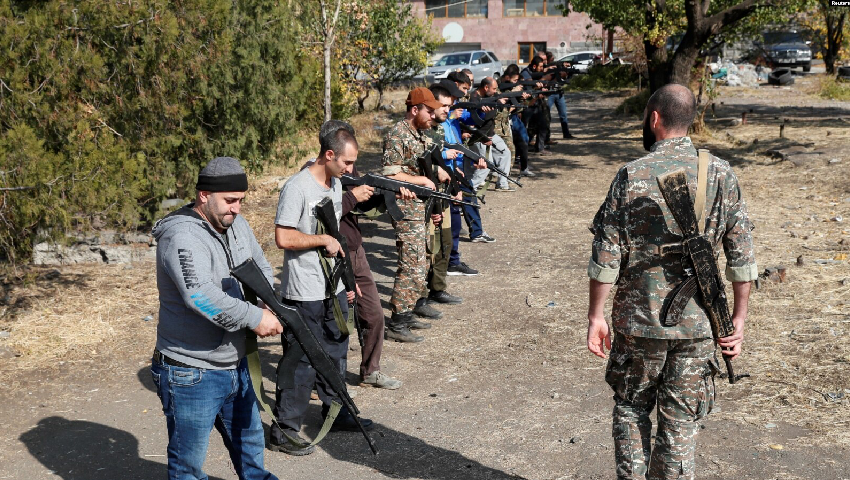
In addition to the Voma terrorist organization, in which Armine Harutyunyan, who made a name for herself in the international media, participated, Vova, Yerkrapa and ASALA terrorists nested in the Zangezur region. Security expert Bayramov, a former commander of the Azerbaijani Army, said that these terrorists, in addition to harassing the border security teams of the Azerbaijani army, also aim to infiltrate Karabakh and Azerbaijani cities for mass murder and have special sabotage training in this direction.
Bayramov also reminded that the Western Azerbaijan-Zangezur line, which was originally a Turkish land and turned into a completely Armenian occupation area with the expulsion of 1 million Turks between 1988-1993, was given to Armenia in 1921 by the Bolshevik Russian occupiers. Zengilan, Gafan, Corus, Jermuh, Megri, Zengilan, Gafan, Corus, Jermuh, Megri, which are connected to Zangezur, which have been extraordinarily mobilized with the complete liberation of Karabakh, were the regions chosen by the terrorist organization and its supporters close to the contact lines.
IRAN ENCOURAGES
Rauf Arifoglu, the President of Azerbaijan Musavat Media Group, stated that France and Iran provide multi-dimensional support to terrorist organizations nesting in Zangezur.
“For the Azerbaijani state and people, as well as Turkey, the liberation of Karabakh marked the beginning of a new era. From now on, the Armenian communists and terrorist apparatuses will spew hatred by unleashing violence and terror. We will face new ASALA-like structures and many assassination and sabotage attempts, especially outside our homeland,” Arifoglu said.
“For this reason, as a state and nation, we must be on high alert. They will try every possible way to bloody our streets. At this point, Iran’s role is more important than Western countries. The Tehran administration is spearheading the terrorist transfer to the region from countries such as Syria, Iran and Lebanon,” he added.
Arifoglu also said that Iran has evil intentions over Karabakh and Azerbaijan.
“On September 12-13 last year, Iranian Revolutionary Guards martyred 80 of our soldiers on the Zangezur line, wearing Armenian military uniforms. Moreover, former Armenian President Sargsyan admitted that their arsenals were filled with Iranian aid. Encouraged by the Western countries and Iran, these terrorists will attack our security forces with harassment and infiltration along the border and organize provocative attacks on shopping malls, airports, hospitals, marketplaces and mosques,” he highlighted.
COUNTER-TERRORISM OPERATION
On September 19, Azerbaijan announced the launch of a counter-terrorism operation following the actions of Armenian separatists in Karabakh. After 24 hours of operation, Armenian separatists reported that they laid down arms. With the disarmament of the separatists, the Azerbaijani flag was re-erected in many settlements occupied since 1994.
Source: Newsroom
Paris has agreed to sign contracts on delivery of military equipment to Armenia, French Foreign Minister Catherine Colonna said on a visit to Yerevan today.
“France has given its agreement to the conclusion of future contracts with Armenia which will allow the delivery of military equipment to Armenia so that it can ensure its defense,” she told reporters after talks with her Armenian counterpart Ararat Mirzoyan.
France’s top diplomat declined to provide any details.
“I can’t give many details. If I have to go a little further, know that there are things that were already agreed between Armenia and France and that are in progress,” Colonna said.
“There is a second category of things that we can do with Armenia,” she added, noting that both countries did not seek an escalation in the region.
Related Articles

The European Union and its member states can “do more” to help Armenia and send “a clear signal”, said French Foreign Minister Catherine Colonna, who also announced on Tuesday that France would be delivering “military equipment”.
“I have made an official written request to the High Representative of the European Union, Josep Borrell, […] to include Armenia in the scope of beneficiaries of the European Peace Facility [EPF]”, announced Colonna on Tuesday evening at a joint press conference with her Armenian counterpart in Yerevan.
The EPF is the EU’s off-budget financial instrument to replace member states’ arms donations provided to Ukraine and partner countries.
As for Armenia, the French minister also asked Borrell “to increase the number of staff in the European Observation Mission and to strengthen its mandate so that this mission is even more useful than it is”.
“But we [Europeans] can do more”, the minister added.
Colonna indicated that France’s “effort” was also “European”, hoping that “the European Union and its member states will now send out a clear signal” in support of Armenia.
A signal aimed at “all those who would be tempted to challenge the territorial integrity of Armenia. Any such action would be met with strong reactions. Let there be no doubt about that”, she added. “We [Europeans] must affirm this together”.
“I also hope that we can count on the support of other friends, partners and allies. And in saying that, I am, of course, thinking of the United States of America”, Colonna added.
After the meeting of EU foreign affairs ministers in Kyiv on Monday, the head of French diplomacy said she had noted a shift in favour of Armenia on the part of certain European partners. “I think I can say that the tragic events that have just unfolded in Nagorno-Karabakh are leading a certain number of our partners to change their vision”.
She hoped this would “bring them closer to our points of view and to the unity that is necessary among Europeans”, with the objective remaining a “political solution and a fair and lasting peace agreement”.
Delivery of military equipment
From a bilateral Franco-Armenian perspective, the Minister also announced that “France has given its agreement to the conclusion of future contracts forged with Armenia, which will enable the delivery of military equipment to Armenia so that it can ensure its defence”.
When asked whether this was an arms sale or a non-returnable shipment, the French Ministry of Foreign Affairs did not respond to Euractiv’s requests at the time of publication of this article.
These announcements and the visit by the head of French diplomacy come in the wake of Azerbaijan’s military operation against the separatist region of Nagorno-Karabakh, which resulted in the displacement of “more than 100,000 Armenian refugees” to Armenia. “The situation in Nagorno-Karabakh […] is a flagrant violation of international law”, the French minister reiterated, assuring Armenia of France’s “constant support”.
This support “will continue and will be shown again if necessary”.
The response, in addition to humanitarian support, is also “political”, said the minister, according to whom France “has been more active than others and for longer” alongside Armenia.
Colonna said France is working on “a draft [UN Security Council] resolution to guarantee a permanent international presence in Nagorno-Karabakh”.
The minister’s visit was also “a way of demonstrating France’s extreme vigilance against any attempt to threaten or consider undermining Armenia’s sovereignty and territorial integrity”, she concluded.
(Davide Basso | Euractiv.fr)
Read more with EURACTIV
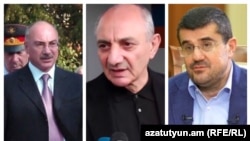
Former Nagorno-Karabakh leaders Arkadi Gukasian (left), Bako Sahakian (center), and Arayik Harutiunian (file photo)
Authorities in Azerbaijan reportedly have arrested more former separatist leaders of Nagorno-Karabakh after Baku reclaimed control of the ethnic Armenian-populated breakaway region in a lightning military operation last month.
Arayik Harutiunian, who led the region before stepping down as president at the beginning of September, was arrested and was being transported to the Azerbaijani capital, sources confirmed to RFE/RL on October 3.
Arkadi Gukasian, who served as the separatist president from 1997 to 2007, and Bako Sahakian, who held the job from 2007 to 2020, were also arrested along with the speaker of the separatist legislature, Davit Ishkhanian.
Gukasian, Sahakian, and Ishkhanian have already been transported to Baku, sources told RFE/RL. The arrests have not been officially confirmed.
The arrests follow the detention of other officials by Azerbaijan’s State Security Service (DTX). The DTX said on September 29 that it detained Davit Manukian, a former deputy commander of the breakaway region’s de facto armed forces, on “terrorism” charges. Two days earlier, Azerbaijan arrested the former de facto prime minister of Nagorno-Karabakh, billionaire Ruben Vardanian.
Sources close to ethnic Armenian de facto authorities in the region confirmed to RFE/RL on September 29 that Azerbaijani officials also detained Levon Mnatsakanian, a former commander of Nagorno-Karabakh’s separatist armed forces, at a border checkpoint with Armenia.
Other leaders of Nagorno-Karabakh have arrived safely in Armenia, according to State Minister Artur Harutiunian. He told RFE/RL on October 3 that he arrived in Armenia through the Azerbaijani checkpoint accompanied by the director of the National Security Service (NSS), Ararat Melkumian, Internal Affairs Minister Karen Sarkisian, and the head of the presidential administration Karen Shahramanian.
Artur Harutiunian did not comment on the detention of the former presidents and the speaker of parliament, saying only that when they were escorted out, they were still in Stepanakert.
Other details could not be verified because communications with Nagorno-Karabakh have been disrupted.
Although Baku pledged to respect the rights of ethnic Armenians after the military campaign, most of the population have fled the region fearing reprisals after three decades of separatist rule.
The UN mission has sent a mission to Nagorno-Karabakh to assess humanitarian needs in the region, but an Armenian official complained on October 3 that it “has done everything possible to legitimize ethnic cleansing, illegal arrests, destruction of civil infrastructure and other crimes carried out by Azerbaijan.”
Edmon Marukian, Armenian ambassador-at-large, said the people in the mission “discredit the UN as an institution.”
Marukian made the comments on X, formerly Twitter, but they were later deleted.
Armenia has also filed a lawsuit with the UN International Court of Justice (ICJ) to prevent the targeting of ethnic Armenians.
The lawsuit says Yerevan expects that Baku will “refrain from taking punitive measures against current or former political representatives or military personnel of Nagorno-Karabakh.”
Photo Gallery:
Nagorno-Karabakh, which along with seven adjacent districts had been under ethnic Armenian control for nearly three decades prior to the war in 2020, is internationally recognized as part of Azerbaijan.
The 2020 war ended with a Russian-brokered cease-fire, under which Moscow deployed about 2,000 troops to the region to serve as peacekeepers.
Azerbaijan’s presidential office said the country has presented a plan for the “reintegration” of ethnic Armenians in the region, noting that “the equality of rights and freedoms, including security, is guaranteed to everyone regardless of their ethnic, religious or linguistic affiliation.”

