
France is ready to begin deliveries of military equipment to Armenia to beef up its defense capabilities, French Foreign Minister Catherine Colonna said on a visit to Yerevan on October 3.
Day: October 4, 2023
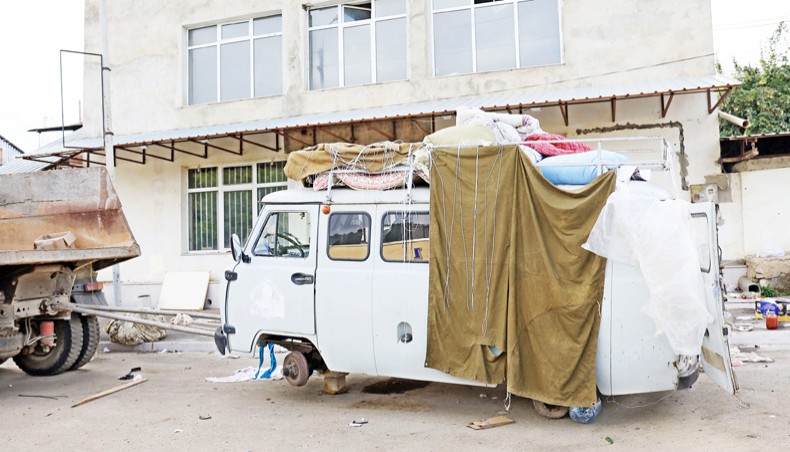
A wreck of a van was abandoned on the side of the road on the outskirts of the city of Stepanakert, retaken last week by Azeri troops, during an Azeri government organised media trip, in Azerbaijan’s controlled region of Nagorno-Karabakh, on Monday. — AFP photo
Armenian separatists from Nagorno-Karabakh said on Monday their officials would stay in the region after Azerbaijan’s offensive for rescue operations, as Yerevan reported ‘casualties’ in a border shoot out with Baku’s forces.
Separatists says over 200 people were killed in fighting Azerbaijan late last month and that a further 170 died when a fuel depot exploded as scores of civilians fled Karabakh over fears of ethnic cleansing.

After three decades of Armenian control, the separatist authorities have agreed to disarm, dissolve their government and reintegrate with Azerbaijan in the wake of Baku’s one-day military operation in late September.
Almost all of the around 1,20,000 residents of the mountainous region fled after Baku’s offensive.
The separatist government however said leader Samvel Shahramanyan will stay in Karabakh’s main city of Stepanakert with a group of officials ‘until the search and rescue operations for the remainder of those killed and those missing’ were completed.
‘The government continues to focus on the issue of those citizens who want to move to the Republic of Armenia,’ the government added in a statement.
Separatist official Artak Beglaryan said ‘a few hundred’ Armenian representatives remained in Karabakh.
He said they included ‘officials, emergency service, volunteers, some persons with special needs.’
Separatist official Artak Beglaryan said ‘a few hundred’ Armenian representatives remained in Karabakh.
He said they included ‘officials, emergency service, volunteers, some persons with special needs.’
Yerevan reported ‘casualties’ on its side, saying Azerbaijani forces had fired on ‘a vehicle carrying food’ for its soldiers in a border region.
Armenia said the incident took place near the eastern village of Kut. Azerbaijan rejected the claim.
Yerevan has accused Azerbaijan of conducting a campaign of ‘ethnic cleansing’ to clear Karabakh of its Armenian population.
Baku has denied the claim and called on Armenian residents of the territory to stay and ‘re-integrate’ into Azerbaijan, saying their rights would be guaranteed.
AFP journalists on Monday saw a convoy carrying water and communications workers that was allowed to enter Stepanakert.
The convoy was escorted by the Azerbaijani army.
They also saw a bus carrying officials who planned to open a ‘re-integration’ office in the city for any ethnic Armenians wishing to register with Azerbaijani authorities.
Azerbaijan is holding ‘re-integration’ talks with separatist leaders.
Several senior representatives of its former government and military command have been detained, including Ruben Vardanyan — a reported billionaire who headed the Nagorno-Karabakh government between November 2022 and February.
His four children released a statement on social media Monday demanding his release ‘from the illegal imprisonment on the territory of Azerbaijan’, saying they ‘feared for his life and health.’
Azerbaijan’s Prosecutor General Kamran Aliyev said criminal investigations had been initiated into war crimes committed by 300 separatist officials.
‘I urge those persons to surrender voluntarily,’ he told journalists on Sunday.
More about:
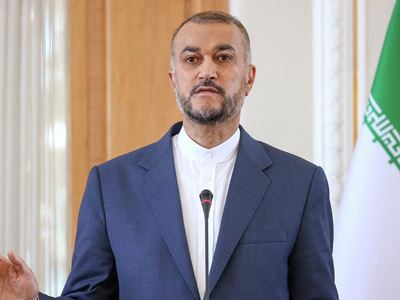

Caucasus analysts are weighing up whether Turkish President Recep Tayyip Erdogan means what he says when he states that Turkey and Azerbaijan would settle for a land corridor that links their two countries via Iran rather than Armenia.
Earlier this week—with Armenia facing a grave crisis with tens of thousands of Nagorno-Karabakh refugees pouring over the border following the Azerbaijani military blitz that retook control of their enclave homeland—Erdogan and Azerbaijani leader Ilham Aliyev hinted that they would push for Armenia to accept their long desired “Zangezur Corridor”. This envisaged link would connect mainland Azerbaijan with Turkey via Armenian territory and the Azerbaijani Nakhchivan exclave.
However, as Erdogan returned to Turkey from a meeting with Aliyev in Nakhchivan—where on September 25 the two presidents jointly opened a modernised Azerbaijani military installation—he spoke with reporters accompanying him, saying that the land bridge project could be realised even without the use of Armenian territory. “If Armenia does not pave the way for [the corridor], where will it pass through? It will pass through Iran,” Turkish media reported him as saying. “Iran currently considers this positively. So, it would be possible to pass from Iran to Azerbaijan,” he added.
At a cabinet meeting later the same day, Erdogan reiterated the statement.
RFE/RL noted that a September 17 article on Haqqin.az, a website associated with Azerbaijan’s security services, differentiated between a “Western Zangezur Corridor” passing through Armenia’s Syunik province and an “Eastern Zangezur Corridor” taking a route through Iran.
The piece concluded: “If Yerevan continues to delay the opening of the Western Zangezur Corridor, then Azerbaijan will open the Eastern Zangezur Corridor with Iran, which means that Armenia will remain outside of yet another strategic project and will once again be a loser.”
A senior official in Azerbaijan’s foreign ministry, speaking on condition of anonymity, confirmed to RFE/RL that the Iranian route would be acceptable for Baku. “The ball is in Armenia’s court. If this country wants to establish overland communication with the outside world after 30 years of self-imposed isolation, they have to live up to their obligations on the Zangezur Corridor. If not, the communication will be established anyway, but in this case via Iran thus bypassing Armenia,” the official was cited as saying.
Armenia is concerned that an agreement for a Western Zangezur Corridor running across its territory would mean a loss of sovereignty if it was unable to monitor traffic on the road and planned railway. But the quoted official dismissed this anxiety as a secondary concern, saying it would be a matter for negotiations. “The most important [thing] is the opening of the traffic itself,” the official added.
One hypothesis advanced by analysts is that Aliyev is wary of putting too much pressure on Armenian leader Nikol Pashinyan in the wake of Azerbaijan’s crushing of what was left of the self-proclaimed Republic of Artsakh (the name the ethnic-Armenians gave to their internationally unrecognised breakaway state) because he does not want to see Pashinyan toppled amid Armenian outrage over the fate of the enclave and replaced by a revanchist administration that might have designs on launching an attempt to take back the lost lands.
“Aliyev will give Armenia a bit of time to handle domestic unrest,” Fuad Shahbaz, a Baku-based political analyst, told RFE/RL, noting that Aliyev conspicuously praised Pashinyan—who during the Azerbaijani offensive in Karabakh announced publicly that Armenian armed forces would not intervene—in a victory address to the nation on September 20, saying: “During this period, today and yesterday, Armenia has unexpectedly shown political competence, which we appreciate.”
But the fear remains that Aliyev and Erdogan are just biding their time and, when the international spotlight is not shining so brightly on the fate of the “Artsakh Armenians”, will return to their demand that a Western Zangezur Corridor, running through Armenia, must be accepted.
Should that happen, however, they would likely be dealing not only with Armenian objections. Iran too has so far objected to the idea of a corridor running across Armenia, a short distance from the parallel Armenia-Iran border, fearing it would disrupt transit routes used by Iranian traders and open the way to more Turkish geopolitical influence in what it sees as its South Caucasus backyard.
Zangezur is important to Turkey in that it would give the country direct passage to both “brother nation” Azerbaijan and the Turkic-speaking nations of Central Asia, namely Kazakhstan, Kyrgyzstan, Turkmenistan and Uzbekistan.
High-level diplomats from the United States, European Union and Russia held a secret meeting in Istanbul two days before Azerbaijan launched a large-scale attack on Artsakh that has resulted in the almost complete depopulation of Artsakh, politico.eu reported late Tuesday.
A senior diplomat with knowledge of the discussions told Politico the secret talks took place on September 17 in Istanbul as part of efforts to pressure Azerbaijan to end its nine-month blockade of Artsakh and allow humanitarian aid convoys from Armenia to deliver aid.
“According to the envoy, the meeting focused on ‘how to get the bloody trucks moving’ and ensure supplies of food and fuel” could reach the Artsakh residents, Politico reported.
Politico revealed that the U.S. was represented by Louis Bono, Washington’s senior adviser for Caucasus negotiations, while the EU dispatched Toivo Klaar, its representative for the region. Russia, meanwhile, sent Igor Khovaev, who serves as Putin’s special envoy on relations between Armenia and Azerbaijan.
In a statement, an EU official told Politico that “we believe it is important to maintain channels of communications with relevant interlocutors to avoid misunderstandings.” The official also observed Klaar had sought to keep open lines of communication on numerous fronts over the “past years,” including in talks with Khovaev and Russian Deputy Foreign Minister Mikhail Galuzin.
A spokesperson for the U.S. State Department declined to comment on the meeting, saying only that “we do not comment on private diplomatic discussions.”
However, a U.S. official familiar with the matter who was granted anonymity by Politico to discuss sensitive diplomatic matters explained the discussions came out of an understanding that the Kremlin still holds sway in the region.
“We need to be able to work with the Russians on this because they do have influence over the parties, especially as we’re at a precarious moment right now,” the U.S. official told Politico.
Since Azerbaijan’s attack on September 19, however, Russia has blamed Yerevan for the situation in Artsakh, while the U.S. and the EU have, on the one hand, hardened their criticism of Baku while pressing for a peace agreement between Armenia and Azerbaijan.
В “гордом” одиночестве друг Путина Шредер провел церемонию по случаю объединения Германии: известна Диалог.UA – Всегда два мнения

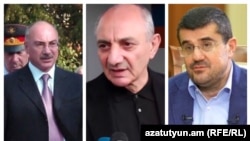
Former Nagorno-Karabakh leaders Arkadi Gukasian (left), Bako Sahakian (center), and Arayik Harutiunian (file photo)
Authorities in Azerbaijan reportedly have arrested more former separatist leaders of Nagorno-Karabakh after Baku reclaimed control of the ethnic Armenian-populated breakaway region in a lightning military operation last month.
Arayik Harutiunian, who led the region before stepping down as president at the beginning of September, was arrested and was being transported to the Azerbaijani capital, sources confirmed to RFE/RL on October 3.
Arkadi Gukasian, who served as the separatist president from 1997 to 2007, and Bako Sahakian, who held the job from 2007 to 2020, were also arrested along with the speaker of the separatist legislature, Davit Ishkhanian.
Gukasian, Sahakian, and Ishkhanian have already been transported to Baku, sources told RFE/RL. The arrests have not been officially confirmed.
The arrests follow the detention of other officials by Azerbaijan’s State Security Service (DTX). The DTX said on September 29 that it detained Davit Manukian, a former deputy commander of the breakaway region’s de facto armed forces, on “terrorism” charges. Two days earlier, Azerbaijan arrested the former de facto prime minister of Nagorno-Karabakh, billionaire Ruben Vardanian.
Sources close to ethnic Armenian de facto authorities in the region confirmed to RFE/RL on September 29 that Azerbaijani officials also detained Levon Mnatsakanian, a former commander of Nagorno-Karabakh’s separatist armed forces, at a border checkpoint with Armenia.
Other leaders of Nagorno-Karabakh have arrived safely in Armenia, according to State Minister Artur Harutiunian. He told RFE/RL on October 3 that he arrived in Armenia through the Azerbaijani checkpoint accompanied by the director of the National Security Service (NSS), Ararat Melkumyan, Internal Affairs Minister Karen Sargsian, and the head of the presidential administration Karen Shahramanian.
Artur Harutiunian did not comment on the detention of the former presidents and the speaker of parliament, saying only that when they were escorted out, they were still in Stepanakert.
Other details could not be verified because communications with Nagorno-Karabakh have been disrupted.
Although Baku pledged to respect the rights of ethnic Armenians after the military campaign, most of the population have fled the region fearing reprisals after three decades of separatist rule.
The UN mission has sent a mission to Nagorno-Karabakh to assess humanitarian needs in the region, but an Armenian official complained on October 3 that it “has done everything possible to legitimize ethnic cleansing, illegal arrests, destruction of civil infrastructure and other crimes carried out by Azerbaijan.”
Edmon Marukian, Armenian ambassador-at-large, said the people in the mission “discredit the UN as an institution.”
Marukian made the comments on X, formerly Twitter, but they were later deleted.
Armenia has also filed a lawsuit with the UN International Court of Justice (ICJ) to prevent the targeting of ethnic Armenians.
The lawsuit says Yerevan expects that Baku will “refrain from taking punitive measures against current or former political representatives or military personnel of Nagorno-Karabakh.”
Photo Gallery:
Nagorno-Karabakh, which along with seven adjacent districts had been under ethnic Armenian control for nearly three decades prior to the war in 2020, is internationally recognized as part of Azerbaijan.
The 2020 war ended with a Russian-brokered cease-fire, under which Moscow deployed about 2,000 troops to the region to serve as peacekeepers.
Azerbaijan’s presidential office said the country has presented a plan for the “reintegration” of ethnic Armenians in the region, noting that “the equality of rights and freedoms, including security, is guaranteed to everyone regardless of their ethnic, religious or linguistic affiliation.”
With reporting by AP and Reuters
Against the backdrop of Russia’s invasion of Ukraine, combating authoritarian aggression has taken center stage in Washington’s foreign policy agenda. But given the West’s inaction in the face of yet another Azerbaijani assault on Nagorno-Karabakh this week—which resulted in the death of at least 32 people and the forced displacement of several thousand more—it is clear that not all crises are made equal.
During U.S. President Joe Biden’s remarks on Tuesday before the United Nations General Assembly, he asked “if we abandon the core principles of the United States to appease an aggressor, can any member state of this body feel confident that they will be protected?” Yet just hours prior, Azerbaijan launched an unprovoked assault on Nagorno-Karabakh following nine months of blockading the region’s 120,000 indigenous Armenians. The blockade was already causing critical shortages of food, medicine, fuel, and other basic necessities—forcing Karabakh’s Armenians into a position of dependence and subservience. Under these conditions, many Armenians will see no option but to leave their homes. But if Azerbaijan’s record of detaining civilians at its military checkpoint tells us anything, it’s that the ability for Armenians to flee persecution isn’t guaranteed.
A ceasefire announced on Wednesday appears to have largely brought the latest assault to a halt. Yet the latest fighting is a crisis the U.S. had every opportunity to prevent but spent months ignoring—prioritizing the preservation of energy ties with authoritarian Azerbaijan over the imminent threat to Armenian lives. The U.S. did not simply turn a blind eye to Azerbaijan’s longstanding attempts to impose its will on the Armenian people through starvation and force—it repeatedly emboldened and legitimized Azerbaijan’s coercive diplomacy by refusing to hold Azerbaijan accountable for its blockade. In standing by as Armenia was forced to engage in peace talks with a gun to its head, the U.S. appeared content with waiting until the Armenians of Karabakh were desperate enough to submit to Azerbaijan’s terms.
But the U.S. can learn from its past mistakes and make clear to Azerbaijan that its acts of aggression will not be rewarded. With negotiations between Azerbaijan and Karabakh’s Armenians on the horizon, the fate and status of the region’s Armenian population remains uncertain. What is certain, however, is that Azerbaijan cannot be trusted with their security.
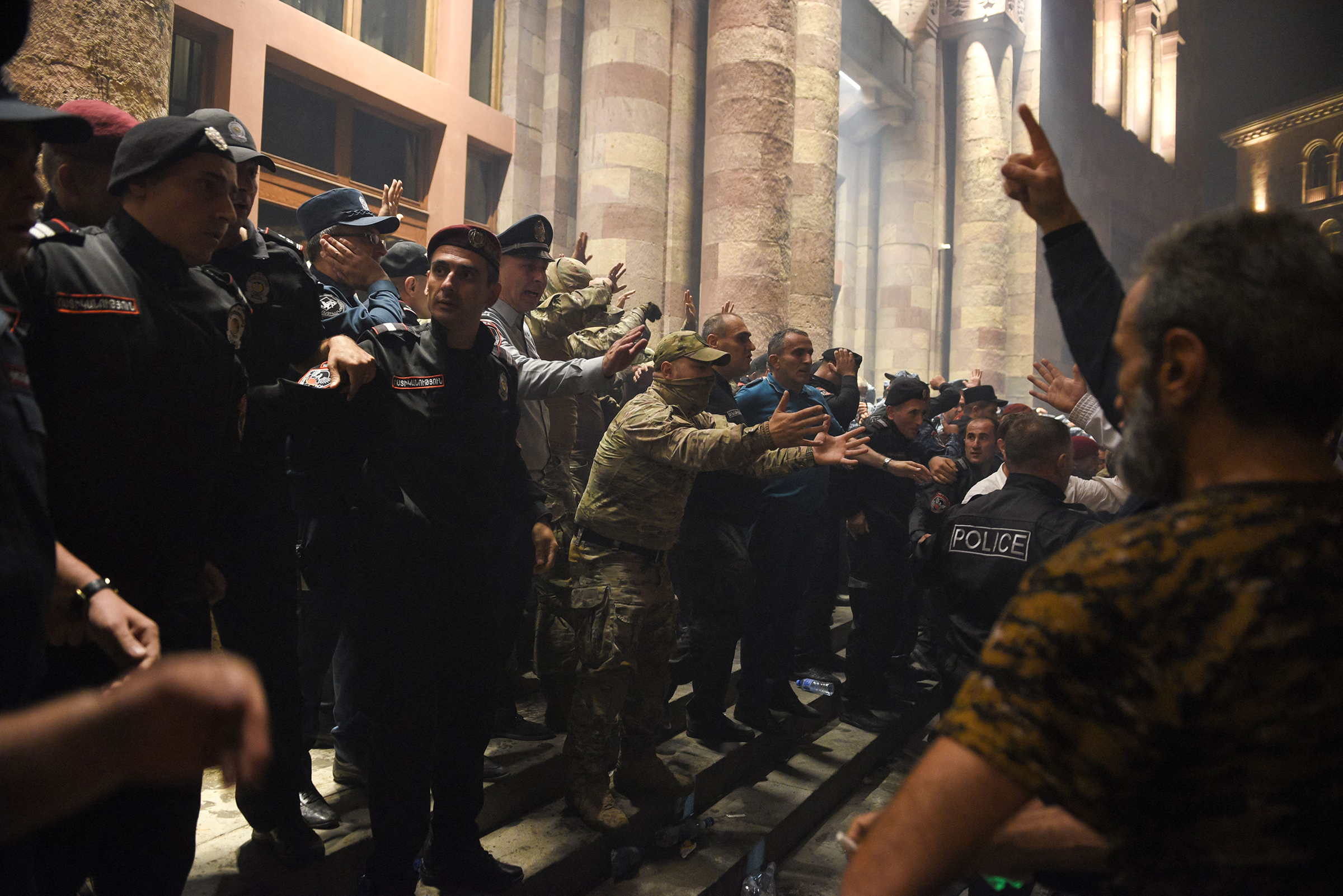 Protesters clash with police as they call on Armenian Prime Minister Nikol Pashinyan to resign in central Yerevan on Sept. 19. Azerbaijan launched a military operation against the the disputed Nagorno-Karabakh region, warning it would “continue until the end” in the territory.Karen Minasyan—AFP/Getty Images
Prior to Azerbaijan’s assault on Nagorno-Karabakh, international legal experts including former International Criminal Court Chief Prosecutor Luis Moreno Ocampo and former U.N. Special Advisor on the Prevention of Genocide Juan Méndez warned that Azerbaijan’s actions constituted a violation of the United Nations Genocide Convention. Those concerns remain no less pertinent today—and the risks of further tragedy remain extremely high should the international community fail to take action and hold Azerbaijan to account.
During a recent U.S. Senate Foreign Relations Committee hearing, Acting Assistant Secretary of State for Europe and Eurasia Yuri Kim vowed that “the United States will not countenance any action or effort—short-term or long-term—to ethnically cleanse or commit other atrocities against the Armenian population of Nagorno-Karabakh.”
Read More: Column: Don’t Just Remember the Armenian Genocide. Prevent It From Happening Again
Despite this, the U.S. failed to match those words with any meaningful action, an approach that could create a credibility crisis and embolden other would-be aggressors. To rectify this, the Biden Administration should suspend military assistance to Baku via the enforcement of statutory restrictions outlined in Section 907 of the FREEDOM Support Act, which was enacted in the early 1990s in response to Azerbaijan’s first war on Nagorno-Karabakh and humanitarian blockade against Armenian civilians. Indeed, this is what the chairs of the Senate Foreign Relations and Armed Services Committees, Bob Menendez and Jack Reed, urged in a recent letter to Secretary Blinken.
For decades, successive U.S. administrations have waived Section 907 restrictions on national security grounds. The State Department says it is reviewing assistance to Azerbaijan but refuses to publicly enforce restrictions out of fear this would undermine peace talks with Armenia and push Baku into Moscow’s arms. But if withholding the enforcement of these restrictions was meant to compel behavioral change in Baku, then clearly this strategy has failed.
The U.S. must also directly target Azerbaijani officials complicit in the perpetration of human rights abuses with sanctions, including under the Global Magnitsky Act. The Biden Administration can use Thursday’s upcoming emergency meeting of the United Nations Security Council convened by France to pursue robust guarantees for Nagorno-Karabakh’s Armenians. This must include an international peacekeeping force on the ground and a humanitarian mission that ensures Armenians are not left at the mercy of Azerbaijan.
How the U.S. responds to Azerbaijan’s latest assault on Nagorno-Karabakh will be a test of its commitment to not only combating authoritarian expansionism—but also in the duty to prevent further atrocities. A failure to change course would not only threaten the survival of Nagorno-Karabakh’s Armenians, but send a dangerous signal to despots the world over.