
Дмитрию Медведеву может принадлежать еще одна яхта – 29-метровая GV стоимостью более 420 млн рублей, говорится в новом расследовании “Верстки”. Журналисты под видом инспекторов позвонили капитану судна и спросили, действует ли специальный режим “для Дмитрия Анатольевича во… pic.twitter.com/N5zknyljz4
— DW на русском (@dw_russian) October 31, 2023
Day: October 31, 2023
What a get by RT. I wonder how they gained such unique access to Hamas’ tunnel systems… https://t.co/mEJLPWW1YF
— Michael Weiss (@michaeldweiss) October 31, 2023

10:25 AM 10/31/2023 – Selected Articles – The News And Times
FBI Director Christopher Wray testifies before the House Homeland Security Committee on Nov. 15, 2022. Chip Somodevilla/Getty Images FBI Director Christopher…
The FBI warns of an increased terrorist threat NPR
The FBI director warns about threats to Americans by those inspired by the Hamas attack on Israel WDIV ClickOnDetroit
Video: Netanyahu Says Israel Will Not Accept a Cease-Fire With … The New York Times
Israel’s war will not eliminate Hamas … it will eliminate Netanyahu Middle East Monitor
UK’s Sunak Stresses to Israel’s Netanyahu Need Minimise Gaza Civilan Casualties U.S. News & World Report
PM call with Prime Minister Netanyahu of Israel : 31 October 2023 GOV.UK
Police officers responded to “disturbances” in Shuafat, Jerusalem, on Tuesday, October 31, according to Israel’s national police force. Israeli Police said on X, formerly Twitter, that officers were responding to reports of suspects approaching the Jerusalem security fence, which separates Shuafat from other territories in Jerusalem, and throwing…
Cornell University calls in FBI to investigate anti-Semitic threats against students – The Telegraph
Cornell University calls in FBI to investigate anti-Semitic threats against students The Telegraph
Israel’s U.N. Ambassador Criticized for Wearing a Yellow Star of David The New York Times
Pro-Palestine supporters storm US hearing on £100 billion Israel aid Metro.co.uk
Former President Donald Trump’s rhetoric has regularly bordered on the incitement of violence. Lately, however, it has become even more violent. Yet both the press and the public have largely just shrugged their shoulders. As a political philosopher who studies extremism, I believe people should be more worried about this. Mark Milley, the outgoing…
The Kremlin’s increasing use of Russian Orthodox priests as spies and propagandists is a security threat that the West should counter more decisively. Bulgaria and North Macedonia have expelled Russian and Belorussian clerics for acts contravening their national security, and in the US the FBI has warned Russian and Greek Orthodox churches that the…
Praying for Putin: Spies in Cassocks Threaten the West Center for European Policy Analysis
The mystery Russian investor behind the restoration of the Sukhumi (Sukhum) airport has been revealed as the son of Rashid Nurgaliyev — Russia’s former interior minister and current First Deputy Secretary of the Russian Security Council. On Friday, Abkhazia’s Economy Ministry and Russia’s Economic Development Ministry announced that Infrastructural…
Putin Ruling May Have Unintended Sanctions Consequences Law360
Kremlin shortens quarantine before meeting Putin as presidential elections approach Fox News
Spain’s Catholic bishops have apologized again for sex abuses committed by members following a report by the national ombudsman that accused the church of widespread negligence.
Кирилл Мартынов: “Война в Украине прекратится, когда Путин перестанет быть президентом России”. Подпишитесь на канал Радио Свобода http://bit.ly/2vQLCnh Включите уведомления о новых видео, нажав на значок колокольчика. #Путин #Украина #война
Iran Says Proxies Won’t ‘Remain Silent’ On Israel-Hamas War Barron’s

The News And Times Information Network – Blogs By Michael Novakhov – thenewsandtimes.blogspot.com
Michael Novakhov’s favorite articles
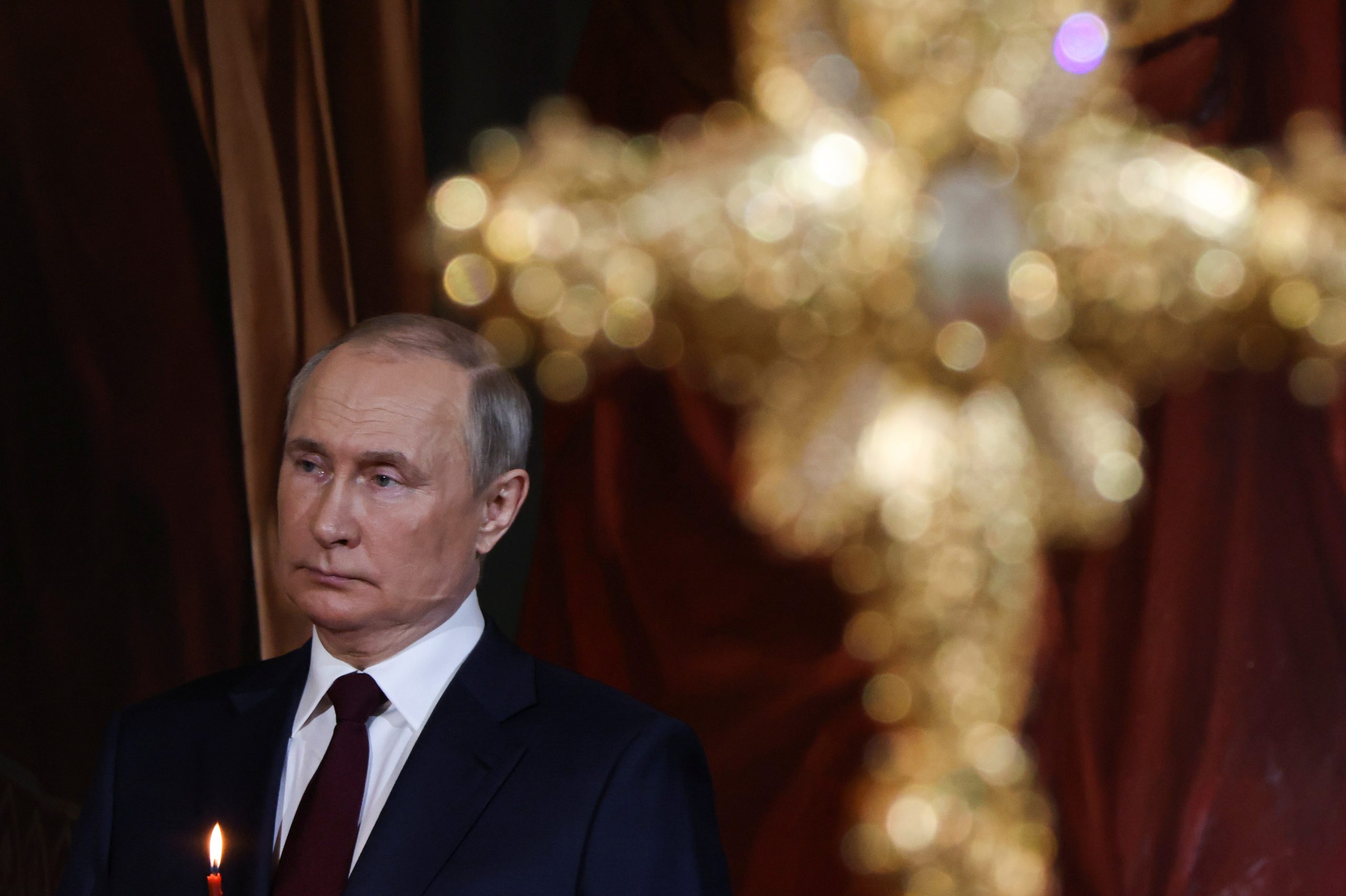
The Kremlin’s increasing use of Russian Orthodox priests as spies and propagandists is a security threat that the West should counter more decisively.
Bulgaria and North Macedonia have expelled Russian and Belorussian clerics for acts contravening their national security, and in the US the FBI has warned Russian and Greek Orthodox churches that the Kremlin’s intelligence services may be using them to recruit agents.
Analysts have long warned that the Kremlin employs the Orthodox Church as a tool for advancing its foreign policy and infiltrating European Union (EU) and NATO member states. According to declassified archives, the head of the Church, Patriarch Kirill, worked for both the KGB and its successor, the FSB.
Kirill has wholeheartedly supported Russia’s invasion of Ukraine, portraying it as a holy war against “Nazis”. During a sermon in September 2022, he reportedly told Russian soldiers that “sacrifice in the course of carrying out your military duty washes away all sins.”
Kirill sought to justify Putin’s war, saying it was essential to “defend God’s truth” and that Russians and Ukrainians were “really one people” joined by a “common national identity.”
The Church has served as a sharp power tool for Putin’s foreign policy over other issues as well. In 2018, during a visit to Bulgaria, Kirill used the commemoration of the 140th anniversary of the 1877-78 Russo-Turkish war, which set Bulgaria on a path to independence, to scold Bulgarian President Rumen Radev for showing “ingratitude” to Moscow.
The Kremlin envoy had been enraged by a speech from Radev in which he expressed gratitude to the Romanian, Ukrainian, Russian, Belarussian, Finnish, Polish, and Lithuanian soldiers who sacrificed their lives in the war. Kirill called this a “wrong historical interpretation” and said Russia alone deserved thanks for liberating Bulgaria from Ottoman rule.
His words amounted to a high-handed and clearly political, intervention in the affairs of Bulgaria with a propaganda message designed to amplify divisions in Bulgarian society (where there is a traditional pro-Russian segment of the population), and to assert Russia’s desired image as the sole defender of the Christian world.
Although the close ties between the Kremlin, its intelligence services, and the Orthodox Church are well-documented, Western governments have hesitated to sanction high-ranking clergy to avoid accusations of violating religious liberty.
Get the Latest
Sign up to receive regular emails and stay informed about CEPA’s work.
The EU attempted to freeze Kirill’s assets and ban him from entering the bloc for his support for the invasion and propagandist behavior, but Hungary blocked the decision, declaring it to be against “fundamental principles of religious freedom.”
Others argued that religious freedom cannot be used as an excuse for violating state sovereignty and territorial integrity, nor as a justification for wars of aggression. In addition, Putin’s Russia has shown over and over again that it does not care about religious freedom.
Bulgarian authorities expelled the representative of the Russian Orthodox Church in Sofia, Archimandrite Vassian Zmeev, who was expelled from Skopje for alleged involvement in Russian espionage.
Bulgaria’s State Agency for National Security said Zmeev and his colleagues had been involved in “the implementation of various elements of the Russian Federation’s hybrid strategy to purposefully influence socio-political processes in the Republic of Bulgaria in favor of Russian geopolitical interests.”
In response, Moscow expressed “outrage” and the Russian Patriarch accused the Bulgarian authorities of Satanism. Bulgarian Prime Minister Nikolai Denkov fired back: “Russian priests were not expelled, only people who worked against the national interests of Bulgaria.”
The West should expose and punish Russia’s hypocrisy in its abuse of religion, and the EU and US should follow the UK’s lead and sanction the Russian Patriarch. Clearly worded political and economic sanctions would make clear that the problem is not Kirill’s religion but the transformation of his church into a mouthpiece for the Kremlin.
It is Moscow’s use of Russian priests as propagandists and spies that violates religious freedom, not the countries that remove them.
Impunity is what emboldens the Kremlin to continue weaponizing religion in order to divide and destabilize democracies. The West should expose Russia’s hypocrisy and sanction the propagandists and spies masquerading as clergy.
Dessie Zagorcheva holds a Ph.D. in International Relations from Columbia University. She specializes in international security with a focus on Russia and Eastern Europe. Her current research examines NATO’s response to Russian sharp power.
Europe’s Edge is CEPA’s online journal covering critical topics on the foreign policy docket across Europe and North America. All opinions are those of the author and do not necessarily represent the position or views of the institutions they represent or the Center for European Policy Analysis.
Europe’s Edge
CEPA’s online journal covering critical topics on the foreign policy docket across Europe and North America.
Praying for Putin: Spies in Cassocks Threaten the West Center for European Policy Analysis
The mystery Russian investor behind the restoration of the Sukhumi (Sukhum) airport has been revealed as the son of Rashid Nurgaliyev — Russia’s former interior minister and current First Deputy Secretary of the Russian Security Council.
On Friday, Abkhazia’s Economy Ministry and Russia’s Economic Development Ministry announced that Infrastructural Development, a recently established company based in Moscow, had won the controversial tender. The company is owned by Nurgaliyev’s son — also named Rashid Nurgaliyev.
His father is currently serving as the First Deputy Secretary of Russia’s Security Council and is subject to Western sanctions against the backdrop of Russia’s invasion of Ukraine.
The deal for a Russian investor to restore the airport has led to fears it could trap Abkhazia in debt and lead to a loss of sovereignty, fears exacerbated by the identity of the investor being kept secret until now.
Nurgaliyev said that the restoration of the airport, which has been out of commission since 1992, would make travel to Abkhazia quicker for Russian tourists.
‘Interest in the resorts of Abkhazia from tourists from Russia is growing from year to year’, said Nurgaliyev, noting that a modern airport would allow the ‘high tourism potential of [Abkhazia] to be fully realised’.
Sergey Gribkov, Infrastructural Development’s general director, has said that the company intended to build a new airport complex in parallel with the restoration work.
The airport is expected to resume operation by the end of 2024.
The announcement drew criticism from Abkhazia’s opposition and civil society.
Izida Chania, a journalist and political commentator, likened the tender to that of the railway project of 2010 — a failed tender that ‘plunged the country into unaffordable debt’.
However, many in Abkhazia support the restoration of the airport. Astamur Lakashia, an Abkhaz entrepreneur, said that the airport would create ‘a lot of jobs and new infrastructure’.
For ease of reading, we choose not to use qualifiers such as ‘de facto’, ‘unrecognised’, or ‘partially recognised’ when discussing institutions or political positions within Abkhazia, Nagorno-Karabakh, and South Ossetia. This does not imply a position on their status.
The post Son of Russian security official revealed as Sukhumi Airport investor appeared first on OC Media.
10:25 AM 10/31/2023 – Selected Articles – The News And Times
The Kremlin’s increasing use of Russian Orthodox priests as spies and propagandists is a security threat that the West should counter more decisively. Bulgaria and North Macedonia have expelled Russian and Belorussian clerics for acts contravening their national security, and in the US the FBI has warned Russian and Greek Orthodox churches that the…
Praying for Putin: Spies in Cassocks Threaten the West Center for European Policy Analysis
The mystery Russian investor behind the restoration of the Sukhumi (Sukhum) airport has been revealed as the son of Rashid Nurgaliyev — Russia’s former interior minister and current First Deputy Secretary of the Russian Security Council. On Friday, Abkhazia’s Economy Ministry and Russia’s Economic Development Ministry announced that Infrastructural…
Putin Ruling May Have Unintended Sanctions Consequences Law360
Kremlin shortens quarantine before meeting Putin as presidential elections approach Fox News
Spain’s Catholic bishops have apologized again for sex abuses committed by members following a report by the national ombudsman that accused the church of widespread negligence.
Кирилл Мартынов: “Война в Украине прекратится, когда Путин перестанет быть президентом России”. Подпишитесь на канал Радио Свобода http://bit.ly/2vQLCnh Включите уведомления о новых видео, нажав на значок колокольчика. #Путин #Украина #война
Iran Says Proxies Won’t ‘Remain Silent’ On Israel-Hamas War Barron’s
UN agency in Gaza says urgent cease-fire is a matter of life and death for millions of Palestinians Charlotte Observer
“Oh, look, Margaret—another Oppenheimer!”
Satellite spies Russia-to-Belarus nuclear transfer preparations Army Technology
Secretary Blinken remarks at the launch of the 2023 U.S. Strategy and National Action Plan – 1:30 PM
Secretary of State Antony J. Blinken delivers remarks at the launch of the 2023 U.S. Strategy and National Action Plan on Women, Peace, and Security at the Department of State, on October 31, 2023. ———- Under the leadership of the President and Secretary of State, the U.S. Department of State leads America’s foreign policy through diplomacy,…
«Надо понимать, где корень зла. Где паук, который пытается опутать паутиной весь мир» Путин выступил на … Meduza
The Israeli Air Force confirms that it intercepted a (presumably Houthi-launched) ballistic missile over the Red Sea with an Arrow anti-ballistic missile. pic.twitter.com/F40nlaYzVt— OSINTtechnical (@Osinttechnical) October 31, 2023
#POTUS POTUS #DOJ DOJ #FBI FBI #CIA CIA #DIA DIA #ODNI ODNI https://t.co/PH3LtsdUTH https://t.co/aNqa3wvK2v #News #Times #NewsAndTimes #NT #TNT Putin Russia #Putin #Russia #GRU GRU #Israel Israel #World World #USA USA7:48 AM 10/31/2023 – Selected Articles:… pic.twitter.com/G7XwjXcJea— Michael Novakhov (@mikenov) October 31, 2023
Having traveled around Europe for two months now, I can tell you: There is no Ukraine fatigue in Europe. Europe is more united than ever and the subject of its unification in Ukraine. https://t.co/f3ZDnrF4Ku— Anders Åslund (@anders_aslund) October 31, 2023
We will never lose hope. 🇮🇱Just like these soldiers from the 7th Armored Brigade, we stand as one, together and united. 🇮🇱 pic.twitter.com/FFdd7nQigT— Israel Defense Forces (@IDF) October 31, 2023
The U.S. will have hundreds of satellites in orbit, instead of just a handful of larger ones- An attack on one #satellite will do little to cripple the DOD’s network, and it’s faster and cheaper to replace a damaged or destroyed one.#military #defensehttps://t.co/RwDiVnGqgt— Robert Morton (@Robert4787) October 31, 2023
Putin Says Russia Backs Full-fledged Palestinian State DAWN.com
Mossad Chiefs Hold Covert Meeting in Qatar Regarding Gaza Hostage Situation http://hamodia.com

The News And Times Information Network – Blogs By Michael Novakhov – thenewsandtimes.blogspot.com

In first since war began, IAF uses ‘Arrow’ system to intercept missile aimed towards Israeli territory.
IDF uses long-range Arrow interceptor to take down Yemen missile … The Times of Israel
Knesset reporter Carrie Keller-Lynn discusses Gallant’s meeting with military reporters and her visit to Nir Oz with survivors, as tech editor Sharon Wrobel looks at Israel’s ports The post Daily Briefing Oct 31: Day 25 – defense minister describes phases of war appeared first on The Times of Israel.
Middle East conflict between Israel and Hamas is dividing the world MSNBC
What China wants from Israel-Hamas war BBC.com
No ceasefire in Gaza, no votes, Muslim Americans tell Biden Middle East Monitor
Where Will Netanyahu’s ‘Second War of Independence’ Lead … Haaretz
Biden’s foreign aid package with $14B for Israel, $60B for Ukraine heads to Congress ABC News
Ukraine-Russia war – live: Putin’s generals ‘bulk up forces’ in … msnNOW
The mayor of Saint-Ouen has ordered police to use all possible means to arrest those painting Stars of David on Jewish homes.
The National Muslim Democratic Council called on Biden to use his influence with Israel to broker a ceasefire by 5 p.m. ET (2100 GMT) on Tuesday.
Israel’s Invasion Approaches Gaza City: Israel-Hamas War Live … The New York Times
Gaza First: The Centrality of Gaza in Israeli-Palestinian Conflict … E-International Relations
King Abdullah on Gaza: ‘No refugees in Jordan, no refugees in Egypt’ Reuters
Israel-Gaza live updates: Hamas compounds in Gaza among 300 targets struck, IDF says ABC News
Israeli forces reach central Gaza in military push against Hamas NPR
Netanyahu failed and must resign The Hill
The Jerusalem Post
IDF: Hamas commander who ‘directed’ October 7 terror attack killed in airstrike Fox News
Hezbollah has lost 47 fighters to Israeli strikes at Lebanon’s frontier since Hamas and Israel went to war on Oct. 7.
As anticipated from the outset, Russia’s launch of what it calls a “special military operation” in Ukraine has had a profound impact on the global balance of power, reshaping international priorities on multiple fronts. Furthermore, the consequences of current Israeli attacks in Gaza are increasingly evident, extending beyond the region’s geographical…
Russia monitoring US priority between Israel and Ukraine | Daily Sabah Daily Sabah
Former Palestinian Authority national security adviser proposes a technocratic government for two years to unify factions, then elections for a government to replace the PA The post Ex-Fatah strongman Dahlan calls for postwar democracy in Gaza, including Hamas appeared first on The Times of Israel.
Satellite images show Israeli tanks 5km. into Gaza – New York Times The Jerusalem Post
Hezbollah Hesitates as Israel Strikes Gaza The New York Times
Israel strikes Hamas terrorists inside Gaza tunnels The Telegraph
Crisis in Gaza as Israel warns of long war with Hamas: Live updates CNN
Satellite image gives rare look at Israeli maneuvers inside Gaza The Times of Israel
JERUSALEM (AP) — An Israeli government ministry has drafted a wartime proposal to transfer the Gaza Strip’s 2.3 million people to Egypt’s Sinai peninsula, drawing condemnation from the Palestinians and worsening tensions with Cairo. Prime Minister Benjamin Netanyahu’s office played down the report compiled by the Intelligence Ministry as a hypothetical…
Fighting in Gaza intensifies as Netanyahu rejects calls for cease-fire CBS News
A girl looks on as she stands outside a building that was hit by Israeli bombardment in Rafah in the southern Gaza Strip. Mohammed Abed/AFP via Getty Images …
Israel expands its ground operations in Gaza amidst calls for a ceasefire; Guatemala’s president-elect faces obstacles; and a bug festival for kids and collectors. Plus, commentary from Andrew Walker, and the Tuesday morning news
Will, the newly elected partisan, MAGA Speaker of the U.S. House of Representatives make important decisions for the country based on his straight …
Maxar Intelligence Appoints Dan Smoot as Chief Executive Officer SpaceWatch.Global
LONDON — A former British cyberespionage employee who had become angry and resentful toward his agency’s work was sentenced Monday to life in prison for attempted murder in the vicious stabbing of an American intelligence worker assigned to the U.K. Joshua Bowles, 29, punched the woman and knifed her repeatedly in what was called a “politically…
Ukraine-Russia war – live: Kyiv says it ‘successfully’ hit Russia’s air defence system in Crimea overnight Yahoo News Australia
С 30 по 31 октября Армия обороны Израиля нанесла удары по 300 целям в секторе Газа, связанным с ХАМАС.
Clashes inside Gaza; Netanyahu rejects cease-fire
Germany moves to block naturalization for antisemites JNS.org
LONDON, Oct 30 (Reuters) – A former British intelligence worker who tried to kill a U.S. National Security Agency (NSA) employee in a “premeditated, targeted and vicious attack” was jailed on Monday for 13 years.Joshua Bowles, 29, repeatedly stabbed the unnamed woman, who was working at British intelligence agency GCHQ, in March near its base at Cheltenham…
LONDON — A former British cyberespionage employee who had become angry and resentful toward his agency’s work was sentenced Monday to life in prison for attempted murder in the vicious stabbing of an American intelligence worker assigned to the U.K.Joshua Bowles, 29, punched the woman and knifed her repeatedly in what was called a “politically motivated”…
2023-10-30T11:31:07Z A former British intelligence worker who tried to kill a U.S. National Security Agency (NSA) employee in a “premeditated, targeted and vicious attack” was jailed on Monday for 13 years. Joshua Bowles, 29, repeatedly stabbed the unnamed woman, who was working at British intelligence agency GCHQ, in March near its base at Cheltenham…
Mossad (Israel’s foreign intelligence agency) director David Barnea visited Qatar over the weekend and met senior Qatari officials to discuss their efforts in trying to secure the release of the more than 235 Israeli and foreign nationals who were taken h
The post Совещание с членами Совета Безопасности, Правительства и руководством силовых ведомств first appeared on The South Caucasus News.
FBI special agent concerned about Illinois hate crime trends CBS Chicago
NPR News: 10-30-2023 6PM EDT
The United Nations Security Council meets on Gaza following Israel’s expanded ground operations. The UAE, which called for the meeting, have asked for Martin Griffiths and Philippe Lazzarini, the head of the U.N. agency providing aid to Palestinians through UNRWA, to brief the council. #Reuters #live #IsraelHamasWar #Israel #Gaza #Hamas #Palestine …
The News And Times Information Network – Blogs By Michael Novakhov – thenewsandtimes.blogspot.com
But who was Sidney Reilly and what were the forces that drove him? To lovers, friends and enemies alike, Reilly remained a mystery. In spite of the many books that have been written about him, often themselves making contrary claims, major questions still remain unanswered about his true identity, place of birth and the precise facts surrounding his disappearance and death. During his life Reilly laid an almost impenetrable fog of mystery and deception around his origins as he adopted and shed one identity after another. Those who entered this ruthlessly compartmentalised life knew only what Reilly himself had told them.
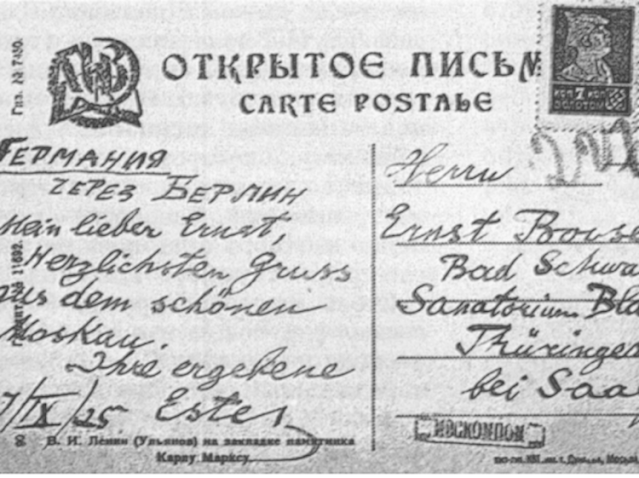
Did it become a tradition of the Russian Intelligence, after the Sidney Reilly – Operation Trust Affair, to send the open, sarcastic “Greeting Cards” to their opponents, like them or Reilly himself sent it, at their connivance, on September 27, 1925 from Moscow to Berlin, to his MI6 Commander Ernest Boyce, informing him that he is allright and in Moscow. The exact facts around this postcard are still quite murky. I was not able to find the origins of this postcard, yet. It looks real, but it could be written by either CheKa, imitating his handwriting, or by Reilly himself. He was arrested very shortly after he mailed this postcard. Note the description of the front of the postcard: Lenin at the founding ceremony of the monument to Karl Marx. The organizing of the shooting at Lenin in 1918 was the main charge against Reilly, and the postcard reminded his MI6 boss about it.
Were the shootings by Robert R. Card one of those “Greeting Cards”?
Was it sent by Putin himself?
Selected Articles – The News And Times
It was a warm, humid afternoon, typical of Moscow in August, and children were playing in the street below. Apartment No 66 was on the top floor and the television crew were using the small lift to shuttle their equipment up in relays. Boris Gudz sat patiently in the corner of the study as cameramen and sound technicians set up around him. Although…
Considered by many the greatest spy in history. His heroic missions, quick thinking and love for the ladies made him the prototype for spies. Born Sigmund Georgievich Rosenblum in Odessa, Russia in 1874, the son of a rich Jewish landowner. Was educated briefly through grade school but was largely self-taught from thereon. Over the years, became proficient…
старое фото Карл Маркс Фридрих Энгельс Владимир Ленин памятник Подробнее старое фото,Карл Маркс,Маркс,Фридрих Энгельс,Владимир Ленин,памятник Еще на темуРазвернуть
He learnt a great deal about the operational history of his own department, including its role in the greatest intelligence coup of the First World War – the cracking of the German diplomatic code 0070, which gave Fleming the inspiration for Bond’s own code number 007.4 This background knowledge enabled him to draw on a rich seam of characters, experiences…
Russian Sidney Reilly spoke seven languages, spied for the British, and inspired Ian Fleming’s famous fictional spy, James Bond. On the evening of November 5, 1925, Prisoner #73 was taken from his cell in the infamous Lubyanka Prison and driven to a woods in the Sokolniki district outside Moscow. In the car with the prisoner were three members of…
From Ukraine with Love: Hollywood’s favorite British spy, James Bond, was inspired by the great Odessa born adventurer. Everyone knows the world’s most famous secret agent, James Bond. British author Ian Fleming’s hero has been a box office star for more than half a century. Bond is celebrated around the globe for his brilliant mind, wild adventures,…
By Cara Tabachnick Updated on: October 28, 2023 / 12:01 AM / CBS News The suspect in the mass shootings that killed 18 people in Lewiston, Maine, 40-year-old Robert Card, has been found dead, the Androscoggin County Sheriff’s Office confirmed Friday.The body of the suspect was found by law enforcement near a recycling plant in the Lisbon area,…
Shani Louk, German-Israeli Hamas hostage who has past link to … NBC Montana
By Reinier Moquete, Founder and CEO, CyberWarrior.com Attackers are constantly evolving the tools they use, learning how defenders are protecting data and finding the gaps to get in. Defenders need to plug all the holes, while attackers only need to find one. Couple this with the fact that we are living in transformational times where generative AI…
President of the European Commission Ursula von der Leyen … EEAS
The S&P 500 is likely to return just 4.7%-6.7% over the next few years, well below its historical average, Vanguard’s CIO said.Lucas Jackson/Reuters US stocks are set to underperform, according to Vanguard’s chief investment officer. The firm estimated the S&P 500 would yield between 4.7%-6.7% over the next few years. That’s well below its…
(Photo by Mario Tama/Getty Images) Stocks rose as investors prepare for a week of market movers. The next FOMC meeting this Wednesday is expected to keep interest rates at current levels. Investors are also awaiting the Treasury’s refunding plan, the next jobs report, and Apple’s earnings. US stocks rose Monday morning as investors readied for a…
Musk Says Starlink to Provide Connectivity in Gaza Voice of America – VOA News
German lawmaker apprehended for Nazi symbols TVP World
EU official warns of antisemitism in European society as fears grow … The Guardian
Afghanistan is on the brink of another catastrophe The Spectator
The measures have been issued less than 48 hours before the UK hosts an AI safety summit.
On this “Face the Nation” broadcast, moderated by Margaret Brennan: National Security Adviser Jake SullivanGeneral Joseph Votel Sen. J.D. Vance, Republican of Ohio Robert Mardini, director-general of the International Committee of Red Cross Click here to browse full transcripts of “Fac the Nation.” MARGARET BRENNAN: Good morning, and welcome…
Open-Source Intelligence, more commonly known as “OSINT” is a technology that uses data from publicly available sources for data intelligence purposes. Even though similar intelligence technologies have been present over hundreds of years, OSINT has gathered momentum after the digital revolution. And the data security laws such as GDPR have only strengthened…

The News And Times Information Network – Blogs By Michael Novakhov – thenewsandtimes.blogspot.com
Michael Novakhov’s favorite articles on Inoreader
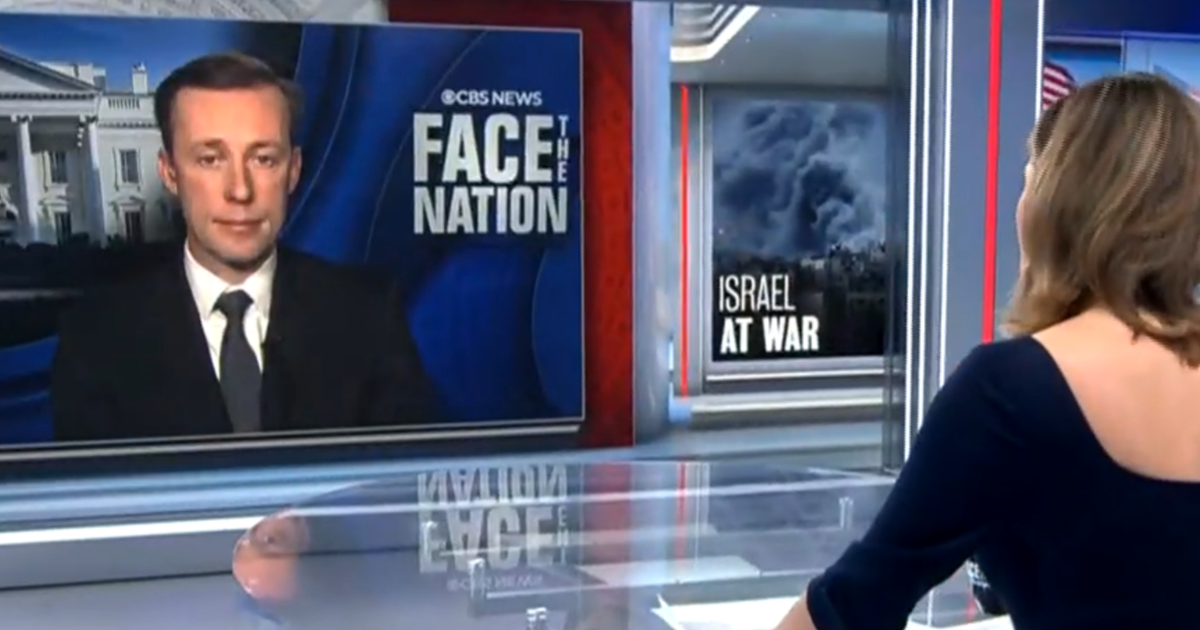
On this “Face the Nation” broadcast, moderated by Margaret Brennan:
- National Security Adviser Jake Sullivan
- General Joseph Votel
- Sen. J.D. Vance, Republican of Ohio
- Robert Mardini, director-general of the International Committee of Red Cross
Click here to browse full transcripts of “Fac the Nation.”
MARGARET BRENNAN: Good morning, and welcome to Face the Nation. I’m Margaret Brennan in Washington.
There has been a significant escalation in the fighting between Israel and Hamas in the last 48 hours. In Gaza, the humanitarian situation has deteriorated even further. There has been no pause to let aid trucks in days. Some communication systems have been restored today following a blackout that started on Friday.
Meanwhile, there have been more attacks from Iran-backed militia groups targeting U.S. forces in Iraq and Syria. The Eisenhower carrier strike group has crossed into the Mediterranean Sea, where it will join with other U.S. Navy assets already in the region.
We begin this morning in Tel Aviv with our Charlie D’Agata.
(Begin VT)
CHARLIE D’AGATA (voice-over): What the Israeli government calls its second stage of the war began with its fiercest aerial onslaught yet, then an artillery barrage, according to Israeli Defense Forces video and tanks, flanked by soldiers on foot, rolling inside Gaza, without pulling back this time, even if Israeli officials stopped short of calling it an invasion,
Prime Minister Benjamin Netanyahu called it Israel’s second war of independence.
(PRIME MINISTER BENJAMIN NETANYAHU SPEAKING IN FOREIGN LANGUAGE)
CHARLIE D’AGATA: “The war inside the Gaza Strip will be long and difficult,” he said, “and we are ready for it.”
Addressing whether what aid agencies call the catastrophic crisis unfolding inside Gaza constitutes a war crime, he said:
(PRIME MINISTER BENJAMIN NETANYAHU SPEAKING IN FOREIGN LANGUAGE)
CHARLIE D’AGATA: “The IDF is the most moral army in the world. The IDF does everything to avoid harming those who are not involved.”
But each airstrike and artillery shell brings more death and destruction for more than two million people with nearly nowhere to take shelter. The Hamas-run Health Ministry now says more than 8,000 people have been killed, around half of them children.
(WOMAN SPEAKING IN FOREIGN LANGUAGE)
CHARLIE D’AGATA: A mother mourns, saying: “Leave him in my arms.”
There are fears for those held beneath Gaza too. Even before the wave of airstrikes and the heavy bombardment that continues, there was growing concern for more than 200 hostages still trapped inside Gaza, making things much more complicated for special forces hostage rescue teams, former Mossad intelligence chief Haim Tomer told us.
Do they have the intelligence or the equipment in the tunneling system in the middle of all of this chaos to find out where these hostages are being kept?
HAIM TOMER (Former Israeli Intelligence Chief): To be very frank and direct, it’s kind of a mission impossible. To find the hostages, intelligence-wise, is very, very, very difficult, almost on the line of impossible.
CHARLIE D’AGATA: Hamas has still been able to retaliate, missiles hitting a Tel Aviv neighborhood.
And while the Israeli government’s stated goal is the total destruction of Hamas and the return of the hostages, the long-term strategy is less clear.
Former Vice Prime Minister Tzipi Livni.
What does Gaza look like after a ground invasion?
TZIPI LIVNI (Former Israeli Vice Prime Minister): Well, I think that we should think about it right now, not to wait until the end of the ground maneuver operation, look at the situation, and think not just about the next day, but about the next year, next 10 years, think about the future.
Now, it’s clear, should be clear, Israel doesn’t want to reoccupy Gaza.
CHARLIE D’AGATA: But how Israel’s new phase of the war is waged, how long, how many more people may die will determine whether it remains confined to this tragic little corner of the Middle East or ignites the region.
(End VT)
CHARLIE D’AGATA: This morning, the U.N. raised alarm that civil order is starting to break down inside Gaza, thousands of people storming their warehouses and distribution centers, in a desperate need for wheat, flour and hygiene supplies – Margaret.
MARGARET BRENNAN: We go now to White House National Security Adviser Jake Sullivan.
Jake, good morning to you.
JAKE SULLIVAN (U.S. National Security Adviser): Good morning, Margaret.
MARGARET BRENNAN: Does the U.S. know if the roughly 500 to 600 Americans in Gaza have survived the past 23 days of bombing, and have the hostages?
NATIONAL SECURITY ADVISER JAKE SULLIVAN: We are in regular contact with most of the Americans who are in Gaza.
We can’t say every single one, but all of the ones who reach out to us, we follow up with on a regular basis, even sometimes a daily basis. And so we know that many of them are still there, still waiting to get out. And we are working actively to try to make that happen.
The challenge right now, Margaret, is that the Egyptians are prepared to let Americans and other foreign nationals out of Gaza. The Israelis have no issue with that. But Hamas is preventing their departure and making a series of demands. We’re trying to work through that to create a circumstance where all of the Americans who are in Gaza are able to get out.
MARGARET BRENNAN: Let me ask you about Israel and how it has explained its mission to the U.S. government.
Saturday, their military said it committed it killed a Hamas leader who had overseen the drone strikes and the paragliders who carried out that horrific attack on October 7. They’d already announced that they’d killed the commander of forces responsible for the massacre at kibbutz Nirim and another key Hamas commander.
Have they told you yet at which point they will declare this mission a success?
NATIONAL SECURITY ADVISER JAKE SULLIVAN: Well, they have declared – they have told us in broad terms that making sure that Hamas can never again threaten Israel in the way it threatened Israel before is their core strategic objective in this conflict.
But in terms of what the specific milestones are, that is something that ultimately is up to Israel. This is their military operation. They will make that decision. And we will continue to ask the hard questions of them, Margaret, that we would ask of ourselves in a military operation like this.
What exactly are the objectives? How are the means matched to the objectives? And how will this evolve over time? That’s a conversation we’ve been having. It’s a conversation we will continue to have in the days ahead.
MARGARET BRENNAN: So it sounds like that endgame has not been specifically laid out.
Do you expect, at this point, a full-scale Israeli invasion and occupation of Gaza, or is that off the table?
NATIONAL SECURITY ADVISER JAKE SULLIVAN: Well, I will let the Israeli Defense Forces speak to what their operational planning is. And I’m not going to characterize it on television today.
What I will say is that the United States has been very focused on a core challenge here, which is that Hamas is using civilians as human shields. They’re hiding behind civilians. They’re hiding among civilians. They’re putting rockets and other terrorist infrastructure in civilian areas.
That creates an added burden for the Israeli Defense Forces. But it does not lessen their responsibility to distinguish between terrorists and innocent civilians and to protect the lives of innocent civilians as they conduct this military operation. That’s true of striking from the air. It is true of going in on the ground. And this is something that we talk about with the Israelis on a daily basis.
MARGARET BRENNAN: I understand, but I also understand now that there has been a tremendous amount of death in Gaza.
I know President Biden said the other day he has no confidence in the numbers presented by Palestinian authorities in Gaza. But I wonder, at which point does the U.S. say there needs to be some cessation of violence?
NATIONAL SECURITY ADVISER JAKE SULLIVAN: Well, first, President Biden was making a straightforward point, which is that the particular institution, the Gaza Health Ministry, which is run by Hamas, we can’t take what Hamas says at face value.
But we have also been clear repeatedly that we have seen thousands of Palestinian civilians killed in this conflict, that that is a tragedy, each and every one of those individual deaths is a tragedy, and that the life of every civilian, Palestinian, Israeli, anyone, is sacred and has to be protected.
And it is important for Israel to distinguish between going after terrorist targets to take out terrorists who continue to threaten Israel and going after civilians. That is an obligation and a responsibility for Israel.
And it’s something that we will continue to press them on. We also believe that there should be humanitarian pauses to get hostages out, potentially to get aid in. And we will continue to work toward that end.
MARGARET BRENNAN: I know – Jake, I have heard this. And, frankly, some of the language is a little contradictory, or it sounds that way, because Secretary Blinken said, even a temporary pause in bombing would benefit Hamas. He said that on this program last week.
Then, a few days later, he went to the U.N. and said a humanitarian pause must be considered. Then the U.S. at the U.N. voted against a humanitarian truce.
So, what exactly is the Biden administration calling for here? Because everyone from the pope to the World Health Organization to the U.N. is saying, just stop the violence for a period of time, at least.
NATIONAL SECURITY ADVISER JAKE SULLIVAN: Well, what a lot of people are calling for is just a stop to Israeli military action against terrorists, period, just stop, no more, Israel cannot go after terrorists who conducted this largest massacre of Jews since the Holocaust and who continue to fire rockets and continue to attack Israel.
We have taken the position that Israel has a right to defend itself against terrorist attacks. That is different from what Secretary Blinken spoke about, which was a humanitarian pause, a pause in the fighting, for example, so that there’s a period of time where there can be safe passage of hostages.
MARGARET BRENNAN: So, just hours?
NATIONAL SECURITY ADVISER JAKE SULLIVAN: President Biden and his whole team are working extremely hard to get those hostages out.
We will continue to do that. I won’t put a time frame on it. But I will say that, given the number of hostages, it would be more than just hours if we were able to secure their release, and we are actively working to secure their release.
And, similarly, when Secretary Blinken said that any pause in fighting benefits Hamas, that’s a reality. There are a lot of complicated realities in this. A humanitarian pause would be a good thing to get hostages out, but you can bet that Hamas will try to use that time to their advantage as well.
These are the things that Israel is trying to grapple with.
MARGARET BRENNAN: So to that point, Benny Gantz, who is part of the Netanyahu war cabinet, said: “We will listen to our friends, but we will act in accordance with what is right for us.”
Is there any daylight, Jake, between the U.S. and the Netanyahu government right now?
NATIONAL SECURITY ADVISER JAKE SULLIVAN: We have conversations, like friends do, on the hard questions that I talked about before, on issues associated with humanitarian aid, on distinguishing between terrorists and innocent civilians, on how Israel is thinking through its military operation.
Those conversations happen multiple times a day. They happen between the president and the prime minister. They happen by the secretary of state, secretary of defense, myself, other senior members of our administration. We talk candidly. We talk directly. We share our views in an unvarnished way, and we will continue to do that.
But sitting here in public, I will just say that the United States is going to make its principles and propositions absolutely clear, including the sanctity of innocent human life.
MARGARET BRENNAN: Yes.
NATIONAL SECURITY ADVISER JAKE SULLIVAN: And then we will continue to provide our advice to Israel in private.
MARGARET BRENNAN: I understand this is another country’s decisions here, but the U.S. gives more than $3 billion a year in aid to Israel.
Some of those weapons being used in Gaza are purchased or helped to be purchased with U.S. taxpayer funds. So whether it’s intended or not, to some of the world, it looks like the U.S. is endorsing all of what Israel is doing here.
Are you at all asking the military to be more limited in its tactics or more strategic?
NATIONAL SECURITY ADVISER JAKE SULLIVAN: The United States of America, when we transfer weapons to another country, whether it’s Israel or anyone else, requests, requires an assurance that those weapons will be used in accordance with the law of armed conflict.
And we seek accountability to ensure that that is the case. We will continue to do that. We will also work around the clock to try to make sure that lifesaving humanitarian assistance gets to people in need.
But, fundamentally, what President Biden says, how he has described things, from the point of view of civilian protection, access to lifesaving goods and medicine for civilians, this is where the United States stands. And we do not stand for the killing of innocent people, whether it be Palestinian, Israeli or otherwise. And we weep and grieve for every lost life, and will continue to do so.
MARGARET BRENNAN: Is that going to be your message to Saudi Arabia’s defense minister when you meet tomorrow?
I know you know a number of Arab partners are concerned about the level of violence in Gaza right now.
NATIONAL SECURITY ADVISER JAKE SULLIVAN: We’ve been talking to our Arab partners, including to Saudi Arabia, about the unfolding crisis in Gaza.
We listen to them carefully. We share our perspective. And, yes, we will have the opportunity to dive deep, not just on what is happening today, but on what tomorrow could bring, because what President Biden said in the Rose Garden this past week was that we can’t go back to October 6.
That means Hamas can no longer terrorize Israel, but it also means that there needs to be a political horizon for the Palestinian people, two states for two peoples, the right of Palestinians to live in safety, dignity and equality. And we’re going to work towards that.
And Arab states, including Saudi Arabia, have a role and a responsibility in that as well.
MARGARET BRENNAN: Before I let you go, do you now believe Iran is deterred?
NATIONAL SECURITY ADVISER JAKE SULLIVAN: Well, what I believe is that the United States will follow through on what we say we’re going to do.
We said that, if our troops were attacked, we would respond. We responded. If they’re attacked again, we will respond again. And we are vigilant, because we are seeing elevated threats against our forces throughout the region and an elevated risk of this conflict spreading to other parts of the region. We are doing everything in our power to deter and prevent that.
But I’m not going to predict what the future brings, other than to say that, if we are attacked, we will respond.
MARGARET BRENNAN: Jake Sullivan, thank you for your time.
And Face the Nation will be back in one minute. Stay with us.
(ANNOUNCEMENTS)
MARGARET BRENNAN: We go now to General Joseph Votel, former CENTCOM commander overseeing operations in the Middle East.
General, it’s good to have you with us.
I want to pick up where we left off with the national security adviser. He said: “The U.S. has elevated threats against U.S. forces, elevated risk of the conflict spreading.”
What are the trigger points you are concerned about?
GEN. JOSEPH VOTEL (RET.) (Former Commander, U.S. Central Command): Thanks. Good morning, Margaret. It’s good to be with you.
So, I think the thing that I have been concerned about and – and probably many have been concerned about is that any miscalculation along the line can move this to a different level. So, an attack on – on an American installation, whether it’s military or diplomatic or commercial, that causes casualties, significant casualties and death, I think, could – could significantly change the calculus – calculus for us.
And, certainly, a much broader attack by the so-called Iranian threat network here, whether it’s Hezbollah or whether it’s Iranian-aligned militia groups in Syria that broaden the conflict, I think these are all aspects that could – that could lead to a widening of the – of the conflict.
MARGARET BRENNAN: There have already been 20 militia attacks on U.S. forces in Syria and Iraq. There are about 19 servicepeople who suffered from traumatic brain injuries. One contractor died.
How do you understand that level of aggression?
GEN. JOSEPH VOTEL: Well, I – it’s very clear that, I mean, Iran is behind this.
Their – their – their elements in – in Iraq and – and to some extent in Syria are perpetrating these attacks. And, as the national security adviser said, we’ve got to – we’ve got to hold them accountable for that. And so it is critically important to not just be responsive, but to be directly responsive and to be forceful in our manner.
Ultimately, what we need to do is compel these elements and Iran, who is behind all of this, to stop this type of action right now.
MARGARET BRENNAN: In Israel, their prime minister said yesterday, this is going to be a long war and we’re in the second phase.
You just heard Jake Sullivan say the U.S. is still asking questions like, what exactly are the objectives?
How do you describe what the IDF is doing right now in Gaza?
GEN. JOSEPH VOTEL: Well, I think what the IDF is doing is – and I think that the task they’ve probably been given is to destroy the war-making capacity of Hamas.
So, they are going after command-and-control locations. They’re going after logistics locations. They’re going after headquarters locations. And they’re going after the likely sites that – that Hamas would use to perpetrate missile strikes or rocket strikes onto – onto Israel.
So, from my perspective, it’s pretty clear what the – what the Israeli military is doing. And I think their job is to – is to – is to destroy that war-making capacity of Hamas.
MARGARET BRENNAN: Should they stop once capturing Gaza City?
GEN. JOSEPH VOTEL: Well, again, I think they’ll have to make an assessment of – of – of their progress.
Most of the – most of the effort now seems to be in the north – northern part of Gaza and around Gaza City, which I think, as – as most people who study this will recognize, is the – are the primary areas where – where Hamas operates.
So, they’ve definitely directed their operations against the places where Hamas is. And – and I think they’re – they’re actually approaching this in an incremental manner. I think we’ve seen introduction of additional forces over the last couple of days. So, they’re thinking about it that way.
And, of course, like any military force would do, they have to take assessments of their – of their progress as they – as they continue with their operations.
MARGARET BRENNAN: There is concern about another front here outside of Gaza.
And I know, on Wednesday, President Biden said he is alarmed by – quote – “extremist settlers attacking Palestinians in the West Bank” in – quote – “places they’re entitled to be.”
One of Israel’s government ministers, Ben-Gvir, has video of him arming Israeli civilians with M16 and M4 assault rifles. How concerned are you about an uptick in violence in the West Bank?
GEN. JOSEPH VOTEL: Well, again, I think this goes back to what we just talked about a few moments ago. And that’s the miscalculations.
I mean, this – this – this, it’s a – it’s a tinderbox. And so, when you have people that are scared, they have weapons, they’re trying to protect themselves, then the chances for something going wrong in this, I think, increase, so yes.
And – and – and – and the rhetoric has been – has been very strong about this, about the vulnerability and the fact that – that Israeli settlers in the West Bank are targets. I mean, that’s essentially what – what these – these Islamic movements have been saying. So, I think it’s – I think it’s an ordinary, critical situation and could flow – flow out very quickly.
MARGARET BRENNAN: General Votel, thank you for your analysis today.
GEN. JOSEPH VOTEL: Thank you. Good to be…
MARGARET BRENNAN: And we’ll be right back, so stay with us.
(ANNOUNCEMENTS)
MARGARET BRENNAN: After 22 days, the House is back in business.
Our Scott MacFarlane takes a closer look at the new speaker, Louisiana’s Mike Johnson.
(Begin VT)
SCOTT MACFARLANE (voice-over): Thrust from obscurity and the backbench of the U.S. House in just his fourth term…
REPRESENTATIVE MIKE JOHNSON (R-Louisiana): Let the enemies of freedom around the world hear us loud and clear. The people’s house is back in business.
(CHEERING AND APPLAUSE)
SCOTT MACFARLANE: The congressman from Louisiana’s ascent to be second in line to the presidency…
REPRESENTATIVE MIKE JOHNSON: Would you all like to get right into governing?
(CHEERING AND APPLAUSE)
SCOTT MACFARLANE: … was so unexpected and so quick, his wife missed the vote.
REPRESENTATIVE MIKE JOHNSON: She’s not here. We couldn’t get a flight in time. This happened sort of suddenly.
(LAUGHTER)
SCOTT MACFARLANE: That overnight rise to the most powerful position in Congress…
REPRESENTATIVE MIKE JOHNSON: You’re going to see this group looking – working like a well-oiled machine.
SCOTT MACFARLANE: … also prevented the traditional deep dive into his career and his positions before he took the gavel.
REPRESENTATIVE MIKE JOHNSON: People are curious, what does Mike Johnson think about any issue under the sun? I said, well, go pick up a Bible off your shelf and read it. That’s – that’s my world view. That’s what I believe.
SCOTT MACFARLANE: The evangelical Christian is an attorney specializing in constitutional law, once a talk radio host who has for decades toed a hard line against abortion rights.
REPRESENTATIVE MIKE JOHNSON: What about the brutal violence and the murder that is committed upon the preborn child?
SCOTT MACFARLANE: Seventeen years before Roe v. Wade was overturned, he wrote an editorial about equating abortion with the Holocaust and a judicial system allowing abortions to Hitler. He has been staunchly against gay rights and has referred to it as inherently unnatural and voted against legalizing same-sex marriage.
After the 2020 presidential election, Johnson was an architect of congressional efforts to overturn the results, not only voting to decertify the results, but galvanizing House Republicans to join a lawsuit in Texas to challenge the outcome, and espousing a conspiracy theory.
REPRESENTATIVE MIKE JOHNSON: When you have a software system that is used all around the country that is suspect because it came from Hugo Chavez’s Venezuela.
SCOTT MACFARLANE: Now that he’s speaker, Johnson has less to say about that.
QUESTION: Mr. Johnson, you helped lead the efforts to overturn the 2020 election results. Do you…
(CROSSTALK)
WOMAN: Shut up! Shut up!
SCOTT MACFARLANE: But if Republicans maintain the majority next November, Johnson would lead the House in the next certification, January 6, 2025.
He has been bolstered by the defectors who removed Kevin McCarthy.
REPRESENTATIVE MATT GAETZ (R-Florida): The swamp is on the run. MAGA is ascendant. And if – if you don’t think that moving from Kevin McCarthy to MAGA Mike Johnson shows the ascendance of this movement and where the power in the Republican Party truly lies, then you’re not paying attention.
SCOTT MACFARLANE: And those same defectors are the ones open to shutting down the government if their demands aren’t met. The new speaker now has just 19 days to keep that from happening.
(End VT)
SCOTT MACFARLANE: Speaker Johnson said he’d like to split aid for Israel from aid for Ukraine, which puts immediate aid for Ukraine in a fragile position, because there are dozens of Republicans who oppose it.
Margaret, he would need a critical mass of Democrats to support it then. And bills with a critical mass of Democratic support is one reason why there’s no Speaker Kevin McCarthy anymore.
MARGARET BRENNAN: Good point.
Scott, thank you.
We will be right back.
(ANNOUNCEMENTS)
MARGARET BRENNAN: We will be right back with a lot more with Ohio Republican Senator J.D. Vance.
Stay with us.
(ANNOUNCEMENTS)
MARGARET BRENNAN: Welcome back to Face the Nation.
Ohio Republican Senator J.D. Vance joins us now in studio.
Good morning and good to have you here face to face.
SENATOR J.D. VANCE (R-Ohio): Thanks for having me.
MARGARET BRENNAN: Senator, there is a lot I want to get to with you.
J.D. VANCE: Sure.
MARGARET BRENNAN: But I want to start on – on one of the big themes we’ve been talking about, which is all the national security threats facing the United States right now.
J.D. VANCE: Sure.
MARGARET BRENNAN: President Biden asked for $106 billion in aid from Congress. Ukraine, Israel, the border, and countering China. I’m surprised, as a Republican, that the issue you’re talking the most about is not the U.S. border. Why?
J.D. VANCE: Well, we care a lot about the border, of course. But the – what I’m saying is that we should divide the packages and actually have distinct debates on each one of these questions, especially the Israel issue for a couple of reasons.
First of all, Israel needs the aid and they need it immediately. Second of all, there’s broad bipartisan consensus that we should be supporting Israel. And third, and most importantly, we’re stretched way too thin. The president’s budget request betrays a fundamental misunderstanding I think of the challenges in the country. We cannot support a three-pronged conflict in a war. We don’t make enough weapons. Our manufacturing capacity is too weak. We need to pick and choose. To pick and choose, Congress has – – needs to have a real debate, not collapse these packages together and pretend we can do everything at once. We can’t.
MARGARET BRENNAN: So, let’s unpack some of what you said there, because you are talking about the exact same amount for Israel that President Biden is talking about.
J.D. VANCE: Sure.
MARGARET BRENNAN: It’s roughly $14 billion. But you’ve removed humanitarian assistance to Gaza. Leader McConnell was on this program last Sunday and he supports the package.
Here’s what he said.
(Begin VT)
SENATOR MITCH MCCONNELL (R-Kentucky): Well, we want to make sure we’re not sending money to Hamas, I can tell you that. But there are genuine humanitarian needs for the people in Gaza who are not Hamas, who have been thrown under the bus by what Hamas is. Innocent people.
(End VT)
MARGARET BRENNAN: Half of the population of Gaza are children.
J.D. VANCE: Sure.
MARGARET BRENNAN: Why don’t you think the United States can do what Leader McConnell talked about there and provide aid to them?
J.D. VANCE: Well, first, Leader McConnell is right of course that there are a lot of innocent people in Gaza. We certainly don’t want to cause any harm to them. We also have to be again reasonable about what we can accomplish. Who delivers the humanitarian assistance. Fundamentally, Hamas is in control of the entire territory. So, if you deliver a large amount of humanitarian assistance, who’s it going to go to, the children in Gaza or to the Hamas fighters on the front line. I fear it’s going to go to Hamas.
MARGARET BRENNAN: Well, the United Nations, the Red Cross, all the international organizations who have been there and administering and frankly stepping up because the government has failed the Palestinian people in the words of a lot of analysts on both sides of the aisle.
J.D. VANCE: Stepping up, but I think there’s still a lot of evidence with a lot of these international organizations that when we send aid into Gaza, a lot of it goes into the wrong hands. And that’s what those of us who are critical of the president’s posture are really worrying about. We don’t want to basically fund two sides of the exact same conflict. Fund Hamas. Fund Israel. It seems like a really bad deal for American taxpayers. Most of all it’s just stupid.
MARGARET BRENNAN: Well, it’s not aid to Hamas. It’s aid to the Palestinian people.
J.D. VANCE: Sure. And I – and look it –
MARGARET BRENNAN: A million of which are children.
J.D. VANCE: And if I could wave a magic wand and give aid to the Palestinian children, I will. But given the realities on the ground, I think we divert resources to Gaza, it’s going to fall in the wrong hands.
MARGARET BRENNAN: So, you don’t trust any of the international organizations that are doing that right now?
J.D. VANCE: I – I don’t trust Hamas on the ground. And I certainly think the international organizations, look, some of them are good people, some of them actually have some compromised positions. We can’t assume that just because it flows to an international organization it’s going to go to the kids and not to the fighters.
MARGARET BRENNAN: You’ve been very critical of President Biden’s response to Iran and its proxy forces.
J.D. VANCE: Sure.
MARGARET BRENNAN: And the threats they pose to our troops.
J.D. VANCE: Yes.
MARGARET BRENNAN: So, spin that forward for me. You’re in the Senate. Would you authorize the use of force by the president against the state of Iran?
J.D. VANCE: Right now, absolutely not. I think that we should be trying to deescalate the situation. Of course, we need to have red lines though, If the Iranians attack American troops, if they play an escalatory role –
MARGARET BRENNAN: They have multiple times.
J.D. VANCE: If they play an excitatory role in the conflict we need to be willing to respond. They have attacked – certain militia groups have attacked. And think we’ve done the right thing, a proportionate response. If they hit us, we have to hit them back. But if you’re talking about an attack on the Iranian mainland, I think that would be a significant escalation. Right now it would be a mistake.
MARGARET BRENNAN: So, on the portion that you are supporting for aid to Israel, the prime minister said last night that this is going to be a long war. But you heard Jake Sullivan, the national security adviser, say they still have to ask specific and hard questions of the Israeli leadership, like what exactly are you doing next? What is the end game here.
J.D. VANCE: Sure.
MARGARET BRENNAN: Doesn’t that trouble you because there are people who would say maybe there should be strings attached to some of this aid. Do you have an open checkbook for Israel?
J.D. VANCE: Well, certainly it’s a troubling situation. It’s a troubling situation, of course, because 1,500 Israeli were slaughtered by Hamas. I think what we have to have is some respect for our allies. They’re not asking us to send ground troops. All they’re asking us really is for weapons. And we should have some respect for their strategic imperative and also the fact that they know what they’re doing within their own country.
The goal here is not to have an unlimited response –
MARGARET BRENNAN: This is within Gaza.
J.D. VANCE: An unlimited response here. The Israelis themselves I think have scoped the operation. They seem to be targeting a very narrow thing, which is degrading Hamas. I think we have to have some respect for our Israeli allies that they know what they’re doing in their own country.
MARGARET BRENNAN: Well, they haven’t explained it yet to the U.S. government is what the national security adviser was – was saying there. So, you are giving them the benefit there.
J.D. VANCE: Sure.
MARGARET BRENNAN: I want to talk about one place you’re very clear that you aren’t giving them the benefit of the doubt and that is to Ukraine.
J.D. VANCE: Right.
MARGARET BRENNAN: We just heard the new House speaker. You have some similarities with him in terms of separating out Israel aid from Ukraine aid.
J.D. VANCE: Correct.
MARGARET BRENNAN: He did say, though, “we can’t allow Putin to prevail in Ukraine because I don’t believe it would stop there. We’re not going to abandon them.” What part of that statement is objectionable to you?
J.D. VANCE: Well, nothing is objectionable in the sense that if I could wave a magic wand and throw Putin out of Ukraine I would. But what we have to accept is there’s a difference between what should happen and what can happen. America has limited capacity.
Just in the Israeli conflict, for example, there are 300,000 artillery shells the Israeli would love to have access to. They don’t because to them. Why? Because we sent them to Ukraine. We have a rising threat of China in east Asia. There are weapons the Taiwanese need that we can’t send because we sent them to Ukraine.
MARGARET BRENNAN: So, to your –
J.D. VANCE: We have to focus. That’s – that’s all I’m saying.
MARGARET BRENNAN: Well, on that –
J.D. VANCE: Please.
MARGARET BRENNAN: Portion of it, though, Leader McConnell spent a good amount of time talking about, of the $60 billion for Ukraine, it’s actually kind of mislabeled because $45 billion of it is for some of this industrial policy, including artillery manufactured in Ohio.
J.D. VANCE: Sure.
MARGARET BRENNAN: You’ve got a tank manufacturer in Ohio, a combat vehicle manufacturer there, General Dynamics. So, if that – are you against that if it benefits your state?
J.D. VANCE: Look, I’m good for benefits of the state, but this particular policy we have to be careful, Margaret. We have to remember that we cannot flip the switch and turn back on America’s industrial might overnight. It takes years –
MARGARET BRENNAN: So, you do want the investment in all that industrial buildup?
J.D. VANCE: I want investment in the industrial buildup for America’s national security interests, not to throw billions of dollars in Ukraine before that industrial buildup even happens. We cannot –
MARGARET BRENNAN: So why not prioritize that first?
J.D. VANCE: Well, we should. That’s exactly my point, in fact.
MARGARET BRENNAN: Before Israel.
J.D. VANCE: We should prioritize the buildup of America’s industrial base and we should devote it to our true allies, like Israel, and, of course, the rising threat in east Asia.
My whole point here is that even if we strike to rebuild the industrial might of this country, we don’t have enough capacity to support a three- front war. We’ve got to focus, and I think we should be focusing on Israel and Taiwan.
MARGARET BRENNAN: Senator, more to talk about with you but we have to take a break.
J.D. VANCE: Sure.
MARGARET BRENNAN: So, I have to leave it there.
We’ll be right back.
(ANNOUNCEMENTS)
MARGARET BRENNAN: CBS News producer Marwan Al Ghoul lives in Gaza and he joins us by phone.
Marwan, I know it’s difficult to communicate with the outside world right now. What can you tell us about what has changed since Israel expanded its operations in Gaza?
MARWAN AL GHOUL (via telephone): Well, first of all, once communication was cut, it was a miserable life. It was miserable before but now it’s more and more. That most bad thing – I mean the war is (INAUDIBLE) as no communication once there is air – airstrike and caused (INAUDIBLE) people, injuries, nobody can call the ambulances. Nobody can call the civil defense. Even the people themselves don’t know who got dead or who got injured.
So, it’s what really terrible life in case of cut all of the communication in Gaza.
Today morning I was driving from Rafah city in the south towards the north of Gaza. And in Gaza City, I saw empty streets, but a lot of destruction everywhere.
MARGARET BRENNAN: Are there any safe zones, Marwan? Is there any place safe to take shelter?
MARWAN AL GHOUL: Unfortunately not. There is no any safe place in Gaza. But for many displaced people went to (INAUDIBLE) school, which is full of thousands and thousands of people in (INAUDIBLE) miserable life in these schools, not enough water, not enough food, no place to sleep. It’s not healthy at all. It’s – it’s very difficult to describe how the people who (INAUDIBLE) in (INAUDIBLE) schools live in.
MARGARET BRENNAN: The United Nations said that order is beginning to break down, that people are panicking. They are running low on food, on water.
MARWAN AL GHOUL: Oh, yes.
MARGARET BRENNAN: On basic supplies.
MARWAN AL GHOUL: Oh, yes. That’s right. Today morning I saw people went to the United Nations stores and they break the doors and took out some food like wheat and some water. It is not enough. But the people break – broke the gates and the siege of the (INAUDIBLE) and took the foods over there. You know, the people are angry. You need to like (sp?) few hours to get bread, which is the most kind of food people needed. It’s really miserable.
MARGARET BRENNAN: What about medical supplies, Marwan? Are the hospitals full? What are you seeing in terms of who is being injured right now?
MARWAN AL GHOUL: Well yesterday I was in Al-Shifa Hospital, which is the biggest one in Gaza Strip. I saw, first of all, all of their beds, medical beds, are full of – inside the departments, in the (INAUDIBLE) departments, ICU, are all full. And they keep the most dangerous inside and they release – and they release the others outside of the hospital in the garden. I saw tents full of injuries and some of them in – even in dangerous case, the beds, medical beds, are outside of the hospital. Some patients and some wounded people, you know, lie on the ground. It’s very difficult to describe.
Anyhow, the medical sector in Gaza, it’s almost collapsed. It’s very difficult to make operations. You know, the numbers of doctors is – is few numbers in the normal time, but now dozens comes to the hospital at one time, at once.
MARGARET BRENNAN: Marwan, you’ve seen a lot of conflict in Gaza over the years, and I wonder how you would describe what’s happening now versus past conflict in Gaza.
MARWAN AL GHOUL: Well, I have been covering the conflict since 1988. But – – until now. But I have never saw or covered such this war. It’s – it’s horrible.
Before this war, I mean, about the war in 2014, the Israeli army used to send message warning to the people to leave – to leave their house before they destroy it. Now they don’t send any warning. Just suddenly they strike the house killing all of the people inside. So this is different, completely different of any other war before in Gaza Strip.
MARGARET BRENNAN: Marwan Al Ghoul, CBS producer living in Gaza, Marwan, please stay safe. Please keep your family safe.
MARWAN AL GHOUL: Thank you. Thank you very much.
MARGARET BRENNAN: And we’ll be right back.
(ANNOUNCEMENTS)
MARGARET BRENNAN: We turn now to Robert Mardini. He’s the director general of the International Committee of the Red Cross, and he joins us from Geneva.
Good morning to you, sir.
How much aid have you been able to get into Gaza today?
ROBERT MARDINI (Director General, International Committee of the Red Cross): Good morning, Margaret.
So, today we were able to get three additional trucks in of medicines, war wounded kits, so surgical equipment for hospitals. They are badly needed, as well as some water and sanitation equipment. They come on top of six trucks that passed on Friday.
This is good. This is positive. But this is a drop in an ocean of need. And, of course, is only a small fraction of what the Gaza Strip and Gazans need today.
MARGARET BRENNAN: We just heard on our program from a Republican senator who said that he does not trust that U.S. aid that is provided to international organizations, like yours, can actually make it to the people of Gaza and not end up in the hands of terrorists. How do you account for that?
ROBERT MARDINI: Well, as a – as a neutral impartial humanitarian organization that has been present in the Gaza Strip for – for decades now, we work in a direct implementation mode. We have our own staff delivering aid and services to – to individuals that are carefully vetted to institutions such as hospitals, such as the Al-Shifa Hospital where our surgeon very often operate hand in hand with Palestinian surgeons and our partners from the Palestinian Red Crescent Society. So, we have very robust and rigorous checks in place to prevent and to insure rather that the aid goes to the right persons, those who need it the most.
MARGARET BRENNAN: This morning, the Palestinian Red Crescent, that you just mentioned, said they received threats and needed to evacuate the hospital they were told because it was going to be bombarded. Did Israel inform your partners of this? What is happening?
ROBERT MARDINI: Well, these orders of evacuation happening in the Gaza Strip are, of course, problematic for us. This hospital, Al-Quds, has close to 400 patients, most of them severely injured. There are thousands of civilians taking shelter in hospitals.
Hospitals are protected by the laws of war, by international humanitarian law. Under no circumstances hospitals should be bombed. Under no circumstance that patients should die in a hospital bed. And it is difficult to evacuate hospitals. Imagine babies in incubators. You cannot unplug this. Imagine people getting oxygen. You cannot just evacuate this unless there is a feasible and viable alternative to this. And today this alternative simply does not exist in the Gaza Strip.
And let’s remind that it is the obligation of parties to the conflict to ensure that basic services for the civilian population are covered at all times. And the burden should not go to organizes such as us or the Palestine Red Crescent Society.
MARGARET BRENNAN: You are neutral. You are in contact with Hamas. On Friday there had been high hopes for a humanitarian hostage release. There wasn’t one. Do you still believe that one is possible?
ROBERT MARDINI: Let me just start by saying that – to the – to the families of hostages, that the plight of their loved ones is one of our top priorities, that we are in conversation with Hamas, with Israeli officials, and with others to ensure their safe release. We have been also proposing to visit hostages in order to ensure that they get personal medicines or simply that they can exchange messages with their loved ones.
And, of course, we stand ready to facilitate any release, hoping that this will happen. So far we were able to facilitate the release of four hostages and we stand ready to do more as soon as parties negotiate an agreement.
MARGARET BRENNAN: Well, we hope for all of those hostage families that there is one. Thank you very much for your time today.
We’ll be right back.
(ANNOUNCEMENTS)
MARGARET BRENNAN: As the war between Israel and Hamas enters its fourth week, we asked our Holly Williams to reflect on the magnitude of the story and how the unimaginable is now reality.
(Begin VT)
HOLLY WILLIAMS (voice over): At first the scale of the attack on October 7th was difficult to grasp, for Israelis and for us.
HOLLY WILLIAMS (on camera): This attack is being compared to Israel’s 9/11.
HOLLY WILLIAMS (voice over): Israel didn’t see the massacre coming. Civilians hunted in their own homes. And nor did we.
HOLLY WILLIAMS (on camera): How long were they planning this for?
MAN: They must have been planning this for at least a year, if not longer. Well trained. They knew how to use these weapons. They were applied correctly, which is why there was so much carnage. They knew what they were doing.
HOLLY WILLIAMS (voice over): For many Israelis it brought back nightmarish echoes of the Holocaust.
WOMAN: This is Almorg (sp?). Look at his smile.
HOLLY WILLIAMS: Aret Mayor’s (sp?) son Almorg is believed to be one of the hostages. Shown here in a Hamas propaganda video.
WOMAN: I recognize him from the beginning.
HOLLY WILLIAMS (on camera): And how did you feel at that moment?
WOMAN: Terrified.
HOLLY WILLIAMS (voice over): Israel and the Palestinians have been locked in a cycle of violence for decades.
BENJAMIN NETANYAHU (Israeli Prime Minister): Hamas will understand that by attacking us they’ve made a mistake of historic proportions.
HOLLY WILLAIMS: Three days after the assault, with Israeli air strikes raining down on Gaza, and Palestinians paying for Hamas’ actions with their lives, the militants threatened to start killing the hostages, one by one, every time Israel bombed Palestinian civilians without warning. We held our breath. So did Israel. But, instead, Hamas began to release some of the hostages. Around 200 are still pawns in a high-stakes game of blackmail.
Reporting from southern Israel when the country’s at war means seeking cover whenever Hamas fires rockets.
HOLLY WILLIAMS (on camera): We just heard a whole series of very large blasts and we ran to take cover here.
HOLLY WILLIAMS (voice over): But Israelis are protected from most by the barrages by the Iron Dome Air Defense System.
Inside the Gaza Strip, there is no protection.
MARWAN AL GHOUL: I saw dozens of killed people.
HOLLY WILLIAMS: Our colleague, CBS News producer Marwan Al Ghoul, lives there with his family, risking his life to get the news out. Marwan has enriched our reporting for over two decades. And when we visited Gaza, he’s helped keep us safe.
MARWAN AL GHOUL: I am concerned of my family. This makes me sometimes angry and sometimes I feel like I need to cry.
HOLLY WILLIAMS: Pain is what the Israelis and the Palestinians share. War and politics are what divide them.
(End VT)
MARGARET BRENNAN: That was our Holly Williams. Thank you.
And thank you all for watching. Until next week, for Face the Nation, I’m Margaret Brennan.

Open-Source Intelligence, more commonly known as “OSINT” is a technology that uses data from publicly available sources for data intelligence purposes.
Even though similar intelligence technologies have been present over hundreds of years, OSINT has gathered momentum after the digital revolution.
And the data security laws such as GDPR have only strengthened the use of a proper OSINT system.
A lot of technologies such as machine learning, predictive analysis, and behavioral science have used the OSINT for better understanding the data subjects’ behavior and patterns.
According to the RAND model of OSINT, intelligence technology works on four key steps with respect to the information available on news, social media, and gray literature. These steps are:
- Collection
- Processing
- Exploitation
- Authentication
- Credibility Evaluation
- Contextualization
- Production
- Classification
- Dissemination
These steps allow the gathered intelligence to be more authentic and reliable. But collecting and processing such complicated processes requires more time and effort from the data scientists.
As OSINT does thorough research and involves complicated analysis, there are a few challenges which you need to overcome while implementing OSINT. We will be discussing those OSINT challenges in this blog.
Challenges in Implementing OSINT Approach
OSINT may provide you the most complex and useful intelligence, but there are a lot of factors which you need to consider while understanding the scope & challenges of OSINT.
The emphasis on data security increased with the implementation of stringent data security laws such as the General Data Protection Rule (GDPR).
These data security laws meant that data scientists had to change the way they used to collect, process, and analyze the data to draw conclusions.
Organizations now have to take into consideration the explicit consent of the data subjects before they process the analysis of the collected information. This is one of the key OSINT challenges for various organizations.
The Digital revolution has allowed users worldwide to connect and express their views freely and reach out to the global audience without spending any money.
But, the digital revolution has also increased the volume of the data. In open-source intelligence, you need to have high-quality data to get the most valuable intelligence reports.
It means organizations need to apply various content filters to get the highest data quality. Organizations are working on this OSINT challenge by training their data -scientists in improving their skill-sets.
As the quality of the collected data is expected to be high, the number of rejected and invalid data is also considerably high.
This leads to a higher level of effort required by the data scientists. Also, as OSINT computes and delivers complex and accurate data, the number of efforts required to collect, process, and deliver these data are more.
Open Source Intelligence a combination of a lot of other intelligence technologies such as Geo-Spatial Intelligence (GEOINT), Measurement and Signature Intelligence (MASINT), Human Intelligence (HUMINT), and the Signal Intelligence (SIGINT).
This overlapping nature makes it difficult to categorize the type of operations which will fall under OSINT.
For example, the intelligence gathered from social media analytics should ideally fall under the HUMINT, but it also falls under the OSINT as the information is openly available on the internet.
This is a fundamental OSINT challenge.
OSINT, when used in the defense applications may cause some political challenges as it involves data monitoring over the globe.
These intelligence practices prove fruitful for the government agencies such as CIA, Interpol to track and stop the potential terrorist threats.
But, at the same time, these counter-intelligence practices draw a lot of geo-political attention as it involves cross-boundary data monitoring.
This is a hard challenge to overcome as far as defense practices are concerned in OSINT technologies. Government organizations are improving the cross-boundary relations to overcome this OSINT challenge.
Future Scope of OSINT
OSINT 4 is considered as a more sophisticated tool than its previous versions due to its flexibility to work with different technologies.
It can create a database that helps the organizations to analyze the data easily and draw more accurate conclusions.
The rapid developments in technologies such as Artificial Intelligence, Machine Learning, and Big Data Analytics have opened the new horizons for OSINT which weren’t previously available.
And tools such as IntelTechniques can now provide the data scientists with the required data from the intelligence gathered from these tools.
You May Like to Read:
#ICYMI Last week, #FBIDirector and intelligence chiefs from the United Kingdom, Australia, Canada, and New Zealand took part in the Bureau’s Emerging Threats and Securing Innovation Security Summit—the first-ever public gathering of Five Eyes leaders. https://t.co/6ShFPy2sEz pic.twitter.com/9WJDmtjQuv
— FBI Director Christopher Wray (@8fbidirector) October 24, 2023
 image/jpeg F9N4kWPWsAAQVzI.jpg
WASHINGTON —
Fiona Hill is worried.
The onetime Russia advisor to then-President Trump fears that support for Ukraine is gradually eroding, encouraging Russian President Vladimir Putin to try to wait the West out.
“Putin feels everything is trending in his favor,” she warns.
But she’s worried about much more than that, beginning with Israel’s war in Gaza, which has made the world more dangerous.
The two conflicts aren’t directly linked, but each is likely to affect the other.
“These could be global-system-shifting wars, something like World War I and World War II, which reflected and produced major changes in the international order,” she said. “In a sense, the Hamas attack on Israel was a kind of Pearl Harbor moment. It opened a second front.”
The News And Times Information Network – Blogs By Michael Novakhov – thenewsandtimes.blogspot.com

FBI Director Christopher Wray testifies before the House Homeland Security Committee on Nov. 15, 2022.
Chip Somodevilla/Getty Images
FBI Director Christopher Wray said Tuesday the war between Israel and Hamas has led to a spike in threats against the United States, warning that “we are in a dangerous period” as various terrorist groups look to leverage the conflict for their own causes.
The threat of international terrorism in the U.S. had largely subsided in recent years, particularly since the defeat of the Islamic State in Iraq and Syria. But senior American officials say Hamas’ deadly Oct. 7 attack on Israel has created a new dynamic with dangerous implications at home and abroad.
“The reality is that the terrorism threat has been elevated throughout 2023, but the ongoing war in the Middle East has raised the threat of an attack against Americans in the United States to a whole other level,” Wray said in testimony before the Senate Homeland Security and Governmental Affairs Committee.
Hamas’ attack, which killed some 1,400 people in Israel, “will serve as an inspiration the likes of which we haven’t seen since ISIS launched its so-called caliphate years ago,” Wray said.
He said the FBI has no evidence of a imminent threat from a foreign terrorist group, but he noted that since Hamas’ attack on Israel, al-Qaida has issued its most specific call for violence against the U.S. in years, while the Islamic State has urged its followers to target Jewish communities in the United States and Europe.
Israel-Gaza conflict is being used in extremist propaganda
Christine Abizaid, the director of the National Counterterrorism Center, told lawmakers that the Israel-Hamas war has featured in messaging and propaganda since Oct. 7.
“We’ve seen it from al-Qaida affiliates, almost every single one of them,” she told lawmakers, referring to terrorist groups in the Mideast and Africa with ties to al-Qaida. “We’ve also seen it from ISIS, which isn’t ideologically aligned with a group like Hamas but is still leveraging this current conflict to try to sow the kind of violence, bring adherence to its cause in a kind of exploitative way.”
On the home front, Wray said the biggest concern for the FBI is that violent extremists — including people inspired by foreign terrorist groups but also domestic violent extremists — will draw inspiration from the ongoing conflict to carry out attacks against Americans.
“We’ve seen that already with the individual we arrested last week in Houston, who’d been studying how to build bombs and posted online about his support for killing Jews,” Wray said. “And with the tragic killing of a 6-year-old Muslim boy in Illinois in what we’re investigating as a federal hate crime.”
But Wray said he’s also concerned about traditional, formal terrorist organizations like al-Qaida, ISIS or Hezbollah potentially carrying out strikes in the U.S.
“We are not currently tracking an imminent, credible threat from a foreign terrorist organization, a structured attack here or something like that, but it is something that we think heightened vigilance is warranted for,” he said.
“It is a time to be concerned,” he said. “We are in a dangerous period.”
At the same time, he urged Americans not to be intimidated.
“This is not a time for panic, but it is a time for vigilance,” he said. “We shouldn’t stop conducting our daily lives, going to schools, houses of worship and so forth. But we should be vigilant.”
Iran and its proxies
Abizaid said the U.S. has no intelligence that indicates Iran or its proxies, most notably the Lebanese militant group Hezbollah, “had any foreknowledge” of Hamas’ Oct. 7 attack.
But she said the U.S. remains focused on Iranian activities — and those of its allies — targeting American interests since the war’s outbreak. She noted that militant groups aligned with Tehran have conducted 24 attacks against American forces in Iraq and Syria.
Despite those strikes, she said Washington doesn’t believe Iran currently is interested in escalating the conflict.
“We assess Iran, Hezbollah and their linked proxies are trying to calibrate their activity, avoiding actions that would open up a concerted second front with the U.S. or Israel while still exacting costs in the midst of the current conflict,” she said.
“This is a very fine line to walk and, in the present regional context, their actions carry the potential for miscalculation thus requiring heightened scrutiny in the region and we monitor for signs that the conflict could spread.”
On the domestic front, she said she has no indications of any Iranian threat inside the U.S., though she cautioned that Iran has a “significant escalatory capability” that it could call on if Tehran decided it wanted to ramp up the conflict.