Categories
Selected Articles

Xi, Putin Reaffirm Partnership Amid Middle East Turmoil


01000000-0aff-0242-ae4e-08dbcfdfca3d_cx0

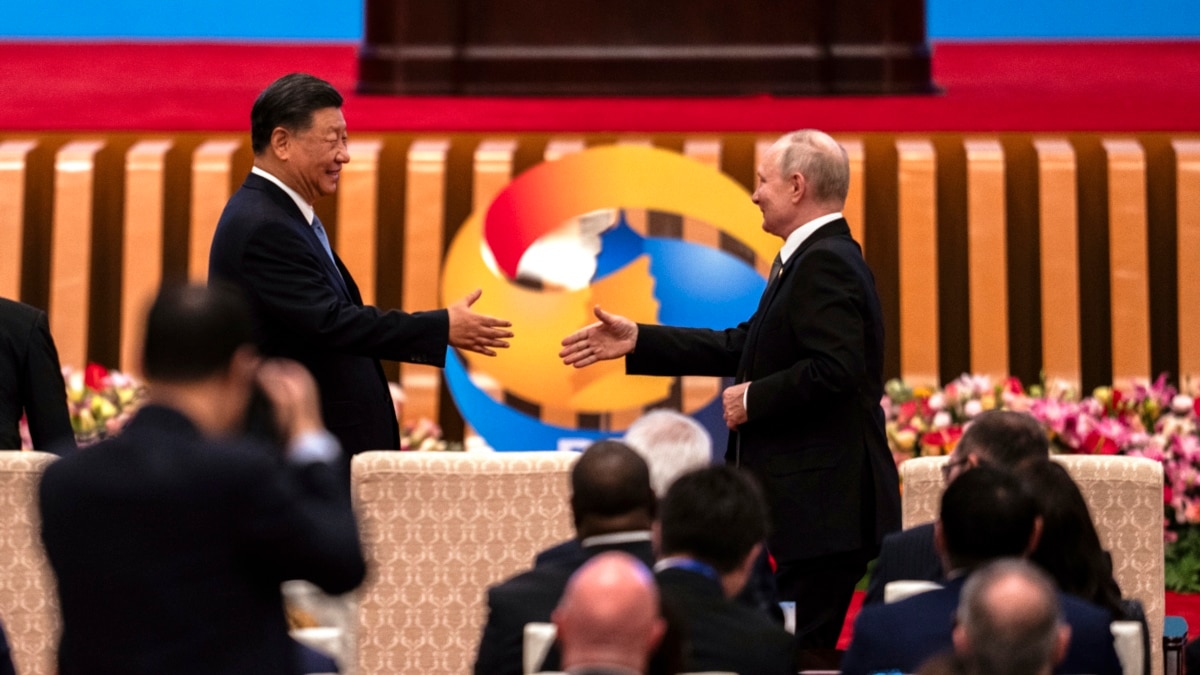
Russian President Vladimir Putin and Chinese leader Xi Jinping held a highly anticipated meeting on the sidelines of the Belt and Road Forum of International Cooperation on Wednesday, hailing their close relationship while celebrating the deepening political and economic ties between China and Russia.

“The political mutual trust between the two countries is continuously deepening,” Xi said, praising “the close and effective strategic coordination” that the two countries have maintained.

Some analysts say the meeting allows Xi to present China as an alternative world leader to developing countries and gives Putin a chance to prove that he is still relevant internationally.

“This meeting will champion Xi’s position [that China is] as an alternative world leader to the Global South and allow Putin to show that he has a very powerful friend [in Xi,]” Sari Arho Havrén, an associate fellow at the Royal United Services Institute (RUSI), told VOA in a written response.

The visit to China marks Putin’s second trip outside Russia since the International Criminal Court (ICC) issued an arrest warrant for the Russian leader in March. Earlier this month, Putin visited Kyrgyzstan for a summit of former Soviet republics. Both China and Kyrgyzstan are not members of the ICC.

It also comes amid the escalating military conflict between Israel and the Palestinian militant group Hamas. While China and Russia have condemned Israel’s airstrikes against Gaza and called for a cease-fire, Xi and Putin didn’t publicly address the issue.

In the official readout released by the Xinhua news agency, Xi called for joint efforts between Beijing and Moscow to “safeguard international fairness and justice.”

Some experts say Xi and Putin’s reluctance to comment on the Israel-Hamas conflict during their meeting shows both countries’ attempt to balance their relationship with the Middle East and Israel. “They haven’t fully backed Israel but neither have they been strong in terms of supporting Hamas,” said Philipp Ivanov, a senior fellow at Asia Society Policy Institute (ASPI).

He adds that China and Russia both understand their limited ability to help solve the longstanding conflict between Israel and Hamas, so instead of directly getting involved in the peace process, Ivanov thinks Moscow and Beijing might use their leverage to ensure the conflict doesn’t “spill into a wider war.”

“I think China and Russia could use their leverage with Syria, Iran, or Saudi Arabia to try to contain the conflict,” he told VOA in a video call.

Deepening bilateral exchanges

Putin’s visit to Beijing also reflects Russia’s growing reliance on China as Moscow faces mounting international sanctions due to the ongoing war in Ukraine. Since Russia has become ever-more isolated internationally, China has become an important market for Russian goods and an important buyer of Russian oil and gas, providing a crucial financial lifeline to Moscow’s war against Kyiv.

Chinese customs data shows that bilateral trade between China and Russia grew 36.5% for the first seven months of 2023, reaching $134.1 billion. Chinese analysts told China’s state-run tabloid Global Times that bilateral trade could reach $200 billion, surpassing last year’s record of $190 billion.

On Wednesday, Xi told Putin that bilateral trade volume between the two countries has reached “a historical high,” emphasizing that it’s “progressing toward the goal of $200 billion set by the two sides.”

Ivanov of ASPI pointed out that Moscow has become highly dependent on China for accessing critical technologies like motherboards and semiconductors, while Beijing is taking “full advantage of discounted commodity and energy prices” that Russia provides. “Amid China’s competition with the U.S., Russia is a stable and affordable energy provider,” he told VOA. “The benefits that both countries derive from this partnership go both ways.”

In addition to deepening engagement on the economic front, some observers say Xi and Putin will look to increase military and technical cooperation. “Apart from oil, gas and agricultural products, something that Russia can offer is certain military technologies that China needs as it ramps up its military modernization,” Ivanov noted.

And for Putin, one of the main goals is to further advance the Power of Siberia 2 gas pipeline, which China and Russia had agreed on some aspects of the deal during Xi and Putin’s Moscow meeting in March.

On Wednesday, Xi said China hopes the China-Mongolia-Russia natural gas pipeline project can make substantive progress “as soon as possible,” according to China’s state broadcaster CCTV.

Havrén from RUSI said the war between Israel and Hamas may complicate this effort, as the war could affect global natural gas prices. “But this remains Putin’s major goals,” she told VOA.

During his address at the BRI Forum on Wednesday, Putin said the BRI fits with the new transportation infrastructure that Russia has been developing, including the Northern Sea Route, which runs from Russia’s border with Norway to the Bering Strait near Alaska, according to Russia’s state-run news agency Sputnik.

China’s balancing act

Wednesday’s meeting marks the third time that Xi and Putin have met in person since 2022. Weeks before the invasion of Ukraine, Putin visited Beijing, where the two leaders signed a 5,000-word agreement to declare their “no limits partnership.”

In March, just days after the ICC issued an arrest warrant for Putin for alleged war crimes, Xi visited Moscow, during which he told Putin that they are driving changes that haven’t happened in 100 years.

Despite Xi and Putin’s close relationship, the two met 42 times as of Wednesday, some analysts say Beijing remains wary of the risk of aligning itself too closely with Moscow.

As the two leaders met in Beijing, lethal airstrikes in the Ukrainian city of Zaporizhzhia killed civilians overnight.

“I don’t think there would be a deeper, open engagement [between China and Russia] as that would further strain Beijing’s relationship with European countries,” said Havrén from RUSI.

She thinks China will try to strike a balance between its close partnership with Russia and attempts to show Western democracies that they are willing to play a neutral role on issues such as the Ukraine War. “That’s what Beijing tries to do, but it’s more or less a camouflage,” she said.


Categories
Selected Articles

First Humanitarian Aid Reaches a Hard-Pressed Gaza


21israel-ledeall01-lmfw-facebookJumbo.jp

But the 20-truck shipment of food, water and medical supplies is only a fraction of what is needed to head off a catastrophe, officials say.


Categories
Selected Articles

What Is Happening To Ukrainian Prisoners Of War In Russia?


0x0.jpg?format=jpg&height=900&width=1600

On October 18, 2023, relatives of Ukrainian Azov regiment war prisoners held a rally at St. Sophia Square in Kyiv calling for their quick exchange with Russian prisoners of war. Prisoner swaps between Ukraine and Russia are rare. While more than 2,500 Ukrainians have been released, up to 10,000 are believed to remain in Russian custody. Their fate is unknown. However, media reported that former Ukrainian captives testified that they were subjected to torture, including frequent beatings and electric shocks, while in custody at a detention facility in south-western Russia, in what would be serious violations of international humanitarian law. Earlier this year, BBC interviewed several former detainees released in prisoner exchanges who alleged physical and psychological abuse by Russian officers and guards. The abuse is said to take place in the Pre-Trial Detention Facility Number Two, in the city of Taganrog. It is one of the locations where Ukrainian prisoners of war have been held in Russia.

Relatives of Ukrainian Azov regiment war prisoners hold placards during a rally calling for their … [+] quick exchange with Russian prisoners of war at St. Sophia Square in Kyiv, on October 18, 2023, amid the Russian invasion of Ukraine. (Photo credit: SERGEI SUPINSKY/AFP via Getty Images)

AFP via Getty Images

Reports of detainees being subjected to abuse are not new. In November 2022, the Head of the U.N. Human Rights Monitoring Mission in Ukraine, Matilda Bogner, presented the results of their interviews with 159 prisoners of war (139 men and 20 women) who were held by the Russian Federation (including by affiliated armed groups). Commenting on the findings, Ms Bogner stated that “Immediately upon capture, some [Ukrainian prisoners of war] were beaten or had their personal belongings pillaged. The prisoners of war were then transported to places of internment in a manner that raised concerns. They were often taken in overcrowded trucks or buses and sometimes lacked access to water or toilets for more than a day. Their hands were tied and eyes covered so tightly with duct tape that it left wounds on their wrists and faces.” She further added that “Upon arrival at certain places of internment, prisoners of war were subjected to so-called ‘admission procedures’, which frequently involved prolonged beatings, threats, dog attacks, being stripped and put into stress positions. Witnesses told us about the death of at least one prisoner of war during an ‘admission procedure’ in the penal colony near Olenivka in mid-April 2022. We have received information about eight other such alleged deaths there in April 2022 and we are working to corroborate them.”

As Ms Bogner explained, the vast majority of those her team interviewed testified that during their internment they were tortured and ill-treated. Torture and ill-treatment are said to have been used to coerce prisoners of war to give military information or statements about alleged crimes but also to intimidate and humiliate them. Prisoners of war described being “beaten, including with batons and wooden hammers, kicked, and given electric shocks with Tasers and a military phone known as TAPik.”

A man interviewed by the the team of Ms Bogner testified on the torture he experienced in a penal colony near Olenivka, including how members of Russian-affiliated armed groups, “attached wires to [his] genitalia and nose, and shocked [him]. They simply had fun and were not interested in [his] replies to their questions.” Other forms of abuse reported by the U.N. Human Rights Monitoring Mission in Ukraine included “being stabbed, shot with a stun gun, threatened with mock executions, being hung by the hands or legs, and burned with cigarettes (…) various forms of sexual violence, such as pulling a male victim by a rope tied around his genitalia, or forced nudity combined with the threat of rape.”

The report produced by the U.N. Human Rights Monitoring Mission in Ukraine included testimonies of 20 women prisoners of war after they were released from the penal colony near Olenivka and other facilities in Donetsk, and in the Russian Federation. Their experiences varied. For example, the women released from the colony near Olenivka described being psychologically tormented by the screams of male prisoners of war being tortured in nearby cells. Women from other locations testified on having been beaten, electrocuted and threatened with sexual violence during interrogations, or being subjected to degrading treatment that amounted to sexual violence (for example by being “forced to run naked from one room to another in the presence of male guards”).

Furthermore, former prisoners reported on the dire conditions more broadly, including overcrowded cells, poor hygiene and lack of food and water. As the U.N. Human Rights Monitoring Mission in Ukraine confirmed, “some of them lost up to a quarter of their body weight, and many frequently fainted in captivity.” Also, only a few of them were allowed to call or text their relatives. The Russian government has not allowed the United Nations and the International Committee of the Red Cross, or other bodies, to visit facilities used to hold prisoners of war.

Prisoners of war are protected under international humanitarian law. Among others, they must be treated humanely in all circumstances. They are protected against any act of violence, intimidation, insults, and public curiosity. International humanitarian law further defines minimum conditions of detention covering accommodation, food, clothing, hygiene and medical care that prisoners of war are to be provided with. Reports suggesting violations of these protections and minimum conditions of detentions must be taken seriously.


Categories
Selected Articles

Netanyahu’s Attack on Democracy Left Israel Unprepared


The prime minister brought about a situation in which all the options are bad.

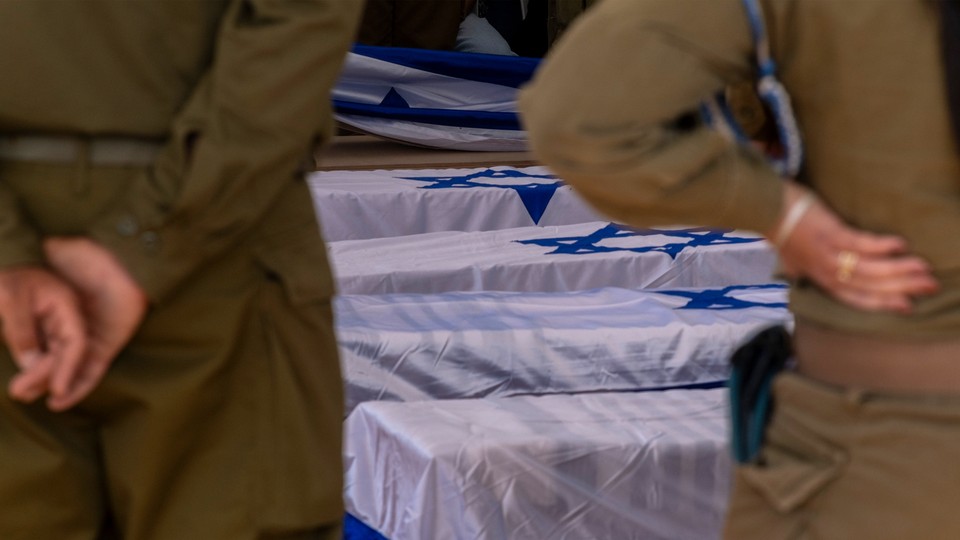
Soldiers looking solemnly at graves covered in Israeli flags

Ron Haviv / VII / Redux

October 21, 2023, 6:43 PM ET

This summer I spent several days in Israel talking with people who were afraid for their country’s future. They were not, at that moment, focused on terrorism, Gaza, or Hamas. They feared something different: the emergence of an undemocratic Israel, a de facto autocracy. In January, Prime Minister Benjamin Netanyahu and his justice minister had announced a package of judicial “reforms” that, taken together, would have given their coalition government the power to alter Israeli legal institutions to their own political benefit. Their motives were mixed. Netanyahu, who is on trial for corruption, was eager to stay out of jail. Some of his coalition partners wanted courts to stop hampering their plans to create new Israeli settlements on the West Bank, others to maintain military exemptions for Orthodox religious communities. All of them were interested in doing whatever it would take to stay in power, without the hindrance of an independent judiciary.

In response, Israelis created a mass movement capable of organizing long marches and enormous weekly protests, every Saturday night, in cities and towns across the country. Unlike similar protest movements in other countries, this one did not peter out. Thanks to the financial and logistical support of the Israeli tech industry, the most dynamic economic sector in the country, as well as to organized teams of people coming from academia and the army reserves, the protests kept going for many months and successfully blocked some of the proposed legal changes. I was trying to understand why these Israeli protests had succeeded, and so I met tech-industry executives, army reservists, students, and one famous particle physicist, all of whom had participated in organizing and sustaining the demonstrations.

After the surprise Hamas attack on southern Israel earlier this month, I listened again to the tapes of those conversations. In almost every one of them, there was a warning note that I didn’t pay enough attention to at the time. When I asked people why they had sacrificed their time to join a protest movement, they told me it was because they feared Israel could become not just undemocratic but unrecognizable, unwelcoming to them and their families. But they also talked about a deeper fear: that Israel could cease to exist at all. The deep, angry divides in Israeli politics—divides that are religious and cultural, but that were also deliberately created by Netanyahu and his extremist allies for their political and personal benefit—weren’t just a problem for some liberal or secular Israelis. The people I met believed the polarization of Israel was an existential risk for everybody.

Read: There are no rules

This is certainly what Michal Tsur was trying to tell me. Tsur is a co-founder and the president of Kaltura, a video cloud platform. She is also one of many entrepreneurs who donated time and money to help organize the protest campaign. Back in January, when Netanyahu’s justice minister first proposed changes to the powers of the Supreme Court, to the system of appointing judges, and to rules obliging government ministers to listen to legal advice, Tsur and her colleagues began talking about their industry and the open, networked, mobile society it needs to thrive. They believed Netanyahu’s judicial changes would crush that society, persuading many talented people to plan their futures elsewhere. Tsur told me that she had felt for a long time that Israel was on a slippery slope, that people had not understood how vulnerable the country’s institutions could become. Israel doesn’t have a written constitution. Its political system works according to informal norms as well as formal law, and Netanyahu has spent years attacking these norms. “It feels as if the country is at real risk,” Tsur told me. “Looking at Israel, if these trends do not turn, I either think Israel won’t exist in 20 or 30 years, or else it will definitely not exist in its current form.” She worried that the kinds of people whose time and energy are necessary for Israel’s self-defense would not work on behalf of a religious or nationalist dictatorship. Israel’s citizens’ army functions, she told me, because it can “get really smart people to serve.” Without democracy, she feared that “people will not serve. People will leave.”

She was not exaggerating: “We will not serve” was one of the threats made by Brothers in Arms, the Israeli reservists who also came together to fight Netanyahu’s assault on the Israeli judiciary. Ron Scherf, one of the group’s founders—also a veteran of one of Israel’s most elite special-forces units—told me that he and his fellow veterans had started the group because “the government is breaking the basic contract, the unwritten contract between itself and the soldiers.” If someone is going to risk his life, he told me, they need to feel a deep connection to the country, that it is their country. Netanyahu was trying to cut that connection, to change what it meant for some people to be Israeli. Scherf couldn’t accept that, and so he and his fellow veterans staged protests in front of the homes of ministers, put banners on bridges and cliffs, even planted Israeli flags in front of the homes of far-right government officials to remind them where their loyalties should lie. Students and academics joined them, and the protests had a snowball effect, convincing others that change was possible. Shikma Bressler, a particle physicist who became one of the most prominent and outspoken leaders of the protest movement, told me that one important impact of the protests was to convince many protesters that they were not alone: “We really had felt that they controlled the conversation,” she said, referring to Netanyahu’s government. “You could not say a word without literally being attacked all over the place. And all of a sudden, we understood that, you know, the majority of the people in this country want something different.”

The government, and Netanyahu himself, reacted to this challenge in the way that all autocratic populists react to any challenge: They accused their opponents of disloyalty. They refused to listen. The prime minister and his supporters slowed down the judicial overhaul, passing one element and tabling the rest, but persisted in polarizing the country, even when they were warned that doing so was dangerous. The links that some members of the protest movement had to the military seemed to fuel the government’s suspicions of the people who were most responsible for national security. Earlier this year, the head of Shin Bet, the Israeli domestic intelligence service, warned that Israeli settlers who were attacking West Bank Palestinians posed a security threat to the country. One member of parliament from Netanyahu’s Likud party responded using language that will sound familiar to Americans: “The ideology of the left has reached the top echelons of the Shin Bet. The deep state has infiltrated the leadership of the Shin Bet and the IDF”—the Israel Defense Forces.

And that rhetoric was typical: In order to pass his judicial program, Netanyahu and his government attacked the judges, the courts, the independent media, the civil service, the universities, and eventually even the protesting army reservists and the military leaders who warned that the division of the country was creating a grave security risk. They attacked the people who were protesting with thousands of national flags, at times calling them “traitors.” This long, drawn-out public battle damaged Israel’s sense of national unity, that mystical but essential element of national security. It created distrust inside the system. It also gave the government an excuse to make the protection of West Bank settlers a military priority, to sideline the Palestinian authority, and to ignore anyone who objected. It may even have been one of the reasons Hamas dared to launch its attack. As Jesse Ferris of the Israel Democracy Institute told me, “The single-minded focus on the judicial overhaul created deep and visible divisions within Israeli society that projected weakness, which tempted aggression.” Last week, the Israeli education minister, Yoav Kisch of Likud, seemed to acknowledge publicly that this division, although it was fostered and promoted by his government, was a mistake. “We were busy with nonsense. We’d forgotten where we live,” he told an Israeli website.

Keren Yarhi-Milo and Tim Naftali: The lessons Israel failed to learn from the Yom Kippur War

In one sense, the protesters’ fears proved unjustified: After October 7, Israel’s divided society instantly unified. Netanyahu had not yet succeeded in changing the nature of the country; Israel is still able to inspire the loyalty of its citizens and of the reservists, who went back to their units. Someone described the current moment to me not just as full mobilization but as “150 percent mobilization,” because even those who were not called up are asking if they can join. One opposition party’s leader, Benny Gantz, agreed to take part in an emergency war cabinet, partly to contribute his experience—he is a retired general and former defense minister—and also to help bridge the divide.

But anger at the Netanyahu government remains—80 percent of Israelis say they want Netanyahu to take responsibility for the attack—especially because the intelligence and security failure on October 7 has since been compounded by a failure of the state to cope with the aftermath. Some members of Brothers in Arms, now expanded to Brothers and Sisters in Arms, who are too old to fight or otherwise ineligible have spent the days since the attack volunteering in the Israeli border communities most badly affected, helping to feed and evacuate people. Within hours, they had set up computer systems to keep track of who was missing, sourced supplies for civilians, and gone to places that had been bombarded to pull out survivors. In Israel, the instinct to protest for democracy on the one hand, and the desire to volunteer in order to make up for the state’s failures on the other, are both coming from the same source: anger at a political class that shunned expertise, thrived on polarization, and threw suspicion on all kinds of state institutions and then neglected them.

There is a lesson here for Americans: We need to look hard at what happened in Israel, and start asking which security risks are posed by the scorn that American far-right politicians and propagandists now pour on the American military, the FBI, and of course the federal government as a whole. They have already weakened public trust and, if Donald Trump becomes president again, they may deliberately set out to weaken the institutions themselves: Preparation to replace civil servants has already begun. The impact of their campaign to undermine Americans’ faith in American democracy has already been felt, and its security implications are already evident. To take just one example, online disinformation campaigns of the sort the Russians ran in the 2016 election work best on polarized societies, where levels of distrust are especially high.

The lesson for Israel is similar, only in the past tense: An autocratic populist party, in alignment with extremists, created the present crisis. Netanyahu’s political choices, including the decision to divide the country, as well as the decision to pretend regional peace could be achieved without the Palestinians, have created a world in which Israel has only bad options. Any response that allows Hamas to keep ruling Gaza could encourage more terrorist violence in the future; at the same time, a horrific ground war in Gaza will kill many Israelis and many more Palestinians, probably creating more anger, feeding more grievance, and maybe inspiring more terrorism in the future too.

We are too far from a solution right now to even imagine what that might look like. I can only offer this imprecise thought: Someday, Israelis and Palestinians have to find some way to live next to each other, both relatively prosperous and relatively free, in states that they feel at home in. A unified Israel will find it very difficult to ever reach that solution. A divided Israel never will.


Categories
Selected Articles

Netanyahu: “Now is the time for war”


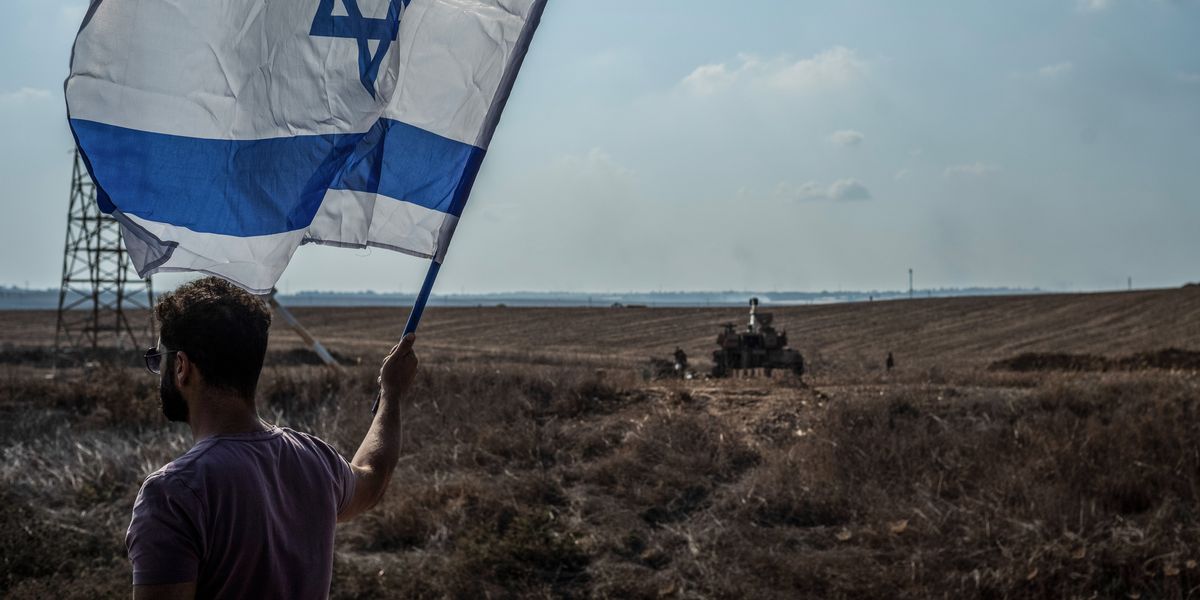
man-holding-israeli-flag-against-the-bac

Announcing on Wednesday that Israel had formed a unity government with the opposition, PM Benjamin Netanyahu said at a press conference that “we put aside all differences to face an enemy worse than ISIS.”

The war cabinet includes the PM, along with his Defense Minister Yoav Gallant, both from the right-wing Likud Party, as well as leader of the National Unity Party Benny Gantz, a former military chief of staff and head of the defense ministry.

Uniting a divided nation. “The most important action [now] is to establish the unity of the nation,” Netanyahu said in an attempt to convey unity to Israel’s enemies. Netanyahu himself has come under intense scrutiny in recent months for driving a wedge through Israeli society and politics by trying to diminish the power of the country’s judiciary.

Along with the military, the two political factions will oversee decision-making for the duration of the war in the Gaza Strip. No legislation unrelated to the war effort will be passed in the Knesset during this time, according to a statement released by both sides.

Crucially, this move sidelines far-right members of Netanyahu’s coalition government, like National Security Minister Itamar Ben Gvir, who, according to Haaretz, rallied against the formation of a unity government that would dilute his own power.

In his address to the country, Netanyahu also confirmed new details of the Hamas attack against southern Israeli communities on Saturday, including revelations that families had been burnt alive, while children were handcuffed before being abused and killed. The gruesome imagery is indeed galvanizing a previously-divided people, but it is also stoking public rage at the government and intelligence community for failing to protect its citizens.

Prospects of a humanitarian corridor. As Israel continues to bomb Gaza and prepares for an imminent ground invasion, the Palestinian death toll is rising. Key Hamas leaders have reportedly been killed, along with hundreds of civilians.

The US, for its part, says it is working with Israel and Egypt to secure a humanitarian corridor for Gazans that would help evacuate civilians, after Israel imposed a blockade on the coastal enclave, cutting off water and food deliveries, and electricity. But this effort is complicated by the fact that Israel has in recent days bombed the only crossing connecting Gaza to the Sinai Peninsula. Meanwhile, Egypt’s President Abdel Fattah el-Sissi, who has made national security his top priority, has also made it crystal clear that he does not want to absorb an influx of Gazans or risk terrorists crossing the border. “National security is my first responsibility and under no circumstances will there be any complacency or negligence,” Sissi said in recent days.

The US’ stance. After Biden on Tuesday addressed the “sheer evil” of the Hamas attack, there are now reports the US could soon send a second aircraft carrier group to the Eastern Mediterranean in order to deter Iran and its Lebanese proxy Hezbollah from joining Hamas in the fight against Israel.

US Secretary of State Antony Blinken arrived in Israel this morning to meet with Israeli leaders, and will then head to Jordan where the issue of securing the release of civilian hostages taken by Hamas, including many Americans, will likely be the focus.

Meanwhile, Ukraine’s President Volodymyr Zelensky, who is Jewish, said that he wants to visit Israel in a show of solidarity, putting an embarrassing spotlight on Netanyahu who has been broadly criticized for failing to adequately back Kyiv amid the Russian invasion.


Categories
Selected Articles

Hamas terror attack on Israel is ‘gift’ for Putin’s Ukraine push, expert says


The terrorist attack in Israel is a “gift” for Russia, who will find America’s attention now divided and its resources potentially shifted away from Ukraine, in what could prove a critical point in the conflict, an expert told Fox News Digital. 

“This couldn’t have happened at a better time for Putin and at the worst time for Israel,” Rebekah Koffler, president of Doctrine & Strategy Consulting and a former Defense Intelligence Agency officer, told Fox News Digital. 

“Putin will seize the momentum to escalate his war on Ukraine,” she added. “Israelis will pay with their blood for Biden’s incompetent foreign policy in Eurasia and his appeasement of Iran.”

Hamas terrorists launched thousands of missiles at Israel and invaded towns along the Gaza border on Saturday, killing at least over 1,300 people, including 27 Americans, and wounding thousands more, prompting Israel to declare war against the Iran-backed group.

ISRAEL MILITARY SPOKESMAN SAYS ‘EVERYTHING LABELED HAMAS IS A TARGET’ AHEAD OF EXPECTED GAZA GROUND ASSAULT

Many countries immediately and clearly condemned the attack, including Indian Prime Minister Narendra Modi, who expressed how “deeply shocked” he was by the news, as did leaders of European nations, including Germany and France. 

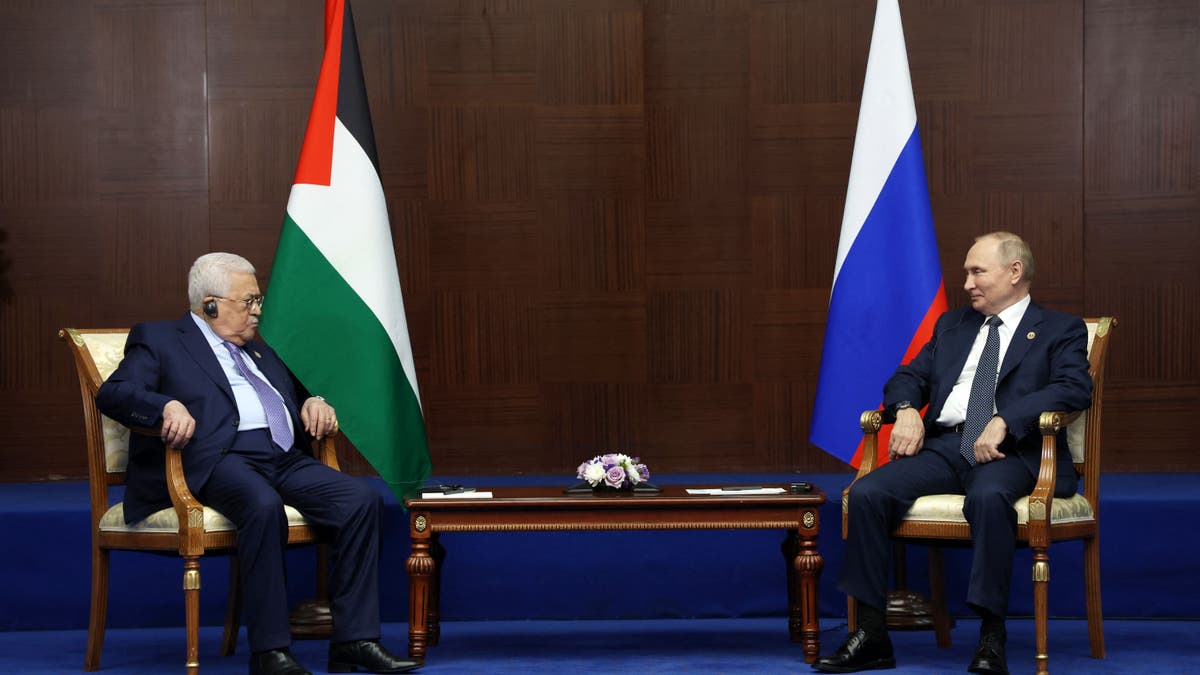
Vladimir Putin meets Mahmud Abbas

Other major nations, such as China and Russia, remained very quiet on the subject. The New York Times earlier this week wrote that Russian President Vladimir Putin’s “muted response” spoke “volumes” for a powerful figure who for many years projected the image of an ally to Israel. 

Putin finally broke his silence on Tuesday to blame the U.S. for the violence, saying during a visit from Iraq’s prime minister that it was “a vivid example of the failure of the United States policy in the Middle East.” 

Putin on Friday offered to mediate between Israel and Hamas and “stop the bloodshed,” telling attendees at a Kyrgyzstan summit that “Russia is ready to coordinate with all constructive partners.”

YES, BIDEN CALLS OUT HAMAS BUT HE’S ODDLY SILENT ON 4 MAJOR ISSUES HIDING IN PLAIN SIGHT

The South China Morning Post on Monday reported, citing Russian news media, that Palestinian National Authority President Mahmoud Abbas in the coming days would visit Moscow, with Russia’s RBC news outlet saying it was awaiting confirmation of an official visit date. 

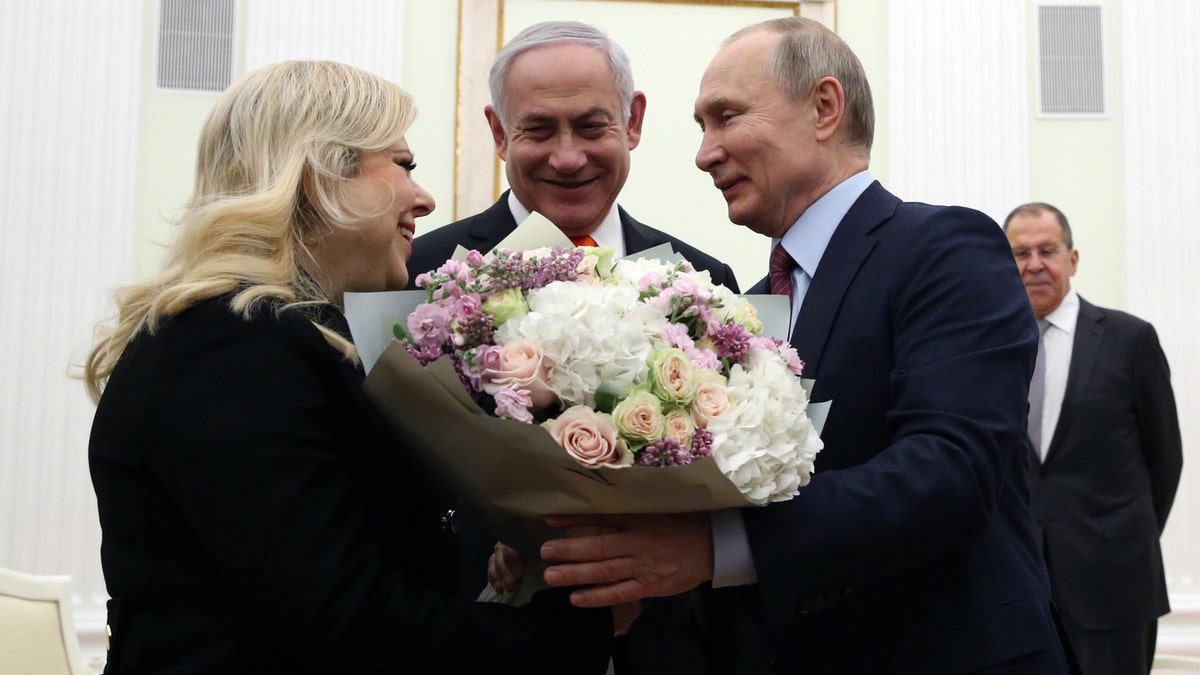
Putin meets the Netanyahus

The Palestinian Ambassador to Russia Abdel Hazif Nofal also claimed that the two sides maintain “daily contacts,” the SCMP reported. 

Peskov warned that the conflict risked spilling over into other regions – a concern shared by many nations, with President Biden repeatedly stressing that other regional actors must resist the urge to take advantage of the situation. 

Koffler advised that Putin will likely try to use his “leverage” with Israel, Iran and the Palestinian Authority to carve out a role for Russia to try and broker peace – or at least create “the perception of being an arbiter in this highly consequential long-standing confrontation.” 

ISRAEL RESPONDS TO HEZBOLLAH ATTACK FROM LEBANON DEPLOYING ‘TENS OF THOUSANDS’ TO NORTHERN BORDER

“Putin benefits from this conflict to go as long as possible,” Koffler said. “Putin who maintained a pragmatic relationship with Netanyahu and pursued a positive policy towards Israel since he became president is now irritated with Israel and likely wants to teach Tel Aviv a lesson.”

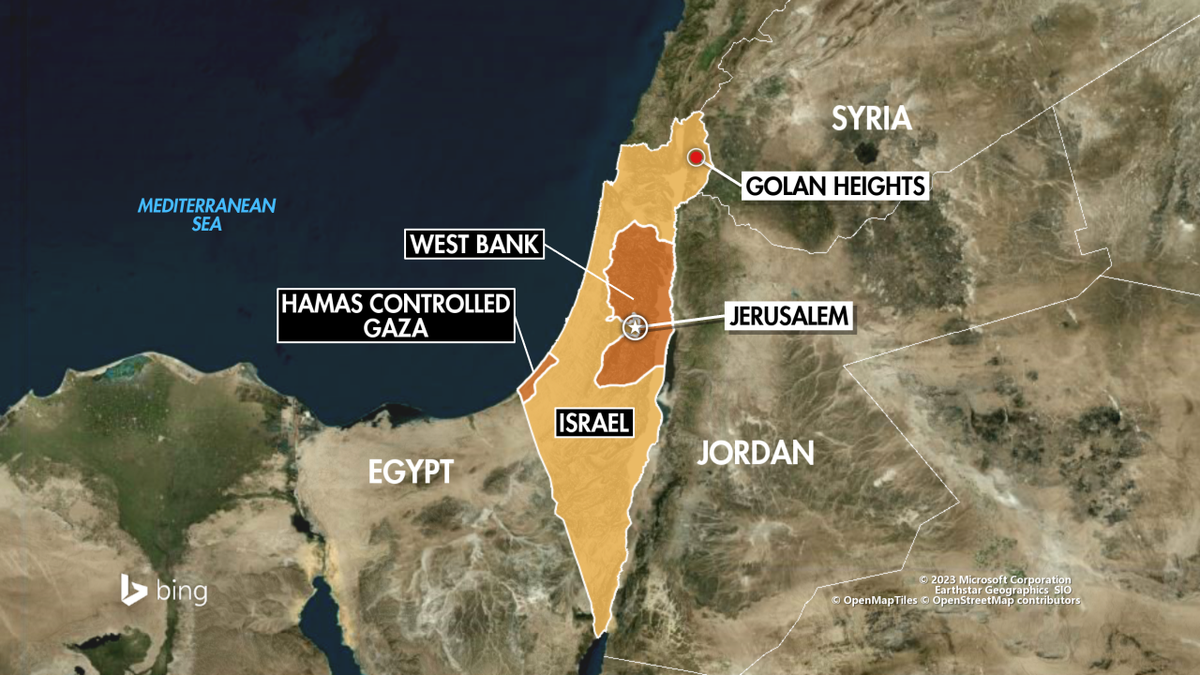
A map of Israel, Egypt and other countries

“After holding out for approximately a year, Israel, under relentless pressure from the Biden Administration, agreed to provide some defensive military hardware to Ukraine, to help it defend against Russia,” she explained.

Russia had warned Israel earlier this year that “all countries that supply weapons should understand that we will consider these to be legitimate targets for Russia’s armed forces.” 

If the conflict should grow and start to involve other actors in the region, Koffler believes Russia will “likely” align with the Arab nations – none of which have condemned the attack and some of which have blamed Israel for the attack – mainly as a means of trying to counter U.S. influence in the Middle East. 

CLICK HERE TO GET THE FOX NEWS APP

Qatar, which is acting as a banker for assets that the U.S. agreed to release to Iran in exchange for the release of some prisoners, said it holds Israel “solely” responsible for the “ongoing escalation” due to “ongoing violations” of the rights of the Palestinian people.

The United Nations Security Council convened on Sunday to discuss the conflict, failing to issue a statement on the conflict as any such statements can only be issued by consensus. 

Reuters contributed to this report. 


Categories
Selected Articles

IDF Gears for a Gradual, Aggressive Gaza Invasion – and a Split Israeli Leadership – Israel News – Haaretz.com


38509-1.jpg?precrop=2400,1395,x0,y60&hei

Haaretz | Israel News

Analysis |

The Israeli army intends to launch a Gaza ground operation but faces questions over its possibilities of success and Biden administration constraints, sparking a debate in Netanyahu’s cabinet. The IDF’s top brass sense they have a one-time pass to kill and be killed, to restore any previous normalcy

Amos Harel

Oct 22, 2023 5:28 am IDTUpdated: Oct 22, 2023 6:00 am IDT

Get email notification for articles from Amos Harel Follow

Oct 22, 2023 5:28 am IDTUpdated: Oct 22, 2023 6:00 am IDT

Amos Harel
Oct 22, 2023 5:28 am IDTUpdated: Oct 22, 2023 6:00 am IDT
Get email notification for articles from Amos Harel Follow
Oct 22, 2023 5:28 am IDTUpdated: Oct 22, 2023 6:00 am IDT

The release of two hostages with U.S. citizenship on Friday night seems to be a step demanded by the U.S. as proof of Hamas’ seriousness. Washington is trying to ascertain whether there is a chance for arranging a channel in which some of the hostages would be released in return for more significant humanitarian concessions for the Palestinian population crammed into the southern Gaza Strip, and allowing foreign nationals to cross into Egypt through the Rafah crossing.

Paid by Attorney Rakefet Shfaim

Categories
Selected Articles

Netanyahu Wrought Carnage on Israel. He Should Have Resigned Already – Israel News – Haaretz.com


54067725.JPG?precrop=7651,4448,x0,y0&hei

Haaretz | Israel News

Analysis |

Prime Minister Benjamin Netanyahu is now counting on fatigue and public despair to help him stay in office, but he can’t be trusted to manage a war and it won’t save him from an enduring legacy of failure. When the war is over, whether in three weeks or three months, all political hell will break loose

Alon Pinkas

Oct 22, 2023 12:28 pm IDT

Get email notification for articles from Alon Pinkas Follow

Oct 22, 2023 12:28 pm IDT

Paid by Attorney Rakefet Shfaim

Categories
Operation "Doppelganger"

Todos os jogos de hoje | OneFootball


Todos os jogos em um só lugar no OneFootball.

Categories
Operation "Doppelganger"

7739 115 Street Delta | Zolo.ca


Home taken off the market on January 28th, 2019. View homes for sale near 7739 115 Street Delta, or learn if this home sold today!