Vladimir Putin has long projected friendly ties to Israel. But his silence since Saturday’s assault illustrates how the war in Ukraine has strained the relationship between the two countries.
 JOSSICA - jossica.com
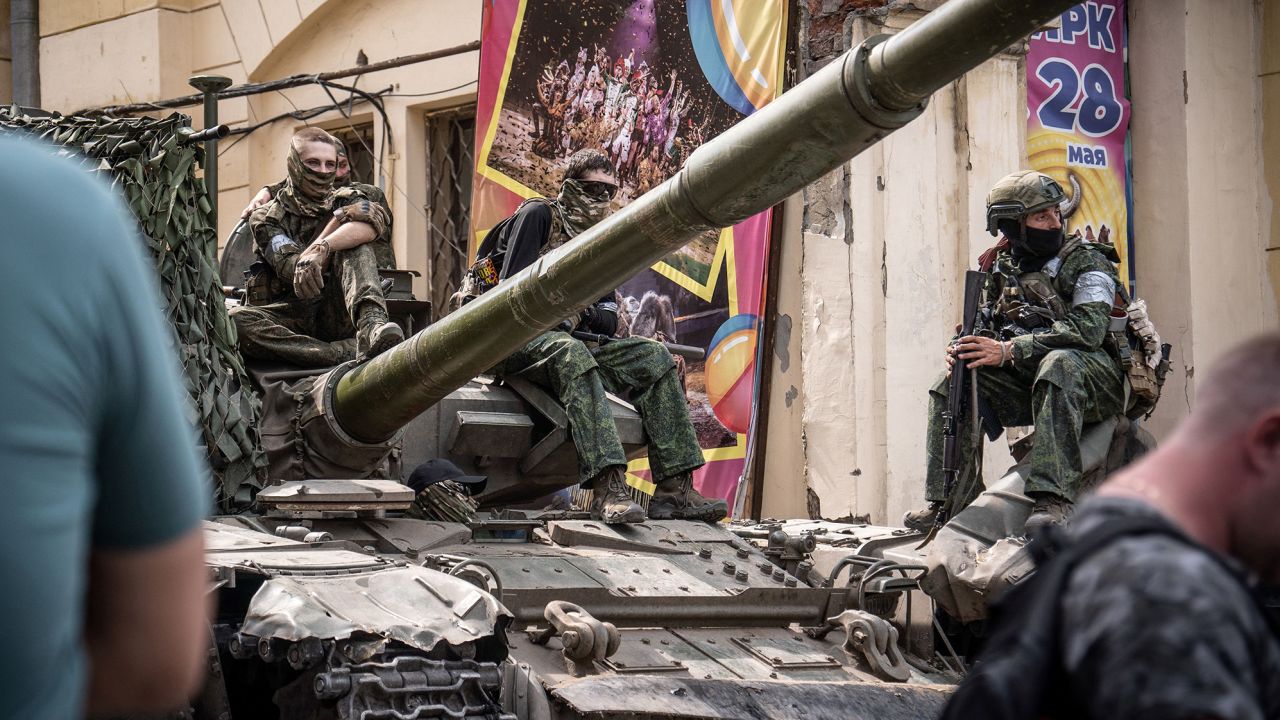
Russian President Vladimir Putin has proposed to Wagner Group fighters that a senior mercenary named Andrey Troshev now command the private military group, according to comments the Russian leader made to the Kommersant newspaper.
Putin appears to have created a split between senior fighters from the Wagner mercenary group and its leader Yevgeny Prigozhin since its failed uprising last month – at least in terms of the narrative emerging from his comments to the Kommersant.
The paper was reporting on a meeting held by the Russian president five days after the Wagner rebellion collapsed at the end of June – a meeting attended by Prigozhin and several dozen senior Wagner combatants.
According to Kommersant, Putin told dozens of Wagner mercenaries in the meeting that among the multiple employment choices he offered to them, one included them continuing to fight under their direct commander, a man who goes by the call sign, ‘Sedoy,’ meaning ‘grey hair.’
“They could have all gathered in one place and continued to serve,” Putin said, “and nothing would have changed for them. They would be led by the same person who has been their real commander all along.”
“And what happened then?” the Kommersant reporter said in reply to Putin. “Many people nodded [affirmatively] when I said that,” Putin replied.
Sedoy is the call sign of Andrey Troshev, a retired Russian colonel and a founding member and Executive Director of the Wagner Group, according to sanctions documents published by the European Union and France.
European Union sanctions concerning the situation in Syria detail Troshev’s position as the chief of staff of the Wagner Group operations in Syria, which supported the Syrian regime.
Troshev was born in April 1953 in Leningrad, in the former Soviet Union, according to the EU sanctions from December 2021.
“Andrey Troshev is directly involved in the military operations of the Wagner Group in Syria. He was particularly involved in the area of Deir ez-Zor,” it added. “As such, he provides a crucial contribution to Bashar al-Assad’s war effort and therefore supports and benefits from the Syrian regime.”
United Kingdom sanctions from June 2022 also say “Andrey Nikolaevich Troshev was the Chief Executive of the Wagner Group. Therefore, he has supported the Syrian regime, was a member of a militia, and has repressed the civilian population in Syria.”
His associates include Wagner Group founder Dimitriy Utkin, who is also a former Russian GRU military intelligence officer, according to EU sanctions. Troshev is also associated with Wagner group commanders Aleksandr Sergeevich Kuznetsov and Andrey Bogatov.
‘Grey hair’ is also a former employee of the special rapid response detachment of the Russian Interior Ministry’s Northwestern Federal District, according to Russian online news outlet Fontanka. He is also a veteran of the wars in Chechnya and Afghanistan.
For his service in Afghanistan, Troshev was awarded two Orders of the Red Star – a Soviet Union decoration for exceptional service. For service in the operation in Chechnya, he was awarded two Orders of Courage and a medal of the Order of Merit for the Fatherland, 2nd degree, according to Russian media.
Troshev was among those invited to a reception at the Kremlin in December 2016. A photograph, believed to be from that 2016 reception, emerged in Russian media in 2017 and shows Putin alongside Troshev and Utkin, who are both wearing several medals.
Ukraine imposed sanctions against Troshev on February 26, 2023.
Meanwhile, the fate of Wagner boss Prigozhin remains unclear. Prigozhin had reportedly traveled to Belarus as part of a deal brokered by Belarusian President Alexander Lukashenko following the failed uprising, but the Belarusian president told CNN last week the Wagner leader is now in Russia.
Footage purporting to show a police raid on Prigozhin’s premises in St. Petersburg has also raised questions about his status. Prigozhin has not been seen in public since June 2.
The Minions are back again, and this time the small yellow creatures are taking their future boss Gru on a new adventure set before the events of Despicable Me.
Both a prequel to Despicable Me and a sequel to Minions, The Rise of Gru charts the eponymous character’s quest to becoming a villain worthy of joining a team of nefarious reprobates known as the Vicious 6.
Steve Carell and Pierre Coffin once again return to their title roles in the animated film franchise, and they are joined by an A-list cast of actors.

A still from “Minions: The Rise of Gru” featuring Gru and Minions Bob, Stuart and Kevin. Both Steve Carell and Pierre Coffin return to voice their respective characters from the “Despicable Me” franchise.
Universal Pictures
As previously mentioned, Carell and Coffin reprise their roles as Gru and the Minions, respectively, with the latter voicing quartet Kevin, Stuart, Bob and Otto in particular—but they’re not the only actors returning to the franchise.
Russell Brand reprises his role as Dr. Nefario, Gru’s future partner in crime, in the Minions sequel, while the iconic Julie Andrews has also come back to voice the villain’s mother Marlena once more.
Steve Coogan, who has voiced several characters in the Despicable Me franchise, also returns to voice Silas Ramsbottom, the director of the Anti-Villain League who appeared in the franchise’s second film.
The Vicious 6 are voiced by a number of iconic stars, with Michelle Yeoh playing member Master Chow, Jean-Claude Van Damme voicing the aptly named Jean Clawed, Dolph Lundgren lending his voice to Svengeance, and Taraji P. Henson voicing the group’s new leader Belle Bottom.
The villainous team is completed by Danny Trejo as Stronghold, Lucy Lawless as Nunchuck, and Alan Arkin as the Vicious 6’s former leader Wild Knuckles.
Other notable actors voicing characters in the kids film include comedians Will Arnett and Jimmy O. Yang, and Futurama star John DiMaggio.
Minions: The Rise of Gru will be released in theaters on Friday, July 1.

The Minions from “Minions: The Rise of Gru” which will come out in theaters on Friday, July 1.
Universal Pictures
“Hamas terrorists bound, burned, and executed children,” Prime Minister Benjamin Netanyahu proclaimed in a speech Monday, condemning the perpetrators of Saturday’s terror.
“They are savages. Hamas is ISIS.”
The comparison to the notorious terrorist organization ISIS underscored the gravity of the situation and the global threat that Netanyahu believes Hamas poses. Just as the international community rallied together to combat the menace of ISIS, the prime minister implored the forces of civilization to unite once more, supporting Israel’s efforts to dismantle Hamas.
But is Hamas ISIS?
Dr. Harel Chorev of the Moshe Dayan Center for Middle Eastern Studies at Tel Aviv University said that Hamas and ISIS share ideological foundations and revere the same philosophical figures that developed them: Abdullah Azzam and Sayyid Qutb.
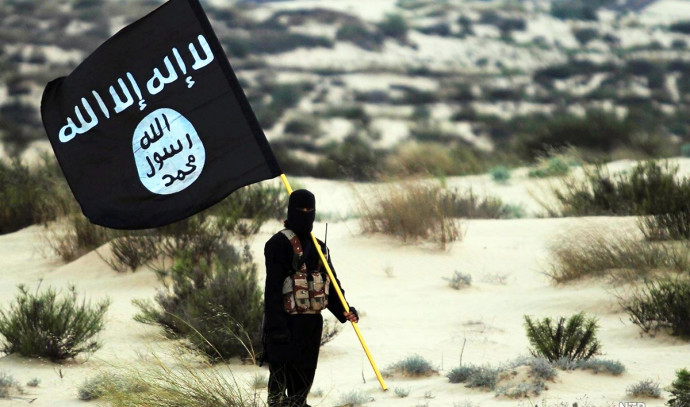
An ISIS member carries and Islamic State flag in Syria. (credit: NDLA)
Azzam, born in the Palestinian West Bank during the 1950s under Jordanian rule, is often regarded as pivotal in developing contemporary global jihadism. A deep-seated hatred towards Israel marked his early years, particularly intensified when his family was compelled to flee across the Jordan River following Israel’s victory in the 1967 Six-Day War.
Azzam’s writings and lectures on “al-Qaida al-Sulba” (the Firm Foundation) laid the groundwork for the emergence of the al-Qaida terrorist organization. He recruited Osama Bin Laden to run the organization.
Additionally, Azzam was a central figure in Hamas’s genesis, contributing to its founding charter’s authorship. He is best known for his reinterpretation of Islamic history and modern Western philosophy to provide ideological justifications for the fantastical ideologies driving global Islamist militant movements.
Sayyid Qutb was an Egyptian ideologue who established the theoretical basis for radical Islamism.
Centered on these philosophers’ ideologies, Hamas and ISIS subscribe to a profoundly paranoid and apocalyptic perspective, in which they propagate the belief that “Crusaders and Zionists” were conspiring for centuries to destroy Islam.
“They are running a holy war against their enemies,” explained Chorev.
However, the similarities between ISIS and Hamas are not only in philosophy but action, Chorev said. Here are four more things they have in common:
As per Chorev’s analysis, both ISIS and Hamas employ dehumanizing rhetoric against individuals who do not adhere to their interpretation of Islam – Christians and Jews, as well as Muslims they consider “not good Muslims.” Their vehemently anti-Western stance is interconnected with this dehumanization, as is their explicit and overt expression of antisemitism.
“You can see it in their incitement on social networking,” Chorev said, illustrating his point by referencing an incident following the tragic murder of Alter Shlomo Lederman, a 20-year-old yeshiva student who was deliberately targeted at a Ramot bus stop earlier this year. He noted that Hamas had released a cartoon depicting Lederman’s face, complete with his fur hat, portrayed as part of a Palestinian maqluba dish, with a family gathered around, consuming it.
“They see their enemies not as human enemies,” Chorev said.
Both ISIS and Hamas are known to treat non-Muslim women as “sex toys,” said Chorev.
Following the recent attacks, videos circulated of the terrorists glorifying Allah for sending them “sex slaves.” Israeli actress and advocate Noa Tishby shared footage released online by Hamas in which you can see several girls paraded through Gaza’s city streets, some half-naked and others with blood gushing from between their legs.
View this post on Instagram
Similar stories have been shared by Yazidi women and girls who were abducted by ISIS and often sold into sexual slavery.
Both ISIS and Hamas celebrate becoming a “shaheed” or martyr for the Islamic faith. According to Chorev, when terrorists are apprehended in Israel there are often accounts of them expressing a willingness to die or even a desire for it, sometimes sharing that, “My family would be proud of me.”
He said, “This is hard, even impossible, for a typical Westerner to understand. How could someone desire his death? But it is the great common denominator between ISIS and Hamas.”
According to Chorev, the two organizations have at least one more thing in common:
By December 2017, the ISIS caliphate had relinquished control over 95% of its territory. Then, in 2019, the final vestiges of the physical ISIS caliphate met their end when the US-backed Syrian Democratic Forces declared triumph following the Battle of Baghuz Fawqani in March 2019, effectively pushing the group into dormancy.
“ISIS was the boss for quite some time until the West decided to destroy it,” Chorev concluded. “Hamas can be destroyed, too.”
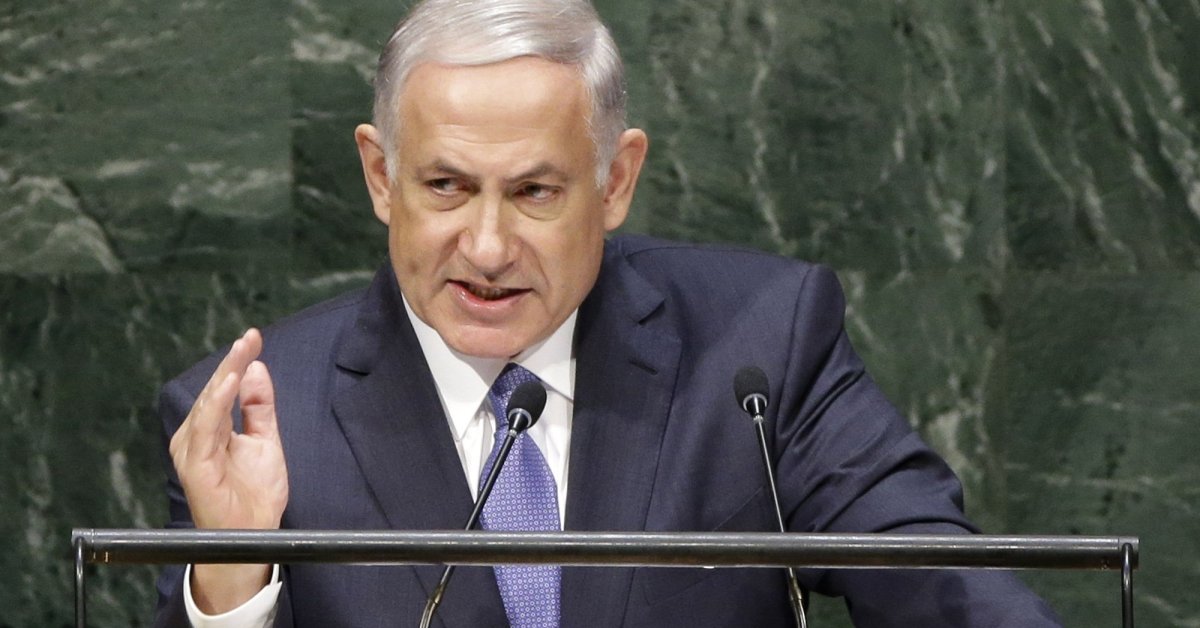
Israeli Prime Minister Benjamin Netanyahu pushed back Monday against Palestinian leader Mahmoud Abbas’ claims that Israel was waging a “genocide” against Palestinians, and called on world leaders to treat Palestinian militant group Hamas as indistinct from the Islamic State of Iraq and Greater Syria (ISIS).
Speaking at the United Nations General Assembly, Netanyahu refuted claims by Abbas and others that his military had committed war crimes during the 50-day war in the Gaza Strip this summer, citing the lengths to which the Israeli Defense Force went to warn civilians to evacuate targeted areas.
“Israel dropped fliers, made phone calls, sent text messages, broadcast warnings in Arabic, all to allow civilians to evacuate targeted areas,” Netanyahu said, arguing that Israel took all available precautions to protect civilian lives, while Hamas deliberately fired rockets from areas where children live and play. “Israel was using its missiles to protect its children, Hamas was using children to protect its missiles,” he added.
He said that the fact that Hamas’s deliberate placement of rockets in civilian communities were the “real war crimes.”
The Israeli Prime Minister also spoke about the growing “cancer” of militant Islam, comparing the situation in Israel with that in Iraq and Syria. “ISIS and Hamas are branches of the same poisonous tree,” he said. “When it comes to their ultimate goals, Hamas is ISIS and ISIS is Hamas. And what they share in common, all militant Islamists share in common.”
The conflict, which ended in August, left 2,100 Palestinians dead and 73 Israelis dead, according to the BBC. The UN said that most of the Palestinian dead were civilians. “This last war against Gaza was a series of absolute war crimes carried out before the eyes and ears of the entire world, moment by moment,” Abbas said last week.
Netanyahu said criticism in Europe of Israel’s treatment of Palestinian civilians often amounts to thinly-veiled anti-Semitism. “We hear mobs today in Europe call for the gassing of Jews, we hear some national leaders compare Israel to the Nazis,” he said. “This is not a function of Israel’s policy, this is a function of diseased minds. That disease has a name, it’s called anti-Semitism, and it’s spreading in polite society.”
The president also warned that Iran was undergoing a “manipulative charm offensive” in order to lift sanctions and continue with plans to build a nuclear weapon. “It’s one thing to confront militant Islamists on pickup trucks… its another thing to confront militant Islamists armed with weapons of mass destruction,” he said. “Would you let ISIS enrich uranium? Then you shouldn’t let the Islamic state of Iran do them either.”
A UN Council tasked with negotiating with Iran on its nuclear program has not made much progress in recent weeks, according to the LA Times. They hope to reach an agreement to limit Iran’s nuclear program to non-military uses in exchange for lifting oil sanctions.
Netanyahu urged the world’s leaders not to trust what he called the “world’s most dangerous regime.” “To say Iran doesn’t practice terrorism is like saying Derek Jeter never played shortstop for the New York Yankees,” he said.
Write to Charlotte Alter at charlotte.alter@time.com.
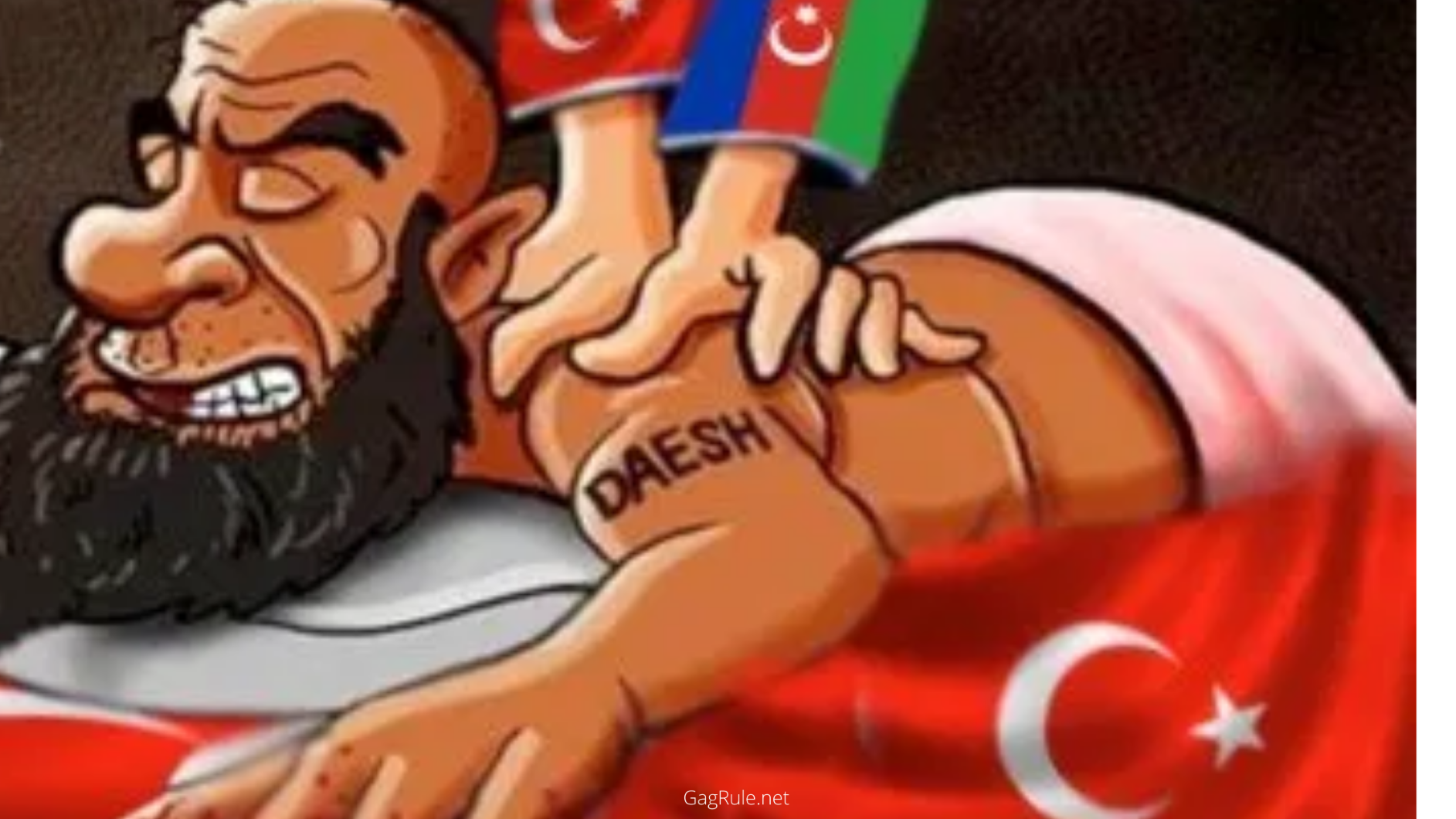
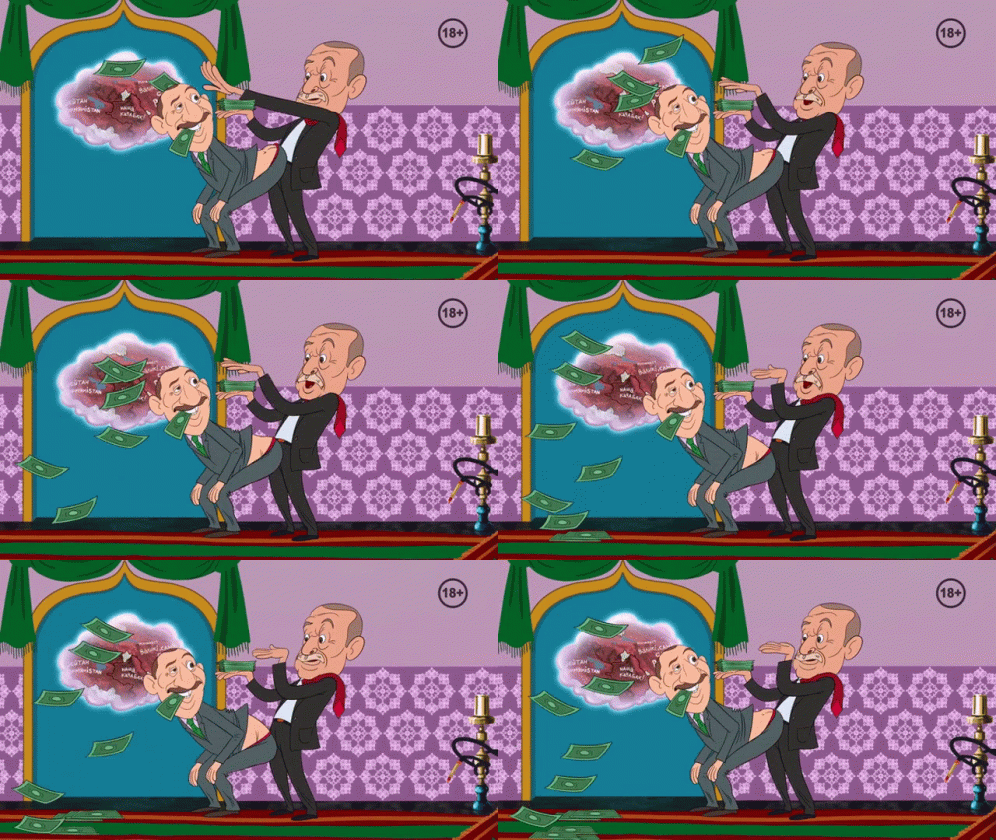
There is now abundant evidence that Azerbaijan is using Syrian jihadist mercenaries transported by Turkey from the areas it controls in Syria to fight against Armenians in Artsakh.
The question is why Azerbaijan, a majority-Muslim but ostensibly secular country run by dictator Ilham Aliyev on shaky footing, would want to have jihadists in his country. The question is all the more befuddling when considering that Azerbaijan has spent billions on its military over the past decade, achieving superiority in the quantity of armaments over Armenia and, also, in the size of their standing army: over 365,000 soldiers with active duty and reserve troops.
So, why mercenaries?
The answer lies in the fact that despite the decade-long propaganda that portrays Azerbaijan as a phoenix newly infused with strength and resolve due to a continuous stream of oil wealth, most citizens of Azerbaijan have little heart for a long war, especially for a place they have never been to and know little about; Aliyev’s dictatorial government knows this.
During the Artsakh Liberation War from 1988 to 1994, many Azerbaijanis were known to flee from the battlefield – a phenomenon seen during this war, as well – and return to their towns and villages to hide, requiring the leadership to recruit people by threat of force.
Additionally, it was well-documented that many of the fighters on the Azerbaijani side were from among the country’s minority groups – Lezgins, Talysh, and Meskheti Turks – along with Soviet Ukrainian soldiers, recently unemployed, who were hired as mercenaries, mostly to round out the Azerbaijani air force.
The experience with Islamic jihadists is also not new. In the first war, Chechen rebels led by the infamous Shamil Basayev and Afghan mujaheddin, led by the infamous Khattab, fresh off their victory over Soviet forces, were paid to come and fight.
It was difficult to hide the losses that Azerbaijan was suffering in that first war amid the internal political discord and general disarray of the collapsing Soviet Union. Warring political factions were happy to exploit the military failures of their opponents to try to secure power.
However, by the April War of 2016, the first large-scale attack on Artsakh since the ceasefire was signed, Azerbaijan was a tightly-controlled dictatorship with a smooth propaganda operation and internal institutions to keep a lid on the flow of information. So, although the April War lasted only four days, an estimated 1,000 soldiers were killed. This was immediately covered up to prevent discord and to this day, Azerbaijan claims that only 31 of their soldiers died.
The fact is that Aliyev understands that the higher the death toll in a war his people do not want to fight, the greater the likelihood that there will be internal unrest. The solution to this problem is to hire mercenaries.
The main benefit of using the mercenaries is that when they die, they aren’t sent back to Azerbaijani towns where people will be able to guess the devastation that Azerbaijan is suffering on the battlefield. Naturally, this lowers the number of dead soldiers being returned to families in Azerbaijan.
So, despite the 365,000 Azerbaijani soldiers at its disposal (over twice the size of Artsakh’s civilian population), the government of the country chooses to hire cheap and, in their eyes, expendable Syrian jihadists whose deaths will soften the blow of realizing how many soldiers are dying in the war with Artsakh. Effectively, these mercenaries act as cannon fodder for battles with Armenians.
Aliyev, nevertheless, seems to understand he is playing with fire in the Land of Fire and can’t afford to bring too many of these jihadists to the country lest they spread radical Islam and destabilize his rule. Thus far, he has brought only a few thousand of these jihadists but the longer the war goes, the more soldiers will die and it will be increasingly difficult to cover up the losses of his own soldiers.
Whether Aliyev chooses to bring in more jihadists or to send more Azerbaijanis to their deaths, his choices are limited and untenable. It is only a matter of time before the people lose their heart, the jihadists start making inroads, or political enemies take advantage of the instability created by his decisions.