Categories
Selected Articles

Israel, even with superior intelligence abilities, fails to anticipate Hamas attack


MICHEL MARTIN, HOST:

You’ve been hearing this morning that Israeli surveillance of Gaza is extensive and intrusive, and yet Hamas fighters were able to invade Israeli territory, seize hostages, including children and entire families. And now more than 1,100 Israelis and Palestinians are dead. We’ve been hearing an array of perspectives this morning about this dangerous situation and possibly a way forward.

So now we’re going to turn to a former top adviser to former Israeli Prime Minister Ehud Barak. Daniel Levy is now president of the U.S./Middle East Project. It’s a group of former top officials who have been working for two decades to, as their mission statement says, advance a dignified Israeli-Palestinian peace. And Mr. Levy is with us now from London. Good morning.

DANIEL LEVY: Good morning, Michel.

MARTIN: So a lot has been said about this being an intelligence and military failure by Israel. But how much of this attack is a reflection of political failure, the failure to make a lasting peace?

LEVY: Well, thank you for asking that question because it’s a question too infrequently asked. Yes, people are going to be looking at how come, with all this high-tech prowess, Israel did not know what had gone on. And I think the reports of meetings in Beirut and Iranian involvement would only increase that question, which is why I think those are probably inaccurate. But the bigger failure, I think, and the fear that I have amongst many other fears today is that they will look for easy answers.

And I already hear folks in Israel saying, well, this is the Netanyahu government. They were focused on this judicial overhaul, and they were focused too much on West Bank settler protection. But the malaise goes much deeper. And the real failure and the need for a paradigm shift is for people to look around and say, Israel has managed to have a period of relative quiet, but what has it done politically to address the root causes? And until there’s a realization that Palestinians living in those circumstances are always going to ask themselves – how do we improve our lot? – and if all diplomatic, political, international legal paths are closed, then you have one route left open, which is armed resistance. And Israelis will not have normality and security until Palestinians do. That’s the sad, painful truth that cannot be ignored in these days.

MARTIN: I’m so sorry we don’t have more time. But I’d like to ask, how do you think the international community should be responding? What is the tone that they should be striking, and of course, because I’m in the United States, I’m going to ask you, particularly the U.S. administration, the Biden administration?

LEVY: I’m afraid that the Biden administration is continuing to encourage Israel to do its worst. American hubris, when you’re surrounded by Canada and Mexico and you go overseas if you need to test and find out the limits of that hubris, is one thing. But encouraging Israel down a hubristic path of military solutions and we stand with you and it’s going to be OK is the biggest disservice America can do.

MARTIN: And before we let you go, as we reported earlier, the defense ministry says it’s shutting down food, fuel and electricity to Gaza. You can understand that as an immediate response but does that advance the cause of bringing this situation to some sort of conclusion?

LEVY: Well, of course it doesn’t. It’s a war crime. One’s heart breaks for what one’s seen in Israel, but one’s hands tremble for what is going to happen to Gazans. And this will only make things worse. There is no military solution, and you need to bring in Hamas. We need to be talking. We should have been talking to them for decades. This is the outcome of failed politics. Don’t double down on that failed politics.

MARTIN: That’s Daniel Levy. He’s president of the U.S./Middle East Project. And as we mentioned, he’s a former adviser to former Israeli Prime Minister Ehud Barak. Mr. Levy, I do hope we’ll talk again, and I do hope it’ll be a better day when we do. Thank you for speaking with us.

LEVY: I hope so, Michel. Thank you.

(SOUNDBITE OF PAN AMERICAN’S “LIGHTS ON WATER”) Transcript provided by NPR, Copyright NPR.

NPR transcripts are created on a rush deadline by an NPR contractor. This text may not be in its final form and may be updated or revised in the future. Accuracy and availability may vary. The authoritative record of NPR’s programming is the audio record.



Categories
Selected Articles

Paragliding fighters flew into Israel. A similar attack happened 35 years ago.


HH3S5TB7WFCKCFLBZYMZERS5DU.JPG&w=1440

Israeli soldiers could hear but not see the threat humming above them.

Two enemy aircraft took off late on Nov. 25, 1987, near Lebanon’s southern border, intent on invading Israeli airspace. They were not jet fighters, helicopter gunships or even blimps. Palestinian guerrillas were trying to attack a country protected by one of the most powerful militaries in the world — with hang gliders that were scarcely more than kites retrofitted with propellers and engines the size of a lawn mower’s.

Within minutes, one of the two pilot-assassins had crossed into Israel, killed six soldiers and wounded at least seven others before being fatally shot.

The raid would live in infamy as the Night of the Gliders.

That attack more than 35 years ago took on new relevance Saturday morning as Palestinian fighters launched a multipronged attack on Israel from the Gaza Strip, invading the country on motorcycles, pickup trucks, boats — and paragliders.

The scale of the attack dwarfed the Night of Gliders. Combined with rocket strikes, Palestinian militants had killed more than 700 people and wounded thousands of others as of early Monday. Israel formally declared war Sunday, with Prime Minister Benjamin Netanyahu promising to turn “all of the places which Hamas is deployed, hiding and operating in … into rubble.” On Monday, it announced a full siege of Gaza, with the defense minister promising “no electricity, no food, no fuel” for the enclave.

Israel will investigate possible security lapses and figure out how the attackers had caught the country’s defense forces by surprise, Michael Herzog, Israel’s ambassador to the United States, told CBS’s “Face the Nation” on Sunday.

“They prepared a surprise attack. They breached the border fence, they came with paragliders and through the sea,” Herzog said. “There will be sufficient time after the war to investigate what exactly happened.”

In 1987, the Israeli army was similarly caught off guard when two Palestinian guerrillas tried to fly giant red-and-white hang gliders some three miles across the country’s northern border with Lebanon, Time magazine reported. While soldiers heard the engines above them, the helicopter gunships they sent to investigate never found anything.

One of the guerrilla pilots failed to cross the Israeli border, instead landing in a buffer zone of Lebanese territory that Israel controlled as a “security zone.” Troops fatally shot him there, an army spokesman told the New York Times in 1987.

But his compatriot got across, landing in a field of thistles north of Kiryat Shemona in Israel, Time reported. The guerrilla pilot then ran some 500 feet to an army base, armed with a Soviet-made Kalashnikov rifle, a pistol equipped with a suppressor and hand grenades. Once the soldier acting as a lookout fled, the guerrilla entered the camp, threw grenades at and opened fire into the tents of unsuspecting Israeli soldiers.

One of the wounded soldiers, a 20-year-old, fatally shot the Palestinian, ending the attack — the most lethal Israel had seen in nearly a decade, Time reported.

The Popular Front for the Liberation of Palestine-General Command, a Syria-based terrorist group that carried out dozens of attacks in Europe and the Middle East during the 1970s and 1980s, claimed responsibility.

Yasser Arafat, then the chairman of the Palestine Liberation Organization, praised the Popular Front’s efforts, according to Reuters.

“The attack demonstrated that there could be no barriers or obstacles to prevent a guerrilla who has decided to become a martyr,” he said at the time.

Four months later, the 19-year-old who abandoned his lookout post was court-martialed and sentenced to three years in jail. At his sentencing, he was chastised for forsaking his duty to protect his fellow soldiers and denounced for “shameful behavior.”

In the aftermath of the attack, Israeli army leaders wondered how, given the country’s military prowess, they had been caught flat-footed by such a technologically unsophisticated strike.

“How did it happen that one terrorist killed six soldiers and wounded seven others?” Lt. Gen. Dan Shomron, then the chief of staff of the Israel Defense Forces, asked at the time. “We cannot live with an event like this.”

Nearly 36 years later, Israel finds itself asking similar questions about an attack — but this time, the casualties are far higher.


Categories
Selected Articles

How a night of dancing and revelry in Israel turned into a massacre


t_12b21cccc02d430c9868ae39c3c55d6b_name_

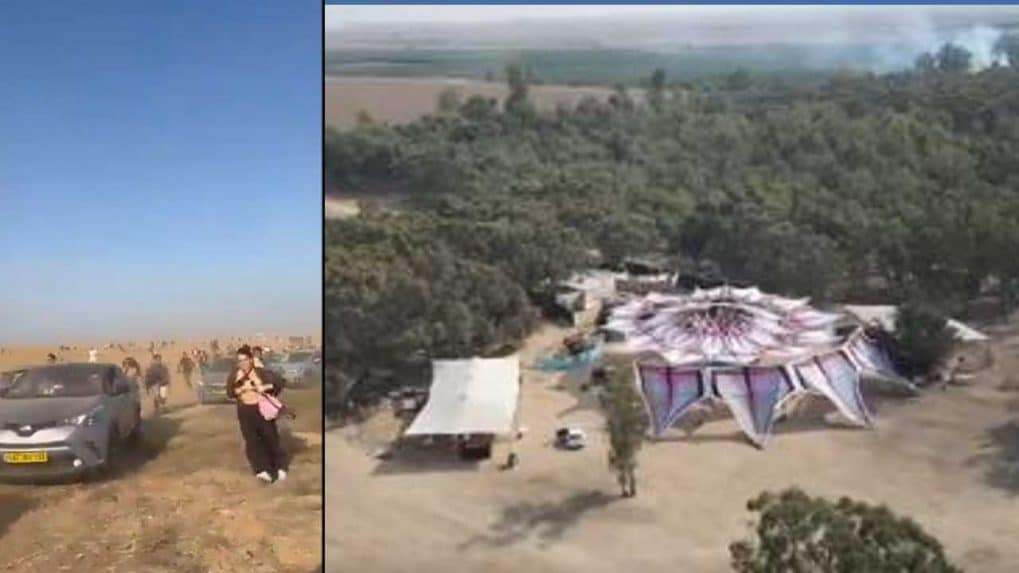
The first rockets were fired just before dawn, arcing through the sky over thousands of revelers who had been dancing through the night at a trance music festival — billed as an event celebrating “friends, love and infinite freedom.”

Initially, some of the ravers didn’t notice the sound of the explosions over the thumping music. Others, used to rockets from Gaza, shrugged them off.

“We heard sirens and rockets, tons of rockets,” said Millet Ben Haim, 27, who attended the festival with a group of friends, posing with one of them just minutes before the attack and sticking her tongue out for the camera.

A voice boomed from the loudspeakers over the tented stages and the chill-out area that organizers described as a “playground for adults.”

“Guys, we have red alert,” the voice warned. “Red alert.”

Videos verified by The Washington Post show people leaving hurriedly, a few jogging, many glancing back to look at the white rocket flashes in the lightening sky. They appear confused but not panicked.

A person dressed in black with a yellow safety vest was directing crowds away from the stages.

Then the gunfire started.

“We started running; we didn’t know where to go,” Ben Haim said. “Nobody knew what to do.”

The Tribe of Nova trance music festival, near Kibbutz Reim, was one of the first targets for Hamas militants as they launched their unprecedented attack on Israel in the early hours of Saturday morning, overrunning the concert area, shooting into the crowd and grabbing as many hostages as they could. Festivalgoers described how the gunmen blocked roads, ambushed escaping cars and scoured the area looking for people to kidnap.

At least 260 bodies were recovered from the concert site Sunday, according to ZAKA, a volunteer emergency response group in Israel. Across the country, at least 700 people have been killed. Dozens are still missing, according to the Israel Defense Forces; Israeli media has put the figure at more than 100. Hamas says hostages are being held in tunnels and other secure locations in Gaza.

It remains unclear how many of them were taken from the festival. Survivors have been inundated with messages from people who are still looking for their loved ones.

The festival’s organizers have not responded to requests for comment but posted a message on Instagram saying they were “stunned” and “share the grief of the missing and murdered families.”

“We hope and pray that good news will reach us and you soon,” the post said.

At the site of the rave Sunday, Israeli soldiers put bodies in the back of a large refrigerated truck parked next to hundreds of abandoned cars. In one clearing, the shells of burned vehicles sat beside discarded tents, camping mats and coolers.

Relatives searching for the missing at a nearby intersection said more than a thousand people were at the event when the militants attacked. Some festivalgoers estimated the true figure was closer to 3,000 or 4,000.

The attendees had not been given the exact location of the festival until a few hours before it began at 10 p.m. Friday. “The event will take place in a powerful natural location full of trees, stunning in its beauty and organized for your convenience, about an hour and a quarter south of Tel Aviv,” ticket buyers were told in the lead-up.

The festival was held just three miles from the fence that divides Israel from the Gaza Strip and its roughly 2 million inhabitants. The ravers were told not to bring firearms or sharp objects onto the festival grounds. They were tired and defenseless when the attack began, trapped in a wide-open area that offered few hiding places.

Ben Haim saw the militants in the distance, closing in on foot. “I took the car keys from a friend of mine that was really wasted and got as many people in the car as possible and started driving like crazy,” she said. “The people who stayed, most of them got kidnapped or murdered.”

Cars were being shot at on the roads and there were gunmen everywhere, she said.

Gal Raz, 31, also tried to drive away with his friends when he realized the area was overrun.

“We heard shots. There were cars with corpses on top of them that blocked the road,” he said. “We couldn’t get out.”

They got in another friend’s car but were quickly ambushed.

“There were about seven to eight terrorists, and they started to shoot at us in our car,” he said.

They drove on for a few hundred meters and then abandoned the car, running past another with several dead bodies next to it. As he hid, Raz thought about his girlfriend, whom he is planning to marry, and about his family.

“It’s clear that there was a failure here,” he said. “Now we need to get these people back who are missing. And to tell these people’s stories.”

Ben Haim and her friends had also jumped out of their car and were running through the fields.

“Every direction we ran we had more people shooting at us; we were running for two hours trying to escape. We started crawling in bushes. Eventually I realized I couldn’t run anymore.”

She and two friends and a stranger lay down in a bush and covered themselves with leaves.

“We stayed silent and tried to reach the police. The police said they can’t help us because too many people were kidnapped.”

After seven hours, with her phone battery at 2 percent, Ben Haim was picked up by a local resident who was driving around trying to rescue people. Raz was eventually picked up by the military.

Help didn’t arrive in time for Noa Argamani, 25, who was hiding in the bushes with her boyfriend, Avinatan Or. Or messaged Argamani’s father around 10 a.m. to let him know they were safe.

The couple were trying to reassure him, said Shlomit Marciano, 25, a childhood friend of Argamani’s. It was the last message the family received.

On Saturday, they saw the couple in a video circulating on Palestinian social media. It shows Argamani screaming as she is separated from her boyfriend and driven off on a motorcycle. Or appears to have his hands bound and is pushed along by several young men.

The Post wasn’t able to independently confirm the location of the video, but the geography and sunlight are consistent with other visuals from the scene.

“You can absolutely see it was her,” said Marciano, who is staying with Argamani’s parents. “I think I haven’t fully accepted it yet; I slept in her bed last night. It’s crazy.”

Argamani had debated not going to the festival, but not because of security concerns. “If she knew it was tense right now, then I think she wouldn’t have gone, but we knew nothing,” Marciano said. “She wasn’t sure because it was far and expensive. I told her, ‘Go; you’re young.’ I regret that.”

A later video appears to show Argamani being held captive, sitting on cushions in a room with a tiled floor, sipping from a bottle of water. “At least we know she’s alive,” Marciano said.

Others don’t have that assurance.

Tali Atias believes that her 23-year-old daughter, Dorin, whom she last heard from shortly before 7 a.m. Saturday, might be among the hostages. Dorin told her mother the area was under attack and she was looking for shelter.

Atias has posted on social media and called her daughter’s friends to try to find out what happened to her, to no avail. “We don’t know what’s going on” or “what to do,” she said.

The family of Shani Louk feel similarly helpless. The 22-year-old posed for a mirror selfie just before parting for the rave, her long dreadlocks partially covered by a headscarf, looking coyly to the side, eyelids flecked with eyeliner.

“She loved to party,” said her cousin Tom Weintraub Louk, 30. Family members desperately tried reaching Louk and her Mexican boyfriend when the news broke.

Then they saw the video posted online.

“We recognized her by the tattoos, and she has long dreadlocks,” Louk said.

In the video, the woman is facedown in the bed of the truck with four militants, apparently being paraded through Gaza. One holds her hair while another raises a gun in the air and shouts, “Allahu akbar!” A crowd follows the truck cheering. A boy spits in her hair.

While her cousin appears lifeless, the family is still holding out for news. “We have some kind of hope,” Louk said.

Morris reported from Berlin, Piper from London, Lee from Washington and George from southern Israel. Shira Rubin in Brussels, Meg Kelly and Sarah Cahlan in Washington, Samuel Oakford in New York and Annabelle Timsit in London contributed to this report.


Categories
Selected Articles

Israeli survivors recount terror at music festival, where Hamas militants killed at least 260


AP23282411848416-e1696870110725.jpg?qual

The night was a getaway. Thousands of young men and women gathered at a vast field in southern Israel near the Gaza border to dance without a care. Old and new friends jumped up and down, reveling in the swirl of the bass-heavy beats.

Maya Alper was standing toward the back of the bar with teams of environmentally conscious volunteers, picking up trash and passing out free vodka shots to party-goers who reused their cups. Just after 6.a.m., as a light-blue dawn broke and the headliner D.J. took the stage, air raid sirens cut through the ethereal trap music. Rockets streaked overhead.

Alper, 25, jumped into her car and raced to the main road. But at the intersection she encountered crowds of stricken festival attendees, shouting at drivers to turn around. Then, a noise. Firecrackers? Panicked men and women staggering down the road just in front of her fell to the ground in pools of blood. Gunshots.

The open-air Tribe of Nova music festival will go down in Israeli history as the worst civilian massacre in the country’s history, with at least 260 dead and a still undetermined number taken hostage. Dozens of Hamas militants who had blown through Israel’s heavily fortified separation fence and crossed into the country from Gaza opened fire on about 3,500 young Israelis who had come together for a joyous night of electronic music to celebrate the Jewish holiday of Sukkot. Some attendees were drunk or high on drugs, magnifying their confusion and terror.

The Associated Press reviewed more than dozen videos taken during the massacre and interviewed survivors to reconstruct how the deadly attack unfolded. The party was held in a dusty field outside of Kibbutz Re’im, about 3.3 miles (5.3 kilometers) from the wall that separates Gaza from southern Israel.

“We were hiding and running, hiding and running, in an open field — the worst place you could possibly be in that situation,” said Arik Nani from Tel Aviv, who had gone to the party to celebrate his 26th birthday. “For a country where everyone in these circles knows everyone, this is a trauma like I could never imagine.”

While rockets rained down, revelers said, militants converged on the festival site while others waited near bomb shelters, gunning down people who were seeking refuge. Many of the militants, who arrived in trucks and on motorcycles, were wearing body armor and brandishing AK-47 assault rifles and rocket-propelled grenades.

Videos compiled by Israeli first responders and posted to the social media site Telegram show armed men plunging into the panicked crowd, mowing down fleeing revelers with bursts of automatic fire. Many victims were shot in the back as they ran.

Israeli communities on either side of the festival grounds also came under attack, with Hamas gunmen abducting dozens of men, women and children — including elderly and disabled people — and killing scores of others in Saturday’s unprecedented surprise attack.

The staggering toll from the festival was becoming clear Monday, as Israel’s rescue service Zaka said paramedics had recovered at least 260 bodies. Festival organizers said they were helping Israeli security forces locate attendees who were still missing. The death toll could rise as teams continue to clear the area.

As the carnage unfolded before her, Alper pulled a few disoriented-looking revelers into her car from the street and accelerated in the opposite direction. One of them said he had lost his wife in the chaos and Alper had to stop him from breaking out of the car to find her. Another said she had just seen Hamas gunmen shoot and kill her best friend. Another rocked in his seat, murmuring over and over, “We are going to die.” In the rear-view mirror, Alper watched the dance floor where she had spent the past ecstatic hours transform into a giant cloud of black smoke.

Festival-goers who managed to make it to the road and parking lot where their vehicles were parked found themselves trapped in a traffic jam, with militants stalking the cars and spraying those inside with gunfire. Drone footage of the scene taken after the attack and reviewed by the AP show chaotic lines of cars where drivers had attempted to flee. Some burned-out vehicles were flipped onto their sides, while others had bullet holes visible in shattered windows.

Nowhere was safe, Alper said. The roar of explosions, hysterical screams and automatic gunfire felt closer the further she drove. When a man just meters away shouted “God is great!”, Alper and her new companions sprung out of the car and sprinted through open fields toward a mass of bushes.

Alper felt a bullet whiz past her left ear. Aware the gunmen would outrun her, she plunged into a tangle of shrubs. Peering through thorns, she said she saw one of her passengers, the girl who had lost her friend, shriek and collapse as a gunman stood over her limp body, grinning.

Israeli Prime Minister Benjamin Netanyahu declared war against Hamas Saturday after the Palestinian militant group launched a surprise attack on Israel, which the IDF says left at least 700 dead and thousands injured.

“I can’t even explain the energy they (the militants) had. It was so clear they didn’t see us as human beings,” she said. “They looked at us with pure, pure hate.”

Videos show the gunmen executed some of the wounded at point-blank range as they crouched on the ground. Some of the militants even rifled through the vehicles of their victims, grabbing purses and backpacks.

An unknown number of people from the festival were taken hostage. A video posted to social media by militants and verified by the AP shows an Israeli couple, Noa Argamani and her partner Avinatan Or, being dragged away by their captors.

Argamani, her face contorted in panic, shouts “No, no!” in Hebrew while being forced onto a motorbike, sandwiched between two gunmen. She reaches out for Or, whose hands are bound behind his back as a group of militants march him forward.

Their whereabouts are now unknown. But it is believed that Hamas is now holding more than 100 Israelis as hostages. On Monday, the group threatened to begin systematically killing captives if the Israeli military bombs Palestinian areas without warning.

For over six hours, Alper and thousands of other concert attendees hid without help from the Israeli army as Hamas militants sprayed automatic gunfire and threw grenades.

Her limbs were so contorted into a tangled mess in the bush that she couldn’t wiggle her toes. At different points, she heard militants speak in Arabic just beside her. A yoga devotee who practices meditation, Alper said she focused on her breath — “breathing and praying in every way I knew possible.”

“Every time I thought of anger, or fear or revenge, I breathed it out,” she said. “I tried to think of what I was grateful for — the bush that hid me so well that even birds landed on it, the birds that were still singing, the sky that was so blue.”

A tank instructor in the Israeli army, Alper knew she was safe when she heard a different kind of explosion — the sound of an Israeli army tank round. She shouted for help and soon soldiers were lifting her out of the bush. Around her lay the lifeless body of one of her friends. The girl from her car she had seen collapse was nowhere to be found; she believes that Hamas militants took her into Gaza.

Alper said the Israeli army, on its way to fight Hamas militants in the hard-hit kibbutz of Be’eri near the Gaza border, was at a loss as to know what to do with her.

At that moment, a pick-up truck full of Palestinian citizens of Israel pulled up. The men from the Bedouin city of Rahat were scouring the area to help rescue Israeli survivors. Helping Alper into their car, they drove her to the police station, where she collapsed, crying, into her father’s arms.

“This is not just war. This is hell,” Alper said. “But in that hell I still feel that somehow, we can choose to act out of love, and not just fear.”

Photos: Israel-Hamas War


Categories
Selected Articles

How Israel was duped as Hamas planned devastating assault


2023-10-08t223906z_1_lynxmpej970e4_rtrop

A careful campaign of deception ensured Israel was caught off guard when the Palestinian Islamist group Hamas launched its devastating attack, enabling a force using bulldozers, hang gliders and motorbikes to take on the Middle East’s most powerful army.

Saturday’s assault, the worst breach in Israel’s defences since Arab armies waged war in 1973, followed two years of subterfuge by Hamas that involved keeping its military plans under wraps and convincing Israel it did not want a fight.

While Israel was led to believe it was containing a war-weary Hamas by providing economic incentives to Gazan workers, the group’s fighters were being trained and drilled, often in plain sight, a source close to Hamas said.

This source provided many of the details for the account of the attack and its buildup that has been pieced together by Reuters. Three sources within Israel’s security establishment, who like others asked not to be identified, also contributed to this account.

“Hamas gave Israel the impression that it was not ready for a fight,” said the source close to Hamas, describing plans for the most startling assault since the Yom Kippur War 50 years ago when Egypt and Syria surprised Israel and made it fight for its survival.

“Hamas used an unprecedented intelligence tactic to mislead Israel over the last months, by giving a public impression that it was not willing to go into a fight or confrontation with Israel while preparing for this massive operation,” the source said.

Israel concedes it was caught off guard by an attack timed to coincide with the Jewish Sabbath and a religious holiday. Hamas fighters stormed into Israeli towns, killing 700 Israelis and abducting dozens. Israel has killed more than 400 Palestinians in its retaliation on Gaza since then.

“This is our 9/11,” said Major Nir Dinar, spokesperson for the Israeli Defence Forces. “They got us.”

“They surprised us and they came fast from many spots – both from the air and the ground and the sea.”

Osama Hamdan, the Hamas representative in Lebanon, told Reuters the attack showed Palestinians had the will to achieve their goals “regardless of Israel’s military power and capabilities.”

‘THEY RAN RIOT’

In one of the most striking elements of their preparations, Hamas constructed a mock Israeli settlement in Gaza where they practiced a military landing and trained to storm it, the source close to Hamas said, adding they even made videos of the manoeuvres.

“Israel surely saw them but they were convinced that Hamas wasn’t keen on getting into a confrontation,” the source said.

Meanwhile, Hamas sought to convince Israel it cared more about ensuring that workers in Gaza, a narrow strip of land with more than two million residents, had access to jobs across the border and had no interest in starting a new war.

“Hamas was able to build a whole image that it was not ready for a military adventure against Israel,” the source said.

Since a 2021 war with Hamas, Israel has sought to provide a basic level of economic stability in Gaza by offering incentives including thousands of permits so Gazans can work in Israel or the West Bank, where salaries in construction, agriculture or service jobs can be 10 times the level of pay in Gaza.

“We believed that the fact that they were coming in to work and bringing money into Gaza would create a certain level of calm. We were wrong,” another Israeli army spokesperson said.

An Israeli security source acknowledged Israel’s security services were duped by Hamas. “They caused us to think they wanted money,” the source said. “And all the time they were involved in exercises/drills until they ran riot.”

As part of its subterfuge in the past two years, Hamas refrained from military operations against Israel, even as another Gaza-based Islamist armed group known as Islamic Jihad launched a series of its own assaults or rocket attacks.

NO INKLING

The restraint shown by Hamas drew public criticism from some supporters, again aimed at building an impression that Hamas had economic concerns not a new war on its mind, the source said.

In the West Bank, controlled by Palestinian President Mahmoud Abbas and his Fatah group, there were those who mocked Hamas for going quiet. In one Fatah statement published in June 2022, the group accused Hamas leaders of fleeing to Arab capitals to live in “luxurious hotels and villas” leaving their people to poverty in Gaza.

A second Israeli security source said there was a period when Israel believed the movement’s leader in Gaza, Yahya Al-Sinwar, was preoccupied with managing Gaza “rather than killing Jews”. At the same time, Israel turned its focus away from Hamas as it pushed for a deal to normalise relations with Saudi Arabia, he added.

Israel has long prided itself on its ability to infiltrate and monitor Islamist groups. As a consequence, the source close to Hamas said, a crucial part of the plan was to avoid leaks.

Many Hamas leaders were unaware of the plans and, while training, the 1,000 fighters deployed in the assault had no inkling of the exact purpose of the exercises, the source added.

When the day came, the operation was divided into four parts, the Hamas source said, describing the various elements.

The first move was a barrage of 3,000 rockets fired from Gaza that coincided with incursions by fighters who flew hang gliders over the border, the source said. Israel has previously said 2,500 rockets were fired at first.

Once the fighters on hang-gliders were on the ground, they secured the terrain so an elite commando unit could storm the fortified electronic and cement wall that divides Gaza from the settlements and which was built by Israel to prevent infiltration.

The fighters used explosives to breach the barriers and then sped across on motorbikes. Bulldozers widened the gaps and more fighters entered in four-wheel drives, scenes that witnesses described.

‘HUGE FAILURE’

A commando unit attacked the Israeli army’s southern Gaza headquarters and jammed its communications, preventing personnel from calling commanders or each other, the source said.

The final part involved moving hostages to Gaza, mostly achieved early in the attack, the source close to Hamas said.

In one well-publicised hostage taking, fighters abducted party-goers fleeing a rave near the kibbutz of Re’im near Gaza. Social media footage showed dozens of people running through fields and on a road as gunshots were heard.

“How could this party happen this close (to Gaza)?” the Israeli security source said.

The Israeli security source said Israeli troops were below full strength in the south near Gaza because some had been redeployed to the West Bank to protect Israeli settlers following a surge of violence between them and Palestinian militants.

“They (Hamas) exploited that,” the source said.

Retired General Yaakov Amidror, a former national security adviser to Prime Minister Benjamin Netanyahu, told reporters on Sunday the assault represented “a huge failure of the intelligence system and the military apparatus in the south.”

Amidror, chairman of the National Security Council from April 2011-November 2013 and now senior fellow with the Jerusalem Institute for Strategy and Security, said some of Israel’s allies had been saying that Hamas had acquired “more responsibility”.

“We stupidly began to believe that it was true,” he said. “So, we made a mistake. We are not going to make this mistake again and we will destroy Hamas, slowly but surely.”


Categories
Selected Articles

Self-proclaimed Republic of Artsakh to dissolve by January 1st, 2024.


2023_Nagorno-Karabakh_War.png

The breakaway government in the Nagorno-Karabakh region reported it will disband by January 1st, 2024. The self-proclaimed Republic of Artsakh is situated inside the UN-recognized borders of Azerbaijan. The territory’s unnoticed chief gave a declaration yesterday, officially ending over thirty years of separatist rule from ethnic Armenians in the Republic of Artsakh.

The declaration comes approximately seven days after Azerbaijan started a 24-hour military operation in Nagorno-Karabakh, and soon after assumed full command over the ethnic Armenian-majority enclave. The 24-hour miliary operation is known as the “2023 Azerbaijani offensive in Nagorno-Karabakh”, you can read more about the 2023 offensive here.

A cease-fire deal was made and the Artsakh Defence Army has been disbanded. More than 70,500 ethnic Armenian individuals, out of an expected populace of 120,000, have fled to neighboring Armenia through a single road known as the Lachin corridor. Before the cease-fire deal, Azerbaijan had blocked the route for around nine months (since December 2022). The almost year long block hindered the local population from fleeing, as well as prevented humanitarian aid.

Large numbers of those leaving the enclave say they fear ethnic cleansing, while Azerbaijan authorities claim they would guarantee protections for ethnic Armenians who choose to stay.

The Armenia–Azerbaijan border crisis is still ongoing.


Categories
Selected Articles

Israel Palestine war: Video shows aftermath of Hamas attack on Israeli music festival that killed 260


photo-1019x573.jpg

The outdoor Tribe of Nova music festival was meant to be an all-night dance party in a rural area near the Gaza-Israel border, where thousand of young people would celebrate the Jewish holiday of Sukkot.

But it became a site of deadly chaos when Hamas militants attacked the festival in the desert area early Saturday, killing an estimated 260 people. Terrified revelers tried to run and hide from the gunfire, according to an Israeli rescue organization, news outlets and accounts on social media.

The Israeli rescue service Zaka said paramedics have removed about 260 bodies from the music festival, with the figure expected to rise as teams continue working to clear the area. Festival organizers said in a statement on social media they were assisting security forces to help locate missing people who attended the event.

The attack on the music festival was part of the larger assault on Israel by Hamas fighters who blew through a fortified border fence in an unprecedented surprise attack that began Saturday.

Video posted to social media from the music festival showed a young woman being abducted by men on a motorbike as she cried for help. Another man nearby was led away with his hands behind his back. A separate video showed dozens of panicked festival-goers running through a field, trying to get into their cars, as gunshots rung out.

BREAKING: Search and rescue mission at Nova festival next to Rei’m in Israel has been completed,260 bodies of Israeli civillians taking part in this peaceful festival were recovered-Emergency services pic.twitter.com/rNMB8HTBN3

— Megh Updates 🚨™ (@MeghUpdates) October 8, 2023

VIDEO:

‘Aftermath of the Supernova music festival in Israel, where Hamas gunmen killed 260 people’

Festival attendee Shoam Gueta told NBC News that he fled the chaos with a group of 20 people, hiding in the bushes for almost six hours, urging people to remain silent and in place while the attack unfolded. He told the outlet that he saw people being shot as they tried to take cover and that he saw a woman cut with a knife.

“We saw terrorists killing people, burning cars, shouting everywhere,” Gueta told NBC News. “If you just say something, if you make any noise, you’ll be murdered.”


Categories
Selected Articles

Wagner Trained Hamas Militants for Attack on Israel, Ukrainian Partisans Claim


Elements of the Russian private military company (PMC) Wagner are alleged to have participated in the training of Hamas militants, the Ukrainian Center of National Resistance (CNR) reports.

“The Center of National Resistance thanks the Belarusian underground for the information about the enemy,” its message reads.

According to the CNR, the primary fields of training given to Hamas fighters included assault tactics and the use of small unmanned aerial vehicles (UAVs) to drop explosive devices on to vehicles and other targets, a technique documented during Hamas’s assault on Israel over the weekend.

The CNR underlined the view that among Hamas’s allies, only Russia possess experience in the use of drones equipped with the means to deploy explosive devices onto enemy targets.

Gaza factions have released a video of a drone dropping a grenade on an Israeli Merkava tank near the Israel/Gaza border and starting a fire. pic.twitter.com/MqUIRxZkS4

— Kyle Glen (@KyleJGlen) October 7, 2023

Ukrainian partisans claim that during exercises in African countries, Wagner PMC members provided UAVs to Hamas militants.

Kyiv Post sought additional information from its sources within the Ukrainian partisan movement, but the source responded: “This is all the information we can release at this time.”

Kyiv Post also reached out to Ukrainian intelligence agencies for comment, to which the Main Intelligence Directorate of the Ministry of Defense (HUR) replied: “This information is currently being clarified.”

In late September, US Secretary of Defense Lloyd Austin stated that the continued presence of Wagner PMC fighters in Africa remains significant.

Russia Interested in Inciting War in The Middle East, Zelensky Says

Ukraine’s President underlined the gravity of the situation the Kremlin seeks to exacerbate, warning that in the past world wars started precisely “like this.”

“Wagner still has a substantial presence on the continent,” Austin told reporters during a visit to Djibouti.

Austin noted that the US had not observed any significant changes in the group’s relations with the Kremlin or any signs of Moscow taking control of the group’s operations across Africa.

He suggested that in the future, there may be internal competition for leadership within PMC ranks and emphasized that maintaining a presence in Africa without Russian support might prove challenging for the mercenaries in the medium to long term.

The Times of Israel has reported, citing unconfirmed local media sources, that the number of Israeli casualties in the Hamas attack and subsequent fighting has risen to 800, making it Israel’s largest loss of life since the 1973 Arab-Israeli war.

Simultaneously, Israel’s Ministry of Health disclosed that as of this afternoon, 2,506 individuals have been hospitalized with injuries, including 23 in life-threatening condition and 353 with severe injuries.

To suggest a correction or clarification, write to us here
You can also highlight the text and press Ctrl + Enter

Julia Struck

Julia Struck

Julia Struck is a news writer and Kyiv Post correspondent who has previously worked as a parliamentary editor, journalist, and news editor. She has specialized in covering the work of Ukrainian parliament, government, and law enforcement agencies.


Categories
Selected Articles

Wagner Trained Hamas Militants for Attack on Israel, Ukrainian … – Kyiv Post


Wagner Trained Hamas Militants for Attack on Israel, Ukrainian …  Kyiv Post

Categories
Selected Articles

Officials: U.S. military presence near Israel a blunt message to Iran and Hezbollah – NBC News


Officials: U.S. military presence near Israel a blunt message to Iran and Hezbollah  NBC News