FREE BLOGGER ELVIN ISAYEV AND OTHER POLITICAL PRISONERS!
The News And Times Information Network – Blogs By Michael Novakhov – thenewsandtimes.blogspot.com
 JOSSICA - jossica.com
Thousands of demonstrators have taken to the streets of the Azerbaijani capital to call for the release of a jailed anticorruption blogger and other people they consider political prisoners.
The protesters taking part in the sanctioned rally in Baku on January 19 demanded President Ilham Aliyev’s government release Mehman Huseynov and other political prisoners.
Police said some 2,800 people took part in the rally, though opposition organizers said the figure for the number of demonstrators was around 20,000.
The National Council for Democratic Forces, an umbrella group of opposition parties, organized the rally.
Security forces said there were no violent incidents at the event. Police checked participants for weapons before allowing them to attend the demonstration.
Protesters held signs saying “Freedom For Political Prisoners” and “We WIll Win,” among others.
A resolution was adopted at the end of the demonstration calling for all political prisoners to be freed and that activists who were detained on the eve of the protest action also be released.
Rally organizers said about 100 activists had been detained by police ahead of the demonstration, with most of them still being held.
Azerbaijani officials reject the notion that there are political prisoners in the country.
Speakers at the rally also criticized what they called widespread corruption in the state government.
Ilqar Mammadov, the head of the opposition REAL Party who was recently released from prison, said “if Azerbaijan was a true republic then the…serious problems of Azerbaijan would be discussed in the [parliament].”
He also pointed out that Azerbaijan’s neighbors, Georgia and Armenia, had become progressively more democratic than Azerbaijan in recent years.
Calls for Huseynov’s release have intensified inside and outside Azerbaijan since he was targeted with a new charge late last month, just weeks before his expected release from prison.
He is accused of “resisting a representative of the authorities with the use of violence dangerous to [the representative’s] health and life.”
Huseynov himself and several other political prisoners have started hunger strikes in protest.
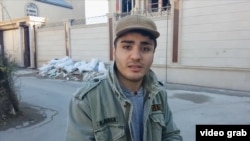
Mehman Huseynov (file photo)
Huseynov is already serving a two-year prison term on libel charges that he and his supporters considered to be politically motivated. He was originally arrested and charged with slandering a police officer.
Huseynov has also alleged that he has been tortured while in prison.
Rights groups and Western governments have urged the Azerbaijani authorities to release political prisoners for years, and have accused the government of fabricating criminal cases to stifle dissent and media freedom.
Aliyev, who has ruled the oil-producing former Soviet republic of almost 10 million people with an iron fist since shortly before his long-ruling father’s death in 2003, has shrugged off the criticism.
Twenty-two years ago, Americans across the country found themselves in varying states of shock, disbelief, horror and anger.
For many, the early-morning news that a plane had crashed into the World Trade Center dealt a blow not felt in their lifetimes. The attack on American soil was the first since Japan launched a surprise strike on Pearl Harbor 60 years prior.
But then came news of another passenger plane hitting a second World Trade Center skyscraper. And then another struck the Pentagon. The attacks unfolded in rapid succession as panic filled the nation.
Shortly after the Defense Department was struck, the US moved to close all airspace in a bid to curtail further strikes.
Just minutes later, passengers aboard United Airlines Flight 93 rushed toward the cockpit of their aircraft in an effort to wrest control of the plane from al-Qaeda hijackers. About five minutes thereafter the plane would jackknife into an empty field in Shanksville, Pennsylvania, killing all onboard.
In New York City, hundreds would jump or fall to their deaths from the North Tower, the first World Trade Center building that was struck. The images remain a stark reminder of the desperation and loss felt that day.

The chaos was compounded as the two World Trade Center towers collapsed in lower Manhattan, sending an ashen poisonous dust cloud across the borough and into neighboring Brooklyn with long-term health effects for first responders and those trying to escape the tragedy.
Nearly 3,000 victims would lose their in the attack with thousands more injured. About 400,000 others were exposed to the carcinogenic dust cloud, particularly firefighters and police who worked tirelessly to rescue as many survivors as possible.
The Global War on Terror
The US would go on the march to stamp out al-Qaeda and all nations who provided terror groups with safe harbor as then-President George W. Bush boldly proclaimed nine days after the attacks: “Either you are with us, or you are with the terrorists.”
“From this day forward, any nation that continues to harbor or support terrorism will be regarded by the United States as a hostile regime,” Bush said during a joint address to Congress, putting the US squarely on a war footing.
“The only way to defeat terrorism as a threat to our way of life is to stop it, eliminate it, and destroy it where it grows,” he added.
Roughly three weeks later, the US would launch the opening salvo against the Taliban after the hardline group refused to hand over al-Qaeda leader Osama bin Laden, the self-professed 9/11 mastermind, and other al-Qaeda operatives.
The Global War on Terror had officially begun.
It would take the US and allied forces just two months to bring the Taliban’s control of Afghanistan to an end, but bin Laden would elude capture.
Roughly two-and-a-half years after the invasion began, Defense Secretary Donald Rumsfeld would declare an end to “major combat” operations in Afghanistan, but the US would not formally withdraw from the war-torn nation for an additional 18 years amid the relentless bloody conflict that could not secure the future of the internationally-recognized government in Kabul.
The Taliban would rapidly close in on the Afghan capital in August 2021 as US and international forces hastily withdrew, marking their return to control in the impoverished nation.
War in Iraq
While the war in Afghanistan would ultimately prove to be the longest in US history, the Iraq war and its fallout would result in active hostilities that continue to this day.
The war began in March 2003, less than two years after the US invaded Afghanistan.
Washington led yet another international coalition in its effort to oust Iraqi strongman Saddam Hussein on allegations that he was developing an illicit weapons of mass destruction program. But those charges, made before the UN Security Council by then-Secretary of State Colin Powell, proved false.
“My colleagues, every statement I make today is backed up by sources, solid sources. These are not assertions,” Powell told the Council one month before the invasion. “What we’re giving you are facts and conclusions based on solid intelligence.”
No chemical or biological weapons were ever found despite robust investigative efforts after Saddam and his military were eliminated. Powell later reflected that the speech was his singular greatest regret during his decades of public service.
But even with the longtime Iraqi leader removed from power, there was no reprieve from hostilities. A post-war insurgency would form against the international coalition, bringing with it sporadic, bloody fighting that largely came to define the US occupation, which did not end until 2011.
But war’s legacy would not conclude with the US exit.
Guantanamo and torture
As the wars in Afghanistan and Iraq flared, another battle was being waged beneath the surface — a shadow war that included secretive renditions of terror suspects, torture, CIA black sites and the now infamous military prison at Guantanamo Bay, Cuba.
Hundreds would be swept up in the intelligence effort, many of whom were subject to what was colloquially referred to as “enhanced interrogation” — a euphemism for what many, including the US Senate, have concluded was torture.
The Senate Intelligence Committee’s more than 500-page report on the CIA’s actions, released in redacted form in 2014, was nothing short of a full-scale indictment that lambasted the intelligence agency for its actions, as well as its efforts to minimize the extent of the abuses by lying about the program’s effectiveness.
“CIA personnel, aided by two outside contractors, decided to initiate a program of indefinite secret detention and the use of brutal interrogation techniques in violation of U.S. law, treaty obligations, and our values,” Committee Chairwoman Dianne Feinstein wrote in the report.
“It is my personal conclusion that, under any common meaning of the term, CIA detainees were tortured. I also believe that the conditions of confinement and the use of authorized and unauthorized interrogation and conditioning techniques were cruel, inhuman, and degrading. I believe the evidence of this is overwhelming and incontrovertible,” she added.
The report brought to light systemic, widespread abuses perpetrated by CIA officers, including the now infamous practice of waterboarding, placing detainees in extended periods of stress positions, sleep deprivation and punitive forced rectal feeding and rehydration.
It further said the CIA’s justifications for the program, based on its alleged effectiveness, were “inaccurate.” A review of 20 cases used by the agency to justify the enhanced interrogation techniques found that there was either no link between torture that was used and counterterrorism successes, or found that the CIA falsely claimed a correlation between the intelligence it gained and the methods used.
The report determined that in such cases the intelligence was either gained from a detainee prior to interrogation or was already available to the CIA from other sources.
Bin Laden killed a decade after Afghanistan war begins
Nearly 10 years after the US began its invasion of Afghanistan in the hopes of killing the 9/11 mastermind, it would finally catch up to bin Laden. Ultimately, the al-Qaeda leader was not found in Afghanistan where he had been holed up in the aftermath of the September 11, 2001 terror attacks.
He was discovered across the border in the Pakistani city of Abbottabad, residing in a sprawling compound less than 1 mile from the country’s premier military academy.
The raid was largely based on intelligence gleaned from a CIA operation set up at a neighboring safe house where the agency was able to identify an al-Qaeda courier who proved pivotal to ascertaining bin Laden’s location.
On May 2, 2011, a pair of previously unknown modified Black Hawk stealth helicopters crossed the Pakistani border, flying fast and low as they closed in on bin Laden’s safe house. As soon as they reached their target, US special operations forces rapidly disembarked, entered the compound and killed the al-Qaeda leader, and took his body for confirmation.
He was subsequently buried at sea after a positive identification was made in what marked the most significant US victory in the war on terror.
ISIS and the forever war
But the milestone proved short-lived with the rise of a new terror threat in Iraq that far surpassed the dangers posed by al-Qaeda.
The Daesh/ISIS terror group grew to global prominence in 2014 when it declared its self-styled caliphate, drawing adherents from around the globe who traveled to Iraq and Syria as its territorial control grew.
At its height, Daesh/ISIS controlled one-third of Syria and 40% of Iraq amid widespread instability, claiming major cities including Mosul and Raqqa and bringing with it an iron-fisted fundamentalist rule that attracted people from around the world.
While it no longer lays formal claim to any territory in either country following an international military campaign led by the US, the terror group maintains cells in the region and has grown to include affiliates as far afield as West Africa and Afghanistan.
To this day, American forces are engaged in efforts around the world aimed at ending threats posed by Daesh/ISIS, and al-Qaeda.
There is no end in sight.

This article was originally published by Anadolu Agency on September 10, 2023.
September 11, 2023
Armenia launched joint drills with US peacekeeping forces on Monday, US military officials said, in the latest sign of the ex-Soviet republic’s drift from its traditional ally Russia.
“Exercise Eagle Partner’s opening ceremony has kicked-off” at Zar training centre near Yerevan, involving some 85 US soldiers and 175 Armenian troops, US Army Europe and Africa Spokesperson told AFP, days after Moscow summoned Armenia’s ambassador over the exercises and rising tensions.
mkh-im/jbr/yad
Armenia launched joint drills with US peacekeeping forces on Monday, US military officials said, in the latest sign of the ex-Soviet republic’s drift from its traditional ally Russia.
An error has occurred, please try again later.
Thank you
This article has been sent to
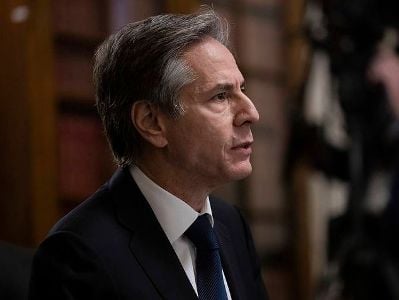
The United States is deeply concerned about the rapidly deteriorating humanitarian situation in Nagorno-Karabakh. This is noted in a press statement by US Secretary of State Antony Blinken.
“We note that humanitarian supplies are positioned near both the Lachin and Aghdam routes, and we repeat our call for the immediate and simultaneous opening of both corridors to allow passage of desperately needed humanitarian supplies to the men, women, and children in Nagorno-Karabakh. We also urge leaders against taking any actions that raise tensions or distract from this goal. The use of force to resolve disputes is unacceptable.
“In light of the recent increase in tensions in the South Caucasus, the United States will continue to strongly support efforts by Armenia and Azerbaijan to resolve outstanding issues through direct dialogue, with the aim of achieving a dignified and enduring peace. We reiterate that any peace agreement between Armenia and Azerbaijan must protect the rights and security of the residents of Nagorno-Karabakh. We also encourage dialogue between Baku and residents of Nagorno-Karabakh.
“The United States further reaffirms the only way forward is peace, dialogue, and the normalization of relations between Armenia and Azerbaijan on the basis of mutual respect for each other’s sovereignty and territorial integrity,” the aforesaid press statement added.
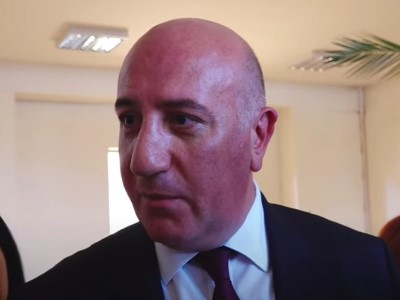
The Ministry of Defense (MoD) of Armenia also announced the information about the [Azerbaijani military] buildup. And in order to avoid excessive stress, other things, it is desirable to follow the official information, we publicize everything. Arman Sargsyan, Deputy Minister of Defense of Armenia, told this to reporters Monday in the National Assembly.
Regarding the remark that there are videos showing that Azerbaijan is stockpiling offensive weapons at the border with Armenia, the deputy defense minister said: “I will not say professionally, it is clearly visible there, and it seems that they are artillery means, it is a number of military equipment. It has been talked about; I don’t want to talk about it one more time. I will only urge you to follow our information, we regularly provide information immediately in case of certain escalations or up to fire from small firearms. The MoD [of Armenia] naturally takes steps within its authority to not destabilize the situation in the region and in terms of not having any negative impact on the general situation. Our region is such that there is a risk of escalation, but we, as a state, must take steps so that it does not come to escalation, in general, to major military actions.”
 12:10, 8 September 2023
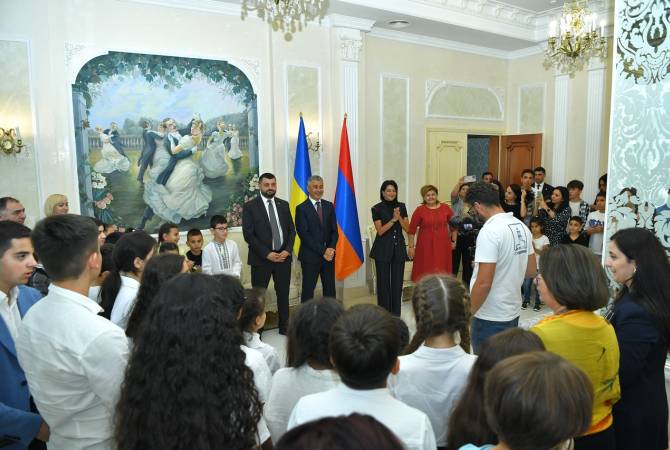
YEREVAN, SEPTEMBER 8, ARMENPRESS. Prime Minister Nikol Pashinyan’s wife Anna Hakobyan has met in Kyiv with members of the Armenian community of Ukraine.
The meeting was attended by Armenian families, together with their children, living in Kyiv, Odessa, Dnipro, Cherkasy, Kirovohrad, Sumy, Khmelnytskyi, Chernihiv oblasts, as well as the city of Kryvyi Rih.
Hakobyan talked with the children, asked them how they were overcoming the days of war. The Armenian children were interested in the life in Armenia, and what the children in Armenia are doing.


September 11, 2023
Armenia launched joint drills with US peacekeeping forces on Monday, US military officials said, in the latest sign of the ex-Soviet republic’s drift from its traditional ally Russia.
“Exercise Eagle Partner’s opening ceremony has kicked-off” at Zar training centre near Yerevan, involving some 85 US soldiers and 175 Armenian troops, US Army Europe and Africa Spokesperson told AFP, days after Moscow summoned Armenia’s ambassador over the exercises and rising tensions.
mkh-im/jbr/yad
Armenia launched joint drills with US peacekeeping forces on Monday, US military officials said, in the latest sign of the ex-Soviet republic’s drift from its traditional ally Russia.
An error has occurred, please try again later.
Thank you
This article has been sent to
The United States is deeply concerned about the rapidly deteriorating humanitarian situation in Nagorno-Karabakh. This is noted in a press statement by US Secretary of State Antony Blinken.
“We note that humanitarian supplies are positioned near both the Lachin and Aghdam routes, and we repeat our call for the immediate and simultaneous opening of both corridors to allow passage of desperately needed humanitarian supplies to the men, women, and children in Nagorno-Karabakh. We also urge leaders against taking any actions that raise tensions or distract from this goal. The use of force to resolve disputes is unacceptable.
“In light of the recent increase in tensions in the South Caucasus, the United States will continue to strongly support efforts by Armenia and Azerbaijan to resolve outstanding issues through direct dialogue, with the aim of achieving a dignified and enduring peace. We reiterate that any peace agreement between Armenia and Azerbaijan must protect the rights and security of the residents of Nagorno-Karabakh. We also encourage dialogue between Baku and residents of Nagorno-Karabakh.
“The United States further reaffirms the only way forward is peace, dialogue, and the normalization of relations between Armenia and Azerbaijan on the basis of mutual respect for each other’s sovereignty and territorial integrity,” the aforesaid press statement added.
The Ministry of Defense (MoD) of Armenia also announced the information about the [Azerbaijani military] buildup. And in order to avoid excessive stress, other things, it is desirable to follow the official information, we publicize everything. Arman Sargsyan, Deputy Minister of Defense of Armenia, told this to reporters Monday in the National Assembly.
Regarding the remark that there are videos showing that Azerbaijan is stockpiling offensive weapons at the border with Armenia, the deputy defense minister said: “I will not say professionally, it is clearly visible there, and it seems that they are artillery means, it is a number of military equipment. It has been talked about; I don’t want to talk about it one more time. I will only urge you to follow our information, we regularly provide information immediately in case of certain escalations or up to fire from small firearms. The MoD [of Armenia] naturally takes steps within its authority to not destabilize the situation in the region and in terms of not having any negative impact on the general situation. Our region is such that there is a risk of escalation, but we, as a state, must take steps so that it does not come to escalation, in general, to major military actions.”

By Anita Powell
President Joe Biden on Sunday affirmed that the United States and Vietnam would elevate their relationship to a “comprehensive strategic partnership” — a move the White House described as “unprecedented and momentous,” and that brings the U.S. level with its main adversary, China, which has the same upper-tier diplomatic status with Vietnam.
“Vietnam and the United States are critical partners at what I would argue is a very critical time,” Biden said during his first meeting after arriving to a triumphant welcome in Vietnam’s verdant capital, Hanoi, where thousands of residents watched his motorcade pass by. “I’m not saying that to be polite. I’m saying it because I mean it from the bottom of my heart.”
“Vietnam will continue to strengthen its ties to the U.S. and other international partners in the spirit of Ho Chi Minh after Vietnam achieved its independence,” said Nguyen Phu Trong, the general secretary of the Communist Party of Vietnam, who is considered the nation’s most powerful and respected political official.
“Vietnam is a friend, a reliable partner and a responsible member of the international community,” he added.
Neither spoke overtly about Beijing’s increased ambitions or its apparent moves, through a new map, to claim territory that Vietnam claims.
“The Vietnamese want a stronger relationship with the United States,” John Kirby, director of strategic communications for the National Security Council, told VOA on the sidelines of the trip. “The Vietnamese share many concerns that the United States has, both economically and from a security perspective in the region. We share a lot of interests; we also have a shared perspective of some of the challenges including the course of behavior of the PRC. It’s really quite a stunning turn of events over recent decades to see our two countries working together this closely.”
This is a big step from a nation that only established relations with the U.S. in 1995, and which has carefully calibrated its relationship with its powerful northern neighbor, China.
In recent years, that bond has strengthened.
Trong and Biden have met before. Trong was the first Vietnamese Communist Party leader to ever visit the U.S., in 2015, and he was hosted for dinner by then-vice president Biden.
The elevation from comprehensive partnership to comprehensive strategic partnership is significant. Vietnam counts only four other nations on that level: China, Russia, India and South Korea.
The difference “sounds like word soup to those of us in the U.S., but for Vietnam, a communist state with a pretty rigid kind of Leninist hierarchy of diplomatic relations, this stuff actually matters,” said Gregory Poling, a senior fellow with the Center for Strategic and International Studies in Washington.
“Vietnam has a very clear hierarchy of diplomatic relations,” said Poling, who also serves as director of the Southeast Asia Program and Asia Maritime Transparency Initiative at the CSIS.
“There’s also rumors they may do that for Japan and Australia as well, all of which suggests that the Vietnamese are willing to take a bit of retaliation from China now to make that happen,” he added. “And that will send a message, I think, up and down the Vietnamese government that senior levels are committed to a closer relationship with the Americans, so everybody get on board.”
Bich Tran is a postdoctoral Fellow at the National University of Singapore’s Lee Kuan Yew School of Public Policy. Tran said the relationship was “due for an upgrade.”
“An official upgrade will empower Vietnamese officials in engaging with their American counterparts,” she said. “This year is considered the best time to do so because it marks 10 years of comprehensive partnership and 50 years of diplomatic relations. An upgrade will entail deeper security cooperation between the two countries and Vietnam’s commitment to further improve its human rights record.”
