Azerbaijan intends to allow an international expert team from the United Nations into Karabakh in a matter of days, with the potential for media access as well

 JOSSICA - jossica.com
Azerbaijani MP Ganira Pashayeva has passed away, News.az reports.
She died in the Central Clinic Clinic Hospital in Baku, where she was undergoing treatment.
On September 24, Pashayeva fell into a coma as a result of exposure to medicines.

Member of the Azerbaijani Parliament Ganira Pashayeva was a positive example for many women in the country, UK Ambassador to Azerbaijan Fergus Auld wrote on X, Report informs.
“I was very saddened by the untimely death of deputy Ganira Pashayeva. The success story of Ganira khanum has become a positive example for many women in Azerbaijan. In addition, she was a friend of the British Embassy. I express my condolences to her loved ones,” the ambassador wrote.

Former Chief of General Staff Intelligence Lieutenant General İsmail Hakkı Pekin explains why Turkey fears the balance of power will tilt in Greece’s favour and why Turkish President Recep Tayyip Erdoğan is desperate to acquire the US-made F-16 fighter jets.
Transcript:
CNN Türk Journalist: Let’s say we don’t buy F-16s and can’t modernise them. What will happen to us?
Pekin: To pressure us, they will give the F-35s to Greece. When you look at the balance of power, it will be very bad. Then the head of the Air force will turn around and tell the government or the General Staff that ‘this is the state of the aircraft and in case of battle with Greece or another country, we cannot stand with these aircraft.'”
See the video:
Why is Erdogan desperate for the US to sell F-16 fighter jets to Turkey?
Turkey’s Former Chief of General Staff Intelligence Lieutenant General İsmail Hakkı Pekin explains why – Turkey fears the balance of power will tilt in Greece’s favour. Objectively speaking, it already… pic.twitter.com/pd7luGttAn
— Paul Antonopoulos 🇬🇷🇨🇾 (@oulosP) September 29, 2023
Context Reuters:
On Thursday, the US Senate Foreign Relations Committee’s new chairman said he would look at Turkey’s $20 billion Lockheed Martin F-16 fighter jet deal and that more issues than Sweden’s ascension to NATO would affect the decision to lift his predecessor’s longstanding hold.
“I need to talk to the administration on a lot of these issues, because it’s beyond just one issue involved, and I need to understand that,” Senator Ben Cardin, a Democrat, told reporters, one day after he took over leadership of the influential panel.
Cardin said he had discussed Sweden’s NATO accession with Turkish officials at a NATO ambassador’s meeting on Wednesday.
“They claim that will be done in the first part of next month,” he said. “If that is in fact true, then at least we have the NATO issue resolved, but there are other issues in addition to just NATO accession that need to be part of our discussions as we move forward.”
The previous chairman, Senator Bob Menendez, had blocked the sale for months, over Turkey’s objections to Sweden joining NATO but also over President Recep Tayyip Erdoğan’s human rights record and overflights of the airspace of neighbouring Greece.
Senate rules forced Menendez to step down as leader of the committee after prosecutors announced he and his wife, Nadine Menendez, faced felony bribery charges. Leaders of the US Senate and House foreign affairs panels review every major foreign arms sale. They regularly ask questions or raise concerns over human rights or diplomatic issues that can delay or stop such deals.
Ankara has held out on the ratification of Sweden’s NATO membership for months, accusing Stockholm of doing too little against people Turkey sees as terrorists, mainly Kurdish members of the outlawed Kurdistan Workers Party (PKK).
Erdoğan said in July he would forward the ratification to parliament when it reopens in October, frustrating some members of Congress who said he could have called it back into session to move Sweden’s NATO membership.
After Menendez’s indictment was unsealed, Erdoğan said Turkey should turn the senator’s legal troubles into an opportunity to purchase the fighter jets. “Menendez being out of the picture is an advantage,” Erdoğan was quoted as telling reporters by Turkish media.
Sweden and Finland applied last year to enter NATO after Russia invaded Ukraine. While Finnish membership was sealed in April, Sweden’s bid remains held up by Turkey and Hungary.
Turkey has said Ankara and Budapest are working in close coordination on the issue.
The top Republican on the Senate panel, Senator Jim Risch, has put a hold on arms sales to Hungary over the issue.
The authors of the plan are named as Giorgi Lortkipanidze, deputy head of Ukrainian military intelligence, who was deputy interior minister under Saakashvili’s government; Mikhail Baturin, former security guard of former President Mikheil Saakashvili; and Mamuka Mamulashvili, a member of Saakashvili’s inner circle and commander of the Georgian Legion in Ukraine.
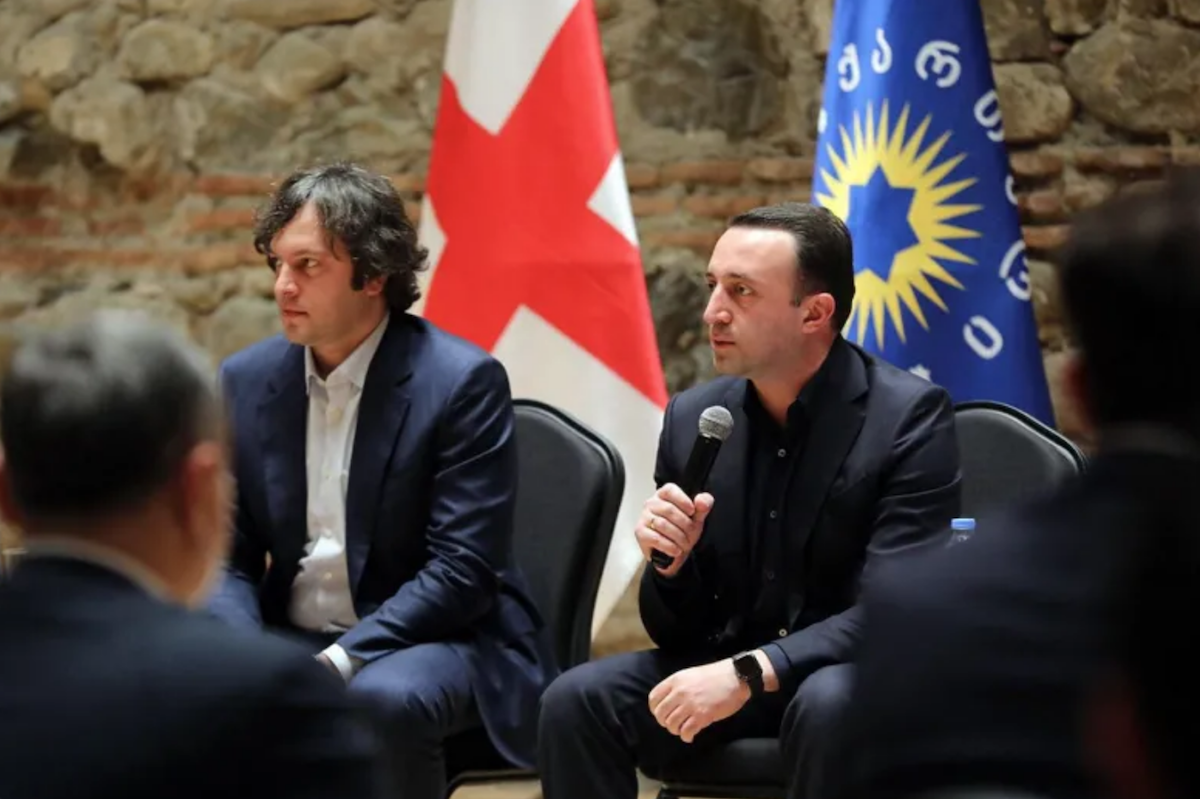
Irakli Garibashvili also commented on President Salome Zurabishvili’s visits to Europe made “without the permission” of the government. The Prime Minister regarded Zurabishvili’s statements to Georgia as sabotage:
“I think this is a very sad fact. There were no cases before that we refused her such visits. On the contrary, I have always supported her.
But let us remind that Mrs. President made very serious statements. She has publicly stated that our government is not implementing the 12 EU recommendations. She also said that we don’t deserve candidate status. After that, what minimal trust remained between us was lost. It was directly against the national interest of our country. And that is what dictated our refusal. Our interest was and is that Georgia gets the status of a candidate for EU accession. Any statements and actions against this are sabotage”.
On September 27, Georgian President Salome Zurabishvili met with Lithuanian President Gitanas Naudeda in Vilnius.On September 26, Zurabishvili met with Latvian President Edgars Rinkevich in Riga.On September 25, Zurabishvili met with Estonian President Alar Karis in Tallinn.
According to the Georgian presidential administration, Zurabishvili continues to meet with European leaders to support Georgia’s EU candidate status.





Promising corridors: Zangezur and Araz. Turan
The Zangezur Corridor and Geopolitical Realities
Geopolicy – Great East
2023 September 29 ( Friday ) 12:23:05
|
Turkish President Recep Tayyip Erdogan has ignited a fresh wave of increased interest in the South Caucasus with his surprising proposal to explore an alternative corridor to replace the Zangezur corridor, which connects Azerbaijan and its exclave of Nakhchivan to the rest of the country. Erdogan’s remarks came following a meeting with Azerbaijani President Ilham Aliyev in Nakhchivan on September 25, where discussions focused on the contentious transportation route.
Erdogan’s proposal hinges on Armenia’s willingness to cooperate. He stated that if Armenia were to abandon the Zangezur corridor project, Turkey and Azerbaijan would forge a new transport corridor through Iran. In his vision, this corridor would serve as a vital artery for global cargo transportation, running in an east-west direction through the South Caucasus.
“The Zangezur corridor will become the second transport artery of global cargo transportation in the East-West direction through the South Caucasus after Baku-Tbilisi-Kars,” Erdogan declared. “Its realization depends on the political will of Armenia.”
Erdogan’s words, which could be seen as either an olive branch or a veiled ultimatum, have elicited mixed reactions from regional experts. Thomas de Waal, an analyst at the Carnegie European Center, speculated that Turkey and Azerbaijan may be preparing to issue an ultimatum to Armenia regarding the Zangezur Corridor, with potential backing from Russia. This would mark a significant escalation of the ongoing dispute over the corridor’s future.
Armenian Prime Minister Nikol Pashinyan, however, has vehemently rejected the notion that Armenia has ever made commitments to establish the corridor. He stated, “Armenia has never made corridor commitments anywhere, either in writing or verbally, and will never accept such comments.” Pashinyan’s position runs counter to paragraph 9 of the Trilateral Statement of November 10, 2020, which stipulates that “Armenia guarantees the security of transport links between the western regions of the Republic of Azerbaijan and the Nakhchivan Autonomous Republic.”
The recent developments follow a history of discussions surrounding the Zangezur Corridor. In July of this year, a joint meeting between Azerbaijani and Iranian officials emphasized the importance of enhancing regional transit potential. They discussed the acceleration of projects aimed at developing and diversifying transport connections, including the establishment of new communication links between Azerbaijan’s East Zangezur Economic Region and the Nakhchivan Autonomous Republic via Iran.
One significant alternative to the Zangezur Corridor is the “Araz Corridor,” which Iran has shown interest in developing. This corridor, which would connect Azerbaijan to Nakhchivan through Iran, has gained traction as a potential replacement for the contentious route through Armenia. Progress on this project was stalled in 2022 due to various geopolitical factors, including Iran’s actions against Azerbaijan and a terrorist attack on the Azerbaijani embassy in Tehran.
With the Zangezur Corridor’s future uncertain and alternative routes in consideration, it remains to be seen whether Armenia will reconsider its position. The upcoming meeting between Prime Minister Pashinyan and President Aliyev on October 5 in Spain may hold the key to resolving this ongoing dispute. The possibility of a constructive outcome has been bolstered by recent developments and a perceived shift in the dynamics of the South Caucasus region.
A Geopolitical Nexus
In the complex tapestry of international geopolitics and global trade, few corridors measure up to the strategic importance of the Zangezur Corridor. Spanning a mere 50 kilometers in length, this narrow passageway serves as a linchpin connecting the realms of Greater Europe and Greater Asia. Its significance, however, extends far beyond its modest dimensions, as it effectively seals two critical North-South routes and facilitates the Middle Corridor, a nexus of economic and geopolitical importance.
To grasp the magnitude of the Zangezur Corridor’s role, one must appreciate its role in uniting the Caucasian transport hub with communications extending in four cardinal directions of the world. Moreover, it links with the Iranian transport hub, positioning itself as a pivotal hub in the southern hemisphere’s transportation network.
From the northern approach, encompassing Western Europe, Russia, Central Asia, Turkey, Georgia, and Azerbaijan, as well as the southern front consisting of Iran and India, substantial efforts have been undertaken to realize the dream of transport reunification between the South and the North. These endeavors continue apace, particularly in the Iranian sector of this monumental project.
In the 21st century, the geo-economic and geopolitical significance of international transportation networks has grown exponentially, elevating the North-South transport corridor to paramount importance. This multifaceted network, spanning over 7,200 kilometers, boasts maritime, railway, and road connections. It promises to slash both distance and time by up to 40% when compared to conventional routes, resulting in a 30% cost reduction. India, in particular, stands to benefit by saving up to 20% on container shipments to CIS countries in Central Asia.
The potential of this transit network to replace the Suez Canal route is a prospect that cannot be underestimated. Theoretically, it could trim the distance of the current Suez route from 16,000 kilometers to a mere 7,200 kilometers and cut travel time between South Asia and Northern Europe from 60 to 30 days. Such a development would significantly reduce continental shipping costs and could challenge the supremacy of the Suez Canal.
In the grand scheme of geo-economic realignment, India and China, the South Asian giants, find themselves in a fierce competition amid the rapidly shifting global landscape. The emergence of the North-South corridor as a potent rival to China’s “One Belt and One Road” Initiative has set the stage for a battle to reshape global trade dynamics. India, capitalizing on the North-South international transport corridor’s potential, seeks to forge new alliances and policies while circumventing Pakistan, thereby limiting China’s influence in the region through investments in the Gwadar port.
In the face of China’s expanding influence in India’s neighboring countries, New Delhi is pursuing substantial long-term investments in Iran’s Chabahar Free Zone to exploit South Asia’s transit potential in response to Chinese investments in Pakistan’s Gwadar port. Chabahar, located on the border of Pakistan’s Baluchistan, offers India a viable alternative to Gwadar.
In this tussle for supremacy, both India and China stand to gain from the Iranian North-South hub, despite their fierce rivalry. The Chabahar Free Zone, with the addition of the Chabahar port and its vast expanse of 80,000 hectares, stands as the linchpin on the North-South corridor, connecting the Oman Sea to the Indian Ocean.
This monumental transport corridor, envisioned in 2000 and subsequently ratified in 2002, has garnered support from a multitude of nations. From Armenia and Azerbaijan to Kazakhstan, Belarus, Tajikistan, Turkmenistan, Ukraine, Kyrgyzstan, Turkey, Syria, and Bulgaria, several countries have joined this transformative initiative. Furthermore, European nations like Finland, Estonia, and Latvia have expressed interest in participation, solidifying this project as one of Eurasia’s most pivotal communication routes, intertwining the destinies of European, West Asian, and Central Asian nations on a grand scale.
What is a Corridor?
In the ongoing discussions surrounding the Zangezur region, the term “corridor” has emerged as a pivotal concept. It represents a key element in the complex geopolitical dynamics of the region, particularly in the context of Armenia’s concerns and Azerbaijan’s aspirations.
At its core, a corridor can be defined as a designated passage or route that allows for the movement of goods, people, or services between two distinct areas. In the case of the Zangezur corridor, the discussions revolve around the fear that it may acquire the status of an extraterritorial passage. For Armenia, this development raises significant apprehensions about its territorial integrity, particularly in the Meghri district, as the historical jurisdiction of Western Zangezur, now known as the Meghri district, once belonged to Azerbaijan.
Armenia’s stance on this matter is unequivocal: it does not intend to grant Azerbaijan a corridor through its territory. However, Armenian Prime Minister Nikol Pashinyan has expressed a willingness to open roads for Baku, a distinction that holds importance in the ongoing negotiations. Pashinyan’s statement highlights Armenia’s readiness to facilitate transportation for Azerbaijan without granting it a dedicated corridor.
Notably, Azerbaijan’s position on the establishment of the Zangezur corridor enjoys broad international support.
To comprehend the concept of a transport corridor in the international lexicon, it is crucial to distinguish it from a mere road section. A transport corridor encompasses a multifaceted network of interconnected elements, including logistics experts, railway station staff, customs officers, tax inspectors, and border guards. Each of these entities plays a pivotal role in ensuring the seamless functioning of the corridor. The primary objective of this network is to optimize the overall system’s operation, explore more efficient delivery methods, and ensure the legality and taxation of goods in transit.
Upon its activation, the Zangezur corridor will inevitably acquire the status of a fully-fledged transport corridor, complete with the intricate web of system elements as described earlier. Given the historically strained relations between Azerbaijan and Armenia, this corridor will demand heightened security measures to safeguard its functionality. Furthermore, it is an integral component of the International Transport Corridors (MTK) North-South and TRACECA, endowing it with international significance and reinforcing its importance in the broader regional context.
It is worth noting that even during the Soviet era, when the Zangezur (Megrinsky) transport section existed within a single country, it was commonly referred to as a corridor. Experts such as Vladimir Egorov, director of the scientific school “Economic Theory” at the Plekhanov Russian University of Economics, and Vladimir Stoll, professor at the Diplomatic Academy of the Ministry of Foreign Affairs of Russia, have emphasized that recent agreements between Azerbaijan, Armenia, and Russia hold the potential to revive the “transport corridor” that once connected Azerbaijan with the Nakhichevan exclave during the Soviet era. This prospect underscores the corridor’s historical and geopolitical significance in the region.
The Corridor as a guarantor of stability and peace
In the midst of the complex discussions surrounding the Zangezur corridor, a pragmatic shift can be expected from Yerevan, despite the ambiguous and contradictory rhetoric from the Armenian side. As we delve into the core of global transport policies and the interests of multinational companies seeking to streamline the movement of goods while reducing costs and transit times, it becomes evident that the region’s logistics hold immense appeal. Armenia, in this context, remains a pivotal but challenging transport hub that cannot be bypassed and, more importantly, cannot be ignored, even if doing so carries undesirable consequences. Yerevan is increasingly recognizing this reality.
A significant development occurred in June of this year with the convening of a trilateral working group comprising Vice Prime Ministers from Azerbaijan, Armenia, and Russia. This meeting yielded a comprehensive document that underscores the initial steps toward unblocking transport links in the region, starting with the restoration of the Yeraskh—Julfa—Meghri—Goradiz railway. The document also outlines key principles for border crossings between Azerbaijan and Armenia while emphasizing the importance of respecting the sovereignty of both nations, as articulated by Deputy Prime Minister of the Russian Federation Alexey Overchuk.
The recent events in Karabakh, which have brought a new level of clarity to the geopolitics of the region, could potentially accelerate the recognition of the imperative to open the Zangezur corridor. With its international status, this corridor can serve as an additional guarantor of regional security, including that of Armenia itself. Any attempts to obstruct its development are likely to elicit responses from transnational entities keen on its establishment, further highlighting the corridor’s significance on the global stage. As the geopolitical situation continues to evolve, the fate of the Zangezur corridor may become a key determinant of regional stability and economic development.


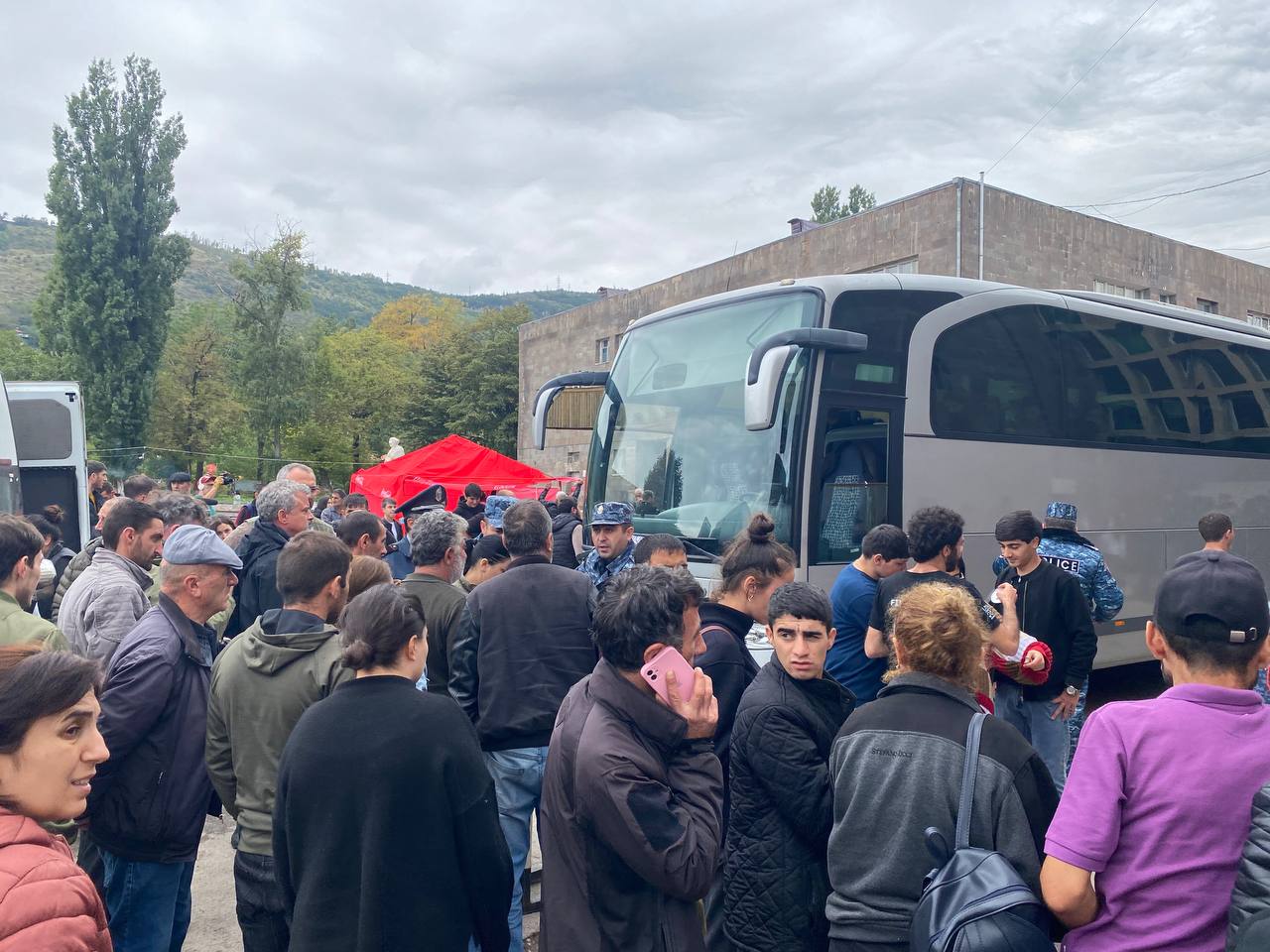
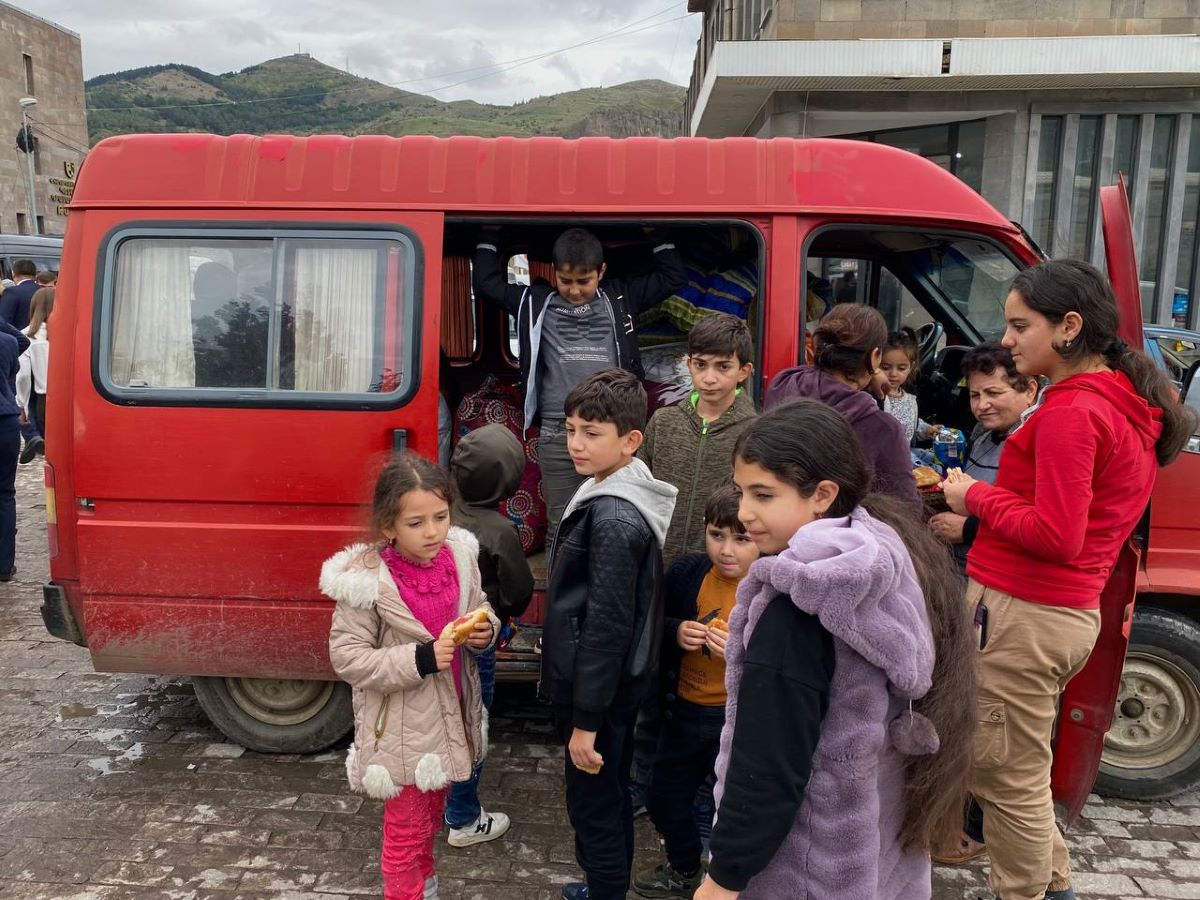
As of 6am Friday, 84,770 forcibly displaced persons have arrived in Armenia from Artsakh (Nagorno-Karabakh), informs the Armenian government.
All those who do not have a predetermined place of residence in Armenia are provided by the government with suitable accommodation.
Registering for assistance needs is continuing.
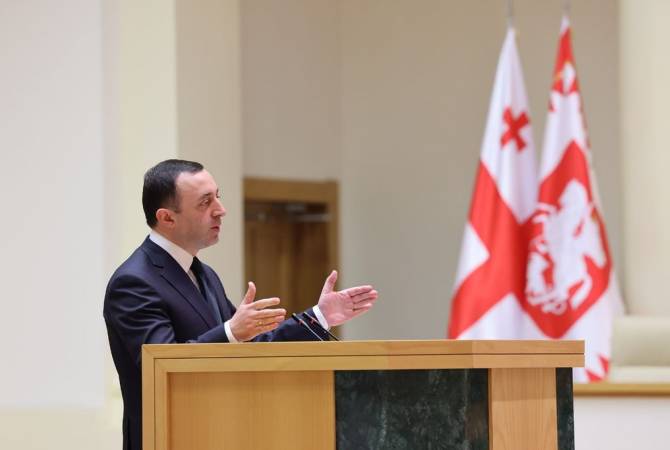
YEREVAN, JUNE 30, ARMENPRESS. Georgia has shown that it is capable of being an effective mediator in the relations between Azerbaijan and Armenia and is ready to re-engage in the process if necessary, ARMENPRESS reports, citing “Sputnik-Georgia”, Prime Minister Irakli Garibashvili said in the Parliament of Georgia.
“Two years ago, we showed the first concrete results of the mediation between Azerbaijan and Armenia, in which I was personally involved. It was, so to speak, one of the exemplary mediations in the region,” Garibashvili said.
The Prime Minister expressed Georgia’s readiness to continue playing the role of a mediator.
“I want to once again publicly reaffirm our full readiness from this podium. If necessary, we are ready to be involved once again as a mediator in the ongoing negotiations between the two countries, our friends,” Garibashvili stated.
News Türkiye Türkiye pledges unwavering support to ensure lasting peace, stability in South Caucasus
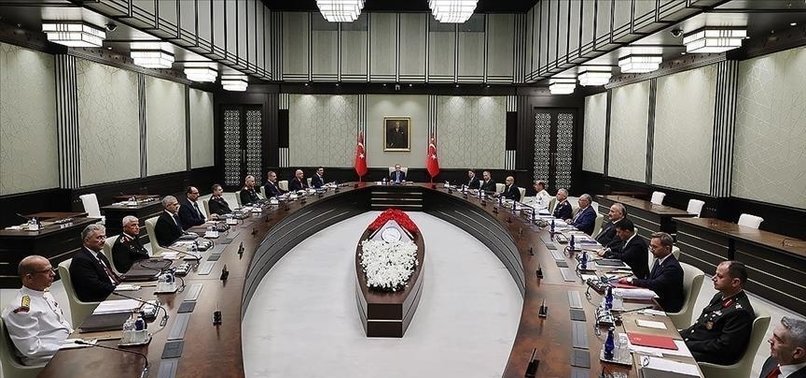
Türkiye will continue to support efforts to ensure a lasting peace and stability in South Caucasus, the country’s National Security Council said on Thursday.
“All parties, especially Armenia, were reminded that the path to a lasting peace in South Caucasus can only be opened through the unconditional establishment of Azerbaijan’s territorial integrity and sovereignty …” said a statement issued after a three-hour meeting of the National Security Council in the capital Ankara.
Obligations based on agreements, which will contribute to the prosperity of countries in the region, should be fulfilled to achieve the regional peace, according to the statement issued by the Turkish Communications Directorate.
Last week, in the wake of provocations by Armenian forces in Karabakh, Azerbaijan said it had launched “counter-terrorism activities” in the region to uphold a 2020 trilateral peace agreement with Russia and Armenia. After 24 hours, a cease-fire was reached.
Relations between Azerbaijan and Armenia have been tense since 1991, when the Armenian military occupied Nagorno-Karabakh, a territory internationally recognized as part of Azerbaijan and seven adjacent regions.
The legitimate resistance of the Syrians against the YPG/PKK terrorist group confirms that this “proxy organization” is the biggest obstacle to peace and stability, the statement said.
The Arab tribes were able to clear about 33 villages of terrorists in the provinces of Deir ez-Zor, Raqqa, Al-Hasakah, and areas in Manbij and Aleppo during operations carried out from Aug. 27 to Sept. 13, 2023.
The tribal forces, however, later withdrew from the villages to prevent civilian casualties from YPG/PKK attacks and agreed to negotiate with the US forces who play a mediation role in the region.
In its more than 35-year terror campaign against Türkiye, the PKK-listed as a terrorist organization by Türkiye, the U.S. and the EU-has been responsible for the deaths of more than 40,000 people, including women, children and infants.
The YPG is the PKK’s Syrian offshoot.
The statement also stressed that the preservation of peace in Kirkuk with the elimination of the terror groups in Iraq are among fundamental principles of Turkish policy toward the region.
On the Cyprus issue, the statement said: “There is a need to establish the legal basis for the activities in the Northern Cyprus through a written agreement with the Turkish Republic of Northern Cyprus (TRNC) authorities.”
“The United Nations Peacekeeping Force’s double standards and activities regarding the sovereignty of the TRNC and the most basic humanitarian needs of the Turkish Cypriots are incompatible with its obligation of neutrality and have damaged its credibility,” it said.
On Aug. 18, UN peacekeepers intervened in road construction work to link the Turkish Cypriot village of Pile in the island’s buffer zone with the rest of the TRNC.
The roadwork is strategically important for residents as it will give them more options to reach Pile, where Turks and Greek Cypriots live together.
The Greek Cypriot administration and the UN, however, opposed to the project.
Türkiye will continue to be the guarantor of the security and peace of the Turkish Cypriots as part of its rights derived from international law and agreements, the statement added.
On Türkiye’s policy towards Balkans, the statement said Ankara will exert maximum effort to preserve peace and stability both in the region and Kosovo.
Türkiye will assume the command of the NATO mission in Kosovo, it recalled.
Regarding the Russia-Ukraine war, the statement said Türkiye is “determined” to continue its efforts to end the war without delay.
Meanwhile, Türkiye will continue to provide support to Libya in a balanced and equitable manner across the country, the statement said.
The Mediterranean Storm Daniel, which struck eastern Libya on Sept. 10, caused flooding in the cities of Benghazi, Al-Bayda and Al-Marj as well as Soussa and Derna. The World Health Organization said nearly 4,000 people died and many others went missing.
WEST PALM BEACH, Fla. — Throughout the 2016 campaign and election, fake accounts run by Russian operatives spread disinformation and fake news throughout social media in the United States, including in South Florida.
In the final stretch towards Election Day, it’s still happening.
While we’re bombarded with television ads and political news, millions of Americans get their news from social media, like Facebook and Twitter.
In September, Facebook removed several accounts the social network said were “associated with past activity by the Russian Internet Research Agency (IRA).” The Internet Research Agency, based in St. Petersburg, Russia, was one of the main actors involved in the 2016 election interference.
FBI Director Christopher Wray told the Homeland Security and Governmental Affairs committee in September his agency had recently “shared threat indicators with Facebook and Twitter that allowed them to take down fake accounts that were created as part of a Russian disinformation campaign.”

FBI Director Christopher Wray testifies before a Senate Homeland Security Committee hearing on Capitol Hill in Washington, Nov. 5, 2019.
“It’s not all that difficult on social media to present a site that looks real, legitimate,” Bret Schafer, an expert on social media disinformation, said.
Schafer is a media and digitial disinformation fellow with the Alliance for Securing Democracy. The organization “develops comprehensive strategies to deter, defend against and raise the costs on authoritarian efforts to undermine and interfere in democratic institutions,” according to its website.
Its director, Laura Rosenberger, spoke before the Senate Select Committee on Intelligence in 2018 to raise awareness about foreign influence on social media. In 2016, the Russian government was the main driver behind disinformation on social media.

Laura Rosenberger, director of the Alliance for Securing Democracy, testifies before a Senate Intelligence Committee hearing on foreign influence operations and their use of social media on Capitol Hill in Washington, Wednesday, Aug. 1, 2018.
“One of Russia’s objectives is just to create chaos. Chaos is seen as beneficial to them, chaos at least in the United States,” Schafer told Contact 5.
It wasn’t just disinformation. Russian operatives even went as far as coordinating and organizing events in the United States.
According to an indictment filed by former special prosecutor Robert Mueller in 2016, thirteen Russian co-conspirators used the Twitter handle “March_for_Trump” to organize an event in West Palm Beach.
The defendants used the Twitter account to “recruit and later pay a real U.S. person to wear a costume portraying (Hillary) Clinton in a prison uniform at a rally in West Palm Beach,” the indictment notes.

Former special counsel Robert Mueller testifies on Capitol Hill in Washington before the House Judiciary Committee hearing on his report on Russian election interference, Sept. 29, 2020.
Schafer told Contact 5 one technique foreign actors use is to tag legitimate or local news sites in posts and “piggyback” off those organizations.
“Because people tend to trust local news more than they trust national news or international news outlets,” Schafer said.
Since 2016, the spread of misinformation by foreign governments hasn’t slowed down. More countries are doing it now.
Schafer told Contact 5 four nations are planting misinformation on social media — Russia, Iran, China and Venezuela.
Iran’s role recently came to light after John Ratcliffe, the director of National Intelligence, said both Iran and Russia “have taken specific actions to influence public opinion relating to our elections.”

“One of Russia’s objectives is just to create chaos,” Bret Schafer, with the Alliance for Securing Democracy, tells Contact 5.
Schafer said some social media accounts try and be subtle, using names or creating personas that try to look local. He pointed to one Twitter handle he found, “FtLaudyEATS,” as a local example.
“It just is sort of a front for pushing out state propaganda,” Schafer said of the handle. “It came to my attention because a Chinese diplomat actually retweeted the account.”
Contact 5 gathered a group of tech-savvy political science majors from Florida Atlantic University for a panel over Zoom to look at the problem.
“[It’s] probably just a post about different places to eat at,” FAU student Nadira Bello said about the Twitter handle.
But the content of the handle’s feed caught the students off-guard.
“I was very surprised to see such political tweets coming from a page like that,” FAU student Alex Zand said.
Ultimately, foreign actors want Americans to read and share misinformation and propaganda, hoping it will spread throughout social media.
“All of us are quite bad at identifying false bits of information when we want that information to be true,” Schafer said. “So, if there’s an attack on a candidate we’re not supporting, we’re just more likely to believe it because we want to believe it.”
“You always want to double-check the information that you read,” Bello told Contact 5 over the Zoom panel.
The bottom line is, when anyone shares false or misleading information on social media, they could be unwittingly doing so on behalf of foreign nations, whose goal is to spread discord and shake confidence in the democratic institution of the U.S.
“When your friends and family start talking about, that’s when it’s been effective,” Schafer said.