Categories
Selected Articles

The view from Baku: Is peace possible after another clash over Karabakh?


2023-09-25T110740Z_1527554652_RC2KF3A6JK

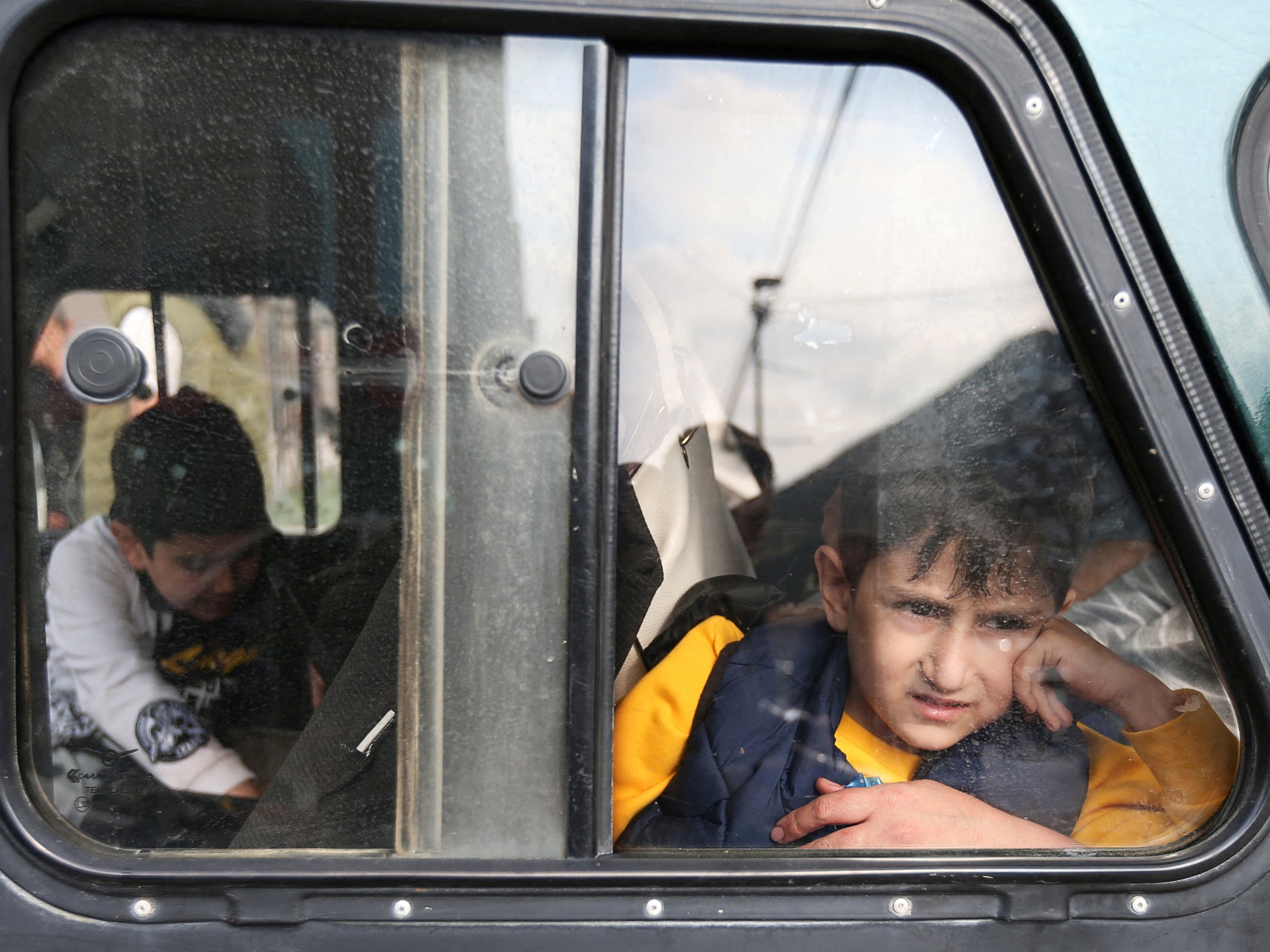
Baku, Azerbaijan – After Azerbaijan’s one-day military operation in Karabakh last week, thousands of ethnic Armenians who dominated the region are fleeing, citing concerns about their rights and safety.

After declaring victory over the long-troubled mountainous area, Azerbaijan President Ilham Aliyev promised to protect them, describing them as “our citizens” in one breath, as he decried their “criminal” separatist leaders in another.

But many of the enclave’s Armenian speakers have reservations about Baku’s stated aims for a seamless integration process.

Azerbaijan has rejected these concerns, saying it has committed to safeguarding the rights of all residents, ensured urgent humanitarian challenges are being addressed, and held talks with representatives of the ethnic Armenian community. Aliyev’s administration says peaceful integration is possible, as long as separatists disarm and disband.

But Armenia says 13,350 “forcibly displaced persons” have entered the country following last week’s offensive.

Armenia and Azerbaijan have fought two wars for control of the region and an atmosphere of mutual hostility and distrust remains, despite the ceasefire which was agreed upon with the involvement of Russia, which has had peacekeepers in Nagorno-Karabakh since the last conflict ended in 2020.

Azerbaijan was sharply condemned by Western powers for its September 19 attack, which it began after claiming six people died in two landmine accidents in the Azeri Khojavend district it blamed on separatists.

Armenia, which like Azerbaijan is a former Soviet nation, is in step with the international community as it officially recognises Nagorno-Karabakh as Azerbaijan’s territory, but it had long called for its autonomy.

Yerevan has expressed disappointment in the Russian peacekeepers deployed to the area, saying they allowed Azerbaijan’s advance. Some Azerbaijanis too, are sceptical of Moscow’s role.

Azerbaijani political scientist Ilgar Valizadeh told Al Jazeera that Azerbaijan’s approach has shifted from making proposals to dictating terms.

In his view, Armenian speakers in Karabakh “must refrain from pursuing separatist tendencies going forward”.

“Any such instances will be met with immediate and stringent measures. People must adapt to this new reality, as citizens also bear responsibilities to the state,” he said.

Hundreds of thousands of Azerbaijanis were displaced from Nagorno-Karabakh and seven surrounding Azerbaijani-majority territories in the 1990s, when ethnic Armenians took control of these areas after a war that followed the Soviet Union’s collapse.

Valizadeh said he expects the return of Azerbaijanis to areas within the region, along with the revival of their culture, music, TV channels and the construction of mosques.

He said Azerbaijan must ensure these changes do not disrupt the life of ethnic Armenians, and that Baku should not be perceived as exerting ideological or moral pressure.

Zaur Shiriyev, an analyst of the International Crisis Group for the South Caucasus region, pointed out that expecting integration to occur overnight is unrealistic.

“The situation at hand is complex, grappling with the aftermath of a one-day military operation. Even before addressing existing humanitarian needs, there’s the task of implementing ceasefire terms which require the disarmament of local forces and dismantling existing structures in the Armenian-populated Karabakh,” Shiriyev said.

He emphasised the importance of a transitional period to protect the interests of Armenians living in the region to prevent chaos.

Meanwhile, concern is growing among Azerbaijan’s government about the potential for international repercussions.

Armenian leaders have accused Azerbaijan of planning to “ethnically cleanse” the region.

Some international organisations have called for a temporary evacuation, with the option for residents to return once stability is restored.

“Azerbaijani authorities should take immediate steps to ensure the safety and humanitarian needs of Nagorno-Karabakh’s ethnic Armenian population, allowing humanitarian access without delay,” Human Rights Watch said. “Azerbaijan should allow civilians who wish to evacuate temporarily to Armenia, as well as people in urgent need of medical care who wish to leave, while respecting their right to return.”

According to Shiriyev at the International Crisis Group, local representatives of Armenian speakers and Azerbaijani officials must engage in dialogue to discuss the role of Azerbaijani law in the region.

“Discussions and agreements on how to preserve the rights of the local populace are crucial. Otherwise, a forced integration could be doomed to fail from the outset,” he said.

Like many Azerbaijanis, Parvana Vagifgizi, a resident of Baku, has been glued to the news but said she has doubts that ethnic Armenian and Azerbaijani populations can live in harmony together.

After Azerbaijan’s Aliyev declared Baku had “restored sovereignty” to Nagorno-Karabakh, protests erupted in Yerevan against Prime Minister Nikol Pashinyan, with Armenians accusing him of abandoning the cause.

“I don’t trust the other party, they, themselves have created this lack of trust. When I see the rallies against Pashinyan and hear the slogans and calls from ordinary Armenians, it’s very concerning. Not everyone feels this way, but many of them seem to have a very negative opinion about us. Until trust is re-established, I don’t hold much hope for coexistence and integration.”

Maya Guliyeva, who is originally from the Agdam district, which Azerbaijan liberated in 2020, said she endured forced displacement for nearly 30 years.

Her eldest son, Khalid, was killed during the conflict known as the second Karabakh war. Unlike Vagifgizi, she believes peace is possible.

“Some Armenians have been living there since Soviet times, and you can’t forcibly remove someone from their home. However, there are others who do not wish to live with us. The Azerbaijani government should handle their departure in accordance with all the proper procedures.

“Those who are willing to live alongside us should also be given opportunities. This hostility needs to end, it must be resolved, and successful integration should be our goal.”

Source: Al Jazeera


Categories
Operation "Doppelganger"

2024 Toyota Highlander Review, Pricing, and Specs – Car and Driver


With lots of standard safety tech and room for eight, the 2024 Toyota Highlander is a mid-pack player in the three-row SUV segment.

Categories
Selected Articles

The EU and Azerbaijan: Time to Talk Tough


1000x542_SE_Sep_26_-_Azerbaijan_Armenia_

The events of the last week are triggering a debate on the need for a deep reset of Europe’s policy toward Azerbaijan.

It’s all about Karabakh, but it’s even bigger than that.

On September 19, Azerbaijan used military force to retake the Armenian-populated territory of Nagorny Karabakh, crossing a red line drawn for it by both the European Union and the United States.

The consequences are cataclysmic. The eventual casualties will run into the hundreds. Fearful for their future, thousands of Karabakh Armenians are now making a mass tragic exodus from their homeland to Armenia.

Many in Brussels and Washington feel shocked and betrayed by Azerbaijan’s use of force. Up until the last minute, Azerbaijani President Ilham Aliyev was reportedly assuring high-level interlocutors—including European Council President Charles Michel and U.S. Secretary of State Antony Blinken—that he would not launch a military operation.

At the United Nations, German foreign minister Annalena Baerbock, said it most clearly: “Baku broke its repeated assurances to refrain from the use of force, causing tremendous suffering to a population already in dire straits.”

An egregious aspect of this is that Azerbaijan was getting pretty much everything it wanted at the negotiating table. After years of deadlock and many equivocations, the Karabakh Armenians had agreed to talks with Baku, which would have resulted in a deal on some kind of integration into Azerbaijan. Armenian Prime Minister Nikol Pashinyan had acceded to the international norm in acknowledging Azerbaijan’s territorial integrity, including Nagorny Karabakh.

So it can’t be business as normal. The human rights issue is now crucial. Baku says that it is in full control of the region and that remaining Armenians have nothing to fear. Yet that is not how bitterly contested ethnic conflicts are fought, when armed groups are sent into civilian areas. There many reports of abuses by Azerbaijani soldiers coming from Armenian sources.

Having thus far rejected efforts to send in an international monitoring mission to the region, Baku bears a great responsibility here. It is not so easy to hide war crimes in the digital age. If atrocities are confirmed in Baku’s war of choice or remaining Karabakhis suffer abuse, there should be calls for prosecution of the abusers concerned, along with cases in the European Court of Human Rights.

The geopolitical implications of this are also significant.

The fact that Western actors were blindsided strengthens the supposition that Aliyev cleared his military assault in advance with Moscow—which then failed to condemn Baku—and is coming into closer alignment with Russia. That is all the more relevant as the next big issue is the planned transport route across Armenia to Azerbaijan’s exclave of Nakhchivan. Russia, Azerbaijan, and Turkey all have a shared interest in imposing their own version of what the latter two call the Zangezur Corridor with as little Armenian control of the route as possible—and perhaps by force.

Aliyev has also started to use the irredentist term “Western Azerbaijan” to describe southern Armenia, also known as Zangezur, which had a substantial Azerbaijani population in the early twentieth century. Last December he designated the creation of a “West Azerbaijani community” and said “they must be able to return to their native lands.”

Aliyev qualified that this return would happen “peacefully.” But after what happened in Karabakh, how seriously can reassurance be taken?

There is a context, of course, that Azerbaijan has been a victim too. Azerbaijanis have compelling stories to tell about the 1990s that many do not know—and which I tried to tell in my book Black Garden. In the first Karabakh war, both sides committed acts of ethnic cleansing, but Azerbaijan undoubtedly came off worse. Hundreds of thousands of displaced people driven from lands captured by Armenian forces deserved sympathy—probably more sympathy than they often got internationally.

That’s a reason to avoid the civilizational discourse that still lingers in some European circles, especially in France and on the Christian right, who say Azerbaijanis are somehow inherently genocidal.

But after the 2020 war, when Azerbaijan recovered its lands by force, the “occupation” excuse lost its relevance. When statesmanship was called for, President Aliyev stayed aggressive. In May this year he gave a bellicose speech in which he told the Armenians that they should either “bend their necks” in defeat or face worse consequences.

Aggression continues on the home front, too. Azerbaijan’s democracy ranking with Freedom House is rock-bottom. In July the well-known economist and opposition activist Gubad Ibadoghlu, linked to U.S. universities and the London School of Economics, was arrested on palpably bogus charges and is now in ill health in detention.

Baku’s main sales pitch in the West is about business and geography—its status as the only country located between Russia and Iran with east-west oil and gas and transport infrastructure as a link in the so-called Middle Corridor.

In Western capitals this frequently produced a silo effect. One part of the establishment—in the Brussels case, Michel and the European External Action Service—would press for peacemaking and resolution of the conflict with Armenia. Another—the European Commission in Brussels—would hold talks with Baku on energy and transport projects.

In an ill-conceived act of public diplomacy in July 2022, Commission President Ursula von der Leyen went to Baku, struck a deal with the EU’s “partner” Azerbaijan to provide extra volumes of gas to the EU, and did not even mention the words “conflict,” “peace,” or “Armenia” in public.

Azerbaijan will always be a transport hub, but there are two caveats to the pitch. First, experts conclude that the EU gas deal is very unlikely to deliver the promised high volumes of gas—a declining asset in the green transition anyway. To achieve export levels of more than 3 or 4 billion cubic meters would require upgrading infrastructure and confronting the often-overlooked fact that Russia and Iran are also stakeholders in the South Caucasus gas pipeline.

Secondly, connectivity and conflict are inextricably linked. The Middle Corridor route, running from China through Central Asia to Europe via the South Caucasus, is a multi-country route that also involves Armenia. It needs regional cooperation to work—and almost certainly funding from Western governments and international financial institutions.

In short, it is time for the EU to talk a lot tougher with Azerbaijan.


Categories
Selected Articles

Michael Rubin: Aliyev is turning into Saddam Hussein


1633693023_1649512.jpg

In late September Michael Rubin, a senior fellow at the American Enterprise Institute, wrote an article Nagorno-Karabakh: A Year of U.S. Failure in the South Caucasus.

Michael Rubin worked previously at the Office of the U.S. Secretary of Defense where he was staff adviser for Iran and Iraq (2002–04) and served as Political Adviser for Coalition Provisional Authority at Baghdad (2003–04).

Mediamax talked to Michael Rubin.

Most likely, U.S. intelligence was aware of the intention of Azerbaijan and Turkey to start a war in September 2020. Did the American side have real opportunities to prevent this war?

The Congress has never confirmed whether U.S. intelligence was aware of Azerbaijan and Turkey’s intention to start a war. I think it more likely there was an intelligence failure rather than a deliberate decision to ignore a pending attack. If the American side did have foreknowledge, however, simply exposing it in advance might have prevented the attack. After all, Turkey and Azerbaijan launched a surprise attack; had Armenia and Artsakh been aware of it beforehand, they could have taken steps to pre-empt or blunt the attack.

What could the United States do after the war broke up to stop it as soon as possible but did not do it?

Drones were decisive in the war. The United States might have helped with counter-drone technology but, realistically, Armenia’s defense relationship with Russia precludes the sharing of such sensitive technology. Certainly, the United States could have sanctioned Turkey and Azerbaijan. This would be slower sanctions do work: Erdogan is full of bluster but, when Trump imposed sanctions, he released Pastor Andrew Brunson, an American hostage Erdogan has seized.

For decades, representatives of the United States and Russia were saying that despite the differences over many issues of international politics, the OSCE Minsk Group co-chairmanship was the format in which they really cooperate effectively. How sincere were these assurances?

Obviously, Washington was more sincere than Moscow, since Russia unilaterally abrogated its agreements. That said, while the Minsk Group was founded with good intentions and there had been some progress in recent years, it was not a major focus of US policy. While Russia and France appointed ambassadors as its co-chairs, the United States appointed a lesser-ranked diplomat.

Does the format of the OSCE Minsk Group co-chairmanship continue to be a capable instrument, or does it rather work by inertia and sooner or later will lose its significance?

I’d say its significance was lost last year.

There are forces in Yerevan which believe that despite the increased dependence on Russia, Armenia should make efforts to build relations with the United States. But does the American side have an intention to strengthen relations with Armenia? What can Armenia’s attraction be?

There is no reason why Armenia can’t have good relations with both the United States and Russia, much like Kazakhstan and Egypt do. While many in the US are suspicious of Armenia’s ties to Russia and Iran, Armenia should respond by pointing out that these are of necessity given the Turkish-Azerbaijani blockade. There is no reason why the United States should not pressure for the lifting of the illegal Turkish and Azeri blockade of Armenia. Armenia also can make its diaspora ties to the UK, Iran, and Russia and asset and market itself as a hub for diplomacy.

You conclude your article with a call to impose sanctions against Ilham Aliyev’s regime. But why impose sanctions against a president who, apparently, suits everyone: Russia, the United States and the Europeans, who today, more than ever, need alternative energy suppliers?

Remember, the US doesn’t get its energy from the Middle East let alone Azerbaijan; we get ours from Alaska, the Gulf of Mexico, or Brazil. Azerbaijan is not as important as it thinks it is, especially with the development of Eastern Mediterranean fields. The problem really is not economic, though: it’s that Aliyev is turning into Saddam Hussein. British Petroleum and London can have their own policy, but the US should see the warning signs and pull back from its ties before he sets off a cascade of events which would destabilize the entire region.


Categories
Selected Articles

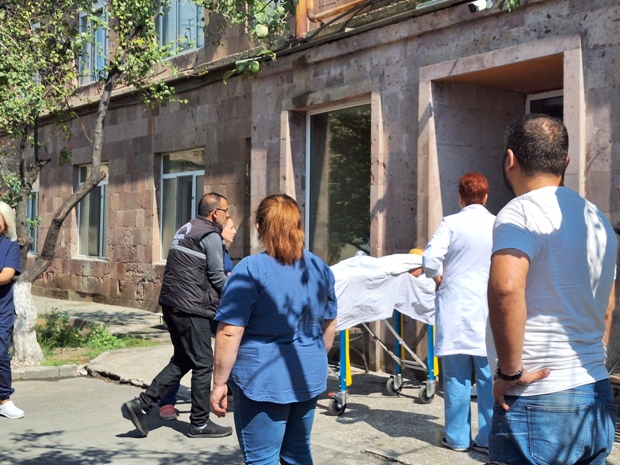
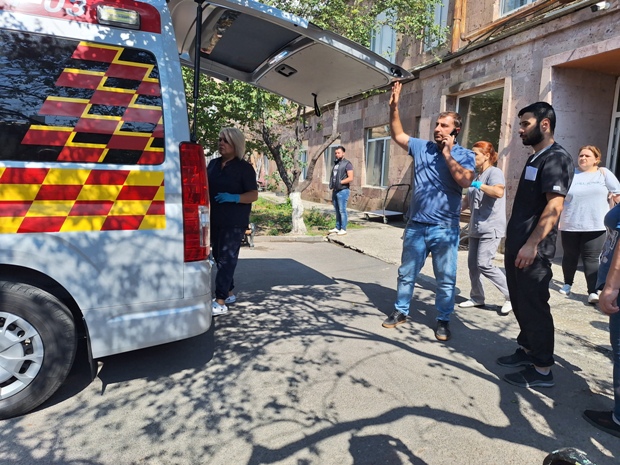
Those injured in Karabakh gasoline depot explosion are transferred to Yerevan burn center (PHOTOS)


Those injured in the explosion of a gasoline depot in Artsakh (Nagorno-Karabakh) have been transferred from Sisian, Armenia to the National Burn Center in capital Yerevan.

At this moment, six ambulances have come to the aforesaid center and the injured are being placed in the hospital.

Those at this medical center are waiting for the other ambulances to arrive.

Many of those gathered near the center do not know whether their relatives have been brought there, as they have not been able to contact them. They are waiting for the clarification from the doctors.

Tuesday morning, a team of doctors left from Armenia to Artsakh capital Stepanakert by helicopter, with the necessary medicines and medical supplies, to help the victims of the explosion in a gasoline depot near the Stepanakert-Askeran motorway last evening. At around 11:30am, the first helicopter landed in Sisian, from where the injured were ambulanced to Yerevan.

20230926_133130.jpg (206 KB)

20230926_133139.jpg (177 KB)

20230926_133237.jpg (190 KB)

20230926_133250.jpg (187 KB)

!

This text available in   Հայերեն and Русский

Print


Categories
Operation "Doppelganger"

Hotpoint aqxxf 149 pm User Manual – Page 1 of 20


aqxxf 149 pm – read user manual online or download in PDF format. Pages in total: 20.

Categories
Selected Articles

Karabakh exodus turns into horror as gas station blast takes heavy toll


Karabakh-blast-800x450.jpg

Thousands more Armenian refugees fled Nagorno-Karabakh on Tuesday (26 September) as officials in Azerbaijan’s war-scarred separatist statelet raised the death toll from a fuel blast to 20. Nearly 300 are injured, some severely burned.

The number of deaths from Monday’s disaster threatened to grow much higher because dozens were being treated in critical condition and many remained unaccounted for.

Most of the victims were stocking up on fuel for the trip down the so-called Lachin Corridor connecting the impoverished and historically disputed region with Armenia.

Yerevan has warned of possible “ethnic cleansing” by Azerbaijan — a close ally of Armenia’s arch-nemesis Turkey — after Baku claimed full control of the region in a lightning offensive last week.

Armenians, mostly Christian, and Azerbaijanis, mostly Muslim, have fought two wars over the mountainous territory since the Soviet Union’s 1991 collapse that has claimed tens of thousands of lives.

The area is now populated by up to 120,000 ethnic Armenians but is internationally recognised as part Azerbaijan.

Armenia said on Tuesday that more than 13,000 refugees had fled since the first group arrived in the country on Sunday.

An AFP team along the Lachin Corridor saw hundreds of cars piled high with belongings moving slowly along the jam-packed road.

Some of the vehicles crept along on flat tyres and many people simply walked past the last Azerbaijani checkpoint.

“They expelled us,” one man said as he walked past the Azerbaijani soldiers.

The influx overwhelmed the border town of Goris — the first port of call for most families.

“We lived through terrible days,” said Anabel Ghulasyan, 41, from the village of Rev, known as Shalva in Azeri.

Many slept in their cars, emerging on Tuesday with red-rimmed eyes and forming long queues outside shops to buy phone cards.

Fears of higher toll

Adding to the humanitarian drama, the separatist government on Tuesday said 13 bodies were found at the scene of a fuel depot blast on Monday and seven more people had died of their injuries.

It said 290 people had been hospitalised and “dozens of patients remain in critical condition”.

Armenia’s health ministry said it had sent a team of doctors to the rebel stronghold of Stepanakert by helicopter.

The Azerbaijani presidency said Baku had also sent medicine to help the wounded.

But treatment was being complicated because local hospitals had run low on medications after a nine-month blockade Azerbaijan had imposed to bring the region to heel.

Azerbaijan turned on the electricity of the rebel stronghold Stepanakert on Sunday, switching it to its own power grid as part of a “reintegration” drive.

Envoys from Baku and Yerevan were in Brussels on Tuesday to pave the way for the first meeting between their leaders since last week’s offensive on October 5.

Tuesday’s talks between national security advisers of the two countries and European heavyweights Germany and France will be chaired by the chief diplomatic adviser to European Council president Charles Michel.

Chaos

Azerbaijan’s operation on 19 September to seize control of the territory forced the separatists to lay down their arms under the terms of a ceasefire agreed the following day.

The separatists have said 200 people were killed in last week’s fighting.

Azerbaijan’s state media on Monday said officials held a second round of peace talks with Nagorno-Karabakh’s ethnic Armenian community aimed at “reintegrating” them.

The question of staying or leaving is now tormenting many Armenian families.

Some say that they cannot live under the authority of Azerbaijanis, while others argue that leaving now means that Armenians might never be able to return, losing the region for good.

“If I do have a chance to come back, I will,” said Khachatur Aydinyan, a 62-year-old shepherd.

“I am sad to leave my sheep behind.”

Those who do decide to go often run the risk of losing contact with friends or family members waiting for them on the other side of the border in the chaotic sea of people.

“I am waiting for my sister’s family,” Artak Soghomonyan, 36, told AFP on the Armenian side of the border.

“They left Stepanakert yesterday, but I have heard nothing since because there is no cell phone service.”

Read more with EURACTIV


Categories
Selected Articles

The Essential Security Challenge in the South Caucasus


This website uses cookies to improve your experience. We’ll assume you’re ok with this, but you can opt-out if you wish. Accept


Categories
Selected Articles

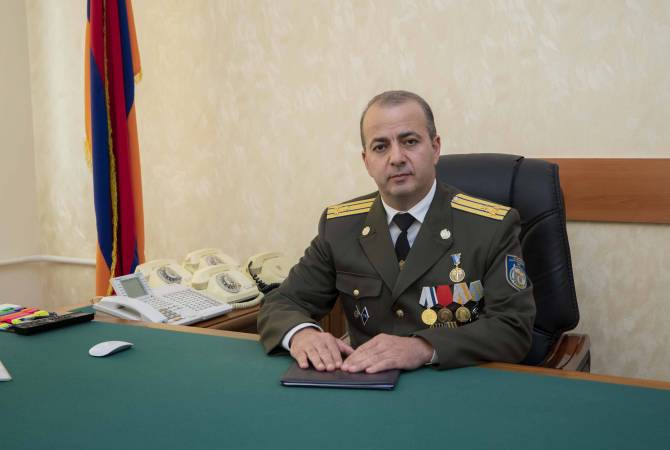
Armen Abazyan appointed Director of National Security Service of Armenia


Armen Abazyan appointed Director of National Security Service of Armenia
16:17, 8 November 2020

YEREVAN, NOVEMBER 8, ARMENPRESS. President of Armenia Armen Sarkissian signed a decree on appointing Armen Abazyan Director of the National Security Service.

The President signed the respective decree based on the Prime Minister’s proposal.

The decree is posted at the official website of the President.

Earlier today Prime Minister Nikol Pashinyan has submitted a proposal to President Armen Sarkissian on dismissing acting Director of the National Security Service, Colonel Mikayel Hambardzumyan.

Editing and Translating by Aneta Harutyunyan