Categories
Selected Articles

There must be international presence in Nagorno-Karabakh, says USAID Administrator


There must be international presence in Nagorno-Karabakh, says USAID Administrator
21:05, 25 September 2023

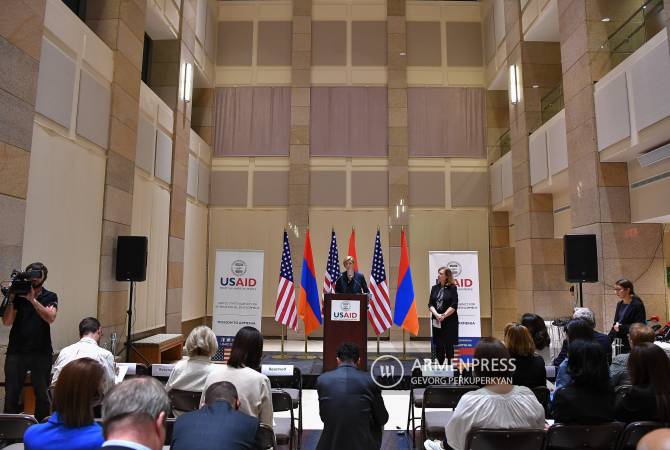
YEREVAN, SEPTEMBER 25, ARMENPRESS. There must be an international presence in Nagorno-Karabakh to assess whether Azerbaijan is implementing its commitments, USAID Administrator Samantha Power said at a press conference in Yerevan.

“We call on Azerbaijan to adhere to the ceasefire and take concrete steps to protect the rights of civilians in Nagorno-Karabakh. President Aliyev has vowed to guarantee the rights of ethnic Armenians, and Azerbaijan must fulfill this promise,” Power said.

The USAID chief said the world must be able to verify and ascertain that Azerbaijan is fulfilling its promise. “All parties must allow an international humanitarian assessment and humanitarian presence to be there, to see whether Azerbaijan is fulfilling its commitments, and for these organizations to be able to report to the international community,” Samantha Power said.

The USAID Administrator emphasized that Azerbaijan must always ensure unimpeded passenger transport, commercial and humanitarian shipments along Lachin Corridor. The promises on protecting the population of NK would be void as long as civilians are unable to freely travel and when food and medical supplies can’t reach the settlements.

“And organizations such as the USAID must have access in order to provide essential humanitarian assistance,” Power said.


Categories
Selected Articles

Urgently sever ties with Russia or calculate risks? Discussions in Yerevan


738459.jpg

Changes in Armenia’s foreign policy course

After the September military actions in Nagorno-Karabakh, expert circles in Armenia are increasingly talking about the uselessness of the Russian presence in the region.

Analysts focus on the inactivity of Russian peacekeepers stationed on the territory of the unrecognized NKR. There are statements that the peacekeeping mission has not ensured the safety of the residents of Nagorno-Karabakh, as a result of which their mass evacuation is now taking place.

Moscow accuses the Armenian Prime Minister of this, recalling the document he signed in Prague recognizing the territorial integrity of Azerbaijan, including the territory of Nagorno-Karabakh. While Putin himself, long before the Prague agreement, had twice publicly stated that Nagorno-Karabakh is part of Azerbaijan.

Even threats to Armenia are heard from Russia. A State Duma deputy threatened that “Armenia will cease to exist” and become a province of the Russian Federation.

Prime Minister Nikol Pashinyan also raised this topic in his Sunday address to the nation. He said that every Armenian citizen should make a choice whether he is “a participant of the movement for the defense of independence or a supporter of a submissive distant province.”

Many Armenian political analysts believe that it is necessary to urgently and definitively sever all ties with Russia, to stop considering this country as a guarantor of security, despite the possible consequences. Others suggest still calculating the risks, as the West, in their opinion, will not take responsibility for ensuring Armenia’s security.

Changes in Armenia’s foreign policy course

“Unshackled state or province?” Pashinyan’s address

“The attacks launched by Azerbaijan against the Republic of Armenia in recent years lead to the obvious conclusion that those external security systems, of which we are a part, are not effective from the point of view of the state interests and security of the Republic of Armenia,” the Armenian Prime Minister said in his address to the nation yesterday.

According to him, this was observed both during the 44-day war in Karabakh and after it, including during the recent hostilities.

In Pashinyan’s assessment, the allies on whom Armenia has relied over the years have set out to “flaunt our vulnerability and justify the Armenian people’s inability to have an independent state.”

He stated that “some partners” are making more and more efforts in that direction, jeopardizing the country’s external and internal security and violating all norms of etiquette and correctness in diplomatic and interstate relations.

The Armenian Prime Minister assured that all measures will be taken to protect the independence of the country, including

  • transformation, supplementing and enriching the instruments of external and internal security in cooperation with all partners ready for mutually beneficial steps,
  • comprehensive reforms of the army and security forces,
  • de jure fixation of the agreements reached on October 6, 2022 in Prague and May 14, 2023 in Brussels,
  • ratification of the Rome Statute.

According to Pashinyan, the deep meaning of the events taking place in Armenia is the following: “whether Armenia will be a sovereign, free, democratic state or a frightened distant province.” He believes that “the citizen of the Republic of Armenia will not lose his pride and determination and will win in this struggle for independence, sovereignty, democracy, happiness and freedom”.

Changes in Armenia’s foreign policy course

“Armenia will cease to exist.”

Yevgeny Fedorov, a State Duma deputy from the ruling United Russia party, recently made a statement about the establishment of a puppet regime in Armenia that would replace Russia’s power:

“Armenia will cease to exist. We will restore control over this territory. There will be a governor there or something else.”

Statements that Armenia has lost its way and this will lead it to various kinds of disasters are also heard at the level of Russian Foreign Minister Sergei Lavrov and Foreign Ministry spokesperson Maria Zakharova.

The latest warning appeared hours ago. It says that Armenia is making “a huge mistake, deliberately trying to collapse Armenia’s multifaceted and centuries-old ties with Russia and making the country a hostage of the West’s geopolitical games.”

The Russian Foreign Ministry statement comments in detail on the theses of Nikol Pashinyan’s address, which contains “unacceptable attacks on Russia.”

“The head of the government, in fact, admitted that all this time the republic was deliberately prepared to turn away from Russia. His steps, designed to set a new – Western – vector of Armenia’s development, are unconvincingly justified by alleged mistakes on the part of the Russian Federation and the CSTO,” it reads.

Russian diplomats declare that “the irresponsible approach of Pashinyan’s team has caused understandable discontent in part of the Armenian society, which was expressed in popular protests”. They claim that Russia has nothing to do with them:

“The head of the Armenian government should be well aware that Moscow does not deal with such things – unlike the West, which is quite skilled in organizing ‘color revolutions’, but by a strange coincidence chose not to notice the numerous facts of persecution of protesters by the authorities in Yerevan.”

Comments

Military and security expert Hrachya Arzumanyan insists that Armenia must take decisive steps immediately. He believes that if Armenia does not sever all ties with Russia, “the events that happened in Stepanakert will happen in Yerevan as well.”

Arzumanyan stated that there is no need for unnecessary words and declare their intentions, it is time to act. In particular, ratify the Rome Statute and withdraw from the Russian military bloc CSTO. Then, he said, the West and power centers will see that Armenia has made its choice:

“If you don’t get out from under Russia’s terrorist blackmail, everything will end up like in Artsakh, confidence will be lost. We need to blow up this blackmail to get a chance to save and protect our independence”.

According to the expert’s assessment, Russia itself has declared Armenia an enemy. He opines that Armenia as a democratic country poses an “existential threat” to Moscow.
He is convinced that Moscow is the organizer of the struggle for the change of power, which is going on these days in the streets of Yerevan. Arzumanyan believes the goal is to create chaos in Armenia and destroy the state.

Among the actions aimed at overthrowing the Armenian statehood he names the second Karabakh war in 2020 and military actions on September 19-20, 2023. The analyst declares the Russian-Turkish tandem to be their author:

“This operation will not end with Artsakh. The next step will be the territory of Armenia, Syunik [southern region of Armenia bordering Azerbaijan]”.

It is for this reason that Hrachya Arzumanyan considers it necessary to sever security ties with Russia. He suggests that Armenia build allied relations with those countries with which its national interests coincide. In addition to the collective West, he names Iran and India as potential partners.

Political observer Hakob Badalyan believes that in addition to “brave and self-confident” statements about changing the foreign policy vector, one should also seriously think about the “bloody price” that will have to be paid for it:

“And even after paying this price one should doubt the success of the change. A change of vector will mean a change of the main responsible person. This means that instead of Russia, it is the West that should become responsible. And the West does not need to emphasize the fact of its own responsibility, but only the complete overthrow of Russia’s responsibility”.

The expert says that the “alternative” offered by the West is as follows: “if you want security, you need to negotiate with Turkey and Azerbaijan, and we will provide you with a “room” for negotiations free of charge”.

It reminds that Russia has much more opportunities than Armenia to make favorable agreements with Azerbaijan and Turkey, and at Armenia’s expense. And in order to get out of this “trap,” it is not necessary to change the vector:

“If we do not have sufficient intellectual institutional capacity to develop other mechanisms and options, it does not mean that there is only one possibility left – to change the vector, especially in the situation of a world war.”

At the same time, the observer does not think that Armenia will be immune from “new bloody stages” if it does not change the vector.

According to Badalyan, to increase resilience, changes inside the country are needed, “starting from the relations within the society and ending with the quality and content of socio-political and military institutions.”

In general, he advises to “minimize the motives and causes of acute reactions in the external field, regardless of the risk of this reaction”.

Follow us Twitter | Facebook | Instagram

Changes in Armenia’s foreign policy course


Categories
Selected Articles

United States will continue to stand beside Armenia: Biden to Pashinyan


The Administrator of the US International Development Agency, Samantha Power, conveyed the letter of US President Joe Biden to Prime Minister Nikol Pashinyan.

The letter reads:

Dear Mr. Prime Minister,

I send my best wishes to you and the people of Armenia as you celebrate your Independence Day. This year, as we mark this proud occasion, we are also mourning the recent loss of life of ethnic Armenians in Nagorno Karabakh. I have asked Samantha Power, a key member of my cabinet, to personally convey to you the strong support of the United States and my Administration for Armenia’s pursuit of a dignified and durable regional peace that maintains your sovereignty, independence, territorial integrity, and democracy.

Armenia has demonstrated its commitment to that purpose by engaging in peace talks with Azerbaijan as well as implementing critical economic reforms, improving government accountability and strengthening democratic institutions. I assure you that the United States will continue to stand beside Armenia as you work to strengthen the democracy at home and seek stability in your neighborhood.

The United States is committed to work with your government and addressing humanitarian needs emerging from the latest violence, which Administrator Power will discuss with you in depth. We will also continue to strengthen our cooperation on energy diversification, resilience, and security, as demonstrated by our recent military exercises.

Armenia’s rich history has inspired nations and people everywhere to strive for liberty and justice. And the Armenian-American community continues to be a source of strength in my own country. In the year ahead, I hope to continue to further deepen and strengthen the bonds between our nations – and our people”.


Categories
Selected Articles

Official: Explosion of gasoline tank near Stepanakert leaves several dozen injured


default.jpg

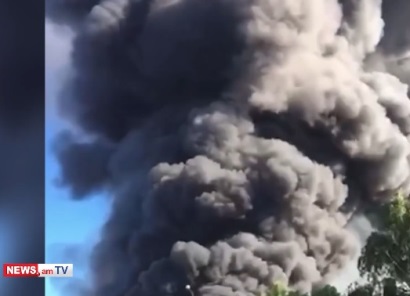
The explosion of a gasoline tank near Stepanakert has left several dozen injured with various burns, the press secretary of the Minister of Health of Artsakh told NEWS.am.

“At the moment, we do not have information about the casualties and the injured. At the moment, we have several dozen wounded with various burns. Right now, that’s all, if there is official information, we will definitely publish it,” Angelina Isakhanyan said.

!

This text available in   Հայերեն and Русский

Print


Categories
Selected Articles

Aliyev again speaks about ‘Zangezur corridor’


default.jpg

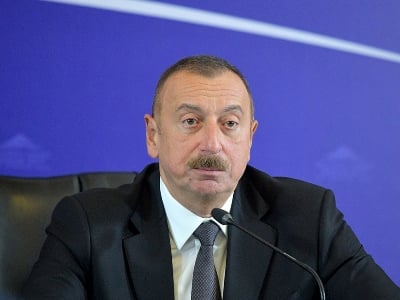
The President of Azerbaijan, Ilham Aliyev, has again announced the so called Zangezur corridor. He made the statement after the meeting with Turkish President Recep Tayyip Erdogan in Nakhichevan.

“The construction of the railway connecting Azerbaijan with Nakhichevan and Turkey is progressing successfully. Most likely, the works in the territory of Azerbaijan should be completed by the end of next year,” he said.

!

This text available in   Հայերեն and Русский

Print


Categories
Selected Articles

Speech Delivered by Irakli Garibashvili, Prime Minister of Georgia, at the 78th session of the United Nations General Assembly


UNGA-Georgia.jpg

Mr. President,

Secretary-General,

Dear Colleagues,

Dear Friends,

It is an honor to address the United Nations General Assembly once again.

I represent Georgia, a strong nation that values freedom, cherishes its rich heritage and embraces progress amid an ever-changing geopolitical landscape.

As you are aware, my country experienced a full-scale military aggression in 2008 and continues to endure its destructive consequences. This is still evident in the occupation of 20 percent of Georgian territory by the Russian Federation and the displacement of hundreds of thousands of people from their homes.

I confidently state that despite the devastation we’ve endured, we have not hesitated to pursue our ambitions. We have transformed Georgia into a dynamic society, fully committed to the realization of the fundamental principles and values enshrined in the UN Charter.

Georgia understands the cost of war and recognizes the value of peace. Since 2012, our Government has built and maintained an uninterrupted decade of peace and stability.

I would like to take this opportunity to express our deep appreciation to the international community for the unwavering support to Georgia’s sovereignty and territorial integrity. To ensure our continued peaceful existence, I call on the international community to persuade the Russian Federation to engage with the “Geneva International Discussions” and fully implement the EU-mediated 2008 Ceasefire Agreement.

Thanks to our pragmatic foreign policy, we have sustained economic growth over the past decade. We continue to make critical investments to improve the quality of life for all Georgians. We have experienced double-digit economic growth for two consecutive years, with a GDP growth rate of over 10 percent in 2021 and 2022. This positive-growth trend has continued in 2023, with an average economic growth of 7 percent.

A substantial increase in GDP per capita is among my Government’s most significant achievements. Since 2012, GDP per capita has nearly doubled. We expect that this positive trend will continue. In addition, in July of this year, our official reserve assets reached a historic high, representing nearly a 90% growth in July 2023 compared to 2012. The unemployment and poverty rates are also at historical lows.

The World Justice Project’s 2022 Rule of Law Index places Georgia as the top ranking country in the Eastern Europe and Central Asia regions regarding the rule of law. According to the Fraser Institute’s report – Economic Freedom of the World 2022, Georgia is among the top 15 countries with the freest economies, while the Heritage Foundation Index of Economic Freedom 2023 places Georgia 21st in Europe, ahead of 11 EU member states. The [NUMBEO] Crime Index 2023 positions Georgia as one of the safest countries in the world, ranking 18th in the world and 8th in Europe.

My Government developed and approved “Vision 2030 – Development Strategy of Georgia” in 2022 — our country’s first long-term policy framework. The document outlines a comprehensive set of reforms, covering areas like economic functions, social progress, good governance, justice, and human rights protection, to implement by 2030.

While we work towards comprehensive, multifaceted progress, we also place significant emphasis on education and social welfare. The importance of robust education systems cannot be overstated, since they serve as the cornerstone for empowered, prosperous, and productive societies. We embrace education by allocating resources to enhance digital literacy and bridge the digital divide.

Our efforts extend to all levels of education. We have allocated up to 1 billion US Dollars to rehabilitate and construct schools and kindergartens across the country. We have increased investments in healthcare and social welfare. Currently, 95 percent of our population benefits from universal healthcare and we are continuously improving the quality of these services. We are determined to ensure the best possible care for all citizens.

Dear Friends, these successes are just a fraction of the progress my country has made, but they clearly demonstrate our efforts to create opportunities for all our citizens, including those residing in the occupied territories of Georgia.

To our Abkhazian and Ossetian brothers and sisters, it is our common adversary who opposes our unity. We are an ingenious people, capable of incredible accomplishments, but only together can we ensure lasting stability, attract increased investments and reach our full potential as a united nation. We must not let this opportunity for a peaceful, stable and prosperous future together slip through our grasp.

Each step we take seeks to bring Georgia back into the European family where it belongs. The remarkable achievements of our Government since 2012, including the EU Association Agreement (AA), the Deep and Comprehensive Free Trade Area (DCFTA) and the Visa-Free regime with the European Union, demonstrate our geopolitical priority to become an EU member state.

The recognition last June of Georgia’s European Perspective has opened a new chapter in our relationship with the European Union. Recent surveys show nearly 90 percent of Georgians support EU membership, and we have demonstrated unwavering commitment to address the 12 priorities set forth for EU Candidate Status. Through a rigorous, inclusive and transparent domestic implementation process involving all stakeholders, we are on-track to complete them this year.

Our achievements deserve a favorable decision from the EU. As a frontrunner among the so-called “Associated Trio” countries, Georgia has earned EU candidate status. We anticipate that Georgia’s performance and the current geopolitical context in the region will be fairly evaluated. Granting Georgia the candidate status is the only course of action.

Considering recent developments, I would like to emphasize the importance of the rules-based international order and the fundamental principles outlined in the UN Charter.

Georgia is a responsible member of the international community actively contributing to global peace. For more than two decades, we have made substantial contributions to NATO missions worldwide, making Georgia one of the largest per capita contributors to the NATO missions in Iraq and Afghanistan. 32 brave Georgian soldiers made the ultimate sacrifice in Afghanistan, while hundreds of others suffered injuries in the pursuit of freedom and peace. Georgia sacrificed greatly to protect our shared values and common interests.

We significantly contributed to the EU-led missions and honor that commitment.

Dear Friends, as we strive for peace, prosperity, progress, and sustainability for all, it is disheartening to witness aggression against a UN member state. The war in Ukraine reawakens the trauma of the 2008 war in Georgia.

We feel the pain and hardships that Ukraine currently faces and stand in full solidarity with the Ukrainian people.

We have sponsored, joined, and supported more than 500 resolutions, statements, joint statements and other initiatives by major international organizations and institutions to support Ukraine and Ukrainian people. Our Western partners, including the United States, EU, and UK, have repeatedly praised our compliance with all international financial sanctions.

My Government has been providing substantial humanitarian assistance to Ukraine and Ukrainian people since the beginning of the war, both in the country and to those currently residing in Georgia. Georgian schools have welcomed more than 2,200 Ukrainian students, ensuring that most of them receive education in the Ukrainian language while following the official Ukrainian curriculum.

Let me be clear – the fundamental philosophy of our Government is to avoid war and secure peace. Despite the challenges posed by our geographic location, we have managed to keep our people safe while supporting Ukraine and the international community through prudent policies and close coordination with our partners.

Through my Government’s Peaceful Neighbor Initiative we are prepared to engage our neighbors and friends from Armenia and Azerbaijan to finally bring lasting peace to the South Caucasus.

Dear Friends, Georgia is emerging as a multi-dimensional regional hub. Our financial services sector has garnered global recognition and we are attracting international investors, infusing additional capital into our economy. We have also prioritized investments in our infrastructure to enhance connectivity, successfully harnessing logistics and energy sectors.

We are developing strategic transport corridors to establish crucial connections between Asia and Europe. Georgia’s participation in various international initiatives and infrastructure projects enhance connectivity, facilitating trade across the Black Sea region.

The Middle Corridor has emerged as a secure and reliable route connecting East with West. We signed comprehensive roadmaps with Azerbaijan and Kazakhstan, to eliminate bottlenecks and enhance the Middle Corridor from 2022 to 2027. These roadmaps provide for specific actions related to transport and logistics infrastructure development, operational optimization, the implementation of a unified tariff policy, corridor digitalization, and improvements to the regulatory framework.

In pursuit of enhancing East-West connectivity, Georgia established the Tbilisi Silk Road Forum in 2015 creating an international platform for dialogue among senior policymakers, businesses and community leaders. The upcoming Silk Road Forum is scheduled to take place in Tbilisi this year on October 26-27, bringing together approximately 2000 delegates, including high-ranking officials and business representatives from more than 60 countries.

Georgia has launched significant infrastructure projects, including the Railway Modernization Project. Upon its completion by the end of 2024, the throughput capacity of Georgian railways will double.

The construction of a new Anaklia Deep Sea Port, which is expected to start soon, is a top priority for my Government. This green-field PPP project will create a state-of-the-art deep-sea port on the Eastern coast of the Black Sea.

Our Government is improving air connectivity by building a new international airport in Tbilisi that will serve as a world-class transportation hub cementing Georgia’s status as a prominent player in global aviation.

Furthermore, the EU-flagship Black Sea Submarine Cable Project, initiated by Georgia, is currently underway. This Project involves the installation of a high-voltage submarine transmission grid to connect the South Caucasus region to Southeast Europe through the underwater cable. The implementation of the project will strengthen energy security in Europe and the South Caucasus region, will foster the development of renewable energy sources and create new opportunities for transit between these two regions.

While recognizing the increasing demand for energy, as well as the need to address climate change, we are actively pursuing new ventures in the field of renewable energy, including hydropower, wind, solar and other sustainable sources. Our objective is to attract investors and create a favorable environment for the establishment of innovative power plants, utilizing the Georgia’s abundant green energy potential.

All of these transformational projects will bring jobs, economic growth, and prosperity to our people and the region.

Dear Friends, Georgia has made significant progress since regaining independence. We remain dedicated to achieving even greater results for the Georgian people while making significant contributions to the global community. We stand ready to strengthen international partnerships and collaborations to ensure a more peaceful and sustainable future.

Our shared humanity binds us together and it is our collective responsibility to uplift one another and leave a lasting legacy for generations to come.

Thank you very much!


Categories
Selected Articles

Kremlin dismisses Armenian suggestion that Russia is quitting South Caucasus


Russia's President Vladimir Putin meets with Armenia's Prime Minister Nikol Pashinyan and Azerbaijan's President Ilham Aliyev in Moscow

Armenia’s Prime Minister Nikol Pashinyan attends a meeting with Russia’s President Vladimir Putin and Azerbaijan’s President Ilham Aliyev on the sidelines of the Eurasian Economic Union summit in Moscow, Russia May 25, 2023. Sputnik/Mikhail Metzel/Pool via REUTERS/File Photo Acquire Licensing Rights

MOSCOW, Sept 5 (Reuters) – The Kremlin on Tuesday rejected a suggestion by Armenia’s prime minister that Russia had failed to protect Armenia in its standoff with neighbouring Azerbaijan and was winding down its role in the wider South Caucasus.

In an interview with the Italian paper La Repubblica published on Sunday, Nikol Pashinyan accused Russia of failing to ensure Armenia’s security against what he said was aggression from Azerbaijan over the breakaway Nagorno-Karabakh region.

Yerevan has repeatedly complained that Russian peacekeepers have for nine months allowed Azerbaijanis to blockade the “Lachin corridor”, the only road linking Nagorno-Karabakh to Armenia, causing shortages of food, medicines and other essentials.

Kremlin spokesman Dmitry Peskov told reporters on Tuesday that Russia, which has a military base in Armenia and has sent peacekeepers to uphold a ceasefire deal, would continue to be a “guarantor of security” in the region.

Pashinyan had said Armenia felt Russia was pulling back from the South Caucasus, which includes Azerbaijan and Georgia. He also suggested that Moscow was unable to meet all Armenia’s security needs because of its own requirements for the war in Ukraine.

“We cannot agree with these [Pashinyan’s] theses,” Peskov said. “Russia is an absolutely integral part of this region … Russia plays a consistent, very important role in stabilising the situation in this region … and we will continue to play this role.”

Russian foreign ministry spokesperson Maria Zakharova, in a separate briefing, called Pashinyan’s comments “public rhetoric verging on rudeness” and said that, rather than blaming others, Yerevan should take responsibility for its own actions.

She also said that Moscow wanted humanitarian aid to reach the enclave unhindered.

Nagorno-Karabakh, a source of tension between Yerevan and Baku for decades, is internationally recognised as part of Azerbaijan, but its 120,000 inhabitants are predominantly ethnic Armenians.

It broke away from Baku’s control in a war in the early 1990s, although Azerbaijan recovered control of some areas in heavy fighting in 2020, when Russia brokered a ceasefire.

Peskov said all sides must obey the terms of that deal, even if there had been changes in the situation since.

The Russian defence ministry said on Monday it had replaced the head of its peacekeeping forces in the South Caucasus, the second change in the space of a few months.

Reporting by Reuters; Writing by Kevin Liffey; Editing by Andrew Osborn and Angus MacSwan

Our Standards: The Thomson Reuters Trust Principles.


Categories
Operation "Doppelganger"

John Cusack: New Movies in 2025 and 2026 – The Cinemaholic


While many of us remember John Cusack as the guy who survived ‘2012,’ he has given us some great movies in the 90s, including ‘Con Air,’ ‘Being John Malkovich,’ ‘The Raven,’ ‘The Grifters,’ ‘Say Anything …,’ ‘High Fidelity,’ ‘Grosse Pointe Blank,’ and ‘The Thin Red Line.’ With over 80 films to his name, he has […]

Categories
Operation "Doppelganger"

Who is eligible for Medicare? Experts explain the rules … – AOL


The federal health insurance for people 65 and older, as well as some individuals under 65 with disabilities or specific conditions.

Categories
Selected Articles

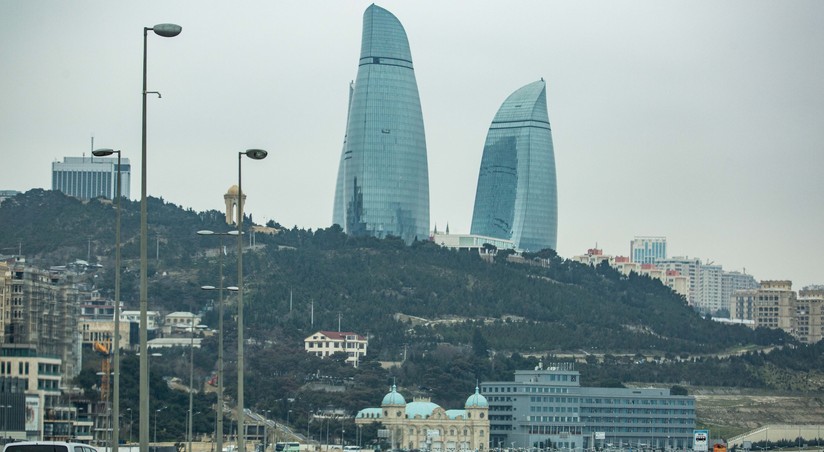
Over 3/4 of respondents in Azerbaijan in favor of signing peace treaty with Armenia


4243aeb5-ed8c-3831-ac46-956b7b2c387d_824

76.4% of respondents in Azerbaijan support the signing of a peace treaty with Armenia, according to the Social Research Center’s opinion poll among citizens, Report informs.

22.8% of the respondents took the opposite position and said that they do not support the peace treaty. 0.8% found it difficult to come up with any opinion on the issue.

The analysis of the results from the gender aspect showed that there was no significant difference in relation to the peace treaty. Thus, 79.3% of men and 73.6% of women expressed their support for the signing of the peace treaty.

Looking at the results of the May 2023 survey, it is noticeable that the peace agenda in the Azerbaijani society maintains its relevance. Thus, 77.3% of the participants in the survey held in May said that they supported the peace treaty between Azerbaijan and Armenia. 20.6% of the respondents were against it, 2.1% had difficulty expressing their opinion.