Categories
Selected Articles

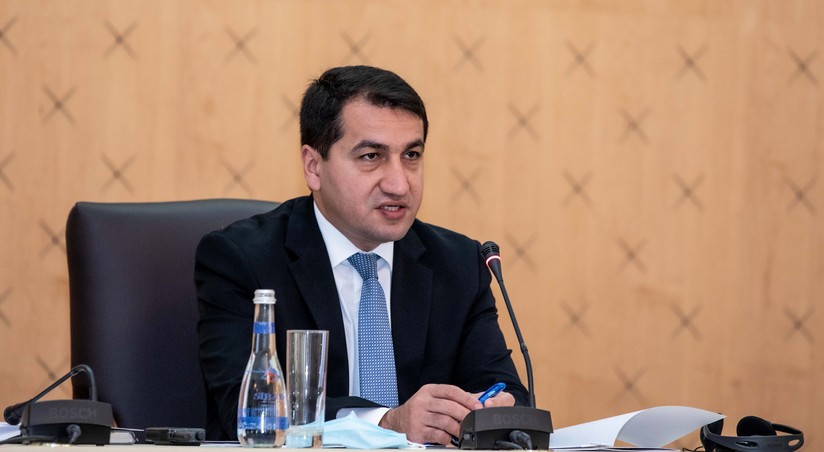
Hikmet Hajiyev: Baku considering possible amnesty for Karabakh militants


9999e519-7cfa-3a4a-99a9-9f058fe87a93_824

Azerbaijan envisages an amnesty for Karabakh Armenian fighters who give up their arms, though there have been some Karabakh military units which have said they will continue their resistance, Assistant to the President of Azerbaijan – Head of the Foreign Policy Affairs Department of the Presidential Administration Hikmet Hajiyev told Reuters, Report informs.

“Even with regard to former militaries and combatants, if they can be classified in such a way, and even for them we are envisaging an amnesty or alluding to an amnesty as well,” Hajiyev said.

Karabakh Armenian rights would be respected as part of their reintegration into Azerbaijan, he said, adding that they had requested humanitarian support as well as oil and gasoline supplies. Three cargos of humanitarian help would be delivered to the region on September 22, he said.

“Currently we are seeing that some individual army groups and officers that made the public statements that they won’t come to our terms and will continue resistance,” he said.

“We also see that some minor groups are going to the forest,” he said. “But we do not see that to be the biggest challenge, and big security challenge. Of course, this will cause certain challenges and difficulties but not on a such a big scale.”


Categories
Selected Articles

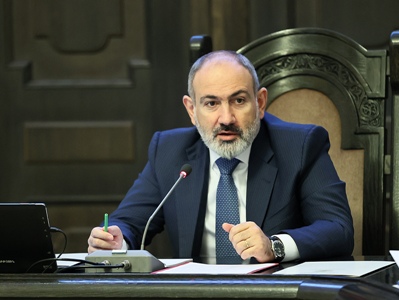
We shouldn’t turn a blind eye on failures of Russian peacekeepers in Nagorno-Karabakh – Pashinyan


We shouldn’t turn a blind eye on failures of Russian peacekeepers in Nagorno-Karabakh – Pashinyan
19:19, 21 September 2023

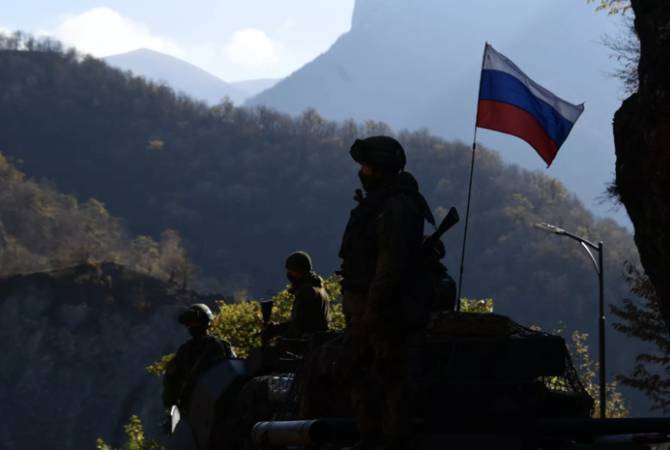
YEREVAN, SEPTEMBER 21, ARMENPRESS. Prime Minister Nikol Pashinyan has said that Armenia bears its share of responsibility but the failures of the Russian peacekeeping mission in Nagorno-Karabakh shouldn’t be ignored.

Addressing the nation live on Thursday, PM Pashinyan commented on Russian media claims that Armenia is trying to blame Russia for its own failures.

“We are not shifting responsibility of any of our failures on anyone. There is the clear 9 November 2020 trilateral statement, by which the Lachin Corridor was supposed to be under the full control of the Russian peacekeeping contingent, the Russian peacekeeping contingent was supposed to oversee the safety of the civilian population. And we’ve been consistently raising this issue for over one and a half years, raising that the processes aren’t proceeding in the right course. We bear our share of responsibility, but I don’t think that we all should turn a blind eye on the failures that the Russian peacekeeping contingent has had in Nagorno-Karabakh,” Pashinyan said, mentioning the deadly incident in 2022 when Russian peacekeepers had assured a farmer in Nagorno-Karabakh that it was safe to conduct agricultural work but the farmer was shot dead by an Azeri sniper in the presence of the peacekeepers.

“Why did this latest outbreak happen? If the peacekeepers were able to agree a ceasefire, why couldn’t they do so before the attack, so that an attack on Nagorno-Karabakh wouldn’t have happened? After all, we’ve all been warning about this, we were saying that Nagorno-Karabakh is blockaded by Azerbaijani military equipment. Why didn’t this mediation take place back then? These are questions that require answers,” the Armenian PM said.


Categories
Selected Articles

PM Pashinyan notes case in which Karabakh Armenians might move to Armenia


default.jpg

The transfer of our compatriots from Nagorno-Karabakh to Armenia may take place in the conditions when it is recorded that it is impossible for our compatriots to stay in Nagorno-Karabakh; that is, if this situation continues. Prime Minister Nikol Pashinyan stated this at Friday’s Cabinet meeting of the Armenian government.

“We assess that this impossibility exists at the moment. If the situation does not improve, that situation will be on the agenda of all of us. But also, I want to inform that back on September 19, that is, the day of the start of [Azerbaijan’s military] operations [in Nagorno-Karabakh], I gave an instruction to Deputy Prime Minister Tigran Khachatryan to discuss with his government colleagues how, where, and with what we will assist our compatriots in the event of a possible flow of people to Armenia. More than 40,000 places have been prepared; it’s about places to stay, as well as simultaneously in terms of health care, food. This is an agreed position with Nagorno-Karabakh colleagues. Our Plan A is not to de-Armenianize Nagorno-Karabakh. We must do everything in our actions so that our compatriots have the chance to live in their homes without fear, with dignity,” Pashinyan said.

!

This text available in   Հայերեն and Русский

Print


Categories
Selected Articles

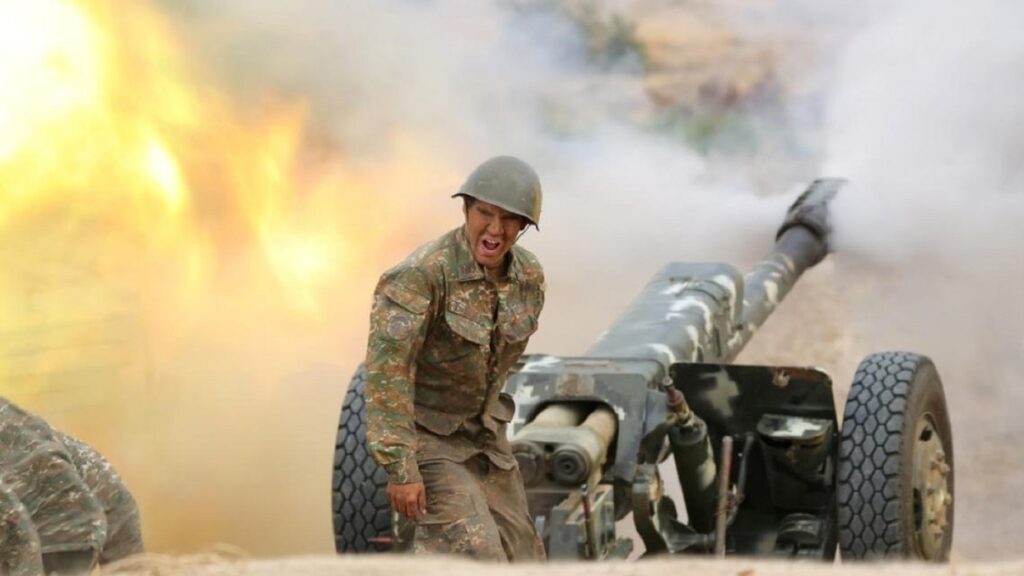
What Should America Do Now in Nagorno-Karabakh?


Second-Nagorno-Karabakh-War-1024x576.jpg

Azerbaijani President Ilham Aliyev appears to relish embarrassing the State Department.

Just weeks after the now-voided ceasefire, Aliyev castigated on live television Andrew Schofer, at the time the chief US representative on the Karabakh issue, during a Baku meeting.

Noting that Aliyev did not invite the American and French representatives, he said he would nevertheless listen on the off chance they had something worthwhile to say.

Aliyev, though, had no desire to listen to diplomats. “Azerbaijan resolved the conflict, which lasted for almost 30 years, resolved by force and political means,” he said. “And I can only agree with what [Russian] president [Vladimir] Putin said, the president of the one of the co-chair countries, that Nagorno-Karabakh conflict is already in the history… Azerbaijan resolved it itself. And by defeating Armenia on the battlefield, we forced aggressor to admit its defeat, to sign declaration which we consider as an act of capitulation of Armenia.”

In the three years since, he has only redoubled his contempt for American diplomacy. Testifying last week before the Senate Foreign Relations Committee, acting Assistant Secretary of State Yuri Kim declared, “We will not tolerate any attack on the people of Nagorno-Karabakh.” Aliyev called her bluff and Kim, who hopes to be the next US ambassador to Turkey, showed her declaration both empty and insincere.

It is not a good look for American diplomacy. Nor is Kim alone. Secretary of State Antony Blinken repeated there could be “no military solution” or that “the use of force to resolve disputes is unacceptable” in recent days. To sit idle as Aliyev imposes through military force a solution that leads to the mass flight or expulsion of one of the region’s oldest Christian communities not only reinforces the notion that Blinken is the weakest secretary of State since Frank Kellogg a century ago. The danger is that not only Aliyev but also other dictators will see inaction or empty rhetoric as a greenlight. The Armenia fight might not be over, after all, especially as Aliyev occupies portions of Armenia and claims even capital Yerevan as an Azeri city.

So how should the United States react?

First, Azerbaijan’s military conquest should not push aside the ongoing investigations of severe human rights abuses and torture and executions of prisoners of war stemming from the 2020 war. The best resource on these cases rests in a repository at the Institute for the Study of Human Rights at Columbia University assembled by now-Georgetown University Scholar David Phillips and his able team.  

Second, will Congress assess how recent waivers of Section 907 of the Freedom Support Act contributed and enabled the Azerbaijani military action? Will any diplomats from the Trump or Biden administrations be held accountable by Congress for flagrant violations of U.S. law?

Third, what will the United States do to ensure preservation of cultural heritage? While the Hudson Institute’s Luke Coffey says, “There is no religious dimension to this conflict,” such a statement is patently false. Put aside the rhetoric of Al Qaeda-affiliated mercenaries from 2020. There is a long history of the Aliyev regime destroying Christian sites or seeking to erase Armenian heritage. Consider, for example, the destruction of the Julfa Cemetery. Every scholar or analyst apologetic to Azerbaijan’s position should explain what motivates such destruction and if they can voice any plausible excuse. The same holds true for the sandblasting of Armenian inscriptions in other churches and monasteries.  The simple facts are these: Few believe the Azerbaijani narrative because Aliyev has not allowed foreign media or foreign observers in for years. Pinocchio’s nose is too big to ignore the ongoing eradication of a community. There is a reason why so many living under Azerbaijani guns fear for their lives.

Fourth, the State Department should immediately dispatch multiple diplomats from the US Embassy in Baku to Stepanakert to monitor the situation. Atrocities occur in the dark. If Azerbaijan has nothing to hide, then it will not impede diplomats visiting beleaguered, Christian populations on land Azerbaijan controls.

Fifth and finally, Azerbaijani officials say that they will allow Armenians from Nagorno-Karabakh to remain as equal citizens under Azerbaijani law. Put aside the fact that they already accuse many generations-old Armenians of the region of having no proof of residency. Congress should demand the State Department release a report assessing the Azerbaijani constitution and the independence of the Azerbaijani judiciary. Does the State Department believe that the Aliyev family is subordinate to Azerbaijani law or above it? Does Blinken believe that Azerbaijani will, for example, bring to justice those seen beheading or mutilating prisoners on video?

Freedom and faith suffer today, but Azerbaijani triumphalism need not be the final chapter. The downside of imposing a military solution, rather than the “consensual” solution for which Secretary of State James Baker called when he crafted the American position to the region more than three decades ago, is that the pendulum of unilateralism swings both ways. Aliyev will not live forever, and even the most ambitious family dynasties unravel. In the interim, it is essential that the State Department cease its business-as-usual with Azerbaijan and work overtime to help one of the world’s oldest Christian communities that, unfortunately, Washington’s own distraction and indifference now imperils.

About the Author

Now a 19FortyFive Contributing Editor, Dr. Michael Rubin is a Senior Fellow at the American Enterprise Institute (AEI). Dr. Rubin is the author, coauthor, and coeditor of several books exploring diplomacy, Iranian history, Arab culture, Kurdish studies, and Shi’ite politics, including “Seven Pillars: What Really Causes Instability in the Middle East?” (AEI Press, 2019); “Kurdistan Rising” (AEI Press, 2016); “Dancing with the Devil: The Perils of Engaging Rogue Regimes” (Encounter Books, 2014); and “Eternal Iran: Continuity and Chaos” (Palgrave, 2005).

Categories
Selected Articles

PM Pashinyan notes case in which Karabakh Armenians might move to Armenia


default.jpg

The transfer of our compatriots from Nagorno-Karabakh to Armenia may take place in the conditions when it is recorded that it is impossible for our compatriots to stay in Nagorno-Karabakh; that is, if this situation continues. Prime Minister Nikol Pashinyan stated this at Friday’s Cabinet meeting of the Armenian government.

“We assess that this impossibility exists at the moment. If the situation does not improve, that situation will be on the agenda of all of us. But also, I want to inform that back on September 19, that is, the day of the start of [Azerbaijan’s military] operations [in Nagorno-Karabakh], I gave an instruction to Deputy Prime Minister Tigran Khachatryan to discuss with his government colleagues how, where, and with what we will assist our compatriots in the event of a possible flow of people to Armenia. More than 40,000 places have been prepared; it’s about places to stay, as well as simultaneously in terms of health care, food. This is an agreed position with Nagorno-Karabakh colleagues. Our Plan A is not to de-Armenianize Nagorno-Karabakh. We must do everything in our actions so that our compatriots have the chance to live in their homes without fear, with dignity,” Pashinyan said.

!

This text available in   Հայերեն and Русский

Print


Categories
Selected Articles

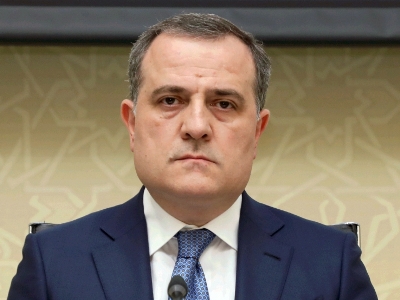
Jeyhun Bayramov meets with Joe Biden


default.jpg

Azerbaijani Foreign Minister Jeyhun Bayramov attended a reception organized by US President Joe Biden within the framework of the high-level week of the 78th session of the UN General Assembly.

The Ministry of Foreign Affairs of Azerbaijan informed on its page in X that within the framework of the reception, the Azerbaijani Foreign Minister met with US President Joe Biden.

!

This text available in   Հայերեն and Русский

Print


Categories
Security and Intelligence

Ex-FBI agent pleads guilty to concealing $225K loan from former Albanian official – AP News


Ex-FBI agent pleads guilty to concealing $225K loan from former Albanian official  AP News

Categories
Security and Intelligence

Ex-FBI agent pleads guilty to concealing $225K loan from former Albanian official – AP News


Ex-FBI agent pleads guilty to concealing $225K loan from former Albanian official  AP News

Categories
Security and Intelligence

Ex-FBI agent pleads guilty to concealing $225K loan from former Albanian official – AP News


Ex-FBI agent pleads guilty to concealing $225K loan from former Albanian official  AP News

Categories
Security and Intelligence

Ex-FBI agent pleads guilty to concealing $225K loan from former Albanian official – AP News


Ex-FBI agent pleads guilty to concealing $225K loan from former Albanian official  AP News