Categories
Selected Articles

Nagorno-Karabakh: Azerbaijan’s Aliyev says operation over – DW – 09/20/2023


Published 09/20/2023Published September 20, 2023last updated 09/20/2023last updated September 20, 2023

Azerbaijan’s president said in a TV address that the military operation was over, and that separatist fighters had accepted demands that they disarm and depart the region. He also seemd to offer Armenia an olive branch.

Russian soldiers help people in the back of an army truck; military helicopters are in the distanceRussian peacekeepers have been evacuating thousands of civilians from Nagorno-KarabakhImage: Russian Defence Ministry/TASS/IMAGOSkip next section What you need to know

  • Ilham Aliyev declares military intervention over, says Azerbaijan’s sovereignty restored
  • Aliyev also said he valued Armenia not having intervened in the operation, and that this was a good sign for peace talks
  • Azerbaijan’s Defense MInistry had announced a cease-fire earlier in the day, brokered by Russia; Armenia had said it was not involved
  • Russian peacekeepers said they evacuated 2,000 civilians in Nagorno-Karabakh, with crowds seen waiting at the airport
Skip next section Armenia accuses Azerbaijan of firing on border positions

09/20/2023September 20, 2023

Armenia’s Ministry of Defense has accused Azerbaijan’s armed forces of firing on some of its army outposts near the town of Sotk, situated around 140 kilometers (80 miles) from Karabakh.

“Azerbaijani army units fired light weapons on the Armenian combat outposts near Sotk”, the Armenian Defense Ministry posted on social media platform X, formerly known as Twitter.

The reports come after Azerbaijani President Ilham Aliyev declared the end of the military operation in Nagorno-Karabakh.

Azerbaijan has denied the claims.

https://p.dw.com/p/4WcT8Skip next section US concerned about humanitarian situation in Nagorno-Karabakh

09/20/2023September 20, 2023

The White House expressed concern over the humanitarian situation after Azerbaijan declared an end to a military operation in Armenian-controlled Nagorno-Karabakh.

“We’re obviously still watching very, very closely the worsening humanitarian situation inside Nagorno-Karabakh,” US National Security Council spokesman John Kirby told reporters.

Kirby said the situation “has been exacerbated by the hostilities perpetrated by Azerbaijan” and there were now concerns of a refugee crisis but that reports of a ceasefire were “positive.”

https://p.dw.com/p/4WcRoSkip next section Macron tells Aliyev to honor cease-fire

09/20/2023September 20, 2023

France’s presidential office said Emmanuel Macron called Azerbaijan’s President Ilham Aliyev after the military operation in Nagorno-Karabakh. 

President Macron “condemned Azerbaijan’s decision to use force … at the risk of worsening the humanitarian crisis in Nagorno-Karabakh and compromising ongoing efforts to achieve a fair and lasting peace.” 

He “stressed the need to respect” the cease-fire and “to provide guarantees on the rights and security” of people in the region “in line with international law.” 

Macron is in France at present, even amid the UN General Assembly, for the delayed state visit of King Charles III. The original appointment was postponed amid pension reform protests in France.

https://p.dw.com/p/4WcOcSkip next section Azerbaijan’s Aliyev says sovereignty ‘restored,’ declares end to operation

09/20/2023September 20, 2023

Azerbaijan’s President Ilham Aliyev gave a televised address on Wednesday evening, as a cease-fire in Nagorno-Karabakh appeared to hold. 

He said that Armenian-backed separatist forces were withdrawing and that most of their military hardware had been destroyed in a military offensive launched barely 36 hours earlier. 

“Illegal Armenian units have begun the process of withdrawal from their positions. They accepted our terms and began surrendering their arms,” Aliyev said.

Azerbaijani President Ilham Aliyev delivers a televised address to the nation in Baku, Azerbaijan, September 20, 2023.President Aliyev appeared on television saying Azerbaijan had restored its sovereignty but also trying to reassure citizens in Nagorno-KarabakhImage: Press Service of the President of Azerbaijan Ilham Alijew/REUTERS

Aliyev said Azerbaijan had regained full sovereignty in the operation, and he tried to assure residents of Nagorno-Karabakh that he wished to integrate the population and turn the region into a “paradise.” 

He said Azerbaijan had nothing against ethnic Armenians in the region, saying “they are our citizens,” but only against their “criminal” separatist leadership.

Aliyev also said that Baku valued the fact that Armenia had not sought to intervene in the military operation, instead remaining “watchful.” He said this impoved the prospects for peace talks between the two longstanding foes.

https://p.dw.com/p/4WcFsSkip next section EU’s Charles Michel speaks to Azerbaijan’s President Aliyev

09/20/2023September 20, 2023

Charles Michel, president of the European Council, said that he had spoken to Azerbaijani President Ilham Aliyev in a phone call on Wednesday morning.

Michel wrote on social media that he had spoken to Aliyev “to ensure full cease-fire and safe, dignified treatment by Azerbaijan of [Nagorno-]Karabakh Armenians.”

“Their rights and security need to be credibly guaranteed. Access needed for immediate humanitarian assistance,” he added.

Michel was writing while in New York for the ongoing UN General Assembly.

https://p.dw.com/p/4Wbo0Skip next section Azerbaijan intent on ‘peaceful reintegration’ of Armenians in Nagorno-Karabakh

09/20/2023September 20, 2023

Baku said on Wednesday that its aim was to “reintegrate” ethnic Armenians living in the Nagorno-Karabakh enclave and to normalize ties with Yerevan.

“Azerbaijan’s agenda is about peaceful reintegration of [Nagorno-]Karabakh Armenians, and Azerbaijan also supports the normalization process between Armenia and Azerbaijan,” presidential foreign policy advisor Hikmet Hajiyev said.

He also said that Azerbaijani forces would offer “safe passage” to Armenian separatist fighters as part of their agreement to disarm.

“Safe passage to appropriate assembly points will also be provided by the Azerbaijani side,” Hajiyev told journalists. “All the actions on the ground are coordinated with Russian peacekeepers.”

The presidential advisor also argued that there was no need for the UN Security Council to hold a special meeting on the conflict, saying that he believed it would be “counter-effective and detrimental” to the cease-fire.

https://p.dw.com/p/4WbjCSkip next section Pashinyan says fighting ‘greatly decreased’ after cease-fire announcement

09/20/2023September 20, 2023

Armenian Prime Minister Nikol Pashinyan said that Wednesday’s cease-fire had appeared to have resulted in a major reduction in hostilities in Nagorno-Karabakh.

“The latest information I have received from Nagorno-Karabakh is that the intensity of fighting has greatly decreased,” the prime minister said in a statement.

“We hope that the military escalation will not continue,” he added, stressing the importance of ensuring the protection of ethnic Armenians living in the enclave that Azerbaijani forces began to attack on Tuesday.

He also called on Russian peacekeeping forces to ensure the safety of Armenians there.

https://p.dw.com/p/4WbNdSkip next section Putin calls for peace in Nagorno-Karabakh

09/20/2023September 20, 2023

Russian President Vladimir Putin said he was hopeful for a peaceful solution to the outbreak of hostilities in Nagorno-Karabakh, according to comments made during a meeting with Chinese Foreign Minister Wang Yi that were shown on state television on Wednesday.

“We are in close contact with all the sides of the conflict: with authorities in Yerevan, with [separatist Nagorno-Karabakh] authorities in Stepanakert and in Baku,” Putin said.

“I hope that we can reach de-escalation and transfer a solution to this problem onto a peaceful course,” he added.

It was not clear if the comments were made before or after the announcement of the cease-fire.

https://p.dw.com/p/4Wb2oSkip next section Armenia was not involved in cease-fire, PM Pashinyan says

09/20/2023September 20, 2023

Armenian Prime Minister Nikol Pashinyan said on Wednesday shortly after the announcement of the cease-fire between Azerbaijan and the Armenian separatists in Nagorno-Karabakh, that his administration had not been involved in its implementation.

“Armenia did not participate in drafting the text of the cease-fire declaration in Nagorno-Karabakh under the mediation of Russian peacekeepers,” Pashinyan said.

He also stressed that Armenia “does not have an army” in the contested region, and had not had any forces there since August 2021.

In a TV address, the prime minister also emphasized the importance of maintaining the cease-fire.

“We hope that military escalation will not continue, because, in the current conditions, it is very important to ensure stability and stop combat actions,” Pashinyan said.

https://p.dw.com/p/4WaoFSkip next section Armenian separatists and Azerbaijan’s military reach cease-fire

09/20/2023September 20, 2023

Armenian separatist forces in Nagorno-Karabakh said they had agreed to the terms of a cease-fire proposed by Russian peacekeepers. 

It comes after the armed group suffered a series of setbacks at the hands of the Azerbaijani military. 

Azerbaijan’s Defense Ministry confirmed the cease-fire agreement, saying the Armenian separatists had agreed to “lay down their weapons, abandon combat positions and military posts and completely disarm,” while all weapons and heavy equipment were being handed over to the Azerbaijani army. 

The agreement was expected to come into effect at 1 p.m. local time (0900 UTC) and peace talks between Azerbaijani officials and the separatists are now scheduled to take place on Thursday in the Azerbaijani city of Yevlakh. 

https://p.dw.com/p/4WaU8Skip next section Russia evacuates over 2,000 civilians in Nagorno-Karabakh

09/20/2023September 20, 2023
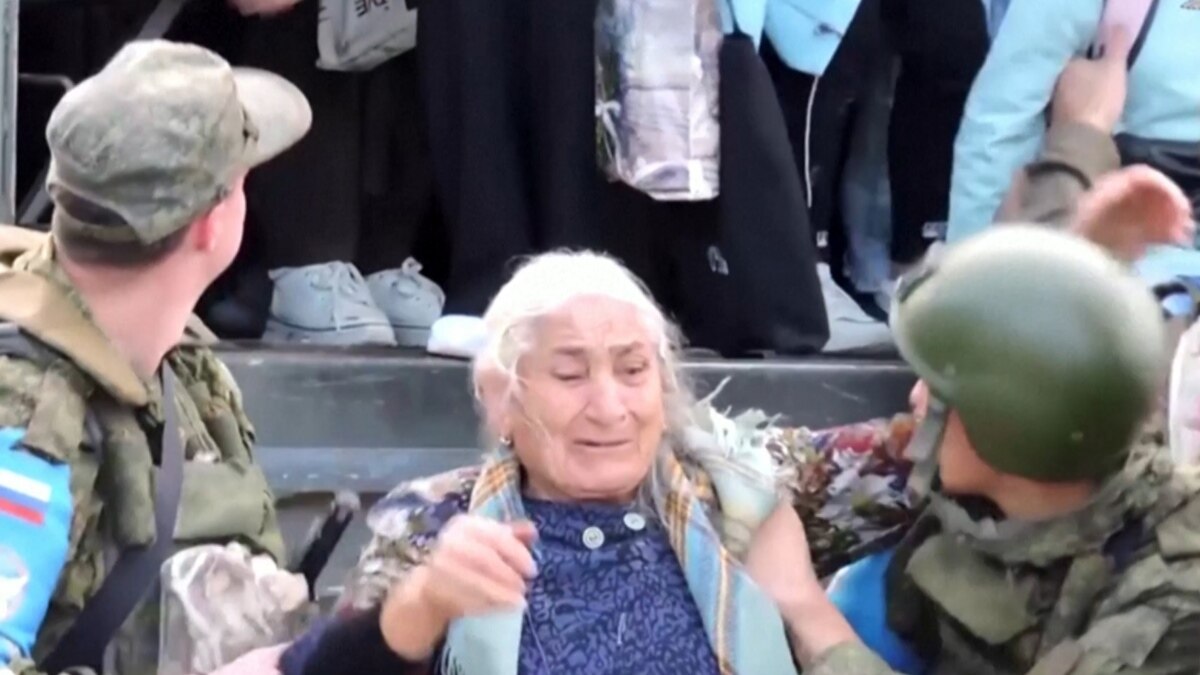
Russian peacekeepers evacuate Nagorno-Karabakh civiliansMoscow said that over 2,000 people, including 1,049 children, have been evacuatedImage: Russian Defence Ministry/TASS/IMAGO

Russian peacekeepers said they evacuated more than 2,000 civilians including over 1,000 children from the “most dangerous” areas in Nagorno-Karabakh, a day after Azerbaijan launched a military operation in the disputed region.

“The Russian peacekeeping contingent is continuing to evacuate the civilian population of Nagorno-Karabakh from the most dangerous areas,” the Russian Defense Ministry said in a statement.

Earlier, Armenian Foreign Ministry called on Russian peacekeepers stationed in Nagorno-Karabakh to “take clear and unequivocal steps to stop” the fighting.

https://p.dw.com/p/4WaGDSkip next section Pope urges all sides to ‘silence their weapons’

09/20/2023September 20, 2023

Pope Francis called for all sides to “silence their weapons” in the breakaway Nagorno-Karabakh region of Azerbaijan.

“I address my appeal to all parties involved and to the international community to silence their weapons and make every effort to find peaceful solutions for the good of the people and respect for human dignity,” the 86-year-old head of the Catholic Church told his weekly audience.

Since Azerbaijan began its military operation in Nagorno-Karabakh on Tuesday, the US, Russia, the EU and the United Nations have called on the conflicting parties to immediately end hostilities.

https://p.dw.com/p/4WaGmSkip next section US joint exercise in Armenia to end as planned

09/20/2023September 20, 2023

US soldiers will complete a joint military exercise with Armenian forces in Armenia on Wednesday as planned, and it was not affected by the launch of a major military operation by neighbouring Azerbaijan, a US military spokesperson said.

The spokesperson said there had been no change to the 10-day Eagle Partner 2023 exercise involving 85 US soldiers and 175 Armenians, despite Azerbaijan’s launch of what it called an “anti-terrorist” operation in the Nagorno-Karabakh region on Tuesday.

“We were aware that they were conducting operations but we didn’t assess there to be any risk to our soldiers at the time and so they remained for the duration of the exercise,” the spokesperson said.

https://p.dw.com/p/4WaEvSkip next section Former official warns of ‘ethnic cleansing’ in Nagorno-Karabakh

09/20/2023September 20, 2023
Damaged cars and buildings after shelling in StepanakertDamage in a residential area after a military strike on Stepanakert in Nagorno-KarabakhImage: Oldhike/TASS/dpa/picture alliance

A former top official in Nagorno-Karabakh’s ethnic Armenian administration said that close to 100 people had been killed and hundreds more injured in the breakaway region after Azerbaijan started what he cast as a “big war.”

“This is a big war  Azerbaijan has started a full operation,” Ruben Vardanyan, former head of the breakaway region’s government, told Reuters from Karabakh.

“They (Baku) are basically saying to us that we need to leave, not stay here, or accept that this is a part of Azerbaijan  — this is basically a typical ethnical cleansing operation and a war with a lot of civilians now being killed,” he said.

Meanwhile, authorities in Stepanakert, the main city of Nagorno-Karabakh, urged residents not to flee. “At this time there is no need to move, we urge you to follow safety rules and stay in basements and bomb shelters,” the mayor’s office said in a statement, pointing to signs of “panic” among locals.

Azerbaijan rejects accusations that its aim is to ethnically cleanse Nagorno-Karabakh and says it will protect the rights of the area’s ethnic Armenian civilians under its own constitution. 

Azerbaijan’s government says it is determined however to remove the breakaway region’s political and military structures.

https://p.dw.com/p/4WaC2Skip next section UN chief calls for ‘immediate end’ to fighting in Nagorno-Karabakh

09/20/2023September 20, 2023
People in a shelter in Stepanakert, Nagorno-KarabakhFamilies in a shelter during the shelling of Stepanakert in Nagorno-KarabakhImage: Siranush Sargsyan/AP/picture alliance

UN Secretary-General Antonio Guterres called for an “immediate end to the fighting” in Nagorno-Karabakh, where Azerbaijan has launched a military operation against separatist forces.

“The Secretary-General calls in the strongest terms for an immediate end to the fighting, de-escalation, and stricter observance of the 2020 ceasefire and principles of international humanitarian law,” said Guterres’ spokesperson Stephane Dujarric.

France on Tuesday called for the UN Security Council to meet urgently on the crisis, which came just as world leaders gathered in New York for the annual United Nation’s General Assembly.

https://p.dw.com/p/4Wa4P


Categories
Selected Articles

Nagorno-Karabakh: Azerbaijan’s Aliyev says operation over – DW – 09/20/2023


Published 09/20/2023Published September 20, 2023last updated 09/20/2023last updated September 20, 2023

Azerbaijan’s president said in a TV address that the military operation was over, and that separatist fighters had accepted demands that they disarm and depart the region. He also seemd to offer Armenia an olive branch.

Russian soldiers help people in the back of an army truck; military helicopters are in the distanceRussian peacekeepers have been evacuating thousands of civilians from Nagorno-KarabakhImage: Russian Defence Ministry/TASS/IMAGOSkip next section What you need to know

  • Ilham Aliyev declares military intervention over, says Azerbaijan’s sovereignty restored
  • Aliyev also said he valued Armenia not having intervened in the operation, and that this was a good sign for peace talks
  • Azerbaijan’s Defense MInistry had announced a cease-fire earlier in the day, brokered by Russia; Armenia had said it was not involved
  • Russian peacekeepers said they evacuated 2,000 civilians in Nagorno-Karabakh, with crowds seen waiting at the airport
Skip next section Armenia accuses Azerbaijan of firing on border positions

09/20/2023September 20, 2023

Armenia’s Ministry of Defense has accused Azerbaijan’s armed forces of firing on some of its army outposts near the town of Sotk, situated around 140 kilometers (80 miles) from Karabakh.

“Azerbaijani army units fired light weapons on the Armenian combat outposts near Sotk”, the Armenian Defense Ministry posted on social media platform X, formerly known as Twitter.

The reports come after Azerbaijani President Ilham Aliyev declared the end of the military operation in Nagorno-Karabakh.

Azerbaijan has denied the claims.

https://p.dw.com/p/4WcT8Skip next section US concerned about humanitarian situation in Nagorno-Karabakh

09/20/2023September 20, 2023

The White House expressed concern over the humanitarian situation after Azerbaijan declared an end to a military operation in Armenian-controlled Nagorno-Karabakh.

“We’re obviously still watching very, very closely the worsening humanitarian situation inside Nagorno-Karabakh,” US National Security Council spokesman John Kirby told reporters.

Kirby said the situation “has been exacerbated by the hostilities perpetrated by Azerbaijan” and there were now concerns of a refugee crisis but that reports of a ceasefire were “positive.”

https://p.dw.com/p/4WcRoSkip next section Macron tells Aliyev to honor cease-fire

09/20/2023September 20, 2023

France’s presidential office said Emmanuel Macron called Azerbaijan’s President Ilham Aliyev after the military operation in Nagorno-Karabakh. 

President Macron “condemned Azerbaijan’s decision to use force … at the risk of worsening the humanitarian crisis in Nagorno-Karabakh and compromising ongoing efforts to achieve a fair and lasting peace.” 

He “stressed the need to respect” the cease-fire and “to provide guarantees on the rights and security” of people in the region “in line with international law.” 

Macron is in France at present, even amid the UN General Assembly, for the delayed state visit of King Charles III. The original appointment was postponed amid pension reform protests in France.

https://p.dw.com/p/4WcOcSkip next section Azerbaijan’s Aliyev says sovereignty ‘restored,’ declares end to operation

09/20/2023September 20, 2023

Azerbaijan’s President Ilham Aliyev gave a televised address on Wednesday evening, as a cease-fire in Nagorno-Karabakh appeared to hold. 

He said that Armenian-backed separatist forces were withdrawing and that most of their military hardware had been destroyed in a military offensive launched barely 36 hours earlier. 

“Illegal Armenian units have begun the process of withdrawal from their positions. They accepted our terms and began surrendering their arms,” Aliyev said.

Azerbaijani President Ilham Aliyev delivers a televised address to the nation in Baku, Azerbaijan, September 20, 2023.President Aliyev appeared on television saying Azerbaijan had restored its sovereignty but also trying to reassure citizens in Nagorno-KarabakhImage: Press Service of the President of Azerbaijan Ilham Alijew/REUTERS

Aliyev said Azerbaijan had regained full sovereignty in the operation, and he tried to assure residents of Nagorno-Karabakh that he wished to integrate the population and turn the region into a “paradise.” 

He said Azerbaijan had nothing against ethnic Armenians in the region, saying “they are our citizens,” but only against their “criminal” separatist leadership.

Aliyev also said that Baku valued the fact that Armenia had not sought to intervene in the military operation, instead remaining “watchful.” He said this impoved the prospects for peace talks between the two longstanding foes.

https://p.dw.com/p/4WcFsSkip next section EU’s Charles Michel speaks to Azerbaijan’s President Aliyev

09/20/2023September 20, 2023

Charles Michel, president of the European Council, said that he had spoken to Azerbaijani President Ilham Aliyev in a phone call on Wednesday morning.

Michel wrote on social media that he had spoken to Aliyev “to ensure full cease-fire and safe, dignified treatment by Azerbaijan of [Nagorno-]Karabakh Armenians.”

“Their rights and security need to be credibly guaranteed. Access needed for immediate humanitarian assistance,” he added.

Michel was writing while in New York for the ongoing UN General Assembly.

https://p.dw.com/p/4Wbo0Skip next section Azerbaijan intent on ‘peaceful reintegration’ of Armenians in Nagorno-Karabakh

09/20/2023September 20, 2023

Baku said on Wednesday that its aim was to “reintegrate” ethnic Armenians living in the Nagorno-Karabakh enclave and to normalize ties with Yerevan.

“Azerbaijan’s agenda is about peaceful reintegration of [Nagorno-]Karabakh Armenians, and Azerbaijan also supports the normalization process between Armenia and Azerbaijan,” presidential foreign policy advisor Hikmet Hajiyev said.

He also said that Azerbaijani forces would offer “safe passage” to Armenian separatist fighters as part of their agreement to disarm.

“Safe passage to appropriate assembly points will also be provided by the Azerbaijani side,” Hajiyev told journalists. “All the actions on the ground are coordinated with Russian peacekeepers.”

The presidential advisor also argued that there was no need for the UN Security Council to hold a special meeting on the conflict, saying that he believed it would be “counter-effective and detrimental” to the cease-fire.

https://p.dw.com/p/4WbjCSkip next section Pashinyan says fighting ‘greatly decreased’ after cease-fire announcement

09/20/2023September 20, 2023

Armenian Prime Minister Nikol Pashinyan said that Wednesday’s cease-fire had appeared to have resulted in a major reduction in hostilities in Nagorno-Karabakh.

“The latest information I have received from Nagorno-Karabakh is that the intensity of fighting has greatly decreased,” the prime minister said in a statement.

“We hope that the military escalation will not continue,” he added, stressing the importance of ensuring the protection of ethnic Armenians living in the enclave that Azerbaijani forces began to attack on Tuesday.

He also called on Russian peacekeeping forces to ensure the safety of Armenians there.

https://p.dw.com/p/4WbNdSkip next section Putin calls for peace in Nagorno-Karabakh

09/20/2023September 20, 2023

Russian President Vladimir Putin said he was hopeful for a peaceful solution to the outbreak of hostilities in Nagorno-Karabakh, according to comments made during a meeting with Chinese Foreign Minister Wang Yi that were shown on state television on Wednesday.

“We are in close contact with all the sides of the conflict: with authorities in Yerevan, with [separatist Nagorno-Karabakh] authorities in Stepanakert and in Baku,” Putin said.

“I hope that we can reach de-escalation and transfer a solution to this problem onto a peaceful course,” he added.

It was not clear if the comments were made before or after the announcement of the cease-fire.

https://p.dw.com/p/4Wb2oSkip next section Armenia was not involved in cease-fire, PM Pashinyan says

09/20/2023September 20, 2023

Armenian Prime Minister Nikol Pashinyan said on Wednesday shortly after the announcement of the cease-fire between Azerbaijan and the Armenian separatists in Nagorno-Karabakh, that his administration had not been involved in its implementation.

“Armenia did not participate in drafting the text of the cease-fire declaration in Nagorno-Karabakh under the mediation of Russian peacekeepers,” Pashinyan said.

He also stressed that Armenia “does not have an army” in the contested region, and had not had any forces there since August 2021.

In a TV address, the prime minister also emphasized the importance of maintaining the cease-fire.

“We hope that military escalation will not continue, because, in the current conditions, it is very important to ensure stability and stop combat actions,” Pashinyan said.

https://p.dw.com/p/4WaoFSkip next section Armenian separatists and Azerbaijan’s military reach cease-fire

09/20/2023September 20, 2023

Armenian separatist forces in Nagorno-Karabakh said they had agreed to the terms of a cease-fire proposed by Russian peacekeepers. 

It comes after the armed group suffered a series of setbacks at the hands of the Azerbaijani military. 

Azerbaijan’s Defense Ministry confirmed the cease-fire agreement, saying the Armenian separatists had agreed to “lay down their weapons, abandon combat positions and military posts and completely disarm,” while all weapons and heavy equipment were being handed over to the Azerbaijani army. 

The agreement was expected to come into effect at 1 p.m. local time (0900 UTC) and peace talks between Azerbaijani officials and the separatists are now scheduled to take place on Thursday in the Azerbaijani city of Yevlakh. 

https://p.dw.com/p/4WaU8Skip next section Russia evacuates over 2,000 civilians in Nagorno-Karabakh

09/20/2023September 20, 2023
Russian peacekeepers evacuate Nagorno-Karabakh civiliansMoscow said that over 2,000 people, including 1,049 children, have been evacuatedImage: Russian Defence Ministry/TASS/IMAGO

Russian peacekeepers said they evacuated more than 2,000 civilians including over 1,000 children from the “most dangerous” areas in Nagorno-Karabakh, a day after Azerbaijan launched a military operation in the disputed region.

“The Russian peacekeeping contingent is continuing to evacuate the civilian population of Nagorno-Karabakh from the most dangerous areas,” the Russian Defense Ministry said in a statement.

Earlier, Armenian Foreign Ministry called on Russian peacekeepers stationed in Nagorno-Karabakh to “take clear and unequivocal steps to stop” the fighting.

https://p.dw.com/p/4WaGDSkip next section Pope urges all sides to ‘silence their weapons’

09/20/2023September 20, 2023

Pope Francis called for all sides to “silence their weapons” in the breakaway Nagorno-Karabakh region of Azerbaijan.

“I address my appeal to all parties involved and to the international community to silence their weapons and make every effort to find peaceful solutions for the good of the people and respect for human dignity,” the 86-year-old head of the Catholic Church told his weekly audience.

Since Azerbaijan began its military operation in Nagorno-Karabakh on Tuesday, the US, Russia, the EU and the United Nations have called on the conflicting parties to immediately end hostilities.

https://p.dw.com/p/4WaGmSkip next section US joint exercise in Armenia to end as planned

09/20/2023September 20, 2023

US soldiers will complete a joint military exercise with Armenian forces in Armenia on Wednesday as planned, and it was not affected by the launch of a major military operation by neighbouring Azerbaijan, a US military spokesperson said.

The spokesperson said there had been no change to the 10-day Eagle Partner 2023 exercise involving 85 US soldiers and 175 Armenians, despite Azerbaijan’s launch of what it called an “anti-terrorist” operation in the Nagorno-Karabakh region on Tuesday.

“We were aware that they were conducting operations but we didn’t assess there to be any risk to our soldiers at the time and so they remained for the duration of the exercise,” the spokesperson said.

https://p.dw.com/p/4WaEvSkip next section Former official warns of ‘ethnic cleansing’ in Nagorno-Karabakh

09/20/2023September 20, 2023
Damaged cars and buildings after shelling in StepanakertDamage in a residential area after a military strike on Stepanakert in Nagorno-KarabakhImage: Oldhike/TASS/dpa/picture alliance

A former top official in Nagorno-Karabakh’s ethnic Armenian administration said that close to 100 people had been killed and hundreds more injured in the breakaway region after Azerbaijan started what he cast as a “big war.”

“This is a big war  Azerbaijan has started a full operation,” Ruben Vardanyan, former head of the breakaway region’s government, told Reuters from Karabakh.

“They (Baku) are basically saying to us that we need to leave, not stay here, or accept that this is a part of Azerbaijan  — this is basically a typical ethnical cleansing operation and a war with a lot of civilians now being killed,” he said.

Meanwhile, authorities in Stepanakert, the main city of Nagorno-Karabakh, urged residents not to flee. “At this time there is no need to move, we urge you to follow safety rules and stay in basements and bomb shelters,” the mayor’s office said in a statement, pointing to signs of “panic” among locals.

Azerbaijan rejects accusations that its aim is to ethnically cleanse Nagorno-Karabakh and says it will protect the rights of the area’s ethnic Armenian civilians under its own constitution. 

Azerbaijan’s government says it is determined however to remove the breakaway region’s political and military structures.

https://p.dw.com/p/4WaC2Skip next section UN chief calls for ‘immediate end’ to fighting in Nagorno-Karabakh

09/20/2023September 20, 2023
People in a shelter in Stepanakert, Nagorno-KarabakhFamilies in a shelter during the shelling of Stepanakert in Nagorno-KarabakhImage: Siranush Sargsyan/AP/picture alliance

UN Secretary-General Antonio Guterres called for an “immediate end to the fighting” in Nagorno-Karabakh, where Azerbaijan has launched a military operation against separatist forces.

“The Secretary-General calls in the strongest terms for an immediate end to the fighting, de-escalation, and stricter observance of the 2020 ceasefire and principles of international humanitarian law,” said Guterres’ spokesperson Stephane Dujarric.

France on Tuesday called for the UN Security Council to meet urgently on the crisis, which came just as world leaders gathered in New York for the annual United Nation’s General Assembly.

https://p.dw.com/p/4Wa4P


Categories
Selected Articles

Nagorno-Karabakh: Azerbaijan meets with Armenians after ceasefire, gunshots heard


KA4BWW5W2JLHZD3NLONBQUY76E.jpg

GORIS, Armenia, Sept 21 (Reuters) – Azerbaijan began talks with ethnic Armenians from Nagorno-Karabakh on Thursday after the breakaway region was forced into a surrender that stoked calls for the resignation in Armenia of Prime Minister Nikol Pashinyan.

Photographs sent to Reuters showed officials from both sides seated at a small round table in the Azerbaijani city of Yevlakh.

Azerbaijani President Ilham Aliyev on Wednesday said his “iron fist” had consigned the idea of a separate ethnic Armenian Karabakh to history.

Karabakh Armenians said they had no choice but to accept Azerbaijan’s terms after Aliyev’s army broke through their lines in a 24-hour offensive.

The ethnic Armenian authorities in Karabakh’s main city, which Armenians call Stepanakert and Azeris call Khankendi, said there had been gunfire in the city on Thursday, and sources told Reuters they had heard shots.

The Karabakh authorities accused Azerbaijani forces of violating the ceasefire and advised residents to stay indoors.

Baku’s defence ministry said the report that its forces had attacked Khankendi was “completely false and has the purpose of disinformation”.

Under the ceasefire agreement, as outlined by Azerbaijan, breakaway Armenian forces must disband and disarm, and the region of 120,000 people will be fully integrated into Azerbaijan.

Baku said it was represented at the talks in Yevlakh by a member of parliament, Ramin Mammadov. Spokespeople for the Karabakh Armenians did not answer repeated phone calls.

Azerbaijan’s rapid victory represented the culmination of decades of struggle to regain control of Karabakh, whose ethnic Armenian population broke away in a major war in the 1990s that coincided with the collapse of the Soviet Union.

“After the surrender of the criminal junta, this source of tension, this den of poison, has already been consigned to history,” Aliyev said in an address to the nation on Wednesday night, focusing his anger on Karabakh’s leadership.

“The Armenian population of Karabakh can finally breathe a sigh of relief. I said this before, and I want to repeat it: the Armenian population of Karabakh are our citizens.”

Aliyev said “war criminals” had tried to poison the minds of Karabakh’s Armenians, who, he said, would now have their religious and cultural rights respected.

But thousands nevertheless massed at Stepanakert’s airport, while others took shelter with Russian peacekeepers.

REGION HAS TURBULENT HISTORY

Azerbaijan’s victory is yet another twist to the tumultuous history of mountainous Nagorno-Karabakh, which over the centuries has come under the sway of Persians, Turks, Russians, Ottomans and Soviets, and where Armenians and Azeris have been in conflict for more than a century.

It could also change the delicate balance of power in the South Caucasus region, a patchwork of nations and ethnicities where Russia, the United States, Turkey and Iran are jostling for influence.

Known as Artsakh by Armenians, the territory is internationally recognised as part of mainly Muslim Azerbaijan, but its ethnic Armenian inhabitants are Christians.

The ceasefire that Azerbaijan said Karabakh Armenians had agreed to would amount to the collapse of the Armenian fight to etch out a separate entity within Azerbaijan, though it was not immediately clear how much support the deal had in Karabakh.

Azerbaijan and Armenia both claimed the territory after the fall of the Russian Empire in 1917 and since the Soviet Union crumbled they have fought two wars over it.

In 2020, after decades of skirmishes, Azerbaijan – buoyed by revenues from its oil and gas exports and backed by Turkey – began a military operation that became the Second Karabakh War.

It won a resounding victory in 44 days, taking back parts of Karabakh and areas around it. Since then, it has tightened its grip.

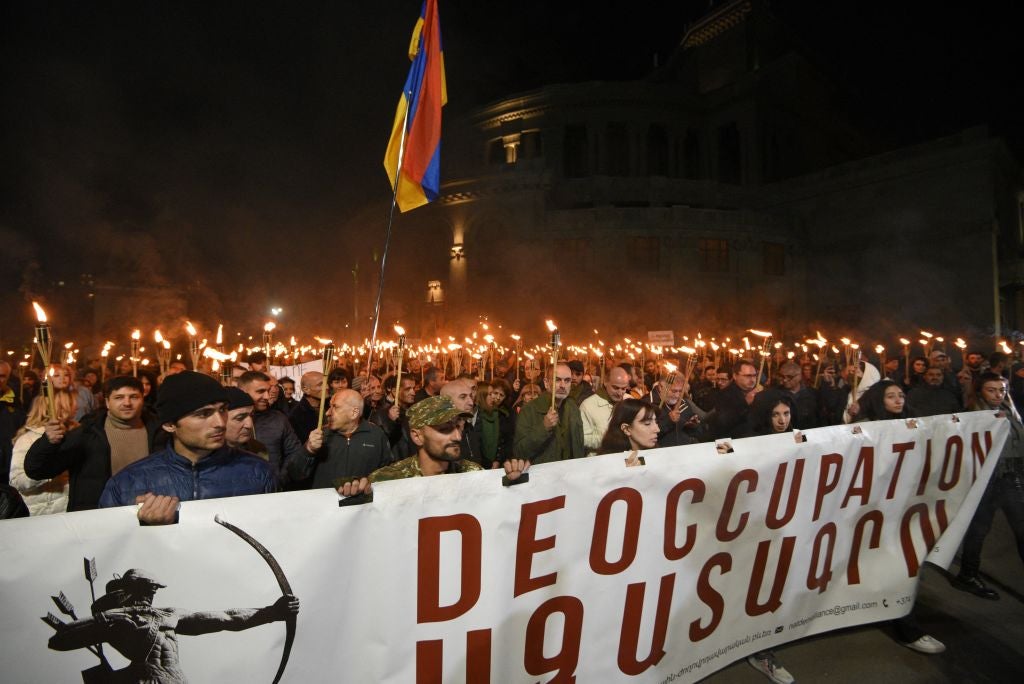
In the Armenian capital Yerevan, thousands of protesters gathered on Wednesday to denounce their government’s failure to protect Karabakh.

Many demanded the resignation of Pashinyan, who presided over defeat to Azerbaijan in 2020 but nevertheless won re-election several months later.

Samvel Sargsyan, 21, a student at the Theatre and Cinema University in Yerevan, who was born in Stepanakert, said: “We need Armenia to join up with Artsakh and fight.”

“Armenians can’t accept another country, another religion. Why should we? Why should Armenia give a part of itself to another nation?”

Reporting by Nailia Bagirova and Felix Light; Writing by Guy Faulconbridge; Editing by Mark Trevelyan

Our Standards: The Thomson Reuters Trust Principles.


Categories
Selected Articles

Azerbaijan’s rep in talks with Karabakh Armenians arrives in Yevlakh


trend_ramin_mammadov_210923_3.jpeg

Ramin Mammadov, responsible for contacts with Armenian residents living in the Karabakh region of Azerbaijan, participates in negotiations with representatives of the Armenian minority of Karabakh in Yevlakh, according to Azerbaijan in Focus, reporting Trend.

The Armenian residents of Karabakh are represented at the talks by David Melkumyan and Sergey Martirosyan.

Representatives of the Armenian residents of Karabakh accompanied by the Russian peacekeeping contingent arrived in Yevlakh earlier this morning.

Ramin Mammadov was appointed responsible for contacts with Armenian residents living in the Karabakh region of the Republic of Azerbaijan. On March 1, in the city of Khojaly, at the headquarters of the peacekeeping contingent of the Russian Federation temporarily stationed on the territory of Azerbaijan, the parliamentarian met with representatives of Armenians living in the Karabakh region of the Republic of Azerbaijan.

Following the meeting held on March 1 in the city of Khojaly, and the invitation presented on March 13, as proposed by the Presidential Administration of the Republic of Azerbaijan once again, the meeting with the representatives of the Armenian residents living in the Karabakh region of Azerbaijan to discuss the reintegration issues, based on the Constitution of the Republic of Azerbaijan and its laws, is being held on September 21, 2023, in Yevlakh.

Meanwhile, in order to ensure the provisions of the Trilateral Statement, to stop large-scale provocations in the Karabakh economic region, to disarm and withdraw formations of the Armenian armed forces from the territories of Azerbaijan, to neutralize their military infrastructure, to ensure the safety of the peaceful population returning to the territories liberated from occupation, civil servants involved in construction and reconstruction works, and our military personnel, as well as to restore the constitutional order of the Republic of Azerbaijan, anti-terrorist measures have been launched in the region.

Taking into account the appeal of the representatives of the Armenian population of Karabakh through the Russian peacekeeping contingent, on September 20, 2023, at 13:00 (GMT+4), an agreement was reached on the cessation of local anti-terrorist activities under the following conditions: Armenian armed forces formations, illegal Armenian armed formations located in Azerbaijan’s Karabakh region, lay down their weapons, leave their combat positions and military posts, and completely disarm, Armenian armed forces formations leave the territory of Azerbaijan, illegal Armenian armed formations are disbanded.


Categories
Selected Articles

Why Armenia may be the next target for Russian aggression


GettyImages-1244639436.jpg?auto=webp

The small but mighty nation of Armenia is in an interesting geopolitical neighborhood. On its western border is Turkey, a NATO ally but longtime enemy. To its east is another enemy, Azerbaijan, with which Armenia just fought over the disputed Nagorno-Karabakh region, claimed by both countries.

In the north is Georgia which is in a never ending war of words and spies (and sometimes actual wars) with Russia. Both Georgia and Armenia were part of the Soviet Union, but even when Russia invaded Georgia in 2008, support for Russia in Armenia was high.

To Armenia south is Iran, which, for the moment, is friendly to Russia-aligned Armenia. But in late September 2023, Armenia will host the United States for a joint military exercise. The move is far more threatening to Russia, which hosts Russian military forces as part of its Collective Security Treaty Organization (CSTO) membership. The exercises are the latest in a split between Russia and Armenia, which could permanently break their relations – or worse.

Armenia and Russia have retained close relations since the fall of the Soviet Union in 1991. Armenia joined Russia in the Commonwealth of Independent States, and joined the economic military and mutual aid collaboration of the CSTO in 1997. But since Prime Minister Nikol Pashinyan was elected to lead Armenia in 2018, the country has been slowly breaking away from Russia’s sphere of influence.

When fighting between Armenia and Azerbaijan broke out over the Nagorno-Karabakh region once again in 2020, Russian President Vladimir Putin didn’t immediately intervene, cooling relations between the two even more. Pashinyan went further in September 2023.

“Moscow has been unable to deliver and is in the process of winding down its role in the wider South Caucasus region,” Pashinyan said. “The Russian Federation cannot meet Armenia’s security needs. This example should demonstrate to us that dependence on just one partner in security matters is a strategic mistake.”

The Prime Minister’s words come after Armenia announced it sent the first lady of the country to deliver humanitarian aid to Ukraine. It has also begun to further distance itself from the Russia-led CSTO. The military drills are just Armenia’s latest effort at realigning itself with the West.

Kremlin spokesperson Dmitry Peskov told reporters that the drills are “cause for concern” and Moscow will “monitor the situation.”

Armenia now finds itself in a Ukraine-like situation. Tired of dealing with Russian hegemony, which has caused a lot of economic hardships in Armenia, the Armenian government is beginning to look further and further West toward the U.S. and EU.

But Russia has built up a lot of armed forces inside Armenia. Even worse, Russians fleeing the war in Ukraine have moved to Armenia in droves, meaning Moscow has the ability to hide its own people among the refugees there, a potential hidden “fifth column” like the tactic used to seize Crimea.

Enemies on three borders, a country potentially filled with pro-Russian sympathizers and an ever-worsening lack of external will to keep Armenia independent could mean Armenia loses its independence entirely. It could be one more former Soviet republic absorbed by Putin’s dream of rebuilding the USSR.


Categories
Selected Articles

“Those who cooperate with Georgia’s former attorney general risk being sanctioned as well” – US State Department


US State Department on sanctions against Partskhaladze

As the US State Department explained, legal entities and individuals who will carry out any transactions or deals with sanctioned former Prosecutor General of Georgia Otar Partskhaladze will also be subject to sanctions. The State Department’s statement is quoted by the Georgian TV station Formula.

In a letter published by Formula, the State Department expresses concern over the decision of the National Bank of Georgia not to follow the sanctions imposed against Otar Partskhaladze.

“On September 14, the United States imposed sanctions against Otar Partskhaladze, a Georgian-Russian oligarch who collaborated with the Russian FSB to influence Georgian society and politics in Russia’s interests. The sanctions against him were imposed under Decree No. 14024, which imposes sanctions on specific, damaging activities of the government of the Russian Federation.

We regret the decision of the National Bank of Georgia. Individuals and entities that conduct any transactions with Partskhaladze or other persons subject to restrictions under our Russia-related sanctions also expose themselves to the risk of sanctions.

Georgia’s banking system has been one of the best achievements in the democratic history of this country. An independent national bank is the cornerstone of any country’s healthy economy,” the US State Department said in the letter.


On September 14, the United States imposed sanctions against Otar Partskhaladze. This is related to his business activities and cooperation with the Russian FSB. Before the official announcement of the decision, the media reported that a “Georgian-Russian oligarch” was among those subject to sanctions.

According to the US State Department, the Russian Federal Security Service (FSB) worked with Otar Partskhaladze to influence Georgian society and politics in favor of Russia.

In addition, the U.S. State Department statement said that in addition to Partskhaladze, sanctions were imposed on Russian intelligence officer Alexander Onishchenko, who allegedly helped “his accomplice Partskhaladze obtain a Russian passport and possibly Russian citizenship.”

On September 18, it became known that the National Bank of Georgia restricted former Prosecutor General and under U.S. sanctions Otar Partskhaladze’s access to bank assets and financial transactions. All his accounts have been frozen.

As the National Bank explained, the sanctioned person is restricted both in the disposal of funds and in the ability to conduct all types of financial transactions.

In addition, on the evening of September 20, the Ministry of Justice of Georgia published a statement saying that the agency considers it appropriate to deprive former Prosecutor General Otar Partskhaladze of Georgian citizenship. The State Services Management Agency has already sent the report to the President of Georgia.


Categories
Selected Articles

Nagorno-Karabakh tension – CNN


Nagorno-Karabakh tension  CNN

Categories
Selected Articles

Talks Have Opened on the Future of Nagorno-Karabakh as Azerbaijan Claims Full Control of the Region – U.S. News & World Report


Talks Have Opened on the Future of Nagorno-Karabakh as Azerbaijan Claims Full Control of the Region  U.S. News & World Report

Categories
Selected Articles

Cease-Fire Called In Nagorno-Karabakh As Ethnic Armenians Agree To Discuss ‘Reintegration’ Into Azerbaijan


01000000-0aff-0242-9155-08dbba041658_cx1

Link has been copied to clipboard


Categories
Selected Articles

Hajiyev: Illegal Armenian armed forces in Karabakh were challenge to regional security


8d075899-ad4a-37d3-9294-7dda36d94c79_824

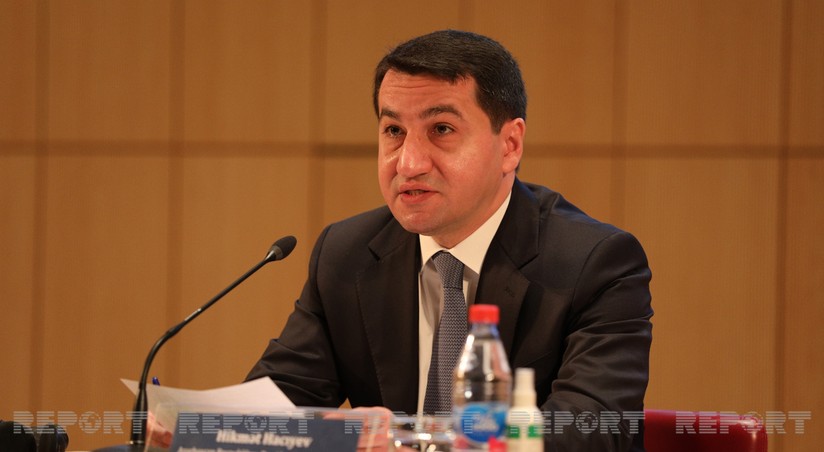
The illegal presence of Armenian armed forces in Karabakh was a serious challenge to regional peace and security, and Azerbaijan had no choice but to take anti-terrorism measures, Assistant to the President of Azerbaijan – Head of the Foreign Policy Affairs Department of the Presidential Administration Hikmet Hajiyev said in an interview with BBC News, Report informs.

“Azerbaijan has always said that illegal presence of the armed forces of the Republic of Armenia continues to remain a major challenge to the regional peace and security. And regardless of this fact the Armenian side refused to withdraw its troops from the sovereign territories of Azerbaijan stipulated by the trilateral statement of November 10, 2020. But Armenia continued military build-up,” he noted.

“Therefore, Azerbaijan was obliged, it’s not our choice, to take counter-terrorism actions and measures on the ground that are local and limited by nature, we are not talking about wide military operation in this case,” he added.