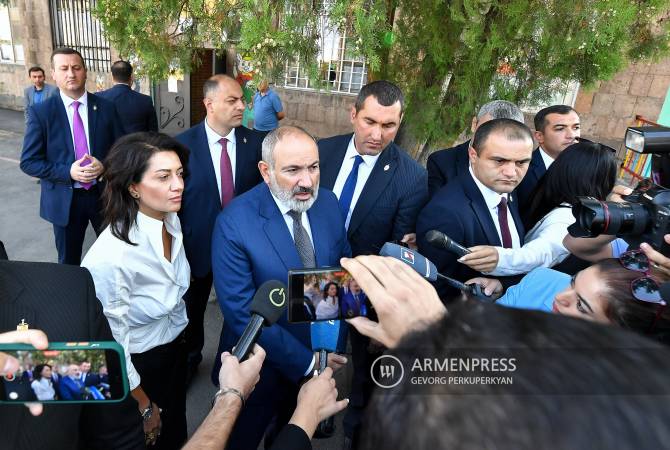
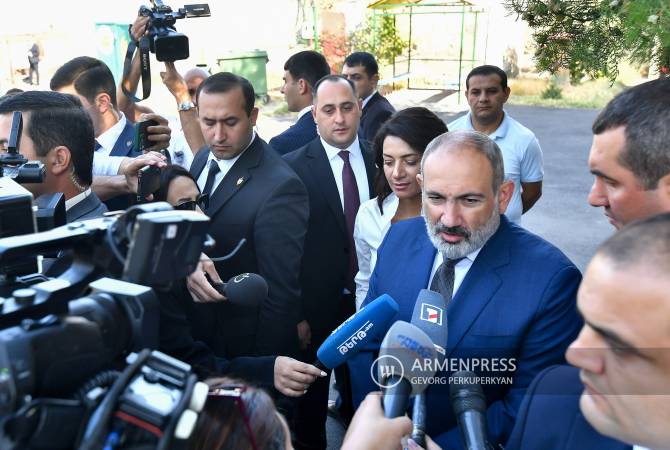
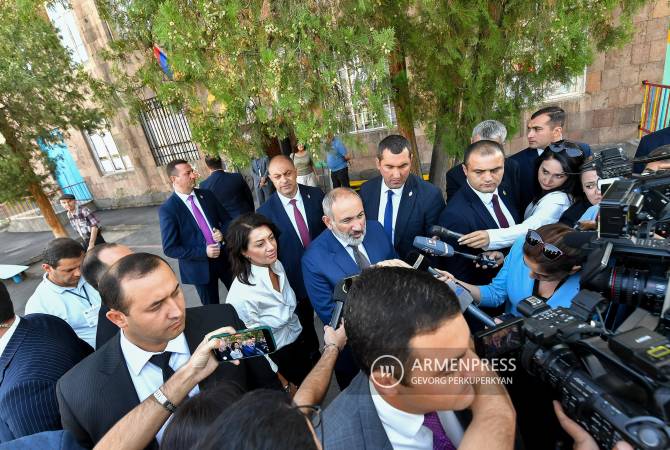
Unlike her husband, Nadine Menendez has lived a mainly private life. Investigators appear focused on the possibility that she or the senator received undisclosed gifts.
 JOSSICA - jossica.com
FBI: Did Baku play any role in the new investigation of Senator Menendez? It smells like it.
#FBI #Baku #SenatorMenendez
FBI: Did Baku play any role in the new investigation of Senator Menendez? It smells like it. – Google Search https://t.co/qc9PtvoHUy
South Caucasus News #SouthCaucasus #News #SouthCaucasusNews: – #FBI #SenatorMenendez #Armenian #NadineArslanian… pic.twitter.com/tbawNGjHSw— Michael Novakhov (@mikenov) September 18, 2023
South Caucasus News #SouthCaucasus #News #SouthCaucasusNews:
–#FBI #SenatorMenendez #Armenian #NadineArslanian #AzerbaijaniIntelligenceService
–
FBI: Are Senator Menendez and his new Armenian wife Nadine Arslanian in the crosshairs of the Azerbaijani Intelligence Service? -… pic.twitter.com/BnuFn19L3c— Michael Novakhov (@mikenov) September 18, 2023
Lying Journo Elnur Enveroglu and his bunch of lies …

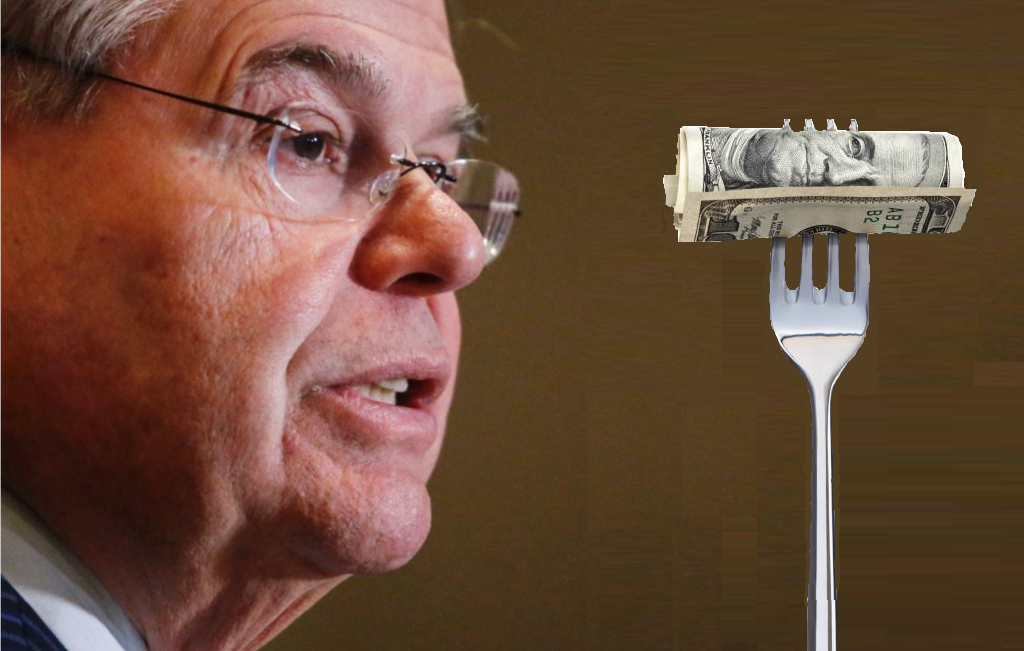
In order to get updated of the latest situation in Armenia and Garabagh, where the separatist forces are still located, it is no longer necessary to search for the Armenian press. The Senate of the United States of America has almost become the daily newspaper of Armenia – giving fresh tiding; whatever the situation is inside, the same atmosphere exists in the Senate. There is only one issue that the voices from the Senate are more excited and more aggressive than those from Yerevan. For example, Senator Robert or simply Bob Menendez, a 69-year-old American politician, is so excited every time he stands in front of the tribune talking about Armenia that he almost drowns in his own sweat. Bob is so pro-Armenian that he would almost give the whole world a gift for Armenia. But Menendez has one thing missing; it’s that he himself can’t understand anything from what he’s talking about. Indeed, the old senate has become so emotional that sometimes he believes the lies he tells himself.
Menendez’s commitment to Armenians is as strong as Caroline Cox’s in the British Parliament. In other words, Armenian blood was injected into the blood of both old armenophiles. The only difference between the two characters is that Menendez is a bit greedy, that is, avid for money. Bob Menendez also had an interesting story in 2015 about his corruption issue in the court just because of being apt to receive bribe. The senator, who is easily lured by money or some gifts, repeatedly poked his nose into an issue he did not know deeply due to the money invested in his account from the Armenian lobbies. The fact that the senator, who has never put a step in Garabagh and has a simple understanding of the Caucasus region, presented false images to the Foreign Relations Committee just for the sake of his pre-paid work, is a clear proof of all that has been said. Although Menendez is a lawyer, he does not know the secrets of his position. Of course, without knowing the region, how can making claims from thousands of kilometers away help lobbyists pouring millions into the pockets of the corruptionists like Menendez? He just wins, because his mission is just to care about his account but not Armenians even if he vehemently shouts out words of sanctions. Who cares though? Because even though he doesn’t know anything about Garabagh, he still knows this business very well.
Thus, the situation in the United States does not directly express Washington’s position towards Azerbaijan. On the contrary, the United States tries to find a way out of such a situation at many points. First of all, the United States will never want to lose Azerbaijan, which is one of the most reliable allies of the West, and cannot directly pressure Azerbaijan even on the most critical issues related to Armenia. The final situation was actually a momentary sabotage plan from the armenianized US Senate aimed at the South Caucasus. Currently, the situation in the US Senate is complicated. Because Yerevan and the forces working to feed the separatists have put such a leash on the neck of people like Menendez that neither the US State Department nor the White House can speak out.
However, unlike them, Azerbaijan can always say its word. Because the international laws written by the West are supreme for Azerbaijan, even if they are worth the bribes they receive. No matter how hard people like Robert Menendez try to impose tough sanctions against Azerbaijan and its leadership, in the end, Azerbaijan gets what it wants. And as it happened… Although the Aghdam-Khankendi road was blocked by the separatists for a long time, in the end it was not what they wanted, but what Azerbaijan wanted.
First, they wanted to create an illusion, ostensibly there was a starvation and humanitarian crisis in Khankendi. All Armenian and pro-Armenian media outlets circulated the fabricated pictures and a term of “genocide”, the one which Menendez tried to fake at the tribune. Besides, the local residents said on social networks that the leaders of the separatist gang took away products brought by the ICRC or the Russian Peacekeepers to aggravate the situation further. However, it did not work and first, the separatists were obliged to step back and release extra meat products in Khankendi on August 20. According to the so-called statement, on September 17 they were obliged to step back a second time against internal pressure. The regime accepts that it is not always possible to provide the daily 200 grams of bread available to a citizen under the coupon system.
In general, there is only one option for separatist and lobbyists in Garabagh, Yerevan, or the Senate: to take action according to the demands and conditions of Azerbaijan. In fact, all these processes could have been resolved a long time ago. It is a fact that earlier, an agreement on the simultaneous opening of these was reached on September 1. The separatists expediently delayed this process.
Despite all their fruitless efforts, Azerbaijan’s principled position once again prevailed.
Now there is a priority for them – to end the resistance, not to rely on empty words from the US Senate and, finally, to take steps for reintegration. Because this is the only way out for the Armenian minority in Garabagh.
—
Elnur Enveroglu is AzerNews’ deputy editor-in-chief, follow him on @ElnurMammadli1
Follow us on Twitter @AzerNewsAz
#ElnurEnveroglu
Unleashed puppy Elnur Enveroglu squeals again, while pooping and producing his next bunch of lies …https://t.co/hcflWVkVzu | https://t.co/6RNDrLHCin… South Caucasus News | #SouthCaucasus #News | #SouthCaucasusNews Armenia – #Armenia, Azerbaijan -… pic.twitter.com/rVEVy7Dxa6— Michael Novakhov (@mikenov) September 17, 2023
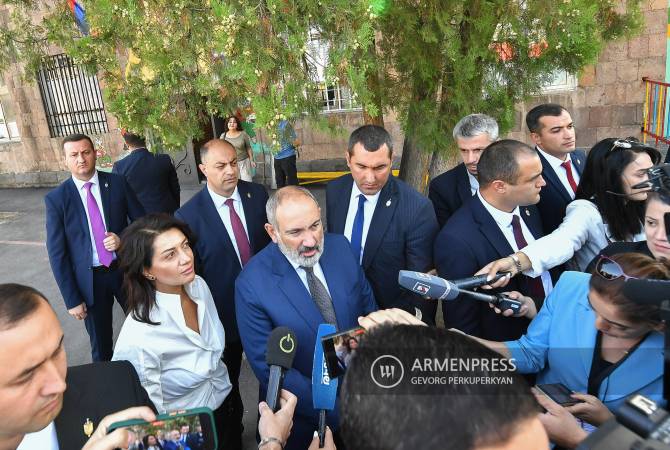 11:33, 17 September 2023
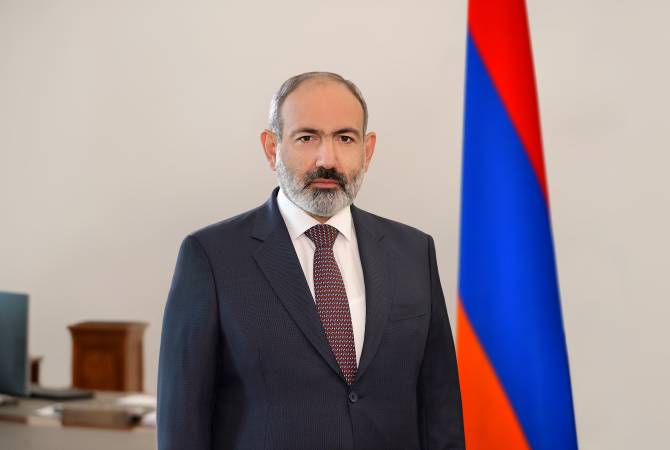
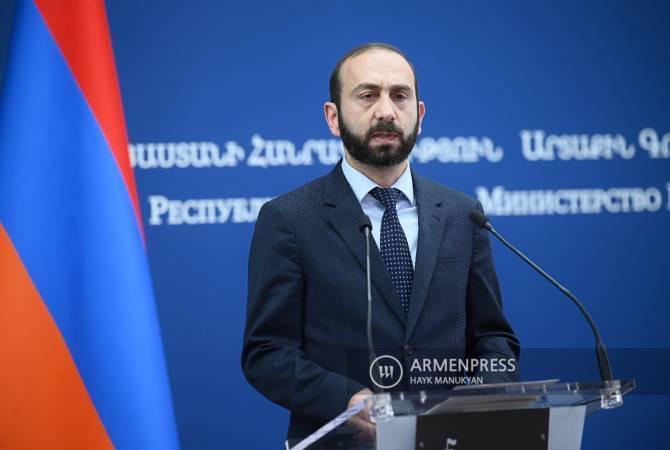
YEREVAN, SEPTEMBER 17, ARMENPRESS. Prime Minister Nikol Pashinyan on Sunday said he was unsure that Azerbaijan actually has the political will to start direct dialogue with Stepanakert despite Baku’s public statements.


Georgia’s Weightlifting Olympic Champion, European Champion and record-breaking athlete Lasha Talakhadze became a seven-time winner of the World Championship on Sunday, after winning the event in Saudi Arabia’s capital city of Riyadh, Azernews reports, citing Agenda.
Talakhadze has claimed three gold medals in the +109 kg weight category after lifting 220 kg in snatch, 253 kg in clean and jerk, and 473 kg in total.
The Georgian athlete also became a seven-time European Champion in April in Yerevan.
Talakhadze was named the 2022 European Weightlifter of the Year, making him the first Georgian athlete to earn the honour.
—
Follow us on Twitter @AzerNewsAz

Work is underway to organize a meeting between official representatives of Artsakh and Azerbaijan, says the message spread by the Artsakh Information Headquarters.
“We also inform you that the mediators are working to organize a meeting with the official representatives of Artsakh and Azerbaijan in order to alleviate the tense humanitarian and security situation in the Republic.”
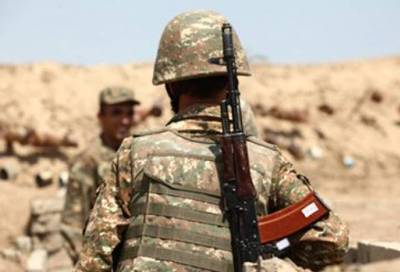
The Azerbaijani Defense Ministry has prepared a video summary of the events that took place throughout the week.
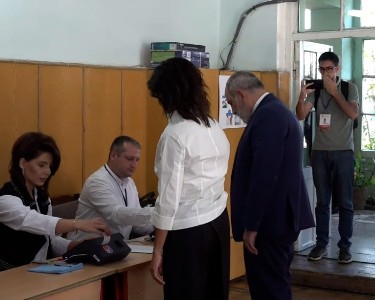
 image/jpeg 1119637.jpg image/jpeg 1119638.jpg image/jpeg 1119644.jpg image/jpeg 1119682.jpg image/jpeg 1119683.jpg image/jpeg 1119684.jpg image/jpeg 1119687.jpg image/jpeg 1119688.jpg image/jpeg 1119706.jpg image/jpeg 1119716.jpg image/jpeg 1119726.jpg image/jpeg 1119729.jpg

Since 2012, the small Middle Eastern country of Azerbaijan has invited hundreds of state lawmakers from Arizona and across the United States to take all-expenses paid trips halfway around the world to see the country firsthand.
The Azerbaijan government has paid for at least 20 trips for Arizona lawmakers, not to mention their guests or spouses, according to a review of annual Arizona financial disclosure statements and interviews with lawmakers. Several lawmakers have made repeat visits.
As part of its long-term strategy to beef up its lobbying forces in the U.S. and gain favor with American politicians, the government of Azerbaijan is betting on state legislatures as the breeding grounds for future members of Congress, and casting a net all the way to the Arizona Legislature and other American statehouses.
Another key benefit for the Azerbaijan government is the positive publicity associated with having American lawmakers tour the country and return home with praise for the ruling Azerbaijani regime, which has come under pressure at home and internationally for human rights violations.
Republican Sen. Don Shooter of Yuma, who has visited the country three times – in 2013, 2014 and in May of this year – said Azerbaijan is seeking long-term rewards in its quest to make American friends.
“You’ve got to commend them – their strategy is a pretty sound one,” Shooter said. “They ask state senators and representatives to come over and get familiar with their country and culture, knowing that in general, that’s the ranks for future Congress people.”
The 10-day trips are promoted as educational and relationship-building outings and economic development opportunities – a chance for state lawmakers to get to know America’s allies in a strategically important region. The Azerbaijani government pays for the trips, and coordinates with Turkish-American nonprofits to invite lawmakers to Azerbaijan, often with side trips to Turkey.
Click the link or the photo below for an interactive tour of the lawmakers’ trip to Azerbaijan in 2012, complete with museums, fancy restaurants and historical sites.

It’s easy to see why Arizona lawmakers would want to take advantage of a free trip to the oil-rich, former Soviet country.
Azerbaijan is a uniquely secular majority Muslim country of about 9.6 million people. It’s ostensibly a democratic republic, and bills itself as a model for religious tolerance, cultural acceptance and even women’s rights in the region. The country has diplomatic and military relations with Israel, and has been a strong ally of the U.S. in the war on terror. Its centuries-old architecture and cosmopolitan capital are among the country’s magnets for American and European tourists.
Friendly relations with U.S. and Israel
But the country’s friendly relations with the U.S. and Israel ensure hostile relations with its neighbors to the north and south, Russia and Iran. To the west, cutting through and bifurcating Azerbaijan, is its sworn enemy, Armenia. Azerbaijanis say their only respite lies to the east, in the Caspian Sea.
So it’s no surprise that the country has a keen interest in gaining favor of American politicians.
To that end, the country flies state lawmakers halfway around the world and treats them to accommodations in five-star hotels. Lawmakers receive bus tours of the countryside, including stops to see waterfalls, museums, Azerbaijani rug-makers and wine producers. They dine in posh restaurants with the country’s ruling class and corporate elite. On at least one tour, lawmakers stuffed their suitcases full of gifts, all courtesy of the Azerbaijani government and the state oil company, SOCAR.
The trips and gifts are offered free, with no strings attached. But after each visit, Azerbaijani officials have asked Arizona lawmakers to pass resolutions celebrating their newfound friends and extolling the country’s virtues.
Lawmakers have repeatedly obliged.
Since first visiting the country in 2012, Arizona legislators have passed three resolutions and read one official statement on the Senate floor honoring the country.
In that respect, Arizona lawmakers are not unique.
Lawmakers in at least 33 states have introduced similar, often identical, resolutions in the past few years. Many of the resolutions came after lawmakers were invited on similar trips to Azerbaijan.
The Arizona resolutions praise the country as having “a long-standing tradition of peaceful coexistence between various ethnic and religious communities.”
But the resolutions don’t mention Azerbaijan’s objectionable record on human, political and religious rights, allegations of stolen elections, or accusations of buying the favor of European officials through what critics call “caviar diplomacy.”
And by passing the resolutions at the behest of Azerbaijani officials, lawmakers are putting Arizona in the middle of an international war.
The resolutions are broadcast and printed in Azerbaijani state media as propaganda in the public relations battle between Azerbaijan and Armenia over a longstanding international land dispute that brought the countries to war in the 1990s, a war that technically continues today, despite a shaky cease-fire agreement.
Fun, but not a vacation
Lawmakers say the trips are a chance to meet America’s allies in a strategically important region.
And even though they have no say in U.S.-foreign policy, Arizona lawmakers who have gone on tours of Azerbaijan say their time was well spent, and they have no regrets.
An Arizona nonprofit called The Foundation for Inter-Cultural Dialogue frequently invited lawmakers on the trips on behalf of the Azerbaijani government. The foundation has close ties to a religious and social movement led by exiled Turkish Islamic scholar and imam Fethullah Gülen, whose followers are active in U.S. and international educational organizations. They have opened more than 100 charter schools throughout the United States, including several in Arizona.
The trips also included side-excursions to Turkey, where Arizona lawmakers met with followers of the Gülen Movement and toured schools affiliated with the movement.
Lawmakers said they were unaware of the total cost of the trip, but travel agents say it would easily cost thousands of dollars per person. A roundtrip ticket during the spring costs roughly $1,400, and 10-days in a five-star hotel would have easily cost another $1,500. Flights from Azerbaijan to Turkey would cost roughly $500. And that doesn’t include in-country luxury bus tours, meals, concert and museum tickets and other entertainment, or gifts.
Arizona law prohibits lawmakers from accepting gifts from lobbyists. But the state has no laws specifically banning lawmakers from accepting gifts from a foreign government, and because Azerbaijan isn’t registered as a lobbying entity in Arizona, the Secretary of State’s Office said there is no conflict in lawmakers accepting the free trips.
In fact, Secretary of State Michele Reagan, who made gift bans one of her top issues while she was in the Legislature, accepted a free trip to Azerbaijan while she was still a state senator in 2013.
Republican Sen. Adam Driggs of Phoenix was part of the first group of lawmakers to fly to the country in 2012.
After having met some of the nonprofit’s leaders at a function on the Ninth Floor, Driggs received an email inviting him to a “big event” in Azerbaijan called Eurovision.
Driggs described the concert as “the European version of ‘American Idol’, except it’s like 40 countries competing against each other and they all put up one singer or musical group.”
The invitation said the Azerbaijani government had reached out to the nonprofit looking for contacts to invite on a 10-day all-expenses paid trip to Azerbaijan and Turkey, courtesy of the Azerbaijani government. Already being familiar with the nonprofit, and having checked the law for any potential problems, Driggs and his wife decided to go.
The flight to Azerbaijan included a layover in Atlanta, where Driggs got the first glimpse of the scope of the event.
“When we landed in Atlanta, there were all these delegations from all over the states. Some of them were elected officials, and some of them were normal people. But there were all these Americans, and we were all going to Eurovision. And none of us had ever heard of Eurovision before,” he said.
But despite the fun of the concert, Driggs said the trip wasn’t a “vacation.” It was more like a work trip because he spent much of his time researching the country and meeting with elected officials there.
“If I got a free vacation, I would want to go to Disneyland, or I would want to go to Hawaii and take the golf clubs and lay on the beach. None of this international travel is like that, at least not that I’ve been on,” he said.
While in Azerbaijan, Driggs and the half-dozen other lawmakers on the 2012 trip received various gifts, including a miniature wall decorative Azerbaijani rug, spice sets, several bottles of wine, books, crystal plaques and hookahs.
Democratic Rep. Bruce Wheeler of Tucson, who went to Azerbaijan with a bipartisan delegation of lawmakers in 2013, said he didn’t receive any gifts on his trip, except a silk scarf that he later gave away.
And while he denounced any previous gift-giving by Azerbaijani officials, Wheeler offered a full-throated endorsement of the trips, which he said are modeled after pro-Israel lobby group AIPAC’s program to take members of Congress to Israel.
Like Israel, Azerbaijan is a U.S. ally that is surrounded by hostile neighbors. Both countries have a national interest in educating American decision-makers about their problems, he said.
And lawmakers have a responsibility to listen, Wheeler said.
“I didn’t know anything about Azerbaijan before this, except that they have a lot of oil and they were part of the Soviet Union. And now I know that they are democratic, they are secular, they have close ties to Israel, they are friends of the United States, and they’re worried about Russia and Iran. I think that’s an important lesson,” he said.
Shooter, likewise, said the trips are an important tool for state lawmakers to learn about Azerbaijan, even if lawmakers don’t actually have any authority over international affairs. During the last legislative session, he read from the Senate floor a statement honoring the 23rd anniversary of a battle in Azerbaijan’s war with Armenia.
“I really believe that we need to support them. And I certainly don’t have any influence in foreign policy or anything like that. But what I can do is things like that resolution to say, ‘We stand with you. We appreciate anybody that wants to be free and independent of tyranny,’” Shooter said.
Persecution of human rights activists
But human rights organizations say Azerbaijan is not free and the country’s leaders are becoming increasing tyrannical.
In fact, Freedom House, an independent watchdog organization dedicated to the expansion of freedom around the world, puts Azerbaijan squarely in the “not free” category.
The organization compiles an annual Freedom in the World report scoring countries on a variety of criteria, including political rights and civil liberties. On a scale from one through seven, with seven being the worst, the organization scored Azerbaijan a six in its 2015 report.
“The (Azerbaijani) government intensified its already severe persecution of human rights activists, independent journalists, and opposition figures during the year. The charges used against them included treason, tax evasion, illegal business activity, and possession of illegal drugs or weapons. Even after a raft of presidential pardons in late December, human rights groups counted more than 90 political prisoners still behind bars,” the report states.
Corruption is rampant in the country, according to the report.
What’s more, human rights in the country have been deteriorating and its ranking has been on a downhill slide for years. The downward trend continued in 2015 due to an “intensified crackdown on dissent, including the imprisonment and abuse of human rights advocates and journalists.”
But it’s not just political dissidents and reporters feeling the impact of the Azerbaijani government’s crackdown.
Religious coexistence is one of the country’s major bragging points to American lawmakers, and officials emphasize on the trips that the country accepts all faiths.
But Azerbaijan is secular to the point of restricting religious freedoms, including the basic right to assemble and worship, according to the U.S. State Department’s annual International Religious Freedom Report.
The report notes that the Azerbaijani constitution provides for religious freedom, but “laws and policies restrict religious freedom in practice, particularly for some religious minorities.”
For example, authorities must review and approve all religious literature for import or sale. The punishment for producing, importing or selling unapproved religious literature can include fines up to $8,750 or two years in jail, according to the State Department.
Religious organizations must also be licensed, and some have complained the Azerbaijani government is delaying or refusing to license their churches. Jehovah’s Witnesses report repeated raids by government officials on their meeting places.
And the country isn’t exactly a hotbed of religious diversity: Upwards of 95 percent of the population is Islamic.
Democratic Sen. Steve Farley of Tucson, who accepted trips to Azerbaijan in 2012 and 2013, said the disconnect between the official Azerbaijani rhetoric and reality became apparent on the highway from the airport in the nation’s capital, Baku. The large sound-barrier walls lining the highways couldn’t block out the view of “more poverty than they would like to show.”
Farley wanted to get a “more rounded” view of the country than the government tour guides provided. On one of his trips, without telling his hosts, he met with an activist from Amnesty International to talk about restrictions on the press, among other human rights concerns.
The country is one of the most censored in the world, according to Reporters Without Borders’ annual World Press Freedom Index. Out of 180 countries included in the report, Azerbaijan checks in at the 162nd spot for press freedom in 2015. Freedom of speech in the country has been on a steady decline since 2002, when Azerbaijan occupied the 101st slot on Reporters Without Borders’ list.
Farley said he left Azerbaijan with the impression that the country is doing a good job at providing a better quality of life for its people, “as long as the people don’t complain about it.”
“That’s a little difficult to deal with for an American, but it’s not unusual among former Soviet countries,” he added.
Perhaps most alarmingly, just a few months after lawmakers visited the country in 2013, Azerbaijani President Ilham Aliyev won re-election in what was widely derided as a sham vote.
The U.S. State Department and international election monitors said the election did not live up to international standards.
In a press statement, the department stated that the “pre-election environment was characterized by a lack of balanced media coverage of candidates, continued restrictions on fundamental freedoms of assembly and expression, and a deficient candidate registration process that, taken together, resulted in an uneven playing field for candidates. On Election Day, observers from the U.S. Embassy in Baku, like their (European) counterparts, noted serious violations of election procedures, including ballot box stuffing.”
The election and Azerbaijan’s campaign to silence critics on the Parliamentary Assembly of the Council of Europe (PACE) by inviting them on lavish trips with extravagant gifts led one European think tank to coin the term “caviar diplomacy” to describe the country’s outreach strategy.
Still, Wheeler said Azerbaijan is much more open and free than many of its neighbors, and defended the country as a fledgling democracy that is still struggling to find its way.
He noted that the country has only existed for a few decades, and said even the U.S. still has severe problems with its electoral system, pointing to “dark money” and the 2000 election when George W. Bush won, despite losing the popular vote.
Catching up with Armenia
Besides coming back with mementos like decorative rugs, spices and wine, lawmakers have been returning from Azerbaijan with official legislative resolutions drafted by the country’s consul general in Los Angeles. They praise the country and insert the Arizona Legislature into the ongoing international territory dispute between Azerbaijan and its nemesis neighbor, Armenia.
Armenians are frequently listed among the most formidable lobbying forces in U.S. politics, and in recent years, Azerbaijan has implemented a 50-state lobbying strategy to catch up.
Wheeler said Azerbaijan is clearly attempting to change the narrative pushed by the Armenian lobby.
“The second motivation for (Azerbaijan), besides Iran and Russia being threats, is the occupation of the Azerbaijan territory by Armenian and Russian troops. Because the Armenians have a strong lobby… the Azerbaijanis want to begin to counter it,” he said.
In 2009, Azerbaijan government and its state-owned oil company started hiring high-priced K Street lobbying firms to try to bring their message to the United States Congress. Since then, the small country has landed on the top-10 list of foreign entities spending to influence U.S. policy, according to The Sunlight Foundation’s analysis of U.S. Department of Justice records.
The state resolutions praise the country’s culture of religious and social tolerance. And, importantly to Azerbaijani officials, the resolutions declare Arizona’s support for the country’s “territorial integrity” in the disputed Nagorno-Karabakh region.
That territorial integrity is a sticking point for both Azerbaijanis and Armenians, who both claim the land should belong to them and who fought a bloody war over the land. The war is technically still ongoing, although a frequently-ignored cease fire has been in place since 1994.
Just a few years ago, leaders of Azerbaijan and Armenia warned that ceasefire could be in danger. Bloody conflicts occasionally still erupt in the disputed Nagorno-Karabakh region, which is technically in Azerbaijan, but residents consider it an autonomous region aligned with Armenia.
And while the pro-Azerbaijan resolutions have been sweeping statehouses nationwide, Armenian lobbying groups have been on the defensive.
Last year, Aram Hamparian, the executive director of the Armenian National Committee of America, penned an open letter to state lawmakers around the country asking them to oppose the barrage of pro-Azerbaijani resolutions.
In the letter, Hamparian stated that Azerbaijan president Ilham Aliyev “is pressuring state legislatures across our country into joining his angry and increasingly violent attacks upon his Christian Armenian neighbor.”
Pro-Azerbaijan resolutions have flown through the Arizona House and Senate unanimously, but in other states, the Azerbaijan lobby has not been so successful.
In January, Colorado pulled a pro-Azerbaijan resolution before it made it to the floor, prompting officials from the Armenian National Committee of America to thank the state for rejecting the resolutions, affirming that Colorado “is not for sale to the oil-rich and corrupt regime of Ilham Aliyev’s Azerbaijan.”
At least five other states have also killed what Armenians call “factually inaccurate” and “anti-Armenian” resolutions.
But Arizona lawmakers don’t see any problem with the resolutions.
Driggs, who sponsored a resolution honoring the country in 2013 after taking his first trip there in 2012, said he had to “tone down” the version the Azerbaijani consulate wanted him to sponsor, for fear of upsetting the Armenians.
Still, Driggs said the resolutions aren’t “real legislation,” and “had very little to do with the trip.”
a
 House Speaker Nancy Pelosi receives flowers from Armenian Prime Minister Nikol Pashinyan during a meeting in Yerevan, Armenia, in September. REUTERS
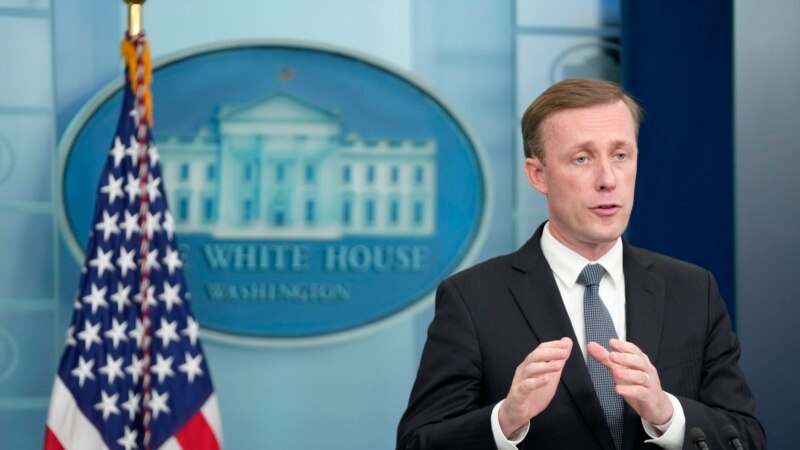
The U.S. is stepping up its diplomacy in Eurasia’s South Caucasus region following the recent clashes that killed at least 280 soldiers along the Armenia-Azerbaijan border, including National Security Advisor Jake Sullivan’s Sept. 27 meeting with Armenian and Azerbaijani foreign policy officials as well as Secretary of State Antony Blinken’s prior call with Azerbaijan’s president.

Yet while Washington’s attempt to foster peace in the region is encouraging, it is undermined by members of Congress, particularly in California, who are taking a one-sided approach that flies in the face of effective diplomacy both in values and practice.
After House Speaker Rep. Nancy Pelosi led a Democratic congressional delegation to Armenia that also included California Reps. Jackie Speier and Anna Eshoo, in addition to Rep. Frank Pallone of New Jersey, the visiting lawmakers (in addition to California’s Rep. Adam Schiff) introduced a House resolution that exclusively blamed Azerbaijan for the recent hostilities as well as the 2020 war between Armenia and Azerbaijan.
It is hardly surprising for longtime congressional advocates of Armenia to visit Yerevan in the aftermath of September’s violence. But given that soldiers died on both sides, it is a diplomatic conundrum for a high-ranking official such as Pelosi, who stands second in the line of succession should the president leave office, to only visit Armenia and to refuse to hear from Azerbaijani leaders.
A more balanced diplomatic approach to the region is long overdue. If she visited Azerbaijan and particularly Karabakh, the territory that Azerbaijan liberated in the 2020 war following three decades of Armenian occupation, Pelosi would witness the comprehensive Azerbaijani efforts to redevelop the area amid the lingering devastation of the occupation.
This desecration, which I saw with my own eyes during a recent visit to Karabakh, is typified by miles of looted homes, mosques, and cemeteries whose roofs were burnt off and whose stones were resold by Armenians in the construction business, according to the Azerbaijani officials whom I spoke with on the ground. Vandals also sold marble from gravestones and golden teeth from corpses, while the mosques were frequented by livestock rather than worshippers.
Across Karabakh, it is difficult to take a step in any direction without considering landmines — as U.N. experts estimate that there are more than 1 million explosive devices in the area, which will take 25 years and $50 billion to fully clean. Araz N. Imanov, senior advisor to Azerbaijan’s president in the Karabakh Economic Region, explained that in November 2020, when Armenians had several weeks to withdraw from Karabakh in accordance with a Russian-brokered ceasefire following their surrender in the war, they used the time to plant difficult-to-detect explosives that have complicated Azerbaijan’s redevelopment of the liberated territories and have left the Azerbaijan National Agency for Mine Action with a seemingly endless task.
What had been a lush green area with vineyards as well as thriving wheat and cotton production prior to the occupation was decimated by “ecocide,” as springs were blocked to divert water for military purposes, said Imanov, whose emotion is palpable as he discusses how he is “still trying to come to terms with what happened in Karabakh.”
Despite the obstacles, Azerbaijan continues to forge ahead with the journey of restoring the territory. A smart village (in which electronic methods and sensors collect data that is used to efficiently manage assets, resources, and services) has been constructed in Zangilan, where Karabakh’s first school in 30 years opened this past month. In Fuzuli, a new international airport is poised to serve as a gateway to the region.
In Shusha — a city known before the occupation as the “Conservatory of the Caucasus” due to its status as a significant political, economic, and cultural center in the region — Apple Pay came to the area just one week after the 2020 war, signifying the renewed openness to modern technology that promises to revitalize the region. Officials in Shusha said that the city, which Azerbaijan redeclared as its cultural capital following the victory over Armenia, has hosted 40 international conferences this year.
While the United Kingdom in August committed $1.2 million to Azerbaijan’s demining efforts in Karabakh, increased investment in the rebuilding initiative serves America’s strategic and moral interests.
From a geostrategic perspective, Azerbaijan is a crucial U.S. ally in the realm of energy security and diversification as the leader of the Southern Gas Corridor — which spans 2,200 miles across seven countries and three pipelines, representing a linchpin of aspirations to decrease Europe’s dependence on Russian natural gas. In July, the European Union signed a memorandum of understanding to more than double the supply of gas from Azerbaijan to EU countries.
Further, from a moral perspective, four U.N. resolutions affirm that Karabakh is part of Azerbaijan. Although Armenia’s supporters in Congress continue to accuse Azerbaijan of “war crimes,” international law is on Baku’s side when it comes to the rebuilding of Karabakh. U.S. policy towards Karabakh should follow accordingly.
Armenia’s sizable American diaspora population, as well as its congressional advocates in California and nationwide, will undoubtedly continue to be vocal and active. It is now incumbent upon those who understand the strategic importance of the U.S.-Azerbaijan relationship to also make their voices heard.
Simultaneously, in the foreign policy arena, the bare minimum that we should expect from high-ranking American and Californian leaders such as Nancy Pelosi is an attempt to conduct balanced diplomacy. Any one-sided efforts will do nothing but undermine peace.
Jacob Kamaras is the editor and publisher of the San Diego Jewish World, the former editor in chief of the Jewish News Syndicate, and the founder of Stellar Jay Communications, a PR firm representing Azerbaijan.