
Day: September 16, 2023
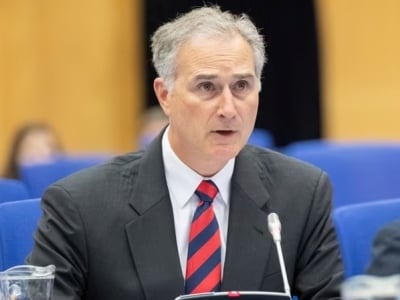
Senior Advisor to the US State Department for Negotiations in the South Caucasus, Louis Bono, met with Azerbaijani Foreign Minister Jeyhun Bayramov, the Press Service of the Azerbaijani Foreign Ministry reports.
“During the meeting, the situation in the region, normalization and peace process between Azerbaijan and Armenia, current threats and challenges were discussed,” the statement said. Bayramov told Bono that “the obstacle to the implementation of the agreement on the simultaneous opening of the [Akna-Stepanakert] Agdam-Khankendi and [Berdzor] Lachin Corridor, reached during the conversation between Azerbaijani President Ilham Aliyev and US Secretary of State Antony Blinken on September 1, is Armenia and the illegal regime it created.”
At the same time, Bayramov began to deny the fact of the blockade and humanitarian crisis in Artsakh.
“Jeyhun Bayramov emphasized the unacceptability of international partners, including the United States, repeating the claims of the Armenian side, despite their well-informed understanding of the situation in the region. He further highlighted that despite Armenia’s ongoing military and political provocations, its worldwide defamation campaign against Azerbaijan, and its support for separatism on our territories, Azerbaijan continues to maintain a constructive stance. […] The head of the Azerbaijani Foreign Ministry expressed regret that the unfounded allegations of Armenia, which it spreads in order to divert attention from the presence of Armenian armed forces in Azerbaijani territories and mislead the international community, were reflected in the speech of the acting US Assistant Secretary of State for European and Eurasian Affairs Yuri Kim”, the statement further reads.

You’re reading an excerpt from the Today’s WorldView newsletter. Sign up to get the rest free, including news from around the globe and interesting ideas and opinions to know, sent to your inbox every weekday.
The firsthand accounts are harrowing. There’s no food on shelves in stores. Children stand for hours in bread lines to help feed their families. Mothers walk for miles in search of cooking oil and other provisions. Electricity, gas and water are in short supply. Ambulances can’t whir into motion for lack of fuel. Clinics report a surge in miscarriages in pregnant women who are malnourished, anemic and consumed by stress.
Such is the apparent state of the isolated and increasingly desperate ethnic Armenian enclave in Nagorno-Karabakh, whose 120,000 people are enduring what local authorities and a host of international experts describe as a blockade at the hands of Azerbaijan, the country within which the territory sits. Armenia and Azerbaijan have fought multiple wars over Nagorno-Karabakh after the collapse of the Soviet Union and the advent of their independent nation-states. Though recognized by the international community as part of Azerbaijan, Nagorno-Karabakh and some areas surrounding it have been governed for decades by a separatist ethnic Armenian entity.
For the entirety of this year, Azerbaijan has restricted movement along the Lachin corridor, the sole route connecting Armenia directly to the enclave, which Armenians refer to as Artsakh. The restrictions intensified this summer, with the International Committee of the Red Cross unable to deliver humanitarian assistance to the region and trucks with hundreds of tons of supplies stranded on the roads. The plight of the afflicted communities led Luis Moreno Ocampo, a former chief prosecutor of the International Criminal Court, to publish an opinion earlier this month determining that the conditions of starvation inflicted on the enclave’s ethnic Armenians was an act of genocide. He cited an article in the Genocide Convention that referred to “deliberately inflicting on the group conditions of life calculated to bring about its physical destruction.”
“The idea of genocide is not just about killing, but about removing people from the land,” Moreno Ocampo told me during a phone call this week. In his report, he wrote: “There are no crematories, and there are no machete attacks. Starvation is the invisible genocide weapon. Without immediate dramatic change, this group of Armenians will be destroyed in a few weeks.”
On Wednesday, the situation was discussed at an emergency session of the United Nations Security Council. Various officials, including U.S. ambassador to the United Nations Linda Thomas-Greenfield, called on Azerbaijan to “restore free movement through the corridor.” Armenian foreign minister Ararat Mirzoyan said the deprivation imposed on the enclave was a form of warfare that would lead to the “ethnic cleansing of the people of Nagorno-Karabakh.”
That sentiment was echoed in Washington by a handful of U.S. lawmakers. “Azerbaijan’s systematic ethnic cleansing of the people of Nagorno-Karabakh through a large-scale and unprovoked invasion is unconscionable,” Sen. Alex Padilla (D-Calif.) told me, referring to the territory seized by Azerbaijan during a lopsided six-week war in 2020 that saw thousands die. “Particularly egregious is their weaponization of the blockade to starve the people of Nagorno-Karabakh and block humanitarian assistance.”
Responding to these charges, Yashar Aliyev, Azerbaijan’s U.N. envoy, described talk of a blockade as “unfounded and groundless allegations” and said his government was subject to an Armenian “campaign” to “manipulate and mislead the international community.” Officials in Baku claim that the restrictions on movement along the Lachin corridor, which is supposed to be administered by Russian peacekeepers, are necessary to stop, among other things, the illicit supply of arms from Armenia into the enclave. They point to the intransigence of the de facto authorities in Nagorno-Karabakh, who have refused the delivery of supplies through an alternate eastern road from Azerbaijan.
“An administration of occupation is blocking the Azerbaijani government’s provision of food and medicine to an Azerbaijani region. Tellingly, nowhere in the Ocampo report is this mentioned,” wrote Hikmet Hajiyev, top foreign affairs adviser to Azerbaijan’s long-ruling President Ilham Aliyev. “Claiming they are under threat while engineering a crisis to galvanize the international community’s support is intended to convince the world that Azerbaijanis and Armenians cannot live together, as we once did.”
With diplomatic corps we are on the entrance of Agdam-Khankandi highway and railway. Only highway’s daily capacity is 17.000 vehicles. Azerbaijan is building roads not walls for reintegration of armenian residents of Karabakh but they put road blocks and barriers. pic.twitter.com/P3v3J59Fxv
— Hikmet Hajiyev (@HikmetHajiyev) August 16, 2023
The impasse reflects the profound gulf between the two sides. Some analysts believe that Azerbaijan, wealthier and reinforced by Turkish and Israeli arms, is pressing its considerable advantage with the world distracted by the war in Ukraine to apply intolerable pressure on the separatist enclave in its midst. Armenia and Azerbaijan have been locked in rounds of negotiations over a lasting peace settlement that would normalize ties and find an acceptable accommodation over the status of Nagorno-Karabakh.
But the current crisis has highlighted the existential fears and deep-seated enmities felt on both sides. As Armenians around the world raised the alarm over the plight of blockaded Nagorno-Karabakh, Azerbaijani media focused on the discovery of a mass grave of Azerbaijani people in the city of Shusha, dating back to the battles of the 1990s and the area’s occupation by ethnic Armenian forces. The city was “liberated” by Azerbaijan in the brief 2020 war, which saw Baku’s forces seize significant swaths of territory captured by Armenian troops in the earlier phase of the conflict.
Now, some ethnic Armenians who fled Shusha — known to Armenians as Shushi — in 2020 find themselves in even more dire straits. One of those is Alvina Nersesyan, a resident of the enclave and mother, who briefed reporters on a virtual call organized by Armenian officials on Thursday. She described the “fearful” bread lines in Stepanakert, the enclave’s de facto capital, known in Azerbaijan as Khankendi, and lamented that she doesn’t “even say the words for sweets anymore,” lest she upset her deprived children who are “too small to understand the situation.”
The immediate hardships are recognized by diplomats elsewhere. “Access to food, medicine, baby formula and energy should never be held hostage,” Thomas-Greenfield said Wednesday. “We urge the government of Azerbaijan to restore free movement through the corridor.”
“U.S. officials believe that Armenians in Nagorno-Karabakh are managing to survive only because of backyard gardens and other home-produced food,” wrote Post columnist David Ignatius. “They fear that within two months, as winter approaches, the population could face starvation. Armenians dread a repetition of the Ottoman genocide of 1915, an ever-present historical memory for Armenians around the world.”
Moreno Ocampo summoned that deep, bitter history, noting that hundreds of thousands of Armenians who perished more than a century ago were driven from their homes by Ottoman forces and left to die of hunger. “Starvation was the weapon of the genocide in 1915 and now Azerbaijan is using starvation against Armenians,” he told me. “It’s tragic but history is repeating, and that’s why humanity has to react.”
Activists protest in front of the U.N. Office in Yerevan, Armenia, on Aug. 16. (Karen Minasyan/AFP/Getty Images)
The firsthand accounts are harrowing. There’s no food on shelves in stores. Children stand for hours in bread lines to help feed their families. Mothers walk for miles in search of cooking oil and other provisions. Electricity, gas and water are in short supply. Ambulances can’t whir into motion for lack of fuel. Clinics report a surge in miscarriages in pregnant women who are malnourished, anemic and consumed by stress.
Such is the apparent state of the isolated and increasingly desperate ethnic Armenian enclave in Nagorno-Karabakh, whose 120,000 people are enduring what local authorities and a host of international experts describe as a blockade at the hands of Azerbaijan, the country within which the territory sits. Armenia and Azerbaijan have fought multiple wars over Nagorno-Karabakh after the collapse of the Soviet Union and the advent of their independent nation-states. Though recognized by the international community as part of Azerbaijan, Nagorno-Karabakh and some areas surrounding it have been governed for decades by a separatist ethnic Armenian entity.
Residents of Nagorno-Karabakh say it’s getting harder to access food and medicines following a months-long Azerbaijani blockade of the region. (Video: Reuters)
For the entirety of this year, Azerbaijan has restricted movement along the Lachin corridor, the sole route connecting Armenia directly to the enclave, which Armenians refer to as Artsakh. The restrictions intensified this summer, with the International Committee of the Red Cross unable to deliver humanitarian assistance to the region and trucks with hundreds of tons of supplies stranded on the roads. The plight of the afflicted communities led Luis Moreno Ocampo, a former chief prosecutor of the International Criminal Court, to publish an opinion earlier this month determining that the conditions of starvation inflicted on the enclave’s ethnic Armenians was an act of genocide. He cited an article in the Genocide Convention that referred to “deliberately inflicting on the group conditions of life calculated to bring about its physical destruction.”
“The idea of genocide is not just about killing, but about removing people from the land,” Moreno Ocampo told me during a phone call this week. In his report, he wrote: “There are no crematories, and there are no machete attacks. Starvation is the invisible genocide weapon. Without immediate dramatic change, this group of Armenians will be destroyed in a few weeks.”
On Wednesday, the situation was discussed at an emergency session of the United Nations Security Council. Various officials, including U.S. ambassador to the United Nations Linda Thomas-Greenfield, called on Azerbaijan to “restore free movement through the corridor.” Armenian foreign minister Ararat Mirzoyan said the deprivation imposed on the enclave was a form of warfare that would lead to the “ethnic cleansing of the people of Nagorno-Karabakh.”
That sentiment was echoed in Washington by a handful of U.S. lawmakers. “Azerbaijan’s systematic ethnic cleansing of the people of Nagorno-Karabakh through a large-scale and unprovoked invasion is unconscionable,” Sen. Alex Padilla (D-Calif.) told me, referring to the territory seized by Azerbaijan during a lopsided six-week war in 2020 that saw thousands die. “Particularly egregious is their weaponization of the blockade to starve the people of Nagorno-Karabakh and block humanitarian assistance.”
Responding to these charges, Yashar Aliyev, Azerbaijan’s U.N. envoy, described talk of a blockade as “unfounded and groundless allegations” and said his government was subject to an Armenian “campaign” to “manipulate and mislead the international community.” Officials in Baku claim that the restrictions on movement along the Lachin corridor, which is supposed to be administered by Russian peacekeepers, are necessary to stop, among other things, the illicit supply of arms from Armenia into the enclave. They point to the intransigence of the de facto authorities in Nagorno-Karabakh, who have refused the delivery of supplies through an alternate eastern road from Azerbaijan.
“An administration of occupation is blocking the Azerbaijani government’s provision of food and medicine to an Azerbaijani region. Tellingly, nowhere in the Ocampo report is this mentioned,” wrote Hikmet Hajiyev, top foreign affairs adviser to Azerbaijan’s long-ruling President Ilham Aliyev. “Claiming they are under threat while engineering a crisis to galvanize the international community’s support is intended to convince the world that Azerbaijanis and Armenians cannot live together, as we once did.”
The impasse reflects the profound gulf between the two sides. Some analysts believe that Azerbaijan, wealthier and reinforced by Turkish and Israeli arms, is pressing its considerable advantage with the world distracted by the war in Ukraine to apply intolerable pressure on the separatist enclave in its midst. Armenia and Azerbaijan have been locked in rounds of negotiations over a lasting peace settlement that would normalize ties and find an acceptable accommodation over the status of Nagorno-Karabakh.
But the current crisis has highlighted the existential fears and deep-seated enmities felt on both sides. As Armenians around the world raised the alarm over the plight of blockaded Nagorno-Karabakh, Azerbaijani media focused on the discovery of a mass grave of Azerbaijani people in the city of Shusha, dating back to the battles of the 1990s and the area’s occupation by ethnic Armenian forces. The city was “liberated” by Azerbaijan in the brief 2020 war, which saw Baku’s forces seize significant swaths of territory captured by Armenian troops in the earlier phase of the conflict.
Now, some ethnic Armenians who fled Shusha — known to Armenians as Shushi — in 2020 find themselves in even more dire straits. One of those is Alvina Nersesyan, a resident of the enclave and mother, who briefed reporters on a virtual call organized by Armenian officials on Thursday. She described the “fearful” bread lines in Stepanakert, the enclave’s de facto capital, known in Azerbaijan as Khankendi, and lamented that she doesn’t “even say the words for sweets anymore,” lest she upset her deprived children who are “too small to understand the situation.”
The immediate hardships are recognized by diplomats elsewhere. “Access to food, medicine, baby formula and energy should never be held hostage,” Thomas-Greenfield said Wednesday. “We urge the government of Azerbaijan to restore free movement through the corridor.”
“U.S. officials believe that Armenians in Nagorno-Karabakh are managing to survive only because of backyard gardens and other home-produced food,” wrote Post columnist David Ignatius. “They fear that within two months, as winter approaches, the population could face starvation. Armenians dread a repetition of the Ottoman genocide of 1915, an ever-present historical memory for Armenians around the world.”
Moreno Ocampo summoned that deep, bitter history, noting that hundreds of thousands of Armenians who perished more than a century ago were driven from their homes by Ottoman forces and left to die of hunger. “Starvation was the weapon of the genocide in 1915 and now Azerbaijan is using starvation against Armenians,” he told me. “It’s tragic but history is repeating, and that’s why humanity has to react.”
Türkiye prioritizes stability and peace in the Caucasus and supports its brotherly nation Azerbaijan, Defense Minister Yaşar Güler said Friday, according to Azerbaijan in Focus, reporting Daily Sabah.
“We place great importance on stability in the Caucasus. We are making significant efforts to establish lasting peace in the region and continue to support our brotherly nation Azerbaijan with the understanding of ‘one nation, two states,’” Güler said at a ceremony held at the Defense Ministry marking September 19, Veterans Day.
In a speech, he said that Türkiye will continue contributing to regional and global peace in many regions.
“We are continuing our constructive efforts to reactivate the Black Sea grain agreement,” he added, referring to a pact reached last summer to enable grain exports from Ukraine despite the ongoing war, which Russia withdrew from in July.
Güler also said Türkiye is continuing its endeavors to maintain the favorable atmosphere with Greece that it has been fostering in recent years.
“We will continue our fight against terrorism with the same determination and unwavering commitment as we have done so far, without making any concessions,” he stressed.
The post Defense Minister Güler: Stability in Caucasus priority for Türkiye appeared first on Azerbaijan In Focus.
Baku is aimed at a peaceful resolution of existing issues with Yerevan, Assistant to the President of the Republic of Azerbaijan, Head of Foreign Policy Affairs Department of the Presidential Administration Hikmat Hajiyev said in an interview with TASS, according to Azerbaijan in Focus, reporting AzerTac.
When asked whether Azerbaijan could again resort to force, as it did in 2020, the assistant to the President of Azerbaijan refrained from making hypothetical forecasts.
“I would not like to comment on hypothetical scenarios. Azerbaijan is a responsible member of the international community and always acts in accordance with the provisions of its constitution and international law. We are aimed at peaceful resolution of all existing issues,” he emphasized.
Commenting on the topic of possible compromises that Baku is ready to make in dialogue with Yerevan, Hajiyev noted that the Azerbaijani side will not discuss “either with Armenia or with any third country issues that call into question the territorial integrity and sovereignty of Azerbaijan.”
“Attempts to interfere in the internal affairs of our state, including by pushing the topic of creating some kind of international mechanisms for dialogue between the central government of Azerbaijan and the ethnic Armenian minority in Karabakh, are doomed to failure,” he noted.
“Karabakh is an internal issue of Azerbaijan, and any attempt to challenge this is counterproductive from the perspective of achieving sustainable peace in the region,” Hajiyev said.
“We still hope for the signing of a peace treaty before the end of this year and call on the Armenian political leadership to take the main step – officially, with their signature under the peace treaty, to record recognition of the territorial integrity of Azerbaijan, including the Karabakh economic region of our republic, and to commit to refrain from interfering in the internal affairs of our country in the future. Including through attempts to bring our internal issues, such as issues of our interaction with our citizens of Armenian ethnic origin in Karabakh, to international platforms under the pretext of ensuring the rights and security of this population group. These are our citizens, and their rights and security will be ensured by the Constitution of Azerbaijan,” he underlined.
According to the assistant to the President, it is important that Armenia abandons the policy of financing separatism in Azerbaijan. “As for the activities of international mediators, we highly appreciate their contribution to the normalization of Azerbaijani-Armenian relations,” he added.
Hajiyev highlighted the important role of Russia in this process, “whose active mediation ensured the signing of a trilateral agreement in November 2020, which put an end to large-scale hostilities.”
“The European Union and the United States also make their contribution to the negotiation process. In general, each of the negotiation tracks is unique in its own way and helps conduct a dialogue between Baku and Yerevan on the most problematic issues.”
The post Hikmat Hajiyev: Karabakh is an internal issue of Azerbaijan appeared first on Azerbaijan In Focus.
