
Day: September 11, 2023
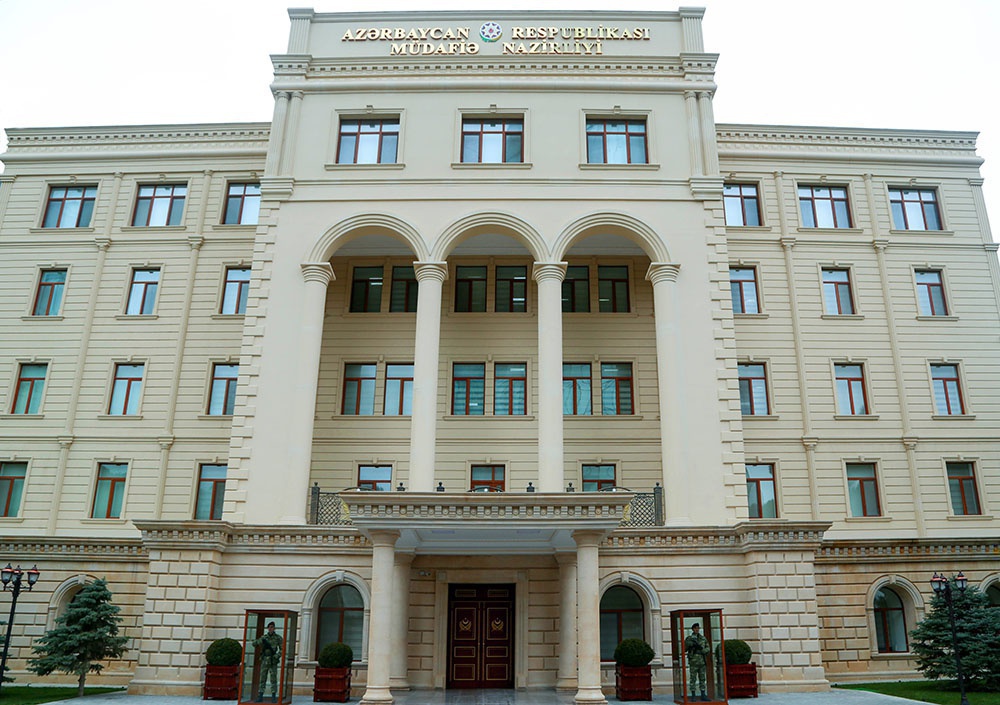
The First Deputy Minister of Defense of the Republic of Azerbaijan – Chief of the General Staff of the Azerbaijan Army, Colonel General Karim Valiyev, who is on an official visit to the Republic of Türkiye, visited the Heydar Aliyev Park in Ankara.
The Azerbaijani delegation laid a wreath at the monument to the National Leader of the Azerbaijani people Heydar Aliyev and paid tribute to the memory of the great leader.
Then the Chief of the General Staff met with the Minister of National Defense of the Republic of Türkiye, Mr. Yashar Güler.
Welcoming the delegation, the Turkish National Defense Minister noted that the strategic alliance between the two countries is based on friendly and fraternal relations.
Colonel General K. Valiev, expressing gratitude for the warm welcome, emphasized that the friendly relations between the heads of state of both fraternal countries, as in other areas, had a positive impact on military cooperation.
The meeting, attended by the Ambassador of Azerbaijan to Türkiye, Rashad Mammadov, discussed the prospects for the development of cooperation between the two countries in the military, military-technical, military-educational and other fields, as well as issues of regional security.
The Chief of the General Staff met with the Turkish National Defense Minister – VIDEO
Находящийся с официальным визитом в Турецкой Республике первый заместитель министра обороны Азербайджанской Республики – начальник Генерального штаба Азербайджанской Армии генерал-полковник Керим Велиев посетил парк Гейдара Алиева в Анкаре.
Азербайджанская делегация возложила венок к памятнику Общенациональному лидеру Гейдару Алиеву, выразив глубокое почтение памяти выдающейся личности.
Затем начальник Генерального штаба встретился с министром национальной обороны Турецкой Республики Яшаром Гюлером.
Поприветствовав делегацию, министр национальной обороны Турции отметил, что стратегический союз между Турцией и Азербайджаном построен на дружеских и братских отношениях.
Поблагодарив за теплый прием, генерал-полковник К.Велиев подчеркнул, что искренние отношения глав двух братских государств положительно влияют на сферу военного сотрудничества, равно как и на другие сферы.
На встрече, в которой также принимал участие посол Азербайджана в Турции Рашад Мамедов, были обсуждены перспективы развития двустороннего сотрудничества в военной, военно-технической, военно-образовательной и в других сферах, а также вопросы региональной безопасности.
Начальник Генерального штаба встретился с министром национальной обороны Турции – ВИДЕО
11 сентября в 20:40 подразделения вооруженных сил Армении с позиций в направлении населенного пункта Джил Чемберекского района вновь подвергли обстрелу из стрелкового оружия позиции Азербайджанской Армии в направлении населенного пункта Новоивановка Гедабейского района.
Подразделениями Азербайджанской Армии были приняты ответные меры в указанном направлении.
Позиции Азербайджанской Армии в Гедабейском направлении вновь подверглись обстрелу
On September 11, at 20:40 the Armenian armed forces units from the positions in the direction of Jil settlement of the Chambarak region using small arms once again subjected to fire the Azerbaijan Army positions stationed in the direction of Novoivanovka settlement of the Gadabay region.
The Azerbaijan Army Units took retaliatory measures in the mentioned direction.
Azerbaijan Army positions were once again subjected to fire in Gadabay direction
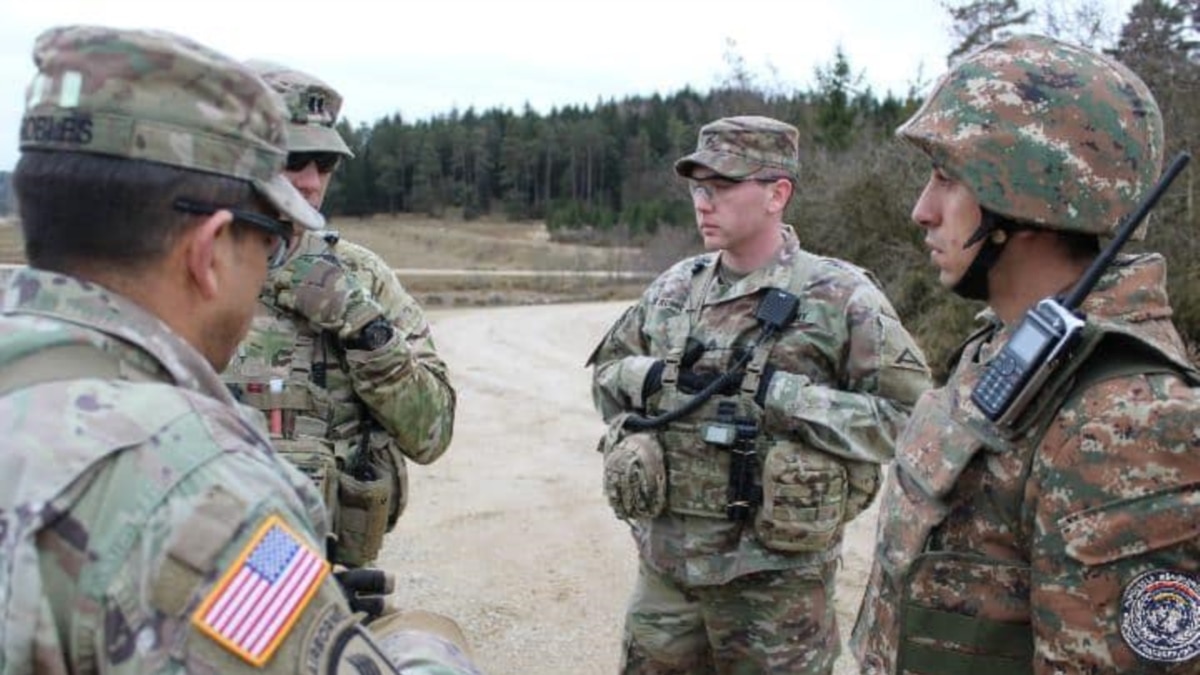
В Армении начались армяно-американские учения Eagle Partner. Об этом пишет AFP со ссылкой на представителя армии США в Европе и Африке.
Согласно заявлению Минобороны Армении, учения направлены на “повышение уровня оперативной совместимости” с силами США в международных миротворческих миссиях и обмен передовым опытом.
Также учения помогут армянской миротворческой бригаде “соответствовать стандартам НАТО”, пишет AFP.
Учения продлятся до 20 сентября на полигонах “Зар” и “Армавир”. В них примут участие около 85 американских и 175 армянских военнослужащих.
Пресс-секретарь президента России Дмитрий Песков заявил, что решение Армении не проводить учения с Организацией договора о коллективной безопасности (ОДКБ), а работать вместо этого с США требует “очень глубокого анализа”, пишет AFP.
“Конечно, мы постараемся всё это осмыслить и понять. Но в любом случае мы будем делать это в тесном партнёрском диалоге с армянской стороной”, – сказал Песков.
На прошлой неделе российский МИД вызвал посла Армении в Москве Вагаршака Арутюняна. Ему было “сделано жёсткое представление” за “серию недружественных шагов”, предпринятых, по мнению Кремля, Ереваном. В заявлении МИД России говорится, что Москва, несмотря на претензии, продолжает считать Армению союзником.

On September 11, at about 08:30, illegal Armenian armed detachments in the territory of Azerbaijan, where Russian peacekeeping forces are temporarily stationed, using a dog as a kamikaze attempted to commit a terrorist act against the servicemen of the Azerbaijan Army who were on combat duty in the direction of the Khojavend region. Thus, illegal Armenian armed detachments attached a Radio Controlled Improvised Explosive Device (RCIED) to the dog and forced it to move in the direction of the Azerbaijan Army positions.The Armenian gunmen’s attempt to launch the improvised explosive device attached to the dog that entered the positions of the Azerbaijan Army in order to increase the scale of the terrorist provocation and cause even more damage to military personnel was suppressed due to the vigilance of the Azerbaijan Army servicemen.We strongly condemn the provocation as an action that contradicts the Protocol on Prohibitions or Restrictions on the Use of Mines, Booby-Traps and Other Devices as an amendment to the Convention on Prohibitions or Restrictions on the Use of Certain Conventional Weapons.
Using animals for the purpose of committing suicide is an immoral act, and we consider it a terrorist act.
This week, 15 years ago, Georgia was one of the first in the 21st century to face the wrath of the Kremlin’s foreign policy machinations. To commemorate the occasion, Prime Minister Irakli Garibashvili and his retinue attended a memorial ceremony at the nation’s military cemetery where the Georgian warriors that fell during the war had been laid to rest. Shaking hands and embracing family members of these heroes, the Prime Minister made statements that sparked controversy with many, including the opposition.
This controversy surrounds the observed date of the beginning of the war. While many online refer to the beginning of formal hostilities as August 7th, the Government of Georgia and others claim this was not official until the following day. Most military analysts and enthusiasts agree that the true roots of the war go much farther back, and the debate sparked by recent statements hinges on a matter of hours and varying reports that come out of the fog of war.
During his statements to the press at the cemetery, Garibashvili commented on the beginning of the war, stating “you can read the order of the president of that time, where it is directly written ‘August 8’ – until 2012, August 8 was officially celebrated as the date of the start of the war.” In response, members of several opposition parties latched on this, calling it a falsehood and a line from the Kremlin. “Russia attacked us on August 7, this is already a fact recognized by the world,” Giorgi Vashadze, MP and chairman of the Strategy Aghmashenebeli party, said to the media.
At the center of the debate is who was the true aggressor in the war. The Kremlin’s narrative has long been that Georgia had been attempting to subjugate these two regions by force, including genocide, and this began with the shelling of Tskhinvali on August 8. Fueled by Rusophobic sentiments in the West and their manipulation of the Georgian government, the Russian side states that Georgia was at fault for the destruction that came after their forces were forced to intervene in a “peace enforcement” operation as a result of this attack on the South Ossetian de facto capital.
Conversely, the Georgian and Western side says quite simply that Russia used the internal security issues in Georgia as a causus belli. With Tbilisi growing closer and closer to Europe and the collective West, the Kremlin saw the opportunity to cripple the trend, thus virtually eliminating the possibility of a NATO country on its southern front. This side states that Russian troops had already entered Georgian territory on August 7th, ahead of any Georgian operations around Tskhinvali, in order to invade and capture territory, not to “enforce peace”.
To drive this home, Giga Bokeria, head of the European Georgia party, noted, “This was a key issue of our enemy’s propaganda, to at least partially blame Georgia for what happened in August 2008 and the fact that today we have a government, a regime, which in this matter and more in the wider context, has completely become a part of our enemy’s propaganda and has become a partner in this. Russia sees in this a recipe for maintaining power for itself; this is our shame.”
Georgian National Guardsmen during the Russian invasion of Georgia, 2008. Photo source: Press Office of the Government Administration
With most opposing arguments, the truth generally lies in the center somewhere. However, taking a deeper look at the events of those harrowing days as the dark clouds in the north gathered allows one to see the intricate details that shed more light on the reality on the ground. With the fog of war working against the truth, it is imperative to take several key notes into account.
The first step is to look at the background of the war. For months, and indeed even years, Tbilisi had sparred with militants in both regions. Groups in South Ossetia and Abkhazia had long sought their own independence after the fall of the Soviet Union, when the duo had achieved some small modicum of autonomy as oblasts, or regions. Following the Georgian civil war, tempers had not cooled and low-level conflict continued to be seen.
In the weeks prior to August 7th and 8th, these tensions had resulted in sporadic gunfights and artillery exchanges. On August 1, Georgian police were struck by an improvised explosive device planted by South Ossetian militants, causing Georgian troops to open fire, killing at least 4 of the armed militants. For days after, the frequency of armed clashes steadily rose. On the 6th of August, then-President Mikheil Saakashvili attempted to reach then-President of Russia Dimitri Medvedev in order to sway him against an intervention or invasion, but he was unable to reach the Kremlin and was told that “the time for presidential negotiations has not yet arrived.”
In this crescendo of violence, Russian military forces were confirmed to have been moving around the North Caucasus, well within Russian territory. However, a Georgian intelligence report at the time claimed that intercepted communications indicated that Russian units entered Georgian territory in the latter part of the 7th. A call between a South Ossetian border security command post and a smaller post by the Roki Tunnel connecting Russia with Georgia was reportedly recorded at 3:52 AM on August 7th.
“Listen, has the armor arrived or what?” the command post asks. “The armor and people,” the response came. When asked if these Russian units had already passed through the tunnel, the reply was “Yes, 20 minutes ago; when I called you, they had already arrived.” The messages confirm that Russian military units were on the move long before any Georgian offensive operations.
What the calls do not tell us is how many units passed through the tunnel. The Russian Ministry of Defense has held the position that any movement was a small contingent meant to rotate peacekeeping units out of the area, indeed units that had been working with Georgian units in a long-established deal. However, the Estonian National Defense College released a report indicating that the size of the units was far more than any peacekeeping agreement allowed for. “150 Russian tanks and armored personnel carriers entered the Roki tunnel in the morning hours of August 7,” the report says. “This happened 20 hours before President Saakashvili gave the order to attack.”
Additionally, a 2009 Black Sea Trust report commented on the composition and mission of such a force, stating the objective was a “full scale invasion inside the Georgian territory with the direct objective to replace President Saakashvili and his regime and to install a ‘more responsible’ president in Tbilisi, as Russian authorities clearly put it.”
Interestingly, another report from the Russian side that went largely under reported shows that Russian conscript units were deployed on August 7th as well. Days after the war concluded, the Russian newspaper “Permskiye Novosti” published an article titled “Perm soldiers found themselves in the epicenter of the war.” In this article, the unit of conscripts spoke with family members about the state of confusion many of them found themselves in during the conflict. The article quotes one of the conscripts who called home saying to his family that “we have been here since August 7. Well, our entire 58th army” and adding that he was not able to call sooner as the unit’s command had “silenced” their phone service.
In an interview, Russian Captain Denis Sedristyi said to military news outlet Krasnaya Zvezda that “on August 7th, we received the order to start moving towards Tskhinvali. An alert was declared and we began the road march.” Thus, with this compiled information, it can be assessed that indeed Russian regular units had been in Georgian territory, moving in an offensive and tactical nature before any Georgian movements against them had begun in earnest.
Sadly, the resulting 5 days of combat saw 180 Georgian soldiers and police killed, and more than 1,000 wounded. Russia sustained 170 killed and more than 350 wounded, including members of the North Caucasian, Cossack, Abkhazian, and South Ossetian militias. The controversy, still leaving the wounds of war open, is only deepening the divide between people once united. Indeed, in light of more recent events since 2014 in Ukraine, it is more clear than ever which side is the true aggressor in the region.
By Michael Godwin
