
Categories
Selected Articles

Guiding Conflicting Factions Toward Addressing the Lachin Crisis


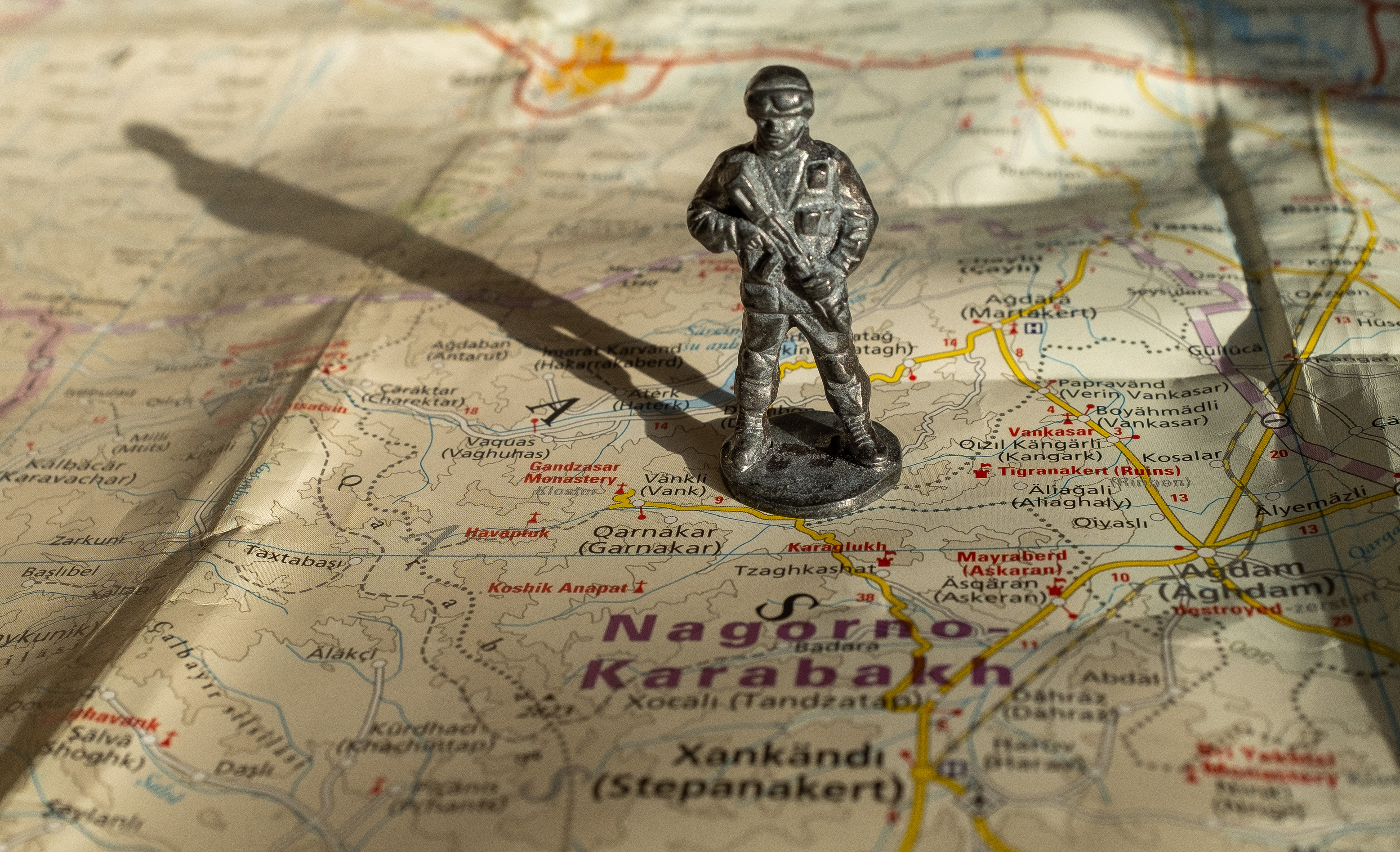
ArmeniaAzerbaijanNagornoKarabakh_Shutter

At a juncture where sustainable peace seemed achievable, Armenian prime minister Nikol Pashinyan’s recognition of Karabakh as part of Azerbaijan—arriving finally two years after the end of the Second Karabakh War, with the mediation of Brussels and Washington—appeared to be a positive development. Regrettably, this promising trajectory now faces the risk of unraveling, jeopardizing all progress made after the recent escalation around Lachin Road and claims about humanitarian conditions.

On April 23 of this year, Azerbaijan strategically positioned a checkpoint in Lachin, a pivotal juncture along the internationally recognized border between Azerbaijan and Armenia. This checkpoint held significant importance as it served as the sole road connecting the Armenian-populated enclave in Karabakh to the Republic of Armenia. Initially, the road functioned without major disruptions. However, tensions escalated following an attack on its checkpoint on June 15, prompting Azerbaijan to impose limitations on its operations. Azerbaijan also contended that this road had been exploited for illicit activities such as smuggling mines, weapons, and individuals affiliated with the IRGC (Islamic Revolutionary Guard Corps) into the region.

On July 26, a convoy of nineteen trucks carrying humanitarian aid was dispatched by the Armenian government, but Azerbaijan barred its entry into the region. This provided Armenia with a pretext to instrumentalize humanitarian issues to bring the matter before the UN Security Council for discussion on August 16. It was not coincidental that certain speakers during the Security Council discussion recommended refraining from employing humanitarian concerns as political leverage. Ahead of the UN Security Council session, significant resources were channeled into a global media campaign, involving politicians, celebrities, and even controversial figures like Luis Moreno Ocampo. The intention behind this was to shape a pro-Armenian sentiment within the international audience and to impose psychological and moral pressure on Azerbaijan, the global community, and the members of the UN Security Council.

Matters have only escalated since. On August 29, the Azerbaijan Red Crescent Society, affiliated with the International Red Cross and Red Crescent Movement, dispatched two trucks loaded with flour to aid Armenian residents in Karabakh through the Aghdam Road. This effort was aimed at breaking the ongoing deadlock and addressing concerns of manipulation surrounding the delivery of aid. However, the trucks encountered concrete roadblocks erected by individuals associated with radical groups who staunchly advocate for the sole use of the Lachin Road and vehemently oppose any alternative routes to the region. A few days later, the spokesperson for Charles Michel, president of the European Council, emphasized the importance of a step-by-step approach, which would involve a carefully sequenced operation for the full utilization of the Ağdam and Lachin routes.

Peace Is Achievable Solely via Sincere Negotiations

Rather than engaging in direct and honest dialogue with Azerbaijan without any mediators—as also endorsed and urged by the United States to address any concerns, including humanitarian matters—Armenia is putting significant effort into exploiting humanitarian issues for its global propaganda purposes. Conversely, following the conclusion of the Second Karabakh War, Armenian propaganda has focused on attempting tirelessly to portray Azerbaijan through an “Israelization” lens and positioning Armenia as a victim in a manner reminiscent of the Palestinian situation.

The intent behind this approach is unmistakably clear, evident not just to those in Baku but also conspicuously acknowledged in Yerevan: to establish the notion within the international community that Karabakhi Armenians cannot viably coexist under Azerbaijan’s jurisdiction. This narrative is constructed to morally validate the concept of remedial secession or separatism for Karabakhi Armenians.

As previously articulated within this platform, for Azerbaijan the dark reality of occupation hides behind the glitzy façade of remedial secession or self-determination and efforts to link the claim to liberal values, like in Crimea, Abkhazia, South Ossetia, Donbas, and Luhansk. Additionally, the discussions and promotional efforts aimed at advancing a remedial secession agenda are perceived by Azerbaijan as an endeavor to divert the attention of the international community from the twenty-seven-year-long occupation of Azerbaijani territories, the plights of up to one million internally displaced persons, their inability to return to the liberated lands because of widely planted landmines, and the complete destruction of urban centers and rural communities like Aghdam. Indeed, acknowledging these responsibilities and addressing the complexities arising from this prolonged situation holds the utmost significance in ensuring enduring peace for the times ahead. Disregarding or deflecting focus away from the twenty-seven-year-long occupation could cast a shadow over the prospects of future peace, potentially leading to a less hopeful outlook.

Following their defeat in the 2020 conflict, Armenia lacks the military capability to directly challenge Azerbaijan and assert its claims over Karabakh. Moreover, Armenia’s demands are not substantiated by international law. In light of these constraints, Armenia’s primary recourse remains the pursuit of “moral justification” on the global stage to substantiate its claim over Karabakh.

At the same time, prominent Armenian analysts, including figures like Richard Kirakosyan, advocate for a strategic approach acknowledging Armenia’s military inferiority to Azerbaijan. They propose delaying the peace process between Armenia and Azerbaijan to allocate time for rebuilding and modernizing Armenia’s military capabilities.

Significantly, the program outlined by Pashinyan’s government for the former Nagorno-Karabakh Oblast, endorsed by Armenia’s National Assembly following the 2021 elections, contains a provision obligating Pashinyan’s administration to secure the Karabakhi Armenians’ right to remedial secession. The recent acknowledgment of Karabakh as part of Azerbaijan by Pashinyan’s government is not contradictory to this obligation; instead, it aligns with the commitment made in 2021 to pursue remedial secession. This alignment is evident in the range of actions and policies pursued by the Pashinyan government, including its recent international initiatives related to Lachin.

As a result, the statement made by the U.S ambassador to Armenia, Kristina Kvien, at the beginning of June, asserting the potential for Karabakhi Armenians to coexist securely under Azerbaijani governance, faced considerable backlash—even in the wake of the recognition of Karabakh as part of Azerbaijan. This criticism prompted the ambassador to walk back her comments the following day, stating that the United States “does not presuppose the outcome of negotiations on the future of Nagorno-Karabakh.”

Enough is Enough

Beneath the surface of this intricate political struggle lies the enduring plight of ordinary people from both sides of the conflict. Amidst the Russian military presence and the remnants of Armenia’s armed forces, individual stories such as that of Izaura Balasanyan emerge, encapsulating the persistent suffering endured. Her story also sheds light on the intricate complexities that impede the path to normalcy and reconciliation for two populations separated by a protracted three-decade-long conflict.

In September 2021, faced with mounting needs and an avaricious landlord, Izaura made a fateful decision driven by desperation: escaping the confines of the Armenian enclave. Her goal was to reach the comparatively promising Azerbaijani-controlled territories. However, her journey was abruptly halted when Russian peacekeepers apprehended her and handed her back into the custody of local Armenian security services.

Since then, the fate of this unfortunate woman has remained cloaked in uncertainty, her story fading into obscurity. Remarkably, her plight has failed to attract the attention of any international institution, leaving her ordeal unexamined and her voice unheard. This stark reality underscores the challenges faced by countless individuals akin to Izaura, trapped in the labyrinthine nexus of radical nationalism and a three-decade-long conflict.

The tale of Izaura serves as a clear example of those opposing the reintegration of these two communities and those acting as a barrier between them. In 2022, with the mediation of the United States in Washington, Armenia and Azerbaijan reached an agreement to commence dialogue for the reintegration between Baku and the Karabakhi Armenians. Interestingly, immediately following this accord, Moscow sent a Russian billionaire, Ruben Vardanyan, who lacks native ties to Karabakh, to the region to undermine the reintegration dialogue. He subsequently expelled all proponents of dialogue from the local de-facto administration. Despite his resignation, both he and Russia continue to uphold the trajectory that was established to impede all reintegration efforts.

Nevertheless, accountability extends beyond Russia and the radicals it supports. It encompasses politicians, experts, and journalists who, regrettably, remain detached from the anguish experienced by individuals like Izaura. Their disengagement underscores the urgency of comprehending the broader context enveloping these narratives.

Blame Games

Paradoxically, while politicians silence the cries of desperate individuals like Izaura, who were taken hostage and who are marginalized, they concurrently appeal to the global stage about the existence of humanitarian crises. In a contrasting stance, local leaders such as Human Rights Defender Gegham Stepanyan and others advocate for a balanced approach. Stepanyan advises restraint in sharing social media posts containing videos of uplifting occasions like weddings and other events that radiate inspiration and prosperity. Conversely, he advocates for refraining from disseminating videos depicting lavish lifestyles—a narrative that clashes with the established official stance.

Consequently, the ongoing conflict between Armenia and Azerbaijan has now found its way into the realm of conflicting narratives within the sphere of social media. On these platforms, Armenians are diligently amplifying efforts to underscore the allegedly pressing humanitarian situation on the ground. In a contrasting display, Azerbaijani social media users are sharing recently published videos featuring Armenian counterparts participating in weddings, extravagant restaurant celebrations, and gatherings within Karabakh that radiate joy and prosperity. This clash of narratives reached its peak during a session of the UN Security Council. The Armenian Minister of Foreign Affairs presented images of purportedly distressed children, prompting the Azerbaijani ambassador to counter with joyful and abundant photographs depicting life in Karabakh.


Categories
Selected Articles

OIC reps to conduct fact-finding mission in Azerbaijan’s Aghdam, Fuzuli and Ganja


A delegation headed by the chairman of the Independent Permanent Human Rights Commission within the framework of the Organization of Islamic Cooperation (OIC) arrived in Azerbaijan at the invitation of the Commissioner for Human Rights (Ombudsperson) of the Republic of Azerbaijan Sabina Aliyeva to conduct a fact-finding mission in Ganja, Aghdam and Fuzuli districts, according to Azerbaijan in Focus, reporting Trend.

The delegation included Chairman of the Independent Permanent Human Rights Commission of the Organization of Islamic Cooperation (OIC IPHRC) Muhammad Suleiman Lawal (Nigeria), Deputy Chairman of the OIC IPHRC Haci Ali Acikgul (Türkiye), member of the OIC NHRC Hilal bin Said Al Shidhani (Oman), Executive Director of the OIC NHRC Secretariat Noura bint Zaid Al-Rashoud (Saudi Arabia Arabia), Director of the OIC NHRC Secretariat Javed Saglaine (Pakistan), employee of the OIC NHRC Secretariat Ibrahim Saidu Kamara (Guinea).

The main purpose of the visit is to establish the facts of Armenia’s destruction of religious and cultural monuments, and cemeteries belonging to Azerbaijanis, to collect materials about Azerbaijanis affected by occupation and rocket bombing, as well as to prepare a report on the results of the mission and present it to the international community.

The post OIC reps to conduct fact-finding mission in Azerbaijan’s Aghdam, Fuzuli and Ganja appeared first on Azerbaijan In Focus.


Categories
Selected Articles

Made in Ukraine: Kyiv’s burgeoning weapons industry is enabling it to project power far beyond the front lines


In the early hours of August 29, swarms of Ukrainian drones flew across seven Russian regions. Many were intercepted; some were not.

Several reached a Russian airbase in Pskov, some 600 kilometers from the Ukrainian border, destroying two Russian military transport aircraft and damaging two more.

It was the most dramatic evidence yet of a new dimension to the 18-month conflict: Ukraine’s growing appetite to take the war to Russian territory.

Aerial and marine drones, mysterious new missiles and sabotage groups are all part of the toolkit; Russian airfields, air defenses and shipping among the targets.

Ukraine has plenty of reasons for broadening the conflict.

A win is a win wherever and whenever it occurs – whether damaging planes at a distant Russian airbase, disrupting commercial aviation and shipping, putting the residents of Russian border regions on edge or hitting Russian air defenses in Crimea.

For Ukrainians who have suffered endless drone and missile attacks, evidence of payback (albeit on a much smaller scale) is a welcome morale-booster, especially when the counteroffensive in the south is still struggling to gain traction.

President Volodymr Zelensky has been unapologetic for taking the conflict to Russian soil, saying recently: “The war is returning to the territory of Russia – to its symbolic centers and military bases, and this is an inevitable, natural and absolutely fair process.”

Attacks far from the current front lines are also evidence of an evolving Ukrainian capability to project power.

That projection very deliberately does not rely upon Western hardware but local adaptations, in terms of both technology and tactics. President Volodymyr Zelensky and Defense Minister Oleksiy Reznikov have repeatedly assured Western donors that their weapons won’t be used against targets inside Russia; that would be viewed by Moscow as an act of aggression which would make them party to the conflict.

That point was reiterated by Ukrainian presidential adviser an adviser to the Head of the President’s office, Mykhailo Podolyak this week. “Ukraine strictly adheres to the obligation not to use the weapons of its partners to strike Russian territory,” he said.

Instead, Ukraine is pushing ahead with creating a weapons industry that will provide everything from 155mm artillery shells to longer-range drones and now – it seems – a new long-range missile.

Senior Ukrainian officials have been dropping hints about the development of a new cruise missile. Oleksii Danilov, secretary of Ukraine’s National Security and Defense Council, posted a video last week of the purported missile with the caption: “The President of Ukraine’s missile program in action. The tests are successful, the use is effective.”

Later he spoke of a three-year development program, “to provide a distance of thousands of kilometers, this is the work of large teams, powerful work. Now we can say we have a result.”

Zelensky himself dropped a cryptic note, congratulating the Ministry of Strategic Industries with the message: “Successful use of our long-range weapons: the target was hit 700 kilometers away!”

And Ukraine’s Center for Strategic Communication reinforced the point Friday, saying on Telegram: “Having launched a full-scale aggression, the Russians counted on their impunity: that the fighting would be localized in Ukraine, and they would feel safe in their rear.”

“The increase in range destroys the Russian illusion of security and increases the cost of aggression for the enemy,” it added.

This is clearly a developing part of Ukraine’s strategy. Podolyak said: “The war is increasingly moving to Russia’s territory, and it cannot be stopped. This is a consequence of the lost frontline component (Russia has long been fighting only in numbers and only in defense, despite all propaganda myths) and the lack of realistic… systems in the regions (including air defense).”

Central to this projection of force is an array of Ukrainian drones – in the air and at sea. The latest iterations have longer range and greater payloads than previous models, thanks to what the Ukrainians describe as a global trawl for drone technology and contracts for multiple indigenous manufacturers.

The attack on the Pskov airbase is the fruit of this labor, though just how it was executed is something of a mystery. The head of Ukrainian Defense Intelligence, Kyrylo Budanov, said that the attack was launched from within Russia, while declining to say what kind of drones were used or how many.

That may be Budonov’s flair for gamesmanship – intended to sow confusion and distrust inside Russia.

It is possible that the drones were launched from Ukrainian territory, but accurate targeting over a distance of more than 700 kilometers would require a step-change in navigational capabilities.

One Russian blogger complained that the Pskov strike indicated that Russian air defenses had not adapted to defend against repeated Ukrainian drone strikes.

The damage being done is not going to break the back of the Russian air force, but it has become a serious irritant. On August 22, at least one Tu-22M strategic bomber was set ablaze at the Soltsy-2 airbase in northern Russia; then came the Pskov attack.

All at sea

Ukraine has also invested heavily in the development of marine drones. The latest deployed carry an explosive payload of up to 400 kilograms, capable of holing a substantial vessel, and can travel hundreds of kilometers.

Early in August, one struck the Russian gas and chemical tanker SIG close to the Kerch strait, immobilizing but not sinking it. Another hit a Russian naval ship in the port of Novosibirsk.

The maritime drones in use against both Russian naval and merchant shipping in the Black Sea provide both a morale boost and complicate Russian calculations. Some Russian warships in the Black Sea have mounted machine-guns on their decks to repel what are difficult weapons to defend against.

These attacks force Russia to spend time on developing counter-measures: One recent example is being the sinking of barges close to the Kerch bridge to Crimea, in an effort to prevent it being hit again by maritime drones following the attacks in July and August.

As Mick Ryan, author of the blog Futura Doctrina and a former General in the Australian armeed forces, writes: “With almost no likelihood of developing its own conventional naval fleet to fight the Russians, the Ukrainians have developed uncrewed capabilities. While ostensibly designed to sink or damage Russian surface warships, they are also intended to have the psychological effect of dissuading the Russian ships from putting to sea.”

Similarly, Russian authorities have to devote air defenses that might be deployed in Ukraine to the Moscow region and infrastructure such as air bases, which have become a frequent target of Ukrainian attacks. Open-source reporting suggests there are at least several Pantsir-2 air defense batteries around Moscow.

The Institute for the Study of War notes that “Russian forces may have focused their air defenses on covering Moscow and somehow missed the unusually large number of Ukrainian drones that reportedly struck the Pskov airfield.”

The Ukrainians are also more focused on degrading Russian transport links, air defenses and bases in annexed Crimea. Last month, they carried out a missile strike against one of Russia’s modern S-400 air defense systems on the Crimean coast, following it up with a commando raid.

Budanov said subsequently: “We have the ability to hit any part of the temporarily occupied [Crimea] as of now. We can reach the enemy absolutely anywhere.”

Strikes at greater range are an extension of the strategy successfully employed since last year to target Russian logistics hubs, command centers and ammunition/ or fuel dumps way behind the frontlines. Longer range Western systems such as HIMARS and more recently Storm Shadows, which with a range of 250 kms have have been critical to that effort, in Kherson, Luhansk and Zaporizhzhia.

Such weapons put Russian forces on notice that they are vulnerable far from the front lines. An attack on a Russian command center in occupied Berdiansk in July killed a senior Russian general; another in January obliterated a barracks in Donetsk, with considerable loss of life.

The drone operations and even the development of new missiles won’t determine the course of the war. Success or failure for the Ukrainians will be determined by the amount of territory reclaimed from Russian occupation and the ability to deter further aggression. That counter-offensive is making at best marginal progress.

But long-range strike operations have their vallue. Mick Ryan says that such operations “will only grow in importance and visibility. It is a way to keep fighting when ground maneuver becomes difficult in the wet, cold season. And it is a way to project progress in the war to Ukraine’s supporters during a period of low tempo in other operations.”

Ukrainian Air Force spokesman Yuriy Inhat says Russia should expect more.

“You can see the hysteria in the Russian public, Russian propaganda channels. They really don’t like what is happening. But what did they want?” he said Friday.

Mykhailo Podolyak says the long-term goal is to inflict a wider war on Russia. “As long as Putin remains president, the war will continue. Pulling Russia deeper and deeper into the abyss of chaos.”

This article originally appeared on CNN on September 2, 2023.

The post Made in Ukraine: Kyiv’s burgeoning weapons industry is enabling it to project power far beyond the front lines appeared first on Azerbaijan In Focus.


Categories
Selected Articles

Hikmet Hajiyev: A new dramatic misinformation and manipulation campaign was launched


Assistant to the President of Azerbaijan, Head of Foreign Policy Affairs Department of the Presidential Administration Hikmat Hajiyev has made the following statement on X:

“From the money talks series! Apparently, on the eve of the “anniversary” of the most terrible, bloody and criminal separatist entity in Europe so-called “Nagorno-Karabakh Rep”, a new dramatic misinformation and manipulation campaign was launched by the order of the Armenian Government and armenian lobby groups. At least, but disgracefully, the former NATO Secretary General does not deny that he is paid by the Government of Armenia for propaganda campaign. Copy of income sheet is attached. Hypocritically, some politicians divide the world between “good and bad separatists and criminals”. Old habits die hard! But disturbing is that the BBC in its Charter declaring that “is committed to achieving due impartiality in all its output. This commitment is fundamental to our reputation, our values and the trust of audiences” is engaged in one-sided and biased aggressive manipulation and promotion of lies as well in “Context” program. BBC should serve as a platform for all voices, particularly on sensitive topics.”


The post Hikmet Hajiyev: A new dramatic misinformation and manipulation campaign was launched appeared first on Azerbaijan In Focus.


Categories
Selected Articles

Armenians Alarmed By Reports Of Azerbaijani Military Buildup


b-367.jpg?fit=800%2C450&ssl=1

By Lilit Shahverdyan 

(Eurasianet) — Over the past few days, footage has circulated across Azerbaijani social media appearing to show increased movement of Azerbaijani troops around Nagorno-Karabakh and along the border with Armenia. 

Military shipments from Israel to Azerbaijan appear to have increased simultaneously, raising fears among Armenians of another impending attack from Azerbaijan. 

At a government session on September 7, Armenian Prime Minister Nikol Pashinyan pointed to these developments and said that “the military and political situation in our region has been significantly aggravated over the past week.”

“The rhetoric of anti-Armenian hatred has intensified in the Azerbaijani press and propaganda platforms. The policy of encroachment on the sovereign territory of Armenia continues,” he added.

The military buildup has triggered particular alarm in Nagorno-Karabakh, an Armenian-populated territory internationally recognized as part of Azerbaijan. The region has effectively been under Azerbaijani blockade since December, and the blockade has been particularly intense since mid-June. 

Armenian and Karabakhi officials have long spoken about Azerbaijani designs to ethnically cleanse the region using force if necessary. 

“It is obvious that Azerbaijan is preparing military operations, and simultaneously trying to exert psychological pressure on the governments and peoples of the Republics of Artsakh and Armenia, as well as to gauge the reaction of the Armenian parties and regional and global actors,” wrote Artak Beglaryan, a former senior Karabakh official. (Artsakh is an alternative Armenian name for Nagorno-Karabakh.)

In case of an offensive in Nagorno-Karabakh, the local forces are unlikely to be able to mount much of a resistance given Azerbaijan’s numerical and power dominance over the roughly 120,000 Karabakhis.

There have been numerous clashes since Azerbaijan’s victory in the 2020 Second Karabakh War, both in and around Nagorno-Karabakh and on the border between Azerbaijan and the Republic of Armenia. Several of the latter have resulted in Azerbaijani troops taking up positions inside Armenia. 

Several previous escalations were preceded by Azerbaijani media reports about “revenge operations” or claims of Armenian forces preparing to stage acts of “provocation.”

This time, Azerbaijani media is mirroring Armenian allegations. State channel AzTV suggested that Armenian reports of Azerbaijani military buildup and the Armenian defense minister’s cancellation of a planned trip abroad are signs that Yerevan is laying the groundwork for its own escalation.

And Azerbaijan’s Foreign Ministry characterized Pashinyan’s warnings as “an integral part of Armenia’s false political manipulation.” 

The EU’s civilian monitoring mission deployed on the Armenian side of the border has reported to Brussels its concerns over “rising tensions and shootings in the border regions of Armenia and Azerbaijan” and stepped up its patrols. It has not sought to blame either side for the current spike in tension, though.

The current reports of Azerbaijani military buildup come on the heels of an Azerbaijani attack on September 1 near the Armenian border town of Sotk that left three Armenian soldiers dead. 

Five days after that, Armenia announced it would hold the Eagle Partner military exercisesjointly with the United States on September 11-20. The Defense Ministry said the purpose of the drills was to prepare Armenian forces for international peacekeeping missions.

The US has become a key player in the Armenian-Azerbaijani peace processes since the 2020 war, overseeing an Azerbaijan-Armenia peace process together with the EU. 

A separate negotiating track is managed by Russia, which has maintained a 2,000-strong peacekeeping presence in Nagorno-Karabakh since the end of the war. 

Russia is also Armenia’s traditional military and economic strategic partner, but Armenian leaders are more and more openly questioning the efficacy of the alliance given Moscow’s refusal to help it against Azerbaijani incursions and the peacekeepers’ alleged failure to protect the Armenians of Karabakh. 

While prospects for peace seem bleaker than ever, the Armenian prime minister reiterated in his September 7 remarks that he was ready to sign a peace treaty with Azerbaijan and end the decades of hostility between the neighboring countries. 

Israel is one of Azerbaijan’s strategic allies and key weapons suppliers.

In March 2023 Israel’s Haaretz newspaper published a report detailing the extent of the Israel-Azerbaijan military partnership. It found that 92 military cargo jet flights took place between Ovda, a military air base in southern Israel, and airports in Azerbaijan between 2016 and the time of publication. 

The Armenian investigative outlet Hetq has been monitoring flights between Ovda and Azerbaijan since then. It recently found that one particular Azerbaijani Silk Road Airlines plane landed at Ovda and returned to Azerbaijan four times between August 15 and September 2. On two of these return flights, it landed in Ganja, a city close to Nagorno-Karabakh. 

Haaretz’s article noted that over the years intensified Ovda-Azerbaijan flights coincided with periods of fighting in Nagorno-Karabakh, including the April 2016 escalation, the 2020 war, and several post-war escalations.

Elsewhere, a post on the site formerly known as Twitter by Turkish nationalist politician Sinan Ogan is being seen by Armenians as another ominous signal from a strategic partner of Baku’s. 

It features an image of Ogan with the words “Khankendi is the Turkish world’s pride” alongside an upside-down A, which is a symbol painted on Azerbaijani military vehicles. (Khankandi is the Azerbaijani name for Nagorno-Karabakh’s de facto capital Stepanakert.)

Ogan, who is of Azerbaijani origin, placed third in the Turkish presidential election in May 23 and threw his support behind the incumbent and ultimate victor Recep Tayyip Erdogan in the second round. 

Heydar Isayev contributed reporting. 

Lilit Shahverdyan is a journalist based in Stepanakert. 


Categories
Selected Articles

Path to Peace in the South Caucasus – Part Two


6320b0a7ed53d6320b0a7ed53e16630867596320

Geopolitical Competition

The momentum in the peace process has been undoubtedly generated by the intensifying geopolitical competition brought about by events in Ukraine.

Recently there has been the 2 October meeting in Geneva between the foreign ministers of Armenia and Azerbaijan, the 5 October meeting in Prague between President Ilham Aliyev of Azerbaijan and Prime Minister Nikol Pashinyan of Armenia, the 14 October 2022 meeting in Astana between the foreign ministers of Armenia and Azerbaijan, and the Sochi meeting between the heads of both states presided over by the Russian President on 31 October.

Significantly, the meetings have taken place under the auspices of international states on both sides of the geopolitical divide, with the President of Russia still mediating the main process but with events facilitated by the President of the European Council, and supported by the US Secretary of State and the U.S. National Security Advisor augmenting (or competing with?) the process.

Before Sochi, the last time the Armenian and Azerbaijani heads of state and Putin had met was on November 26, 2021 to discuss the realisation of the November 10, 2020, and January 11, 2021, Trilateral statements. At that time, Russia was holding a tight grip over the Armenia–Azerbaijan negotiation process, and it seemed that no one could challenge the Russian position which had been gained by Putin’s successful management of the ending of the War in November 2020.

However, since then, came the Russian Special Military Operation in Ukraine and the West has seized its chance to recover influence in the process lost by the years of failure by the OSCE Minsk group. The European Union, and recently the US, have re-engaged in active involvement in the Armenia–Azerbaijan negotiations. European Council President Charles Michel has organised 4 Armenia–Azerbaijan summits in Brussels (December 2021, April, May and August 2022). The next talks in this format are preliminarily scheduled to take place in Brussels later this month.

The U.S. entered the process in mid-September 2022, bringing Armenian and Azerbaijani Foreign Ministers to New York and the Secretary of the Armenian Security Council and top foreign policy aide to President Aliyev to the White House in late September 2022. As a result of the EU and the U.S. mediation efforts, the sides approved the Prague statement on October 6, 2022, which recognised mutual territorial integrity, reinforcing the UN Charter and Alma-Ata declaration of 1991 (The UN Charter established the principle of territorial integrity of states, while the Alma-Ata protocols stated that communist-era administrative boundaries became state borders after the Soviet Union’s collapse).

Simultaneously, the U.S. ambitiously proposed a signing of an Armenia-Azerbaijan peace treaty by the end of 2022. According to the Secretary of the Armenian Security Council, Armenia and Azerbaijan had agreed to sign a peace agreement and finish the border delimitation process by the end of the year during September 27, 2022, meeting in the White House. 

The active re-involvement of the U.S. in Armenia–Azerbaijan negotiations while generating competition that has injected momentum into the process has also the potential to bring the South Caucasus peace process within the framework of the U.S.–Russia geopolitical confrontation.

The renewed U.S. involvement in the South Caucasus has undoubtedly concerned the Kremlin which believes that the primary goal of the U.S. is to use influence over the Armenia–Azerbaijan peace agreement to push Russian peacekeepers out of the remaining Armenian rump of Karabakh as a part of a global strategy against Russian interests. The Russian logic is that if Armenia and Azerbaijan were to sign a peace treaty, Azerbaijan would be influenced not to extend the mandate of the Russian peacekeepers beyond the initial five-year term, which ends in November 2025. Moscow is concerned that an Armenia–Azerbaijan peace treaty and withdrawal of the Russian peacekeepers from Karabakh would be the first step to push Russia out of the region and increase Western influence in the South Caucasus, on the borderlands of the Russian Federation. 

The West would undoubtedly like to encourage the demand for the withdrawal of the Russian military base and border troops from Armenia itself. But to achieve this it would have to bring about the normalisation of relations between Armenia and Turkiye. President Erdogan has reiterated that Turkiye would normalize its relations with Armenia immediately after the signature of an Armenia–Azerbaijan peace treaty.

Within Armenia itself, some political forces and intellectuals are already demanding the withdrawal of the Russian military base at Gyumri from Armenia and argue that Armenia should leave the Collective Security Treaty Organization. The normalization of Armenia–Azerbaijan and Armenia–Turkey relations will undoubtedly strengthen these pro-Western voices in Yerevan. In August, Azerbaijani military action forced the handing back of the Lachin corridor between Armenia and Karabakh to Azerbaijan. This demonstrated to the Armenians that the Russians were not prepared to militarily intervene on their behalf and sounded alarm bells in Yerevan and among the Armenians of Karabakh, who see the Russians as their guarantors of security. These alarm bells rang again in September when Azerbaijani forces crossed the state border between Armenia and Azerbaijan in some places after a military confrontation with Yerevan’s forces.

The most important thing about the September military escalation for Yerevan was who stopped it. The war of 2020 was stopped by Moscow and its ending carefully managed by the Kremlin. But in September the Armenians certainly believe that calls from Washington to Baku were sufficient in rescuing them from defeat while the Russians stood idly by.

The West’s diplomatic offensive in the South Caucasus reached its peak at the European Political Community summit held in Prague in early October, where the Armenian and Azerbaijani leaders met in person and agreed to allow an EU observer mission to the Armenia-Azerbaijan border. This was something that would have been difficult to imagine a few months ago, before the events in Ukraine. Yerevan’s decision to involve the European Union in the border delimitation process on the ground, and the EU’s agreement to do so, was probably the immediate cause of Moscow’s dissatisfaction with what it perceived to be an EU attempt to enhance its role from a facilitator of the peace process to one akin to that of a mediator, like Russia. Azerbaijan has subsequently blocked the EU observers from appearing on its side of the border.

The most striking statement to come out of this summit, however, was the aforementioned declaration that the signing of a peace treaty between Azerbaijan and Armenia was expected by the end of the year.

In late October, Moscow attempted to regain the initiative which was being wrested from it by Washington and the EU. The Russian President hosted the leaders of Armenia and Azerbaijan in Sochi.

The Sochi statement itself tends to suggest this was a kind of holding operation. There was still some momentum in the Russian peace process. But nothing looked like it had changed. The major importance of it was the things that were omitted from the statement. Pashinyan’s wanting a reference to the future “status” or future negotiations on “status” were not in the statement. And certain territorial gains Azerbaijan has made, which Pashinyan wanted the Russians to reverse, were not overturned or even referred to in the statement. So, the most significant thing about the statement is what was not in the statement.

At Sochi, President Aliyev made it clear that the question of special “status” for the Armenian-populated parts of mountainous Karabakh was not on the table. He emphasized to Yerevan that Azerbaijan will only sign a peace treaty with Armenia if that treaty fixes the existence of all of Karabakh as an integral territorial administrative unit of Azerbaijan. Azerbaijan again rejected any ethnic-based Armenian autonomy for Karabakh.

The Armenians were concerned that Washington was ready to support this position if it forced a Russian retreat from the region.

Some Armenian sources have suggested that the primary Moscow goal in the Sochi summit of October 31 was not to achieve a breakthrough in Armenia–Azerbaijan negotiations but to prevent the signature of a potential US-mediated peace agreement. This argument suggests that the Kremlin is satisfied with the current status quo with Karabakh being a de jure part of Azerbaijan but part of it remaining de facto controlled by Russia and its peacekeeping presence. The best case scenario for Russia, it is argued, would be to extend this situation for at least another 5 years after 2025 to maintain leverage over all parties. The Kremlin would then be able to use the absence of a peace settlement as justification for its continued military presence in the region.

On the other hand, a peace agreement would undermine the basis of the Russian military presence. Putin made the remark to Prime Minister Pashinyan that if he wished to sign an agreement with President Aliyev he could – but he would be taking his chances with the West if he did and, in that event, there would no longer be “Russian protection”. That was probably designed to concentrate Armenian minds on the value of the Russian presence.

On 27 October, when asked a question by a journalist at the Valdai Club, Putin answered by saying that there were now two competing peace plans: One was represented by a Washington plan recognising “Azerbaijan’s sovereignty over Karabakh as a whole”. The second was the Russian plan which recognised the complexities of Karabakh, taking account of the Armenian presence as well as Azerbaijan’s sovereignty.

This was undoubtedly Putin’s play to Yerevan in providing a carrot along with the stick, to maintain Armenia’s adherence to the Russian peace plan, lest they be tempted away by Nancy Pelosi, Washington and the EU into a new Promised Land of Western milk and honey. 

A few days before the Sochi summit, Pashinyan said he was ready and willing to sign a document in Sochi that would extend the Russian peacekeepers’ mandate by up to 20 years. However, the Sochi statement did not extend the mandate, currently set to expire in 2025.

Certainly, if Russia’s primary goal during the Sochi summit was to obstruct progress it succeeded. It was shown that Armenia and Azerbaijan could not agree on an extensive joint statement because of disagreements. President Putin was able to present the argument that if Armenia and Azerbaijan could not agree on an extensive statement, how could they ever agree on a final peace agreement? Both Armenia and Azerbaijan confirmed the significant role of the Russian peacekeepers and agreed not to use force or the threat of force in the future. The Sochi summit, therefore, succeeded in obstructing any hopes Washington had in detaching either Armenia or Azerbaijan or both, at present from the Russian process.

After Sochi Edmon Marukyan, Yerevan’s Ambassador-at-large said that Armenia’s negotiators were “satisfied” with the Sochi summit because it showed that two competing peace tracks — a Western one and a Russian one — are not “contradictory.” This was very much in line with Armenia’s policy of riding 4 horses at once – US, France, Russia and Iran – waiting to see which horse delivers the best deal for them. However, the fact that these 4 horses are riding off in different directions will surely make this policy unsustainable and hazardous.

Some pro-Western observers have suggested that Baku should jump at the Western offer and embrace the Washington peace process as an alternative to the Kremlin’s. But Baku is wise to express caution at “Greeks bearing gifts”. For one thing, any such move would drive Yerevan firmly toward Moscow and the protection of Russian power. The Azerbaijan Government would be wary of Western Governments, particularly those of the US and France, with their influential Armenian diasporas and interest groups, presenting themselves as “honest brokers” when they have been pro-Armenian before, during and after the wars over Karabakh.

The Azerbaijani experience of the OSCE from 1994-2020 would not have engendered confidence in Baku in the objectiveness of Western diplomacy. The historical experience of the 1920s, when the Western Governments abandoned the Azerbaijan Republic to the Red Army also could not be forgotten. A year or two earlier Russia was down and out and on its knees, with Britain in control of the South Caucasus. By 1920 Russia was back in the region for a further 70 years. Predictions of Russian disaster should always be treated with a pinch of salt by any statesmen who have to deal with the reality of power in the region!

Another possible platform for the peace process is emerging in the Shanghai Cooperation Organization (SCO), where, as SCO Secretary-General Zhang Ming said in March 2022, the granting of observer status to Azerbaijan and Armenia is now being actively discussed. The 3+3 regional formula proposed by the Azerbaijani and Turkish Presidents remains relevant too. This format could bring Armenia, Azerbaijan, and Georgia together with Iran, Russia, and Türkiye in order to deal with regional issues. At present this proposal is handicapped by Georgia’s reluctance to participate within such a format due to its unresolved territorial disputes with Russia over the two breakaway entities, Abkhazia and South Ossetia, that unilaterally declared their independence from Georgia in 2008.

The hedging Armenian policy, and the West’s toleration of Yerevan’s links with Russia and Iran, which would not be intolerable in relation to other countries, makes Azerbaijan’s position a difficult one. It can only pursue a principled position in relation to Moscow and Washington and react to Yerevan’s opportunistic choice when it comes. All this resembles a game of Chess on the South Caucasus chessboard.

The first part of the Path to Peace in the South Caucasus report was published on November 21, 2022. 


Categories
Selected Articles

Yerevan, Baku agree to reopen Lachin Corridor


Categories
Selected Articles

Iran closely watching South Caucasus region


4657171.jpg?ts=1694261070001

Iran has made it clear that it’s closely watching the situation and won’t accept any geopolitical changes on its doorstep. 

Over the last few days, the authorities of Baku and Yerevan traded accusations of trying to initiate new major military escalations. Videos and photos circulating on social media indicated that the accusations may be rooted in reality as both countries have moved to reinforce their troops along the border. 

In parallel, the leaders of Baku and Yerevan started discrete diplomatic campaigns to win over regional and international heavyweights in apparent anticipation of a major escalation of tensions. 

Iran is closely following the developments as they unfold. 

On Saturday, Iranian President Ebrahim Raisi received a phone call from Armenian Prime Minister Nikol Pashinyan as part of the Armenian premier’s diplomatic push to fend off a potential war with Azerbaijan. 
In what appeared to be a warning to Azerbaijan, President Raisi said Iran is ready to prevent any changes in regional geopolitics. 

For context, the Republic of Azerbaijan has been calling for the establishment of a corridor called “Zangezour” that links the exclave of Nakhchivan to mainland Azerbaijan ever since it won the 2020 Karabakh war. 

The corridor, if established, would cut off Iran’s access to Armenia, potentially depriving Iran of an alternative route to Europe. Iran has made it crystal clear that it won’t accept this geopolitical change all while highlighting the need for maintaining the sovereignty and territorial integrity of Armenia and the Republic of Azerbaijan. 

But it seems that Iran’s continued calls for peace and security have fallen on deaf ears in Baku and Ankara, which are clearly trying to impose new geopolitical realities. 

President Raisi once again reiterated Iran’s firm position regarding the situation in the South Caucasus region. 

Responding to a report about the situation in the region presented by Pashinyan, Raisi reiterated the serious opposition of the Islamic Republic of Iran to any tension and changes in the historical borders of the region, according to a readout by the official website of the Iranian presidency. 

Raisi emphasized the readiness of Iran as a powerful neighbor to play an effective role in preventing new conflicts and any changes in the geopolitics of the region.

Announcing the Islamic Republic of Iran’s support for the territorial integrity of all countries in the region, President Raisi said, “We believe that regional issues should be resolved through dialogue between the countries of the region, and we are seriously opposed to the involvement of foreign countries in the Caucasus region’s issues. Iran is ready to play its role to help resolve issues through diplomatic talks.”

In another part of this telephone conversation, President Raisi expressed his satisfaction with the report of the Prime Minister of Armenia on the favorable progress of economic cooperation and the implementation of the agreements and the readiness of our country to further develop economic and commercial interactions and accelerate the implementation of agreements with Armenia.

In this telephone conversation, Pashinyan, while presenting a detailed report on the latest developments in the South Caucasus region as well as the field developments in the Caucasus, stated, “The Islamic Republic of Iran has always played an effective and constructive role in establishing, maintaining and strengthening peace, stability, and security in the region.”

While appreciating the positions of the Islamic Republic of Iran in the Caucasus region, the Prime Minister of Armenia also presented a report on the latest status of economic cooperation between the two countries, as well as the measures taken to accelerate the implementation of the agreements reached during his visit to Tehran last year.

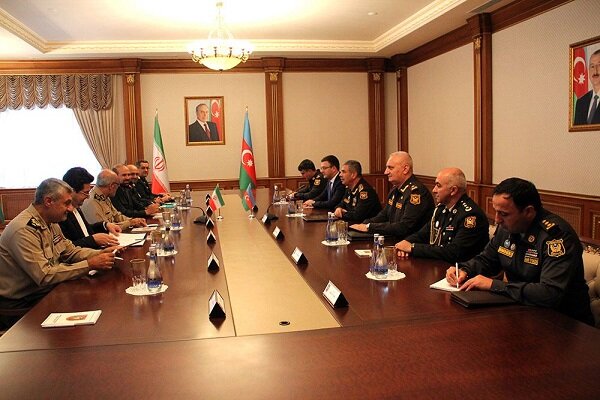
Simultaneously, an Iranian military delegation met on Saturday with Zakir Hasanov, the defense minister of Azerbaijan in Baku. 

The two sides discussed security issues in the region, according to Fars News.

The timing of the meeting suggests that the Iranian delegation might have conveyed a message from Iran regarding the prospect of new escalations between Baku and Yerevan. 

Iran has offered help to achieve peace and security in the South Caucasus region through diplomatic means. But it also said it cannot accept any use of force in the region to dictate new geopolitical realities. It remains to be seen whether Baku and Yerevan heeded the Iranian calls. 

By Sadegh Fereydounabadi

First published in Tehran Times


Categories
Selected Articles

UN Security Council convenes emergency meeting on Artsakh … – Armenian Weekly


UN Security Council convenes emergency meeting on Artsakh …  Armenian Weekly

Categories
Selected Articles

Azerbaijan could reopen Lachin Corridor on certain condition


  • By
    Al Mayadeen English
  • Source: Politico
  • Today 11:34

The Lachin Corridor remains closed until now but could reopen as Azerbaijan reassesses its position following hints that Armenia could accept Russian aid through an alternative route that crosses Azerbaijan.

  • Activists block a road from Stepanakert, the capital of Nagorno-Karabakh region of Azerbaijan, to Azerbaijani Aghdam demanding the reopening of the blockaded Lachin Corridor linking Karabakh to Armenia on July 18, 2023. (AFP)
    Activists block a road from Stepanakert, the capital of the Nagorno-Karabakh region of Azerbaijan, to Azerbaijani Aghdam demanding the reopening of the blockaded Lachin Corridor linking Karabakh to Armenia on July 18, 2023. (AFP)

On condition that leaders of Nagorno-Karabakh accept aid from Azerbaijan and not only from Armenia, the Azeri government agreed to reopen the Lanchin corridor linking Armenia to Nagorno-Karabakh, according to information citing a senior Azerbaijani official in POLITICO on Saturday.

The announcement comes after authorities in the Armenian-controlled exclave, also known to Armenians as the Republic of Artsakh, announced earlier in the day that it would accept humanitarian shipments from the Russian Red Cross via an alternative route.

The chosen route was through Aghdam, located within Azerbaijani government-held territory, which pushed Azerbaijan to reconsider its position.

In turn, Hikmet HAjiyev, the foreign policy adviser to Azerbaijani President Ilham Aliyev announced that “Azerbaijan expressed its consent as a goodwill gesture to ensure simultaneous opening” of the Lachin Corridor to allow for the transportation of ICRC cargo, reaffirming that “In the Lachin checkpoint, Azerbaijan’s customs and border regime must be observed.”

The Lanchin Corridor stands as the sole roadway linking Nagorno-Karabakh to Armenia, without which Armenia loses its only access to the self-proclaimed Republic of Artsakh. Consequently, severing this corridor has created hardships in the area, affecting the import of essential resources such as oil, electricity, food, and medical supplies. Nevertheless, both the corridor and the region have garnered international attention, given the substantial interests of multiple stakeholders in this region, which is geographically adjacent to Iran.

Azerbaijan builds up military forces on border: Armenian MoD

The Armenian Defense Ministry stated on Friday, underscoring the precarious situation prevailing at the border with Azerbaijan due to the apparent buildup of Azerbaijani military forces.

The mounting tension has raised concerns, prompting the Armenian Armed Forces to take measures aimed at maintaining stability and deterring potential provocations. “The situation continues to be tense as a result of the accumulation of Azerbaijani armed forces during the last two days. Hence, the Armenian Armed Forces continue to take necessary actions to stabilize it and prevent provocations,” the Armenian MoD said in an official statement. 

This recent escalation follows a recurring pattern of periodic exchanges of fire along the border between Armenia and Azerbaijan. The most significant flare-up in hostilities took place on September 12, 2022, leaving regional observers wary of a possible repeat of such confrontations.

Read more: Moscow summons Armenian envoy, gives him a ‘tough presentation’