Categories
Selected Articles

Armenia cancels military drills, widening rift with Moscow


?url=https%3A%2F%2Fstorage.googleapis.co

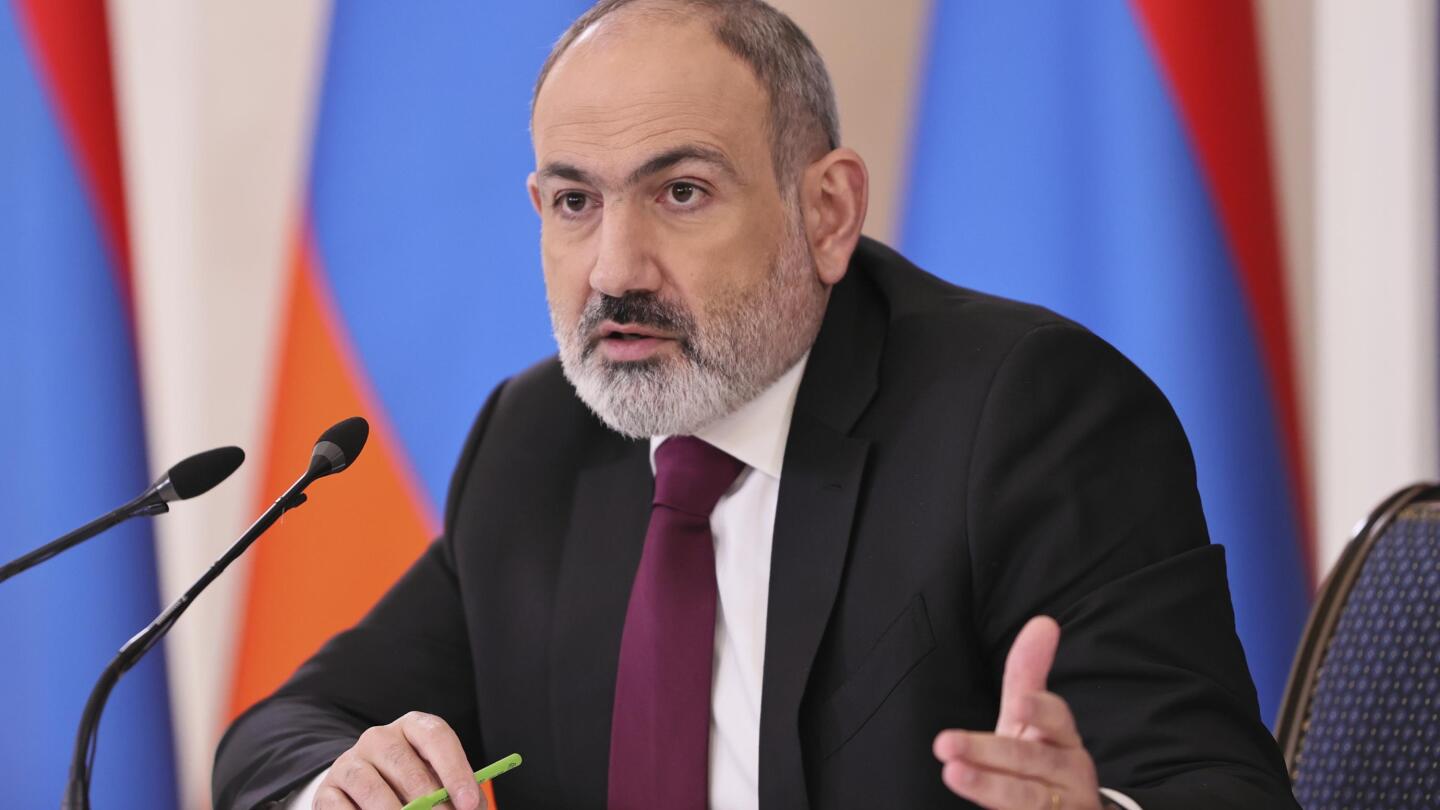
YEREVAN, Armenia (AP) — The prime minister of Armenia said Tuesday that his country has refused to host military drills planned by a Russia-dominated security pact, an announcement that reflected the Armenian government’s growing tensions with Moscow.

Nikol Pashinyan has repeatedly criticized Russian peacekeepers for failure to secure free transit along a corridor linking Armenia and the separatist region of Nagorno-Karabakh that Azerbaijani activists have blocked since last month.

Speaking at a news conference Tuesday, Pashinyan said that Armenia considers the military exercise the Moscow-dominated Collective Security Treaty Organization planned for later this year “inappropriate in the current situation.”

“At least this year, these drills won’t take place,” he said.

Pashinyan’s move followed his refusal in the fall to sign a conclusive document from a meeting of the leaders of CSTO member nations in Yerevan, Armenia’s capital.

Nagorno-Karabakh lies within Azerbaijan but has been under the control of ethnic Armenian forces backed by Yerevan since a separatist war there ended in 1994. That conflict left not only Nagorno-Karabakh itself but large chunks of surrounding lands in Armenian hands.

In 44 days of heavy fighting that began in September 2020, the Azerbaijani military routed Armenian forces, forcing Yerevan to accept a Russia-brokered peace deal that saw the return to Azerbaijan of a significant part of Nagorno-Karabakh. The agreement also required Armenia to hand over swaths of land it held outside the separatist region.

Lachin province, which lies between Nagorno-Karabakh and Armenia, was the last of the three areas on the rim of Nagorno-Karabakh that Armenian forces surrendered in December 2020. Russia deployed nearly 2,000 peacekeepers for at least five years to ensure safe transit across the region, to monitor the peace deal and to help refugees return.

But travel across the Lachin corridor has been blocked since Dec. 12 by Azerbaijani activists, who demanded access to what Azerbaijan has described as unlawful mining sites in Nagorno-Karabakh. Armenian authorities have described the blockade as part of efforts by Azerbaijan to extend its control over the region and urged the Russian peacekeepers to unblock the road.

The Azerbaijani move has left Russia in a precarious position. Armenia hosts a Russian military base, and Moscow has been the country’s top ally and sponsor. But the Kremlin also has sought to maintain warm ties with oil-rich Azerbaijan. Western sanctions over the Russian invasion of Ukraine have made Russia increasingly dependent on Azerbaijan’s main ally, Turkey.

With its attention focused on the fighting in Ukraine, Russia has taken a wait-and-see attitude on the Lachin corridor blockade, angering Armenia.

“Russia’s military presence in Armenia not only fails to guarantee its security, but it raises security threats for Armenia,” Pashinyan said Tuesday.

He noted that the blockade of the Lachin corridor is intended to “break the will of the people of Nagorno-Karabakh,” adding that Armenia will also seek support from the U.S. and the European Union to help ease the tensions with Azerbaijan.

After the Russian peacekeepers’ five-year mandate is over, Armenia could invite U.N. peacekeepers to come in “if Russia fails to fulfill its function to ensure security for the population of Nagorno-Karabakh,” Pashinyan said.

The Russia-brokered 2020 peace deal also called for the creation of a transportation link between Azerbaijani and its Nakchivan exclave via Armenian territory. Azerbaijani President Ilham Aliyev accused Armenia on Tuesday of reneging on its promise to provide such a transit corridor.

“Whether Armenia wants it or not, it will be implemented,” Aliyev said in televised remarks, describing the corridor to Nakchivan as Azerbaijan’s “natural right.” He added, though, that Azerbaijan has no plans to wage another war against Armenia.

Asked to comment on Armenia’s decision to cancel the planned military drills, Kremlin spokesman Dmitry Peskov said Moscow would ask Yerevan to clarify its position. “In any case, Armenia is our close ally, and we will continue our dialogue, including the most complex issues,” he told reporters.

Peskov previously rejected a claim by the secretary of Armenia’s Security Council that Moscow had pressured Armenia to join a union of Russia and Belarus.

Commenting on the claim Tuesday, Pashinyan said that Moscow had not made any official request to that effect but noted that “the reality isn’t as simple as it seems.” He added: “Sometimes, it’s not the text but the subtext that needs to be considered.”

“Armenia’s sovereignty is an absolute value,” the prime minister said.


Categories
Selected Articles

Is Russia preparing a coup in Armenia?


090800066404.webp

The Armenian telegram channel Bagramyan 26, considered close to Pashinyan, reported on September 8 that Russia was preparing a coup in Armenia with the help of members of the mercenaries from the private military company Wagner.

We publish this material with some abbreviations:

At the time of Prigozhin’s death, there were about 3,000 fighters of the Wagner PPK in Armenia. Recently (mostly from Rostov) they have been joined by about 2,000 contract soldiers (mostly ethnic Armenians). Considering Pashinyan’s recent statements about the mistake of choosing Russia as a strategic partner and accusing the Russian leadership of non-compliance with agreements on the Karabakh issue, the Kremlin has authorized the scenario of a coup d’etat in Armenia.

The goal of this plan is to remove Pashinyan and his team from power using the Wagner militants present in the country. The “last straw” for Putin was the joint Armenian-American military exercises. Currently, the number of Wagnerians in Armenia has increased to 12 thousand. The command to act was “for the day before yesterday.” The Russians’ main bet is on the top management of the military, intelligence services, and police, where there are plenty of Russian agents. In the middle and lower levels, support from Russians is much less. Russia does not have worthy candidates to replace Pashinyan (both Kocharyan and Sargsyan are popping up there…) and is going all-in.

The likelihood of success is extremely low, given the presence of numerous military formations in and around Yerevan. However, the emphasis is on destabilization on the contact line of Nagorno-Karabakh and on the Armenian-Azerbaijani border.

In continuation of the process, the cards of pro-Russian candidates for the mayor of Yerevan will be played (Tandilyan – Ruben Vardanyan’s candidate, Marutyan – Patrushev’s candidate, Tevanyan – Kocharyan’s candidate). -0-


Categories
Selected Articles

A shift in leadership dynamics: Samvel Shahramanyan becomes a key figure of Armenians in Karabakh


A shift in leadership dynamics: Samvel Shahramanyan becomes a key figure of Armenians in Karabakh

Baku/01.09.23/Turan: September 1 marked a significant turning point for the Armenians residing in the populated areas of the Karabakh Economic Region of Azerbaijan. Samvel Shahramanyan assumed the d ……

A shift in leadership dynamics: Samvel Shahramanyan becomes a key figure of Armenians in Karabakh

Turan News Agency – turan.az https://turan.az

https://turan.az/img/turanlogo.gif

Baku/01.09.23/Turan: September 1 marked a significant turning point for the Armenians residing in the populated areas of the Karabakh Economic Region of Azerbaijan. Samvel Shahramanyan assumed the de facto civilian leadership position, being appointed “state minister” with considerable authority by the now-resigned and illegitimate president, Araik Harutyunyan. The post of “president” is awaiting a successor, with the region’s illegal “parliament” set to make an appointment within a week.

This recent shift in power can be traced back to a series of events that began on July 29, 2023. On that day, “parliament” speaker Artur Tovmasyan voluntarily stepped down from his position, acknowledging his inability to influence unfolding events. Subsequently, on August 9, David Ishkhanyan, a representative of the radical nationalist Dashnaktsutyun party, was elected as the new “speaker,” signaling a transfer of elected power into the hands of staunch adversaries of Azerbaijan.

With Harutyunyan’s departure, his ally “state Minister” Gurgen Nersisyan, known for impassioned anti-Azerbaijan rhetoric, also resigned. Another notable departure was Artak Beglaryan, known for his fervent animosity towards Turks. Ruben Vardanyan, once a “state minister,” then an “adviser to the state minister,” also exited the political stage.

Stepping into this shifting landscape is Samvel Shahramanyan, who formerly held the post of “secretary of the Security Council.” Shahramanyan’s career trajectory is marked by his roles in various governmental departments since 1999. Notably, he served in the local “National Security Service” from 1999 to 2008, followed by positions such as “head of the operational investigation Department of the tax Service” (2008-2010), “chief enforcement officer of the Ministry of Justice” (2010-2013), “head of the Criminal Investigation Board of Khankendi,” (2013-2018), “Director of the Service National Security” (2018), “Minister of Youth, Sports and Tourism” (2020), and “Secretary of the Security Council” (2023).

Shahramanyan has faced personal tragedy as well; his son lost his life in the 44-day war. Yet, his career progression has been attributed to his apparent avoidance of major confrontations with corrupt officials, as noted by blogger David Stepanyan. Stepanyan asserts that Shahramanyan’s rise through the ranks was facilitated by his tendency to turn a blind eye to certain practices, particularly high-ranking officials’ evasion of taxes. This has allowed him to consistently climb the ladder of success.

In contrast to his predecessor, Shahramanyan has not faced a criminal case initiated by the Prosecutor General’s Office of Azerbaijan, positioning him potentially more favorably for negotiations with Baku. However, his stance on the demands made by Azerbaijan remains unknown as of now.

As the leadership dynamics continue to evolve in the region, Shahramanyan’s ascendancy and his potential role in shaping the region’s relationship with Azerbaijan will undoubtedly be closely watched by both local and international observers.-0–


Categories
Selected Articles

Ukraine’s Zelenskiy: Our partners have eased up on sanctions on Russia


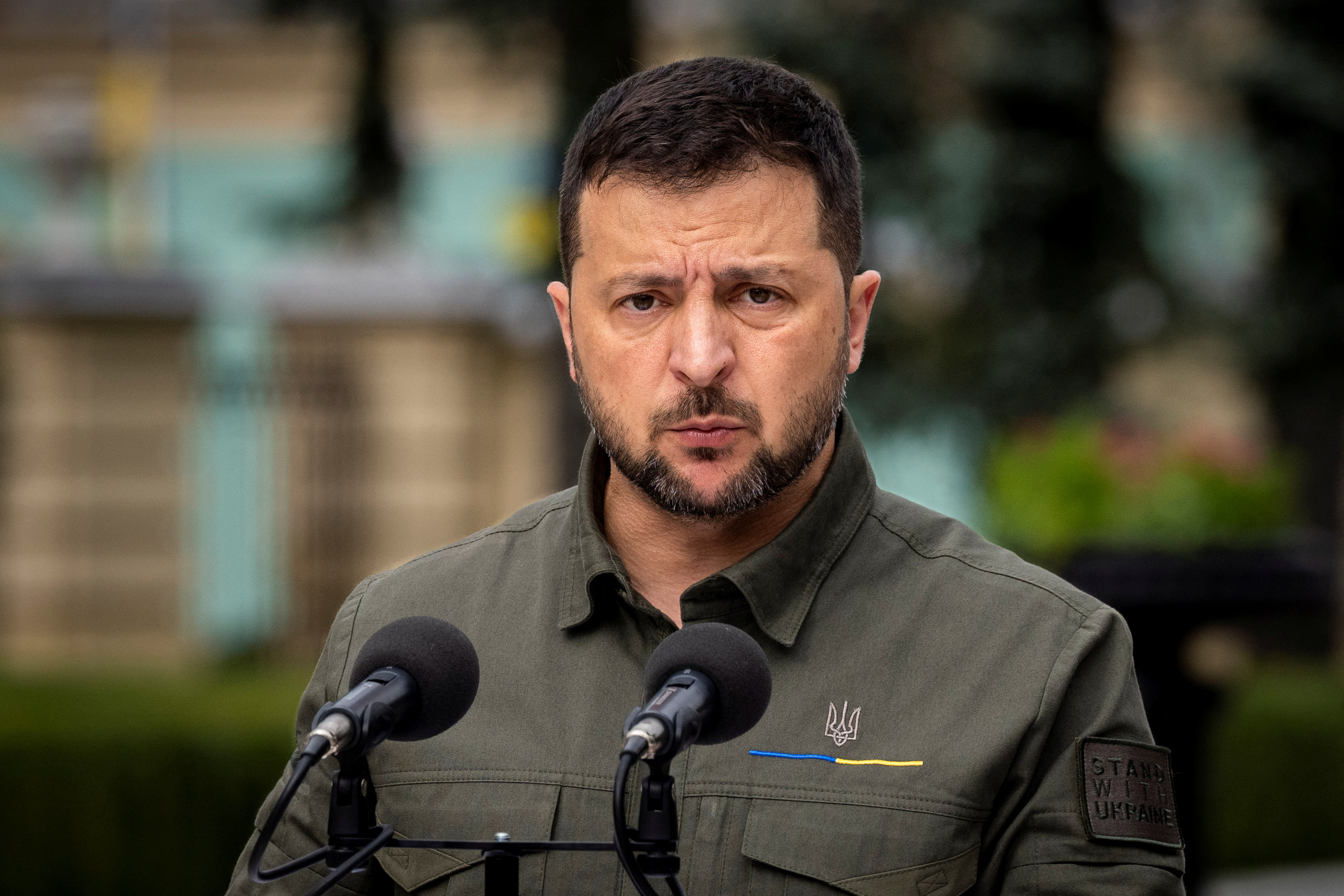
Ukraine's President Volodymyr Zelenskiy during a press conference with Denmark's Prime Minister Mette Frederiksen

Ukraine’s President Volodymyr Zelenskiy during a press conference with Denmark’s Prime Minister Mette Frederiksen (not pictured) in front of the presidential palace in Kyiv, Ukraine, September 6, 2023. Ritzau Scanpix/Ida Marie Odgaard via REUTERS Acquire Licensing Rights

Sept 8 (Reuters) – Ukrainian President Volodymyr Zelenskiy said on Friday that his country’s allies had eased sanctions on Russia and called for a renewed drive to impose further punitive measures on Moscow.

“At this time, we see too long a pause by our partners in terms of sanctions,” he said in his nightly video address. “And very active Russian attempts to evade sanctions.”

Zelenskiy said keeping the pressure on Moscow should focus on Russia’s energy sector, its access to microelectronics and its financial sector.

“There are three priorities: further sanctions against Russia’s energy sector, real restrictions on the supplies going to the terrorists of chips and microelectronics in general and continued blocking of Russia’s financial sector,” he said.

“The world’s sanctions offensive must resume.”

Foreign Ministry spokesperson Oleg Nikolenko had earlier said Ukraine rejected any suggestion of easing sanctions against Russia as part of efforts to restore the U.N.-backed agreement to ship grain through the Black Sea.

“Easing part of the sanctions regime against Russia in exchange for the resumption of the grain agreement would be a victory for Russian food blackmail and an invitation to Moscow for new waves of blackmail,” Nikolenko wrote on Facebook.

Reporting by Oleksander Kozhukhar and Ron Popeski; editing by Jonathan Oatis and Cynthia Osterman

Our Standards: The Thomson Reuters Trust Principles.


Categories
Selected Articles

Azerbaijan will allow aid into Karabakh from Armenia if aid from its side is let in, official says


c5c99a44de4a99fe8eb83c490162e87b

By Andrew Osborn

LONDON (Reuters) -Azerbaijan is ready to allow Red Cross aid from Armenia into the ethnic Armenian Nagorno-Karabakh enclave if Red Crescent aid from Azerbaijan is let in at the same time, Hikmet Hajiyev, foreign policy adviser to President Ilham Aliyev, told Reuters.

Nagorno-Karabakh, internationally recognised as part of Azerbaijan but run by ethnic Armenian authorities, is at the centre of a rancorous stand-off, with Azerbaijan restricting movement along the only road to it from Armenia to thwart what it says is arms smuggling.

Armenia says what it calls a blockade of the “Lachin corridor”, known as “the road of life” by ethnic Armenians in Karabakh, has caused acute shortages of food, medicines and other essentials.

Baku says it has let the Red Cross evacuate people to Armenia for medical treatment and that its own information shows there is no shortage of basic food staples, but it has not allowed food and other supplies in for some time.

Hajiyev said in an interview on Thursday that Azerbaijan was now ready to let the Red Cross bring in humanitarian aid on condition that the Red Crescent also be allowed to bring in aid, on a different road from Azerbaijan.

He said the two roads – the Lachin corridor and the Aghdam road – could be opened to aid simultaneously as part of a pilot scheme that could defuse tensions and spur long-running peace talks between Baku and Yerevan.

The idea had been discussed in a phone call between President Aliyev and U.S. Secretary of State Antony Blinken on Sept. 1, he said.

“There was a suggestion for the simultaneous opening of the roads and Azerbaijan agreed and immediately agreed,” said Hajiyev, saying that part of the Aghdam road had been obstructed with concrete blocks by Karabakh’s ethnic Armenian authorities.

“Now one week has passed since the telephone call with Secretary Blinken and there is no movement.”

Yuri Kim, acting assistant secretary of state for the United States, spoke on Thursday of “progress toward immediately & simultaneously opening Lachin and other routes to get humanitarian supplies into Nagorno-Karabakh”.

“Opening routes and direct talks are key to resolving outstanding issues,” Kim said on X.

Ruben Vardanyan, a billionaire banker who was a top official in Karabakh’s ethnic Armenian administration until February, said Azerbaijan was wrong to try to attach preconditions to allowing aid to pass through the Lachin corridor.

Vardanyan, who has accused Baku of trying to “ethnically cleanse” the enclave by choking off supplies to it – something it denies – said a Russian-brokered 2020 ceasefire deal signed by Azerbaijan after a short war was meant to ensure that the Lachin corridor remained open to Armenia.

“Their President signed a trilateral ceasefire statement on November 9th (2020) and took responsibility for providing a corridor for uninterrupted connection,” Vardanyan said on X on Wednesday.

“However, they now refuse to implement that commitment and are attempting to impose new preconditions for opening the Lachin Corridor.”

(Reporting by Andrew Osborn; Editing by Kevin Liffey)