
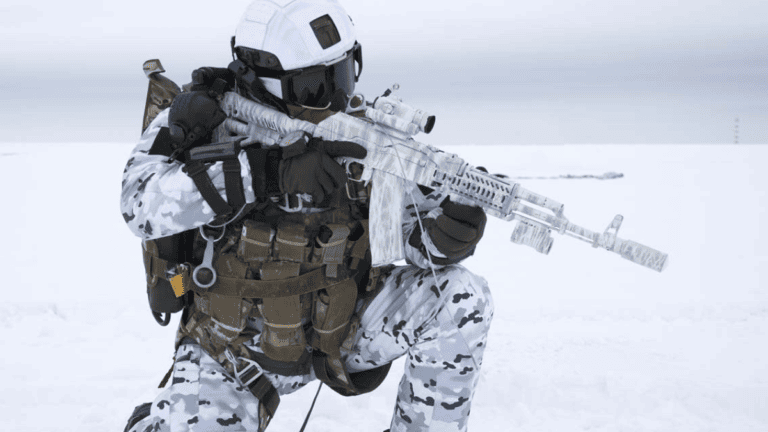
Russia’s invasion of Ukraine has created an even tenser atmosphere in the Arctic. The war changed key political dynamics with NATO and its two new Arctic members: Sweden and Finland. In Russia’s 2020 Arctic Strategy 2035, the Kremlin focused on the creation of new transport routes, environmental protections and maritime delimitation (source; source). However, tensions with NATO have led to a shift in priorities towards security and military countermeasures (source). These recent developments put the Arctic in Russia’s sights, with implications for domestic and foreign policy over the next 12 months.
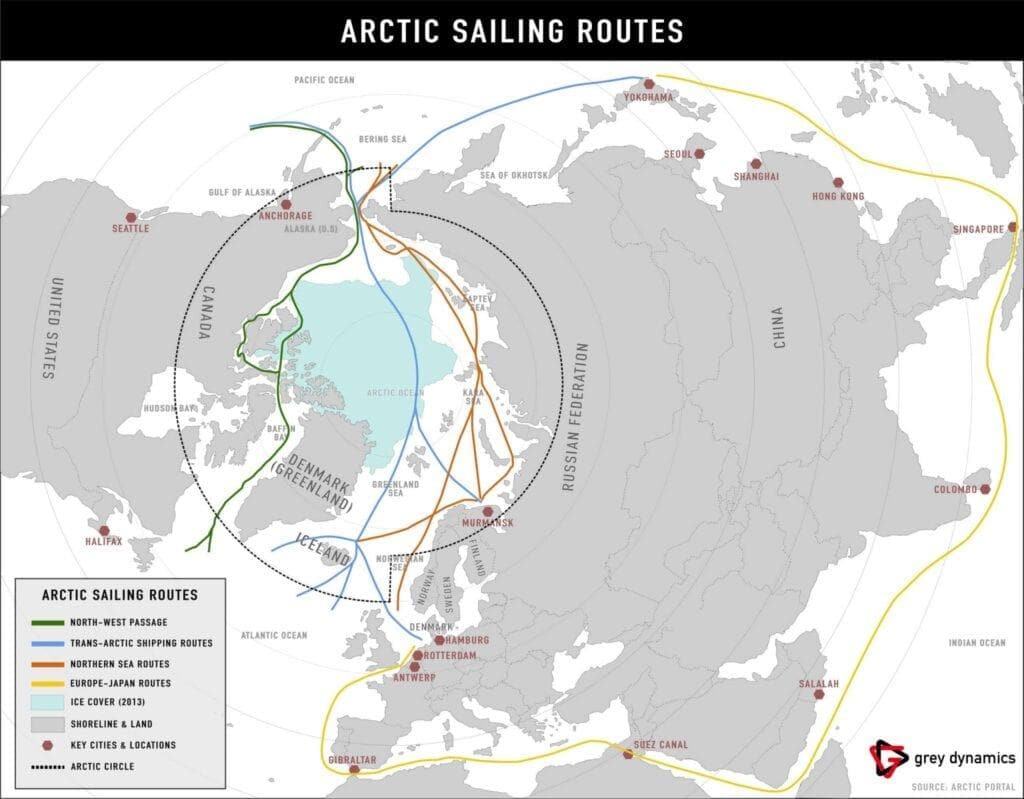
Key Judgement 1. In the next 12 months, Russia is likely to intensify its military presence in the Arctic.
Key Judgement 2. Over the next 12 months, Russia will likely continue strengthening Arctic transport routes, focusing on energy exports.
Key Judgement 3. It is likely that in the next 12 months, Russia will seek political-economic cooperation in Arctic affairs with China.
KJ-1. In the next 12 months, Russia is likely to intensify its military presence in the Arctic.
a. In April 2023, Finland joined NATO, while Sweden is close to joining as well. Russia will soon be the only non-NATO Arctic Council member (source; source).
b. Russia has threatened Finland and Sweden not to join NATO, nor to deploy NATO troops on their territory (source). Russia perceives these as threats and is reinforcing its Northern Fleet (source; source).
c. Since early 2023, NATO and Finland have intensified their involvement in the Arctic with numerous military exercises (source). Russia has warned of retaliation for this activity (source).
d. Russia is expanding and modernising its military bases and outposts, and deploying more personnel and materiel (source; source). In early 2023, Russian authorities approved the expansion and modernisation of Russia’s Novaya Zemlya air base in the Arctic (source).

KJ-2. Over the next 12 months, Russia will likely continue strengthening Arctic shipping routes, focusing on energy exports.
a. Moscow’s policy stance is to use the Arctic as a strategic resource base to meet the country’s socio-economic needs. Russia will seek to develop unexploited energy deposits to boost its economy (source).
b. Moscow is also expanding its energy infrastructure in the region (source). Major projects include the interlinked Yamal LNG (liquefied natural gas) and Northern Sea Route (NSR) projects (source).
c. In 2020, Moscow declared its Arctic region a Free Trade Zone (FTZ). This includes tax incentives to encourage Russian residents to relocate there. This seeks to favour the creation of a belt of free ports along the NSR (source).
KJ-3. It is likely that in the next 12 months, Russia will seek political-economic cooperation in Arctic affairs with China.
a. Given the tensions with the West, Sino-Russian cooperation is increasing significantly, especially in the economic sphere (source).
b. The Kremlin is gradually moving closer to China in search of more cooperation and new projects (source). Both nations cooperate on the Yamal LNG and the Sila Sibiri (Siberian Power) gas pipeline (source).
c. Russia is also working on the development of the Russian Far East with China. Discussions are underway on joining the Belt and Road Initiative (source).
d. However, China seems unwilling to establish a military presence in the Arctic. Beijing is more focused on the South China Sea where it has historical ties and bases (source).
Analytical Summary
We have high confidence in our assessment that, given NATO presence, Russia will increase its military activity in the Arctic. We are confident that Russia will get closer to China to strengthen its energy market in the region. Our analysis is primarily based on English-language press. We assume that Russia, and NATO, will continue to be interested in expanding their influence in the Arctic. Were this assumption proven incorrect, we would expect to see a de-escalation of war in the Arctic between both blocks. Further insight into Russian and Chinese plans and NATO activity in the region would reduce uncertainty.
Intelligence Cut-off Date: 27 December 2023
The post Russia’s Arctic Strategy 2024: A 12-Month Assessment appeared first on Grey Dynamics.