Categories
Selected Articles

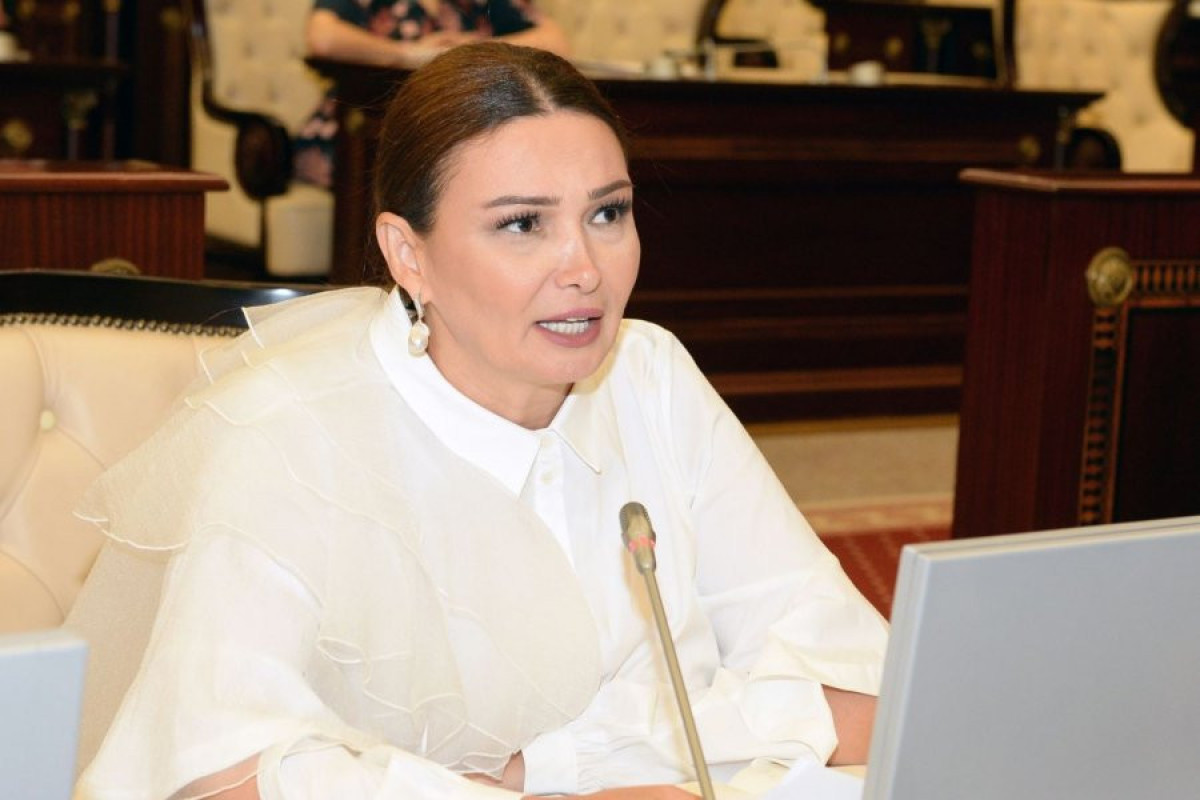
Azerbaijani MP Ganira Pashayeva fell into a coma


650ff17196015650ff171960161695543665650f

Member of Azerbaijani Parliament Ganira Pashayeva fell into a coma, APA reports.

She fell into a coma last night and was admitted to the Central Clinical Hospital.

She is currently being treated there.

It is reported that the deputy fell into a coma from the medicine.


Categories
Selected Articles

Armenian envoy expects Israel will halt arms sales to Azerbaijan amid conflict


President Reuven Rivlin spoke on the phone to his Armenian counterpart Armen Sarkissian on Monday, amid anger in the capital Yerevan over Israeli arms sales to Azerbaijan as a border dispute between the countries flares.

Shortly after the call, Armenia’s Ambassador to Israel Armen Smbatyan told Armenian news site Factor.am that Yerevan was in talks with Jerusalem and believes weapons sales could be halted in the coming days.

“I think that in this situation, Israel will stop supplying weapons to Azerbaijan. We are cooperating with the Israeli Foreign Ministry, there are certain people in the presidency, there are people who have influence.

“In two or three days they seem to be on the way to stopping the supply of weapons… I was given a verbal promise,” he said.

In the phone call between presidents, Rivlin “expressed his sorrow at the outbreak of violence between Armenia and Azerbaijan in the Nagorno-Karabakh region and at the loss of life on both sides,” a statement from his office said.

Get The Times of Israel’s Daily Edition
by email and never miss our top stories
By signing up, you agree to the terms

“He added that the State of Israel has longstanding relations with Azerbaijan and that the cooperation between the two countries is not aimed against any side,” the statement added, in an apparent reference to Israel’s sale of military weapons to Baku.

“The president also noted that the State of Israel is interested in promoting relations with Armenia and is prepared to offer humanitarian aid, and that we welcome the opening of the Armenian embassy in Israel and hope that the Armenian ambassador will return soon,” Rivlin’s office said.

In this photo released by Ministry of Defense of Armenia on Sept. 29, 2020, an Armenian soldier fires an artillery piece during fighting with Azerbaijan’s forces in the breakaway region of Nagorno-Karabakh. (Ministry of Defense of Armenia via AP)

The phone call came four days after Armenia announced that it was recalling its ambassador from Israel due to Israeli weapon sales to its bitter enemy Azerbaijan, against the backdrop of heavy fighting between the two nations over the disputed region of Nagorno-Karabakh.

The ongoing clashes represent the biggest escalation in years of a decades-old conflict that has killed dozens and left scores of others wounded.

The Armenian ambassador was recalled to protest what an Armenian foreign ministry spokeswoman called “Israel’s supply of ultra-modern weapons to Azerbaijan.”

The Israeli Foreign Ministry released a statement in response saying it regretted the Armenian decision and that “Israel attaches importance to our relations with Armenia, and because of this sees the Armenian Embassy in Israel as an important tool for promoting the benefit of both peoples.”

Armenian foreign ministry spokewoman @naghdalyan: “For us, Israel’s supply of ultra-modern weapons to Azerbaijan is unacceptable, especially now, in the conditions of Azerbaijan’s aggression with the support of Turkey”

— Barak Ravid (@BarakRavid) October 1, 2020

Israel and Azerbaijan enjoy security and import agreements and it is speculated that Israel supplies 60 percent of the Azerbaijani military’s armaments, while Azerbaijan supplies a large amount of natural fuel to the Jewish state.

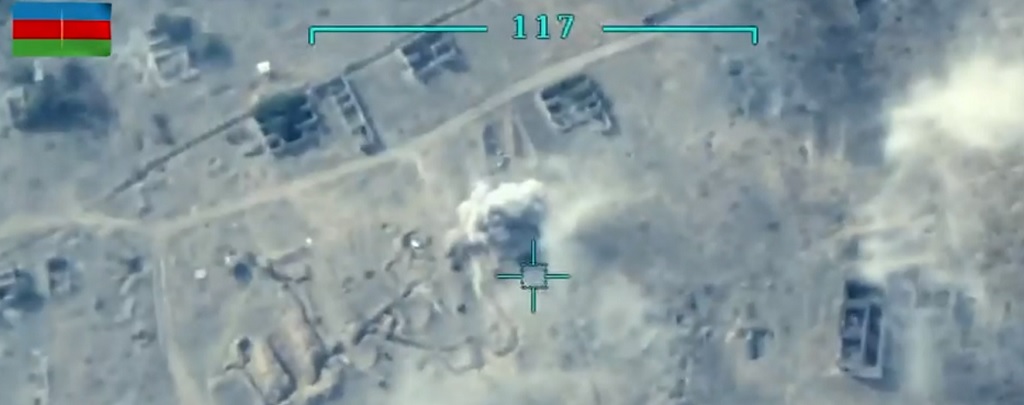
The Azerbaijani military has been using Israeli-made attack drones — including loitering munitions, or “kamikaze drones” — during the recent uptick in violence with Armenia, Hikmet Hajiyev, assistant to the president of Azerbaijan, said in an interview with Israel’s Walla news site Wednesday.

Hajiyev lauded the effectiveness of the Israeli weapons.

The Azerbaijani Ministry of Defense then released several videos showing drones in action against Armenian forces.

An Azeri drone striking an Armenian artillery battery. (Screengrab: Walla)

The fighting in Nagorno-Karabakh erupted last Sunday and has continued despite mounting calls for a ceasefire from around the globe.

Azerbaijan’s Defense Ministry said Armenian forces started shelling the town of Tartar last month, damaging “civilian infrastructure” and wounding people, while Armenian military officials reported that Azerbaijani forces were bombing positions of the Nagorno-Karabakh army in the north of the war-torn region.

Nagorno-Karabakh lies within Azerbaijan but has been under the control of ethnic Armenian forces backed by the Armenian government since 1994, at the end of a separatist war following the breakup of the Soviet Union three years earlier.

AP contributed to this report. 

Responsibly covering this tumultuous time

As The Times of Israel’s political correspondent, I spend my days in the Knesset trenches, speaking with politicians and advisers to understand their plans, goals and motivations.

I’m proud of our coverage of this government’s plans to overhaul the judiciary, including the political and social discontent that underpins the proposed changes and the intense public backlash against the shakeup.

Your support through The Times of Israel Community helps us continue to keep readers across the world properly informed during this tumultuous time. Have you appreciated our coverage in past months? If so, please join the ToI Community today.

~ Carrie Keller-Lynn, Political Correspondent


Yes, I’ll join


Yes, I’ll join

Already a member? Sign in to stop seeing this

You’re a dedicated reader

We’re really pleased that you’ve read X Times of Israel articles in the past month.

That’s why we started the Times of Israel eleven years ago – to provide discerning readers like you with must-read coverage of Israel and the Jewish world.

So now we have a request. Unlike other news outlets, we haven’t put up a paywall. But as the journalism we do is costly, we invite readers for whom The Times of Israel has become important to help support our work by joining The Times of Israel Community.

For as little as $6 a month you can help support our quality journalism while enjoying The Times of Israel AD-FREE, as well as accessing exclusive content available only to Times of Israel Community members.

Thank you,
David Horovitz, Founding Editor of The Times of Israel


Join Our Community


Join Our Community

Already a member? Sign in to stop seeing this


Categories
Selected Articles

Israeli Weapons Fuel Armenia-Azerbaijan Conflict and Grease Palms of Corrupt Elite


israeli arms exportsAmnesty International graphic on Israeli arms exports

It’s common knowledge that Israel is one of the world’s largest arms exporters. As I reported in Jacobin Magazine, it exports to the most genocidal regimes on the planet, and fuels ethnic conflicts from South Sudan to the Phillipines.

Less known is the role Israel is playing the Nagorno-Karabakh conflict between Armenia and Azerbaijan. In fact, the latter’s largest cargo planes are landing several times a week at an Israeli military air base, loading up on Israeli weapons and ferrying them back to Azerbaijan, sometimes with stops along the way in Turkey, another Azeri military ally.  Nor is this a recent development.  Israel has been selling advanced weapons systems to the Azeris for years. And the deals haven’t stopped at weapons systems. Because of Azerbaijan strategic location sharing a long border with Iran, it becomes a major intelligence asset for Israel as it seeks ways to surveil its arch-enemy Iran and understand its military capabilities.

News reports have indicated that the Azeris have permitted Israel to refurbish an old Soviet-era airfield thus permitting Israeli drones and aircraft to fly reconnaissance missions directed at Iran.  If Israel ever mounted an air assault on Iran and its nuclear facilities, such a base would prove invaluable given how difficult it would be for its war planes to fly directly from Israel to Iran.  The Mossad has also opened a station in Baku in order to monitor Iran.

A nation as steeped in corruption as Azerbaijan doesn’t offer these “favors” cheaply. They come with a steep price tag.  As you’ll see below, the price of a huge Israeli arms deal was nearly 10% in kickbacks to regime cronies. Access to an entire airfield on Iran’s border? As the commercial says: Priceless!

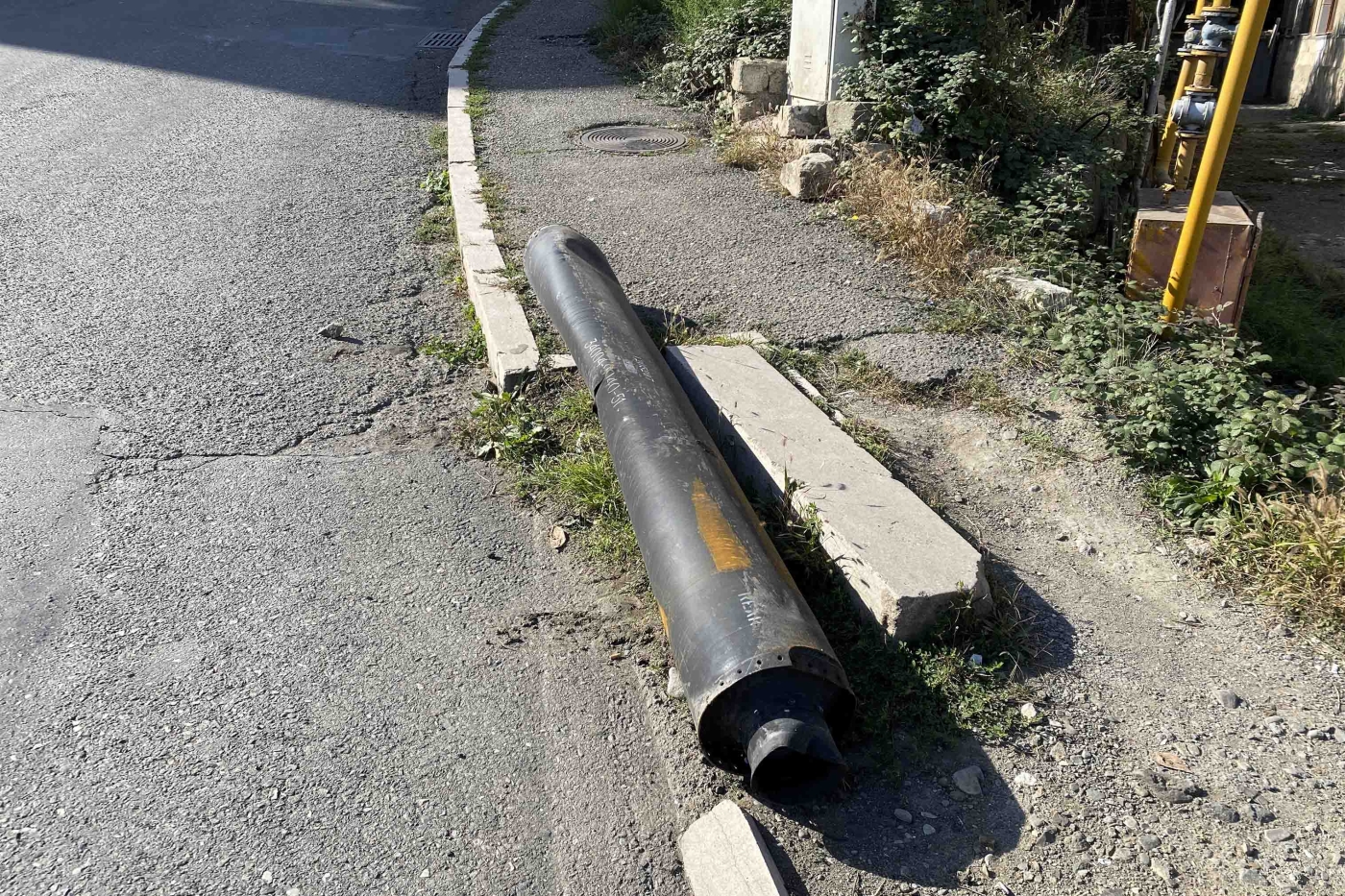
israeli rocketAn LAR-160 series Israeli-made rocket fired by Azerbaijan on the Nagorno-Karabakh capital (Human Rights Watch)

In another odd development, Israeli drone manufacturer, Aeronautics, sent technicians to Azerbaijan to demonstrate the capabilities of their products. The military officials then demanded that the Israeli drone handlers actually attack an Armenian military encampment to seal the deal. The technicians rightfully protested and refused to comply.  They refused to become players in a conflict not of their making.

But the company was so desperate to complete the transaction that a corporate executive accompanying the mission himself flew the drone and attacked the Armenians. Though soldiers were injured, no one was killed. The drone operators filed a complaint with the defense ministry.  The company was sanctioned for its behavior.  But the Israeli military censor, seeking to avoid exposing an embarrassing moment in which Israelis directly intervened in a foreign military conflict, suppressed the identity of the Israeli company (though I reported it here).

Perhaps most alarming of all is Uri Blau’s expose for Haaretz revealing that another Israeli arms exporter, Israel Aerospace Industries, signed a huge $1.6-billion deal with Azerbaijan several years ago, one of the largest foreign contracts ever signed by an Israeli weapons maker.  Now those weapons are likely killing Armenians on the battlefield and constitute a major advantage for Azerbaijan in Nagorno-Karabakh.

How did the Israeli company seal the deal?  Did it offer the best quality product?  Did it offer the lowest price?  None of these.  It offered a cash bonanza to the Azeri government officials and their cronies who approved the deal. $155-million, or nearly 10% of the entire value of the deal was paid into offshore accounts controlled by members of the Azeri elite.  Before reaching those shell company accounts, the Israelis transferred the funds to Russian banks, in one of which oligarch Mikhail Prokhorov, the former owner of the Brooklyn Nets NBA team, has a majority interest.

As an aside, it seems that buying major sports teams is one of the preferred ways for dirty Russian oligarchs to launder their ill-gotten gains (cf. Abramovich, Gadaymak, Prokhorov, Rybolovlev, etc.)

Which indicates that the seamy trail of corruption which begin in Israel, meanders through dirty Russian oligarchs and ends in the hands of Azeri crooks,  who use it to buy luxury cars and jewels for their mistresses, or villas on the French Riviera.  Not to mention the role these transactions play in laundering the money so that it is moves from the dark and into the light of legitimate commerce.

Somehow, while Ben Gurion once rejoiced that the new Jewish State could even have its own Jewish crooks, thus achieving the ‘normalcy’ of any other nation, I’m not sure he had this in mind.

While the amounts spent on armaments by many of these purchasing nations are astronomical; and the enormous sums spent prove too enticing for the buyers to control their venality; nevertheless, Israel has proven to be a master of the bribe. Not only have arms exporters paid such bribes, but Israeli oligarchs seeking to pillage the natural resources of African countries have paid enormous bribes to kleptocratic rulers in order to gain commercial mining concessions.

Though Israeli officials will claim that there are regulations in place to monitor corporate behavior and constrain such corrupt dealings, the truth is that the defense ministry takes a hands-off approach to arms deals.  These are huge money-makers for the Israeli economy. The prevailing attitude is: why mess with the goose that lays the golden eggs?  As long as arms dealers are raking in the cash and fueling the country’s export boom, why complicate things by introducing foreign concepts like ethics and transparency?

In the case of the mining magnates, it wasn’t Israel that stepped in to restrain the rapaciousness of oligarchs like Dan Gertler.  It was the U.S. Treasury which sanctioned him and embarrassed Israel by doing so.

There is little likelihood a foreign government will act against corrupt Israeli business practices in this region.  So the killing will continue and Israeli weapons will play a major role in heightening the lethality of the conflict.

As Yossi Melman wrote about Israeli rockets destroying Armenian homes in Nagorno-Karabakh:

It’s hard to expect that Israel, which always decries rockets launched against civilians by Hezbollah and Hamas, will change its ways. Another country may have declared a suspension of shipments, even temporarily. In anything related to the Holocaust, to historical memory and to the sale of weapons, the hypocrisy of Israeli governments over the years is nothing new. The government’s current silence on the matter speaks volumes.

One final word: Israel is by no means the most corrupt country in the world; but it surely is one of the most corrupt among those western democracies to which it is so fond of comparing itself. Massive bribery may fuel growth and bring in contracts in the short run.  But in the long run, major companies based in large western countries will steer clear of engaging in commerce with Israel in these fields. It will at some point have to crack down on such rampant venality if it wants to join the ranks of major western exporters of goods and services.  In fact, studies show that economies overall suffer from such corruption, which tends to enrich the elite and bypass the rest.  Israel, with one of the largest wealth disparities between rich and poor among OECD countries, makes this worse through its rampant corruption.


Categories
Selected Articles

Azerbaijan Museum Tells Mysteries of the Mountain Jews


Krasnaiya-Sloboda.jpg

By Larry Luxner

A 19th-century silver Kiddush cup. Faded Soviet propaganda magazines from the 1920s. Clandestine letters mailed from the front by Jewish soldiers battling Nazis. Medallions from Azerbaijan’s bruising 1992 war against Armenia.

These are among hundreds of artifacts on display at Azerbaijan’s new Museum of Mountain Jews in the remote town of Krasnaiya Sloboda, an all-Jewish shtetl of about 3,500 inhabitants and two active synagogues 25 miles south of the Azerbaijani-Russian border.

The only problem is that the pandemic has prompted Azerbaijan to close its borders to foreign tourists. As a result, the museum is closed until further notice.

It was to have been inaugurated earlier this year by President Ilham Aliyev and the three Russian Jewish oligarchs who financed its construction. Invited guests from Israel and elsewhere were scheduled to attend.

Whenever Azerbaijan reopens, foreign visitors will be able to access one of the most remote collections of Judaica anywhere in the former Soviet Union. Housed in the restored Karchogsky Synagogue, which had lain dormant for years, the museum is a symbol of Azerbaijan’s efforts to preserve what’s left of its shrinking, isolated Jewish community.

Azerbaijan is home to about 24,000 Jews, according to local leaders. Some 4,000 are Ashkenazim who live in the capital, Baku. The rest are so-called “Mountain Jews” who have distinct cultural, linguistic and religious traditions that sometimes more closely resemble those of their Muslim neighbors rather than of other Jews.

Krasnaiya Sloboda is a one-of-a-kind place. “There’s no other town in the world like this outside Israel,” Chabad Rabbi Yoni Yaakobi, who moved to Krasnaiya Sloboda 15 years ago from Israel. “The Jews here date from 2,500 years ago, even before the time of the First Temple.”

Area Jews got the appellation “Mountain Jews” because they used to live near Shahdagh, a peak in the Greater Caucasus range. Most are descended from Jews who began arriving from Persia in the 13th century. As a result, many of their texts are written in Juhuri, an obscure, ancient language consisting mainly of Farsi with some Hebrew sprinkled in.

The new museum features many of the unique elements of the “Mountain Jews,” including their traditional costumes and jewelry, as well as ritual utensils, manuscripts and marriage contracts.

One of the museum’s greatest treasures is the Slashed Book, a siddur used by a local rabbi hundreds of years ago to protect himself from the sword of a Muslim general whose army had come to attack Jews living in the area.

“The general tried to stab the rabbi, but instinctively the rabbi held the prayer book in front of him and it got cut in half — nothing happened to him,” said Pisakh Issakov, the top appointed municipal official in Krasnaiya Sloboda.

Famous Jews featured in the museum’s displays range from the Israeli-born folk singer Yaffa Yarkoni, a descendant of “Mountain Jews,” to Albert Agarunov, an Azerbaijani tank commander who was posthumously awarded the title National Hero of Azerbaijan after being killed by an Armenian sniper during the 1992 Nagorno-Karabakh War.

While about 95 percent of Azerbaijan is Muslim, the country’s Jews say they get along very well with their neighbors. The government keeps a tight lid on Islamic extremism.

“We don’t have anti-Semitism because there’s a positive attitude among Azerbaijanis,” said Evgeny Brenneysen, deputy chairman of the Jewish community in Baku. “If anything, people will bend over backwards to show friendship towards the Jews.”

The great threat to Jewish tradition in Azerbaijan in the last century was the Soviet era, when much of Jewish practice was snuffed out. All but one of Kraisnaya Sloboda’s 13 synagogues closed.

Following the collapse of the Soviet Union and the economic chaos of the early 1990s, most of Azerbaijan’s Jews moved to Israel or Russia. Even today, many of the Jews registered as residents of Krasnaiya Sloboda actually live in Moscow, Israel or New York.

“Lots of Jews are here, but unfortunately after 70 years of communist rule there’s no real Jewish life,” said Rabbi Shenor Segal, chief rabbi of the Ashkenazi community of Azerbaijan. “In most cities of the former USSR, synagogues were closed. Here in Baku they were open, but average people did not attend — only the elderly.”

Because Azerbaijan was relatively tolerant of its Jewish minority, the rate of intermarriage is quite high, he noted.

Today, there are seven active synagogues in the country, including the large Ashkenazi Synagogue in Baku. Baku is also home to Bet Chabad Or Avner, a Jewish educational complex with about 180 students. Last year, Azerbaijan’s first-ever kosher restaurant, 7/40, opened in the city’s Nasimi district, but it has since closed amid the pandemic.

Local Jews are eager for tourists to return, but with most flights into Baku on hold, that prospect remains far off.

“There’s no work, no jobs. We live from tzedakah,” said Yaakobi, the Chabad rabbi in Krasnaiya Sloboda. “Most of our young people have left to live in Russia and become businessmen. Most people will go to where the money is.”

Larry Luxner writes for the JTA global Jewish news source.


Categories
Selected Articles

Aliyev y Pashinián se reunirán el 5 de octubre en Granada bajo los auspicios de la UE


Archivo - Ilham Aliyev y Nikol Pashinyan en una reunión con Vladimir Putin de anfitrión en una imagen de archivo

Archivo – Ilham Aliyev y Nikol Pashinyan en una reunión con Vladimir Putin de anfitrión en una imagen de archivo – Europa Press/Contacto/Mikhail Klimentyev/Kremlin P

MADRID, 24 Sep. (EUROPA PRESS) –

El primer ministro de Armenia, Nikol Pashinian, y el presidente de Azerbaiyán, Ilham Aliyev, se reunirán el 5 de octubre en Granada para abordar la negociación de un tratado de paz entre ambos países, según ha confirmado este domingo el Consejo de Seguridad de Armenia.

También estarán presentes el presidente de Francia, Emmanuel Macron; el canciller alemán, Olaf Scholz, y la presidenta de la Comisión Europea, Ursula von der Leyen, según recoge la Radio Pública de Armenia.

El secretario del Consejo de Seguridad armenio, Armen Grigorian, viajará el próximo martes a Bruselas para preparar esta cita. Allí se reunirá con el asesor de la Presidencia azerí, Hikmet Hajiyev. También se previsto reunirse con asesores de Macron, Scholz y del presidente del Consejo Europeo, Charles Michel.

La región de Nagorno Karabaj es un territorio de unos 4.400 kilómetros cuadrados en el Cáucaso Sur reconocido internacionalmente como parte de Azerbaiyán, si bien la mayoría de esta zona del país ha estado gobernada por la autoproclamada república de Artsaj –respaldada por Armenia–, desde la Primera Guerra de Nagorno Karabaj, entre 1988 y 1994.

Tras la ofensiva azerí de 2020 y el ataque relámpago del pasado 19 de septiembre en la que en un solo día las fuerzas de Azerbaiyán lograron un alto el fuego que incluye el desarme y la retirada de las fuerzas proarmenias de Nagorno Karabaj.


Categories
Selected Articles

Nagorno-Karabakh says no agreement yet with Azerbaijan on guarantees or amnesty – Reuters


Nagorno-Karabakh says no agreement yet with Azerbaijan on guarantees or amnesty – Reuters
19:19, 22 September 2023

YEREVAN, SEPTEMBER 22, ARMENPRESS. Nagorno-Karabakh authorities said on Friday that there were no concrete results yet from talks with Azerbaijan on possible security guarantees or an amnesty that Baku is supposedly proposing, Reuters reports. 

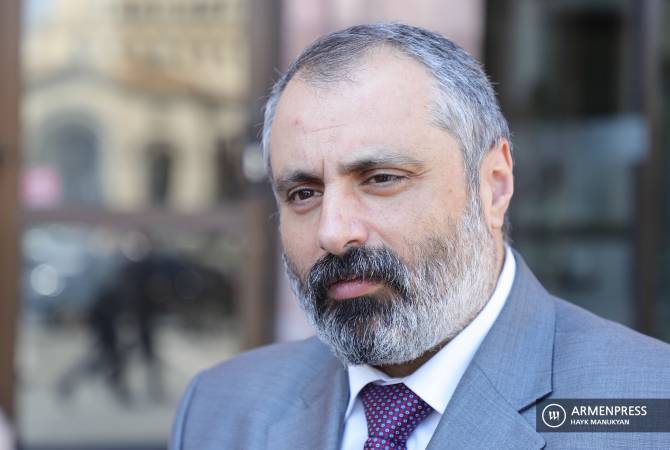
“These questions must still be resolved,” David Babayan, the advisor of Nagorno-Karabakh (Artsakh Republic) President Samvel Shahramanyan told Reuters. “There are no concrete results yet.”

“The situation is difficult – humanitarian questions need to be resolved. Agreement has been reached for a humanitarian convoy to come from Armenia via the Lachin corridor,” Babayan said.

Asked whether or not the Armenians of Karabakh were on the move, Babayan said there was no large-scale movement of people as the region was effectively under siege.

“The Lachin corridor does not work as it should,” he said. “At the present time, other questions need to be resolved.”

“The situation is very difficult: the people are hungry, there is no electricity, no fuel – we have many refugees.”


Categories
Selected Articles

Karabakh Armenians: no agreement yet with Azerbaijan on guarantees or amnesty


Russian peacekeepers evacuate civilians in Nagorno-Karabakh

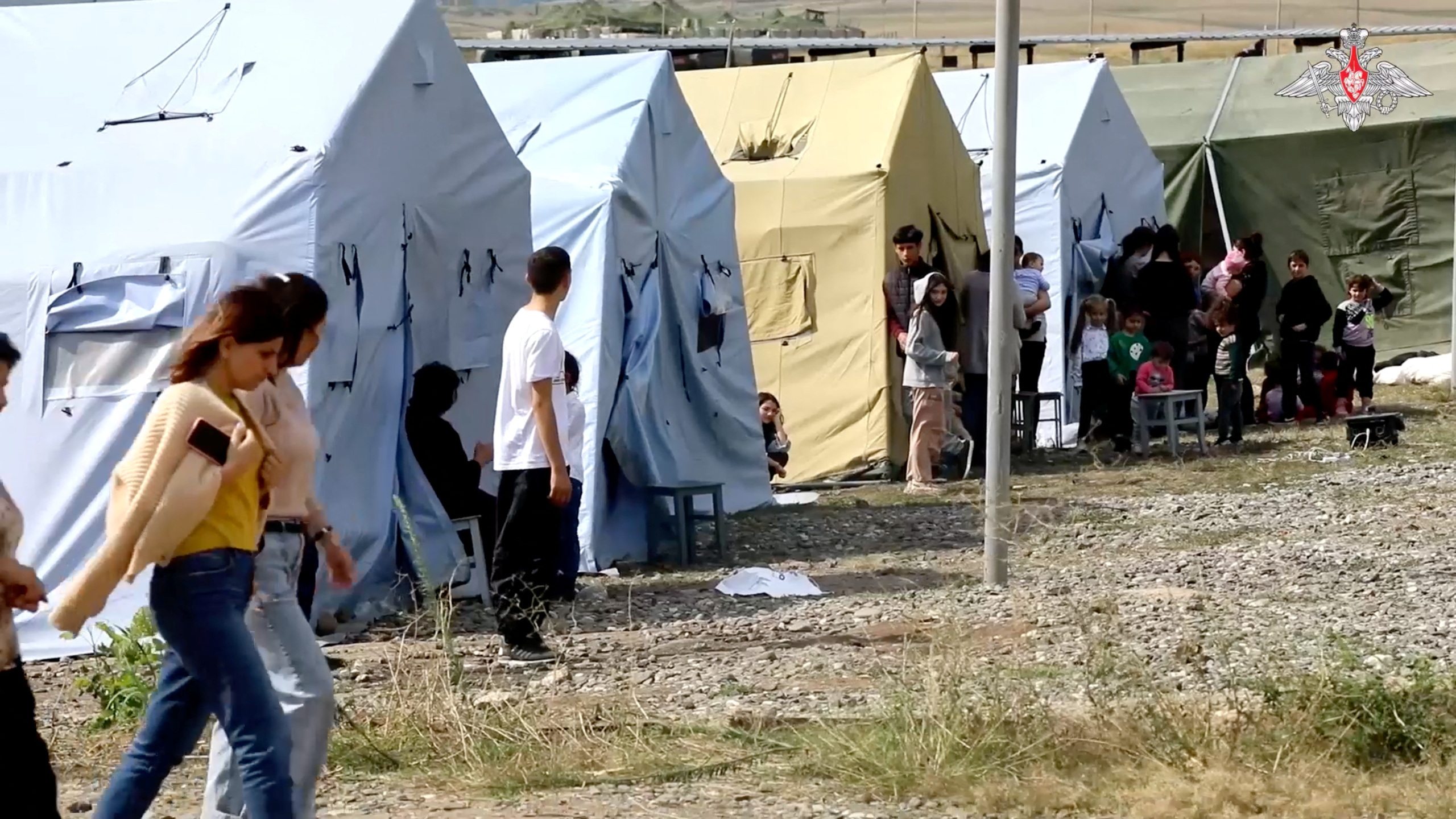
A view shows civilians evacuated by Russian peacekeepers following Azerbaijani armed forces’ offensive operation in Nagorno-Karabakh, a region inhabited by ethnic Armenians, in an unknown location in Nagorno-Karabakh, in this still image from video published September 21, 2023. Russian Defence Ministry/Handout via REUTERS/File Photo Acquire Licensing Rights

MOSCOW, Sept 22 (Reuters) – The ethnic Armenian leadership of breakaway Nagorno-Karabakh said on Friday that there were no concrete results yet from talks with Azerbaijan on possible security guarantees or an amnesty that Baku is proposing.

“These questions must still be resolved,” David Babayan, an adviser to Samvel Shahramanyan, the president of the self-styled Republic of Artsakh, told Reuters. “There are no concrete results yet.”

Azerbaijan mounted a lightning offensive this week and declared it had restored sovereignty over Karabakh, whose ethnic Armenian population broke away in a war in the 1990s.

It envisages an amnesty for Karabakh Armenian fighters who give up their arms although some have vowed to continue their resistance, an Azerbaijani presidential adviser told Reuters.

Babayan said agreement had been reached for an humanitarian convoy to arrive on Friday via the road that connects Armenia to Karabakh, which Azerbaijan has effectively blockaded for more than nine months.

“The situation is difficult – humanitarian questions need to be resolved. Agreement has been reached for a humanitarian convoy to come from Armenia via the Lachin corridor,” Babayan said.

Asked whether or not the Armenians of Karabakh were on the move, Babayan said there was no large-scale movement of people as the region was effectively under siege.

“The Lachin corridor does not work as it should,” he said. “At the present time, other questions need to be resolved.”

“The situation is very difficult: the people are hungry, there is no electricity, no fuel – we have many refugees.”

Reporting by Guy Faulconbridge; Editing by Mark Trevelyan

Our Standards: The Thomson Reuters Trust Principles.


Categories
Selected Articles

Israel’s Massive Supply of Sophisticated Weapons to Azerbaijan


LORA-quasiballistic-missile-by-Israel-Ae

On March 5, the Israeli Haaretz newspaper published an astounding article titled, “92 Flights from Israeli Base Reveal Arms Exports to Azerbaijan.”


The article reported that on March 2, Azerbaijan’s Silk Way Airlines’ cargo plane landed in Israel’s Ovda military airport. Two hours later, it returned to Baku via Turkey and the Georgian Republic. In the last seven years, this is the 92nd cargo flight from Baku to Ovda, the only airfield in Israel that is allowed to export explosives. These military shipments increased substantially during Azerbaijan’s attacks on Armenia/Artsakh in 2016, 2020, 2021 and 2022. President Ilham Aliyev of Azerbaijan has described Israel’s covert relations with Azerbaijan as being like an iceberg – nine-tenths of it is below the surface.


Israel supplies almost 70-percent of Azerbaijan’s weapons and in return receives about half of its imported oil. Haaretz quoted foreign media sources disclosing: “Azerbaijan has allowed the Mossad [Israel’s intelligence agency] to set up a forward branch [in Azerbaijan] to monitor what is happening in Iran, Azerbaijan’s neighbor to the south, and has even prepared an airfield intended to aid Israel in case it decides to attack Iranian nuclear sites. Reports from two years ago stated that the Mossad agents who stole the Iranian nuclear archive smuggled it to Israel via Azerbaijan. According to official reports from Azerbaijan, over the years Israel has sold it the most advanced weapons systems, including ballistic missiles, air defense and electronic warfare systems, kamikaze drones and more.”


Haaretz revealed that Azerbaijan’s Silk Way Airlines “operates three weekly flights between Baku and [Israel’s] Ben-Gurion International Airport with Boeing 747 cargo freighters.” In addition, some Eastern European countries circumvent the ban on the sale of weapons to Azerbaijan by shipping them via Israel.


The restriction of the sale of weapons by Europe and the United States to Armenia and Azerbaijan created an opportunity for Israel to earn billions of dollars in weapons’ sales to Azerbaijan.


Haaretz reported that “Israel has exported a very wide range of weapons to the country [Azerbaijan] – starting with Tavor assault rifles all the way to the most sophisticated systems such as radar, air defense, antitank missiles, ballistic missiles, ships and a wide range of drones, both for intelligence and attack purposes. Israeli companies have also supplied advanced spy tech, such as communications monitoring systems from Verint and the Pegasus spyware from the NSO Group – tools that were used against journalists, the LGBT community and human rights activists in Azerbaijan, too.”


The Stockholm International Peace Institute wrote: “Israel’s defense exports to Azerbaijan began in 2005 with the sale of the Lynx multiple launch rocket systems by Israel Military Industries (IMI Systems), which has a range of 150 kilometers (92 miles). IMI, which was acquired by Elbit Systems in 2018, also supplied LAR-160 light artillery rockets with a range of 45 kilometers, which, according to a report from Human Rights Watch, were used by Azerbaijan to fire banned cluster munitions at residential areas in Nagorno-Karabakh,” even though Israel and 123 other countries have banned the use of cluster bombs.


Haaretz reported: “In 2007, Azerbaijan signed a contract to buy four intelligence-gathering drones from Aeronautics Defense Systems. It was the first deal of many. In 2008 it purchased 10 Hermes 450 drones from Elbit Systems and 100 Spike antitank missiles produced by Rafael Advanced Defense Systems and in 2010 it bought another 10 intelligence-gathering drones. Soltam Systems, owned by Elbit, sold it ATMOS self-propelled guns and 120-millimeter Cardom mortars, and in 2017 Azerbaijan’s arsenal was supplemented with the more advanced Hanit mortars. According to the telegram leaked in Wikileaks, a sale of advanced communications equipment from Tadiran was also signed in 2008.”


According to Haaretz, “Israel and Azerbaijan took their relationship up a level in 2011 with a huge $1.6 billion deal that included a battery of Barak missiles for intercepting aircraft and missiles, as well as Searcher and Heron drones from Israel Aerospace Industries (IAI). It was reported that near the end of the Second Nagorno-Karabakh War in 2020, a Barak battery shot down an Iskander ballistic missile launched by Armenia. Aeronautics Defense Systems also began cooperating with the local arms industry in Azerbaijan, where some of the 100 Orbiter kamikaze (loitering munitions) drones were produced – drones that Azerbaijan’s defense minister called ‘a nightmare for the Armenian army.’”


In 2021, “an indictment was filed against [Israel’s] Aeronautics Defense Systems for violating the law regulating defense exports in its dealing with one of its most prominent clients. A court-imposed gag order prevents the publication of further details. A project to modernize the Azerbaijani army’s tanks began in the early 2010s. Elbit Systems upgraded and equipped the old Soviet T-72 models with new protective gear to enhance the tanks’ and their crews’ survivability, as well as fast and precise target acquisition and fire control systems. The upgraded tanks, known as Aslan (Lion), starred in the 2013 military parade. Azerbaijan’s navy was reinforced in 2013 with six patrol ships based on the Israel Navy’s Sa’ar 4.5-class missile boats, produced by Israel Shipyards and carrying the naval version of the Spike missiles, along with six Shaldag MK V patrol boats with Rafael’s Typhoon gun mounts and Spike missile systems. Azerbaijan’s navy also bought 100 Lahat antitank guided missiles.”


In 2014, “Azerbaijan ordered the first 100 Harop kamikaze drones from IAI, which were a critical tool in later rounds of fighting. Azerbaijan also purchased two advanced radar systems for aerial warning and defense from IAI subsidiary Elta that same year…. Two years later, Azerbaijan bought another 250 SkyStriker kamikaze drones from Elbit Systems. Many videos from the areas of fighting showed Israeli drones attacking Armenian forces…. In 2016, during Prime Minister Benjamin Netanyahu’s visit to Baku, Aliyev revealed that contracts had already been signed between the two countries for the purchase of some $5 billion in ‘defensive equipment.’ In 2017, Azerbaijan purchased advanced Hermes 900 drones from Elbit Systems and LORA ballistic missiles from IAI, with a range of 430 kilometers. In 2018, Aliyev inaugurated the base where the LORA missiles are deployed, at a distance of about 430 kilometers from Yerevan, Armenia’s capital. During the war in 2020, at least one LORA missile was launched, and according to reports it hit a bridge that Armenia used to supply arms and equipment to its forces in Nagorno-Karabakh. More advanced Spike missiles were sent in 2019 and 2020.”


It is appalling that the descendants of the Holocaust are supplying such massive lethal weapons to Azerbaijan to kill the descendants of the Armenian Genocide.


Categories
Selected Articles

Armenian, Azerbaijani, EU officials to prepare leaders’ meeting in Grenada scheduled for October 5


Armenian Security Council Secretary Armen Grigoryan will pay a working visit to Brussels, the capital of Belgium.

On September 26, the Security Council Secretary is scheduled to meet with advisers to French President Emmanuel Macron, German Chancellor Olaf Scholz, EU Council President Charles Michel and Assistant to Azerbaijani President Hikmet Hajiyev to prepare the leaders’ meeting scheduled for October 5 in Granada.

Related Articles


Categories
Selected Articles

Erdogan To Meet Azerbaijani President On September 25


Local residents cook food in a street in Stepanakert in Nagorno-Karabakh on September 22. As Baku's forces tighten their grip on the breakaway Azerbaijani region, concern has been mounting over the plight of ethnic Armenian civilians trapped there.

Local residents cook food in a street in Stepanakert in Nagorno-Karabakh on September 22. As Baku’s forces tighten their grip on the breakaway Azerbaijani region, concern has been mounting over the plight of ethnic Armenian civilians trapped there.

Armenian Prime Minister Nikol Pashinian has told his Caucasus nation on the heels of a bruising defeat for allies in a breakaway region of Azerbaijan that while Baku and Russian peacekeepers bear responsibility for protecting ethnic Armenians there, if necessary his government “will welcome our brothers and sisters of Nagorno-Karabakh to Armenia with all care.”

In a televised address to his nation of around 3 million, Pashinian also seemingly delivered a barb to Russia and Moscow-led efforts at regional security.

“The attacks carried out by Azerbaijan against the Republic of Armenia in recent years lead to an obvious conclusion that the external security systems in which we are involved are not effective from the point of view of the state interests and security of the Republic of Armenia,” Pashinian said.

Pashinian and many Armenians blame Russia — which traditionally has served as Armenia’s protector in the region — for failing to use its peacekeeping force to protect ethnic Armenians in Karabakh.

Armenia is a member of the Collective Security Treaty Organization (CSTO), which Russia has tried to position as a counterweight to NATO, although as recently as this month its armed forces were conducting exercises with U.S. forces.

Pashinian has been on rocky political footing since overwhelming Azerbaijani forces retook much of the territory in and around Nagorno-Karabakh held for decades by ethnic Armenians in a six-week war in late 2020 that led to a Russian-brokered cease-fire.

Then this week the breakaway leadership in Nagorno-Karabakh was thrashed by a lightning Azerbaijani offensive that led Baku to declare victory in returning its sovereignty to the territory.

Around the time Pashinian was addressing the nation on September 24, an adviser to the defeated leadership in Nagorno-Karabakh said virtually all of the territory’s ethnic Armenians will leave for Armenia in a bitter exodus from “our historic lands.”

Davit Babayan, an adviser for foreign policy to the separatist government’s de facto leader Samvel Shahramanian, told Reuters on September 24 that “Our people do not want to live as part of Azerbaijan. Ninety-nine point nine percent prefer to leave our historic lands.”

He said nothing of a time frame and there was otherwise no official position on a possible mass exodus.

Calls have increased in urgency for humanitarian help from the United Nations and the international community since the ethnic Armenian separatists agreed to a Russian-brokered cease-fire after a 24-hour blitz by Azerbaijani military forces on September 19-20.

Baku has repeatedly vowed to ensure the rights of what ethnic Armenians say is around 120,000 locals but the Azerbaijani side says is around half that figure.

“The fate of our poor people will go down in history as a disgrace and a shame for the Armenian people and for the whole civilized world,” Babayan said. “Those responsible for our fate will one day have to answer before God for their sins.”

Azerbaijan again signaled victory in Nagorno-Karabakh while Armenia urged international help to ensure the safety of the local ethnic Armenian population in competing speeches before the United Nations General Assembly, as evacuation and disarmament efforts continue.

Russia’s foreign minister, Sergei Lavrov, meanwhile used his UN appearance to say the two post-Soviet foes have “put things in order” and now it’s time to build “mutual trust.”

The trio of September 23 speeches came as the Yerevan-backed separatists said they were implementing the terms of the days-old cease-fire but concerns continued over the safety of tens of thousands of ethnic Armenians in the territory and with evacuations of the wounded under way.

Azerbaijan and Armenia’s foreign ministers struck opposing tones in their speeches to the UN forum.

Azerbaijani Foreign Minister Ceyhun Bayramov hailed the success of his country’s September 19-20 military campaign in Nagorno-Karabakh, which is internationally recognized as Azerbaijani territory, as achieving the “goals of anti-terrorist measures.”

“Armenia and its subordinate illegal regime were forced to agree to disarmament, liquidation of all so-called structures and withdrawal of forces from Azerbaijan,” Bayramov said.

In his speech to the UN General Assembly several hours later, Armenian Foreign Minister Ararat Mirzoyan lamented Yerevan’s repeated calls for greater UN activity to break a nine-month-long de facto Azerbaijani blockade of the region before the latest offensive.

Armenia’s government has distanced itself from the latest cease-fire mediated by Russia’s peacekeeping force in Nagorno-Karabakh on September 20, with daily protests targeting Armenian Prime Minister Nikol Pashinian and his government.

Mirzoyan accused much larger neighbor Azerbaijan of pursuing a “path of war” and disregarding accepted international principles.

He said the message from Azerbaijan has been that “you can talk about peace, but we can go on the path of war, and you will not be able to change anything.”

Mirzoyan said the latest casualty toll of this week’s Azerbaijani actions were “more than 200 confirmed dead and 400 wounded, including civilians, women, and children.” He said the fates of hundreds more remained “uncertain.”

He also repeated Yerevan’s “imperative” call for a UN mission in Nagorno-Karabakh “to monitor and assess the human rights, humanitarian and security situation on the ground, “with “unhindered access.”

Armenia’s Health Ministry announced on September 24 that ambulances were transporting 23 seriously injured individuals from Nagorno-Karabakh to Armenian territory.

In his speech to the General Assembly on September 23, Lavrov said “the time has come for confidence-building measures between Armenia and Azerbaijan in Nagorno-Karabakh.”

He said Russia’s peacekeepers would assist, and he accused Western governments of inserting themselves unnecessarily in the Caucasus.

Lavrov said that “Yerevan and Baku actually put the situation in order.”

Nagorno-Karabakh‘s ethnic Armenian separatist leaders said on September 23 said they were implementing the cease-fire, including evacuations of injured civilians to Armenia with the help of Russian peacekeepers and the International Committee of the Red Cross (ICRC).

The separatists said that, as part of the September 20 agreement, aid was to be delivered from Armenia to Stepanakert — the de facto capital of the breakaway region under ethnic Armenian control — through the Lachin Corridor, for decades the main link between Karabakh and Armenia.

Also as part of the agreement, separatists said, talks would take place on “the political future” of the region, which is suffering from shortages of food, fuel, and electricity.

Russian peacekeeping forces in Nagorno-Karabakh reported that Karabakh separatists had already handed over more than 800 firearms, grenades, mortars, anti-tank guided missiles, and anti-tank missile systems, and the disarmament process would continue over the weekend.

U.S. Democratic Senator Gary Peters, who is leading a congressional delegation to the Armenia-Azerbaijan border, called for international observers needed to monitor the situation and said people in Karabakh were “very fearful.”

“I am certainly very concerned about what’s happening in Nagorno-Karabakh right now. I think there needs to be some visibility,” Peters told reporters.

Azerbaijan has vowed to protect the rights of civilians there.

The offensive was halted on September 20 after Karabakh’s ethnic Armenian leadership accepted a proposal by the Russian peacekeeping mission, although sporadic fighting has been reported.

Baku has said it envisages an amnesty for Karabakh Armenian fighters who give up their arms and seeks to reintegrate the territory’s ethnic Armenian population. Some separatist fighters have vowed to continue to resist Azerbaijani control.

U.S. Secretary of State Antony Blinken told Pashinian in a phone call on September 23 that Washington continues to support Armenia’s “sovereignty, independence, and territorial integrity” and that it has “deep concern for the ethnic Armenian population in Nagorno-Karabakh.”

During a special meeting of the UN Security Council after this week’s cease-fire, council members including the United States and Russia called for peace, while Armenian and Azerbaijani officials traded barbs.

During a short but bloody war in 2020, Azerbaijan recaptured much of Nagorno-Karabakh as well as seven surrounding districts that had been controlled since the 1990s by ethnic Armenians with Yerevan’s support.