Categories
Selected Articles

FM: Azerbaijan guarantees respect for all rights and freedoms of ethnic Armenians in Karabakh


The Azerbaijani government has committed itself to reintegrating ethnic Armenians living in the Karabakh region as equal citizens within the framework of political-legal, social and economic relations, Azerbaijani Foreign Minister Jeyhun Bayramov said at

LLOGGO-AZ.png


Categories
Selected Articles

FM: Azerbaijan guarantees respect for all rights and freedoms of ethnic Armenians in Karabakh


The Azerbaijani government has committed itself to reintegrating ethnic Armenians living in the Karabakh region as equal citizens within the framework of political-legal, social and economic relations, Azerbaijani Foreign Minister Jeyhun Bayramov said at


Categories
Selected Articles

Hikmat Hajiyev: Hate against Azerbaijanis undermine image and global reputation of US Congress


“This kind of lobbism, ‘moneytalkism,’ sheer lie and racist hate against Azerbaijanis and others undermine the image and global reputation of the United States Congress. Shameful!” Assistant of the President of the Republic of Azerbaijan, Head of Foreign


Categories
Selected Articles

Investigative Committee of Armenia: Serviceman shot himself in head with machine gun


The Investigative Committee of Armenia has called suicide a preliminary version of the death of conscript Alex Avanesyan


Categories
Selected Articles

Hikmat Hajiyev: Deliberate weaponization of humanitarian issues – Armenia’s futile strategy


Maintaining gray area status quo and deliberate weaponization of humanitarian issues are their futile strategy, Hikmat Hajiyev, Assistant to President of Azerbaijan – Head of the Foreign Policy Affairs Department of Azerbaijan’s Presidential Administratio


Categories
Selected Articles

Can the US work with Russia in Nagorno-Karabakh?


nagorno-karabakh-armenia-azerbaijan.jpg?

The geopolitical repercussions from the war in Ukraine continue to reverberate across Eurasia.

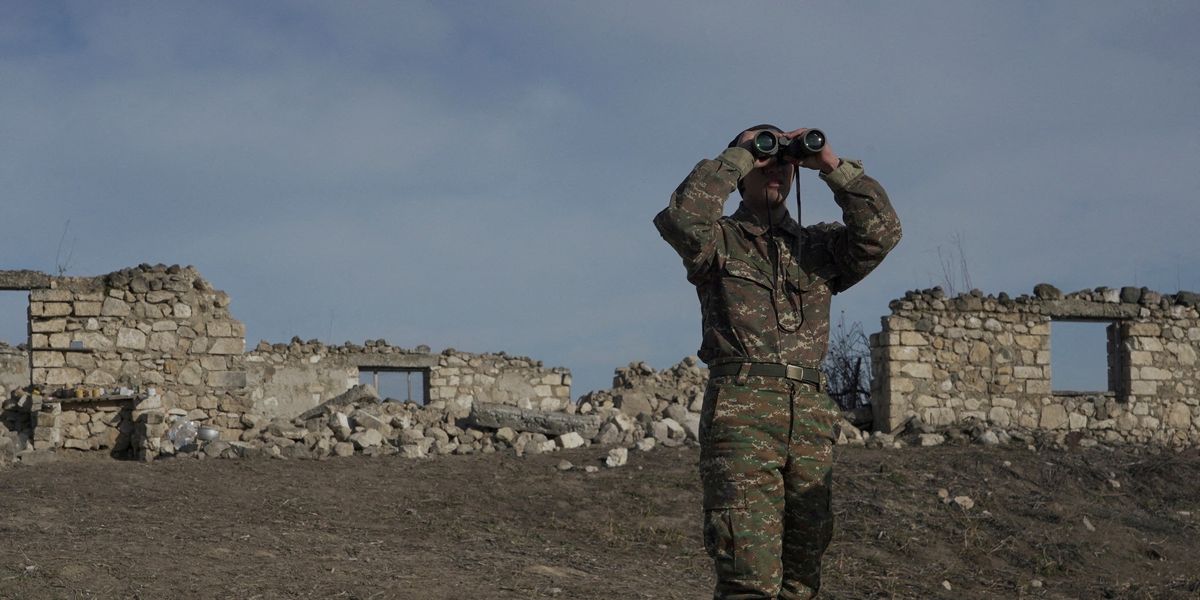
With global attention preoccupied by Moscow’s invasion of Ukraine, Azerbaijan has been depriving the estimated 120,000 ethnic Armenian population in the disputed enclave of Nagorno-Karabakh access to humanitarian aid in a blockade that has lasted over eight months and has recently intensified.

Much to Armenia’s consternation, the 2,000 Russian peacekeeping forces stationed in the enclave since the most recent round of fighting in 2020 have appeared ineffective in the face of increasing Azerbaijani pressure against the besieged Armenian population.

As a result, Armenia is openly seeking to diversify its security relationship away from Russia, its longstanding ally, including conducting joint military drills with the United States in Armenia that began Monday and is set to end on September 20.

Yerevan, Armenia’s capital, has increasingly expressed a sense of betrayal at Moscow’s inability, or unwillingness, to lend support to its treaty ally since last September when Azerbaijani armed forces attacked Armenia’s internationally recognized territory and where they still occupy 10 square kilometers, according to Armenian officials.

The Backdrop of Current Tensions

The two former Soviet Republics fought the First Nagorno-Karabakh War during the early 1990s after the indigenous Armenian majority in the autonomous oblast proclaimed their independence from the Azerbaijan Soviet Socialist Republic. Following the disintegration of the Soviet Union, a full-scale war broke out between the two newly independent countries, eventually leaving tens of thousands casualties dead and hundreds of thousands displaced between 1992 and 1994. The war ended with a victory by Armenia.

A Russian-brokered ceasefire resulted in Armenian control of Nagorno-Karabakh and adjacent regions of Azerbaijan proper. The United Nations and international community, however, continued to recognize Nagorno-Karabakh as part of Azerbaijan.

After over 25 years of unsuccessful negotiations under the auspices of the OSCE Minsk Group co-chaired by the U.S., France, and Russia, Azerbaijan’s President Ilham Aliyev, bolstered by the “brotherly” military support from NATO member Turkey and years of stockpiling Israel-supplied weapons, launched an all-out assault to recapture the disputed territory in September 2020.

The 44-day war saw Azerbaijan secure a military victory with further territorial gains guaranteed under a Moscow-brokered ceasefire, leaving a rump self-governing Nagorno-Karabakh Republic alongside a Russian peacekeeping contingent as stipulated by the November 2020 ceasefire agreement. That agreement also guaranteed that a link between the Nagorno-Karabakh enclave and Armenia, the Lachin Corridor, would be sustained and controlled by the Russian peacekeeping contingent. The status of Nagorno-Karabakh and its inhabitants remained unresolved.

Last December, however, Baku effectively blockaded the Lachin Corridor and, five months later, it established a checkpoint on the road, formalizing the blockade. While the European Union, Russia, the U.S., and even the International Court of Justice have increasingly called for lifting the blockade, Azerbaijan remains defiant. The Azerbaijan foreign ministry insists that claims of a blockade are “completely baseless” and has accused Armenians of transporting arms into the territory, a claim Yerevan denies. Nevertheless, even the International Committee of the Red Cross struggles to continue its vital deliveries into the territory, resulting in what several United Nations Special Rapporteurs describe as a “dire humanitarian crisis.”

There were hopes the dispute over Nagorno-Karabakh, which has been at the heart of the conflict between Armenia and Azerbaijan, would be resolved by negotiations facilitated by a complementary EU and U.S. approach (although a separate track by Moscow also persists). However, the ongoing blockade has dimmed hopes for a viable negotiated settlement.

Current Tensions

The war in Ukraine has drained the Kremlin’s military resources and room for maneuver, especially in a region like the South Caucasus where Russia vies with Turkey for regional hegemony. Moscow’s increased reliance on Ankara over the last 18 months to balance against the West diplomatically has resulted in its inability to fulfill its own obligations in the ceasefire agreement following the 2020 war.

Given this new reality, Armenia has started to hedge against Moscow by actively searching for new military partners and security guarantors.

The publicity surrounding Eagle Partner 2023, the Armenian-hosted joint military exercise with the U.S., clearly worries the Kremlin, which has said it would “deeply analyze” the latest events. However, these exercises are “narrowly focused on peacekeeping operations” and do not represent a “breakthrough in U.S.-Armenia defense cooperation,” according to Benyamin Poghosyan, senior fellow at APRI, a Yerevan-based think tank.

Nevertheless, the exercises follow Armenia’s refusal in January to host Russian-led Collective Security Treaty Organization exercises on its territory, citing the organization’s unwillingness to support Yerevan during last September’s escalation by Azerbaijan.

Armenian Prime Minister Nikol Pashinyan, has recently made a distinctly public effort to distance itself from Russian actions in Ukraine and even from Moscow itself. In just the last weeks Yerevan has moved to ratify the Rome Statute of the International Criminal Court and recalled its ambassador to the CSTO. Pashinyan said depending solely on Russia for security was a “strategic mistake.” Pashinyan’s spouse, Anna Hakobyan, traveled to Kyiv last week and delivered the first package of Armenian humanitarian aid to Ukraine.

However, the fact remains that only Russia has sent peacekeepers to Nagorno-Karabakh, and that these peacekeepers are all that stands between the local Armenian population and Azerbaijani conquest, almost certainly leading to massacre and expulsion. As Poghosyan sees it, the driving cause behind a potential new attack is “Azerbaijan’s desire to establish control over Nagorno Karabakh without providing any status or special rights to Armenians.”

This aligns with the view of Shujat Ahmadzada, a Baku-based researcher on foreign and security policies of the South Caucasus countries, who believes Azerbaijan is pursuing a “3D policy” with regard to Nagorno-Karabakh. The three D’s stand for “De-internationalization, De-territorialization, and De-institutionalization.” Such a process is intended to transform the status of the ethnic Armenians living there into a “purely ‘internal matter’ of Azerbaijan” while “incorporating the self-governing institutions into the Azerbaijani political system in such a way that there is no single territorially defined unit for the ethnic Armenian community.”

While the deployment of over 80 U.S. troops on Armenian soil will hopefully guarantee against imminently anticipated Azerbaijani attacks on Nagorno-Karabakh or Armenia itself, Washington’s move in a region Moscow has long viewed as a vital interest does not come without risk. Moscow views Washington’s increased involvement as the Biden administration taking advantage of Russia’s war in Ukraine in order to weaken or challenge its influence in the South Caucasus region, where Russia has a history of over 200 years of regional military domination.

The latest American proposal for unblocking the Lachin Corridor plans to simultaneously open an alternative route to Nagorno-Karabakh through the Azerbaijani town of Aghdam. However, Armenians have regarded this proposal as a clear threat. Tigran Grigoryan, a Karabakh-born analyst and head of the Regional Center for Democracy and Security, a Yerevan-based think tank, assessed that, even if both the Lachin Corridor and the Aghdam route were to be opened, the potential remained for Baku to again close the corridor and create a “new status quo on the ground.”

Recent reports show that the first delivery of aid by the Russian Red Cross has entered Nagorno-Karabakh from Azerbaijan. However, the acute crisis in food, energy, and humanitarian supplies continues as the Lachin Corridor remains shut and Azerbaijan continues its buildup along the border regions.

The Biden administration would do better to use its leverage over Azerbaijan to ensure an end to the Lachin Corridor blockade while simultaneously working to achieve a solution to the Nagorno-Karabakh conflict that would both recognize Azerbaijani sovereignty and provide enforceable guarantees for the future rights and security of the Armenian population there. For such an approach to work would likely require coordination with Russia.

While such a scenario might be hard to imagine, Washington and Moscow have worked together in the past over Nagorno-Karabakh, even when relations were severely strained elsewhere. Such coordination is particularly compelling given the tens of thousands in the enclave who currently face famine. Rather than taking steps that Moscow views as threatening to its military presence in the South Caucasus (a process which led to disastrous consequences for neighboring Georgia 15 years ago), Washington, and the region itself, would be better off if American involvement instead demonstrated its commitment to ensuring human rights.


Categories
Selected Articles

The New Kings Of Jihadist Terrorism


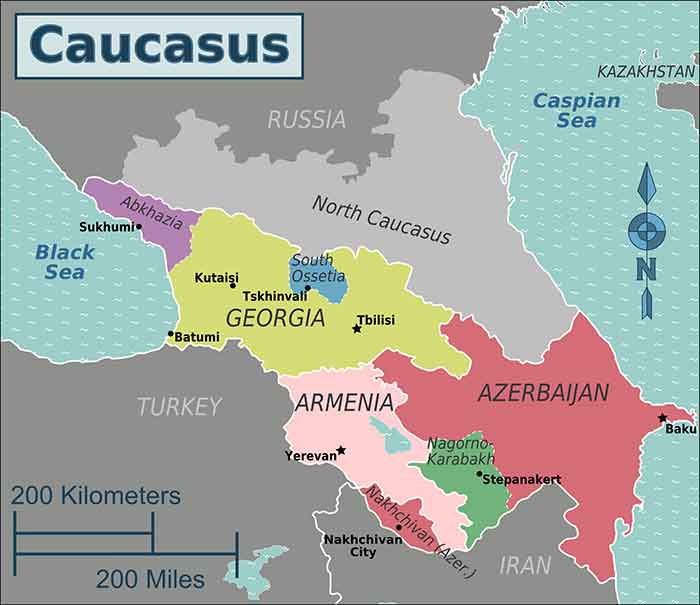
caucusus

The vicious war against the Armenian Republic of Artsakh (Nagorno-Karabagh) and Armenia by Azerbaijan, Turkey, and thousands of their jihadist terrorists has passed the one month mark.

The jihadis’ presence, which includes ISIS, is consistent with the debauched political cultures and national ambitions of Azerbaijan and Turkey.  It also tells us that the U.S./NATO/EU stance towards those countries continues to be dangerously passive.

Just days ago, right in our nation’s capital, Azeri demonstrators chanted “jihad, jihad, jihad” and flashed the hand signal of Turkey’s homicidal, neo-fascist Grey Wolves.

It’s not surprising.  Azerbaijan and Turkey are longtime Turkic allies of jihadist terrorists.

Turkic Jihadist Terror

  • In the early 1990s, Azerbaijan deployed thousands of jihadis and terrorists, including Afghan Mujahedin, Chechens, and Grey Wolves against Artsakh’s Armenians who had voted for self-determination. Turkish army officers also took part.
  • Al-Qaeda cells in Baku, Azerbaijan helped to plan the 1998 bombings of U.S. embassies in Kenya and Tanzania. A dozen Americans and 212 others were killed.
  • The U.S. Military Academy’s Combating Terrorism Center reports that ISIS ranks have included over 900 Azerbaijanis and 7,400 Turks.
  • Ahmet S. Yayla, Turkey’s chief of counterterrorism from 2010-13, wrote: “Turkey was a central hub for the travel of over 50,000 ISIS foreign fighters, and the main source of ISIS logistical materials … making Turkey and ISIS practically allies.
  • Secret wiretaps revealed that Turkey has supplied ISIS in Syria via Ilhami Bali, codenamed Abu Bakr, a 36-year-old Saudi-born Turk.
  • Columbia University has issued two valuable studies: ISIS-Turkey Links and Turkey-ISIS Oil

Today’s Turkic Jihadist Terror

  • Since September, Azerbaijan and Turkey have brought in ISIS commander Sayf Balud, the Hamza and Sultan Murad Brigades, Syrian terrorists, and thousands of other jihadis to battle Armenians. Many were present even before September.
  • Some of the jihadis had committed atrocities against Christian Armenians and Assyrians, Kurds, Yazidis, and others in Syria and elsewhere.
  • Azerbaijan is using some jihadis as human shields for its soldiers. Others are thrust into battle while Azeris point guns at their backs to prevent retreat.
  • Armenian forces have dealt them severe blows. One jihadi warned, “Jihadi, don’t come, we have been deceived, everything is a lie.  This is a meat grinder.”

Artsakh’s Ordeals

In the early 1920s, Soviet dictator Josef Stalin transferred the ancient Armenian territory of Artsakh (96% Armenian) to Azerbaijan to indulge Turkey.  No country/people named Azerbaijan/Azeri had ever existed before 1918.

Artsakh’s Armenians subsequently suffered brutal repression, deportations, and mass murders under Soviet Azerbaijan’s scimitar.  By 1988, Armenians had been reduced to 76% of the population.  All this was due to raw, ethno-racial, Azeri fanaticism.

Artsakh’s Armenians voted in 1988 and 1991 for self-determination and independence from Azerbaijan according to Soviet law and then international law.  Armenians won the ensuing war.

Note that Azerbaijan claims not only Artsakh but Armenia too.

Artsakh and Armenia are reformist democracies.  Dictatorial Azerbaijan is light-years away from that.  Turkey is a similar political and human rights disaster.

If you lived in Artsakh, would you ever agree to Azeri rule?  Of course not.

America’s Global War for Terror

The Global War on Terror (GWOT) has been American foreign policy’s pièce de résistance since 2001.  Supposedly, therefore, regimes that use jihadis/terrorists against civilized people should become pariahs.

Yet American administrations and Congress have acted largely deaf, dumb, and blind regarding Turkey and Azerbaijan’s support for jihadis/terrorists.

In 2016, I presented evidence to Richard M. Mills, U.S. Ambassador to Armenia, that Turkey supported ISIS.  He foolishly lied and denied it all.

The U.S. (and Europe) fawn over Azerbaijan’s gas and oil deposits and westbound pipelines despite its sickening record on jihadis and human rights.

Our government lies about our GWOT, but we remain silent.  What kind of people are we?

Rename the GWOT to GWFT: the Global War for Terror.

Azerbaijan has signed and is violating the “UN Convention against the Recruitment, Use, Financing and Training of Mercenaries.”  Neither the UN, State Department, nor Congress has spoken up.

America provides “counterterrorism” assistance to Azerbaijan.  Thus, Americans pay it to fight terrorists while Azerbaijan turns around and hires terrorists.  This is sick stuff in which we as Americans are complicit.

Now consider the jihad against Armenian/Armenia/Artsakh by Israel and the Jewish American lobby.

The Kosher Jihad

Countless Jewish academicians, writers, human rights advocates, and elected officials have supported Armenian Genocide recognition and helped Armenians in other ways.  Not so for top Jewish organizations such as the ADL, AIPAC, AJC, and JINSA.

For decades, they have diminished/denied the Armenian Genocide and colluded with Turkey and Israel to defeat Armenian Genocide resolutions in Congress.  The ADL and AJC have relented a bit, though insincerely and only under pressure.

For years, Israel and most of these organizations, led by AJC, have supported Azerbaijan.

Azerbaijani dictator Ilham Aliyev has given his country’s highest award to AJC Executive Director David Harris.

Israel demands worldwide recognition of and legislation on the Holocaust but refuses to recognize the Armenian Genocide.

Israel is probably Azerbaijan’s biggest weapons supplier.  Israeli cluster bombs — usually banned under international law — are killing Artsakh’s civilians.

As Azerbaijan runs short of weapons and ammo, Israel is now sending more.

There are 24 righteous Armenians in Israel’s Yad Vashem Holocaust memorial but no Azeris.  No problem, bomb the Armenian goyem anyway using Israeli weapons.

Meanwhile, scores of Jewish and Israeli writers defame Armenia and Armenian Americans.

Israel always complains it’s the victim of terrorists and jihadis.  Now it’s on the same side as the jihadis and terrorists in Azerbaijan.

Countless Americans, including Christians, sell their souls to the Jewish lobby for political expediency, money, and career advancement and dare not whisper a word of dissent. You know who you are.

Meanwhile, Armenian Genocide 2.0 beckons.

Artsakh’s ombudsman correctly notes that “various representatives of the international community are either blind or incapable.”

How long will this remain so?

Much of the author’s work can be found at http://www.armeniapedia.org/wiki/David_Boyajian.

SIGN UP FOR COUNTERCURRENTS DAILY NEWSLETTER


Categories
Selected Articles

Azerbaijan concerned over alarming surge in hate speech: Minster


188290-0528906.jpg

Azerbaijan is convinced that promoting tolerance and non-discrimination is one of the essential elements in ensuring the protection of the rights of people and building sustainable societies, the country’s foreign minister said at the 54th session of the UN Human Rights Council.

Minister Jeyhun Bayramov noted that Azerbaijan is concerned about the growing trend of intolerance and discrimination, Islamophobia, other religious misconceptions, and an alarming surge in hate speech.

“These attitudes pose a grave threat to our societies’ harmony, security, and stability. Burning and desecrating the Holy Quran in some parts of the world under the guise of freedom of expression is inadmissible and constitutes a hate crime. Effective prevention and countering of these phenomena require joint international efforts,” he said.

With the centuries-long tradition of diversity and multiculturalism, Azerbaijan is renowned for its efforts and contributions to promote intercultural and interfaith dialogue, the top diplomat added.

Minister Bayramov stressed that Azerbaijan acknowledges the crucial role of the United Nations in promoting human rights through cooperation and dialogue among its Member States.

“As we mark the 75th anniversary of the Universal Declaration of Human Rights, Azerbaijan remains actively engaged in cooperation and constructive dialogue with the U.N. human rights bodies and mechanisms,” he said.

News.Az 


Categories
Selected Articles

Armenian Anarchist Group Rises in Besieged Artsakh


04b519_e3cdb80f284840e08bf228772b8d177fm

What You Need To Know: 

The ongoing Azerbaijani blockade of food, fuel, and medical supplies from reaching the Armenian statelet of Artsakh, also known as Nagorno-Karabakh, and home to around 120,000 people has today triggered the creation of a new anarchist group – Anarchist Artsakh. 

The blockade dates back to Soviet-era territorial claims both Azerbaijan and Armenia have to the Nagorno-Karabakh region, which is situated inside Azerbaijan, but in which, ethnic Armenians make up 95 per cent of the population. Following the collapse of the Soviet Union in 1991, both nations took up arms against one another over the area.

The first Nagorno-Karabakh conflict, (1991-94) left Armenia with the majority of the autonomous zone. Following a 2010 strategic partnership agreement with Azerbaijan Turkey has become a key player in the conflict, supplying Azerbaijan with military aid when fighting broke out again in July 2020. This material support, alongside the aid of Syrian mercenaries, enabled Azerbaijan to recapture swaths of the Nagorno-Karabakh before a ceasefire was brokered by Russia in November 2020. The gains made by Azerbaijan in 2020 left Nagorno-Karabakh surrounded. 

Anarchist Artsakh:

The group, in their first post on Telegram stated, “Comrades! A new front of anarchist resistance is maturing. This time Artsakh. For almost a year now, the fascist government of Azerbaijan has kept the local Armenian population under complete blockade, seeking forced submission from the Armenians. 

The dictatorial power of Ilham Aliyev is actually starving our people in order to subjugate them, assimilate them and deprive them of the freedom for which we have fought for a very long time. In the territories occupied in 2020, the occupiers are destroying our cultural objects in order to erase our traces from our own lands. 

We already had the sad experience of living under the rule of the Azerbaijani leadership in the 1980s – 1990s. We will no longer allow the fascists to enslave our people. We – Armenian anarchists – will fight for the freedom of our (and not only our) people. Most likely, the Azerbaijani tyrants will soon begin a ground operation on the territory of Artsakh. We are trying to organise ourselves to resist the onslaught of the imperialists.

Comrades! We ask you to support us in our fight. After all, solidarity is our main weapon. Help spread the word about the chaos going on. Glory and freedom to all oppressed peoples!” 

The current siege is the result of the December 2022 blocking of the Lachin Corridor, a lifeline between Armenia and Artsakh by Azerbaijan, which claims that Armenia has been using the corridor to smuggle arms. 

Russian Mediation?: 

However, on early Tuesday, a truck carrying Russian humanitarian aid was given access through Azerbaijani territory to the besieged region’s capital, Stepanakert. According to DW, the Russian Foreign Ministry claimed the aid package represents “a first step” to resolving the crisis. It is unclear if this move by Russia will satisfy the clearly frustrated members of Anarchist Artsakh. 


Categories
Selected Articles

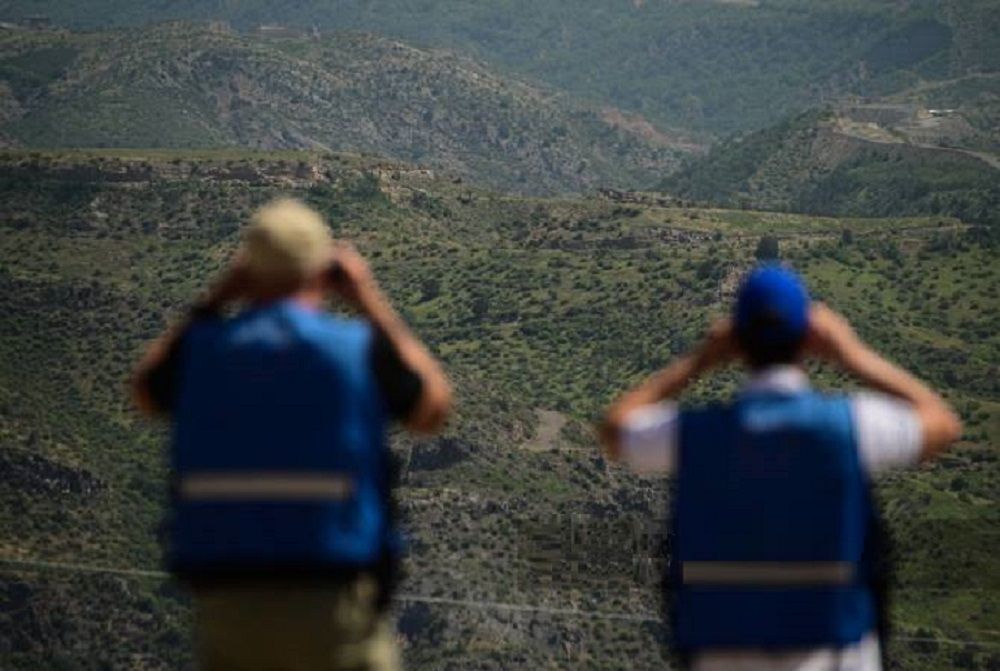
What is Pashinyan’s EU mission group looking for in region?


1117432.jpg

What and whom Armenia serves is still opaque. The
pseudo-independent state, which once had ninety percent of its
border territory under the control of Russia, today is gradually
breaking away from the influence of Russia and trying to hand over
its territories to the West.

We would not be wrong if we say that 2020 is the year when
Azerbaijan restored its territorial integrity and simultaneously a
period that political players swapped over Armenia. The 30-year
occupation seemed to have led Armenia into a deep sleep under the
shadow of Russia, and its inability to wake up from that sleep has
kept it far off the political ground in the region. In addition,
Armenia’s lack of appreciation for the opportunities it had and its
short-sighted behavior left it in a desperate situation. The
question is, why has Armenia never been able to benefit from the
fact that it is surrounded by countries with strong economies in
the South Caucasus, such as Azerbaijan in particular?

Although the answer to this question needs an in-depth
interpretation, it can be enough to consider the events happening
today. If we look at recent events, we can witness that Armenia has
plunged into an extremely complex political game. Especially by
partially skipping the Russian factor, Pashinyan seems to have
given a bit more privilege to the Western forces. As they look more
active in the South Caucasus today creates the impression that
Yerevan is being played on a gambling table. Being in a confused
state in political games, Armenia backs the wrong horse; completely
ignores the priorities for the future of its country, and is
currently trying to turn the region into a battleground between the
West and Russia.

After the full operation of Azerbaijan’s Lachin State Border
Checkpoint, Armenia began to seek refuge in the West. So, starting
from January 2023, the European Union Mission group, whose real
mission is unknown, suddenly appeared in the region. First, under
the guise of humanitarian aid to Armenian minority in Garabagh, and
then by misinterpreting Armenian armed provocations, the mission
group began to expand its activities.

Yesterday, the mission group celebrated the opening of its base
with a new name – European Union Mission in Armenia (EUMA) in the
town of Ijavan, Tavush province of Armenia. It is noted in the
information that this is already the 5th base of EUMA opened in the
territory of Armenia so far. I wonder what the head of the mission
Mr. HoM Markus Ritter intends to do in Armenia by opening so many
bases.

If the mission group or EUMA has any interest in the
conventional borders between Azerbaijan and Armenia, then it would
be a more objective step for some of their representatives to come
to Azerbaijan as well, to observe the situation from the flipside
of the event. If we are talking about eliminating tension and
ensuring security in the region, there is an answer here – Armenia
and Azerbaijan, as two independent states, are capable of ensuring
peace between themselves. However, there is an exception, which is
Armenia’s taking an adequate step… But what does EUMA do for
this? Is the mission group really taking purposeful steps for peace
talks to take place?

Two days ago, after a long wait, a truck with food belonging to
the Russian Red Cross Committee on the Aghdam-Khankendi route was
able to enter Khankendi. This plan was actually an unambiguous
solution to some groundless disputes surrounding Lachin BCP.
Unfortunately, the European Union mission group and many
representatives of the West expressed their “true intentions” by
showing a stronger and pro-Armenian position regarding the border
with Lachin. In particular, the ICRC’s involvement in political
rather than humanitarian issues has made it somewhat of a spy for
the West. If the separatists in Garabagh did not accept the food
sent from Azerbaijan, it was an internal matter, but the fact that
the Western forces did not let in the food sent from Russia this
time began to look like the West was deviating from its
mission.

It means that the West intends to put pressure on Russia through
Armenia, and this means that external forces want create a battle
ground for themselves in the region. As I mentioned earlier,
Armenia completely confuses internal politics and tries to create
tension instead of peace in the region. As a tool in the hands of
certain forces, it deliberately exaggerates the issue of the
Armenian minority living in Azerbaijan’s Garabagh economic region
and deliberately focuses the attention of the outside audience on
the region.

In fact, this is the helplessness and incompetence of Pashinyan,
who cannot find a common language with the other side, i.e.
Azerbaijan. All these are factors that lead to his repeated lies
and denial of what he says. Pashinyan chooses not just what is in
front of him and what is available to him, but on the contrary, he
chooses the means that is wide of the mark and can put his country
and the region in danger. The reason is simple – Armenia’s lack of
perspective and political agenda and inability to see the error of
its ways and most importantly, yet finding hard to recover from the
trauma of 2020. These factors still seriously prevent Armenia from
choosing the right path

Elnur Enveroglu is AzerNews’ deputy editor-in-chief, follow him
on @ElnurMammadli1

Follow us on Twitter @AzerNewsAz