Categories
Selected Articles

With Friends Like These


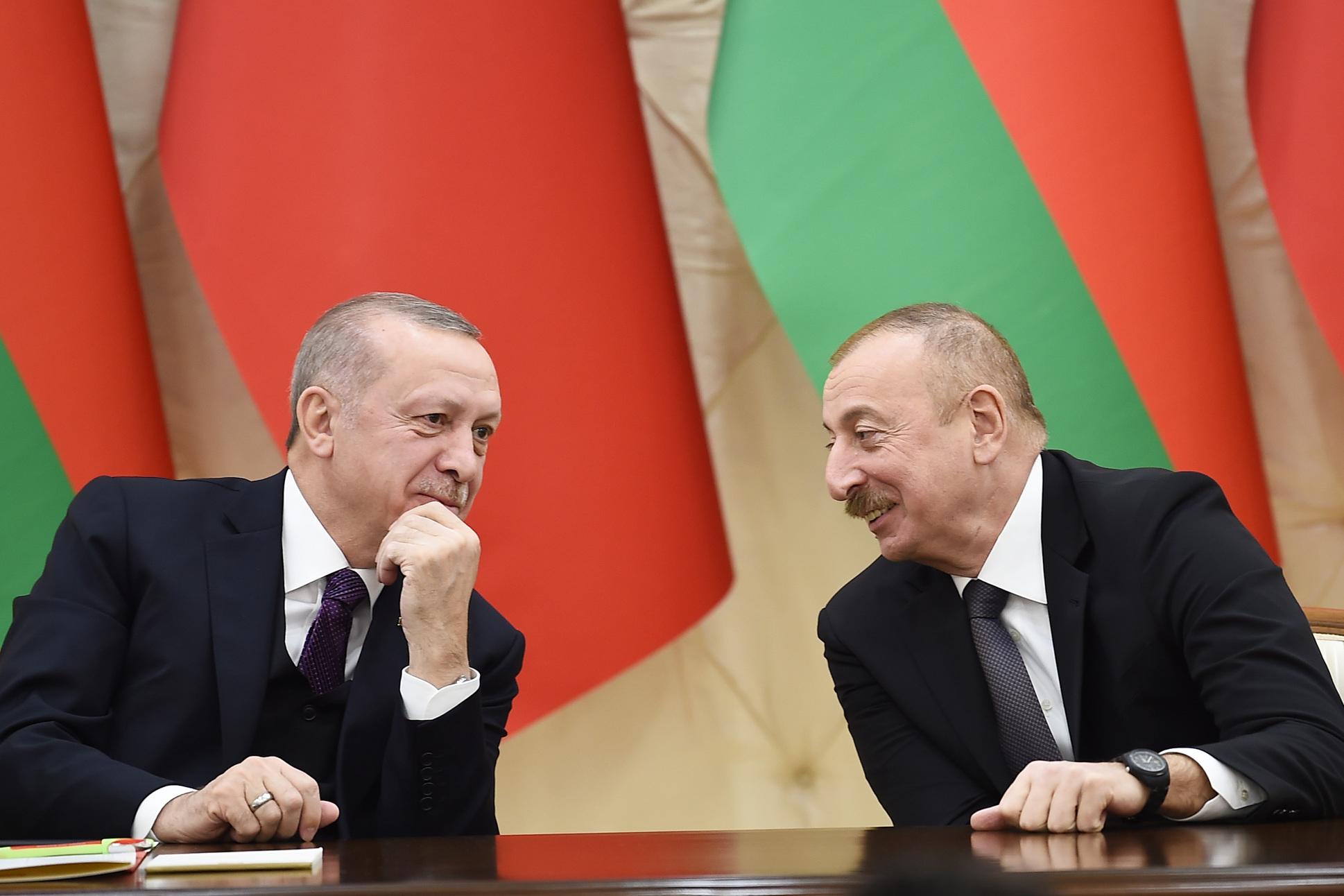
Turkey-Az.jpg

Turkey’s brinksmanship in the South Caucasus puts a spotlight on tensions within NATO.

On Friday, the foreign ministers of Armenia and Azerbaijan flew to Moscow for ceasefire talks. A “humanitarian ceasefire” was announced earlier this week, but at the time of writing appears to have broken down. “Let those holding talks in Moscow know that it’s our territory and we won’t be making any concessions,” Azerbaijan’s president, Ilham Aliyev remarked of the prospects for peace on Friday, foreshadowing this week’s renewed violence. Currently at an advantage, Azerbaijan has little incentive to return to the negotiating table.

In the past, when tensions around Nagorno-Karabakh flared up, neither side gained sufficient advantage to force the other side into concessions. By default or design, Moscow has ended up as an arbiter. This time, however, Turkey seems to be tipping the scales in Azerbaijan’s favor, with the other two regional powers, Russia and Iran, pleading for peace. In an unlikely turn, Western leaders today find themselves in the unlikely position of being more aligned with governments in Moscow and Tehran than their own NATO ally.

Aggressively backing Azerbaijan is in line with Turkey’s increasingly assertive, interventionist foreign policy developed under President Recep Tayyip Erdoğan. Turkey has pursued unilateral military interventions in Syria and Libya, pressured Greece and Cyprus over expanding maritime borders, and is now backing Azerbaijan’s territorial cause in the South Caucasus. Its military interventions in Syria and Libya have been condemned by many European countries, and with French leadership, the EU has threatened Turkey with sanctions over the Mediterranean maritime border dispute.

The security guarantees afforded by its NATO membership may be emboldening Turkey to use military force when it knows that deterrence keeps adversaries at bay. Especially in the South Caucasus, it’s conceivable that Turkey’s strategists are calculating they can escalate conflicts without fear of Russia directly retaliating on Turkish soil. Early last week, Turkey’s foreign minister was downright dismissive of Russian calls for an immediate ceasefire on his visit to Baku.

Russia has every reason to want to do something about Turkish behavior. As Samuel Ramani, a DPhil candidate in the Department of Politics and International Relations at the University of Oxford, pointed out, “[Russia] views Turkey’s seamless integration of Syrian proxy militias alongside the Azerbaijani military as worrisome, as that show that Ankara could mobilize Syrians for its own purposes effectively in more places that just Libya.” Unanswered provocations send signals of their own.

That said, Turkey does not have a completely free hand in the region either. Earlier in the conflict, Armenia accused Turkey of shooting down one of its military jets, which Turkey vehemently denied. Armenia is a member of the Collective Security Treaty Organization (CSTO), a Russian-led alliance modeled on its North Atlantic adversary. The CSTO is often dismissed as a paper tiger, but its existence complicates the calculus of all the players. Russia’s prestige in the region, as well as its credibility as a security provider, is on the line, and we do not know to what extent Turkey is willing to test these commitments. For now, the CSTO’s involvement is mostly a question of escalation—whether there is a credible threat on Armenian soil. The CSTO’s treaty obligations do not extend to Nagorno-Karabakh (which is not part of Armenia and which even Armenia has not recognized as independent), so there is ample gray area for Turkey to act. Known tensions between Putin’s regime and the government of Nikol Pashinyan could also prompt Turkish brinksmanship.

Get the Latest

Sign up to receive regular emails and stay informed about CEPA’s work.

Neighboring Iran is the other uneasy and interested spectator in the region. The country has enjoyed a close relationship with Armenia, but it has a sizeable Azeri minority living within its borders (representing 16% of Iran’s total population, more than the total number living in Azerbaijan proper). The leadership in Tehran cannot afford to alienate either side. At the same time, it also wants to avoid spillover of regional violence and is eyeing Turkey’s presence at its borders. So despite attempts to signal a neutral stance, Iran has allowed Russia to transport military supplies through to Armenia.

Nicole Grajewski, an international security fellow at Harvard’s Belfer Center, noted Iran’s seriousness in taking on a mediator role in alleviating the conflict, but highlighted the geostrategic difficulties facing any settlement. While Russia and Iran would prefer a return to the pre-July status quo and may want to re-freeze the conflict as quickly as possible, Turkey has incentives to push on for longer. Part of the motivation is domestic; saber-rattling nationalists upset with Turkey’s humiliation in the current Greece talks need to be deflected. But, Ramani says, Turkey does not want to risk pushing Russia and Iran away simultaneously, thereby both further intensifying its international isolation and straining peace negotiations in Syria.

Thus far, the West has gone missing in the conflict. This is attributable to a lack of on-the-ground presence on the one hand, as well as to uncertainty at getting involved in a complicated fight where Turkey, Russia, and Iran already dominate. Still, allowing a NATO member to court conflict so openly hardly seems like optimal policy. CEPA’s Lauren Speranza thinks NATO needs to find a way to help de-escalate the situation at a higher level, as the United States tried to do with Russia in Syria. For better or for worse, Erdoğan’s Turkey is an ally, and the Alliance will have to stand by it. The goal has to be to avoid an unintended escalation spiral should either Russia or Turkey somehow miscalculate.

Letting Russia, Turkey and Iran take the lead on brokering peace—or another ceasefire—may be the best available option, even if prospects for a lasting agreement are dim under such leadership. Western leaders, however, can’t afford to be complacent. Even the best-case outcome in Nagorno-Karabakh should lead to serious soul-searching in the Alliance. Having an erratic and increasingly authoritarian regime as a partner poses risks all its own.

Europe’s Edge is CEPA’s online journal covering critical topics on the foreign policy docket across Europe and North America. All opinions are those of the author and do not necessarily represent the position or views of the institutions they represent or the Center for European Policy Analysis.

Europe’s Edge

CEPA’s online journal covering critical topics on the foreign policy docket across Europe and North America.

Read More


Categories
Selected Articles

Jeyhun Bayramov discusses peace process between Azerbaijan and Armenia with US official. Azerbaijani FM says US repeating Armenia’s claims is unacceptable …


 bono%20in%20baku%20-%209.6.23.jpeg

The Minister of Foreign Affairs of Azerbaijan, Jeyhun Bayramov, met with the US State Department Senior Advisor for Caucasus Negotiations, Louis Bono, Report informs.

LLOGGO-AZ.png

Azerbaijan Minister of Foreign Affairs, Jeyhun Bayramov, met with the US State Department Senior Advisor for Caucasus Negotiations, Louis Bono, Report informs.
The meeting discussed the current situation in the region, the normalization and peace proces

Azerbaijani FM says US repeating Armenia’s claims is unacceptable 

The Minister of Foreign Affairs of Azerbaijan, Jeyhun Bayramov, met with the US State Department Senior Advisor for Caucasus Negotiations, Louis Bono, Report informs.
posted 31m ago via AzeriTimes
 

Azerbaijan Minister of Foreign Affairs, Jeyhun Bayramov, met with the US State Department Senior Advisor for Caucasus Negotiations, Louis Bono, Report informs. The meeting discussed the current situation in the region, the normalization and peace proces
posted 31m ago via AzeriTimes
 
The News And Times Information Network – Blogs By Michael Novakhov – thenewsandtimes.blogspot.com

Categories
Selected Articles

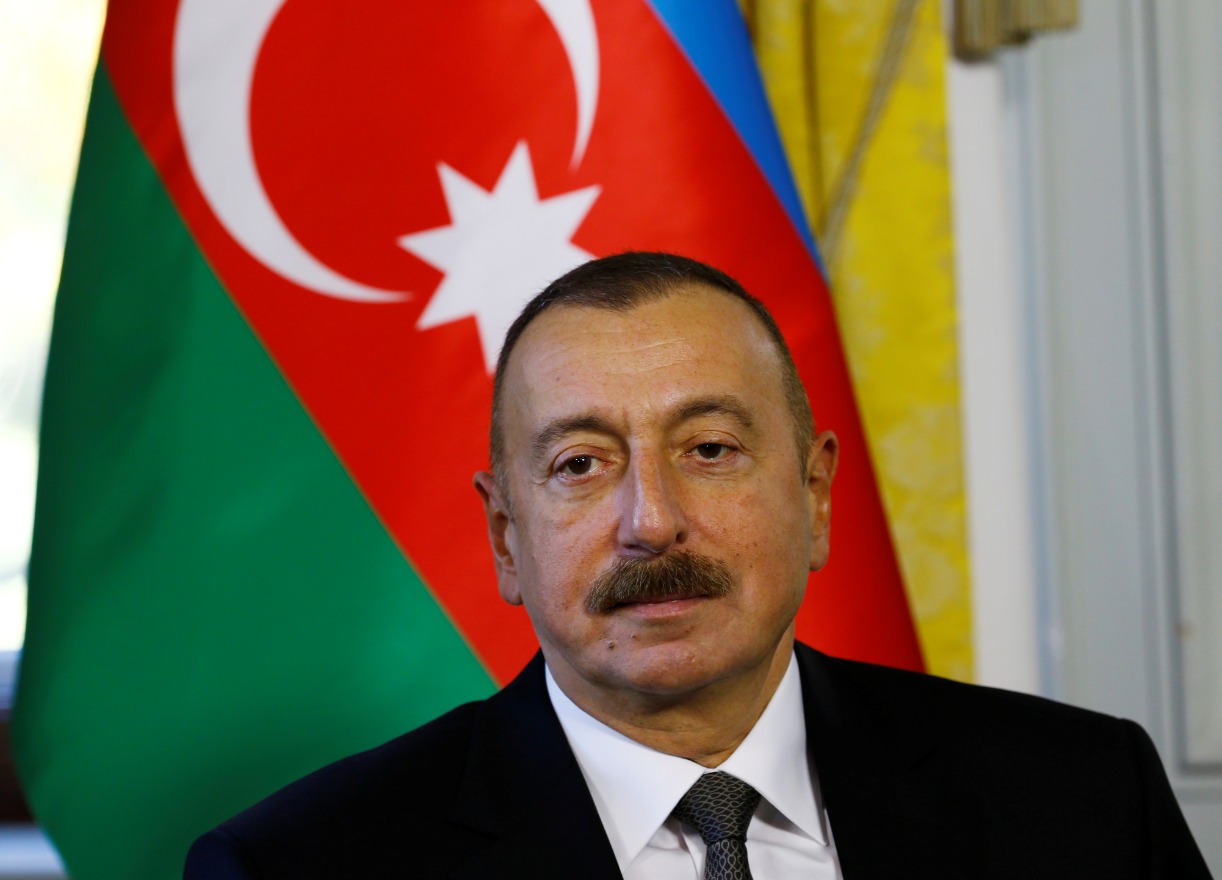
The Pharaoh – Фараон a.k.a. Ilham Aliyev – #IlhamAliyev: Azerbaijan’s Aliyev is a Strategic Liability, Not an Asset. #Azerbaijan needs a #REGIMECHANGE! And the sooner the better.


The Pharaoh – Фараон (aka Ilham Aliyev – #IlhamAliyev)

posted at 11:27:48 UTC by Michael Novakhov (Mike Nova) via The News And Times


ilham_aliyev.jpg 
The Pharaoh – Фараон 

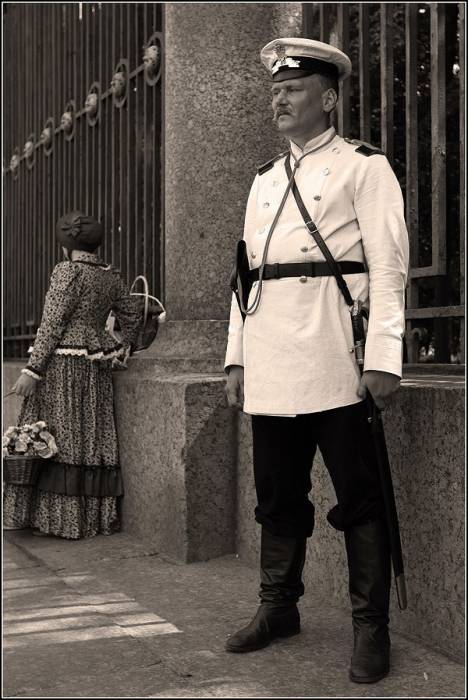
Почему милицию называют «фараонами»? 10 фактов о том, как все ...

Город делился на околотоки, в каждом был свой надзиратель, стоявший на перекрестке или на главной улице. Народ прозвал полицейских «фараонами», потому что такой страж порядка, одетый в специальную форму, стоял с суровым выражением лица, подобно египетскому царю.Apr 25, 2018
The News And Times Information Network – Blogs By Michael Novakhov – thenewsandtimes.blogspot.com

Ilham%20Aliyev.jpg

Ilham Aliyev, President of Azerbaijan for nearly eighteen years, sits atop a mirage. Azerbaijan’s capital Baku exudes wealth. Luxury boutiques like Bulgari, Christian Dior, Gucci, and Trussardi line Neftchiler Avenue across Primorsky Park from the Bay of Baku. Luxury hotels like the Four Seasons, Marriott Absheron, and the Hilton Baku overlook the cornice. Car dealerships showcase the latest Rolls Royces, Lamborghinis, and Ferraris. Azerbaijan is hardly the only country to sport such an ostentatious display—Persian Gulf emirates do as well—but the wealth extremes among Azeri citizens are greater, as anyone who has bypassed the official tours to see the mudbrick houses and shantytowns outside the capital can attest. While those associated with the Aliyev family and his inner circle might afford Baku’s luxury goods, most city residents, including the educated and professional class, barely scrape by. Travel an hour or two outside the capital, and the situation is even worse.

Azerbaijan is among the world’s most corrupt countries; Transparency International ranks Azerbaijan with Russia, Mali, and Malawi. In contrast, neighboring Armenia sits alongside Greece and Slovakia in the rankings, while Georgia scores even better. The recent Pandora Papers exposé showed that family members of senior Azeri officials had bought or sold tens of millions of dollars of luxury real estate.

Politically, Azerbaijan remains an authoritarian dictatorship. Freedom House assesses that Azeris living under Aliyev’s dictatorship enjoy less freedom than Palestinians struggling under Hamas rule in the Gaza Strip and Houthi repression in Yemen; Azeris enjoy fewer civil liberties than the Chinese under President Xi Jinping’s repressive rule.

Why the West Ignores Azerbaijan’s Reality

Western states have ignored Aliyev’s corruption and repression for a variety of reasons:

The United Kingdom shields Azerbaijan at international forums because of British Petroleum’s interest in the country’s energy market. While China’s trade with Azerbaijan has historically been only a fraction of Great Britain’s, Beijing’s ambitions in Azerbaijan are quickly growing, which ironically makes China and the United Kingdom allies in the United Nations Security Council offering blind support to Azerbaijan, when the United Nations considers issues involving the South Caucasus.

Israel, meanwhile, has long-standing ties with Azerbaijan that are rooted in the arms-for-energy trade. During last year’s Nagorno-Karabakh war, Azerbaijan used Israeli drones against both civilian and military targets to turn the tide of the war after ethnic Armenian forces in Nagorno-Karabakh rebuffed the initial Azerbaijani invasion.

Traditionally, both Israel and the United States also value Azerbaijan for its strategic location and willingness to allow espionage, if not full-fledged operations, against the Islamic Republic of Iran. While the mostly Shi’ite Azerbaijan once sought to distinguish itself from theocratic Iran to its south, in recent years, Aliyev has played the issue both ways: coasting on Azerbaijan’s past reputation while increasing his ties with Iran (and Russia), recent disputes with Tehran notwithstanding.

Azerbaijan’s reputation for religious tolerance and secularism also attracts many Western supporters. Certainly, Azerbaijan deserves praise in this regard, though the myth does not live up to reality. While Azerbaijan has generally protected its Jewish community, Aliyev’s government has long targeted Azerbaijan’s Christians, in some cases by erasing centuries-old cultural property like the graveyard in Julfa that Azerbaijani troops systematically destroyed. More recently, Aliyev’s cooperation with and tolerance for Syrian jihadi mercenaries, whom he used in his fight against Nagorno-Karabakh’s Armenians, raise questions about his outlook. In many ways, Aliyev appears to be taking a page from Turkish president Recep Tayyip Erdoğan’s playbook: Distract the West with paeans to the secular past while quietly co-opting, if not promoting, religious extremists to act as policy proxies. When countries have embraced such tactics, the result has been blowback that harmed the standing of religious minorities. Azerbaijan’s subordination of its foreign policy to Erdoğan’s—even allowing Turkish diplomats veto power over Azerbaijani engagements—should raise questions about Baku’s tolerance and the ability of Israel and the United States to leverage Azerbaijani territory for other strategic pursuits in the near future.

Beyond the strategic reasons for ignoring Azerbaijan’s reality, there is also the reality of caviar diplomacy and golden parachutes. Azerbaijan pays well. The regime spends lavishly on gifts, luxury hotel suites, and dinners and provides access to those who parrot official positions and, more importantly, refuse to research or consider counterarguments. Some Israeli officials openly talk about how they hope to enter the Azerbaijani business scene after retirement. Former American officials might be more discreet in what they say, but their actions do not substantively differ.

Aliyev’s Dangerous Revanchism

Aliyev’s orientation should raise questions for any honest analyst, but, what really makes Azerbaijan a strategic liability, is Aliyev’s increasing unwillingness to live within Azerbaijan’s borders. This problem goes beyond disputes with Armenia over Nagorno-Karabakh, the contested territory recognized by most countries as Azerbaijani territory, and extends to Aliyev’s territorial claims over Armenia proper, which the Azerbaijani dictator has increasingly voiced over the past decade.

For example, on November 20, 2012, Aliyev said, “Armenia as a country is of no value. It is actually a colony, an outpost run from abroad, a territory artificially created on ancient Azerbaijani lands.” The following year, Aliyev gave a speech in which he promised not only to retake Nagorno-Karabakh but also all of Armenia. “Azerbaijanis will live on their historical lands in the future. Our historical lands are Irevan [Yerevan] and Zangezur regions,” he said. He returned to this theme on January 22, 2014, during a visit to Ganja, Azerbaijan’s second-largest city, when he described Armenia as “historical Azerbaijani lands” that his countrymen will eventually regain. While Minsk Group diplomats pushed a land-for-peace and security deal, Aliyev promised Azeris that an Armenian withdrawal from Nagorno-Karabakh and the adjacent districts would only be the first phase of a final solution.

At Nowruz celebrations the following year, Aliyev tripled down on the theme. “The Armenian-Azerbaijani Nagorno-Karabakh conflict must be settled only within the framework of Azerbaijan’s internationally recognized territorial integrity,” he said, then added, “after that, we will return to our ancient lands—to Yerevan, Geicha, and Zangezur.”

While successive secretaries of state took Aliyev at his word when he promised to settle his disputes with Armenia diplomatically, Aliyev did not try to deceive his home audience. Speaking in the central Azerbaijani district of Terter in December 2016, he explained, “Today, we are not claiming any in the modern Republic of Armenia. We do not intend to reclaim Yerevan, Meghri, Goris through military force but I’m sure that time will come, and we, Azerbaijanis, will return to all our historic lands,” He then promised, “The main factor [for success] is strength. This is true. We live in the real world. So we have to become even stronger, to create a more powerful army.”

In recent years, especially as his economy has stagnated or declined against the backdrop of falling oil prices, Aliyev has increasingly turned toward revanchist claims to distract the public from his own mismanagement. During a speech to his New Azerbaijan Party, for example, Aliyev claimed that Yerevan, the territories of Lake Sevan, and the province of Syunik, also known as Zangezur, are historical Azerbaijani lands and that their return was a “strategic and political goal.” During a Baku military parade after the Azeri victory in the most recent Nagorno-Karabakh war, Aliyev called Yerevan, the capital of Armenia, as well as Armenia’s Syunik and Sevan regions “historical lands” of Azerbaijan. Such rhetoric dashes hopes for peace. Just last month, Aliyev threw cold water on Armenia’s request for talks about the status of Nagorno-Karabakh, warning Armenians that they should refrain from raising the subject since Azerbaijan has more historical grounds for claiming parts of Armenia like Zangezur and Lake Geicha.

It is one thing for Azerbaijan not to have diplomatic relations with Armenia—that can be rectified—but it is quite another to reject Armenia’s right to exist.

A Perfect Storm

Family fiefdoms seldom succeed in countries without formal, institutionalized monarchies. Egyptian President Hosni Mubarak fell when he tried to promote his son to power. Likewise, Muammar Gaddafi fell as he tried to have his son Saif succeed him. Hafez al-Assad’s son Bashar did come into power, but Syria ultimately paid a far higher price as it descended into civil war.

For dictators, the problem with multi-decade rule is that political scapegoats are in short supply. For example, Erdoğan cannot blame his predecessors for the corruption and economic mismanagement that drained Turkey’s foreign reserves and crashed its currency. For all of Azerbaijan’s hydrocarbon wealth, the per capita income of Azerbaijanis is actually less than that of Georgians and Armenians, the latter of whom subsist under a Turkish-Azerbaijani economic blockade. While the citizens of Gulf emirates arguably accept a contract in which they sacrifice freedoms for wealth, the comparison between the Gulf states and Azerbaijan falters because ordinary Azeris receive little in exchange for political pliancy.

Azerbaijan now faces a perfect storm. As Aliyev seeks to promote his wife and son to succeed him, ordinary Azerbaijanis grow increasingly frustrated with their plight. They also see the cost of Aliyev’s Nagorno-Karabakh victory: infringement on Azerbaijani sovereignty by Russian and Turkish troops. Aliyev sponsors trips for foreign officials and some Azeris to recaptured areas of Nagorno-Karabakh, but few Azeris who originate from the territory are prepared to return permanently, given the region’s lack of jobs and their new roots in and around Baku. In effect, Aliyev wants to spend billions of dollars on infrastructure and Potemkin ghost towns that few Azeris want to reside in permanently during a shaky time for  Azerbaijan’s economy, the rise in oil prices notwithstanding.

To #CIA#ODNI#POTUS#Senate#House#SenatorMenendez#Azerbaijan needs a #REGIMECHANGE! And the sooner the better. This appears to be the most efficient solution for its problems. The #PetroWealth of the #SouthCaucasus belongs to all its #people, and it has to be… pic.twitter.com/ugbRVyuMG2

— Michael Novakhov (@mikenov) September 13, 2023 

To #CIA#ODNI#POTUS#Senate#House#SenatorMenendez#Azerbaijan needs a #REGIMECHANGE! And the sooner the better. This appears to be the most efficient solution for its problems. The #PetroWealth of the #SouthCaucasus belongs to all its #people, and it has to be distributed #accordingly. The #SouthCaucasusFederation should be formed, #firmly #allied with the #New #Ukraine and the “#CollectiveWest“.

 NT-News-and-Times.png

Selected Articles – The News And Times

  The Pharaoh – Фараон Почему в Америке полицейских называют фараонами?Город делился на околотоки, в каждом был свой надзиратель, стоявший на перекрестке или на главной улице. Народ прозвал полицейских «фараонами», потому что такой страж порядка, одетый в специальную форму, стоял с суровым выражением лица, подобно египетскому царю.Apr 25, 2018The News…
posted 7m ago by Michael Novakhov (Mike Nova) via The News And Times
 

Ilham Aliyev, President of Azerbaijan for nearly eighteen years, sits atop a mirage. Azerbaijan’s capital Baku exudes wealth. Luxury boutiques like Bulgari, Christian Dior, Gucci, and Trussardi line Neftchiler Avenue across Primorsky Park from the Bay of Baku. Luxury hotels like the Four Seasons, Marriott Absheron, and the Hilton Baku overlook the…
posted 38m ago via nationalinterest.org
 

To #CIA, #ODNI, #POTUS, #Senate, #House, #SenatorMenendez: #Azerbaijan needs a #REGIMECHANGE! And the sooner the better. This appears to be the most efficient solution for its problems. The #PetroWealth of the #SouthCaucasus belongs to all its #people, and it has to be… pic.twitter.com/ugbRVyuMG2— Michael Novakhov (@mikenov) September 13, 2023 To #CIA,…
posted 1d ago by Michael Novakhov (Mike Nova) via The News And Times
 

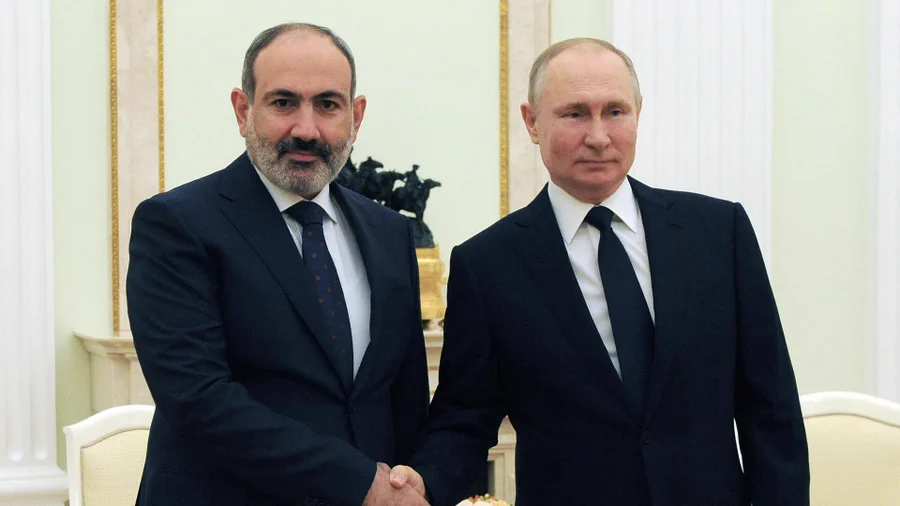
#Putin Wants to “Remove” #Armenia PMPutin is seriously concerned about the situation with repeated statements of Armenian Prime Minister Nikol #Pashinyan that #Russia was not able to ensure the security of Armenia and obvious hints at leaving Russia’s sphere of influence.… pic.twitter.com/NvCIiaTRJG— generalsvr_en (@generalsvr_en) September 15, 2023…
posted 1h ago by Michael Novakhov (Mike Nova) via The News And Times
 

Routes into Azerbaijan’s breakaway territory of Nagorno-Karabakh, including a key link known as the Lachin corridor,  remained blocked at the weekend despite a claimed deal between the two sides on humanitarian aid deliveries. Tensions have been rising in the region as Armenia holds military exercises with US forces, Nagorno-Karabakh elects a new leadership,…
posted 11h ago via intellinews.com
 

Lachin Corridor remains closed despite ‘rapidly deteriorating humanitarian situation’  15 September 2023ByArshaluys BarseghyanThe Azerbaijani checkpoint at the entrance to the Lachin Corridor. Photo: Foreign Ministry of Azerbaijan.The Lachin Corridor, connecting Nagorno-Karabakh to Armenia, remains blocked by Azerbaijan, as the region continues to grapple…
posted 17h ago by Michael Novakhov (Mike Nova) via The News And Times
 

 Selected Articles – The News And TimesU.S. Generals Attend Joint Military Drills In ArmeniaYEREVAN (Azatutyun.am)—Two U.S. generals have arrived in Armenia to watch an ongoing U.S.-Armenian military exercise criticized by Russia and Iran. Major General Gregory Anderson, the commander of the U.S. Army’s 10th Mountain Division, and Brigadier General…
posted 16h ago by Michael Novakhov (Mike Nova) via The News And Times
 

 Situation in Artsakh discussed during consultations chaired by President Shahramanyanposted at 13:56:26 UTC via en.armradio.amThe situation created in Artsakh as a result of the complete blockade of Artsakh by Azerbaijan and the mechanisms for overcoming it were discussed during the working consultations convened by President Samvel Shahverdyan.Other…
posted 21h ago by Michael Novakhov (Mike Nova) via The News And Times
 

 Selected Articles – The News And TimesPutin signaling to trade detained Americans for captured assassins ‘like dealing with a drug gang’Rachel Maddow looks at the “acute toxicity” of Vladimir Putin in the international community, sending assassins to other countries to kill his political enemies and taking foreign nationals hostage to trade with other…
posted 22h ago by Michael Novakhov (Mike Nova) via The News And Times
 

Mr. Hajiyev: You watch the “serious corruption allegations” against Azerbaijan and against your own boss, Ilham Aliyev. See “Azerbaijani Laundromat”, for example. https://t.co/hcflWVkVzu | https://t.co/6RNDrLHCin… | South Caucasus News | #SouthCaucasus #News |… pic.twitter.com/rDSsB7Cy4B— Michael Novakhov (@mikenov) September 13, 2023 The News And…
posted 1d ago by Michael Novakhov (Mike Nova) via The News And Times
 

 Senator Menendez Presses State Department on Its Actions Regarding Lachin Blockade, Assembly Submits Testimonyposted at 05:21:19 UTC via mirrorspectator.com“Is it so important to us that we cozy up to someone who is in the process of creating ethnic cleansing? Is that the side of history the US wants to stand on?” concluded Senator Menendez.Conveying…
posted 1d ago by Michael Novakhov (Mike Nova) via The News And Times
 

Selected Articles – Michael Novakhov’s favorite articles on Inoreader – The News And TimesHeads of state participating in 5th Consultative Meeting viewed EXPO Central Asia 2023 exhibition in Dushanbe [PHOTOS]President of the Republic of Azerbaijan Ilham Aliyev and other presidents participating in the 5th Consultative Meeting of the Heads of State of…
posted 1d ago by Michael Novakhov (Mike Nova) via The News And Times
 
Louis Bono – GS – 5.14.23menafnUs State Department’s Senior Advisor For Caucasus Negotiations Visits ArmeniaBAKU, Azerbaijan, September 14. Louis L. Bono, theState Department’s Senior Advisor for CaucaNegotiations, has visited Armenia, T..2 hours agoTrend News AgencyUS State Department’s Senior Advisor for Caucasus Negotiations visits ArmeniaBAKU, Azerbaijan,…
posted 1d ago by Michael Novakhov (Mike Nova) via The News And Times
 

Armenian Anarchist Group Rises in Besieged Artsakhposted at 10:02:50 UTC via theatlasnews.coWhat You Need To Know: The ongoing Azerbaijani blockade of food, fuel, and medical supplies from reaching the Armenian statelet of Artsakh, also known as Nagorno-Karabakh, and home to around 120,000 people has today triggered the creation of a new anarchist group…
posted 3d ago by Michael Novakhov (Mike Nova) via The News And Times
 

Michael Novakhov’s favorite articlesAzerbaijan Defense Minister receives new Commander of Russian peacekeeping forcesposted at 17:35:57 UTC via azernews.azOn September 12, the new Commander of the Russian peacekeeping forces temporarily stationed in Azerbaijan, Major General Kirill Kulakov was introduced to the Azerbaijan Defense Minister, Colonel General…
posted 3d ago by Michael Novakhov (Mike Nova) via The News And Times
 
The EU & US (the “Collective West”) and Nikol Pashinyan did one smart thing: they INTERNATIONALIZED the Nagorno-Karabakh (Artsakh) conflict. Now it is not about Armenia vs Azerbaijan, it is the World (and UN) against the violations of the rights of the ethnic minorities, and, by association all Human Rights by the certain forces of Azerbaijan. Now,…
posted 3d ago by Michael Novakhov (Mike Nova) via The News And Times
 

#SouthCaucasus #News News https://t.co/WaVZxqr5Bl https://t.co/XuD9if8PCl #PoliticalPrisoners Azerbaijan #AzerbaijanIlham Aliyev #IlhamAliyev: No wonder that Nagorno-Karabakh #NagornoKarabakh (Artsakh – #Artsakh) does not want to be your political vassal and to live under… pic.twitter.com/iD1brQLUvO— Michael Novakhov (@mikenov) September 11, 2023 Michael…
posted 4d ago by Michael Novakhov (Mike Nova) via The News And Times
 

Impeachment of President Salome Zurabishvili and Prime Minister Irakli Gharibashvili _____________________________Georgian PM discusses ties, country’s EU aspirations with new Dutch Ambassadorposted at 14:49:38 UTC via Agenda.ge news.feedAs The EU Pushes Georgia To End Political Polarization, The Government Impeaches The Presidentposted at 16:02:09…
posted 4d ago by Michael Novakhov (Mike Nova) via The News And Times
 
Chairman Menendez Leads Senate Foreign Relations Committee Calls for Enforcing Section 907 Restrictions on U.S. Aid to Azerbaijan WASHINGTON – Under intense grilling on Thursday by the U.S. Senate Foreign Relations Committee, a mid-level Biden-Harris Administration aide repeatedly dodged direct questions about the State Department’s failure to break…
posted 2h ago by Mike Nova via The Puerto Rico Times
 

Watch as Munich Oktoberfest opens its doors for the 188th edition of beer festival. Watch more from Independent TV at: https://www.independent.co.uk/tv/editors-picks Click here to subscribe to The Independent: https://bit.ly/Subscribe-to-Independent About The Independent: Making Change Happen. The Independent is the world’s most free-thinking…
posted 2h ago by The Independent via The Independent
 
The News And Times Information Network – Blogs By Michael Novakhov – thenewsandtimes.blogspot.com

Categories
Selected Articles

Azerbaijani FM says US repeating Armenia’s claims is unacceptable


The Minister of Foreign Affairs of Azerbaijan, Jeyhun Bayramov, met with the US State Department Senior Advisor for Caucasus Negotiations, Louis Bono, Report informs.

LLOGGO-AZ.png


Categories
Selected Articles

Jeyhun Bayramov discusses peace process between Azerbaijan and Armenia with US official


Azerbaijan Minister of Foreign Affairs, Jeyhun Bayramov, met with the US State Department Senior Advisor for Caucasus Negotiations, Louis Bono, Report informs.

The meeting discussed the current situation in the region, the normalization and peace proces

LLOGGO-AZ.png


Categories
Selected Articles

Почему милицию называют «фараонами»? 10 фактов о том, как все начиналось в Витебске | Витебский Курьер


зачем полицейскому «лягушка» и что в народе прозвали «здравствуй и прощай»

В 2017 году в нашем городе открылся обновленный историко-демонстрационный зал УВД Витебского облисполкома, а в этом году его даже включили в программу «Феста экскурсоводов». Экспозиция находится в административном здании УВД Витебского облисполкома и в ней около 300 экспонатов. О самых интересных фактах из истории витебской милиции рассказывала старший хранитель фондов ЦКВР Инна Александровна Абрамова. И если вас интересует вопрос, почему полицейских называли «фараонами», зачем им «лягушка» и почему в 1920-ых годах первые милиционеры должны были проходить «кастинг» не только по характеру, но по внешности, – теперь мы готовы рассказать об этом.

1. История милиции началась еще в Витебской губернии, в 1802 году на территории Российской империи впервые сформировали «милиционные отряды», которые собирали из-за угрозы войны с Наполеоном. Обученные военному делу крестьяне должны были стать резервом регулярной армии. После окончания войны отряды были распущены. 

2. Правопорядок в городах Российской империи охраняли полицейские. Город делился на околотоки, в каждом был свой надзиратель, стоявший на перекрестке или на главной улице. Народ прозвал полицейских «фараонами», потому что такой страж порядка, одетый в специальную форму, стоял с суровым выражением лица, подобно египетскому царю. На боку у него была шашка, правда, только для устрашения – главным рабочим «оружием» полицейского был свисток. В народе его называли «лягушка», потому что медь окислялась и становилась зеленой.

Почему милицию называют «фараонами»? 10 фактов о том, как все начиналось в ВитебскеЗа такой внешний вид полицейских прозвали “фараонами”. Источник dz-online.ru

3. Перед началом Февральской революции полиция получила право входить в любое учреждение и даже в домовладение, если подозревалось, что там находятся революционеры. Так что потом вместо нее сформировали милицию. Вместо формы у нее были только с нарукавные повязки «НО» (народная охрана). В Витебске полицию заменили милицией в ночь с 5 на 6 марта (по старому стилю) 1917 года.

4. В 1920-е годы на работу в милицию годился не любой мужчина, например, смотрели, чтобы на лице у него не было шрамов, к тому же нужно было обладать определенными качествами характера и опрятным внешним видом. Милиционер должен был выглядеть красиво. Следили, чтобы он был правильно одет, если оторваны пуговицы, грязная обувь – значит такая и власть.

Служба милиционера длилась 8 часов. В любое время суток, в любую погоду нужно было нести службу. ГАИ в те времена не было, так что приходилось регулировать и движение транспорта. Для этого использовался жезл красного цвета. А для гужевого транспорта еще были таблички с надписью: «Ехать шагом». Когда в нашем городе был установлен первый светофор, читайте на нашем сайте. 

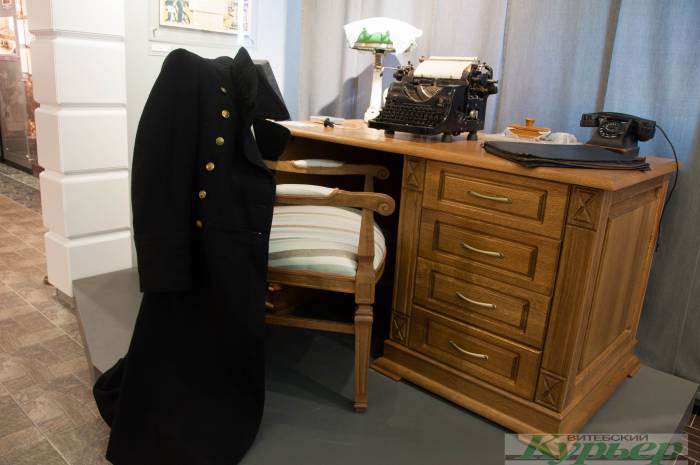
Почему милицию называют «фараонами»? 10 фактов о том, как все начиналось в ВитебскеИнсталляция рабочего места милиционера в 1920-ых годах. Фото Анастасии Вереск

5. С 1922 года милиция стала профессиональной, а не просто добровольной обязанностью каждого гражданина по охране порядка. В том же году в Витебске впервые отмечали первый профессиональный праздник, а Ратушу даже украсили большим портретом милиционера в форме. Старались отметить каждого, поэтому дарили часы, сапоги, отрезы на костюм и даже пивные кружки. В то время милиционер получал очень мало – 17 рублей. Впервые самых лучших и заслуженных милиционеров отметили государственной наградой – орденом Красного знамени, а также званием Герой труда милиции.

6. В 1931 году белорусская милицейская форма была заменена на общесоюзную. Введенные «каскетки» в народе прозвали «здравствуй и прощай», потому что у них был козырек впереди и сзади.

7. Последними из оккупированного в Отечественную войну Витебска уходили истребительный батальон милиции и сотрудники ОСОАВИАХИМ. Первый бой батальона под Суражем стал также и последним: потери были ужасны. Сейчас установлены 182 фамилии сотрудников витебской милиции, погибших при исполнении служебного долга в разные годы. Именами Бобкова и Синкевича названы улицы в Орше и Сенно.

Почему милицию называют «фараонами»? 10 фактов о том, как все начиналось в ВитебскеМемориальный комплекс в честь погибших солдат правопорядка возле здания УВД был установлен в 2005 году. Фото Анастасии Вереск

8. Легендой витебской милиции стал Ландыченко Виктор Федорович, полный кавалер Ордена Славы. Третья степень награды нашла его уже после войны, когда Виктор Федорович в уголовном розыске разведчиком. Его направляли в бандформирования для сбора информации.

9. Пять сводных отрядов из витебской милиции были отправлены после аварии в чернобыльскую зону, из 1300 человек на сегодняшний день в живых осталось только 700.

За организацию работы сводных отрядов полковник милиции Томашев А.М. награжден орденом Красного знамени. Такой же награды удостоен милиционер Сергей Малахов, умерший в от полученной лучевой болезни.

10. До того, как в 1980 году было построено здание для УВД на проспекте Фрунзе, милиция находилась на улице Калинина, теперь там работает поликлиника УВД. В экспозиции восстановлена дежурная часть, в которую звонили по номеру «02».

Почему милицию называют «фараонами»? 10 фактов о том, как все начиналось в ВитебскеВ коллекции есть и форма современной белорусской милиции, ОМОНа, ГАИ. Фото Анастасии Вереск

Знакомство с экспозицией предполагает групповое посещение с 9.00 до 18.00 (с понедельника по пятницу), для посещения необходима предварительная запись, так как выставочный зал находится в административном здании.

Подробнее об истории уголовного розыска в Витебске читайте на нашем сайте. 


Categories
Selected Articles

The Pharaoh – Фараон (aka Ilham Aliyev – #IlhamAliyev)


ilham_aliyev.jpg 
The Pharaoh – Фараон 

Почему милицию называют «фараонами»? 10 фактов о том, как все ...

Город делился на околотоки, в каждом был свой надзиратель, стоявший на перекрестке или на главной улице. Народ прозвал полицейских «фараонами», потому что такой страж порядка, одетый в специальную форму, стоял с суровым выражением лица, подобно египетскому царю.Apr 25, 2018
The News And Times Information Network – Blogs By Michael Novakhov – thenewsandtimes.blogspot.com

Categories
Selected Articles

Azerbaijan’s Aliyev is a Strategic Liability, Not an Asset


Ilham%20Aliyev.jpg

Ilham Aliyev, President of Azerbaijan for nearly eighteen years, sits atop a mirage. Azerbaijan’s capital Baku exudes wealth. Luxury boutiques like Bulgari, Christian Dior, Gucci, and Trussardi line Neftchiler Avenue across Primorsky Park from the Bay of Baku. Luxury hotels like the Four Seasons, Marriott Absheron, and the Hilton Baku overlook the cornice. Car dealerships showcase the latest Rolls Royces, Lamborghinis, and Ferraris. Azerbaijan is hardly the only country to sport such an ostentatious display—Persian Gulf emirates do as well—but the wealth extremes among Azeri citizens are greater, as anyone who has bypassed the official tours to see the mudbrick houses and shantytowns outside the capital can attest. While those associated with the Aliyev family and his inner circle might afford Baku’s luxury goods, most city residents, including the educated and professional class, barely scrape by. Travel an hour or two outside the capital, and the situation is even worse.

Azerbaijan is among the world’s most corrupt countries; Transparency International ranks Azerbaijan with Russia, Mali, and Malawi. In contrast, neighboring Armenia sits alongside Greece and Slovakia in the rankings, while Georgia scores even better. The recent Pandora Papers exposé showed that family members of senior Azeri officials had bought or sold tens of millions of dollars of luxury real estate.

Politically, Azerbaijan remains an authoritarian dictatorship. Freedom House assesses that Azeris living under Aliyev’s dictatorship enjoy less freedom than Palestinians struggling under Hamas rule in the Gaza Strip and Houthi repression in Yemen; Azeris enjoy fewer civil liberties than the Chinese under President Xi Jinping’s repressive rule.

Why the West Ignores Azerbaijan’s Reality

Western states have ignored Aliyev’s corruption and repression for a variety of reasons:

The United Kingdom shields Azerbaijan at international forums because of British Petroleum’s interest in the country’s energy market. While China’s trade with Azerbaijan has historically been only a fraction of Great Britain’s, Beijing’s ambitions in Azerbaijan are quickly growing, which ironically makes China and the United Kingdom allies in the United Nations Security Council offering blind support to Azerbaijan, when the United Nations considers issues involving the South Caucasus.

Israel, meanwhile, has long-standing ties with Azerbaijan that are rooted in the arms-for-energy trade. During last year’s Nagorno-Karabakh war, Azerbaijan used Israeli drones against both civilian and military targets to turn the tide of the war after ethnic Armenian forces in Nagorno-Karabakh rebuffed the initial Azerbaijani invasion.

Traditionally, both Israel and the United States also value Azerbaijan for its strategic location and willingness to allow espionage, if not full-fledged operations, against the Islamic Republic of Iran. While the mostly Shi’ite Azerbaijan once sought to distinguish itself from theocratic Iran to its south, in recent years, Aliyev has played the issue both ways: coasting on Azerbaijan’s past reputation while increasing his ties with Iran (and Russia), recent disputes with Tehran notwithstanding.

Azerbaijan’s reputation for religious tolerance and secularism also attracts many Western supporters. Certainly, Azerbaijan deserves praise in this regard, though the myth does not live up to reality. While Azerbaijan has generally protected its Jewish community, Aliyev’s government has long targeted Azerbaijan’s Christians, in some cases by erasing centuries-old cultural property like the graveyard in Julfa that Azerbaijani troops systematically destroyed. More recently, Aliyev’s cooperation with and tolerance for Syrian jihadi mercenaries, whom he used in his fight against Nagorno-Karabakh’s Armenians, raise questions about his outlook. In many ways, Aliyev appears to be taking a page from Turkish president Recep Tayyip Erdoğan’s playbook: Distract the West with paeans to the secular past while quietly co-opting, if not promoting, religious extremists to act as policy proxies. When countries have embraced such tactics, the result has been blowback that harmed the standing of religious minorities. Azerbaijan’s subordination of its foreign policy to Erdoğan’s—even allowing Turkish diplomats veto power over Azerbaijani engagements—should raise questions about Baku’s tolerance and the ability of Israel and the United States to leverage Azerbaijani territory for other strategic pursuits in the near future.

Beyond the strategic reasons for ignoring Azerbaijan’s reality, there is also the reality of caviar diplomacy and golden parachutes. Azerbaijan pays well. The regime spends lavishly on gifts, luxury hotel suites, and dinners and provides access to those who parrot official positions and, more importantly, refuse to research or consider counterarguments. Some Israeli officials openly talk about how they hope to enter the Azerbaijani business scene after retirement. Former American officials might be more discreet in what they say, but their actions do not substantively differ.

Aliyev’s Dangerous Revanchism

Aliyev’s orientation should raise questions for any honest analyst, but, what really makes Azerbaijan a strategic liability, is Aliyev’s increasing unwillingness to live within Azerbaijan’s borders. This problem goes beyond disputes with Armenia over Nagorno-Karabakh, the contested territory recognized by most countries as Azerbaijani territory, and extends to Aliyev’s territorial claims over Armenia proper, which the Azerbaijani dictator has increasingly voiced over the past decade.

For example, on November 20, 2012, Aliyev said, “Armenia as a country is of no value. It is actually a colony, an outpost run from abroad, a territory artificially created on ancient Azerbaijani lands.” The following year, Aliyev gave a speech in which he promised not only to retake Nagorno-Karabakh but also all of Armenia. “Azerbaijanis will live on their historical lands in the future. Our historical lands are Irevan [Yerevan] and Zangezur regions,” he said. He returned to this theme on January 22, 2014, during a visit to Ganja, Azerbaijan’s second-largest city, when he described Armenia as “historical Azerbaijani lands” that his countrymen will eventually regain. While Minsk Group diplomats pushed a land-for-peace and security deal, Aliyev promised Azeris that an Armenian withdrawal from Nagorno-Karabakh and the adjacent districts would only be the first phase of a final solution.

At Nowruz celebrations the following year, Aliyev tripled down on the theme. “The Armenian-Azerbaijani Nagorno-Karabakh conflict must be settled only within the framework of Azerbaijan’s internationally recognized territorial integrity,” he said, then added, “after that, we will return to our ancient lands—to Yerevan, Geicha, and Zangezur.”

While successive secretaries of state took Aliyev at his word when he promised to settle his disputes with Armenia diplomatically, Aliyev did not try to deceive his home audience. Speaking in the central Azerbaijani district of Terter in December 2016, he explained, “Today, we are not claiming any in the modern Republic of Armenia. We do not intend to reclaim Yerevan, Meghri, Goris through military force but I’m sure that time will come, and we, Azerbaijanis, will return to all our historic lands,” He then promised, “The main factor [for success] is strength. This is true. We live in the real world. So we have to become even stronger, to create a more powerful army.”

In recent years, especially as his economy has stagnated or declined against the backdrop of falling oil prices, Aliyev has increasingly turned toward revanchist claims to distract the public from his own mismanagement. During a speech to his New Azerbaijan Party, for example, Aliyev claimed that Yerevan, the territories of Lake Sevan, and the province of Syunik, also known as Zangezur, are historical Azerbaijani lands and that their return was a “strategic and political goal.” During a Baku military parade after the Azeri victory in the most recent Nagorno-Karabakh war, Aliyev called Yerevan, the capital of Armenia, as well as Armenia’s Syunik and Sevan regions “historical lands” of Azerbaijan. Such rhetoric dashes hopes for peace. Just last month, Aliyev threw cold water on Armenia’s request for talks about the status of Nagorno-Karabakh, warning Armenians that they should refrain from raising the subject since Azerbaijan has more historical grounds for claiming parts of Armenia like Zangezur and Lake Geicha.

It is one thing for Azerbaijan not to have diplomatic relations with Armenia—that can be rectified—but it is quite another to reject Armenia’s right to exist.

A Perfect Storm

Family fiefdoms seldom succeed in countries without formal, institutionalized monarchies. Egyptian President Hosni Mubarak fell when he tried to promote his son to power. Likewise, Muammar Gaddafi fell as he tried to have his son Saif succeed him. Hafez al-Assad’s son Bashar did come into power, but Syria ultimately paid a far higher price as it descended into civil war.

For dictators, the problem with multi-decade rule is that political scapegoats are in short supply. For example, Erdoğan cannot blame his predecessors for the corruption and economic mismanagement that drained Turkey’s foreign reserves and crashed its currency. For all of Azerbaijan’s hydrocarbon wealth, the per capita income of Azerbaijanis is actually less than that of Georgians and Armenians, the latter of whom subsist under a Turkish-Azerbaijani economic blockade. While the citizens of Gulf emirates arguably accept a contract in which they sacrifice freedoms for wealth, the comparison between the Gulf states and Azerbaijan falters because ordinary Azeris receive little in exchange for political pliancy.

Azerbaijan now faces a perfect storm. As Aliyev seeks to promote his wife and son to succeed him, ordinary Azerbaijanis grow increasingly frustrated with their plight. They also see the cost of Aliyev’s Nagorno-Karabakh victory: infringement on Azerbaijani sovereignty by Russian and Turkish troops. Aliyev sponsors trips for foreign officials and some Azeris to recaptured areas of Nagorno-Karabakh, but few Azeris who originate from the territory are prepared to return permanently, given the region’s lack of jobs and their new roots in and around Baku. In effect, Aliyev wants to spend billions of dollars on infrastructure and Potemkin ghost towns that few Azeris want to reside in permanently during a shaky time for  Azerbaijan’s economy, the rise in oil prices notwithstanding.


Categories
Selected Articles

To #CIA, #ODNI, #POTUS, #Senate, #House, #SenatorMenendez: #Azerbaijan needs a #REGIMECHANGE! And the sooner the better. This appears to be the most efficient solution for its problems. The #PetroWealth of the #SouthCaucasus belongs to all its #people, and it has to be distributed #accordingly. The #SouthCaucasusFederation should be formed, #firmly #allied with the #New #Ukraine and the “#CollectiveWest”.


To #CIA, #ODNI, #POTUS, #Senate, #House, #SenatorMenendez: #Azerbaijan needs a #REGIMECHANGE! And the sooner the better. This appears to be the most efficient solution for its problems. The #PetroWealth of the #SouthCaucasus belongs to all its #people, and it has to be… pic.twitter.com/ugbRVyuMG2

— Michael Novakhov (@mikenov) September 13, 2023 

To #CIA, #ODNI, #POTUS, #Senate, #House, #SenatorMenendez: #Azerbaijan needs a #REGIMECHANGE! And the sooner the better. This appears to be the most efficient solution for its problems. The #PetroWealth of the #SouthCaucasus belongs to all its #people, and it has to be distributed #accordingly. The #SouthCaucasusFederation should be formed, #firmly #allied with the #New #Ukraine and the “#CollectiveWest“.

Image

To CIA, ODNI, POTUS, Senate, House, Senator Menendez:
Azerbaijan needs a REGIME CHANGE! And the sooner the better. This appears to be the most efficient solution for its problems.
The Petro Wealth of the South Caucasus belongs to all its people, and it has to be distributed… pic.twitter.com/brTxi1zZgQ

— Michael Novakhov (@mikenov) September 13, 2023

Israel and Netanyahu should support all the people of the South Caucasus, not just Azerbaijan and the corrupt Ilham Aliyev’s regime. The alliances of convenience are short lived. Jews have roots throughout all the South Caucasus. The relations with Armenia have to be reviewed and… pic.twitter.com/7RcKqGB60b

— Michael Novakhov (@mikenov) September 14, 2023

To CIA, ODNI, POTUS, Senate, House, Senator Menendez:
Azerbaijan needs a REGIME CHANGE! And the sooner the better. This appears to be the most efficient solution for its problems.
The Petro Wealth of the South Caucasus belongs to all its people, and it has to be distributed… pic.twitter.com/brTxi1zZgQ

— Michael Novakhov (@mikenov) September 13, 2023

The News And Times Information Network – Blogs By Michael Novakhov – thenewsandtimes.blogspot.com

Categories
Selected Articles

Putin Wants to “Remove” Armenia PM – GeneralSVR – 9.15.23


#Putin Wants to “Remove” #Armenia PM

Putin is seriously concerned about the situation with repeated statements of Armenian Prime Minister Nikol #Pashinyan that #Russia was not able to ensure the security of Armenia and obvious hints at leaving Russia’s sphere of influence.… pic.twitter.com/NvCIiaTRJG

— generalsvr_en (@generalsvr_en) September 15, 2023

#Putin Wants to “Remove” #Armenia PM


Putin is seriously concerned about the situation with repeated statements of Armenian Prime Minister Nikol #Pashinyan that #Russia was not able to ensure the security of Armenia and obvious hints at leaving Russia’s sphere of influence. Armenia’s exit from the CSTO will call into question the very existence of the organization, and the exit of #Kazakhstan, which has already secured the support of #China, puts an end to the existence of the CSTO. Putin considers Nikol Pashinyan to be to blame for the problems that have arisen and in the process of discussing possible options for overcoming the crisis, he expressed displeasure several times that the issue with “upstart” Pashinyan should have been resolved on takeoff and there would have been no problems. The Russian President insisted that it was not too late to “remove” the Prime Minister of Armenia, and this was the best way to solve the problem. Despite statements from security officials that such an operation could not be prepared quickly, Putin insisted on implementing such a decision as quickly as possible. Russian President Vladimir Putin understands “the development of relations with our closest neighbours and allies” in a very odd way.

Image

·

18.2K

Views

The News And Times Information Network – Blogs By Michael Novakhov – thenewsandtimes.blogspot.com