
If you’ve been tracking how establishment US media has whitewashed Ukraine’s neo-Nazi militias since Russia’s Feb. 2022 invasion, we’ve got a new one for the lexicon:
According to NYT’s @MarcSantoraNYT, the Azov Battalion is “a former far-right militia group.” Compare that to… pic.twitter.com/2WVfY1h9Ud
— Aaron Maté (@aaronjmate) December 26, 2023
Day: December 26, 2023
Categories
NPR News: 12-26-2023 1AM EST
 Россия не оставляет попыток захватить Украину, однако терпит только неудачи и потери. Оккупанты тщетно пытаются проводить штурмовые действия, ведь ВСУ их сдерживают. Полный текст новости
Governor Soundararajan Criticizes Tamil Nadu’s Flood Response: Politics or Genuine Concern?

Ukrainian Pole Vaulting Icon Sergej Bubka Accused of Business Dealings with Russian Occupants

Adnan Jalil’s Political Shift and Implications for Pakistan’s Political Landscape

Sudden Demise of Former Papua Governor Lukas Enembe Stirs Indonesian Political Landscape

South Africa’s Struggle with Illegal Immigration in 2023: A Deep Dive

Rishi Sunak Reveals Lighter Side with ‘Home Alone’ Inspired Video

G4Media Appeals for Support as Romanian Ministry Details Christmas Eve Operations

Winter Tourism Transforms Nalati Grassland into Hotspot of Prosperity

SRF Website Recaps 2023 Sports Highlights with a Focus on June

Pele’s Son, Edinho, Voices Concern Over Brazilian Football Crisis

Amid Sanctions and Workforce Shortages, Russia’s Economy Shows Resilience

Pope Francis Criticizes Arms Spending, Calls for Peace in Christmas Message

Ghana’s Afua Asantewaa Aduonum Aims for Guinness World Record in Sing-a-thon

Ghana’s Afua Asantewaa Aduonum Eyes Guinness World Record in Sing-a-thon

World AIDS Day Campaign Focuses on Prevention, Testing, and Ending Discrimination

Cosmic Collision Awaited: Andromeda Galaxy on Course to Merge with Milky Way

Afua Asantewaa Aduonum’s Quest for Guinness World Record: Day 3 of the Longest Singing Marathon

Pope Francis’ Christmas Message: A Beacon of Hope and Peace

Hamas’ surprise October 7 attack on Israel and the ensuing war in Gaza, and Russia’s invasion of Ukraine have demanded White House attention and intelligence resources, complicating CIA Director William Burns’ drive to ensure China is the top long-term priority.
— Eddie Du (@Edourdoo) December 26, 2023
Background
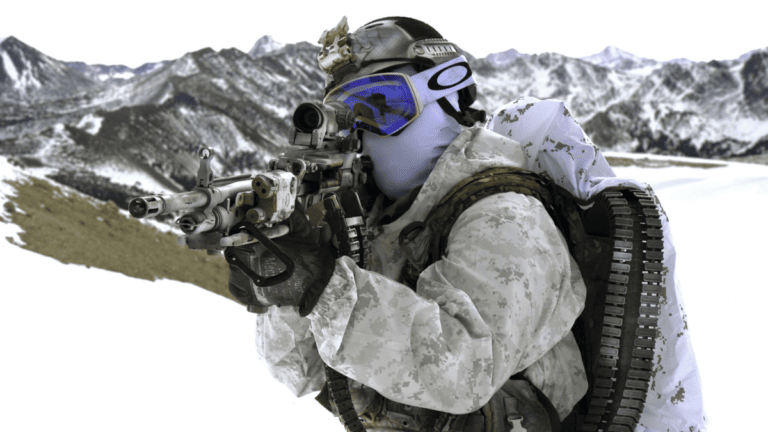
The United States is one of the most powerful arctic nations in the world. With global temperatures rising, controlling the Arctic Circle has increasingly strategic advantages. Melting Arctic ice introduces new opportunities and competition for shipping routes and resources in the region.
Post-Cold War arms reduction treaties and a major shift in US military focus to the Middle East after 9/11 reduced the DoD’s Arctic focus. Now, the DoD frequently revisits its Arctic strategy as tensions with Russia and China rise. US policymakers aim to steadily increase US military presence, infrastructure, and capabilities in the region. An updated strategy is to be released in 2024.
Key Judgement 1. U.S. Policymakers will likely prioritise elevating the quality of its Arctic bases and operations in the next 12 months.
Key Judgement 2. The US will likely encounter more geostrategic competition over the Arctic in the next 12 months.
Key Judgement 3. The US will likely take a leading role in the Arctic Council in the next 12 months.
KJ-1. US Policymakers will likely prioritise elevating the quality of its Arctic bases and operations in the next 12 months.
a. Alaska military projects are set to receive $168M in funding in 2024. Additionally, $203M was approved for a runway extension and other projects on Joint Base Elmendort-Richardson in Anchorage. [source]
b. The 11th Airborne Division in Alaska is upgrading equipment to handle extreme Arctic temperatures. Learning from allies like the Indian Army and the US 10th Mountain Division, the division is focusing on procuring specialised gear for Arctic conditions.[source]
c. US Congressmen have emphasised the importance of the US military receiving ice cutters in the Arctic, seeing as it is trailing behind the arsenal of Chinese and Russian cutters. The plans were approved, however, they have been delayed. [source]
d. The design of the Polar Security Cutter’s is not complete, which has led to an extended design phase and contributed to a 3-year delay, with the construction of the first cutter now planned for March 2024. [source]

KJ-2. The US will likely encounter more geostrategic competition over the Arctic in the next 12 months.
a. In October, the US Navy conducted Multinational naval exercises with NATO allies in the Barents Sea. [source]
b. In September, the US Coast Guard encountered a Chinese guided missile cruiser, two naval ships and four Russian naval vessels, including a destroyer, in formation 86 miles north of Alaska. [source]
c. In early November, the US sanctioned Russia’s Arctic LNG-2 project for its actions in Ukraine. [source]
KJ-3. The US will likely take a leading role in the Arctic Council in the next 12 months
a. With the exception of Russia, the US engages with all members of the Arctic Council on issues such as wildfire control, search and rescue, climate change, and sustainable development. [source]
b. On [date], the US, the UK, and Sweden joined Finnish troops in a large land-force drill in the Arctic Circle. The USAF 48th Fighter Wing heritage F-15E Strike Eagle was part of the joint training force. [source]
c. Arctic Council members Finland and Sweden have closely aligned themselves with US interests, with Finland having joined NATO this year and Sweden in the application process. [source]
Analytical Summary
We are highly confident in our assessment that the Arctic Circle will be better prioritised by the US in 2024. Our analysis relies on local and international press reports, think tanks, and government statements. We assume that the approved funding for Alaskan military projects will bring positive improvements to base efficiency and operationality. If this assumption proves incorrect and the US lags behind its competitors in Arctic superiority, we anticipate there will be more confrontations along the Bering Strait. Obtaining more insight into the anticipated 2024 DoD Arctic Strategy would help mitigate uncertainty about upcoming projects and operations.
Intelligence Cut-off Date: 26 December 2023
The post US Arctic Strategy 2024: A 12-Month Assessment appeared first on Grey Dynamics.