
Day: November 24, 2023
A comedy play from 1716 called The Cobbler of Preston is believed to contain the first known iteration of the words “Tis impossible to be sure of anything but death and taxes”. The phrase itself became more common after a letter from American statesman Benjamin Franklin written in 1789.
There’s no question the phrase works on a literal level – but it also has a deeper meaning. The original play was based in Preston, then a town in the north-west of England, which had recently been the scene of a battle – all part of the ongoing Jacobite Rebellion. The battle brought death and injuries in a way not seen before to the area – with the play making reference to this.
And like so many other times in history, death stares us in the face once again. Last weekend, the long-running conflict between Israel and Palestine flared up once again – with one of the incidents being an appalling attack by Hamas at the Supernova rave, which was taking place quite near to the Gaza Strip last Saturday.
Pictures of the aftermath have been shared far and wide on social media – and it’s now been confirmed that Supernova’s organisers, twin brothers Michael and Osher Vaknin, died as a result. Their charred remains were found at the site – Osher was buried in Jerusalem on Tuesday, with Michael’s funeral due to take place soon.
India’s very own Braindrop – real name Sumith Suresh – paid tribute on his Facebook page earlier…

Now, Ears To The House has a longstanding policy of not taking sides on political matters. We understand that our readers have a variety of views on these matters, and it isn’t our job to try and influence those. But what we will do is take a closer look at the issues arising from this conflict – and others more widely – for the dance music world.
For starters, what will the ongoing situation mean for clubbing and nightlife in the area? Well, it should be obvious – it means everything’s effectively off the table for a while. International travel into Israel is certainly out of the question – airlines are announcing the cancellation of flights into Israel on an almost daily basis.
In the longer term, it’s harder to say. Take Ukraine, as an example – it didn’t take long for the media to find out that raves were still taking place, even amidst a backdrop of men being conscripted into the army to fight. It’s not inconceivable that Israel and the Gaza Strip could witness a similar phenomenon – but there is one other factor which may be more of a consideration here.
Namely, potential acts of terrorism. This isn’t a new thing, as anyone who remembers the Bali bombings of two nightclubs in October 2002 will know – but it might well focus minds elsewhere with what’s going on right now. And it would be foolhardy to pretend the bad side of conflict – violence, rape, drugs, and so on – would somehow not be seen in the world of nightlife.
Is there also a potential for conflict to spread within the Middle East? There are a lot of other countries in the same area that have increasingly thriving club scenes – Dubai in the United Arab Emirates is one example with the likes of MDL Beast Soundstorm, Saudi Arabia is another. Whilst the chance of these countries being dragged into war seems low, it’s not impossible.
These are certainly interesting times in the dance music world – and part of its future might not be moulded by events entirely outside its control…

The systematic UNRWA call for violence had been witnessed and ignored by the IDF for a generation.

The Islamofascist oppressive regimes crave for nothing less than a Global Jihad.

You can help Israel fight propaganda

It’s a vicious cycle: Lack of exposure leads to lack of awareness leads to lack of knowledge leads to lack of recognition.

Israeli organizations Rachashei Lev, Elron Ventures, and Accelmed collaborated to import
critical medical equipment to battle zones following the October 7 attacks.

The Israeli government and media prevented anyone from knowing that the PLO had failed to ratify the Oslo Accords.

“Dad, I’m talking to you from a Jewish woman’s phone. I killed her and I killed her husband. I killed 10 with my own hands!” the terrorist cries.

Palestinian Authority leader Mahmoud Abbas addresses a rally in Ramallah commemorating the fifth anniversary of late Palestinian leader Yasser Arafat’s death, Nov. 11, 2009. (Photo

The survey also found that 38.6% of Muslim Americans approve of Hamas leader Ismail Haniyeh.

A map of the incidents shows clusters in various states and regions.
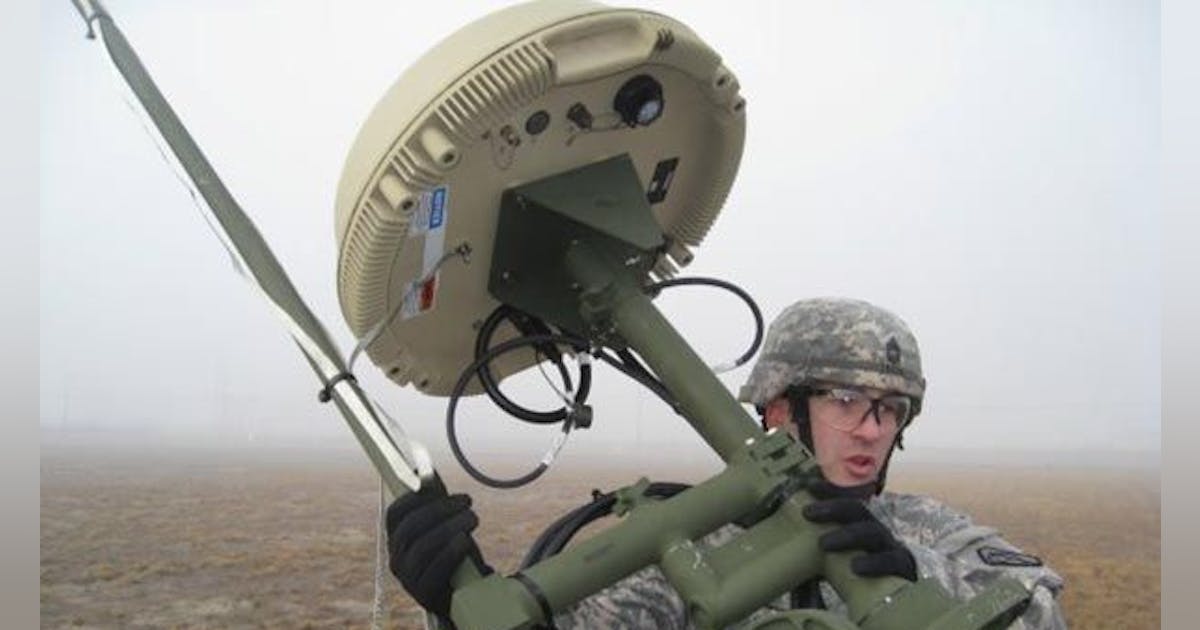
WASHINGTON – The potential for electronic warfare (EW) jamming that can knock out satellite navigation over wide areas is a very real threat. Perfect Jammer reports. Continue reading original article
The Military & Aerospace Electronics take:
5 Sept. 2019 — the potential effects of GPS jammers are not widely known, yet the threat gets bigger the more we rely on GPS. As a result, more and more countries are committed to developing GPS interference devices.
Because jamming technology now decides the battle. Whoever gains the upper hand in an electronic jamming war will determine the course of the war.
The U.S. Government is buying one hundred portable drone jammers to protect government facilities, property and personnel. The jammer interferes with the drone’s radio controls, avoiding dangerous alternatives involving bullets and other projectiles.
Related: Electronic warfare (EW) upgrades to boost EA-18G electronic attack
John Keller, chief editor
Military & Aerospace Electronics
Jamming underpins the electronic attack mission. Electronic attack is a subset of the wider Electronic Warfare (EW) discipline discussed in more detail elsewhere. Jamming was first used offensively during the Second World War to attack radars and radios. Both these latter systems transmit radio signals. Radars do this to detect and track an object, radios do this to send and receive voice and data traffic.
At its simplest, jamming is intended to degrade the ability of radars or radios to perform their tasks, or even prevent them from doing so altogether. The jamming process also harnesses radio signals but does so in such a way as to attack these systems. Put simply, jamming uses artificially created radio interference offensively. An example of how jamming works can be witnessed when a car drives under a powerline with its radio on. The sound of the radio suddenly becomes drowned out by interference. This is caused by the electromagnetic radiation from the powerlines.
A jamming signal, known as a waveform, will be transmitted towards a radar or radio’s antenna. The intention is for the antenna to detect this signal. To ensure this occurs, the signal is transmitted on a frequency which can be detected by the antenna and which matches the frequency of the signal the jamming is targeting: If a radar is transmitting its signal on a frequency of 3.6 gigahertz/GHz, the jamming signal must be the same.
However, jamming a radar or radio successfully not only depends on the jamming signal’s frequency. Signal amplitude is also important. Let us consider a radio receiving traffic with amplitudes at a certain number of watts. If the jamming signal is weaker than the signals received by the radio then those latter signals will be left undisturbed. The jamming signal will be detected too but will be too weak to have any discernible effect.
If the jamming signal is stronger than the traffic received by the radio it will ‘wash out’ the former. In electronic warfare, jamming is effective when the radio or radar is receiving rather than transmitting. This is because the incoming radio signals will already be comparatively weak. This reduces the power levels the jammer needs to be effective. To explain how jamming works, imagine a solo violinist and a heavy rock band on the same stage. The solo violinist starts to play but their music immediately becomes inaudible when the rock band starts. This does not mean that the violinist’s music has stopped, merely that the loudness of the band drowns out the soloist.
Electronic Jamming Tactics
Jamming has increased in sophistication as electronic warfare has developed and includes an array of tactics. Barrage jamming is performed against two or more frequencies. This can be useful when the aggressor does not know exactly which radio or radar frequencies their adversary is using. Nonetheless, they may know with reasonable certainty which waveband of frequencies they may be using. Spot jamming is performed against specific frequencies known to be in use.
The advent of solid-state electronics in the 1960s revolutionised jamming. It enabled the development of sophisticated Digital Radio Frequency Memory (DRFM) systems. These are particularly useful for jamming radars. DRFMs detect an incoming radar signal, sample that signal and then subtly alert it, before retransmitting it back to the radar. This new, but false, signal could confuse the radar by presenting two or more targets where there was previously only one. It could show the target as appearing to travel faster or slower than it actual is. This tactic is known as deception jamming.
Likewise, false signals could be composed by the DRFM and transmitted to convince the radar there is a far more prominent or attractive target in its field-of-view rather than the one it originally detected. This tactic is known as seduction jamming. Over the long term, the advent of artificial intelligence techniques will make jamming tactics and techniques ever more sophisticated.