Categories
Selected Articles

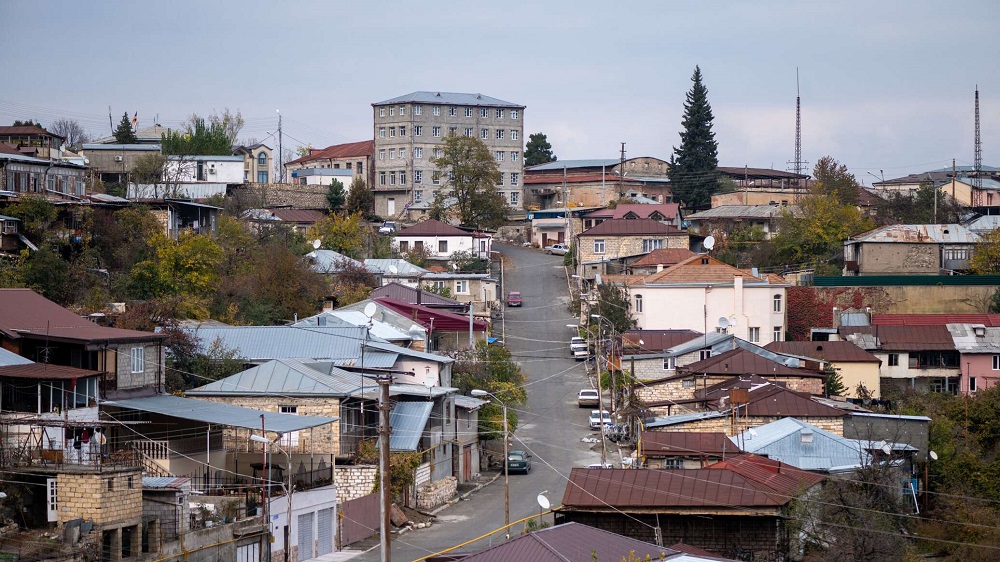
Khankendi city connected to Azerbaijan’s energy grid


Khankendi city connected to Azerbaijan's energy grid

Baku, September 24, AZERTAC

Urgent works are underway to address the issues discussed in the meeting held with the representatives of the Armenian residents living in the Karabakh region of the Republic of Azerbaijan on September 21, 2023, in the city of Yevlakh.

According to the Presidential Administration of Azerbaijan, as a next step, the city of Khankendi was disconnected from the energy grid of Armenia and connected to the energy grid of Azerbaijan. Reserve slots for Khankendi were installed in the “Shusha” substation, which was built by “Azerenergy” in 2021 and inaugurated with the participation of President of the Republic of Azerbaijan Ilham Aliyev. Beginning from September 19, 2023, “Azerenergy” started the installation of additional 110 kV high-voltage poles near the “Shusha” substation and connecting them with the Khankendi transmission line. As a result of the works, the process has already been completed. At the same time, “Azerenergy” and “Azerishig” employees inspected the transmission and distribution network and protection systems, and then transmission lines were provided with electricity. From now on, Azerbaijan is providing electricity to Khankendi.


Categories
Operation "Doppelganger"

Anal Fissures: Causes and Prevention – WebMD


What Are Anal Fissures? An anal fissure is a cut or a tear in the thin, delicate lining of your anus. The tear often exposes the muscle around the anus, called the anal sphincter.

Categories
Selected Articles

Notorious Russian intelligence chief tapped to replace Prigozhin in Wagner’s Africa operations


Gen. Andrey Averyanov is being tapped to run the Wagner Mercenary group’s Africa operations following the death of Yevgeny Prigozhin.

Averyanov currently serves as the head of covert offensive operations in Russia’s military intelligence service, and he has been accused of ordering assassinations of Russian dissidents. He now has the task of maintaining Wagner’s operations in Africa after the death of their architect, The Wall Street Journal reported.

Averyanov met with African leaders during a Russia-Africa summit in July. The summit was also Prigozhin’s first public appearance following his brief mutiny against Russian President Vladimir Putin’s regime.

When Prigozhin’s private jet crashed last week, Wagner lost several members of its top brass in addition to their leader. Prigozhin’s second in command, Dmitry Utkin, and Wagner’s non-military logistics chief, Valery Chekalov, were also aboard.

Putin forced Wagner mercenaries to withdraw operations in Ukraine following their mutiny earlier this year. However, the group remains heavily active in Africa.

It is unknown what caused Prigozhin’s plane to crash, but experts believe Putin ordered an assassination.

Rescuers said they found 10 bodies in the wreckage, and Russian officials stated Sunday that a DNA analysis confirmed that Prigozhin was among them.

In comments following the crash, Putin described Prigozhin as “a man of difficult fate” who “made serious mistakes in life, and he achieved the results he needed — both for himself and, when I asked him about it, for the common cause, as in these last months. He was a talented man, a talented businessman.”

“It would be harmful to make changes immediately,” one Wagner employee in Africa told WSJ. “The first concern now is not to lose control of the situation while waiting for the appointment of one (or more) heirs.”

The current session of the UN General Assembly has shown that the United States will not force the Global South to take its position in the Ukrainian conflict, writes ‘An Nahar’ from Lebanon. Developing countries refuse to condemn Russia and demand an end to hostilities, as they suffer from their consequences.

UN Secretary-General António Guterres said during his speech that humanity faces enormous challenges, from a worsening climate emergency to escalating conflicts, a global cost of living crisis, growing inequality and technological changes.

This is a huge number of problems that a divided world faces. The role of the United Nations has noticeably declined. There is intense competition between the West, led by the United States, on the one hand, and developing countries, led by China, on the other. More than ever, Beijing wants a say in international affairs commensurate with the size of the Chinese economy that has boomed over the past four decades.

The United States appears to be facing an almost impossible task of forging a global consensus on isolating Russia internationally over the situation in Ukraine. Most developing countries have a different view of the Ukrainian conflict, which has been going on for 18 months. They demand a political solution and an immediate cessation of hostilities.

Washington is trying in vain to pressure countries in the Global South to accept a Western strategy based on the idea that the problem will be solved when Russia suffers a crushing defeat in Ukraine. There are leaders in the world who strongly disagree with this approach. Brazilian President Luiz Inacio Lula da Silva, for example, accused the United States of encouraging the conflict in Ukraine. In addition, developing countries have not joined Western sanctions against Russia, despite the pressure put on them.

While Western powers are able to pay for aid to Ukraine, developing countries are suffering from continued hostilities and cannot bear the costs of the conflict. The longer the fighting goes on, the more states in the Global South insist on a ceasefire.

Developing countries are increasingly concerned about pressing issues such as food security, climate change, inequality and the debt crisis. It won’t be long before the consequences of the collapse of the Black Sea grain deal between Russia and Ukraine begin to show in poor countries.

Although the regular session of the UN General Assembly allows for discussion of pressing global problems, disagreements have arisen among participants regarding how to solve them.

The division of countries into international blocs competing with each other has led to the fact that the United Nations has practically lost its global significance and demonstrated ineffectiveness in resolving international conflicts.

The more tensions between states escalate, the weaker the role of the United Nations becomes.

The intensity of global competition is preventing the United Nations from fulfilling the mission for which it created.

The world divided into opposing camps, each of which is looking for the best way to protect its national interests. It is not easy to find a way to salvation or get out of a dead end, ‘An Nahar’ writes.

The timing of the Canadian assault on the Indian foreign and security policy establishment over the killing of Hardeep Singh Nijjar is not in doubt, stresses M.K. Bhadrakumar, Indian Ambassador and prominent international observer.

It surged in the aftermath of the G20 summit, which witnessed a crushing diplomatic defeat for the US in front of the world community, where the host country India navigated skilfully to scuttle any negative reference to Russia in the event’s final document.

The Nijjar affair can be metaphorically called the grapes of wrath. The liberal western world so far granted Modi government a free passage through their rules-based order. India could preach, but wasn’t accountable for its own practice. All good things come to an end.

Canada has a record of acting as a surrogate of the US. As regards Nijjar file, a Canadian official familiar with the matter told Associated Press that Prime Minister Justin Trudeau’s allegation against Modi government was based on surveillance of Indian diplomats in Canada, including intelligence provided by a “major ally” who is a member of the infamous Five Eyes, the secretive intelligence network of Anglo-Saxon countries — Australia, Britain, Canada, New Zealand and the US.

Interestingly, Britain scrambled to distance itself from Trudeau’s tirade, while a Canadian source told Reuters that Canberra and Washington collaborated “very closely” to examine evidence indicating potential Indian involvement in Nijjar’s killing.

Trudeau spoke in the Canadian parliament after consultations with President Biden, and the White House reaction on the same day was highly supportive. The White House National Security Council spokesperson Adrienne Watson said, “We are deeply concerned about the allegations referenced by Prime Minister Trudeau. We remain in regular contact with our Canadian partners. It is critical that Canada’s investigation proceed and the perpetrators be brought to justice.”

Watson works under NSA Jake Sullivan who reports directly to Biden. It is unlikely that Sullivan made this a personal issue with the Indian security establishment. Simply put, the buck stops at the Oval Office.

Indeed, after Watson’s initial remark, the White House quickly switched to megaphone diplomacy with its highflying strategic communications chief John Kirby, a retired rear admiral, confirming for record that Biden is “mindful of the serious allegations” by Trudeau “and they are very serious… and we support Canada’s efforts to investigate this. We believe a fully transparent, comprehensive investigation is the right approach so that we can all know exactly what happened, and of course we encourage India to cooperate with that.”

Such gratuitous lecturing is sheer hypocrisy by a country that freely resorts to assassination as a tool in its foreign policy. Who killed Qassem Soleimani?

Alas, in the face of this bullying, Delhi’s reaction has been pusillanimous, to say the least — as if it is stone deaf and couldn’t hear what the White House officials were saying.  

One would like to believe that India, with high values in global governance and deep respect for national sovereignty — apart from being the flag carrier of the concept of ‘Vasudhaiva Kutumbakam’ (‘The World is One Family’) — would never descend to such a heinous level as to practice murder in its statecraft.

The Indian government should strategise through its present predicament. After all, as a key member of the western alliance and a close ally of the US, Canada plays an important role for the US in establishing a so-called rules-based international order and promoting the Indo-Pacific Strategy. And “rules-based order” and Indo-Pacific Strategy are Indian mantras too.

Biden himself may come under cloud very soon and be battling for his political career. Inviting him to be the chief guest at the Republic Day with an additional frill thrown in by way of a QUAD summit to placate him is pointless. Once the Canadian investigation runs its course, Ottawa may put on the public domain further accusations passing for “evidence” — and that could happen at some point closer to our general election. All in all, the big question is, what is it that the US is really upto.

Image source: Xinhua

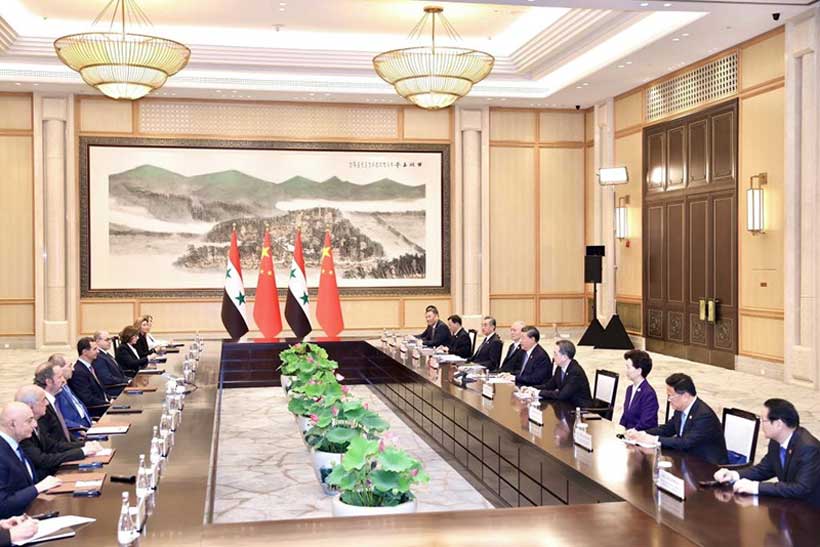
Chinese President Xi Jinping and Syrian President Bashar al-Assad on Friday jointly announced the establishment of a China-Syria strategic partnership, Chinese Xinhua Net informs.

The two presidents met in the eastern Chinese city of Hangzhou, Zhejiang Province, ahead of the opening of the 19th Asian Games.

Syria was one of the first Arab countries that established diplomatic relations with the People’s Republic of China, and was one of the countries that co-sponsored the resolution to restore the lawful seat of the People’s Republic of China in the United Nations, Xi said.

Over the 67 years since the establishment of diplomatic relations between the two countries, the China-Syria relationship has stood the test of changes in the international situation, and their friendship has grown stronger over time, he said.

Xi noted that the establishment of the strategic partnership will be an important milestone in the history of bilateral ties.

China is willing to work with Syria to enrich their relationship and continuously advance the China-Syria strategic partnership, Xi said.

Xi emphasized that China will continue to work with Syria to firmly support each other on issues concerning the two sides’ respective core interests and major concerns, safeguard the common interests of both countries and other developing countries, and uphold international fairness and justice.

China supports Syria in opposing foreign interference, rejecting unilateralism and bullying, and safeguarding national independence, sovereignty and territorial integrity, he said.

China supports Syria in conducting reconstruction, enhancing counter-terrorism capacity building, and promoting a political settlement of the Syrian issue following the “Syrian-led, Syrian-owned” principle, Xi said.

China also supports Syria in improving its relations with other Arab countries and playing a greater role in international and regional affairs, he added.

China is willing to strengthen Belt and Road cooperation with Syria, increase the import of high-quality agricultural products from Syria, and jointly implement the Global Development Initiative, the Global Security Initiative and the Global Civilization Initiative to make active contributions to regional and global peace and development.

Assad said that in international affairs, China has always aligned itself with international fairness and justice, and upheld international law and humanitarianism, playing an important and constructive role.

Syria highly appreciates and firmly supports the Belt and Road Initiative, the Global Development Initiative, the Global Security Initiative and the Global Civilization Initiative, and will actively participate in them, Assad added.

The Syrian side thanks the Chinese government for its invaluable support to the Syrian people, firmly opposes any act of interference in China’s internal affairs, and is willing to be China’s long-term and staunch friend and partner, he said.

Assad said Syria will take the establishment of the Syria-China strategic partnership as an opportunity to strengthen bilateral friendly cooperation and step up their communication and coordination in international and regional affairs.

After the talks, the two heads of state witnessed the signing of bilateral cooperation documents in areas including Belt and Road cooperation, and economic and technological cooperation.


Categories
Operation "Doppelganger"

Best WiFi range extenders – CyberGuy


How Wi-Fi Extenders Work A WiFi range extender is a device that connects to your existing router and amplifies the signal to reach farther areas. It’s a cheaper and easier solution than buying a new router or upgrading your internet plan. They can be set up between your router and the areas with weak or no signal to extend the coverage.

Categories
Selected Articles

Leadership of Azerbaijan’s Defense Ministry visits military hospital VIDEO


16955580184397935987_1200x630.jpg

Baku, September 24, AZERTAC

Azerbaijan’s Minister of Defense, Colonel General Zakir Hasanov and other high-ranking officers of the Ministry have visited the Main Clinical Hospital of the Ministry of Defense, the ministry told AZERTAC.

First, flowers were laid at the monument to National Leader Heydar Aliyev erected in the territory of the hospital. The memory of the Great Leader and martyrs, who sacrificed their lives for the sovereignty, independence, and territorial integrity of Azerbaijan was honored with observing a minute of silence.

The Defense Ministry’s leadership met with servicemen undergoing treatment in the hospital after being wounded during local anti-terror measures conducted in the Karabakh region of Azerbaijan, as well as enquired about their health and concerns.

The Minister of Defense was reported that the hospital’s medical personnel are working with high professionalism for the treatment of wounded servicemen.

The Minister visited servicemen being treated in the wards, enquired about their health and rehabilitation process, as well as wished them a speedy recovery and return to their places of service.

Minister Zakir Hasanov emphasized that the significant military successes achieved by Azerbaijani servicemen in a short period of time in all directions during anti-terror measures by showing heroism, courage and professionalism in difficult terrain conditions, were highly appreciated by President of Azerbaijan, Supreme Commander-in-Chief of the Armed Forces Ilham Aliyev.

In the end, the Minister gave relevant instructions on more qualitative organization of the medical service provided to wounded servicemen.


Categories
Selected Articles

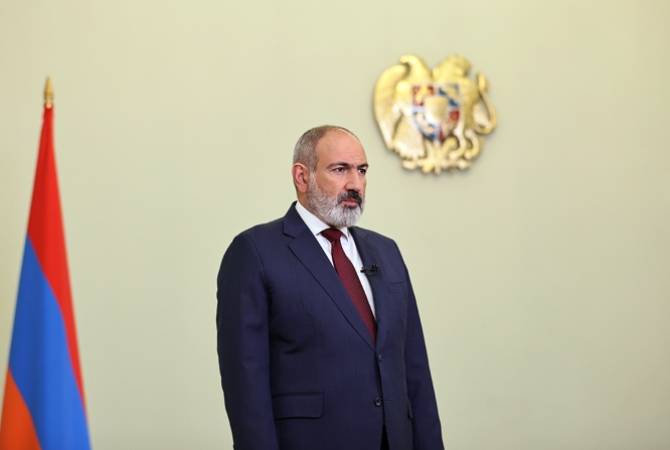
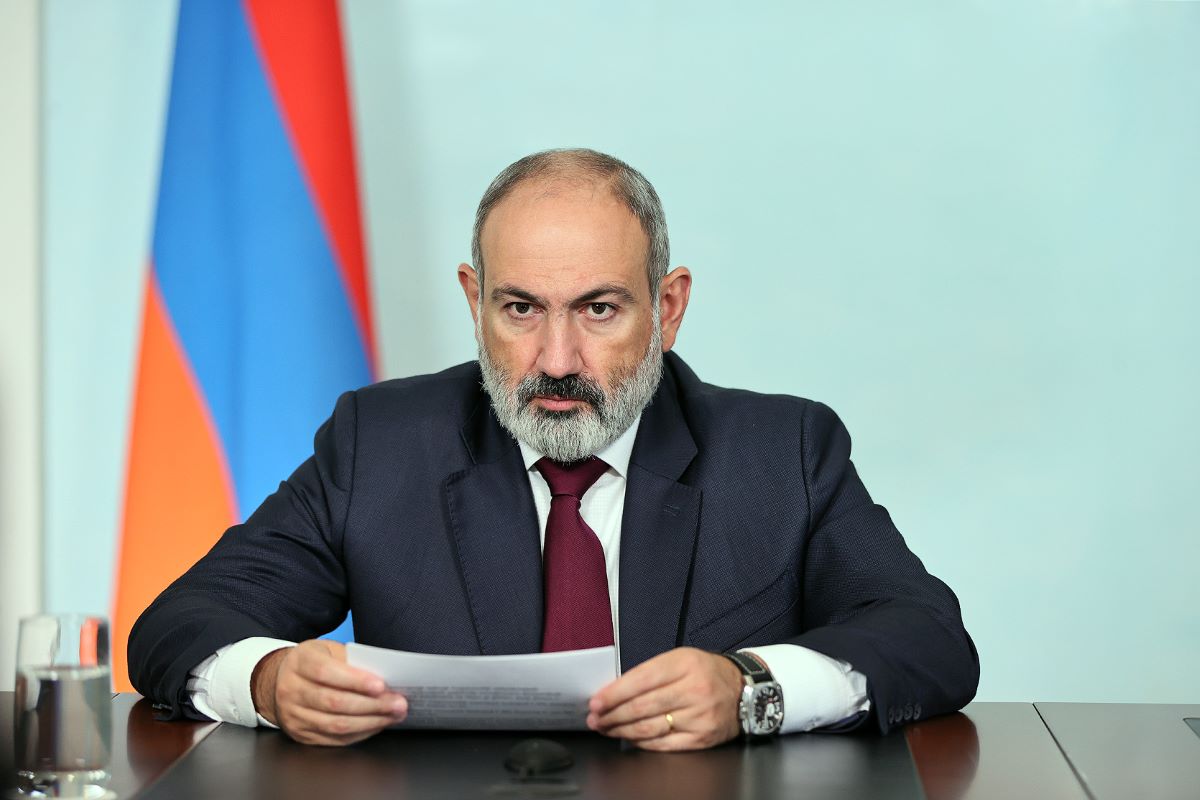
The citizen of Armenia will win in this struggle for independence, sovereignty, democracy – PM addresses the nation


The citizen of Armenia will win in this struggle for independence, sovereignty, democracy - PM addresses the nation
13:21, 24 September 2023

YEREVAN, SEPTEMBER 24, ARMENPRESS. The Azerbaijani attacks against Armenia over the past years have lead to the obvious conclusion that Armenia’s external security systems are ineffective in terms of national interests and security, Prime Minister Nikol Pashinyan has said.

In an address to the nation on Sunday, PM Pashinyan said that a number of developments over the past years have led to the imperative of making assessments, re-assessments and conclusions.

Below is the transcript of PM Pashinyan’s speech as published by his office. 

“Dear people, dear compatriots,

A number of events that have taken place in recent years have forced all of us to evaluate, re-evaluate the situation, and draw conclusions. What happened in Armenia, what is happening and what should happen? These are the questions the answer to which is strategic for the future.

The attacks undertaken by Azerbaijan against the Republic of Armenia in recent years lead to an obvious conclusion that the external security systems in which we are involved are not effective for the state interests and security of the Republic of Armenia. This was seen both during the 44-day war and during the May and November events in 2021, as well as in September 2022, and this list goes on.

The capture of Khtsaberd and the Hin Tagher of Nagorno-Karabakh in December 2020 and the capture of more than 60 Armenian servicemen, the events of Parukh, the numerous expressions of intimidation of the Armenian population of Nagorno-Karabakh, the illegal blocking of the Lachin Corridor, the September 19 Azerbaijani attack on Nagorno-Karabakh, raise serious questions in Nagorno-Karabakh as well about the goals and motives of the peacekeeping troops of the Russian Federation.

In spite of the tripartite declaration of November 9, 2020, the Armenians of Nagorno-Karabakh are still facing the threat of ethnic cleansing. In recent days, humanitarian goods have entered Nagorno-Karabakh, but this does not change the situation. And if real conditions for Nagorno-Karabakh Armenians to live in their homes and effective mechanisms of protection from ethnic cleansing are not created, the chances that the Nagorno-Karabakh Armenians will see leaving their homeland as the only way to save their lives and identity is greatly increased.

The responsibility for such a development of events will fall entirely on Azerbaijan, which has adopted the policy of ethnic cleansing, and on the peacekeeping troops of the Russian Federation in Nagorno-Karabakh. Of course, the Armenian government is working with international partners on the formation of international mechanisms for ensuring the rights and security of the Armenians of Nagorno-Karabakh. But if these efforts do not give concrete results, the Government will welcome our sisters and brothers of Nagorno Karabakh to the Republic of Armenia with all care.

By doing so, however, the issues mentioned above will not only be not addressed, but will be exacerbated. The Republic of Armenia has never abandoned its obligations as an ally and has never betrayed its allies. But the analysis of the events shows that the security systems and the allies we have relied on for many years have set a task to demonstrate our vulnerabilities and justify the impossibility of the Armenian people to have an independent state. Moreover, such a policy has nothing to do with the Government established by the popular, non-violent, velvet revolution that took place in 2018 in Armenia, we have seen the manifestations of that policy regularly in recent decades. The four-day war of 2016, the border escalations of 2014-2015 were also an expression of that policy.

We have never agreed with formulations calling into question the independence of Armenia. However, it is concerning that instead of heeding our desire for an independent, sovereign, free and democratic state, some of our partners are increasingly making efforts to expose our security vulnerabilities, putting at risk not only our external, but also internal security and stability, while violating all norms of etiquette in diplomatic and interstate relations, including obligations assumed under treaties.

In response to these steps, we call and urge our partners to respect our statehood and sovereignty, and express our determination to strengthen our statehood, sovereignty, democracy, external and internal security. We call on the international community to express unwavering support for Armenia’s independence, sovereignty, territorial integrity and democracy. We will take all measures to protect our independence. In this regard, it is necessary to transform, supplement, and enrich the external and internal security tools of the Republic of Armenia, cooperating with all partners ready for mutually beneficial steps. Among those measures, we observe not only the deep and comprehensive reforms of the army and security forces, but also the de jure recording of the Prague agreement of October 6, 2022, and Brussels agreement of May 14, 2023, by which the administrative borders of Soviet Armenia are de jure formulated as the state borders of the Republic of Armenia. We are also looking at the ratification of the Rome Statute as another measure, which will enable the Republic of Armenia to use the capabilities of the International Criminal Court in ensuring external security. We made the decision to ratify the Rome Statute in December 2022, when it became clear to all of us that the CSTO and the instruments of the Armenian-Russian strategic partnership are not enough to ensure Armenia’s external security, and that decision is not directed against the CSTO or the Russian Federation in any way. It stems from our external security interest and it is our sovereign right to make such a decision.

Dear people, dear compatriots,

Armenia should be a peaceful, developed, happy, free and democratic state. But on this path, it is necessary to reaffirm our will to be a free and sovereign state, and we go along that path, respecting all our partners, but also expecting the same respect for our people, our state, our sovereignty, our freedom. The deep meaning of the events taking place with us in recent years and even today is this: will Armenia be a sovereign, free, democratic state or a frightened outlying region? This is the choice that is almost openly and transparently brought forward in the internal political field of Armenia. And every citizen must make a choice: he is a participant in the movement for the defense of independence or a supporter of the outlying province.

I am the Prime Minister of the Republic of Armenia, therefore I lead the independence defense movement. If I were not the prime minister, as a citizen I would go after the prime minister leading the movement of the defense of the independence of Armenia, knowing that it will not be easy, but it will happen, because the future of Armenia depends on one person and that one person is me, the future of Armenia depends on one person and that one person is you.

The citizen of the Republic of Armenia has not lost and will not lose his pride and determination and the citizen of the Republic of Armenia will win in this struggle for independence, sovereignty, democracy, happiness and freedom.

Glory to the martyrs and long live the Republic of Armenia.”


Categories
Selected Articles

Aliyev wins the war against Armenia for Nagorno Karabakh


2023092420140199989.jpg

A lightning military operation, lasting barely twenty-four hours, has put an end to the dream of an independent Nagorno Karabakh. This was announced by the President of Azerbaijan, Ilham Aliyev, after proclaiming the “reintegration” into the country of the entire region, inhabited until now by slightly more than 120,000 people, mainly ethnic Armenians. Since December 2022 the enclave had been completely encircled following the blockade by Azeri troops and activists of the Lachin corridor, the territory’s only connection to Armenia.

The security of the road had been taken over by Russia, which had erected interposition troops and aspired to mediation work. Absorbed in its energies by the war it was waging against Ukraine, Russia neglected to pay attention to this commitment, all the more so since the Kremlin had warned of Armenia’s pro-Western fickleness with the consequent cooling of relations with Moscow. 


For President Aliyev, this victory, which puts an end to thirty years of frozen conflict, represents an obvious strengthening of his international position. His main supporters also share part of this triumph: Erdogan’s Turkey, confronting Armenia since the genocide of 1915, which Ankara refuses to recognize as such, and Netanyahu’s Israel, which supplies arms to Azerbaijan, an equipment that has proved sufficient and decisive for the triumph of Baku. 


The last issue of this war is to determine the fate of the Armenian inhabitants of the failed republic of Artsakh, the name with which they had baptized the territory and whose capital they had established in Stepanakert. After being subjected to a nine-month siege, with a lack of food, water and medicine, many have gone into hiding, fearful of being put to the sword by the victorious troops. This was dramatically stated to Agence France Presse by Armine Hayrapetian, the spokeswoman for the government of the separatist republic of Artsakh, who warned of the “massacres” which, in her opinion, the Azeris would undertake as soon as they entered the capital. 


More likely, however, is that an agreement will be reached on the evacuation of the 120,000 Armenians, to be hosted by Yerevan. In addition to the human crisis that this entails, there will undoubtedly be a political crisis in Armenia itself. Its current government of Nikol Pashinyan has already been accused of passivity and of not having done enough to defend and help its beleaguered countrymen. This pressure will be accentuated by the arrival of these refugees, who will bring to the country not only bitterness over the tragedy of their exile and the hardships suffered, but also reproaches to the “Armenian motherland” for not having effectively defended her children. 


The two countries, Armenia and Azerbaijan, will further accentuate their animosity and differences. Both had gained independence from the Russian Empire in 1918, but both were again swallowed up by the USSR, which determined that Nagorno-Karabakh would remain an autonomous territory within the then Azerbaijan Soviet Socialist Republic. 


Like many other peoples forcibly subdued by the central power in Moscow, the two countries appeased their mutual enmity, but it flared up again as soon as the Soviet Union disintegrated. Three years of war, between 1991 and 1994, ended with the ethnic Armenian rebels conquering most of the territory, invading in the process other surrounding regions of Upper Karabakh, inside Azerbaijan, which were not in dispute. 


Baku never recognized the borders that emerged from that confrontation; it always claimed the territory arguing that the Azeri population living in Upper Karabakh had been expelled and massacred by the Armenians, and the tension resulted in periodic skirmishes that would again reach their climax in the 2020 war, when Armenia and Azerbaijan crossed mutual accusations of shelling civilian settlements.

The cease-fire agreement that halted hostilities, later punctuated by new clashes, was broken last December, when Azerbaijan closed the Lachin corridor and began the encirclement by hunger and thirst that has now concluded with the lightning military operation that is supposed to be definitive, although in this as in so many other stories in history nothing can ever be taken for granted forever and ever.


Categories
Selected Articles

Karabakh’s Armenians start to leave en masse for Armenia


2023-09-24t145416z_1_lynxmpej8n06m_rtrop

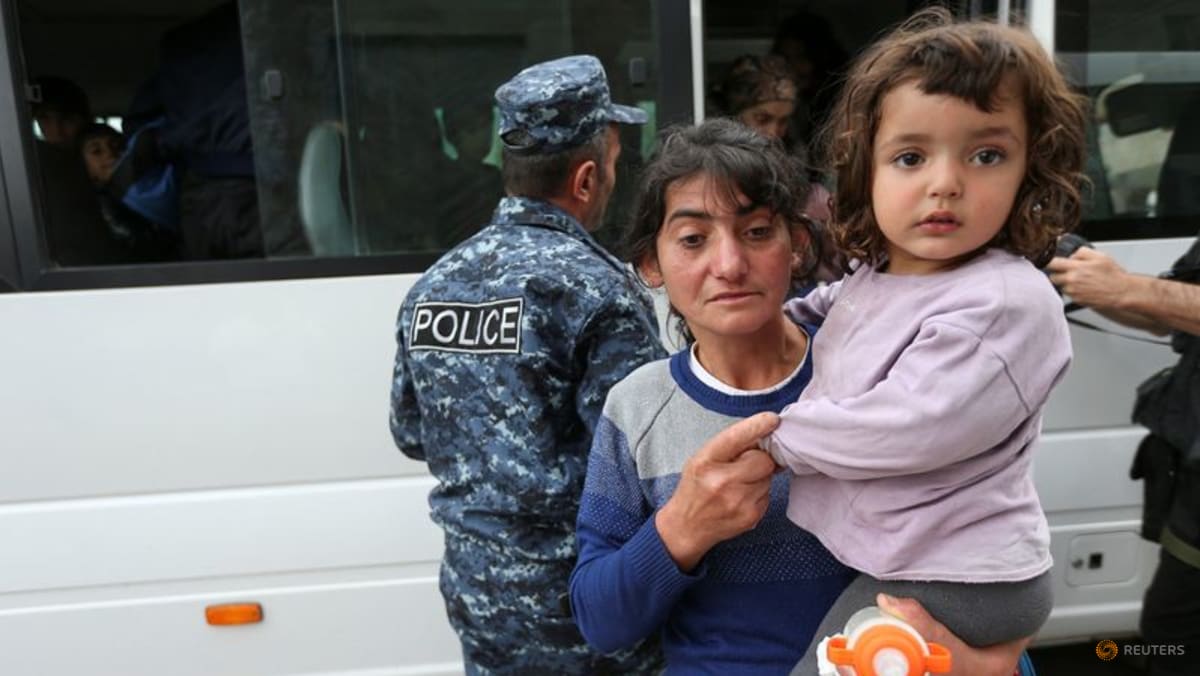
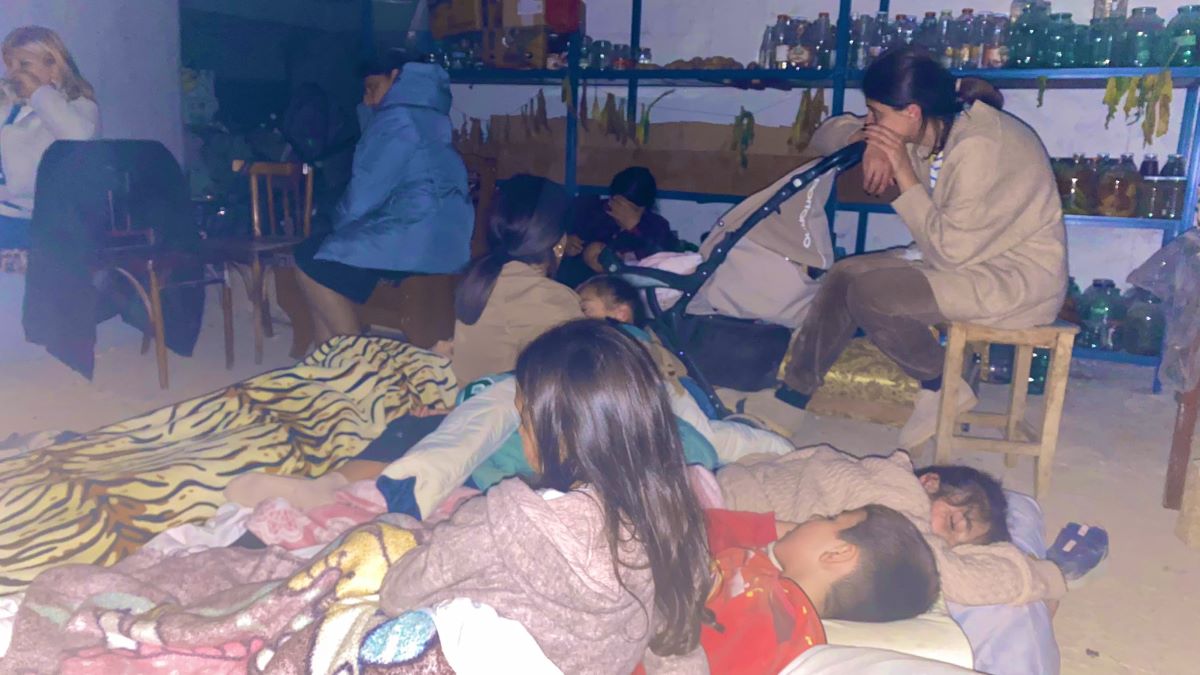
STEPANAKERT, Azerbaijan :Ethnic Armenians in Nagorno-Karabakh began a mass exodus by car on Sunday towards Armenia after Azerbaijan defeated the breakaway region’s fighters in a conflict dating from the Soviet era.

The Nagorno-Karabakh leadership told Reuters the region’s 120,000 Armenians did not want to live as part of Azerbaijan for fear of persecution and ethnic cleansing.

Those with fuel had started to drive down the Lachin corridor towards the border with Armenia, according to a Reuters reporter in the Karabakh capital, known as Stepanakert by Armenia and Khankendi by Azerbaijan.

Reuters pictures showed dozens of cars driving out of the capital at night towards the corridor’s mountainous curves.

The Armenians of Karabakh, a territory internationally recognised as part of Azerbaijan but previously beyond its control, were forced into a ceasefire last week after a 24-hour military operation by the much larger Azerbaijani military.

The Armenians are not accepting Azerbaijan’s promise to guarantee their rights as the region is integrated.

“Ninety-nine point nine percent prefer to leave our historic lands,” David Babayan, an adviser to Samvel Shahramanyan, president of the self-styled Republic of Artsakh, told Reuters.

“The fate of our poor people will go down in history as a disgrace and a shame for the Armenian people and for the whole civilised world,” Babayan said. “Those responsible for our fate will one day have to answer before God for their sins.”

The Armenian leaders of Karabakh said that all those made homeless by the Azerbaijani military operation and wanting to leave would be escorted to Armenia by Russian peacekeepers.

Reuters reporters near the village of Kornidzor on the Armenian border saw some heavily laden cars pass into Armenia. Armenia said 377 refugees had arrived by Sunday evening.

It was unclear when the bulk of the population might move to Armenia.

FEARS OF VIOLENCE

Prime Minister Nikol Pashinyan has faced calls to resign for failing to save Karabakh. In an address to the nation, he said some aid had arrived but a mass exodus looked inevitable.

“If proper conditions are not created for the Armenians of Nagorno-Karabakh to live in their homes and there are no effective protection mechanisms against ethnic cleansing, the likelihood is rising that the Armenians of Nagorno-Karabakh will see exile from their homeland as the only way to save their lives and identity,” he said, according to an official transcript.

The situation could change the delicate balance of power in the South Caucasus region, a patchwork of ethnicities crisscrossed with oil and gas pipelines where Russia, the United States, Turkey and Iran vie for influence.

Last week’s Azerbaijani victory appears to end one of the decades-old “frozen conflicts” of the Soviet Union’s dissolution. President Ilham Aliyev said his “iron fist” had consigned the idea of an independent ethnic Armenian Karabakh to history and that the region would be turned into a “paradise”.

Armenia says more than 200 people were killed and 400 wounded in the Azerbaijani military operation.

FIRST KARABAKH WAR

Nagorno-Karabakh lies in an area that over centuries has come under the sway of Persians, Turks, Russians, Ottomans and Soviets. It was claimed by both Azerbaijan and Armenia after the fall of the Russian Empire in 1917. In Soviet times it was designated an autonomous region within Azerbaijan.

As the Soviet Union crumbled, the Armenians there threw off nominal Azeri control and captured neighbouring territory in what is now known as the First Karabakh War. From 1988-1994 about 30,000 people were killed and more than a million people, mostly Azeris, displaced.

In 2020, after decades of skirmishes, Azerbaijan, backed by Turkey, won a decisive 44-day Second Karabakh War, recapturing territory in and around Karabakh. That war ended with a Russian-brokered peace deal that Armenians accuse Moscow of failing to guarantee.

The Armenian authorities in the region said late on Saturday that about 150 tonnes of humanitarian cargo from Russia and another 65 tonnes of flour shipped by the International Committee of the Red Cross had arrived in the region.

With 2,000 peacekeepers in the region, Russia said that under the terms of the ceasefire six armoured vehicles, more than 800 small arms, anti-tank weapons and portable air defence systems, as well as 22,000 ammunition rounds, had been handed in by Saturday.

Space for 40,000 people from Karabakh had been prepared in Armenia. Azerbaijan, which is mainly Muslim, has said the Armenians, who are Christian, can leave if they want.

Pashinyan blamed Russia publicly on Sunday for failing to do enough for Armenia which he said would review its alliance with Moscow.

“Some of our partners are increasingly making efforts to expose our security vulnerabilities, putting at risk not only our external, but also internal, security and stability, while violating all norms of etiquette and correctness in diplomatic and interstate relations, including obligations assumed under treaties,” Pashinyan said in his Sunday address.

Russian officials say Pashinyan is to blame for his own mishandling of the crisis, and have repeatedly said that Armenia, which borders Turkey, Iran, Azerbaijan and Georgia, has few other friends in the region.

(Reporting by Reuters in Stepanakert, Azerbaijan; Felix Light near Kornidzor, Armenia, and Guy Faulconbridge in Moscow; Writing by Lidia Kelly and Guy Faulconbridge; Editing by Peter Graff, David Holmes and Barbara Lewis)

Categories
Selected Articles

Employees of Azerbaijan`s State Security Service climb to “Heydar Peak”


168302116197584913_1200x630.jpg

Baku, May 2, AZERTAC

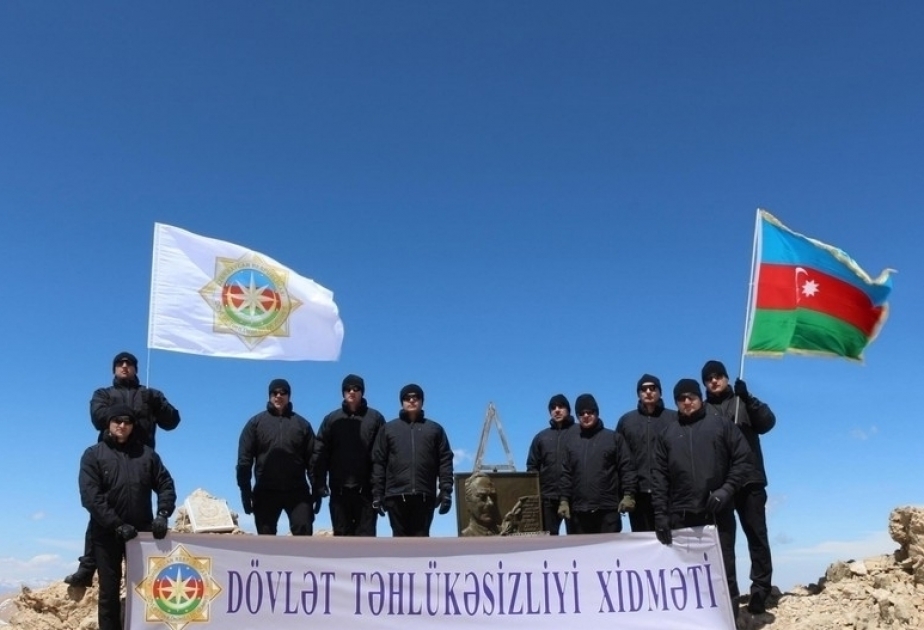
On the occasion of the 100th anniversary of National Leader Heydar Aliyev, a group of employees of the State Security Service organized another climbing to the “Heydar Peak” located at an altitude of 3751 meters above sea level.

Despite the difficult terrain and severe climate, the participants reached the place on time, and paid tribute to the National Leader.

They raised the National Flag of the Republic of Azerbaijan, placed a poster with the name and emblem of the State Security Service, as well as a commemorative stone plaque made of a piece of rock taken from the natural deposits in the liberated territories and depicting the 100th anniversary of Great Leader Heydar Aliyev on the top.


Categories
Selected Articles

Foreign Ministers of Armenia and Azerbaijan disagree in Washington, but US Secretary of State optimistic


Suren Surenyants, political scientist:

“As expected, the Washington round of Mirzoyan-Bayramov talks turned out to be ineffectual. I think that the negotiations in Washington were doomed to such an outcome for at least two reasons:

1) the Armenian-Azerbaijani institution of direct dialogue cannot work effectively, if only because there is a power imbalance between Yerevan and Baku, where Azerbaijan is trying to impose its entire agenda on Yerevan;

2) we may like or dislike Russia’s policy, but it is obvious that without the participation of Moscow it is impossible to achieve a resolution of Armenian-Azerbaijani relations. Russia is not only the main moderator in the South Caucasus, a key mediator in this conflict, but also, in fact, a party and participant in this conflict, which also follows from the logic of the November 9 [2020] tripartite statement on the cessation of hostilities in Karabakh.

Of course, it does not follow from what has been said that the Moscow round of talks will be crowned with success. In general, it is difficult to imagine the resolution of Armenian-Azerbaijani relations without consolidated international efforts in this direction. And those cannot be in the conditions of a global conflict between Russia and the West, international chaos.

This situation, of course, creates new risks for the security of Armenia, such as the expulsion of Armenians from Artsakh.”

Ruben Mehrabyan, political scientist:

“A statement of the persistence of differences on key issues means that Aliyev is still firmly resisting, hoping that the Kremlin, after the meeting in Washington, will arrange another “St. Petersburg”, as it was after Vienna in 2016, put pressure on Yerevan, help Baku in once again slipping out from under American pressure, after which he will give another go-ahead to lawlessness in the interests of Moscow and Baku.

And this means that Yerevan MUST prevent this.

And this means leaving Moscow alone with its beloved Baku, thereby contributing to the consolidation of pressure on Baku, bringing its positions closer to Washington and Brussels.

But we are told from Prague that “a visit to Moscow is planned” [during an official visit to the Czech Republic, Pashinyan himself announced this].

Why a visit to Moscow?

I want to warn you: your incomprehensibly beloved Moscow, where you are going to go, went over your agent Serzhik [former Armenian President Serzh Sargsyan] and did not spare him. Don’t think that it will spare you.

In short, you should not crawl back into this hole. Theres nothing for us there.

Meanwhile, what is called the peace agenda is a stubborn struggle for peace against the enemies of the world, and above all, against the aspirations of Moscow, which is the main enemy of the world.”

Comments from Baku

Azerbaijani MP Rasim Musabekov explained the lack of a documented agreement after the talks in America with Russian pressure on Yerevan:

“At the talks in Washington, Armenia balked at its demands and frustrated the initialing of the agreement with Azerbaijan. The continuation of negotiations in Moscow was announced. From there, the encouragement followed. The repair of the main gas pipeline in the Stavropol Territory has been completed and gas supplies to Armenia interrupted on May 1 have been restored.”

The MP also expects “an encouraging gesture from the Kremlin in the form of the beginning of the passage of Armenian trucks with agricultural products through the Lars crossing, which was stopped during the ministerial meetings in Washington.”

The mountain gave birth to a mouse. This is how Azerbaijani political scientist Farhad Mammadov summed up the talks in Washington.

“Progress… finish line… exhausted Blinken… And that’s it?! And all from the inconsistency of the position of the Americans themselves! At one time, they did not point to the occupier, did not apply sanctions against Armenia, but, on the contrary, supported it financially and politically.

There are topics on which there is no common understanding. Then Baku will take more steps to finalize it before the next meeting. The diplomatic battle will continue in Russia, it will be interesting…

The Americans need Azerbaijan to give up the enclaves… as I understand it from Pashinyan’s statement made in Prague – that’s exactly what… to help Pashinyan retain power…

And the Karabakh Armenians will remain in limbo…” he added.

Former Azerbaijani Foreign Minister Tofig Zulfugarov noted that the negotiations were difficult.

“At best, they could sign some text. Because, logically, after the meeting of foreign ministers in Washington, the heads of state should meet to sign the prepared document. After such a long meeting, a meeting of the leaders of the countries is expected. It is sensed that the United States intends to put a political end to the Armenian-Azerbaijani conflict, because the Americans put on the negotiating table the question of a fundamental solution to the problems of the post-conflict period.”

Follow us Twitter | Facebook | Instagram