Categories
Selected Articles

Putin’s brutal war on Ukraine vanishes from news coverage amid raging conflict in Gaza


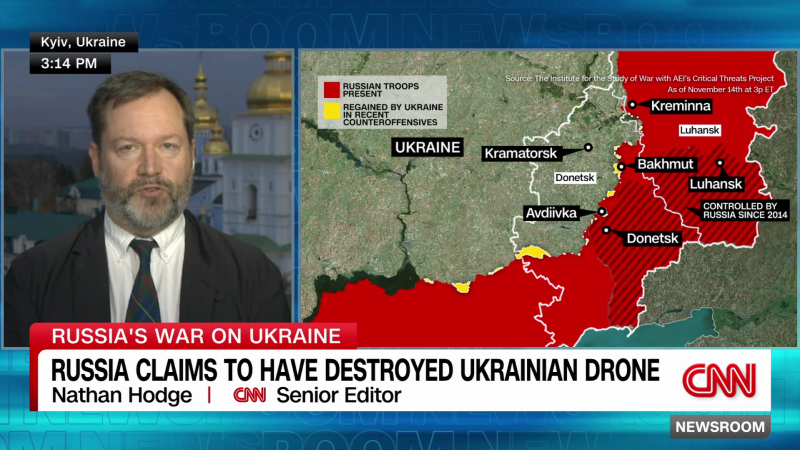
231115092225-exp-russia-ukraine-donetsk-

Editor’s Note: A version of this article first appeared in the “Reliable Sources” newsletter. Sign up for the daily digest chronicling the evolving media landscape here.

When was the last time you saw a live television news report from Ukraine? It’s likely been a while.

The raging war in the Middle East has put the prolonged war in Eastern Europe largely on the back burner, in terms of media coverage, with Vladimir Putin’s campaign of brutality against Ukraine receiving much less attention from the press than it did prior to the Israel-Hamas conflict breaking out.

Closed-captioning data from the Internet Television Archive, which was analyzed by the GDELT Project, showed that on cable news, coverage of the Ukraine war plummeted dramatically after Hamas’ shocking Oct. 7 terror attack. In the days before the Israel-Hamas war, the battle in Ukraine amounted to about eight percent of CNN’s television coverage. After the attacks, CNN —the cable news network that provided the most Ukraine coverage — fell to under one percent.

As the chaos to elect a new House speaker ensnared Washington, there was a notable uptick in mentions of Ukraine on cable news networks — but the focus of the coverage mostly pertained to U.S. funding of the embattled nation, not the actual state of play in the war.

Data provided by ComScore, an Internet analytics firm, showed a similar trend play out online. The data indicated that there has been a significant drop in discussion on social media about the Ukraine war since the onset of the Israel-Hamas conflict, though it also indicated that in general, there had been a lull in attention to Putin’s invasion in recent months.

The noted drop in Ukraine war coverage from the press, given the fresh violence in the Middle East, is not completely surprising. The horrific acts of violence Hamas carried out in Israel has shocked the world, arresting the attention of those who normally pay little regard to global affairs. U.S. outlets have also been juggling several other important stories in the last several weeks, including disarray in Congress, Donald Trump’s legal issues and a monstrous mass shooting in Maine.

But, at the same time, the drop in attention paid to Ukraine has been nothing short of a boon for Putin. The authoritarian Russian leader, who has committed unspeakable atrocities as his forces invade a sovereign nation, has been able to wage his war with far less scrutiny on his appalling actions.

Paul Kolbe, a senior fellow at the Belfer Center for Science and International Affairs in Harvard Kennedy School, who served for 25 years in the Central Intelligence Agency, told me that Putin must be “delighted” that the war between Israel and Hamas “is diverting US attention” as Russia “continues to strike Ukrainian cities and civilian targets.”

“Even as Western press coverage of war in Ukraine wanes, Russia fills the vacuum in reporting with its own campaign of distributing lies and disinformation,” Kolbe said. “Putin’s strategy is to wear down Western patience and support, play upon U.S. domestic divisions, and to prey upon those in NATO which harbor latent Russian sympathies.”

In addition to the kinetic military action, Putin is also waging an information war, using all the tools at his disposal to lie about and sanitize the acts of savagery being committed against a civilian population under his orders. As Kolbe told me, “Putin’s media campaign to paint Ukraine as divided, corrupt, and a puppet of the U.S. and NATO, is a central part” of his strategy.

The lack of press attention makes that all the more easier.

Categories
Selected Articles

From Gaza With Rage – OpEd


From Gaza With Rage – OpEd

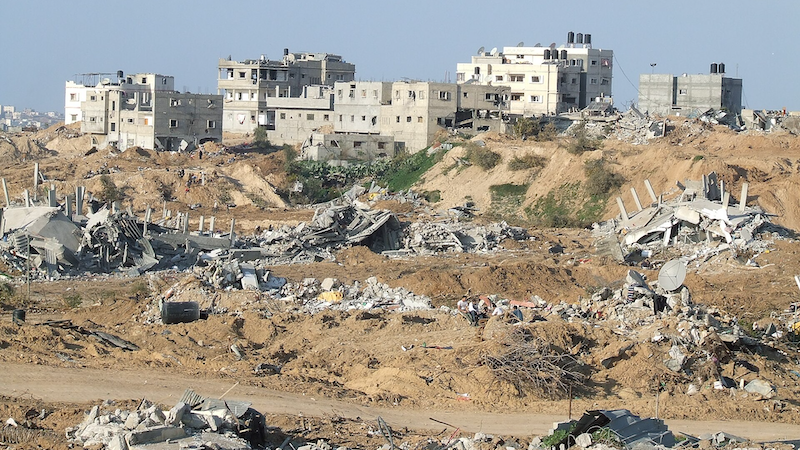
Jabalia, Gaza. Photo Credit: ISM Palestine, Wikimedia Commons

The repeating Israeli airstrikes on the Jabalia refugee camp in Gaza are beyond my own comprehension.  For at least 10 of the last 40 days, missiles have rained down on the most densely populated refugee camp in all of Gaza. 

And it is not just the days; it is also the nights. The bombing is done in the dark, when the power is off and the only light is from the fires that burn. It is done when the internet is cut, when the journalists are shot dead, to hide their crimes, the burning of children.

I have a long history and strong connection to the people in this camp. My friends, former coworkers, patients, and people I have known for decades through my work as a doctor at Gaza’s Al-Awda hospital are living in this camp. There are the children who grew up coming to the library I founded in Jabalia, who are now young men and women, who have their own children, their own families. There are my beautiful neighbors and friends and patients, who are not my relatives but are my family. They are generation after generation of refugee families living in one of the most crowded places on earth.

After the latest massacre, I cannot reach any of them. 

I see these same families in the video sent to me of my neighbors pulling children from the rubble.  I see them in my memories as we lived and struggled under dual occupations, and Israeli bombings and apartheid.  I hear what it sounds like in the aftermath when women and children, the overwhelming majority of those living in, injured, and killed in Jabalia, scream and mourn in anguish and wake up to do it again. I can taste the chemicals, the poisons that linger in the air for hours and days after these indiscriminate explosions. I can smell the acrid odor of white phosphorus, used by Israel in Gaza and caked on the walls of burning buildings and bodies.  I can feel the collective hunger: for food and for justice and for all of it to stop.

But now I am in Cairo and it is so difficult and distressing to hear more terrible news each day, news of my loved ones killed by this criminal occupation, by these crimes of war bragged about by Israeli officials who say that there will be no buildings left in Gaza, that we will be a “city of tents.”

I had always been home in Gaza during previous Israeli bombings that so often use U.S. planes and U.S. missiles, gifted and given as “aid.” Such “help” is the opposite of the aid I am buying now. The food, medicine, and more, even toys for children who have lost so, so much. The Middle East Children’s Alliance is raising money so we can buy these supplies to deliver to children and families in Gaza as soon as we can.

I am so very sad. But it is not only sadness that I feel. It is also rage.

How do I feed a child that will not eat because of fear? How do you give a toy to a child who will not play, who searches the skies for what they know will come? 

I am enraged at Israel’s constant, ruthless bombardment, killing thousands of people from newborn babies to grandfathers. What is happening now in Gaza is genocide.Those who are not killed by Israeli bombs are dying slowly from the lack of medicine, food, and water.

I mourn more of my beloveds, both family and friends, every day and I ask myself who is next. Last week it was one of my dear friends killed in Jabalia. We were friends for over 35 years, since we worked together during the first intifada in 1987.

Before that, it was my own family. My own brother speaks in the video about our own family members that were killed a few weeks ago. 

This is our story and it is the tragedy of every family in Gaza. More than one out of every two hundred Palestinians in Gaza has been killed in the last 40 days. 

I have always signed my letters to supporters and friends from around the world with these words, “From Gaza with Love.”  But today I’m writing with a rage that no mother should know, a rage of desperation and disbelief about what is being allowed to happen. I still feel love for everyone in Palestine, and people who have stood in support and solidarity of our shared struggle. But please, take action. And then do more. 

We must stop this genocide. 


Categories
Selected Articles

Arab-OIC Summit Calls Israeli Assault On Gaza A War Crime


Arab-OIC Summit Calls Israeli Assault On Gaza A War Crime

Gaza, Palestine.

A joint Arab-Islamic summit held in Saudi Arabia’s capital Riyadh on November 11, rejected Israeli claims that the war in Gaza was in “self-defense.” The participating members instead held Israel responsible for the “continuation and aggravation of the conflict” and “warned of the disastrous repercussions” for the state’s “war crime.”

The summit, originally scheduled as a meeting of the Arab League members, was later expanded into a joint summit with members of the Organization of Islamic Countries (OIC).

The 57 members of the OIC include 22 Arab countries, Turkey, Iran, Pakistan, Indonesia, and several other Asian and African countries.

The joint communique issued after the meeting also reiterated the demand for an immediate end to the “barbaric, inhuman and brutal massacre by the colonial occupation government” in Gaza and an end to Israel’s “barbaric crimes committed also in the West Bank and Al-Quds Al-Sharif [East Jerusalem].”

The summit was called to discuss a joint response to the Israeli war in Gaza. Israel has been carrying out indiscriminate air strikes and land incursions in the besieged Palestinian territory since October 7. The offensive has killed more than 11,000 Palestinians, mostly children, women, and the elderly, and injured over 28,000.

Israeli attacks have displaced more than 70 percent of the 2.3 million population of Gaza, destroying residential buildings, hospitals, schools, shelters, and almost all of its civil infrastructure.


Categories
Selected Articles

Armenia Receives Shipment Of French Armored Vehicles Through Georgia


Armenia Receives Shipment Of French Armored Vehicles Through Georgia

armenia map flag

By Heydar Isayev 

(Eurasianet) — Armenia has received its first batch of armored vehicles from France via Georgia. 

Azerbaijan is ratcheting up its rhetoric against France over Paris’ growing military support to its archrival but so far has refrained from criticizing Georgia for facilitating the first delivery of French hardware.

On November 12, Azerbaijani Defense Ministry-aligned Caliber.az shared images purporting to show at least 20 Bastion armored personnel carriers arriving at the Poti Port, on Georgia’s Black Sea coast. 

APM Terminals, which operates the Poti Port, meanwhile, confirmed on November 14 that a “specific cargo” was received from France and sent on to Armenia. “In the absence of clear instructions [to the contrary] from the Georgian government and any restrictions from international regulators, APM Terminals Poti, as a multipurpose port in Georgia and the region, had no right to reject without basis a cargo that is not under sanctions,” the company told RFE/RL.

Georgian Foreign Minister Ilia Darchiashvili gave his own confirmation of the arms transit in an interview with Georgian Public TV on November 14. 

He referred to Armenia and Azerbaijan as both “brotherly and friendly” nations and said that both have the right to use Georgian territory for transit “on equal terms.” 

“All countries have the right to have defense forces and all countries have the right to acquire conventional hardware and weapons permitted under international agreements. Georgia’s position is that both countries should be allowed to use our country for transit.”

Armenia’s Defense Ministry, for its part, neither confirmed nor denied the transfer of the vehicles. 

Georgia’s role in the arms transfer was noted in both Armenia and Azerbaijan, but not at the official level. 

“What is most important is that Georgia is not hindering the logistics, despite [Azerbaijani President Ilham] Aliyev’s attempts to put pressure on Tbilisi,” Leonid Nersisyan, Armenian military analyst, wrote on X. 

An editorial on Minval.az, a pro-Azerbaijani government analysis website, called the transfer a “stab in the back” by Georgia against its strategic partner Azerbaijan. The commentary said that Azerbaijani energy supplies, as well as pipelines carrying Azerbaijani oil and gas through Georgia, were crucial to Georgia’s security and economic well-being, and lamented that now, the leadership in Tbilisi has “chosen to curry favor with France at the expense of Azerbaijan’s interests.”

Azerbaijan’s Foreign Ministry, meanwhile, condemned France over the hardware transfer but made no mention of Georgia. 

“Against the backdrop of smearing campaigns and destructive actions by France against Azerbaijan in the region, these steps, which adds to the militarization policy of Armenia, attests to the fact of France’s erroneous interests in the region,” the English version of the statement read. “Armenia and France should end armament and militarization policy in the region, and finally understand that there is no alternative to peace and stability in the region.”

The Armenian and French defense ministers signed deals on October 23 under which Armenia will purchase radar systems and other equipment, including anti-aircraft systems, from French manufacturers, and France will help train and reform the Armenian armed forces. 

“France and the French people are by our side, a fact that deserves our highest appreciation,” Armenian Defense Minister Suren Papikyan said at the signing of the deal.

The delivery of French APCs was not mentioned in initial official statements about that deal.

Azerbaijan has long been critical of France over its pro-Armenian stance in the Karabakh conflict, especially during the peace process that followed the 2020 war between Armenia and Azerbaijan. Now that Azerbaijan largely resolved the Karabakh conflict in its own favor, it still opposes France’s involvement in the Armenia-Azerbaijan peace negotiations as a mediator. 

In early October, President Aliyev refused to attend a meeting in Spain where he was scheduled to meet the Armenian Prime Minister, citing the exclusion of Turkey, Azerbaijan’s closest ally, from the would-be multilateral talks, and the inclusion of France. 

Azerbaijan has recently begun using its chairmanship of the Non-Aligned Movement (NAM) to position itself as a global leader in the fight against what it calls French “neocolonialism.”

Baku recently hosted a neocolonialism conference that featured invitees from independence movements in New Caledonia, Corsica, French Polynesia and French Guiana. 

Hikmat Hajiyev, Aliyev’s senior foreign policy advisor, told the conference that Azerbaijan will help French overseas territories to continue with their “struggle, and political freedom ambitions.”

“We will raise the opinions expressed here at the level of the UN and other international organizations. Our country was deprived of independence for many years. As a state, we know what occupation is,” he said. 

Heydar Isayev is a journalist from Baku.


Categories
Selected Articles

Zelenskyy Now Surrounded By Predicaments – OpEd


Zelenskyy Now Surrounded By Predicaments – OpEd

By White Mountain

The domestic political situation in Ukraine is becoming increasingly unfavorable for Volodymyr Zelenskyy.

The Ukrainian Verkhovna Rada representative Oleksandr Dubinsky had his residence raided by the SBU for making derogatory remarks about Zelenskyy and his chief of staff Andriy Yermak. This indicates that Zelenskyy’s standing in the country is highly sensitive. Various political forces may hope that in next year’s Ukrainian elections, Zelenskyy will have an opportunity to step down “normally”, thus opening the door to negotiations with Russia.

The vulnerability and growing unreliability of the European Union are evident. EU official Josep Borrell warns Ukraine that ammunition is limited. Borrell, the EU’s top diplomat, states that the bloc “might not meet the delivery target of one million shells for Ukraine”. The EU has already provided Ukraine with over 300,000 shells. In contrast, Russia has just acquired one million shells from North Korea.

Due to the EU’s fragile performance, it is now almost certain that Ukraine will lose all its “dependencies” – the EU, NATO, and Poland – unless the United States shows impressive leadership. In this situation, it is worrisome to consider whether Ukraine might resort to some “out-of-the-box” actions, such as causing a massive nuclear leak in Europe, leading to a collective disaster for all.


Categories
Selected Articles

One Cannot Interpret Facts Of Reality Without Theories – OpEd


One Cannot Interpret Facts Of Reality Without Theories – OpEd

lightbulb energy innovation idea

By Frank Shostak

Many economists, including Milton Friedman, have claimed that reality is elusive and that one cannot know its true nature. Most mainstream economists also believe that data gives us the state of the economy. By inspecting numbers such as gross domestic product (GDP) or the consumer price index, only then can an economist accurately assess the state of economic conditions.

Ludwig von Mises and the Austrian School of Economics have had a different view. According to Mises, the data is a historical display and, by itself, cannot provide the facts regarding the real world. To make sense of the data, one needs to have a theory beforehand that will allow one to interpret the data, and the theory must originate from something real that cannot be refuted. A theory resting on the foundation that human beings act consciously and purposefully fulfills this requirement.

One cannot refute that foundation since anyone trying to do so does it consciously and purposefully and thus contradicts himself, according to Hans-Hermann Hoppe. The knowledge that human actions are conscious and purposeful allows one to make sense of historical data, writes Murray N. Rothbard in the preface to Theory and History by Mises.

The Importance of Defining the Subject of Investigation

The key to examining data is establishing the subject and definition of what one is analyzing. To establish a definition, one should go back as far as one can to the point of time when that particular thing emerged.

For instance, when analyzing money supply, we would go back to when a particular commodity started to assume the role of money. In this case, one would establish that individuals began to use money to promote the trading of goods. A commodity that was selected as money enabled the most efficient exchange. Note that, through the general medium of the exchange, we establish that individuals are paying for one good with another good with the help of money.

We can also establish that increases in the quantity of money cause a decline in the purchasing power of money, all other things being equal. This is because the expansion of the money supply results in a greater amount of money per unit of a good than in the previous situation, all other things being equal. Note that the price of a good is the amount of money per unit of a good. Hence, by observing an increase in money supply, one could infer that more money will be spent per good, bringing a decline in the money’s purchasing power.

The definition that money is the general medium of exchange enables the understanding that once money is injected, there will always be early and late recipients of money. This in turn enables us to infer that a change in the money supply is likely to have a lagged effect on the prices of goods.

Without a theoretical framework, the data by itself cannot tell us the conditions of the economy. It cannot tell us whether the strong GDP data is because of a wealth expansion or because of the erosion in the wealth-generation process.

For instance, once it is established that the loose monetary policies of the central bank are behind the so-called strong economic conditions, then by means of a theory, we can establish that this is going to weaken the wealth-generation process. In the modern world of the paper money standard, we can establish that an increase in money supply results in an exchange of nothing for something. This leads to a diversion of wealth from wealth generators to non-wealth-generating activities.

To maintain their lives and well-being, individuals are likely to prefer present consumption over future consumption. As an individual’s wealth expands, the premium assigned to present consumption over future consumption likely declines, with the premium of present consumption over future consumption determining interest.

Preferring present consumption to future consumption implies that, to live, people assign a premium to present consumer goods versus future consumer goods. From this, we can also establish that individuals’ time preferences determine interest rates, not central bank policies.

Central bank policies can only distort interest rates, thus setting in motion boom-bust cycles and economic impoverishment. Also, note that preferring present consumption over future consumption implies that interest rates must be positive.

If one observes negative interest rates, this does not contradict the theory but rather forces the analyst to ponder how this could have happened. Most likely, he will discover that the main reason for these rates are the central bank monetary policies that distort the interest rates.

Furthermore, the fact that an individual pursues purposeful actions implies that causes in the world of economics emanate from human beings and not from outside factors. This means that mathematical methods are not going to be of much help here.

For instance, contrary to popular thinking, one’s outlays on goods are not caused by real income as such. In his own unique context, every person decides how much of a given income will be used for consumption and how much for investments.

While it is true that people are likely to respond to changes in their incomes, the response is not automatic. Every individual assesses changes in income against the particular set of goals he wants to achieve. In response to the increase in income, he might decide that it is more beneficial for him to raise his investment in financial assets rather than to raise consumption. However, the important thing to remember is that the decision is made by the person in question, not a mathematical equation.

Conclusion

Reliance on statistical data as a foundation for the formation of a view about the state of the economy is questionable. Data cannot produce information about the facts of reality without a theory that “stands on its own feet” and is not derived from the data itself. Once the theory passes the test of logic, it becomes the means for interpreting the facts of reality through the assessment of the data.

About the author: Frank Shostak‘s consulting firm, Applied Austrian School Economics, provides in-depth assessments of financial markets and global economies. Contact: email.

Source: This article was published by the Mises Institute


Categories
Operation "Doppelganger"

7 Best Growth ETFs to Buy and Hold | The Motley Fool


The best long-term ETFs provide investors with broad exposure to industries, asset classes, and geographies for a relatively low cost.

Categories
Selected Articles

What China“s Xi gained from his Biden meeting


2023-11-17T05:22:20Z

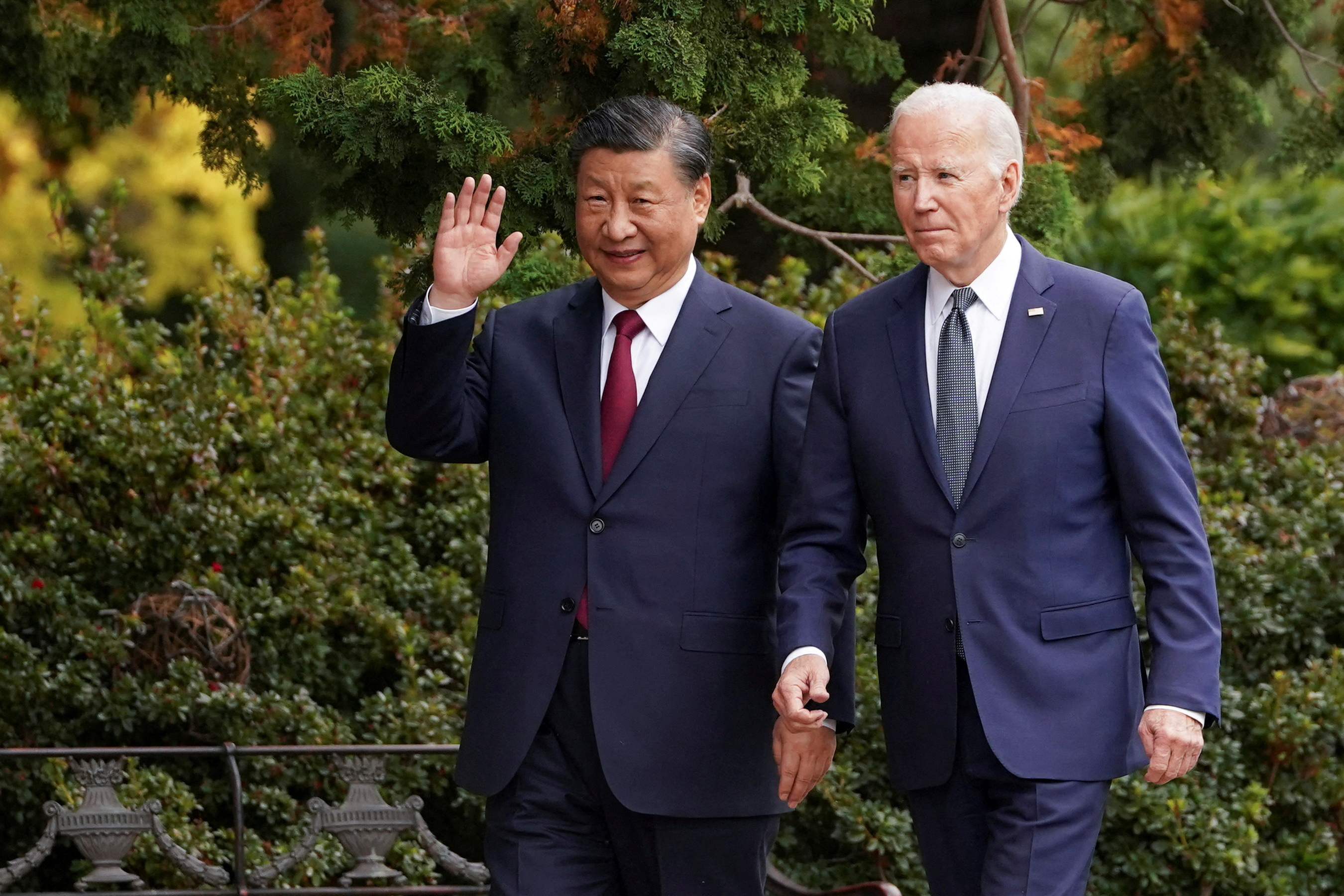
Chinese President Xi Jinping waves as he walks with U.S. President Joe Biden at Filoli estate on the sidelines of the Asia-Pacific Economic Cooperation (APEC) summit, in Woodside, California, U.S., November 15, 2023. REUTERS/Kevin Lamarque/File Photo

When Chinese President Xi Jinping met executives for dinner on Wednesday night in San Francisco, he was greeted with not one, but three standing ovations from the U.S. business community.

It was one of several public relations wins for the Chinese leader on his first trip in six years to the United States, where he and President Joe Biden reached agreements covering fentanyl, military communications and artificial intelligence on the sidelines of the Asia-Pacific Economic Cooperation summit.

All three were outcomes the United States had sought from China rather than the other way around, said two people briefed on the trip.

But Xi appeared to have achieved his own aims: earning U.S. policy concessions in exchange for promises of cooperation, an easing of bilateral tensions that will allow more focus on economic growth, and a chance to appeal to foreign investors who increasingly shun China.

China’s economy is slowing and earlier this month it reported its first quarterly deficit in foreign direct investment. And the ruling Communist Party has battled political intrigues that have raised questions about Xi’s decision-making, including the sudden and unexplained removals of his foreign minister and defense minister.

“If the U.S. and China can manage their differences … it will mean that Xi Jinping doesn’t have to divert all of his attention to that (bilateral relations),” said Alexander Neill, an adjunct fellow at Hawaii’s Pacific Forum think-tank.

“He needs to focus on his domestic agenda which is incredibly pressing.”

Securing Xi’s promise of Chinese cooperation on stemming the flow of fentanyl to the United States was high on Biden’s to-do list for the summit. A senior U.S. official said the agreement under which China would go after specific companies that produce fentanyl precursors was made on a “trust but verify” basis.

In return, the U.S. government on Thursday removed a Chinese public security forensic institute from a Commerce Department trade sanction list, where it was placed in 2020 over alleged abuses against Uyghurs, a long-sought diplomatic aim for China.

Critics warned removing sanctions against the institute signals to Beijing that U.S. entity listings are negotiable, and have questioned the Biden administration’s commitment to pressuring China over what it says is the Chinese government’s genocide of Uyghurs.

“This undermines the credibility of our entity list and our moral authority,” said a spokesperson for the Republican-led House of Representative’s select committee on China.

On top of that, Biden’s Republican opponents argue the U.S. is missing an opportunity by not leveraging China’s flagging economic momentum for more diplomatic gains.

Biden also touted as a success an agreement to resume military dialogues cut by China following then-U.S. House Speaker Nancy Pelosi’s 2022 trip to Chinese-claimed Taiwan.

But while Beijing would welcome lower tensions, this is unlikely to change Chinese military behavior the U.S. sees as dangerous, such as intercepts of U.S. ships and aircraft in international waters that have led to a number of near-misses.

“China fears hotlines could be used as a potential pretext for a U.S. presence in areas it claims as its own,” said Craig Singleton, a China expert at the Foundation for Defense of Democracies in Washington.

Biden administration officials have acknowledged that creating functional military relations won’t be as easy as semi-regular meetings between defense officials.

“This is a long, hard, slow slog and the Chinese have to see value in that mil-mil before they’ll do it. That’s not going to be a favor to us,” one senior Biden administration told Reuters in October in the run-up to the Xi-Biden meeting.

In his public remarks to Biden, Xi suggested China sought peaceful coexistence with the United States, and he told business leaders China was ready to be a “partner and friend” to the U.S., words partially aimed at a business community alarmed by China’s crackdown on various industries and the use of exit bans and detentions against some executives.

Similarly, Xi’s televised garden walk with Biden, and the largely respectful reception given to Xi by his American hosts, was highlighted in China’s tightly controlled media to show a domestic audience that their president is managing the country’s most important economic and political relationship.

“Xi Jinping may have made the calculation that overhyping the American threat does China and his standing in the party and the party itself more harm than good,” said Drew Thompson, a former Pentagon official who is now a scholar at the National University of Singapore.

“The fact that we are debating whether China is investible is a real problem for China.”

At the same time, Xi reiterated to Biden points that he made earlier this year to Russian President Vladimir Putin, urging the U.S. president to view U.S.-China relations through “accelerating global transformations unseen in a century.”

Analysts say that is code for the belief that China – and Russia – are remolding the U.S.-led international system.

Still, this time pragmatism may have outweighed ideology.

China recognizes it’s still necessary for its economic progress to have somewhat normal relations with the U.S. and Western countries, said Li Mingjiang, a professor at the Rajaratnam School of International Studies in Singapore.

“It’s the fundamental driving force behind the meeting.”


Categories
Selected Articles

Gang attack on Haitian hospital leads to a call for help and an unlikely triumph for police


One of Haiti’s most vulnerable and impoverished communities is recovering from a gang attack that targeted a hospital serving as a lifeline for many.

Categories
Selected Articles

‘Bring them home’: As battle for Gaza rages, hostage families wait with trepidation


Friends and family of the roughly 240 hostages held by Hamas fear their loved ones will be an afterthought for the politicians and generals directing the campaign.